自1932年至今,南加州地震台网(SCSN)已经产出了超过77年的SCSN地震目录.该目录包括震相、震源位置和震级.本文介绍SCSN的历史和目录的演变,以方便用户了解其优势和局限性.随着时间的推移,台站数量从7个逐渐增加到400个,数据采集和测量过程变得越来越精细,使得震源位置和震级测算质量得到提高.台网的完整性震级(Mc)从早期的Mc3.25降到目前的Mc1.8,在仪器布置最密集的地区表现更好.47万余个地震是以主震—余震和震群序列以及分散的单个背景地震为其活动特征的.地震频率—大小分布的b值平均为1.0左右,M≥6.0事件大约每3年发生一次.记录到的3个最大的地震是1952年克恩县MW7.5,1992年兰德斯MW7.3和1999年赫克托矿MW7.1地震序列,3个最具破坏性的地震是1933年长滩MW6.4地震,1971年圣费尔南多MW6.7地震和1994年北岭MW6.7地震.所有这些地震都是缓慢滑动的、远离主板块边界(圣安德烈斯断层)的断层发生了错动.它们的余震序列在目录中占了约1/3.快速滑动的南圣安德烈斯断层在微震水平相对平静,而且自1932年以来没有发生过M>6的地震.相比之下,滑动较慢的圣哈辛托断层具有最高的地震活动性,包括几个M>6的地震.因此,地震活动的时空模式与板块构造地壳变形呈现复杂的关系.
Research Article| March 01, 2013 Report on the August 2012 Brawley Earthquake Swarm in Imperial Valley, Southern California Egill Hauksson; Egill Hauksson aCalifornia Institute of Technology, 1200 East California Blvd., Pasadena, California 91125 U.S.A.hauksson@caltech.edu Search for other works by this author on: GSW Google Scholar Joann Stock; Joann Stock aCalifornia Institute of Technology, 1200 East California Blvd., Pasadena, California 91125 U.S.A.hauksson@caltech.edu Search for other works by this author on: GSW Google Scholar Roger Bilham; Roger Bilham bUniversity of Colorado, Department of Geological Sciences, Campus Box 399, Boulder, Colorado 80309‐0399 U.S.A. Search for other works by this author on: GSW Google Scholar Maren Boese; Maren Boese aCalifornia Institute of Technology, 1200 East California Blvd., Pasadena, California 91125 U.S.A.hauksson@caltech.edu Search for other works by this author on: GSW Google Scholar Xiaowei Chen; Xiaowei Chen cInstitute of Geophysics and Planetary Physics 0225, University of California San Diego, La Jolla, California 92093‐0225 U.S.A. Search for other works by this author on: GSW Google Scholar Eric J. Fielding; Eric J. Fielding dJet Propulsion Laboratory, California Institute of Technology, 4800 Oak Grove Drive, Pasadena, California 91109 U.S.A. Search for other works by this author on: GSW Google Scholar John Galetzka; John Galetzka aCalifornia Institute of Technology, 1200 East California Blvd., Pasadena, California 91125 U.S.A.hauksson@caltech.edu Search for other works by this author on: GSW Google Scholar Kenneth W. Hudnut; Kenneth W. Hudnut eUnited States Geological Survey, 525 South Wilson Avenue, Pasadena, California 91106 U.S.A. Search for other works by this author on: GSW Google Scholar Kate Hutton; Kate Hutton aCalifornia Institute of Technology, 1200 East California Blvd., Pasadena, California 91125 U.S.A.hauksson@caltech.edu Search for other works by this author on: GSW Google Scholar Lucile M. Jones; Lucile M. Jones eUnited States Geological Survey, 525 South Wilson Avenue, Pasadena, California 91106 U.S.A. Search for other works by this author on: GSW Google Scholar Hiroo Kanamori; Hiroo Kanamori aCalifornia Institute of Technology, 1200 East California Blvd., Pasadena, California 91125 U.S.A.hauksson@caltech.edu Search for other works by this author on: GSW Google Scholar Peter M. Shearer; Peter M. Shearer cInstitute of Geophysics and Planetary Physics 0225, University of California San Diego, La Jolla, California 92093‐0225 U.S.A. Search for other works by this author on: GSW Google Scholar Jamie Steidl; Jamie Steidl fUniversity of California Santa Barbara, Earth Research Institute, Santa Barbara, California 93106‐1100 U.S.A. Search for other works by this author on: GSW Google Scholar Jerry Treiman; Jerry Treiman gCalifornia Geological Survey, 888 South Figueroa Street, Suite 475, Los Angeles, California 90017 U.S.A. Search for other works by this author on: GSW Google Scholar Shengji Wei; Shengji Wei aCalifornia Institute of Technology, 1200 East California Blvd., Pasadena, California 91125 U.S.A.hauksson@caltech.edu Search for other works by this author on: GSW Google Scholar Wenzheng Yang Wenzheng Yang aCalifornia Institute of Technology, 1200 East California Blvd., Pasadena, California 91125 U.S.A.hauksson@caltech.edu Search for other works by this author on: GSW Google Scholar Author and Article Information Egill Hauksson aCalifornia Institute of Technology, 1200 East California Blvd., Pasadena, California 91125 U.S.A.hauksson@caltech.edu Joann Stock aCalifornia Institute of Technology, 1200 East California Blvd., Pasadena, California 91125 U.S.A.hauksson@caltech.edu Roger Bilham bUniversity of Colorado, Department of Geological Sciences, Campus Box 399, Boulder, Colorado 80309‐0399 U.S.A. Maren Boese aCalifornia Institute of Technology, 1200 East California Blvd., Pasadena, California 91125 U.S.A.hauksson@caltech.edu Xiaowei Chen cInstitute of Geophysics and Planetary Physics 0225, University of California San Diego, La Jolla, California 92093‐0225 U.S.A. Eric J. Fielding dJet Propulsion Laboratory, California Institute of Technology, 4800 Oak Grove Drive, Pasadena, California 91109 U.S.A. John Galetzka aCalifornia Institute of Technology, 1200 East California Blvd., Pasadena, California 91125 U.S.A.hauksson@caltech.edu Kenneth W. Hudnut eUnited States Geological Survey, 525 South Wilson Avenue, Pasadena, California 91106 U.S.A. Kate Hutton aCalifornia Institute of Technology, 1200 East California Blvd., Pasadena, California 91125 U.S.A.hauksson@caltech.edu Lucile M. Jones eUnited States Geological Survey, 525 South Wilson Avenue, Pasadena, California 91106 U.S.A. Hiroo Kanamori aCalifornia Institute of Technology, 1200 East California Blvd., Pasadena, California 91125 U.S.A.hauksson@caltech.edu Peter M. Shearer cInstitute of Geophysics and Planetary Physics 0225, University of California San Diego, La Jolla, California 92093‐0225 U.S.A. Jamie Steidl fUniversity of California Santa Barbara, Earth Research Institute, Santa Barbara, California 93106‐1100 U.S.A. Jerry Treiman gCalifornia Geological Survey, 888 South Figueroa Street, Suite 475, Los Angeles, California 90017 U.S.A. Shengji Wei aCalifornia Institute of Technology, 1200 East California Blvd., Pasadena, California 91125 U.S.A.hauksson@caltech.edu Wenzheng Yang aCalifornia Institute of Technology, 1200 East California Blvd., Pasadena, California 91125 U.S.A.hauksson@caltech.edu Publisher: Seismological Society of America First Online: 14 Jul 2017 Online ISSN: 1938-2057 Print ISSN: 0895-0695 © 2013 by the Seismological Society of America Seismological Research Letters (2013) 84 (2): 177–189. https://doi.org/10.1785/0220120169 Article history First Online: 14 Jul 2017 Cite View This Citation Add to Citation Manager Share Icon Share Facebook Twitter LinkedIn Email Tools Icon Tools Get Permissions Search Site Citation Egill Hauksson, Joann Stock, Roger Bilham, Maren Boese, Xiaowei Chen, Eric J. Fielding, John Galetzka, Kenneth W. Hudnut, Kate Hutton, Lucile M. Jones, Hiroo Kanamori, Peter M. Shearer, Jamie Steidl, Jerry Treiman, Shengji Wei, Wenzheng Yang; Report on the August 2012 Brawley Earthquake Swarm in Imperial Valley, Southern California. Seismological Research Letters 2013;; 84 (2): 177–189. doi: https://doi.org/10.1785/0220120169 Download citation file: Ris (Zotero) Refmanager EasyBib Bookends Mendeley Papers EndNote RefWorks BibTex toolbar search Search Dropdown Menu toolbar search search input Search input auto suggest filter your search All ContentBy SocietySeismological Research Letters Search Advanced Search The 2012 Brawley earthquake swarm occurred in the Brawley Seismic Zone (BSZ) within the Imperial Valley of southern California (Fig. 1). The BSZ is the northernmost extensional segment of the Pacific–North America plate boundary system. Johnson and Hill (1982) used the distribution of seismicity since the 1930s to outline the geographical extent of the BSZ, defining boundaries of the BSZ as shown in Figure 1. Its north–south extent ranges from the northern section of the Imperial fault, starting approximately 10 km north of the United States–Mexico international border and connecting to the southern end of the San Andreas... You do not have access to this content, please speak to your institutional administrator if you feel you should have access.
Determining local magnitude (M L ) in a manner that is uniform and internally consistent for earthquakes throughout California and the vicinity is an important component of the California Integrated Seismic Network (CISN).We present a new local magnitude attenuation function and corresponding station adjustments that are valid throughout California.The new attenuation function is an analytic function of the radial hypocentral distance between 1 and 500 km.Associated station adjustments are also available for 1185 horizontal seismometer and accelerometer channels from five seismic networks operating in California.The new attenuation function and adjustments provide several advantages to CISN.They allow a more robust M L computation, the M L s are more consistent between northern and southern California than they have been in the past, and because adjustments are now available for more station-network-channel-location codes (SNCLs), M L s can be computed for small earthquakes in more locations than was previously possible.In addition to describing our method for calibrating the new CISN M L , we also present a tool for adding adjustments for new or upgraded stations.
The Southern California Seismic Network (SCSN) has produced the SCSN earthquake catalog from 1932 to the present, a period of more than 77 yrs. This catalog consists of phase picks, hypocenters, and magnitudes. We present the history of the SCSN and the evolution of the catalog, to facilitate user understanding of its limitations and strengths. Hypocenters and magnitudes have improved in quality with time, as the number of stations has increased gradually from 7 to ~400 and the data acquisition and measuring procedures have become more sophisticated. The magnitude of completeness (M_c) of the network has improved from M_c ~3.25 in the early years to M_c ~1.8 at present, or better in the most densely instrumented areas. Mainshock–aftershock and swarm sequences and scattered individual background earthquakes characterize the seismicity of more than 470,000 events. The earthquake frequency-size distribution has an average b-value of ~1.0, with M≥6.0 events occurring approximately every 3 yrs. The three largest earthquakes recorded were 1952 M_w 7.5 Kern County, 1992 M_w 7.3 Landers, and 1999 M_w 7.1 Hector Mine sequences, and the three most damaging earthquakes were the 1933 M_w 6.4 Long Beach, 1971 M_w 6.7 San Fernando, and 1994 M_w 6.7 Northridge earthquakes. All of these events ruptured slow-slipping faults, located away from the main plate boundary fault, the San Andreas fault. Their aftershock sequences constitute about a third of the events in the catalog. The fast slipping southern San Andreas fault is relatively quiet at the microseismic level and has not had an M>6 earthquake since 1932. In contrast, the slower San Jacinto fault has the highest level of seismicity, including several M>6 events. Thus, the spatial and temporal seismicity patterns exhibit a complex relationship with the plate tectonic crustal deformation.
The El Mayor-Cucapah earthquake sequence started with a few foreshocks in March 2010, and a second sequence of 15 foreshocks of M > 2 (up to M4.4) that occurred during the 24 h preceding the mainshock. The foreshocks occurred along a north–south trend near the mainshock epicenter. The M w 7.2 mainshock on April 4 exhibited complex faulting, possibly starting with a ~M6 normal faulting event, followed ~15 s later by the main event, which included simultaneous normal and right-lateral strike-slip faulting. The aftershock zone extends for 120 km from the south end of the Elsinore fault zone north of the US–Mexico border almost to the northern tip of the Gulf of California. The waveform-relocated aftershocks form two abutting clusters, each about 50 km long, as well as a 10 km north–south aftershock zone just north of the epicenter of the mainshock. Even though the Baja California data are included, the magnitude of completeness and the hypocentral errors increase gradually with distance south of the international border. The spatial distribution of large aftershocks is asymmetric with five M5+ aftershocks located to the south of the mainshock, and only one M5.7 aftershock, but numerous smaller aftershocks to the north. Further, the northwest aftershock cluster exhibits complex faulting on both northwest and northeast planes. Thus, the aftershocks also express a complex pattern of stress release along strike. The overall rate of decay of the aftershocks is similar to the rate of decay of a generic California aftershock sequence. In addition, some triggered seismicity was recorded along the Elsinore and San Jacinto faults to the north, but significant northward migration of aftershocks has not occurred. The synthesis of the El Mayor-Cucapah sequence reveals transtensional regional tectonics, including the westward growth of the Mexicali Valley and the transfer of Pacific–North America plate motion from the Gulf of California in the south into the southernmost San Andreas fault system to the north. We propose that the location of the 2010 El Mayor-Cucapah, as well as the 1992 Landers and 1999 Hector Mine earthquakes, may have been controlled by the bends in the plate boundary.
Report given by Baker: A request was being made to fund tax help for the international students in the amount of $300. A motion was made by Gade and 2 nd to approve this funding. All voted for motion. Treasurer: Requests for suggestions to update ASCSM budget request form was made. Social Chair: The spring kickoff event at the 13 th St Bake shop went well. Approximately 184 people got drinks and 172 got cinnamon rolls. The attendance was better this year than last. Looking at setting up bowling for February. Most likely do a Pub Crawl around E-Days. Travel Grants: Awarded 14 presenter and 4 meeting attendee grants out of 20 of each available for the fall semester. Still have plenty left and they will be handed out until each level hits 40 recipients for the year. Email server issues: David Lee and Robert Hicks from AC&N visited to discuss the email situation at CSM. There is a growing need to look at outsourcing email services to the likes of Google or MSN. Other institutions in the state have already done so even though there is a legal question over the validity of the contracts. This is being investigated by the school's attorney and the Colorado Attorney General. There are two options on the table for graduate students. The first is to move with the undergrad students to a system like Google gMail. This system limits the file size that can be emailed. The second option is to setup a Microsoft Exchange system. This system would allow for checking calendars of professors and a larger file size that can be emailed. The overwhelming feeling in the room was that the gMail system was preferred. Department reps were asked to go back to their departments and bring back any thoughts on the matter at the next meeting.
We have obtained 699 new BVRI observations of the O5 + WN5 eclipsing binary system CX Cephei (WR 151), plus 126 more observations in V only. Our light curves are consistent with previous studies, showing a primary minimum (where the O5 star is eclipsed) of approximately 0.1 mag depth and a much smaller secondary minimum with an approximately 0.03 mag depth. Using the PHOEBE interface to the Wilson-Devinney computer code, we were able to obtain a reasonably satisfactory fit to these data, ignoring any possible contribution from atmospheric eclipse phenomena. The best-fit solution has i = 61.1° and results in masses of 36.8 M⊙ for the O5 star and 26.4 M⊙ for the Wolf-Rayet (WR) star. The binary system is detached. There is an asymmetry in the light curve, suggesting that the “leading side” of the O5 star (or the trailing side of the WR star) is brighter than vice versa. We also observed some features in the light curve that were persistent, but which we could not model. O − C residuals relative to the PHOEBE fit reveal time variations with a total range of approximately 12% of the flux. Comparing our data with those of Lipunova & Cherpashchuk (), we find that the secondary minimum is less prominent today than it was in the 1980s. We were able to revise their period estimate to 2.12691 days.
Bakun (2009) argues that the conclusions of Hough and Hutton (2008) are wrong because the study failed to take into account the Sierra Nevada attenuation model of Bakun (2006). In particular, Bakun (2009) argues that propagation effects can explain the relatively high intensities generated by the 1872 Owens Valley earthquake. Using an intensity attenuation model that attempts to account for attenuation through the Sierra Nevada, Bakun (2006) infers the magnitude estimate (M_w 7.4–7.5) that is currently accepted by National Earthquake Information Center (NEIC).
Research Article| November 01, 2008 Preliminary Report on the 29 July 2008 Mw 5.4 Chino Hills, Eastern Los Angeles Basin, California, Earthquake Sequence Egill Hauksson; Egill Hauksson California Institute of Technology, Seismological Laboratory, MC 252-21 Pasadena, California 91125 U.S.A. hauksson@gps.caltech.edu (E.H.) 1California Institute of Technology Search for other works by this author on: GSW Google Scholar Karen Felzer; Karen Felzer California Institute of Technology, Seismological Laboratory, MC 252-21 Pasadena, California 91125 U.S.A. hauksson@gps.caltech.edu (E.H.) 2U.S. Geological Survey Search for other works by this author on: GSW Google Scholar Doug Given; Doug Given California Institute of Technology, Seismological Laboratory, MC 252-21 Pasadena, California 91125 U.S.A. hauksson@gps.caltech.edu (E.H.) 2U.S. Geological Survey Search for other works by this author on: GSW Google Scholar Michal Giveon; Michal Giveon California Institute of Technology, Seismological Laboratory, MC 252-21 Pasadena, California 91125 U.S.A. hauksson@gps.caltech.edu (E.H.) 1California Institute of Technology Search for other works by this author on: GSW Google Scholar Susan Hough; Susan Hough California Institute of Technology, Seismological Laboratory, MC 252-21 Pasadena, California 91125 U.S.A. hauksson@gps.caltech.edu (E.H.) 2U.S. Geological Survey Search for other works by this author on: GSW Google Scholar Kate Hutton; Kate Hutton California Institute of Technology, Seismological Laboratory, MC 252-21 Pasadena, California 91125 U.S.A. hauksson@gps.caltech.edu (E.H.) 1California Institute of Technology Search for other works by this author on: GSW Google Scholar Hiroo Kanamori; Hiroo Kanamori California Institute of Technology, Seismological Laboratory, MC 252-21 Pasadena, California 91125 U.S.A. hauksson@gps.caltech.edu (E.H.) 1California Institute of Technology Search for other works by this author on: GSW Google Scholar Volkan Sevilgen; Volkan Sevilgen California Institute of Technology, Seismological Laboratory, MC 252-21 Pasadena, California 91125 U.S.A. hauksson@gps.caltech.edu (E.H.) 2U.S. Geological Survey Search for other works by this author on: GSW Google Scholar Shengji Wei; Shengji Wei California Institute of Technology, Seismological Laboratory, MC 252-21 Pasadena, California 91125 U.S.A. hauksson@gps.caltech.edu (E.H.) 1California Institute of Technology Search for other works by this author on: GSW Google Scholar Alan Yong Alan Yong California Institute of Technology, Seismological Laboratory, MC 252-21 Pasadena, California 91125 U.S.A. hauksson@gps.caltech.edu (E.H.) 2U.S. Geological Survey Search for other works by this author on: GSW Google Scholar Author and Article Information Egill Hauksson 1California Institute of Technology California Institute of Technology, Seismological Laboratory, MC 252-21 Pasadena, California 91125 U.S.A. hauksson@gps.caltech.edu (E.H.) Karen Felzer 2U.S. Geological Survey California Institute of Technology, Seismological Laboratory, MC 252-21 Pasadena, California 91125 U.S.A. hauksson@gps.caltech.edu (E.H.) Doug Given 2U.S. Geological Survey California Institute of Technology, Seismological Laboratory, MC 252-21 Pasadena, California 91125 U.S.A. hauksson@gps.caltech.edu (E.H.) Michal Giveon 1California Institute of Technology California Institute of Technology, Seismological Laboratory, MC 252-21 Pasadena, California 91125 U.S.A. hauksson@gps.caltech.edu (E.H.) Susan Hough 2U.S. Geological Survey California Institute of Technology, Seismological Laboratory, MC 252-21 Pasadena, California 91125 U.S.A. hauksson@gps.caltech.edu (E.H.) Kate Hutton 1California Institute of Technology California Institute of Technology, Seismological Laboratory, MC 252-21 Pasadena, California 91125 U.S.A. hauksson@gps.caltech.edu (E.H.) Hiroo Kanamori 1California Institute of Technology California Institute of Technology, Seismological Laboratory, MC 252-21 Pasadena, California 91125 U.S.A. hauksson@gps.caltech.edu (E.H.) Volkan Sevilgen 2U.S. Geological Survey California Institute of Technology, Seismological Laboratory, MC 252-21 Pasadena, California 91125 U.S.A. hauksson@gps.caltech.edu (E.H.) Shengji Wei 1California Institute of Technology California Institute of Technology, Seismological Laboratory, MC 252-21 Pasadena, California 91125 U.S.A. hauksson@gps.caltech.edu (E.H.) Alan Yong 2U.S. Geological Survey California Institute of Technology, Seismological Laboratory, MC 252-21 Pasadena, California 91125 U.S.A. hauksson@gps.caltech.edu (E.H.) Publisher: Seismological Society of America First Online: 09 Mar 2017 Online ISSN: 1938-2057 Print ISSN: 0895-0695 © 2008 by the Seismological Society of America Seismological Research Letters (2008) 79 (6): 855–866. https://doi.org/10.1785/gssrl.79.6.855 Article history First Online: 09 Mar 2017 Cite View This Citation Add to Citation Manager Share Icon Share Facebook Twitter LinkedIn MailTo Tools Icon Tools Get Permissions Search Site Citation Egill Hauksson, Karen Felzer, Doug Given, Michal Giveon, Susan Hough, Kate Hutton, Hiroo Kanamori, Volkan Sevilgen, Shengji Wei, Alan Yong; Preliminary Report on the 29 July 2008 Mw 5.4 Chino Hills, Eastern Los Angeles Basin, California, Earthquake Sequence. Seismological Research Letters 2008;; 79 (6): 855–866. doi: https://doi.org/10.1785/gssrl.79.6.855 Download citation file: Ris (Zotero) Refmanager EasyBib Bookends Mendeley Papers EndNote RefWorks BibTex toolbar search Search Dropdown Menu toolbar search search input Search input auto suggest filter your search All ContentBy SocietySeismological Research Letters Search Advanced Search The 29 July 2008 Mw 5.4 Chino Hills earthquake was the largest event to occur within the greater Los Angeles metropolitan region since the Mw 6.7 1994 Northridge earthquake. The earthquake was widely felt in a metropolitan region with a population of more than 10 million people and was recorded by hundreds of broadband and strong-motion instruments. In this report we present preliminary analysis of the event and discuss its significance within the seismotectonic framework of the northern Los Angeles basin as revealed by previous moderate earthquakes. The Chino Hills mainshock-aftershock sequence began at a depth of about 15 km... You do not have access to this content, please speak to your institutional administrator if you feel you should have access.
The 26 March 1872 Owens Valley earthquake is among the largest historical earthquakes in California.The felt area and maximum fault displacements have long been regarded as comparable to, if not greater than, those of the great San Andreas fault earthquakes of 1857 and 1906, but mapped surface ruptures of the latter two events were 2-3 times longer than that inferred for the 1872 rupture.The preferred magnitude estimate of the Owens Valley earthquake has thus been 7.4, based largely on the geological evidence.Reinterpreting macroseismic accounts of the Owens Valley earthquake, we infer generally lower intensity values than those estimated in earlier studies.Nonetheless, as recognized in the early twentieth century, the effects of this earthquake were still generally more dramatic at regional distances than the macroseismic effects from the 1906 earthquake, with light damage to masonry buildings at (nearest-fault) distances as large as 400 km.Macroseismic observations thus suggest a magnitude greater than that of the 1906 San Francisco earthquake, which appears to be at odds with geological observations.However, while the mapped rupture length of the Owens Valley earthquake is relatively low, the average slip was high.The surface rupture was also complex and extended over multiple fault segments.It was first mapped in detail over a century after the earthquake occurred, and recent evidence suggests it might have been longer than earlier studies indicated.Our preferred magnitude estimate is M w 7.8-7.9,values that we show are consistent with the geological observations.The results of our study suggest that either the Owens Valley earthquake was larger than the 1906 San Francisco earthquake or that, by virtue of source properties and/or propagation effects, it produced systematically higher ground motions at regional distances.The latter possibility implies that some large earthquakes in California will generate significantly larger ground motions than San Andreas fault events of comparable magnitude.
Research Article| May 01, 2006 Southern California Seismic Network Update Kate Hutton; Kate Hutton Seismological Laboratory California Institute of Technology Pasadena, CA 91106 (K.H., E.H., J.C., J.F., A.G., N.S.) kate@gps.caltech.edu Search for other works by this author on: GSW Google Scholar Egill Hauksson; Egill Hauksson Seismological Laboratory California Institute of Technology Pasadena, CA 91106 (K.H., E.H., J.C., J.F., A.G., N.S.) kate@gps.caltech.edu Search for other works by this author on: GSW Google Scholar John Clinton; John Clinton Seismological Laboratory California Institute of Technology Pasadena, CA 91106 (K.H., E.H., J.C., J.F., A.G., N.S.) kate@gps.caltech.edu Search for other works by this author on: GSW Google Scholar Joseph Franck; Joseph Franck Seismological Laboratory California Institute of Technology Pasadena, CA 91106 (K.H., E.H., J.C., J.F., A.G., N.S.) kate@gps.caltech.edu Search for other works by this author on: GSW Google Scholar Anthony Guarino; Anthony Guarino Seismological Laboratory California Institute of Technology Pasadena, CA 91106 (K.H., E.H., J.C., J.F., A.G., N.S.) kate@gps.caltech.edu Search for other works by this author on: GSW Google Scholar Nick Scheckel; Nick Scheckel Seismological Laboratory California Institute of Technology Pasadena, CA 91106 (K.H., E.H., J.C., J.F., A.G., N.S.) kate@gps.caltech.edu Search for other works by this author on: GSW Google Scholar Doug Given; Doug Given Pasadena Field Office U.S. Geological Survey 525 S. Wilson Avenue Pasadena, CA 91106 (D.G., A.Y.) Search for other works by this author on: GSW Google Scholar Alan Yong Alan Yong Pasadena Field Office U.S. Geological Survey 525 S. Wilson Avenue Pasadena, CA 91106 (D.G., A.Y.) Search for other works by this author on: GSW Google Scholar Author and Article Information Kate Hutton Seismological Laboratory California Institute of Technology Pasadena, CA 91106 (K.H., E.H., J.C., J.F., A.G., N.S.) kate@gps.caltech.edu Egill Hauksson Seismological Laboratory California Institute of Technology Pasadena, CA 91106 (K.H., E.H., J.C., J.F., A.G., N.S.) kate@gps.caltech.edu John Clinton Seismological Laboratory California Institute of Technology Pasadena, CA 91106 (K.H., E.H., J.C., J.F., A.G., N.S.) kate@gps.caltech.edu Joseph Franck Seismological Laboratory California Institute of Technology Pasadena, CA 91106 (K.H., E.H., J.C., J.F., A.G., N.S.) kate@gps.caltech.edu Anthony Guarino Seismological Laboratory California Institute of Technology Pasadena, CA 91106 (K.H., E.H., J.C., J.F., A.G., N.S.) kate@gps.caltech.edu Nick Scheckel Seismological Laboratory California Institute of Technology Pasadena, CA 91106 (K.H., E.H., J.C., J.F., A.G., N.S.) kate@gps.caltech.edu Doug Given Pasadena Field Office U.S. Geological Survey 525 S. Wilson Avenue Pasadena, CA 91106 (D.G., A.Y.) Alan Yong Pasadena Field Office U.S. Geological Survey 525 S. Wilson Avenue Pasadena, CA 91106 (D.G., A.Y.) Publisher: Seismological Society of America First Online: 09 Mar 2017 Online Issn: 1938-2057 Print Issn: 0895-0695 © 2006 by the Seismological Society of America Seismological Research Letters (2006) 77 (3): 389–395. https://doi.org/10.1785/gssrl.77.3.389 Article history First Online: 09 Mar 2017 Cite View This Citation Add to Citation Manager Share Icon Share Facebook Twitter LinkedIn MailTo Tools Icon Tools Get Permissions Search Site Citation Kate Hutton, Egill Hauksson, John Clinton, Joseph Franck, Anthony Guarino, Nick Scheckel, Doug Given, Alan Yong; Southern California Seismic Network Update. Seismological Research Letters 2006;; 77 (3): 389–395. doi: https://doi.org/10.1785/gssrl.77.3.389 Download citation file: Ris (Zotero) Refmanager EasyBib Bookends Mendeley Papers EndNote RefWorks BibTex toolbar search Search Dropdown Menu toolbar search search input Search input auto suggest filter your search All ContentBy SocietySeismological Research Letters Search Advanced Search The authoritative region of the Southern California Seismic Network (SCSN) extends across southern California, from the U.S./Mexico international border to Coalinga and Owens Valley in central California (Figure 1). This area contains almost 20 million inhabitants, including two of the ten largest cities in the United States (Los Angeles and San Diego) and the two largest harbors (Los Angeles and Long Beach) in the nation. SCSN also reports on earthquakes in Baja California, which could potentially cause damage in the U.S. More than fifty earthquakes (not including aftershocks) are felt each year, and an average of 1.5 events... You do not have access to this content, please speak to your institutional administrator if you feel you should have access.
In 1995, Robert S.Yeats found himself teaching a core curriculum class at Oregon State University for undergraduate nonscience majors, linking recent discoveries on the earthquake hazard in the Pacific Northwest to societal response to those hazards. The notes for that course evolved into the first edition of this book, published in 1998. In 2001, he published a similar book, Living With Earthquakes in California: A Survivors Guide (Oregon State University Press). Recent earthquakes, such as the 2001 Nisqually Mw6.8, discoveries, and new techniques in paleoseismology plus changes in public policy decisions, quickly outdated the first Pacific Northwest edition. This is especially true with the Cascadia Subduction Zone and crustal faults, where our knowledge expands with every scientific meeting.
Research Article| January 01, 2002 Emerging from the Stress Shadow of the 1992 Mw 7.3 Landers Southern California Earthquake? A Preliminary Assessment Egill Hauksson; Egill Hauksson Seismological Laboratory California Institute of Technology Pasadena, CA 91125 hauksson@gps.caltech.edu (E.H.) Search for other works by this author on: GSW Google Scholar Lucile Jones; Lucile Jones U. S. Geological Survey 515 S. Wilson Avenue Pasadena, CA 91106 (L.J.) Search for other works by this author on: GSW Google Scholar Sue Perry; Sue Perry U. S. Geological Survey 515 S. Wilson Avenue Pasadena, CA 91106 (S.P.) Search for other works by this author on: GSW Google Scholar Kate Hutton Kate Hutton Seismological Laboratory California Institute of Technology Pasadena, CA 91125 (K.H.) Search for other works by this author on: GSW Google Scholar Seismological Research Letters (2002) 73 (1): 33–38. https://doi.org/10.1785/gssrl.73.1.33 Article history first online: 09 Mar 2017 Cite View This Citation Add to Citation Manager Share Icon Share Twitter LinkedIn Tools Icon Tools Get Permissions Search Site Citation Egill Hauksson, Lucile Jones, Sue Perry, Kate Hutton; Emerging from the Stress Shadow of the 1992 Mw 7.3 Landers Southern California Earthquake? A Preliminary Assessment. Seismological Research Letters 2002;; 73 (1): 33–38. doi: https://doi.org/10.1785/gssrl.73.1.33 Download citation file: Ris (Zotero) Refmanager EasyBib Bookends Mendeley Papers EndNote RefWorks BibTex toolbar search Search Dropdown Menu nav search search input Search input auto suggest search filter All ContentBy SocietySeismological Research Letters Search Advanced Search Numerous felt earthquakes have occurred in southern California in 2001. The most prominent sequences have been near Big Bear, in the Coso region in eastern California, in the northern Los Angeles basin, and along the San Jacinto Fault (Figure 1). These main shocks have been followed by productive aftershock sequences and in some cases by enhanced microseismicity in adjacent regions, which were recorded by the Caltech-USGS TriNet (Hauksson et al., 2001). These sequences thus raise the possibility that background seismicity has increased regionally, as has happened in the past. The late 1980's and early 1990's... You do not currently have access to this article.
The 1999 M-w 7.1 Hector Mine mainshock showed right-lateral strike-slip faulting, with an initial strike of N6degreesW and vertical dip. The mainshock was preceded within 20 hours by 18 recorded foreshocks of 1.5 less than or equal to M less than or equal to 3.8 within a few kilometers distance of the mainshock hypocenter. The aftershocks delineate how the Hector Mine earthquake ruptured with strike N6degreesW to the south for a distance of 15 km, and possibly to the north for a distance of several kilometers. The two largest aftershocks of M 5.9 and M 5.7 occurred near the north and south ends of the first mainshock rupture segment. The second segment of rupture, starting 15 km to the south away from the mainshock hypocenter, delineated by strike-slip and thrust-faulting aftershocks, extends 10 km farther away with a strike of S140degreesE along the Bullion fault. The aftershocks also outline an unusual third rupture segment, extending from about 5 kin south of the hypocenter with a strike of N30degreesW to N35degreesW for a distance of 20 km. Approximately 10 to 25 km farther to the north and west of the mainshock epicenter, several clusters form a complex aftershock distribution. Three-dimensional Vp and Vp/Vs models of the region exhibit only small regional changes, as is typical for the Mojave region. Nonetheless, the mainshock rupture started within a region of rapidly varying Vp, and at least three regions of low Vp/Vs are imaged within the aftershock zone. The rate of decay for the Hector Mine earthquake sequence has been slightly above the mean for both p-values and b-values in southern California. The focal mechanisms of the aftershocks and the state of stress are consistent with strike-slip faulting, including a component of normal faulting most prominent to the north. The orientation of the regional maximum horizontal stress, the variation in orientation of the mainshock fault segments by 30degrees, and scattered distribution of aftershocks suggest that the mainshock and aftershock deformation field exhibit volumetric shear deformation accommodated by complex conjugate sets of strike-slip faults.
 Egill Hauksson合作论文数Geophysics, Division of Geological and Planetary Sciences, California Institute of Technology21
 Lucile M. Jones合作论文数Department of Earth and Planetary Sciences;Massachusetts Institute of Technology;Department of Earth and Planetary Sciences, Massachusetts Institute of Technology10
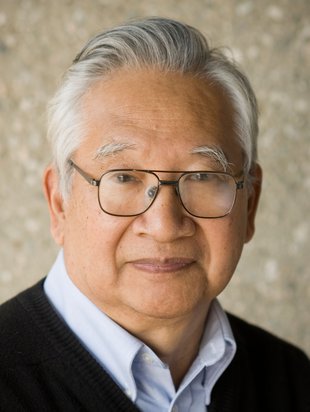 Hiroo Kanamori合作论文数Division of Geological and Planetary Sciences, California Institute of Technology7
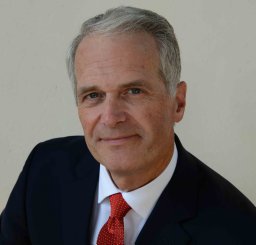 Kenneth W. Hudnut合作论文数US Geol Survey7
 Thomas H. Heaton (Thomas Heaton)合作论文数Division of Geological and Planetary Sciences, California Institute of Technology6Susan E. Hough (Susan Hough)合作论文数United States Geological Survey6
 Joann M. Stock合作论文数Division of Geological and Planetary Sciences, California Institute of Technology4
 David Wald合作论文数Department of the Interior, United States Geological Survey4Doug Given合作论文数4
 Susan E Hough合作论文数U. S. Geological Survey4J Mori合作论文数3
 Wenzheng Yang合作论文数China Seismological Bureau Center for Analysis and Prediction3
 Peter Shearer合作论文数Institute of Geophysics and Planetary Physics, Scripps Institution of Oceanography, University of California, San Diego3Margaret Hellweg合作论文数3A. Shakal合作论文数2Katrin Hafner合作论文数2
 Jim Mori合作论文数2
 Anne Lilje合作论文数Sandia National Laboratories, Albuquerque, NM, USA2
 Shengji Wei合作论文数Asian School of the Environment, Nanyang Technological University2
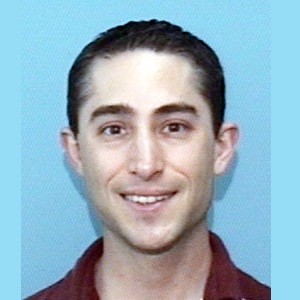 Aron Jeffrey Meltzner合作论文数Asian School of the Environment, Nanyang Technological University2
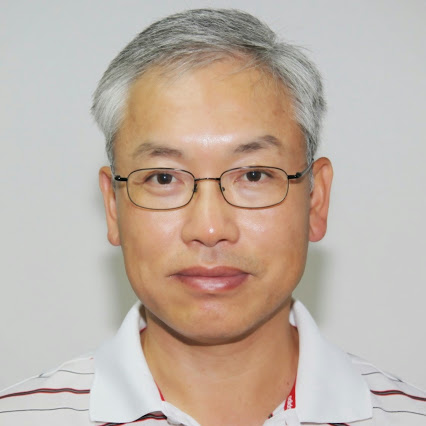 Lupei Zhu (朱露培)合作论文数Department of Earth and Atmospheric Sciences, School of Science and Engineering, Saint Louis University2Scott C Lindvall合作论文数2Kerry Sieh合作论文数2
 Brian P. Wernicke合作论文数Division of Geological and Planetary Sciences, California Institute of Technology2
 Philip James Maechling合作论文数Earthquake Center;University of Southern California;Earthquake Center, University of Southern California2Donna Eberhart-Phillips合作论文数2
 Alan Yong合作论文数United States Geological Survey2J. Treiman合作论文数2
 Robert W. Clayton合作论文数Geophysics, Division of Geological and Planetary Sciences, California Institute of Technology2J. Zachariasen合作论文数2Hong Kie Thio合作论文数2Suzanne C. Perry合作论文数1jerry treiman合作论文数1Patrick Small合作论文数1D.D. Given合作论文数1Maren Boese合作论文数1SF MCGILL合作论文数1Robert Busby合作论文数1Daniel J. Ponti合作论文数1shuching chen合作论文数1klaus stark合作论文数1Lisa A. Wald合作论文数1
 Edith Yu合作论文数1J. Antonio Vidal‐Villegas合作论文数1lucy jones合作论文数1
 James D. Goltz合作论文数1Stephen Meisenhelter合作论文数Geisel Sch Med, Hanover, NH 03755 USA1
 Nick Scheckel合作论文数Seismological Laboratory, Division of Geological and Planetary Sciences, California Institute of Technology1LiWen Zhang (张立文)合作论文数1




