Zeolitic imidazolate frameworks (ZIFs) are three-dimensional (3D) porous materials with only a few exceptions - ZIF-L, Zn2(benzimidazole)4, etc. Herein, we report the synthesis of a new layered ZIF, which we call ZIF-S. We use a surfactant (sodium dodecyl sulfate) as a structure-directing agent, analogous to the concept used in the synthesis of zeolites. The layers contain individual ZIF sheets intercalated by surfactants. Its ordered structure belongs to the tetragonal lattice with the P4̅21m space group. The unit cell parameters are a = b = 16.82 Å; c = 24.5 Å at room temperature. The layered material undergoes topotactic condensation and forms its parent material (ZIF-8 or ZIF-67, depending on the metal node) upon heating to or above 200 °C. ZIF-S layers could be obtained with a large lateral size and a high aspect ratio, which is ideal for the scalable preparation of gas-selective membranes, thanks to the presence of pore apertures suitable for the separation of small gas molecules. Fabrication of gas-selective membranes from a simple coating of ZIF-S is demonstrated.
Membrane-based gas separations at elevated temperatures (e.g., 300 °C) are limited by the availability of porous supports that combine thermal robustness, mechanical integrity, and low cost. Conventional ceramic supports suffer from brittleness and sealing challenges, while powder-derived sintered porous stainless-steel (SS) supports, although mechanically robust, are expensive and increase the capital cost of the membrane process. Here, we report a low-cost SS wire-mesh support that, through a novel pore-shrinkage protocol, is transformed into a distinct porous morphology comprising isolated micron-scale openings embedded within a smooth metallic surface. This morphology enables the formation of a nanostructured interlayer by deposition of multiwalled carbon nanotubes (MWCNTs), reducing the effective pore size to <100 nm while maintaining high gas permeance (>105 GPU) and thermal stability up to 400 °C. The resulting MWCNT/SS support enables the direct fabrication of ∼1 μm-thick zeolitic imidazolate framework (ZIF-8) membranes, which exhibit permselective H2 transport at 300 °C, among the highest reported values for thermally robust ZIF-8 membranes. Additionally, the membrane demonstrates stable operation under elevated-temperature ammonia exposure (up to 250 °C). Overall, this work introduces a low-cost metallic support architecture enabled by polishing-induced morphology transformation for high-temperature and aggressive gas separations.
Precise control over angstrom-scale pores in graphene remains a central challenge for exploiting its potential for gas separation. Most pore formation methods produce broad pore-size distributions with a long tail of nanometer-scale, nonselective pores. Here, we present a strategy based on simultaneous competitive growth and etching during chemical vapor deposition. By coupling CH4 as a carbon precursor with CO2 as a mild etchant, we establish a continuous kinetic regime in which pore expansion and shrinkage emerge from the same growth environment and are tuned bidirectionally by gas-phase composition. Carbon isotope labeling reveals that pore shrinkage proceeds via edge-mediated lattice reconstruction fueled exclusively by CH4, while CO2 acts solely as an etchant. This competitive growth-etching interplay enables the systematic contraction of nanometer-scale pores into angstrom-scale apertures. The resulting porous graphene exhibits remarkably enhanced molecular sieving behavior, providing a general framework for postsynthetic control of defect dimensions in two-dimensional materials.
Zero-dimensional pores in graphene hold strong promise for carbon capture, yet the role of pore-edge functional groups remains poorly understood. Using molecular dynamics simulations and potential-of-mean-force calculations, we show that pore-edge chemistry determines whether A & ring;-scale pores are selective. Oxygen-functionali zed pores (O-pores) exhibit highly selective CO2/O2 transport, whereas similarly sized hydrogen-terminated pores (H-pores) are non-selective. This difference arises from markedly stronger CO2-pore interactions in O-pores, where CO2 adsorbs at the pore mouth for up to a nanosecond, compared to residence times up to two orders of magnitude shorter in H-pores. We further develop a velocity-corrected transition-state-theory model that accurately predicts gas transport through both pore types by accounting for molecule-pore interactions at the transition state. These findings provide a robust framework for rational membrane design and highlight the benefits of oxidative pore-formation protocols for carbon-capture membranes.
Two-dimensional metal-organic frameworks (2D-MOFs) are promising for separations, sensing, and nano-optoelectronics. However, their integration with electron beam fabrication and imaging is limited by beam-induced structural damage. Here, we show that ligand-chemistry drives plane-specific electron-beam responses in two distinct 2D-MOFs with planar-porphyrinic-carboxylate and tetrahedral imidazolate coordination. Using low-dose serial electron diffraction at 300 kV, we quantify degradation pathways and critical doses for Zn-TCPP (porphyrinic-carboxylate) and Zn2(benzimidazolate)4. Zn-TCPP exhibits a two-stage evolution in which early ligand-assisted rearrangement transiently strengthens selected Bragg planes before the pristine unit cell collapses at higher cumulative dose. In contrast, Zn2(benzimidazolate)4 undergoes a direct transition to amorphization consistent with progressive Zn-N4 breakdown. The degradation mechanism, along with extracted ligand-resolved dose thresholds, practical windows for low-dose transmission electron microscopy, defect engineering, and electron-beam lithography (EBL), with conversions to standard exposure units, is provided. These results reframe the electron-beam from liability to design tool and low-dose characterization of 2D-MOFs.
Ultrathin metal‐organic framework membranes hold immense potential for challenging gas separations. In particular, Zn 2 (benzimidazole) 4 membranes hosting H 2 ‐sieving apertures have shown attractive H 2 /CO 2 separation performance. Nevertheless, the current synthesis routes for Zn 2 (benzimidazole) 4 face challenges that hinder the scalable fabrication of ultrathin MOF membranes. Here, a multicycle, short‐exposure growth strategy using ultradilute precursors is presented that hinders homogeneous nucleation and promotes uniform in‐plane heteroepitaxial growth on graphitic substrates. By reducing substrate roughness and optimizing multicycle deposition parameters, continuous high‐quality uniform 8–50 nm thick Zn 2 (benzimidazole) 4 films are achieved across a large‐area substrate. Time‐resolved dynamic light scattering and X‐ray photoelectron spectroscopy reveal a progressive reduction of grain‐boundary defects over successive cycles. These membranes deliver attractive H 2 /CO 2 selectivity and permeance at elevated temperature with a 100% success rate in fabricating selective membranes. This scalable approach provides a robust pathway to ultrathin, defect‐free MOF membranes for high‐performance gas separations.
Membrane-based carbon capture offers an energy-efficient and environmentally friendly alternative to conventional absorption-based processes, yet adoption remains limited by its performance with dilute CO 2 sources such as natural gas power plants. Here we present a techno-economic assessment of pyridinic-graphene membranes—porous graphene membranes hosting pyridinic nitrogen—that yield increasingly high CO 2 permeance and selectivity as CO 2 concentration in the feed decreases. This unique behaviour substantially reduces energy consumption, process footprint and capture costs, even when considering the non-ideal effects such as concentration polarization and pressure drops. Using uncertainty-aware cost modelling, including membrane cost, electricity prices, contingency factors and learning curves, we show that capture costs can reach US$50–100 per ton CO 2 for natural gas power plants and as low as US$25–50 per ton CO 2 for coal and cement plants, positioning this technology favourably against state-of-the-art capture processes. Our work bridges material innovation with process optimization, highlighting the role of advanced membrane materials and process design in cost-effective carbon capture for diverse industrial sectors.
Two-dimensional metal-organic frameworks (2D-MOFs) are promising for separations, sensing, and nano-optoelectronics. However, their integration with electron beam fabrication and imaging is limited by beam-induced structural damage. Here, we show that ligand chemistry governs non-monotonic, plane-specific electron beam responses in archetypal 2D-MOFs. Using low-dose serial electron diffraction at 300 kV, we quantify degradation pathways and critical doses for Zn-TCPP (porphyrinic carboxylate) and Zn 2 (benzimidazolate) 4 . Zn-TCPP exhibits a two-stage evolution in which early ligand-assisted rearrangement transiently strengthens selected Bragg planes before the pristine unit cell collapses at higher cumulative dose. In contrast, Zn 2 (benzimidazolate) 4 undergoes a direct transition to amorphization consistent with progressive Zn-N 4 breakdown. The extracted, ligand-resolved dose thresholds define practical windows for low-dose transmission electron microscopy, deterministic defect creation, and electron-beam lithography (EBL), with conversions to standard exposure units provided. These results reframe the electron beam from liability to design tool and supply quantitative guidelines for reliable patterning and characterization of 2D-MOFs.
We present CMesh, a polymer-free carbon nanotube (CNT) mesh scaffold for robust TEM specimen preparation of graphene and porous graphene. Fabricated by simple vacuum filtration, CMesh acts as a porous mechanical reinforcement layer during transfer, avoiding direct contact between graphene and a continuous sacrificial polymer support such as PMMA. Under the optimized condition using 0.5 mL of 0.05 mg/mL CNT stock dispersion, CMesh provides dense suspended pockets as TEM/STEM imaging windows while enabling transfer onto standard low-cost TEM grids. Fresh CMesh-supported pristine graphene shows a STEM-segmented cleanliness of 53 ± 6% without post-transfer cleaning. With CMesh reinforcement, pristine graphene and 2 s O2 plasma-treated porous graphene show high coverages of 99.4 ± 0.3% and 99.4 ± 0.2%, respectively, on standard 400-mesh Cu grids, reducing grid cost by ∼60-200-fold compared with specialized supports. The resulting specimens support atomic-resolution TEM/STEM imaging, remain structurally stable during in situ heating up to 900°C, and retain large-area integrity after approximately one year of storage.
Membranes with nanometre- and subnanometre-scale pores play a vital role in aqueous separations across applications ranging from desalination and wastewater reuse to resource recovery and green hydrogen production. Despite their widespread use, the molecular-level mechanisms that govern water and solute transport in these membranes remain inadequately understood. In this Perspective, we examine advances in membrane and nanochannel transport across macroscopic, microscopic and molecular scales to establish a unified mechanistic framework. We begin by analysing current macroscopic models, highlighting their simplifying assumptions and inherent limitations. We then explore insights from nano- and ångström-scale fluidic studies, revealing unconventional transport phenomena that are not captured by classical continuum theories. Next, we describe how molecular simulations offer atomistic resolution of transport processes, providing mechanistic insight into how water and ions traverse the dynamic, heterogeneous porous networks of real-world, state-of-the-art polymer membranes. Finally, we discuss how to integrate these molecular, microscopic and macroscopic scales to advance theoretical understanding and inform the rational design of next-generation membranes. We conclude by identifying key knowledge gaps and outlining emerging opportunities to bridge scales through advanced characterization techniques and multiscale modelling. This Perspective explores the multiscale transport mechanisms of water and solutes in desalination and ion selective membranes, offering mechanistic insights to guide the design of next-generation membranes and nanoporous systems for applications in water purification, separations, and energy technologies.
Abstract Carbon membranes yielding high selectivity as well as high permeance are attractive to advance the membrane-based gas separation. Herein, we report ultrathin carbon membranes (UCMs) which deliver enhanced gas separation performance through oxygen-modulated pyrolysis of poly(4-vinylpyridine) precursor. We show that O 2 in pyrolysis environment, transforms the otherwise uniform carbon network featuring a ~ 3.9 Å characteristic interlayer spacing into disrupted UCMs (d-UCMs). These d-UCMs possess a multimodal ultramicroporous structure characterized by distinct d-spacings of ~3.4 Å, 3.9 Å, and 5.5 Å. This optimized distribution of free volume in a 10-nm-thick membrane enables a record combination of H 2 permeance exceeding 10,000 gas permeation units (GPUs) and H 2 /N 2 mixture selectivity surpassing 200. Meanwhile, d-UCM exhibits physical and thermal stability, showing no aging over 7 days of elevated temperature permeance testing, which overcomes the common issue of rapid aging in carbon membranes. Mechanistic investigations reveal that O 2 pyrolysis environment selectively removes relatively weakly-bound carbon species, altering pyrolysis intermediates, resulting in a nitrogen-rich framework with disordered nanodomains and heterogeneous ultramicroporosity. This work advances the material chemistry of ultrathin carbon membranes, attractive for ultrafast and high-precision molecular-sieving for molecular separation.
Zeolitic imidazolate framework-67 (ZIF-67) is an important class of nanoporous materials for high-performance membranes for gas separation, offering uniform-sized gas-selective pores. However, the fabrication of high-quality sub-100-nm-thick ZIF-67 membranes, critical for high-performance separation, has remained elusive. Herein, we report a facile strategy to fabricate ∼20-nm-thick ZIF-67 membranes. We identify a simple and rapid route to prepare ∼1-nm-thick β-Co(OH)2 nanosheets as a precursor to ZIF-67. Highly dispersed β-Co(OH)2 nanosheets are synthesized via a one-pot reaction at room temperature in just 1 h using ultradilute cobalt and linker concentrations in water. The resulting high-aspect-ratio nanosheets yield compact coating on porous polymeric supports. Well-intergrown ZIF-67 membranes are prepared by thermal treatment of nanosheets in the presence of a linker and exhibit attractive hydrogen sieving performance at elevated temperatures (up to 250 °C). This approach provides a scalable and versatile platform for hydrogen separation for applications such as precombustion carbon capture.
Single-layer crystalline films are ideal separation membrane materials because their atomic thickness could yield the highest possible molecular flux once nanopores are generated. However, the development of single-layer membranes with well-defined pore structures remains elusive, which makes the realization of efficient molecular sieving and interpretation of molecular transport a difficult task. Herein, we report the fabrication of single-layer nanoporous hexagonal boron nitride (hBN) membranes that uniquely contain triangular nanopores with a high density (around 1012 pores per cm2). The hBN membranes exhibit a H2 permeance of 5.43 x 10⁻⁶ mol m-2 s-1 Pa- 1 with a H2/CH4 selectivity of 14.7; they also show a CO2 permeance of 1.37 x 10⁻⁶ mol m-2 s-1 Pa-1, with a CO2/N2 selectivity of 12.3. Importantly, we show that straightforward mathematical modeling can predict and describe the gas transport properties of the hBN, providing new insights into the molecular transport across atomically thin nanopores. The results gained from this study could significantly advance our understanding of molecular transport across hBN nanopores and may promote the development of hBN membranes to address critical separation issues.
Atomically thin graphene membranes with sub-1-nm pores show promise for ion/molecular separation, osmotic energy generation, and energy storage. Narrowing the pore size distribution and controlling the surface charge are essential to achieve these applications. However, nanoporous graphene membranes fabricated via conventional methods possess a broad pore size distribution and inadequately regulated surface charge, limiting their applications. Herein, we present a molecular anchoring approach for scalable synthesis of nanoporous graphene membranes via a bottom-up technique, aiming to narrow the pore size distribution without reducing the pore density while simultaneously adjusting the charge properties of nanopores. By selecting suitable anchoring molecules, the custom-tailored pore size distribution and chemical functionality of nanoporous graphene membranes can be achieved. Leveraging the steric restriction effect, anchoring monomers selectively traverse larger nanopores to form ion-selective plugs, effectively repairing these nanopores. The centimeter-scale nanoporous graphene membrane with an ion-selective plug achieves high separation selectivity (K+/Na+=20, K+/Mg2+=330). Theoretical simulations indicate that a smaller pore size, narrow pore size distribution, and positive charge result in a larger energy barrier difference, leading to ultrahigh metal ion selectivity. Furthermore, in treating lithium battery leaching solutions, Li+/divalent ions selectivity exceeds 900. These findings provide a way for designing graphene-based membranes.
The synthesis of MOFs in a two-dimensional (2D) film morphology is attractive for several applications including molecular and ionic separation. However, 2D MOFs have only been reported from structures that crystallize in lamellar morphology, where layers are held together by van der Waals (vdW) interaction. By comparison, UiO-66, one of the most studied MOFs because of its exceptional chemical stability, has only been reported in three-dimensional (3D) morphology. 2D UiO-66 is challenging to obtain given the robust isotropic bonds in its cubic crystal structure. Herein, we report the first synthesis of non-vdW 2D UiO-66-NH2 by developing crystal growth conditions that promote in-plane growth over out-of-plane growth. Continuous, oriented UiO-66-NH2 film with thickness tunable in the range of 0.5 to 2 unit cells could be obtained by sustainable, scalable chemistry, which yielded attractive ion-ion selectivity. The preparation of non-vdW 2D MOF is highly attractive to advance the field of MOF films for diverse applications.
Graphene with angstrom‐scale, zero‐dimensional pores offers a promising platform for gas separations due to its exceptional permeance and potential for molecular sieving. Herein, we demonstrate a dynamic strategy to tune N‐functionalized graphene pores, achieving selective oxygen (O 2 ) separation from nitrogen (N 2 ), a particularly challenging separation due to their similar kinetic diameters. We exploit the heterogeneity of functional groups at the pore edge to tune the pore limiting diameter (PLD). By facile thermal annealing, we convert primary amine groups at the pore edge to lattice‐incorporated nitrogen. Temperature‐dependent extent of conversion allows to tune the steric hindrance from amine‐CO 2 complex, and therefore, PLD for O 2 /N 2 separation in favor of O 2 permeation. The resulting membranes exhibit attractive O 2 /N 2 separation performance, with O 2 permeance near 2500 GPU with O 2 /N 2 selectivity above 10, significantly outperforming the state‐of‐the‐art membranes. This is attractive for energy‐efficient and modular production of O 2 from air and can cut down fuel consumption in natural gas‐fired furnaces in the chemical industry by 60%.
Tuning the reactivity of graphene enables molecular‐level engineering of the lattice, achieving desired chemical and structural properties through functionalization, doping, and etching. Atom‐thin graphene film hosting Å‐scale pores, with capability to differentiate molecules with sub‐Å resolution, is ideal to advance performance for challenging molecular separation. Control over pore formation is needed to improve pore size distribution (PSD), in particular, to increase the percentage of molecular selective pores. An attractive approach is to modulate the energy barriers involved in the pore formation to control PSD. In this study, it is shown that electron‐hole puddles induced in graphene by the underlying Cu substrate increase its reactivity toward O 3 . These puddles promote electron transfer during O 3 chemisorption and reduce the energy barrier for lattice gasification. This strategy is implemented to increase the density of molecular‐selective pores by expanding small non‐permeable pores. The resulting porous graphene membranes demonstrate highly promising separation performance for the CO 2 /N 2 gas pair. This approach provides a new pathway to finely control pore formation for advanced applications in molecular separation and beyond.
Direct Air Capture (DAC) is a crucial technology for climate change mitigation. Adsorption-based DAC has been demonstrated at various scales, but suffers from sorbent degradation, high energy consumption and high costs. We propose a hybrid adsorption-membrane process where adsorption and membranes operate in a loop. The CO2-enriched stream produced by adsorption is further purified by membranes, and the almost pure N2 retentate from membranes is used as desorption purge. Therefore, the process integration allows regenerating the sorbent with N2 purge, a regeneration mode that is well-known to improve sorbent stability but that has never been considered feasible for real-world applications because of the high costs and the low CO2 purity produced. By adding a downstream membrane process based on pyridinic-graphene membranes, we achieve high CO2 purity, and we abate the costs for the purge by recirculating the retentate. The optimized energy consumption of the hybrid process is comparable with those of stand-alone adsorption technologies within the same productivity range. By considering an extended lifetime in the case of N2 purge, based on experimental data from the literature, we demonstrate the economic competitiveness of the hybrid process and its robustness towards multiple uncertainties in costs and grid emission intensity.
 Shiqi Huang合作论文数27
 Villalobos Vazquez de la Parra Luis Francisco合作论文数Lab Adv Separat, Ecole Polytech Fed Lausanne27
 Michael Tsapatsis合作论文数Department of Chemical and Biomolecular Engineering, Whiting School of Engineering, Johns Hopkins University23
 Mostapha Dakhchoune合作论文数EPFL, LAS, CH-1951 Sion, Switzerland17Heng-Yu Chi合作论文数Institute of chemical sciences and engineering, Ecole Polytechnique Federale de Lausanne16
 Mohammad Tohidi Vahdat合作论文数Natl Ctr Computat Design & Discovery Novel Mat Ma, Theory & Simulat Mat THEOS, Ecole Polytech Fed Lausanne EPFL15Kuang-Jung Hsu合作论文数Lab Adv Separat LAS, Ecole Polytech Fed Lausanne EPFL15
 Guangwei He (何光伟)合作论文数Department of Chemical Engineering at MIT15
 Shaoxian Li合作论文数14
 Luc Bondaz合作论文数12
 Marina Micari合作论文数Laboratory of Advanced Separations (LAS), EPFL12Mojtaba Rezaei合作论文数11Berna Topuz合作论文数Chemical Engineering Department, İzmir Institute of Technology11
 Deepu J. Babu合作论文数Department of Metallurgical and Materials Engineering, Indian Institute of Technology Madras11Jian Hao合作论文数10
 Mounir Mensi合作论文数10Cédric Van Goethem合作论文数Membrane Technology Group – CMACS, KU Leuven8
 Narasimharao Katabathini合作论文数Faculty of Science, King Abdulaziz University8
 Rangnekar Neel合作论文数Department of Chemical Engineering and Materials Science, University of Minnesota8
 Michael S. Strano合作论文数Department of Chemical Engineering, School of Engineering, Massachusetts Institute of Technology8
 Sulaiman Nasir Basahel合作论文数8
 Shaeel Al-Thabaiti合作论文数Department of Chemistry, Faculty of Science, King Abdulaziz University8Wan-Chi Lee合作论文数Lab Adv Separat LAS, Ecole Polytech Fed Lausanne EPFL7
 Nicola Marzari合作论文数Cavendish Laboratory, Department of Physics, University of Cambridge;École Polytechnique Fédérale de Lausanne7
 Kangning Zhao (赵康宁)合作论文数State Key Lab Adv Technol Mat Synth & Proc, Wuhan Univ Technol7
 Lorraine F Francis合作论文数Department of Chemical Engineering and Materials Science, College of Science and Engineering, University of Minnesota7
 Liu Qi合作论文数7
 Shuqing Song合作论文数Collaborative Innovation Center of Chemical Science and Engineering (Tianjin), Tianjin 300072 China6
 Dandan Xu合作论文数6
 Meera Shete合作论文数Department of Chemical Engineering and Materials Science, University of Minnesota6
 Emad Oveisi合作论文数Interdisciplinary Center for Electron Microscopy, Ecole Polytechnique Fédérale de Lausanne6
 Benjamin L. Stottrup合作论文数Departments of Chemistry and Physics, University of Washington6Xuekui Duan合作论文数Dept Chem Engn & Mat Sci, Univ Minnesota5Kim Donghun合作论文数5
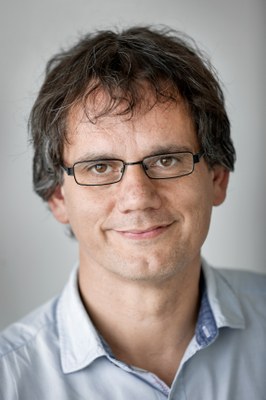 Ivo Vankelecom合作论文数Department of Microbial and Molecular Systems, Catholic University of Leuven;Faculty of Bio-Science Engineering, Catholic University of Leuven5
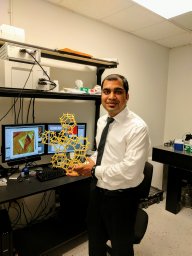 Kumar Manjesh合作论文数5Qi Liu (刘琪)合作论文数Soochow College, Soochow University5
 Jeffrey D. Rimer合作论文数William A. Brookshire Department of Chemical and Biomolecular Engineering, Cullen College of Engineering, University of Houston5
 Andre Mkhoyan合作论文数Department of Chemical Engineering and Materials Science, College of Science and Engineering, University of Minnesota5Evguenia Karapetrova合作论文数5
 Anshaj Ronghe合作论文数Dept Chem Engn, Indian Inst Sci4Yueqing Shen合作论文数4
 Zongyao Zhou (周宗尧)合作论文数School of Environment, Harbin Institute of Technology4
 Ranadip Goswami合作论文数Acad Sci & Innovat Res AcSIR4Xueyi Zhang合作论文数4
 Prashant Kumar合作论文数Institute for Sustainability, University of Surrey;Global Centre for Clean Air Research, University of Surrey;Faculty of Engineering and Physical Sciences, University of Surrey4
 Yu Han (韩宇)合作论文数South China Advanced Institute for Soft Matter Science and Technology, South China University of Technology4
 Davide Campi合作论文数Dipartimento di Scienza dei Materiali, Università di Milano-Bicocca4Miao Yu-Run合作论文数4




