Events with no charged particles produced between the two leading jets are studied in proton-proton collisions at
Data taken by the DELPHI experiment at centre-of-mass energies of 183 GeV and 189 GeV with a total integrated luminosity of 212 pb^{-1} have been used to search for the supersymmetric partners of the electrons, muons, and taus in the context of the Minimal Supersymmetric Standard Model (MSSM). The decay topologies searched for were the direct decay ({\tilde \ell} -> \ell {\tilde \chi_1^0}), producing acoplanar lepton pairs plus missing energy, and the cascade decay ({\tilde \ell} -> \ell {\tilde \chi_2^0} > \ell \gamma {\tilde \chi_1^0}), producing acoplanar lepton and photon pairs plus missing energy. The observed number of events is in agreement with Standard Model predictions. The 95% CL excluded mass limits for selectrons, smuons and staus are m_{\tilde {e}} \leq 87 GeV/c^2, m_{\tilde {\mu}} \leq 80 GeV/c^2 and m_{\tilde {\tau}} \leq 75 GeV/c^2, respectively, for values of \mu=-200 GeV/c^2 and tan(beta)=1.5.
Events with no charged particles produced between the two leading jets are studied in proton-proton collisions at . The jets were required to have transverse momentum and pseudorapidity , and to have values of with opposite signs. The data used for this study were collected with the CMS detector during low-luminosity running at the LHC, and correspond to an integrated luminosity of 8. Events with no charged particles with in the interval between the jets are observed in excess of calculations that assume no color-singlet exchange. The fraction of events with such a rapidity gap, amounting to 0.5–1% of the selected dijet sample, is measured as a function of the of the second-leading jet and of the rapidity separation between the jets. The data are compared to previous measurements at the Tevatron, and to perturbative quantum chromodynamics calculations based on the Balitsky–Fadin–Kuraev–Lipatov evolution equations, including different models of the non-perturbative gap survival probability.
DELPHI results are presented on the inclusive production of the neutral mesons , f0(980), f2(1270), K 0 2 (1430) and f 0 2(1525) in hadronic Z 0 decays. They are based on about 2 million multihadronic events collected in 1994 and 1995, using the particle identi cation capabilities of the DELPHI Ring Imaging Cherenkov detectors and measured ionization losses in the Time Projection Chamber. The total production rates per hadronic Z decay have been determined to be: 1:19 0:10 for ; 0:164 0:021 for f0(980); 0:214 0:038 for f2(1270); 0:073 0:023 for K 0 2 (1430); and 0:012 0:006 for f 0 2(1525). The total production rates for all mesons and di erential cross-sections for the , f0(980) and f2(1270) are compared with the results of other LEP experiments and with models. (Accepted by Physics Letters B)
Results are reported from a search for physics beyond the standard model in final states with at least three charged leptons, in any combination of electrons or muons. The data sample corresponds to an integrated luminosity of 2.3\(\,\text {fb}^{-1}\) of proton–proton collisions at \(\sqrt{s} =13\) \(\,\text {TeV}\), recorded by the CMS experiment at the LHC in 2015. Two jets are required in each event, providing good sensitivity to strong production of gluinos and squarks. The search regions, sensitive to a range of different new physics scenarios, are defined using the number of jets tagged as originating from bottom quarks, the sum of the magnitudes of the transverse momenta of the jets, the imbalance in the overall transverse momentum in the event, and the invariant mass of opposite-sign, same-flavor lepton pairs. The event yields observed in data are consistent with the expected background contributions from standard model processes. These results are used to derive limits in terms of R-parity conserving simplified models of supersymmetry that describe strong production of gluinos and squarks. Model-independent limits are presented to facilitate the reinterpretation of the results in a broad range of scenarios for physics beyond the standard model.
We report a Dalitz plot analysis of charmless hadronic decays of charged $B$ mesons to the final state $K_{\rm S}^{0}\pi^{+}\pi^{0}$ using the full BaBar dataset of $470.9\pm2.8$ million $B\bar{B}$ events collected at the $\Upsilon(4S)$ resonance. We measure the overall branching fraction and $CP$ asymmetry to be ${\cal B}\left(B^{+}\to K^{0}\pi^{+}\pi^{0}\right) = \left(45.9 \pm 2.6 \pm 3.0^{+8.6}_{-0.0}\right)\times10^{-6}$ and $A_{CP}\left(B^{+}\to K^{0}\pi^{+}\pi^{0}\right) = 0.07 \pm 0.05 \pm 0.03^{+0.02}_{-0.03}$, where the uncertainties are statistical, systematic, and due to the signal model, respectively. This is the first measurement of the branching fraction for $B^{+} \to K^{0}\pi^{+}\pi^{0}$. We find first evidence of a $CP$ asymmetry in $B^{+}\to K^{*}(892)^{+}\pi^{0}$ decays: $A_{CP}\left(B^{+}\to K^{*}(892)^{+}\pi^{0}\right)=-0.52 \pm 0.14 \pm 0.04^{+0.04}_{-0.02}$. The significance of this asymmetry, including systematic and model uncertainties, is $3.4$ standard deviations. We also measure the branching fractions and $CP$ asymmetries for three other intermediate decay modes.
A search is presented for new massive resonances decaying to WW, WZ or ZZ bosons in ℓν qq and qqqq final states. Results are based on data corresponding to an integrated luminosity of 2.3-2.7 fb −1 recorded in proton-proton collisions at √(s)=13 TeV with the CMS detector at the LHC. Decays of spin-1 and spin-2 resonances into two vector bosons are sought in the mass range 0.6-4.0 TeV. No significant excess over the standard model background is observed. Combining the results of the ℓν qq and qqqq final states, cross section and mass exclusion limits are set for models that predict heavy spin-1 and spin-2 resonances. This is the first search for a narrow-width spin-2 resonance at √(s)=13 TeV.
Results are presented from a search for the electroweak production of supersymmetric particles in pp collisions in final states with two tau leptons. The data sample corresponds to an integrated luminosity between 18.1 fb 1 and 19.6 fb 1 depending on the final state of tau lepton decays, at √s = 8 TeV , collected by the CMS experiment at the LHC. The observed event yields in the signal regions are consistent with the expected standard model backgrounds. The results are interpreted using simplified models describing the pair production and decays of charginos. For models describing the pair production of the lightest chargino, exclusion regions are obtained in the plane of chargino mass vs. neutralino mass under the following assumptions: the chargino decays into third-generation leptons, which are taken to be the lightest leptons, and the slepton masses lie midway between those of the chargino and the neutralino. Chargino masses below 420 GeV are excluded at a 95% confidence level in the limit of a massless neutralino, and for neutralino masses up to 100 GeV, chargino masses up to 325 GeV are excluded at 95% confidence level.
we acknowledge the enduring support for the construction and operation of the LHC and the CMS detector provided by the following funding agencies: BMWFW and FWF (Austria); FNRS and FWO (Belgium); CNPq, CAPES, FAPERJ, and FAPESP (Brazil); MES (Bulgaria); CERN; CAS, MoST, and NSFC (China); COLCIENCIAS (Colombia); MSES and CSF (Croatia); RPF (Cyprus); SENESCYT (Ecuador); MoER, ERC IUT, and ERDF (Estonia); Academy of Finland, MEC, and HIP (Finland); CEA and CNRS/IN2P3 (France); BMBF, DFG, and HGF (Germany); GSRT (Greece); OTKA and NIH (Hungary); DAE and DST (India); IPM (Iran); SFI (Ireland); INFN (Italy); MSIP and NRF (Republic of Korea); LAS (Lithuania); MOE and UM (Malaysia); BUAP, CINVESTAV, CONACYT, LNS, SEP, and UASLP-FAI (Mexico); MBIE (New Zealand); PAEC (Pakistan); MSHE and NSC (Poland); FCT (Portugal); JINR (Dubna); MON, RosAtom, RAS, and RFBR (Russia); MESTD (Serbia); SEIDI and CPAN (Spain); Swiss Funding Agencies (Switzerland); MST (Taipei); ThEPCenter, IPST, STAR, and NSTDA (Thailand); TUBITAK and TAEK (Turkey); NASU and SFFR (Ukraine); STFC (United Kingdom); DOE and NSF (USA). Individuals have received support from the Marie-Curie program and the European Research Council and EPLANET (European Union); the Leventis Foundation; the A. P. Sloan Foundation; the Alexander von Humboldt Foundation; the Belgian Federal Science Policy Office; the Fonds pour la Formation a la Recherche dans l’Industrie et dans l’Agriculture (FRIA-Belgium); the Agentschap voor Innovatie door Wetenschap en Technologie (IWT-Belgium); the Ministry of Education, Youth and Sports (MEYS) of the Czech Republic; the Council of Science and Industrial Research, India; the HOMING PLUS program of the Foundation for Polish Science, cofinanced by European Union, Regional Development Fund, the Mobility Plus program of the Ministry of Science and Higher Education, the National Science Center NCN(Poland), Contracts Harmonia 2014/ 14/M/ST2/00428, Opus 2013/11/B/ST2/04202, 2014/13/ B/ST2/02543 and 2014/15/B/ST2/03998, Sonata-bis 2012/ 07/E/ST2/01406; the Thalis and Aristeia programs cofinanced by EU-ESF and the Greek NSRF; the National Priorities Research Program by Qatar National Research Fund; the Programa Clarin-COFUND del Principado de Asturias; the Rachadapisek Sompot Fund for Postdoctoral Fellowship, Chulalongkorn University and the Chulalongkorn Academic into Its 2nd Century Project Advancement Project (Thailand); and the Welch Foundation, Contract No. C-1845.
A search for new particles has been conducted using events with two high transverse momentum (pt) tau leptons that decay hadronically, at least two high-pt jets, and missing transverse energy from the tau lepton decays. The analysis is performed using data from proton-proton collisions, collected by the CMS experiment in 2015 at sqrt(s) = 13 TeV, corresponding to an integrated luminosity of 2.1 inverse femtobarns. The results are interpreted in two physics models. The first model involves heavy right-handed neutrinos, N[l] (l = e, mu, tau), and right-handed charged bosons, W[R], arising in a left-right symmetric extension of the standard model. Masses of the W[R] boson below 2.35 (1.63) TeV are excluded at 95% confidence level, assuming the N[tau] mass is 0.8 (0.2) times the mass of the W[R] boson and that only the N[tau] flavor contributes to the W[R] decay width. In the second model, pair production of third-generation scalar leptoquarks that decay into tau tau bb is considered. Third-generation scalar leptoquarks with masses below 740 GeV are excluded, assuming a 100% branching fraction for the leptoquark decay to a tau lepton and a bottom quark. This is the first search at hadron colliders for the third-generation Majorana neutrino, as well as the first search for third-generation leptoquarks in the final state with a pair of hadronically decaying tau leptons and jets.
A measurement of electroweak-induced production of Wγ and two jets is performed, where the W boson decays leptonically. The data used in the analysis correspond to an integrated luminosity of 19.7 fb −1 collected by the CMS experiment in √(s)=8 TeV proton-proton collisions produced at the LHC. Candidate events are selected with exactly one muon or electron, missing transverse momentum, one photon, and two jets with large rapidity separation. An excess over the hypothesis of the standard model without electroweak production of Wγ with two jets is observed with a significance of 2.7 standard deviations. The cross section measured in the fiducial region is 10 . 8 ± 4 . 1(stat) ± 3 . 4(syst) ± 0 . 3(lumi) fb, which is consistent with the standard model electroweak prediction. The total cross section for Wγ in association with two jets in the same fiducial region is measured to be 23 . 2 ± 4 . 3(stat) ± 1 . 7(syst) ± 0 . 6(lumi) fb, which is consistent with the standard model prediction from the combination of electroweak and quantum chromodynamics-induced processes. No deviations are observed from the standard model predictions and experimental limits on anomalous quartic gauge couplings f M ,0−7 / Λ 4 , f T ,0−2 / Λ 4 , and f T ,5−7 / Λ 4 are set at 95
Pair production of Y(1S) mesons is observed at the LHC in proton-proton collisions at √(s)=8 TeV by the CMS experiment in a data sample corresponding to an integrated luminosity of 20.7 fb −1 . Both Y(1S) candidates are fully reconstructed via their decays to μ + μ − . The fiducial acceptance region is defined by an absolute Y(1S) rapidity smaller than 2.0. The fiducial cross section for the production of Y(1S) pairs, assuming that both mesons decay isotropically, is measured to be 68.8±12.7 (stat)±7.4 (syst)±2.8 ( ℬ ) pb, where the third uncertainty comes from the uncertainty in the branching fraction of Y(1S) decays to μ + μ − . Assuming instead that the Y(1S) mesons are produced with different polarizations leads to variations in the measured cross section in the range from −38
We report on measurements of the decays of $\overline{B}$ mesons into the semileptonic final states $\overline{B} \to D^{(*)} \pi^+\pi^- \ell^-\overline{\nu}$, where $D^{(*)}$ represents a $D$ or $D^*$ meson and $\ell^-$ is an electron or a muon. These measurements are based on $471\times 10^6$ $B\overline{B}$ pairs recorded with the $BABAR$ detector at the SLAC asymmetric $B$ Factory PEP-II. We determine the branching fraction ratios $R^{(*)}_{\pi^+\pi^-} = \mathcal{B}(\overline{B} \to D^{(*)} \pi^+\pi^- \ell^- \overline{\nu})/\mathcal{B}(\overline{B} \to D^{(*)} \ell^-\overline{\nu})$ using events in which the second $B$ meson is fully reconstructed. We find $R_{\pi^+\pi^-} = 0.067 \pm 0.010 \pm 0.008$ and $R^*_{\pi^+\pi^-} = 0.019 \pm 0.005 \pm 0.004$, where the first uncertainty is statistical and the second is systematic. Based on these results, we estimate that $\overline{B} \to D^{(*)}\pi\pi\ell^-\overline{\nu}$ decays, where $\pi$ denotes both a $\pi^\pm$ and $\pi^0$ meson, account for up to half the difference between the measured inclusive semileptonic branching fraction to charm hadrons and the corresponding sum of previously measured exclusive branching fractions.
We study the lepton forward-backward asymmetry AFB and the longitudinal K* polarization FL, as well as an observable P2 derived from them, in the rare decays B->K*l+l-, where l+l- is either e+e- or mu+mu-, using the full sample of 471 million BBbar events collected at the Upsilon(4S) resonance with the Babar detector at the PEP-II e+e- collider. We separately fit and report results for the B+->K*+l+l- and B0->K*0l+l- final states, as well as their combination B->K*l+l-, in five disjoint dilepton mass-squared bins. An angular analysis of B+->K*+l+l- decays is presented here for the first time.
We measure the time-dependent $CP$ asymmetry in the radiative-penguin decay ${B}^{0}\ensuremath{\rightarrow}{K}_{S}^{0}{\ensuremath{\pi}}^{\ensuremath{-}}{\ensuremath{\pi}}^{+}\ensuremath{\gamma}$, using a sample of $471\ifmmode\times\else\texttimes\fi{}{10}^{6}$ $\mathrm{\ensuremath{\Upsilon}}(4S)\ensuremath{\rightarrow}B\overline{B}$ events recorded with the BABAR detector at the PEP-II ${e}^{+}{e}^{\ensuremath{-}}$ storage ring at SLAC. Using events with ${m}_{K\ensuremath{\pi}\ensuremath{\pi}}<1.8\text{ }\text{ }\mathrm{GeV}/{c}^{2}$, we measure the branching fractions of ${B}^{+}\ensuremath{\rightarrow}{K}^{+}{\ensuremath{\pi}}^{\ensuremath{-}}{\ensuremath{\pi}}^{+}\ensuremath{\gamma}$ and ${B}^{0}\ensuremath{\rightarrow}{K}^{0}{\ensuremath{\pi}}^{\ensuremath{-}}{\ensuremath{\pi}}^{+}\ensuremath{\gamma}$, the branching fractions of the kaonic resonances decaying to ${K}^{+}{\ensuremath{\pi}}^{\ensuremath{-}}{\ensuremath{\pi}}^{+}$, as well as the overall branching fractions of the ${B}^{+}\ensuremath{\rightarrow}{\ensuremath{\rho}}^{0}{K}^{+}\ensuremath{\gamma}$, ${B}^{+}\ensuremath{\rightarrow}{K}^{*0}{\ensuremath{\pi}}^{+}\ensuremath{\gamma}$ and $S$-wave ${B}^{+}\ensuremath{\rightarrow}(K\ensuremath{\pi}{)}_{0}^{*0}{\ensuremath{\pi}}^{+}\ensuremath{\gamma}$ components. For events from the $\ensuremath{\rho}$ mass band, we measure the $CP$-violating parameters ${\mathcal{S}}_{{K}_{S}^{0}{\ensuremath{\pi}}^{+}{\ensuremath{\pi}}^{\ensuremath{-}}\ensuremath{\gamma}}=0.14\ifmmode\pm\else\textpm\fi{}0.25\ifmmode\pm\else\textpm\fi{}0.03$ and ${\mathcal{C}}_{{K}_{S}^{0}{\ensuremath{\pi}}^{+}{\ensuremath{\pi}}^{\ensuremath{-}}\ensuremath{\gamma}}=\ensuremath{-}0.39\ifmmode\pm\else\textpm\fi{}0.2{0}_{\ensuremath{-}0.02}^{+0.03}$, where the first uncertainties are statistical and the second are systematic. We extract from this measurement the time-dependent $CP$ asymmetry related to the $CP$ eigenstate ${\ensuremath{\rho}}^{0}{K}_{S}^{0}$ and obtain ${\mathcal{S}}_{{K}_{S}^{0}\ensuremath{\rho}\ensuremath{\gamma}}=\ensuremath{-}0.18\ifmmode\pm\else\textpm\fi{}0.3{2}_{\ensuremath{-}0.05}^{+0.06}$, which provides information on the photon polarization in the underlying $b\ensuremath{\rightarrow}s\ensuremath{\gamma}$ transition.
 Gilbert Grosdidier合作论文数Laboratoire de l'Accélérateur Linéaire, Institut National de Physique Nucléaire et de Physique des Particules1131R. Contri合作论文数1103Martino Margoni合作论文数Department of Physics and Astronomy, Università degli Studi di Padova1039
 Bjarne Sandvik Stugu合作论文数Department of Physics and Technology University of Bergen1012
 Gerald Eigen合作论文数Department of Physics and Technology, University of Bergen1009Wt Meyer合作论文数1002H. B. Crawley合作论文数976
 David Leith合作论文数Stanford Linear Accelerator Center972F. Simonetto合作论文数970J. Chauveau合作论文数941
 Tim Adye合作论文数Particle Physics Department, Rutherford Appleton Laboratory929Serednyakov Sergey Ivanovich合作论文数Budker Institute of Nuclear Physics, Siberian Division, Russian Academy of Sciences915
 j a mckenna合作论文数University of British Columbia914Ap Onuchin合作论文数908J. R. Fry合作论文数905L. Piemontese合作论文数899
 Gr Bonneaud合作论文数University of Paris896
 Lorenzo Vitale合作论文数Department of Engineering and Architecture, University of Trieste;Sezione di Trieste, INFN;Dipartimento di Fisica, University of Trieste896Am Eisner合作论文数894
 Claudio Campagnari合作论文数Physics Department, University of California Santa Barbara;CERN894
 Lucien Cremaldi合作论文数Department of Physics and Astronomy, University of Mississippi893G. Finocchiaro合作论文数893Gp Wormser合作论文数893
 James Cochran合作论文数Department of Physics and Astronomy, College of Liberal Arts and Sciences, Iowa State University888
 Eli Rosenberg合作论文数Department of Physics and Astronomy, Iowa State University888
 David Hitlin合作论文数Division of Physics Mathematics and Astronomy, California Institute of Technology888
 Frank C. Porter合作论文数The Division of Physics, Mathematics and Astronomy, California Institute of Technology887
 A. V. Gritsan合作论文数Johns Hopkins University886George Lafferty合作论文数School of Physics and Astronomy, The University of Manchester882
 Terry L. Schalk合作论文数Division of Physical & Biological Sciences, Department of Physics, University of California, Santa Cruz;Santa Cruz Institute for Particle Physics, University of California, Santa Cruz881
 Francesca Di Lodovico合作论文数Department of Physics, Faculty of Natural, Mathematical & Engineering Sciences, King’s College London881
 Bill Lockman合作论文数Santa Cruz Institute for Particle Physics, Department of Physics, University of California, Santa Cruz879J. M. Losecco合作论文数878G. Lynch合作论文数Lawrence Berkeley National Laboratory875V. Lepeltier合作论文数872Erwin Gabathuler合作论文数University of Liverpool869
 Masahiro Morii合作论文数Department of Physics, Harvard University869T. S. Mattison合作论文数868P. M. Patel合作论文数868Ve Blinov合作论文数863
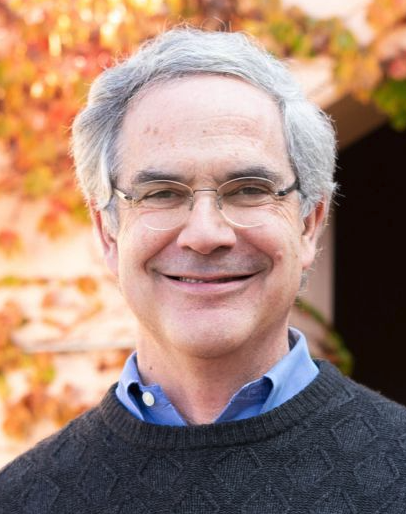 Jeffrey D. Richman合作论文数Physics Department, University of California, Santa Barbara862J. D. Lange合作论文数862
 Dmytro Kovalskyi合作论文数Massachusetts Institute of Technology861
 Rolf Dubitzky合作论文数CARIAD860
 Roger Barlow合作论文数School of Computing and Engineering, University of Huddersfield859
 Concezio Bozzi合作论文数Istituto Nazionale di Fisica Nucleare Sezione di Ferrara854
 Blair Ratcliff合作论文数SLAC National Accelerator Laboratory;Stanford University852
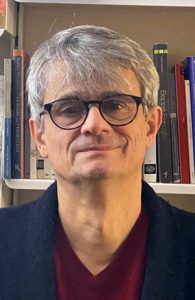 Achille Stocchi合作论文数Irène Joliot-Curie Laboratory, CNRS851H. Briand合作论文数851




