Data taken by the DELPHI experiment at centre-of-mass energies of 183 GeV and 189 GeV with a total integrated luminosity of 212 pb^{-1} have been used to search for the supersymmetric partners of the electrons, muons, and taus in the context of the Minimal Supersymmetric Standard Model (MSSM). The decay topologies searched for were the direct decay ({\tilde \ell} -> \ell {\tilde \chi_1^0}), producing acoplanar lepton pairs plus missing energy, and the cascade decay ({\tilde \ell} -> \ell {\tilde \chi_2^0} > \ell \gamma {\tilde \chi_1^0}), producing acoplanar lepton and photon pairs plus missing energy. The observed number of events is in agreement with Standard Model predictions. The 95% CL excluded mass limits for selectrons, smuons and staus are m_{\tilde {e}} \leq 87 GeV/c^2, m_{\tilde {\mu}} \leq 80 GeV/c^2 and m_{\tilde {\tau}} \leq 75 GeV/c^2, respectively, for values of \mu=-200 GeV/c^2 and tan(beta)=1.5.
DELPHI results are presented on the inclusive production of the neutral mesons , f0(980), f2(1270), K 0 2 (1430) and f 0 2(1525) in hadronic Z 0 decays. They are based on about 2 million multihadronic events collected in 1994 and 1995, using the particle identi cation capabilities of the DELPHI Ring Imaging Cherenkov detectors and measured ionization losses in the Time Projection Chamber. The total production rates per hadronic Z decay have been determined to be: 1:19 0:10 for ; 0:164 0:021 for f0(980); 0:214 0:038 for f2(1270); 0:073 0:023 for K 0 2 (1430); and 0:012 0:006 for f 0 2(1525). The total production rates for all mesons and di erential cross-sections for the , f0(980) and f2(1270) are compared with the results of other LEP experiments and with models. (Accepted by Physics Letters B)
We have observed exclusive production of the exotic $X(3872)$ hadron in the reaction $\mu^+~N \rightarrow \mu^+ (J\!/\!\psi\pi^+\pi^-)\pi^{\pm}~N'$ using COMPASS data collected with incoming muons of 160~GeV/$c$ and 200~GeV/$c$ momentum. The statistical significance of the $X(3872)$ signal is 6$\sigma$. The shape of the two-pion mass distribution shows disagreement with previous observations. The product of cross section and branching fraction of the $X(3872)$ decay into $J\!/\!\psi\pi\pi$ is determined to be 71$\pm$28(stat)$\pm$39(syst)~pb.
J. P. Lees, V. Poireau, V. Tisserand, E. Grauges, A. Palano, G. Eigen, B. Stugu, D. N. Brown, L. T. Kerth, Yu. G. Kolomensky, M. J. Lee, G. Lynch, H. Koch, T. Schroeder, C. Hearty, T. S. Mattison, J. A. McKenna, R. Y. So, A. Khan, V. E. Blinov, A. R. Buzykaev, V. P. Druzhinin, V. B. Golubev, E. A. Kravchenko, A. P. Onuchin, S. I. Serednyakov, Yu. I. Skovpen, E. P. Solodov, K. Yu. Todyshev, A. N. Yushkov, D. Kirkby, A. J. Lankford, M. Mandelkern, B. Dey, J. W. Gary, O. Long, G. M. Vitug, C. Campagnari, M. Franco Sevilla, T. M. Hong, D. Kovalskyi, J. D. Richman, C. A. West, A. M. Eisner, W. S. Lockman, B. A. Schumm, A. Seiden, D. S. Chao, C. H. Cheng, B. Echenard, K. T. Flood, D. G. Hitlin, P. Ongmongkolkul, F. C. Porter, R. Andreassen, Z. Huard, B. T. Meadows, B. G. Pushpawela, M. D. Sokoloff, L. Sun, P. C. Bloom, W. T. Ford, A. Gaz, U. Nauenberg, J. G. Smith, S. R. Wagner, R. Ayad, W. H. Toki, B. Spaan, R. Schwierz, D. Bernard, M. Verderi, S. Playfer, D. Bettoni, C. Bozzi, R. Calabrese, G. Cibinetto, E. Fioravanti, I. Garzia, E. Luppi, L. Piemontese, V. Santoro, R. Baldini-Ferroli, A. Calcaterra, R. de Sangro, G. Finocchiaro, S. Martellotti, P. Patteri, I. M. Peruzzi, M. Piccolo, M. Rama, A. Zallo, R. Contri, E. Guido, M. Lo Vetere, M. R. Monge, S. Passaggio, C. Patrignani, E. Robutti, B. Bhuyan, V. Prasad, M. Morii, A. Adametz, U. Uwer, H. M. Lacker, P. D. Dauncey, U. Mallik, C. Chen, J. Cochran, W. T. Meyer, S. Prell, A. V. Gritsan, N. Arnaud, M. Davier, D. Derkach, G. Grosdidier, F. Le Diberder, A. M. Lutz, B. Malaescu, P. Roudeau, A. Stocchi, G. Wormser, D. J. Lange, D. M. Wright, J. P. Coleman, J. R. Fry, E. Gabathuler, D. E. Hutchcroft, D. J. Payne, C. Touramanis, A. J. Bevan, F. Di Lodovico, R. Sacco, G. Cowan, J. Bougher, D. N. Brown, C. L. Davis, A. G. Denig, M. Fritsch, W. Gradl, K. Griessinger, A. Hafner, E. Prencipe, K. R. Schubert, R. J. Barlow,40,∥ G. D. Lafferty, E. Behn, R. Cenci, B. Hamilton, A. Jawahery, D. A. Roberts, R. Cowan, D. Dujmic, G. Sciolla, R. Cheaib, P. M. Patel, S. H. Robertson, P. Biassoni, N. Neri, F. Palombo, L. Cremaldi, R. Godang, P. Sonnek, D. J. Summers, M. Simard, P. Taras, G. De Nardo, D. Monorchio, G. Onorato, C. Sciacca, M. Martinelli, G. Raven, C. P. Jessop, J. M. LoSecco, K. Honscheid, R. Kass, J. Brau, R. Frey, N. B. Sinev, D. Strom, E. Torrence, E. Feltresi, M. Margoni, M. Morandin, M. Posocco, M. Rotondo, G. Simi, F. Simonetto, R. Stroili, S. Akar, E. Ben-Haim, M. Bomben, G. R. Bonneaud, H. Briand, G. Calderini, J. Chauveau, Ph. Leruste, G. Marchiori, J. Ocariz, S. Sitt, M. Biasini, E. Manoni, S. Pacetti, A. Rossi, C. Angelini, G. Batignani, S. Bettarini, M. Carpinelli, G. Casarosa, A. Cervelli, F. Forti, M. A. Giorgi, A. Lusiani, B. Oberhof, E. Paoloni, A. Perez, G. Rizzo, J. J. Walsh, D. Lopes Pegna, J. Olsen, A. J. S. Smith, R. Faccini, F. Ferrarotto, F. Ferroni, M. Gaspero, L. Li Gioi, G. Piredda, C. Bünger, O. Grünberg, T. Hartmann, T. Leddig, C. Voß, R. Waldi, T. Adye, E. O. Olaiya, F. F. Wilson, S. Emery, G. Hamel de Monchenault, G. Vasseur, Ch. Yèche, F. Anulli, D. Aston, D. J. Bard, J. F. Benitez, C. Cartaro, M. R. Convery, J. Dorfan, G. P. Dubois-Felsmann, W. Dunwoodie, M. Ebert, R. C. Field, B. G. Fulsom, A. M. Gabareen, M. T. Graham, C. Hast, W. R. Innes, P. Kim, M. L. Kocian, D.W. G. S. Leith, P. Lewis, D. Lindemann, B. Lindquist, S. Luitz, V. Luth, H. L. Lynch, D. B. MacFarlane, D. R. Muller, H. Neal, S. Nelson, M. Perl, T. Pulliam, B. N. Ratcliff, A. Roodman, A. A. Salnikov, R. H. Schindler, A. Snyder, D. Su, M. K. Sullivan, J. Va’vra, A. P. Wagner, W. F. Wang, W. J. Wisniewski, M. Wittgen, D. H. Wright, H.W. Wulsin, V. Ziegler, W. Park, M. V. Purohit, R. M. White, J. R. Wilson, A. Randle-Conde, S. J. Sekula, M. Bellis, P. R. Burchat, T. S. Miyashita, E. M. T. Puccio, M. S. Alam, J. A. Ernst, R. Gorodeisky, N. Guttman, D. R. Peimer, A. Soffer, S. M. Spanier, J. L. Ritchie, A. M. Ruland, R. F. Schwitters, B. C. Wray, J. M. Izen, X. C. Lou, F. Bianchi, F. De Mori, A. Filippi, D. Gamba, S. Zambito, L. Lanceri, L. Vitale, F. Martinez-Vidal, A. Oyanguren, P. Villanueva-Perez, H. Ahmed, J. Albert, Sw. Banerjee, F. U. Bernlochner, H. H. F. Choi, G. J. King, R. Kowalewski, M. J. Lewczuk, T. Lueck, I. M. Nugent, J. M. Roney, R. J. Sobie, N. Tasneem, T. J. Gershon, P. F. Harrison, T. E. Latham, H. R. Band, S. Dasu, Y. Pan, R. Prepost, and S. L. Wu
We measure the direct CP violation asymmetry, A(CP), in B -> X-s gamma and the isospin difference of the asymmetry, Delta A(CP), using 429 fb(-1) of data collected at Upsilon(4S) resonance with the BABAR detector at the PEP- II asymmetric- energy e(+)e(-) storage rings operating at the SLAC National Accelerator Laboratory. B mesons are reconstructed from ten charged B final states and six neutral B final states. We find A(CP) = +(1.7 +/- 1.9 +/- 1.0)%, which is in agreement with the Standard Model prediction and provides an improvement on the world average. Moreover, we report the first measurement of the difference between A(CP) for charged and neutral decay modes, Delta A(CP) = +(5.0 +/- 3.9 +/- 1.5)%. Using the value of Delta A(CP), we also provide 68% and 90% confidence intervals on the imaginary part of the ratio of theWilson coefficients corresponding to the chromomagnetic dipole and the electromagnetic dipole transitions.
We describe searches for B meson decays to the charmless vector-vector final states omega omega and omega phi with 471 x 10(6) B (B) over bar pairs produced in e(+)e(-) annihilation at root s = 10.58 GeV using the BABAR detector at the PEP-II collider at the SLAC National Accelerator Laboratory. We measure the branching fraction B(B-0 -> omega omega) = (1.2 +/- 0.3(-0.2)(+0.3)) x 10(-6), where the first uncertainty is statistical and the second is systematic, corresponding to a significance of 4.4 standard deviations. We also determine the upper limit B(B-0 -> omega phi) < 0.7 x 10(-6) at 90% confidence level. These measurements provide the first evidence for the decay B-0 -> omega omega, and an improvement of the upper limit for the decay B-0 -> omega phi.
We study the process $e^+e^-\to\psi(2S)\pi^{+}\pi^{-}$ with initial-state-radiation events produced at the PEP-II asymmetric-energy collider. The data were recorded with the \BaBar detector at center-of-mass energies at and near the $\Upsilon(\mathrm{nS})$ (n = 2, 3, 4) resonances and correspond to an integrated luminosity of 520$fb^{-}$. We investigate the $\psi(2S)\pi^{+}\pi^{-}$ mass distribution from 3.95 to 5.95 $GeV/c^{2}$, and measure the center-of-mass energy dependence of the associated $e^+e^-\to \psi(2S)\pi^{+}\pi^{-}$ cross section. The mass distribution exhibits evidence of two resonant structures. A fit to the $\psi(2S)\pi^{+}\pi^{-}$ mass distribution corresponding to the decay mode $\psi(2S)\to J/\psi \pi^{+}\pi^{-}$ yields a mass value of $4340 \pm16$ (stat) $\pm 9$ (syst) ${\mathrm {MeV/c^{2}}}and a width of $94 \pm 32$ (stat) $\pm 13$ (syst) MeV for the first resonance, and for the second a mass value of $4669 \pm 21$ (stat) $\pm 3$ (syst) ${\mathrm {MeV/c^{2}}}$ and a width of $104 \pm 48$ (stat) $\pm 10$ (syst) MeV. In addition, we show the $pi^{+}\pi^{-}$ mass distributions for these resonant regions.
We report a search for the decay ${\overline B}^{0}\rightarrow{\Lambda_{\rm c}^{+}}{\overline p}{p}{\overline p}$. Using a data sample of $471 \times 10^6\: B{\overline B}$ pairs collected with the BABAR detector at the PEP-II storage ring at SLAC, we find no events and set an upper limit on the branching fraction ${\cal B}({\overline B}^{0}\rightarrow{\Lambda_{\rm c}^{+}}{\overline p}{p}{\overline p}) \times\frac{{\cal B}(\Lambda_{\rm c}^{+}\rightarrow p K^{-} \pi^{+})}{0.050} < 2.8\times10^{-6}$ at $90\,%$ C.L., where we have normalized ${\cal B}(\Lambda_{\rm c}^{+}\rightarrow p K^{-} \pi^{+})$ to the world average value.
We present a measurement of the total branching fraction of the flavor-changing neutral-current process B->Xsl+l-, along with partial branching fractions in bins of dilepton and hadronic system (Xs) mass, using a sample of 471x10^6 Upsilon(4S)->BBbar events recorded with the BaBar detector at the PEP-II e+e- collider. B mesons are reconstructed by combining a dilepton pair, either e+e- or mu+mu-, with 10 different Xs final states containing exactly one charged or neutral kaon, two or fewer charged pions, and at most one pi0. Using a sum over these exclusive modes as the basis for extrapolation to the fully inclusive rate, we measure a lepton-flavor-averaged inclusive branching fraction BF(B->Xsl+l-) = (6.73 +0.70-0.64[stat] +0.34-0.25[exp syst] +/- 0.50[model syst])x10^-6 for m(l+l-)^2>0.1 GeV^2/c^4. Restricting our analysis exclusively to final states from which a decaying B meson's flavor can be inferred, we additionally report measurements of the direct CP asymmetry ACP in bins of dilepton mass; over the full dilepton mass range, we find ACP=0.04 +/- 0.11 +/- 0.01$ for a lepton-flavor-averaged sample.
We measure the direct CP violation asymmetry, A_CP, in B to X_s gamma and the isospin difference of the asymmetry, Delta A_CP, using 429 fb^-1 of data collected at Upsilon(4S) resonance with the BaBar detector at the PEP-II asymmetric-energy e+e- storage rings operating at the SLAC National Accelerator Laboratory. B mesons are reconstructed from 10 charged B final states and 6 neutral B final states. We find A_CP = +(1.7 +- 1.9 +- 1.0)%, which is in agreement with the Standard Model prediction and provides an improvement on the world average. Moreover, we report the first measurement of the difference between A_CP for charged and neutral decay modes, Delta A_CP = +(5.0 +- 3.9 +- 1.5)%. Using the value of Delta A_CP, we also provide 68% and 90% confidence intervals on the imaginary part of the ratio of the Wilson coefficients corresponding to the chromo-magnetic dipole and the electromagnetic dipole transitions.
Evidence is presented for the baryonic B meson decay B[bar]^0 →D^0 ΛΛ[bar] based on a data sample of 471×10^6 BB[bar] pairs collected with the BABAR detector at the PEP-II asymmetric e^+ e^− collider located at the SLAC National Accelerator Laboratory. The branching fraction is determined to be B(B[bar]^0 →D ^0ΛΛ[bar] )=(9.8^(+2.9)_(−2.6) ±1.9)×10^(−6), corresponding to a significance of 3.4 standard deviations including additive systematic uncertainties. A search for the related baryonic B meson decay B[bar]^ 0 →D^0Σ^0Λ[bar] with Σ^0 →Λγ is performed and an upper limit B(B[bar]^ 0 →D^0Σ^0 Λ[bar] +B[bar]^ 0 →D^0 ΛΣ[bar]^ 0 )<3.1×10^(−5) is determined at 90% confidence level.
We present a preliminary measurement of the Collins asymmetries in the inclusive process e^+e^- --> qqbar --> pi pi X at center-of-mass energy near 10.6 GeV. We use a data sample of 468 fb^(-1) collected by the BABAR experiment, and we consider pairs of charged pions produced in opposite jets in hadronic events. We confirm a non-zero Collins effect as observed by previous experiments, and we study the Collins asymmetry as a function of pion fractional energies and transverse momenta, and as a function of the polar angle of the analysis axis.
 Gilbert Grosdidier合作论文数Laboratoire de l'Accélérateur Linéaire, Institut National de Physique Nucléaire et de Physique des Particules1079H. B. Crawley合作论文数1035R. Contri合作论文数1013M. R. Monge合作论文数1002
 Gerald Eigen合作论文数Department of Physics and Technology, University of Bergen965Martino Margoni合作论文数Department of Physics and Astronomy, Università degli Studi di Padova961
 Bjarne Sandvik Stugu合作论文数Department of Physics and Technology University of Bergen955
 David Leith合作论文数Stanford Linear Accelerator Center939J. Chauveau合作论文数887
 Tim Adye合作论文数Particle Physics Department, Rutherford Appleton Laboratory884
 Rolf Dubitzky合作论文数CARIAD863
 Masahiro Morii合作论文数Department of Physics, Harvard University862
 Eli Rosenberg合作论文数Department of Physics and Astronomy, Iowa State University861F. Simonetto合作论文数856Serednyakov Sergey Ivanovich合作论文数Budker Institute of Nuclear Physics, Siberian Division, Russian Academy of Sciences852
 Lorenzo Vitale合作论文数Department of Engineering and Architecture, University of Trieste;Sezione di Trieste, INFN;Dipartimento di Fisica, University of Trieste851
 j a mckenna合作论文数University of British Columbia849
 James Cochran合作论文数Department of Physics and Astronomy, College of Liberal Arts and Sciences, Iowa State University847Gp Wormser合作论文数842Am Eisner合作论文数838
 Lucien Cremaldi合作论文数Department of Physics and Astronomy, University of Mississippi837Ap Onuchin合作论文数835
 Francesca Di Lodovico合作论文数Department of Physics, Faculty of Natural, Mathematical & Engineering Sciences, King’s College London835
 Achille Stocchi合作论文数Irène Joliot-Curie Laboratory, CNRS833L. Piemontese合作论文数833
 Bill Lockman合作论文数Santa Cruz Institute for Particle Physics, Department of Physics, University of California, Santa Cruz832
 Blair Ratcliff合作论文数SLAC National Accelerator Laboratory;Stanford University832
 Claudio Campagnari合作论文数Physics Department, University of California Santa Barbara;CERN831
 Frank C. Porter合作论文数The Division of Physics, Mathematics and Astronomy, California Institute of Technology828
 David Hitlin合作论文数Division of Physics Mathematics and Astronomy, California Institute of Technology828Patrick Roudeau合作论文数828G. Finocchiaro合作论文数826George Lafferty合作论文数School of Physics and Astronomy, The University of Manchester826
 Terry L. Schalk合作论文数Division of Physical & Biological Sciences, Department of Physics, University of California, Santa Cruz;Santa Cruz Institute for Particle Physics, University of California, Santa Cruz824
 Gr Bonneaud合作论文数University of Paris823J. R. Fry合作论文数823
 David Kirkby合作论文数Dept Phys & Astron, Univ Calif Irvine821J. M. Losecco合作论文数818V. Lepeltier合作论文数814
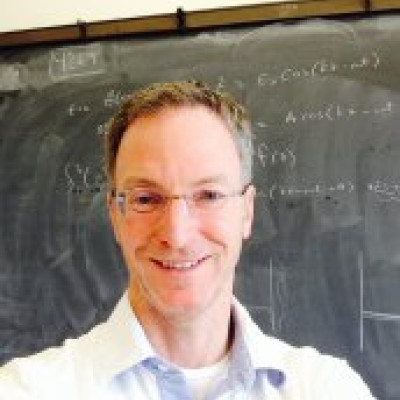 Carlo Dallapiccola合作论文数Department of Physics, College of Natural Sciences, University of Massachusetts Amherst810P. M. Patel合作论文数810J. D. Lange合作论文数809
 Roger Barlow合作论文数School of Computing and Engineering, University of Huddersfield809
 A. V. Gritsan合作论文数Johns Hopkins University808T. S. Mattison合作论文数803Ve Blinov合作论文数801G. Lynch合作论文数Lawrence Berkeley National Laboratory801Erwin Gabathuler合作论文数University of Liverpool798
 Dmytro Kovalskyi合作论文数Massachusetts Institute of Technology796




