There is widespread interest in evaluating the social impacts of research and other scholarly activities. Conventional metrics for social impacts focus on economics or wealth creation, such as patents or technology transfer. These kinds of metrics are less appropriate for many scholarly fields, and miss the specific social concerns or needs that researchers aim to address. In this paper, drawing on ideas from ethics and development economics, we develop a conceptual framework for characterizing the social goals of research. We first distinguish resources — such as wealth and intellectual credit — from the goals of scholarship, and further distinguish inward- and outward-facing goals. Outward-facing goals refer to the intended social impacts of research. Next we introduce the Capabilities Approach, a conceptual framework for human well-being developed by ethicists and economists over the last 40 years. This Approach focuses on basic human needs, rather than wealth, and we draw specifically on a list of central human capabilities developed by philosopher Martha Nussbaum. We propose that the items on this list provide a useful starting point for articulating the specific social aims of research. We argue that the Capabilities Approach can facilitate research communication and improve the recognition of public engagement in academic and funding institutions. Familiar bibliographic data and text mining methods can be used in a capabilities-inspired portfolio analysis, and modest changes to existing data collection systems — for tenure and promotion, or research funding applications — could support the development of even richer capabilities-inspired metrics and incentive systems.
In the 21st Century, research is increasingly data- and computation-driven. Researchers, funders, and the larger community today emphasize the traits of openness and reproducibility. In March 2017, 13 mostly early-career research leaders who are building their careers around these traits came together with ten university leaders (presidents, vice presidents, and vice provosts), representatives from four funding agencies, and eleven organizers and other stakeholders in an NIH- and NSF-funded one-day, invitation-only workshop titled "Imagining Tomorrow's University." Workshop attendees were charged with launching a new dialog around open research – the current status, opportunities for advancement, and challenges that limit sharing. The workshop examined how the internet-enabled research world has changed, and how universities need to change to adapt commensurately, aiming to understand how universities can and should make themselves competitive and attract the best students, staff, and faculty in this new world. During the workshop, the participants re-imagined scholarship, education, and institutions for an open, networked era, to uncover new opportunities for universities to create value and serve society. They expressed the results of these deliberations as a set of 22 principles of tomorrow's university across six areas: credit and attribution, communities, outreach and engagement, education, preservation and reproducibility, and technologies. Activities that follow on from workshop results take one of three forms. First, since the workshop, a number of workshop authors have further developed and published their white papers to make their reflections and recommendations more concrete. These authors are also conducting efforts to implement these ideas, and to make changes in the university system. Second, we plan to organise a follow-up workshop that focuses on how these principles could be implemented. Third, we believe that the outcomes of this workshop support and are connected with recent theoretical work on the position and future of open knowledge institutions.
In the 21st Century, research is increasingly data- and computation-driven. Researchers, funders, and the larger community today emphasize the traits of openness and reproducibility. In March 2017, 13 mostly early-career research leaders who are building their careers around these traits came together with ten university leaders (presidents, vice presidents, and vice provosts), representatives from four funding agencies, and eleven organizers and other stakeholders in an NIH- and NSF-funded one-day, invitation-only workshop titled "Imagining Tomorrow's University." Workshop attendees were charged with launching a new dialog around open research – the current status, opportunities for advancement, and challenges that limit sharing. The workshop examined how the internet-enabled research world has changed, and how universities need to change to adapt commensurately, aiming to understand how universities can and should make themselves competitive and attract the best students, staff, and faculty in this new world. During the workshop, the participants re-imagined scholarship, education, and institutions for an open, networked era, to uncover new opportunities for universities to create value and serve society. They expressed the results of these deliberations as a set of 22 principles of tomorrow's university across six areas: credit and attribution, communities, outreach and engagement, education, preservation and reproducibility, and technologies. Activities that follow on from workshop results take one of three forms. First, since the workshop, a number of workshop authors have further developed and published their white papers to make their reflections and recommendations more concrete. These authors are also conducting efforts to implement these ideas, and to make changes in the university system. Second, we plan to organise a follow-up workshop that focuses on how these principles could be implemented. Third, we believe that the outcomes of this workshop support and are connected with recent theoretical work on the position and future of open knowledge institutions.
In 2014, University of California, Davis University Library and the California Digital Library collaborated on an Andrew W. Mellon Foundation grant-funded project to explore costs associated with moving scholarly journal subscriptions in the U.S. market entirely to an Article Processing Charge business model, known also as "Gold Open Access." We contacted MacKenzie Smith, one of the principal investigators, in order to get her reflections on the process of gathering the data, and to discuss some implications of the findings. The interview suggests that the "Pay It Forward" model could be successful over time, following a necessarily complex transition period.
In geodynamics as in other scientific areas, computation has become a core component of research, complementing field observation, laboratory analysis, experiment, and theory. Computational tools for data analysis, mapping, visualization, modeling, and simulation are essential for all aspects of the scientific workflow. Specialized scientific software is often developed by geodynamicists for their own use, and this effort represents a distinctive intellectual contribution. Drawing on a geodynamics community that focuses on developing and disseminating scientific software, we assess the current practices of software development and attribution, as well as attitudes about the need and best practices for software citation. We analyzed publications by participants in the Computational Infrastructure for Geodynamics and conducted mixed method surveys of the solid earth geophysics community. Fromthis we learned that coding skills are typically learned informally. Participants considered good code as trusted, reusable, readable, and not overly complex and considered a good coder as one that participates in the community in an open and reasonable manor contributing to both long-and short-term community projects. Participants strongly supported citing software reflected by the high rate a software package was named in the literature and the high rate of citations in the references. However, lacking are clear instructions from developers on how to cite and education of users on what to cite. In addition, citations did not always lead to discoverability of the resource. A unique identifier to the software package itself, community education, and citation tools would contribute to better attribution practices.
The viability of gold open access publishing models into the future will depend, in part, on the attitudes of authors toward open access (OA). In a survey of academics at four major research universities in North America, we examine academic authors' opinions and behaviors toward gold OA. The study allows us to see what academics know and perceive about open access models, their current behavior in regard to publishing in OA, and possible future behavior. In particular, we gauge current attitudes to examine the perceived likelihood of various outcomes in an all-open access publishing scenario. We also survey how much authors at these types of universities would be willing to pay for article processing charges (APCs) from different sources. Although the loudest voices may often be heard, in reality there is a wide range of attitudes and behaviors toward publishing. Understanding the range of perceptions, opinions, and behaviors among academics toward gold OA is important for academic librarians who must examine how OA serves their research communities, to prepare for an OA future, and to understand how OA impacts the library's role.
In this article we examine what motivations influence academic authors in selecting a journal in which to publish. A survey was sent to approximately 15,000 faculty, graduate students, and postdoctoral researchers at four large North American research universities with a response rate of 14.4% (n = 2021). Respondents were asked to rate how eight different journal attributes and five different audiences influence their choice of publication output. Within the sample, the most highly rated attributes are quality and reputation of journal and fit with the scope of the journal; open access is the least important attribute. Researchers at other research-intensive institutions are considered the most important audience, while the general public is the least important. There are significant differences across subject disciplines and position types. Our findings have implications for understanding the adoption of open access publishing models.
Learned PublishingVolume 24, Issue 3 p. 203-205 Point of ViewFree Access Communicating with data: new roles for scientists, publishers and librarians MacKenzie SMITH, Corresponding Author MacKenzie SMITH MIT Libraries MacKenzie SMITH Research Director, MIT Libraries 77 Mass. Ave., E25-131 Cambridge MA 02139, USA Email: [email protected]Search for more papers by this author MacKenzie SMITH, Corresponding Author MacKenzie SMITH MIT Libraries MacKenzie SMITH Research Director, MIT Libraries 77 Mass. Ave., E25-131 Cambridge MA 02139, USA Email: [email protected]Search for more papers by this author First published: 01 July 2011 https://doi.org/10.1087/20110308Citations: 5AboutPDF ToolsRequest permissionExport citationAdd to favoritesTrack citation ShareShare Give accessShare full text accessShare full-text accessPlease review our Terms and Conditions of Use and check box below to share full-text version of article.I have read and accept the Wiley Online Library Terms and Conditions of UseShareable LinkUse the link below to share a full-text version of this article with your friends and colleagues. Learn more.Copy URL Share a linkShare onEmailFacebookTwitterLinkedInRedditWechat No abstract is available for this article.Citing Literature Volume24, Issue3July 2011Pages 203-205 RelatedInformation
Underpinning every digital library and digital repository there is a policy framework, which makes the digital library viable - without a policy framework a digital library is little more than a container for content. Policy governs how a digital library is instantiated and run. It is therefore a meta-domain which is situated both outside the digital library and any technologies used to deliver it, and within the digital library itself. Policy is also a key aspect of digital library and digital repository interoperability in a common and integrated information space. Policy interoperability - that is the exchange and reuse of policies - is a step beyond policy standardisation. Furthermore, effective and efficient policy frameworks are also one of the Digital Curation Center (DCC), DigitalPreservationEurope (DPE), nestor and Center for Research Libraries (CRL) core criteria for digital repositories. In this article, we share our research on policy interoperability levels and the experimental survey on policy interoperability conducted with real-life digital libraries, as a contribution towards the definition of a Policy Interoperability Framework.
Increasing demand to manage and preserve 3-dimensional models for a variety of physical phenomena (e.g., building and engineering designs, computer games, or scientific visualizations) is creating new challenges for digital archives. Preserving 3D models requires identifying technical formats for the models that can be maintained over time, and the available formats offer different advantages and disadvantages depending on the intended future uses of the models. Additionally, the metadata required to manage 3D models is not yet standardized, and getting intellectual proposal rights for digital models is uncharted territory. The FACADE Project at MIT is investigating these challenges in the architecture, engineering and construction (AEC) industry and has developed recommendations and systems to support digital archives in dealing with digital 3D models and related data. These results can also be generalized to other domains doing 3D modeling.
The RLG/NARA trusted digital repository (TDR) certification checklist defines a set of preservation assessment criteria. The criteria can be mapped into management policies that define how a digital preservation environment is operated. We explore how these management policies can be automated through their characterization as rules that control preservation services. By integrating a rule-based data management system with the DSpace digital library, we expect to demonstrate automated audits of the TDR checklist. The system is sufficiently general that one can also demonstrate the completeness and self-consistency of preservation environments. This is the concept that all required preservation metadata are controlled by management policies, and that for each management policy the required preservation metadata are preserved.
The MIT Libraries, the San Diego Supercomputer Center, and the University of California San Diego Libraries are conducting the PLEDGE Project to determine the set of policies that affect operational digital preservation archives and to develop standardized means of recording and enforcing them using rules engines. This has the potential to allow for automated assessment of “trustworthiness†of digital preservation archives. We are also evaluating the completeness of other efforts to define policies for digital preservation such as the RLG/NARA Trusted Digital Repository checklist and the PREMIS metadata schema. We present our results to date.
 Robert Tansley合作论文数Google6
 Julie Harford Walker合作论文数4Margret Branschofsky合作论文数Massachusetts Institute of Technology4Behringe.Aj合作论文数3Fish Allison合作论文数Center for Biomedical Informatics, Charles Drew University of Medicine and Science3Jay Walsh合作论文数2Misty Jones合作论文数2joshua m greenberg合作论文数Alfred P. Sloan Foundation, New York, NY 10111.2
 Adina Howe合作论文数Iowa State Univ, Dept Agr & Biosyst Engn, Ames, IA USA2Lisa Christian合作论文数Coll Commun & Informat, Univ Tennessee2
 Martin Paul Eve合作论文数Presenters2
 Carl Boettiger合作论文数Department of Environmental Science, Policy and Management, College of Natural Resources, University of California, Berkeley2
 Bik Holly M合作论文数Univ Calif Davis, UC Davis Genome Ctr2
 Khanna May合作论文数Stark Neuroscience Research Institute, Indiana University Cancer Center2
 Chris Mentzel合作论文数2
 Elizabeth D. Dalton合作论文数ICF Next2
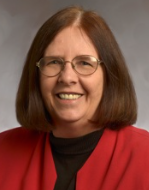 Carol Tenopir合作论文数School of information Sciences, The University of Tennessee2
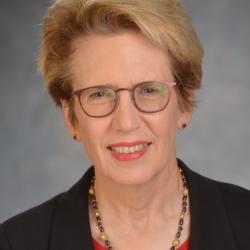 Christine L. Borgman合作论文数Department of Information Studies, School of Education and Information Studies, University of California, Los Angeles2
 Lorena A Barba合作论文数Mechanical Engineering Department2
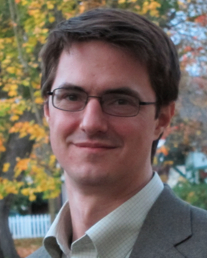 Bill Howe合作论文数Information School, University of Washington2Greg Mcclellan合作论文数2
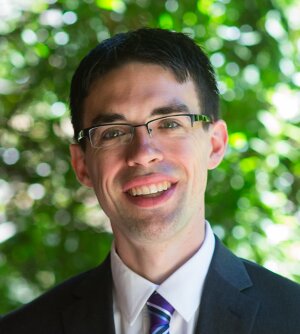 Matthew J Turk合作论文数Department of Astronomy, College of Liberal Arts and Sciences, University of Illinois at Urbana-Champaign2Mick Bass合作论文数2
 Gabrielle Allen合作论文数School of Computing, University of Wyoming;Department of Mathematics & Statistics, University of Wyoming;Department of Physics & Astronomy, University of Wyoming2
 Jeffrey R. Spies合作论文数Department of Psychology;University of Virginia;Department of Psychology, University of Virginia2
 Nirav Merchant合作论文数Data Science Institute, University of Arizona2
 Daniel S. Katz合作论文数University of Illinois Urbana-Champaign, University of Illinois Urbana-Champaign;School of Information Sciences, University of Illinois Urbana-Champaign2
 Kyle E. Niemeyer合作论文数School of Mechanical, Industrial, and Manufacturing Engineering, College of Engineering, Oregon State University2Matthew S. Mayernik合作论文数National Center for Atmospheric Research, University Corporation for Atmospheric Research2
 Brian E. Granger合作论文数1 Institute for Theoretical Atomic2
 Devin R. Berg合作论文数2Stuart Buck合作论文数2
 C. Titus Brown合作论文数Division of Biology, California Institute of Technology2Richard Rodgers合作论文数2
 Anita de Waard合作论文数Elsevier;Utrecht University2
 Randy Burd合作论文数Department of Nutritional Sciences, University of Arizona2
 Edward Seidel合作论文数University of Wyoming2
 Sarah M Nusser合作论文数Department of Statistics, College of Liberal Arts and Sciences, Iowa State University2
 Reagan W. Moore合作论文数Data Intensive Computing
San Diego Supercomputer Center2
Reagan W. Moore合作论文数Data Intensive Computing
San Diego Supercomputer Center2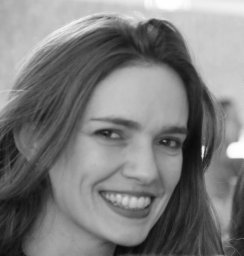 Erin C Mckiernan合作论文数Mathematical, Computational, and Modeling Sciences Center, Arizona State University2
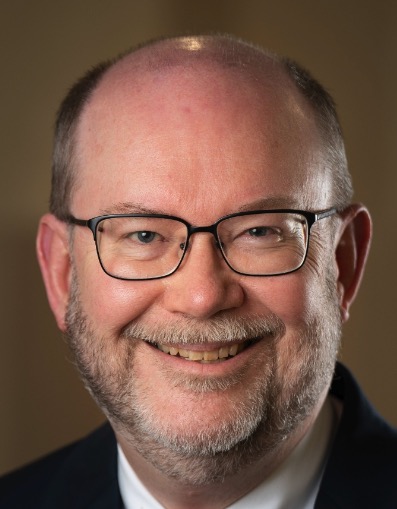 Daniel Reed合作论文数School of Computing, University of Utah2mit libraries合作论文数1
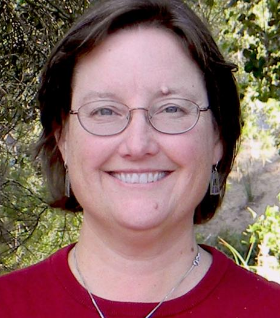 Louise Kellogg合作论文数Department of Earth and Planetary Sciences, College of Letters and Science, University of California Davis1
 carl stahmer合作论文数1Katie Fortney合作论文数Univ Calif Calif Digital Lib1Daniel J. Hicks合作论文数1William Reilly合作论文数1Reagan Moore合作论文数San Diego Supercomputer Center;Data Intensive Computing 1
 Sarah Williams合作论文数Norman B. Leventhal Center for Advanced Urbanism, Massachusetts Institute of Technology;Department of Urban Studies and Planning, School of Architecture and Planning, Massachusetts Institute of Technology1




