Innovative education and extension programs that engage with agricultural producers to develop, test, implement, and refine solutions have been recommended to increase the adoption of conservation management practices and technologies while maintaining farm profitability. The interactive, real-life farm management competition Testing Ag Performance Solutions (TAPS) was created in response. The TAPS program utilizes theories of adult, experiential, and peer learning and gamification to provide teams of producers an opportunity to experiment with all crop production and marketing decisions on university test plots in friendly competition with their peers. This study evaluated the impact of participating in the TAPS program, specifically considering producers' views and decision-making related to management practices and new technology. Using a convergent mixed-methods design, we conducted a survey of and interviews with former TAPS program participants to provide insights into the effect of the competition on participants and their farm operations. Extension programs would benefit from replicating the TAPS learning model to effect real change and substantial adoption of state-of-the-art technologies and management strategies.
We explored stakeholders' familiarity with, trust of, perceived competence of, and shared vision with Cooperative Extension on water-related issues in two states to determine the degree to which Extension is positioned to be an effective bridging organization. Results of surveys in Nebraska and Pennsylvania showed that, overall, neither agricultural producers nor non-farm households were very familiar with Extension. However, both stakeholder groups perceived Extension to be trustworthy, competent, and have similar goals on water-related issues. Extension should renew efforts to bolster its familiarity among these groups to enhance its effectiveness as a bridging organization.
In the past three decades, a paradigm shift has elevated stakeholder engagement in natural resource governance, emphasizing collaborative approaches for effective decision-making. While academic literature increasingly endorses engagement methods, a gap persists in our knowledge of the methods and outcomes of such processes. To address this disparity, we systematically reviewed 261 peer-reviewed studies on stakeholder engagement in water resource management from 2000 to 2019. Analyses find that data-driven studies of engagement processes and outcomes from engagement processes are limited in the peer-reviewed literature. Our findings underscore the need for consistent vocabulary and theoretical frameworks and increased empirical evaluation to enhance our understanding of stakeholder engagement processes and outcomes in water resource management. We conclude by discussing the implications of these findings and synthesizing the methods suggested by the general literature for creating more inclusive, replicable, and impactful engagement-related research and practice in the future.
This study considers how and why agricultural groundwater users would limit their own water consumption. We find that voluntary governance arrangements are based on a form of legitimacy that stems from informal social processes. Agricultural irrigation reform in Nebraska, U.S. took place after decades of collaboration in informal social settings; this background of decentralized rulemaking contributed to legitimizing extraction limits in times of water stress. The dimensions of social legitimacy are assessed through triangulation of interview data, integrated management plans, workshop facilitation, and recordings of legal proceedings related to the Natural Resources Districts in the state of Nebraska. These districts initially placed voluntary limits on extraction but evolved to sanction violators for over-consumption. Groundwater rules are accepted because they are set by publicly elected boards, leaders participate in a state-wide leadership training network, and the districts are granted rule-making authority by the state. Our results show that voluntary self-limiting behavior can form the basis for binding legal requirements. The legitimacy of polycentric governance stems from social acceptance, inclusive membership, a prior history of collaboration, and an understanding of rules. The rules themselves are context-specific and self-made. We summarize these elements in an evaluation framework to test whether and how authority in other polycentric groundwater governance arrangements is justified and accepted.
Increasing complexity of riverine management is driving the need for more participatory approaches in which a wide range of stakeholders inform management actions. The foundational conditions of successful stakeholder engagement in participatory riverine management include the stakeholders’ familiarity with, trustworthiness of, shared vision with, and perceived competence of agencies involved in riverine management. We employ an embedded experimental mixed-methods approach to gain insight into two key stakeholder group’s (agricultural producers and non-farm households) perceptions of foundational conditions of successful stakeholder engagement in participatory riverine management in watersheds of two geographically and regulatorily disparate states. Overall, ratings for familiarity were often contrary to ratings of other three conditions. Contrary to previous research our findings suggest that familiarity does not necessarily lead to stakeholder perceived trustworthiness, shared vision, and competence of those involved in riverine management. These findings are important for participatory processes; for example, trust and shared vision without familiarity may inhibit the active involvement of diverse stakeholders in participatory processes that is needed for improving management of complex riverine systems. Our findings suggest agencies and groups involved in riverine management prioritize developing stronger relationships with agricultural producers to improve on these foundational conditions. Agencies and groups involved in riverine management rated low on familiarity should consider campaigns to increase stakeholders’ familiarity with them to leverage the generally high ratings on the other three foundational conditions. Future research should explore these contrary findings and their relationships to active involvement in participatory riverine management.
The vast majority of the Earth's freshwater is allocated for agricultural purposes, playing a significant role in environmental deterioration observed globally. Environmental policymakers must collaborate with agricultural producers to foster sustainable production while allowing producers to remain profitable to feed the growing world population. This study aimed to identify factors that influenced how those involved in environmental policy including regulatory agency personnel, scientists, industry representatives, and Extension specialists relate to producers about their use of agricultural technology and management practices after competing in a real-life farm management competition grounded in gamification along with adult, experiential, and peer learning. We used exploratory regression analysis to identify significant relationships between variables from the literature that suggest that the program can influence how non-producer participants relate to producers. Social norms, perceived behavioral control, peer interaction, expectations of the program, educational components of the program, risk reduction, and education level of participants were significantly related to how non-producers relate to producers about their use of agriculture technology. Social norms, peer interaction, expectations of the program, educational components of the program, and risk reduction were significantly related to how non-producers relate to producers about agricultural management practices. This study demonstrates that innovative Extension and educational programs framed in farm management competitions grounded in gamification along with adult, experiential, and peer learning are an effective way to help policymakers be more comfortable interacting with producers—a solid starting place for successful collaborations.
Alternative energy, or green energy, has the potential to mitigate carbon dioxide emitted from conventional power sources, particularly at grid parity – the point at which alternative energy reaches a levelized electricity cost that is less than or equal to purchasing grid-supplied electricity. This mixed methods study examined the effect of defaults on electricity utility selection at grid parity by young people who may be choosing a utility for the first time or may have recently experienced choosing a utility. Additionally, we investigate the justification of participants’ choice of electricity utility. A chi-squared test determined that the gray electricity utility was chosen significantly more often in the gray default condition than in either the no default or green default conditions confirming the influence of defaults even at grid parity. Those who selected green energy regardless of the default scenario expressed that they did so because the alternative energy option was the same price, but cleaner. Those who chose the conventional energy source regardless of default conveyed doubt that green energy would remain at grid parity and held a belief that conventional energy is more reliable along with feeling manipulated by the green utility’s informational message. Results from this study indicate that continuing to offer gray energy as the default and green energy as the alternative could adversely impact the predicted large-scale shift in generation from gray energy sources to green energy sources when grid parity is prevalent.
Boundary spanners are individuals able to reach across organizational borders to build relationships and interconnections to help better manage complex problems. What is not clear, however, are the skills that allow boundary spanners to cross diverse scales, sectors, and organizations. To address this gap, we use a qualitative case study approach to examine evidence for how boundary spanning skills are implemented in the context of stakeholder engagement for addressing water challenges in agricultural settings. We employ a hybrid deductive-inductive thematic analysis approach to examine interview data collected with 25 stakeholder participants as well as direct observation of engagement behavior. Interview instruments were designed to elicit responses related to six deductively derived skills of boundary spanning: relationship builder, authentic leadership, trustworthiness, autonomy, perspective-taking, and effective science communication. Our inductive analysis identified evidence for three additional boundary spanning skills. Our study finds that some boundary spanning skills were exhibited more than others, and their frequency of use varied throughout the engagement process, and certain skills were used interchangeably. This research provides guidance on what boundary spanning looks like in action, and thus provides guidance on identifying and enhancing these skills in stakeholder engagement for water resource management.
As public agencies and research institutions increasingly pursue involving stakeholders in making decisions, scholars and practitioners are calling for a more rigorous empirical understanding of engagement processes and their outcomes. However, effective research methodologies for stakeholder engagement research are limited due to the complex challenge of both linking engagement contexts, processes, and outcomes and conducting research in ways that meet both practical and scholarly goals. This paper outlines a method for studying stakeholder engagement contexts, processes, and outcomes in water resource management settings developed through stakeholder engagement efforts in five US project sites. In response to methodological needs identified in diverse scholarship on participatory approaches to water resource management, we describe a longitudinal, mixed-methods, case comparison, and participatory research design, for gathering evidence for social, behavioral, and environmental change outcomes while simultaneously supporting engagement processes. This paper describes the research design and data collection procedures we developed to study change through engagement. This design was intended to allow in-depth analysis of place-specific engagement processes and outcomes, as well as the ability to compare across contexts to illuminate drivers of differences. We present this research design as a framework for others considering similar approaches and conclude by discussing benefits and limitations of the research design and tensions across research on and with stakeholder participants.
A farm family’s land succession plan is vital to ensure that high-value farmland continues to benefit the family for generations to come. However, many farmers have been reluctant to develop succession plans. The purpose of this study was to determine the influence of place attachment on farmers’ land succession planning. This exploratory mixed methods research involved farmers within 10 years of retirement age (55 years of age or older), both with and without a land succession plan. Surveys and interviews utilized Raymond, Brown, and Weber’s (2010) five dimensions of place attachment: place identity, place dependence, nature bonding, family bonding, and friend bonding. Survey results showed farmers with a succession plan had significantly higher place identity, place dependence, nature bonding, and overall place attachment than farmers without a succession plan. Seven themes emerged from the qualitative analysis of interviews of farmers with a succession plan and six themes emerged from interviews of farmers without a succession plan. Three themes: connection to family, sense of community, and enjoyment of the outdoors were held in common. This study adds to the literature exploring the complex factors affecting the transition of the family farm to the next generation.
Abstract This chapter describes the locally driven, but centrally coordinated, water governance model in Nebraska, U.S. It offers a snapshot of water resources and the importance of agriculture, then moves to the relevant political institutions in the state, and federal controls related to water quantity. The focus of the chapter is on the Nebraska Department of Natural Resources' (NeDNR) and Natural Resources Districts' (NRDs) management of surface and groundwater, which has some distinct and some overlapping authority. The main area of overlap is in addressing the connection between ground and surface water, particularly in situations when either or both are over appropriated. Integrated management planning is a key tool for basins in crisis, where allocations are fully or over appropriated and there is increased demand or diminished supply. The chapter explains what integrated management planning entails and gives a closer look into instances where it has been implemented. The polycentric model allows for collaborative governance, pushing stakeholders (particularly the agricultural sector) to innovate based on changes in water availability. NRDs can (and do) exercise controls; they do so by using their authority to make institutional changes and sanction violators for over-abstraction. This authority is granted and legitimized by publicly elected boards, an ongoing leadership training network, and a history of locally driven rule-making. However, there are also shortcomings to the model: in particular, it is difficult to address cross-border issues or legal conflicts. Furthermore, there is scant research on its effectiveness in actually preventing groundwater decline. The Nebraska model and its local examples may offer lessons for other basins where water resources have historically been relatively plentiful but are now facing drought stresses and the growing demands of intensive irrigated agricultural production.
The state of Nebraska, USA employs a localized, integrated approach to managing water resources to address escalating quantity challenges. Here, we assess differences between agricultural water users’ perceptions of water management in a water-stressed area of Nebraska after a first round of water management planning and perceptions of three other stakeholder groups in Nebraska immediately after a second round of water management planning. We also demonstrate the value of augmenting Ostrom’s common-pool resource management design principles with locally relevant criteria to evaluate water management at regional and statewide governance scales. Data from a survey of Platte River basin agricultural producers in 2012 were combined with survey data collected in 2019 from Platte basin agricultural producers, Platte basin non-farm residents, and non-farm residents across Nebraska. There were significant increases from 2012 to 2019 in Platte basin producers’ perceptions of four criteria and significant decreases in their perceptions of four other criteria. The current system continues to work relatively well, but notable exceptions endure, including a significant decrease in the number of agricultural producers who agree that there is equitable treatment of water users and trust in water management agencies. Non-farm respondents were significantly less likely than producers to agree that the current water management system is working well with regard to enforcing water-use rules.
ABSTRACT The U.S. federal government’s requirements and guidance for wetland conservation are reflected in a series of federal laws, regulations, and policies. However, the degree to which these requirements are reflected in local planning efforts is unclear. This study using five components with 56 indicators evaluates how well wetland conservation efforts are integrated into 112 local comprehensive plans in Nebraska, USA. The results show that the majority of local comprehensive plans pay little direct attention to wetland conservation, although many conservation efforts are conducted under the umbrella of environmental protection frameworks. The indicators include water resource protection received the highest score and was the descriptor of natural or environmental resources and resulted in the highest level of local awareness on natural assets. The indicator of setting goals for no net loss of wetlands received the lowest score among all indicators, demonstrating a clear gap between the national vision and the local reality of wetland conservation. Findings suggest local governments need more direct and proactive inputs to improve wetland conservation. Further findings from this research provide a practical roadmap for planners globally, particularly for the developing countries, to integrate wetland conservation into the local planning systems.
Grasslands are imperiled due to land conversion, fragmentation, woody encroachment, population growth, and global warming. What remains of intact grasslands are vital for the ecosystem services they provide. Wildlife species native to the North American Great Plains evolved in response to very specific and differing habitats. Without variation in vegetation structure and composition (heterogeneity) the number of species that can thrive is minimized, as are the interconnected ecosystem services. Landowners’ assistance in the maintenance of grassland ecosystems is essential because Great Plains grasslands are primarily privately managed. Thus, increasing heterogeneity on working rangelands is a partial solution to balancing the needs of wildlife with that of cattle production. This study tested a predictive model of factors influencing attitudes toward heterogeneous and landscape-scale ranch management. An online survey was sent to ranchers within prescribed-burn and grazing groups in the Great Plains. Predictors of landscape-scale management were spirituality, stewardship, social descriptive norms, consideration of future consequences, and participation in grassland activities. The lone predictor of attitudes toward heterogeneous grassland management was consideration of future consequences. Even though the survey targeted groups that were more likely to be higher in heterogeneous attitudes, a vast majority are still following the “manage to the middle” paradigm. It appears these ranchers are unaware of the benefits of a heterogeneous landscape and the compatibility of its associated management techniques with their cattle production goals. To improve the adoption of techniques that promote vegetation heterogeneity, more resources should be devoted to demonstrating how these practices benefit ranchers’ cattle business alongside the larger landscape.
We examine how contextual factors affect farmer perspectives on collaborative environmental management in Arizona, Nebraska, and Pennsylvania, U.S., through a qualitative and comparative study. In doing so, we explore how contextual factors identified in foundational collaborative environmental governance research play out specifically in three agricultural cases. Findings from this study reveal four key cross-case themes from farmer perspectives on collaboration: (1) prior participation, (2) flexible agenda, (3) willingness to learn, and (4) agency influence. Further, we find positions that are more open or closed on each theme are shaped by three contextual factors: farmer interdependence with non-farmers, the nature of salient water resource issues, and protection from versus vulnerability to regulatory agencies. These findings are useful for guiding future collaborative forums aiming to elicit farmer participation in environmental management.
Participatory approaches to science and decision making, including stakeholder engagement, are increasingly common for managing complex socio-ecological challenges in working landscapes. However, critical questions about stakeholder engagement in this space remain. These include normative, political, and ethical questions concerning who participates, who benefits and loses, what good can be accomplished, and for what, whom, and by who. First, opportunities for addressing justice, equity, diversity, and inclusion interests through engagement, while implied in key conceptual frameworks, remain underexplored in scholarly work and collaborative practice alike. A second line of inquiry relates to research–practice gaps. While both the practice of doing engagement work and scholarly research on the efficacy of engagement is on the rise, there is little concerted interplay among ‘on-the-ground’ practitioners and scholarly researchers. This means scientific research often misses or ignores insight grounded in practical and experiential knowledge, while practitioners are disconnected from potentially useful scientific research on stakeholder engagement. A third set of questions concerns gaps in empirical understanding of the efficacy of engagement processes and includes inquiry into how different engagement contexts and process features affect a range of behavioral, cognitive, and decision-making outcomes. Because of these gaps, a cohesive and actionable research agenda for stakeholder engagement research and practice in working landscapes remains elusive. In this review article, we present a co-produced research agenda for stakeholder engagement in working landscapes. The co-production process involved professionally facilitated and iterative dialogue among a diverse and international group of over 160 scholars and practitioners through a yearlong virtual workshop series. The resulting research agenda is organized under six cross-cutting themes: (1) Justice, Equity, Diversity, and Inclusion; (2) Ethics; (3) Research and Practice; (4) Context; (5) Process; and (6) Outcomes and Measurement. This research agenda identifies critical research needs and opportunities relevant for researchers, practitioners, and policymakers alike. We argue that addressing these research opportunities is necessary to advance knowledge and practice of stakeholder engagement and to support more just and effective engagement processes in working landscapes.
Drought-related decision-making and policy should go beyond numeric hydrometeorological data to incorporate information on how drought affects people, livelihoods, and ecosystems. The effects of drought are nested within environmental and human systems, and relevant data may not exist in readily accessible form. For example, drought may reduce forage growth, compounded by both late-season freezes and management decisions. An effort to gather crowdsourced drought observations in Missouri in 2018 yielded a much higher number of observations than did previous related efforts. Here we examine 1) the interests, circumstances, history, and recruitment messaging that coincided to produce a high number of reports in a short time; 2) whether and how information from volunteer observers was useful to state decision-makers and to U.S. Drought Monitor (USDM) authors; and 3) potential for complementary use of stakeholder and citizen science reports in assessing trustworthiness of volunteer-provided information. State officials and the Cattlemen's Association made requests for reports, clearly linked to improving the accuracy of the USDM and the related financial benefit. Well-timed requests provided a focus for people's energy and a reason to invest their time. State officials made use of the dense spatial coverage that observers provided. USDM authors were very cautious about a surge of reports coinciding closely with financial incentives linked to the Livestock Forage Disaster program. An after-the-fact comparison between stakeholder reports and parallel citizen science reports suggests that the two could be complementary, with potential for developing protocols to facilitate real-time use.
This study sheds light on the importance of boundary spanners in developing the conditions that foster trust between stakeholders in integrated water resource management (IWRM). Boundary spanners routinely reach across organizational borders to build interconnections and interdependencies in order to manage complex problems, inform policy, and encourage knowledge sharing. The importance of the boundary spanning role has been shown in organizational business practices, urban planning, and higher education yet little research exists on its impact in IWRM. The mixed methods approach used in this study involved surveying and interviewing individuals with previous experience with IWRM in Nebraska. The results of the survey indicated that boundary spanning behavior predicted a large percentage of the variance in conditions that build trust between stakeholders. Further exploration revealed that boundary spanning, cooperation, power imbalance, and scale mismatch were predictors of trust building conditions. In addition, authentic leadership, autonomy, and trustworthiness were predictors of boundary spanners' ability to establish trust building conditions between stakeholders, with trustworthiness being the strongest predictor. The qualitative phase included interviews with thirteen individuals who participated in the online survey and scored high in boundary spanning behaviors. The interview analysis resulted in seven themes, which strongly support the promising role that boundary spanners play in fostering conditions that build trust between stakeholders within IWRM. This paper reflects on the importance of a boundary spanner within integrated water management, demonstrates the effectiveness of boundary spanning on the development of trust building conditions, and encourages more research on how to better identify and train boundary spanners to assist in the co-production of knowledge.
Groundwater use often has external effects on both the environment and future groundwater benefits, leading to overwithdrawal. Ostrom’s research on common property resources (CPRs) and related literature indicates that CPR management may improve if users have more information about the groundwater system, more opportunities for communication, and empowerment to regulate. In this paper, we conduct a computer laboratory experiment involving 180 students to evaluate the role of these components of engagement in reducing irrigation withdrawals from an aquifer. Our treatments, which consisted of different levels of information, communication, and empowerment, resulted in decreases in groundwater extraction and increases in irrigation profits over nine-year extraction horizons. Enhanced information and communication also increased the fraction of subjects who voted for and complied with collective action in the form of quotas on pumping levels.
 Hans J. Czap合作论文数22
 Natalia Czap合作论文数22
 Gary D. Lynne合作论文数Department of Agricultural Economics17
 Courtney Quinn合作论文数Clinical Center and trans-NIH Center for Human Immunology (CHI),, National Institutes of Health10Marianna Khachaturyan合作论文数8
 Gina S. Matkin合作论文数Department of Agricultural Leadership Education and Communication, University of Nebraska—Lincoln8Stephanie Kennedy合作论文数7
 Weston M. Eaton合作论文数Haub School of Environment and Natural Resources, University of Wyoming7Jodi Delozier合作论文数6Kathryn Brasier合作论文数5
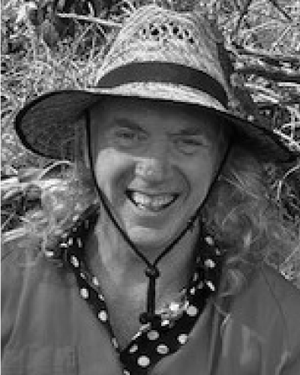 Michael J. Hayes合作论文数5shannon moncure合作论文数4
 Frederick C. Day合作论文数4
 Maggi Sliwinski合作论文数Univ Nebraska Lincoln4
 Tonya Haigh合作论文数Natl Drought Mitigat Ctr, Univ Nebraska4Roy F. Spalding合作论文数4
 Heath E. Harding合作论文数3kevin l flores合作论文数3Walt Whitmer合作论文数3
 Hannah Whitley合作论文数Dept Agr Econ Sociol & Educ, Penn State Univ3
 Larkin A. Powell合作论文数School of Natural Resources;University of Nebraska-Lincoln;School of Natural Resources, University of Nebraska-Lincoln3Mary Bomberger Brown合作论文数3
 Linda Stalker Prokopy合作论文数Department of Forestry and Natural Resources, Purdue University, 195 Marsteller Street, West Lafayette, IN 47907, USA3
 Kristin Floress合作论文数Department of Forestry;Southern Illinois University;Department of Forestry, Southern Illinois University3Walter H Schacht合作论文数3John E. Quinn合作论文数2amy i oden合作论文数2
 Kem Gambrell合作论文数2leyla parravicary合作论文数2Lara B. Fowler合作论文数Penn State Law & Penn State Inst Energy & Environ, Penn State Univ2
 Theresa Jedd合作论文数Tech Univ Munich2
 Daran R. Rudnick合作论文数West Central Research and Extension Center, University of Nebraska-Lincoln2
 Barbara Quimby合作论文数Morrison Inst, Arizona State Univ2fahian tanin合作论文数2
 Byrav Ramamurthy合作论文数Department of Computer Science and Engineering, University of Nebraska, Lincoln2
 Zhenghong Tang (唐正宏)合作论文数Shanghai Astronomical Observatory, Chinese Academy of Sciences2Lisa Pennisi合作论文数2
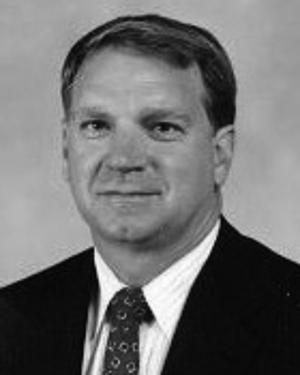 Dennis R. Alexander合作论文数Center for Electro-Optics and Dept. of Electrical Engineering, University of Nebraska-Lincoln Lincoln2
 Mazbahul Golam Ahamad合作论文数2
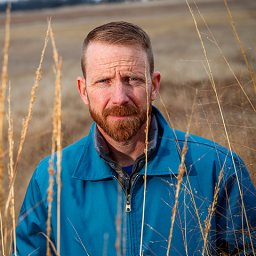 Anthony B. Schutz合作论文数2Connie I. Reimers-Hild合作论文数2
 James R Brandle合作论文数2
 Cody L Knutson合作论文数University of Nebraska School of Natural Resources2Wilson S. Clayton合作论文数1Sara Bonilla Anariba合作论文数1Charles Burr合作论文数1Jason Weigle合作论文数1Ligang Zhang合作论文数1
 Georgia M Hart-Fredeluces合作论文数1




