This study examines how the reputation of Christian churches is configured, and which sociodemographic variables and experiences (personal or mediated) relate to it. It provides in-depth insights into how the Swiss population evaluates Roman Catholic, Reformed Protestant, and Evangelical churches on the basis of various theories, such as organizational reputation, media, and social identity theories, embedded in a religious sociological context. Data from representative online surveys conducted in 2022 and 2023 show that perceived identity and attractiveness are the most critical factors for a general organizational reputation in a religious context. The results show that online and offline news media significantly influence the reputation formation of the Roman Catholic Church. However, social media has a less significant influence on churches in general. They also show that Protestants and Catholics rate each other better than Evangelicals, and religiosity is the most decisive factor in rating churches favorably.
Tech corporations, such as Google, Facebook, and Apple, have increasingly become the focus of public media attention and are subject to public scrutiny due to their prominence and scandals. Often, the news media reports on the corporations' chief executive officers and founders as representatives of the corporations to make complex company-related information comprehensible and gain more public attention. The personalization trend in the news media has turned some corporate leaders into celebrities and is linked to tech companies' media reputations, that is, the evaluations of tech companies in the news media. However, research on personalization in corporate news is rare and conflicting, and whether and how personalization is linked to the media reputations of Big Tech corporations is not yet clear. By focusing on different personalization types, this study investigates the relationship between personalization and the evaluation of tech companies in the news. A quantitative content analysis of media articles (N = 5234) in Swiss news outlets revealed that the news on tech companies is frequently personalized, and personalized news is more negative and more often related to the social aspects of tech corporations than non-personalized news. Our study indicates that personalization is used as a journalistic style in the news about tech corporations but is most common in negative reporting in which the role of tech corporations in society is critically assessed.
How we perceive the public opinion climate can have important consequences on our own opinions and behaviors. Such perceptions are especially relevant during moments of widespread crisis, as they may influence support and compliance with crisis response measures. In this paper, we address what factors inform misperceptions of public opinion during these important moments. We focus on two complementary processes, internal and external crisis information processing, to explain variation in public opinion misperceptions of three measures during the COVID-19 pandemic (masking, use of a contact tracing app, and vaccination). Analyses of 82 weekly waves of longitudinal rolling cross-sectional surveys of the Swiss population during two years of the pandemic (N = 36,667) demonstrate that individuals regularly underestimated the popularity of these measures. We find that those who were in the opinion minority (usually those strongly opposed to these measures) had less accurate estimations of public opinion. News media played an important role for misperceptions. When it comes to the correction of misperceptions, individuals reporting to be regular news readers were more likely to have more accurate perceptions of public opinion. Combining the survey data with measures of media salience across news media published during this period, ARIMA time series modeling shows that the salience of measures in the media affects public opinion misperceptions for app usage and masking. Implications for the field of political communication are discussed both in the context of the COVID-19 pandemic, and for crises more generally.
Medienstrukturen im Sinne von Medien als Organisationen, Institutionen und Systeme prägen das Handeln von Akteuren, doch werden auch Organisationen, Institutionen und Systeme durch Akteurshandeln aufrechterhalten oder verändert. Diese theoretische Prämisse weist die Medienstrukturforschung als ein zentrales Forschungsfeld der Kommunikationswissenschaft aus. Gerade in Zeiten radikaler medialer und gesellschaftlicher Veränderungen, die häufig mit Begriffen wie Digitalisierung, Deregulierung und Polarisierung beschrieben werden, kann die Medienstrukturforschung dazu beitragen, den sich vollziehenden Medien- und Öffentlichkeitswandel in seinen politischen, wirtschaftlichen und technologischen Kontexten zu analysieren. Darin kann eine der Voraussetzungen gesehen werden, um überhaupt Maßnahmen zur Bewältigung gegenwärtiger krisenhafter Entwicklungen, sei es in der Medienproduktion oder in der Mediennutzung, und damit zur Stärkung demokratierelevanter Medienstrukturen konzipieren zu können. Anhand von sieben Beiträgen, die dieses Themenheft von M&K versammelt und die unterschiedliche Aspekte des weiten Forschungsfeldes der Medienstrukturforschung aufgreifen, soll zweierlei verdeutlicht werden: (1.) der Anspruch, das dynamische Zusammenspiel von Struktur und Handeln und damit die Wechselwirkungen zwischen Makro-, Meso- und Mikroebene einschließlich ihrer Auswirkungen auf die Gesellschaft als Ganzes zu verstehen, und (2.) das Potenzial des daraus resultierenden grundlegenden Reflexionswissens, das die Medienstrukturforschung im Sinne einer gesellschaftlichen Profilierung des Faches, aber auch zur Beratung von Medienpolitik und -regulierung bereitstellen kann.
While democratic opinion formation relies on citizens receiving vital information from the news, an increasing number of people consistently consume very little of it. To address this concern, we tracked the mobile news consumption of 382 young adults in Switzerland and combined it with survey data of the participants to determine the effect of topical interests, political attitudes, and media consumption habits on news usage. We found that interest in domestic politics was a strong predictor of news consumption. Additional predictors within our 18-25-year-old participant group were age and time spent online. These findings have implications for policymakers; fostering an informed citizenry may be more effective when targeting the underlying interest in politics rather than directly attempting to boost news use.
Referendum campaigns increasingly unfold within hybrid media environments, where information circulates across both traditional news outlets and social media platforms. In this article, we review recent empirical research to explore how political communication scholars are addressing this shift – and what it implies for referendum cultures and the quality of public debate. Our findings reveal several concerning developments, particularly the rise of disinformation and misinformation in various contexts. However, we also observe that challenges to the quality of public debates – such as issues of balance and accuracy – are not solely attributable to the emergence of social media. Using Switzerland as a litmus test case, we identify a comparatively robust referendum culture that persists despite the growing influence of social media. This resilience may be due to strong traditional news media that continue to hold political elites accountable. As international discussions on regulating social media platforms gain momentum, our article invites comparative legal scholars to broaden their analyses. We propose integrating legal perspectives on safeguards for healthy referendum campaigns with a holistic understanding of hybrid media environments – one that considers the role of political elites, the fairness of media coverage, and citizens’ actual news consumption.
News consumption is often treated as static behavior, yet situational and temporal factors play a significant role in shaping how individuals consume news throughout their daily lives. Mobile phones have become a driving force of dynamic news habits, especially among younger audiences. This study aims to bridge the gap between static perceptions of news consumption and the dynamic realities of daily mobile usage. To investigate this, we tracked news usage on the mobile phones of 384 young adults in Switzerland over three weeks in 2021, in a period surrounding a national referendum. These data were combined with two surveys at the beginning and end of the tracking period to examine how a political referendum, daily schedules, and browsing habits are related to the amount of mobile news consumption. Using a Bayesian time-lagged model, we found an increase in news consumption on the day of the referendum, and a slight decrease on weekends and during working hours. We also found that participants read more news when they first opened their phones than as a browsing session continued, and that higher news consumption was substantially associated with the use of X/Twitter and Instagram, but only slightly with TikTok.
Religion has long been a topic of interest in news coverage. However, research shows that its representation and prominence fluctuate with different thematic foci, often depending on perceived newsworthiness driven by real-world events. However, comprehensive longitudinal studies of religion(s) in news coverage remain scarce. Addressing this research gap, our study examined the coverage of religion and religious traditions in different types of newspapers in Switzerland from 1998 to 2022 ( n = 28,219 news articles) through two forms of automated content analysis: a keyword-based dictionary for identifying religious traditions and a structural topic model for identifying overarching themes. Findings indicate that the salience of religion in news coverage has remained relatively stable over the past two decades, with some notable peaks driven by politicization and negativity. Moreover, we observed a consistent focus on Christianity but an increased attention on Islam, especially in topics associated with conflict and violence. Finally, the study reveals the frequent inclusion of broad religious terminology in soft news topics, such as sports. Overall, the results highlight persistent Western norms and values within news coverage and underscore their societal impact on journalism’s construction of religion.
Social norms have great potential for mitigating crisis as people align their prevention behavior with the norms they perceive. However, there is insufficient knowledge of how normative perceptions are formed to exploit this potential. Drawing from agenda-setting theory, the present study examined norm-setting processes of media reporting on perceptions of vaccination norms during the COVID-19 pandemic. It combined data of a continuous content analysis of the salience and valence of the vaccination issue and a weekly repeated cross-sectional survey on perceived descriptive (i.e. perceived prevalence of willingness to get vaccinated) and injunctive vaccination norms (i.e. perceived approval of getting vaccinated) in the Swiss population, from February 2021 to February 2022. Time-series-based regression modeling did not support the hypothesized first-level norm setting-the transfer from issue salience in media to perceived descriptive norms in the population. However, we found evidence for second-level norm setting: Changes in issue valence predicted changes in perceived injunctive norms in the Swiss population. The findings provide unique insights into norm-setting processes and highlight the relevance of monitoring media reporting and public perceptions as a basis for evidence-based crisis communication.
Desinformation wird zunehmend als Gefahr für die öffentliche Meinungsbildung wahrgenommen – auch in der Schweiz. Die vorliegende Publikation lotet den Bedarf und den Spielraum für die Governance von Desinformation in der Schweiz aus sozial- und rechtswissenschaftlicher Perspektive aus. Auf Grundlage der gewonnenen Erkenntnisse werden empirisch fundierte und rechtlich zulässige Governance-Massnahmen zur Bekämpfung von Desinformation vorgeschlagen.
Theories of the public sphere—or more recently, of plural public spheres—are core elements of communication and media research. A lively and dynamic debate exists about the respective theories, and the approaches employed to do so have diversified in recent years. This special issue of Communication Theory aims to assess the role and future of public sphere(s) theory in digital societies: if, and where, are concepts of the public sphere(s) still useful and needed, which criticisms are (still) valid, which not, which new ones might be necessary, and which concepts need to be developed or elaborated to respond meaningfully to the digital transformation? This editorial introduces the topic of and contributions to the special issue as well as nine theses on the development of public sphere(s) theorizing.
By providing diverse news content, news media are key for a well-functioning public sphere. However, agreement on how to measure news content diversity is lacking. Research often refers to democratic theory as normative reference point, but different models of democracy understand news content diversity differently. Our study makes a unique, innovative contribution to this field: (1) We develop a methodological framework for measuring news content diversity, that is a set of comprehensive measuring instruments that derive different operationalizations of topic and actor diversity each from liberal and deliberative democratic theories. (2) Considering that a good public discourse requires more than diversity, we analyze news content diversity in the context of four other journalistic standards: neutrality, rationality, discursivity, and civility. (3) We prove the applicability of our measuring instruments by means of a standardized content analysis of six German news media as a case study. The different quality profiles of these outlets our analysis reveals are explained by their different functions in the media system. Our study shows how important a multi-perspectival normative approach to news content diversity is, both empirically and theoretically. Future studies on news content diversity should make their normative foundations transparent and derive their indicators purposefully therefrom.
Referendum campaigns, which happen in many countries on the national or sub-national level, are highly important and special periods of political communication. Unlike elections, however, referendum campaigns are understudied phenomena. This thematic issue addresses patterns of referendum campaigns, which increasingly take place in digital and hybrid media environments, where political actors conduct campaigns through various channels, news media react to and shape debates on social media, and citizens receive a large share of political information from traditional and digital media. In this editorial, we provide a short overview of how research on referendum campaigns has evolved and how it has started to shift its attention away from news coverage and toward the role of campaign actors and the citizens who use (or engage with) search engines and social media platforms. The articles in this thematic issue reflect this shift but also show that news media remain important actors in referendum campaigns. Finally, we outline further research steps, which should include even more holistic analyses of the hybridity of referendum campaigns and hopefully more comparisons across cases.
Introduction In times of war, sourcing becomes a major challenge for journalists. Information is often unavailable because access is restricted or because reporting on the ground is prohibited, too dangerous, or even simply too costly for media having to work with limited resources. Which sources actually shape the news is a highly relevant question because news media still constitute the main channel of information for many citizens, especially when it comes to wars abroad. For a long time, scholars have diagnosed a dominance of official sources in war coverage but have not analyzed whether this is still the case with the advent of social media platforms, which potentially offer journalists other sources. Moreover, the integration of social media sources, such as Twitter or Telegram, is just one of many interdependencies in hybrid media environments. We aim to provide a more holistic understanding of sourcing practices in times of war by analyzing to what extent information from government and military sources, social media, other news media, and news agencies is featured as a main source in reporting on the war in Ukraine. Methods In our paper, we examine how 13 online media in Switzerland cover the war in Ukraine during the first 3 months after Russia's invasion—an example of a period in which journalists must typically identify reliable sources for reporting on the events surrounding such a war. Using a manual content analysis of 1,198 news articles, we analyze the sourcing practices that are visible in the reporting. Results Our results clearly show that information from other news outlets and social media and, above all, from news agencies plays an important role. Structural features of media types lead to distinct sourcing practices. Heavily commercialized, advertising-based media rely on news agency reports, other news media, and social media much more than subscription media or public service media. However, in all media types, actors from the government and the military are the most important source type. Discussion Our study reveals patterns old and new in terms of sourcing practices war coverage in a European country not participating in, but affected by, the major war in Ukraine.
The news media are among the most important sources of information about political events, such as referendums. For young adults, the smartphone has become the main device for accessing news. However, we know little about the factors influencing mobile news consumption and how this consumption is related to political knowledge and political participation. This study investigates the antecedents of young individuals’ smartphone news consumption and how it is correlated with their knowledge about and participation in two referendums in Switzerland. We record the mobile internet usage of 309 young adults and link their digital trace data to survey data. We show that trust in news media and the use of broadcast media are positively correlated with the duration of mobile news consumption. The use of social media leads to more news source diversity. However, we find that the duration of mobile news consumption and news source diversity are not correlated with political knowledge about or participation in the referendum. As interest in politics is also positively correlated with the diversity of news sources used by individual participants, our study supports the idea that attentive audiences use a broader range of news sources to inform themselves about referendums.
In diesem Beitrag fokussieren wir eine makrotheoretische Perspektive der Organisationskommunikation und stellen die Frage nach dem Einfluss des gesellschaftlichen Umfelds auf die Entwicklung von legitimationsstiftenden Leitbildern. Leitend ist der Theoriestrang des soziologischen Neo-Institutionalismus in Kombination mit Theorien des sozialen Wandels und der Öffentlichkeitssoziologie. Wir gehen davon aus, dass gesellschaftliche Schlüsselereignisse bestehende Leitbilder im gesellschaftlich-öffentlichen Umfeld erodieren lassen und neue an Bedeutung gewinnen, an denen sich Organisationen orientieren. Mithilfe einer Kombination qualitativer und quantitativer Inhaltsanalysen untersuchen wir am Beispiel der Finanzkrise 2008 den Leitbildwandel in Expertenkulturen (Beratungsagenturen), der Aktivkommunikation von Banken (PR) und in der Medienöffentlichkeit. Die Resultate zeigen eine Transformation der Leitbilder nach dem krisenhaften Schlüsselereignis in allen drei untersuchten Arenen.
High-quality news is important, not only for its own sake but also for its political implications. However, defining, operationalizing, and measuring news media quality is difficult, because evaluative criteria depend upon beliefs about the ideal society, which are inherently contested. This conceptual and methodological paper outlines important considerations for defining news media quality before developing and applying a multimethod approach to measure it. We refer to Giddens' notion of double hermeneutics, which reveals that the ways social scientists understand constructs inevitably interact with the meanings of these constructs shared by people in society. Reflecting the two-way relationship between society and social sciences enables us to recognize news media quality as a dynamic, contingent, and contested construct and, at the same time, to reason our understanding of news media quality, which we derive from Habermas' ideal of deliberative democracy. Moreover, we investigate the Swiss media system to showcase our measurement approach in a repeated data collection from 2017 to 2020. We assess the content quality of fifty news media outlets using four criteria derived from the deliberative ideal (N = 20,931 and 18,559 news articles and broadcasting items, respectively) and compare the results with those from two representative online surveys (N = 2,169 and 2,159 respondents). The high correlations between both methods show that a deliberative understanding of news media quality is anchored in Swiss society and shared by audiences. This paper shall serve as a showcase to reflect and measure news media quality across other countries and media systems.
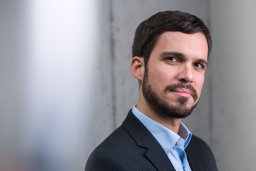 Daniel Vogler合作论文数Res Ctr Publ Sphere & Soc, Univ Zurich30
 Mario Schranz合作论文数24
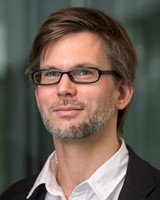 Linards Udris合作论文数19
 Jörg Schneider合作论文数Dept Commun & Media Res IKMZ, Univ Zurich15Lisa Schwaiger合作论文数Universität12Kurt Imhof合作论文数Universität Zürich11
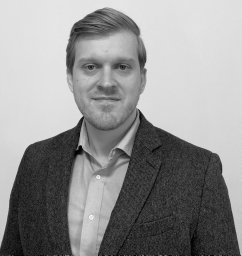 Adrian Rauchfleisch合作论文数Grad Inst Journalism, Natl Taiwan Univ7
 Mike S. Schäfer合作论文数Department of Communication and Media Research, University of Zurich4Thomas N. Friemel合作论文数University of Zurich Institute of Mass Communication and Media Research (IPMZ)4
 Daniel Kunstle合作论文数3Andrea Häuptli合作论文数3
 Sarah Marschlich合作论文数Dept Commun & Media Res IKMZ, Univ Zurich3
 Pascal Jürgens合作论文数University of Mainz3Esther Kamber合作论文数3Morley Weston合作论文数2
 Dario Siegen合作论文数2
 Sarah Geber合作论文数Dept Commun & Media Res, Univ Zurich2
 Olaf Jandura合作论文数Institut für Kommunikationswissenschaft und Medienforschung, Ludwig-Maximilians-Universität München2
 Marlis Prinzing合作论文数2Thomas Zerback合作论文数Institut für Publizistik, Johannes Gutenberg-Universität Mainz2Forschungszentrum Öffentlichkeit und Gesellschaft合作论文数1
 Miriam Klein合作论文数1Camille Nchakga合作论文数1
 Mihael Djukic合作论文数1
 Raphael Kösters合作论文数1
 Isabel Heller Sorensen合作论文数1
 Florent Thouvenin合作论文数Faculty of Law, University of Zurich1
 Ernesto de Leon合作论文数Inst Commun & Media Studies, Univ Bern1
 Silke Furst合作论文数Dept Commun & Media Res, Univ Zurich1
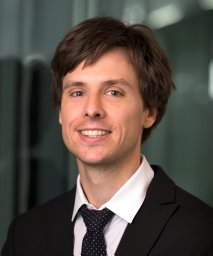 Philipp Bachmann合作论文数Univ Zurich1
 Melanie Magin合作论文数Dept Sociol & Polit Sci, Norwegian Univ Sci & Technol1
 Antonis Kalogeropoulos合作论文数Univ Liverpool1
 Birgit Stark合作论文数1
 Jane Suiter合作论文数Sch Commun, Dublin City Univ1
 Andreas A. Riedl合作论文数Department of Economics, University of Augsburg1Matthias Vonwil合作论文数1Barbara Peter合作论文数1
 Diana Ingenhoff合作论文数MCM Institute;University of St;MCM Institute, University of St1Christina Holtz-Bacha合作论文数1Lynda Lee Kaid合作论文数College of Journalism and Communications, University of Florida1




