TubeTracker provides a method to partially automate analysis of pollen tube growth using live imaging. Pollen function is critical for successful plant reproduction and crop productivity and it is important to develop accessible methods to quantitatively analyze pollen performance to enhance reproductive resilience. Here we introduce TubeTracker as a method to quantify key parameters of pollen performance such as, time to pollen grain germination, pollen tube tip velocity and maintenance of pollen tube integrity. TubeTracker integrates manual and automatic image processing routines and the graphical interface allows the user to interact with the software to make manual corrections of automated steps. TubeTracker does not depend on training data sets required to implement machine learning approaches and thus can be immediately implemented using readily available imaging systems. Furthermore, TubeTracker is an excellent tool to produce the pollen performance data sets necessary to take advantage of emerging AI-based methods to fully automate analysis. We tested TubeTracker and found it to be accurate in measuring pollen tube germination and pollen tube tip elongation across multiple cultivars of tomato. Graphical user interface of TubeTracker showing all supported functionalities.
Rising temperature extremes during critical reproductive periods threaten the yield of major grain and fruit crops. Flowering plant reproduction depends on the ability of pollen grains to generate a pollen tube, which elongates through the pistil to deliver sperm cells to female gametes for double fertilization. We used tomato as a model fruit crop to determine how high temperature affects the pollen tube growth phase, taking advantage of cultivars noted for fruit production in exceptionally hot growing seasons. We found that exposure to high temperature solely during the pollen tube growth phase limits fruit biomass and seed set more significantly in thermosensitive cultivars than in thermotolerant cultivars. Importantly, we found that pollen tubes from the thermotolerant Tamaulipas cultivar have enhanced growth in vivo and in vitro under high temperature. Analysis of the pollen tube transcriptome’s response to high temperature allowed us to define two response modes (enhanced induction of stress responses and higher basal levels of growth pathways repressed by heat stress) associated with reproductive thermotolerance. Importantly, we define key components of the pollen tube stress response, identifying enhanced reactive oxygen species (ROS) homeostasis and pollen tube callose synthesis and deposition as important components of reproductive thermotolerance in Tamaulipas. Our work identifies the pollen tube growth phase as a viable target to enhance reproductive thermotolerance and delineates key pathways that are altered in crop varieties capable of fruiting under high-temperature conditions.
In flowering plants, male gametes are immotile and carried by dry pollen grains to the female organ. Dehydrated pollen is thought to withstand abiotic stress when grains are dispersed from the anther to the pistil, after which sperm cells are delivered via pollen tube growth for fertilization and seed set. Yet, the underlying molecular changes accompanying dehydration and the impact on pollen development are poorly understood. To gain a systems perspective, we analyzed published transcriptomes and proteomes of developing Arabidopsis thaliana pollen. Waves of transcripts are evident as microspores develop to bicellular, tricellular, and mature pollen. Between the "early"- and "late"-pollen-expressed genes, an unrecognized cluster of transcripts accumulated, including those encoding late-embryogenesis abundant (LEA), desiccation-related protein, transporters, lipid-droplet associated proteins, pectin modifiers, cysteine-rich proteins, and mRNA-binding proteins. Results suggest dehydration onset initiates after bicellular pollen is formed. Proteins accumulating in mature pollen like ribosomal proteins, initiation factors, and chaperones are likely components of mRNA-protein condensates resembling "stress" granules. Our analysis has revealed many new transcripts and proteins that accompany dehydration in developing pollen. Together with published functional studies, our results point to multiple processes, including (1) protect developing pollen from hyperosmotic stress, (2) remodel the endomembrane system and walls, (3) maintain energy metabolism, (4) stabilize presynthesized mRNA and proteins in condensates of dry pollen, and (5) equip pollen for compatibility determination at the stigma and for recovery at rehydration. These findings offer novel models and molecular candidates to further determine the mechanistic basis of dehydration and desiccation tolerance in plants.
Key message Pollen tubes from closely related species and mutants lacking pollen tube MYB transcription factors are able to initiate FER/LRE-dependent synergid cell calcium oscillations. Abstract Reproductive isolation leads to the evolution of new species; however, the molecular mechanisms that maintain reproductive barriers between sympatric species are not well defined. In flowering plants, sperm cells are immotile and are delivered to female gametes by the pollen grain. After landing on the stigmatic surface, the pollen grain germinates a polarized extension, the pollen tube, into floral tissue. After growing via polar extension to the female gametes and shuttling its cargo of sperm cells through its cytoplasm, the pollen tube signals its arrival and identity to synergid cells that flank the egg. If signaling is successful, the pollen tube and receptive synergid cell burst, and sperm cells are released for fusion with female gametes. To better understand cell–cell recognition during reproduction and how reproductive barriers are maintained between closely related species, pollen tube-initiated synergid cell calcium ion dynamics were examined during interspecific crosses. It was observed that interspecific pollen tubes successfully trigger synergid cell calcium oscillations—a hallmark of reproductive success—but signaling fails downstream of key signaling genes and sperm are not released. This work further defines pollen tube–synergid cell signaling as a critical block to interspecific hybridization and suggests that the FERONIA/LORELEI signaling mechanism plays multiple parallel roles during pollen tube reception.
PURPOSE:The echolocating bat is used as a model for studying the auditory nervous system because its specialized sensory capabilities arise from general mammalian auditory percepts such as pitch and sound source localization. These percepts are mediated by precise timing within neurons and networks of the lower auditory brainstem, where the gap junction protein Connexin36 (CX36) is expressed. Gap junctions and electrical synapses in the central nervous system are associated with fast transmission and synchronous patterns of firing within neuronal networks. The purpose of this study was to identify areas where CX36 was expressed in the bat cochlear nucleus to shed light on auditory brainstem networks in a hearing specialist animal model.METHODS:We investigated the distribution of CX36 RNA throughout the cochlear nucleus complex of the echolocating big brown bat, Eptesicus fuscus, using in situ hybridization. As a qualitative comparison, we visualized Gjd2 gene expression in the cochlear nucleus of transgenic CX36 reporter mice, species that hear ultrasound but do not echolocate.RESULTS:In both the bat and the mouse, CX36 is expressed in the anteroventral and in the dorsal cochlear nucleus, with more limited expression in the posteroventral cochlear nucleus. These results are generally consistent with previous work based on immunohistochemistry.CONCLUSION:Our data suggest that the anatomical substrate for CX36-mediated electrical neurotransmission is conserved in the mammalian CN across echolocating bats and non-echolocating mice.
Pollen grains are central to sexual plant reproduction and their viability and longevity/storage are critical for plant physiology, ecology, plant breeding, and many plant product industries. Our goal is to present progress in assessing pollen viability/longevity along with recent advances in our understanding of the intrinsic and environmental factors that determine pollen performance: the capacity of the pollen grain to be stored, germinate, produce a pollen tube, and fertilize the ovule. We review current methods to measure pollen viability, with an eye toward advancing basic research and biotechnological applications. Importantly, we review recent advances in our understanding of how basic aspects of pollen/stigma development, pollen molecular composition, and intra- and intercellular signaling systems interact with the environment to determine pollen performance. Our goal is to point to key questions for future research, especially given that climate change will directly impact pollen viability/longevity. We find that the viability and longevity of pollen are highly sensitive to environmental conditions that affect complex interactions between maternal and paternal tissues and internal pollen physiological events. As pollen viability and longevity are critical factors for food security and adaptation to climate change, we highlight the need to develop further basic research for better understanding the complex molecular mechanisms that modulate pollen viability and applied research on developing new methods to maintain or improve pollen viability and longevity.
Olfactory sensory neurons (OSNs) are functionally defined by their expression of a unique odorant receptor (OR). Mechanisms underlying singular OR expression are well studied, and involve a massive cross-chromosomal enhancer interaction network. Trace amine-associated receptors (TAARs) form a distinct family of olfactory receptors, and here we find that mechanisms regulating Taar gene choice display many unique features. The epigenetic signature of Taar genes in TAAR OSNs is different from that in OR OSNs. We further identify that two TAAR enhancers conserved across placental mammals are absolutely required for expression of the entire Taar gene repertoire. Deletion of either enhancer dramatically decreases the expression probabilities of different Taar genes, while deletion of both enhancers completely eliminates the TAAR OSN populations. In addition, both of the enhancers are sufficient to drive transgene expression in the partially overlapped TAAR OSNs. We also show that the TAAR enhancers operate in cis to regulate Taar gene expression. Our findings reveal a coordinated control of Taar gene choice in OSNs by two remote enhancers, and provide an excellent model to study molecular mechanisms underlying formation of an olfactory subsystem.
Sexual reproduction in flowering plants takes place without an aqueous environment. Sperm are carried by pollen through air to reach the female gametophyte, though the molecular basis underlying the protective strategy of the male gametophyte is poorly understood. Here we compared the published transcriptomes of Arabidopsis thaliana pollen, and of heat-responsive genes, and uncovered insights into how mature pollen (MP) tolerates desiccation, while developing and germinating pollen are vulnerable to heat stress. Germinating pollen expresses molecular chaperones or "heat shock proteins" in the absence of heat stress. Furthermore, pollen tubes that grew through pistils at basal temperature showed induction of the endoplasmic reticulum (ER) stress response, which is a characteristic of stressed vegetative tissues. Recent studies show MP contains mRNA-protein (mRNP) aggregates that resemble "stress" granules triggered by heat or other stresses to protect cells. Based on these observations, we postulate that mRNP particles are formed in maturing pollen in response to developmentally programmed dehydration. Dry pollen can withstand harsh conditions as it is dispersed in air. We propose that, when pollen lands on a compatible pistil and hydrates, mRNAs stored in particles are released, aided by molecular chaperones, to become translationally active. Pollen responds to osmotic, mechanical, oxidative, and peptide cues that promote ER-mediated proteostasis and membrane trafficking for tube growth and sperm discharge. Unlike vegetative tissues, pollen depends on stress-protection strategies for its normal development and function. Thus, heat stress during reproduction likely triggers changes that interfere with the normal pollen responses, thereby compromising male fertility. This holistic perspective provides a framework to understand the basis of heat-tolerant strains in the reproduction of crops.
The evolution of plant organs, including leaves, stems, roots, and flowers, mediated the explosive radiation of land plants, which shaped the biosphere and allowed the establishment of terrestrial animal life. Furthermore, the fertilization products of angiosperms, seeds serve as the basis for most of our food. The evolution of organs and immobile gametes required the coordinated acquisition of novel gene functions, the co-option of existing genes, and the development of novel regulatory programs. However, our knowledge of these events is limited, as no large-scale analyses of genomic and transcriptomic data have been performed for land plants. To remedy this, we have generated gene expression atlases for various organs and gametes of 10 plant species comprising bryophytes, vascular plants, gymnosperms, and flowering plants. Comparative analysis of the atlases identified hundreds of organ- and gamete-specific gene families and revealed that most of the specific transcriptomes are significantly conserved. Interestingly, the appearance of organ-specific gene families does not coincide with the corresponding organ’s appearance, suggesting that co-option of existing genes is the main mechanism for evolving new organs. In contrast to female gametes, male gametes showed a high number and conservation of specific genes, suggesting that male reproduction is highly specialized. The expression atlas capturing pollen development revealed numerous transcription factors and kinases essential for pollen biogenesis and function. To provide easy access to the expression atlases and these comparative analyses, we provide an online database, www.evorepro.plant.tools, that allows the exploration of expression profiles, organ-specific genes, phylogenetic trees, co-expression networks, and others.
Reproductive isolation leads to the evolution of distinct new species, however, the molecular mechanisms that promote and maintain reproductive barriers are elusive. In flowering plants sperm cells are immotile and are delivered to female gametes by the pollen grain which germinates a polarized extension, the pollen tube, into floral tissue. After growing via polar extension to the female gametophyte, the pollen tube signals with receptive female cells flanking the egg in two distinct steps. If signaling is successful, the pollen tube releases sperm cells for fusion with female gametes. To better understand cell-cell recognition during reproduction, we investigated calcium ion dynamics associated with interspecific cell signaling between mating partners. We observed that interspecific pollen tubes successfully complete initial cell-cell signaling, but fail during later phases of pollen tube reception. Our work refines our understanding of pollen tube reception as a critical block to interspecific hybridization. Our results also shed light on the functional significance of the two phases of pollen tube reception, and implicate the second step as being the stage during which the pollen tube presents its genetic identity.
In flowering plants, pollen tubes undergo tip growth to deliver two nonmotile sperm to the ovule where they fuse with an egg and central cell to achieve double fertilization. This extended journey involves rapid growth and changes in gene activity that manage compatible interactions with at least seven different cell types. Nearly half of the genome is expressed in haploid pollen, which facilitates genetic analysis, even of essential genes. These unique attributes make pollen an ideal system with which to study plant cell-cell interactions, tip growth, cell migration, the modulation of cell wall integrity, and gene expression networks. We highlight the signaling systems required for pollen tube navigation and the potential roles of Ca2+ signals. The dynamics of pollen development make sexual reproduction highly sensitive to heat stress. Understanding this vulnerability may generate strategies to improve seed crop yields that are under threat from climate change.
HAPLESS2 (HAP2) is a broadly conserved, gamete-expressed transmembrane protein that was shown recently to be structurally homologous to viral class II fusion proteins, which initiate fusion with host cells via insertion of fusion loops into the host membrane. However, the functional conformation of the HAP2 fusion loops has remained unknown, as the reported X-ray structure of Chlamydomonas reinhardtii HAP2 lacked this critical region. Here, we report a structure-guided alignment that reveals diversification of the proposed HAP2 fusion loops. Representative crystal structures show that in flowering plants, HAP2 has a single prominent fusion loop projecting an amphipathic helix at its apex, while in trypanosomes, three small nonpolar loops of HAP2 are poised to interact with the target membrane. A detailed structure-function analysis of the Arabidopsis HAP2 amphipathic fusion helix defines key residues that are essential for membrane insertion and for gamete fusion. Our study suggests that HAP2 may have evolved multiple modes of membrane insertion to accommodate the diversity of membrane environments it has encountered during eukaryotic evolution.
In flowering plants, successful reproduction and generation of seed depends on the delivery of immotile sperm to female gametes via the pollen tube. As reproduction in flowering plants is the cornerstone of our agricultural industry, there is a need to uncover the genes, small molecules, and environmental conditions that affect pollen tube growth dynamics. However, methods for measuring pollen tube phenotypes are labor intensive, and suffer from a tradeoff between workload and resolution. To approach these problems, we use an image analysis technique called Automated Stack Iterative Subtraction (ASIST). Our tool converts growing pollen tube tips into closed particles, making the automated simultaneous extraction of multiple pollen tube phenotypes from hundreds of individual cells tractable via existing particle identification technology. Here we use our tool to analyze growth dynamics of pollen tubes in vitro, and semi in vivo. We show that ASIST provides a framework for robust, high throughput analysis of pollen tube growth behaviors in populations of cells, thus facilitating pollen tube phenomics.
Blocks to polyspermy are thought to be universally adaptive because they prevent lethal genome imbalance and chromosome segregation defects. However, two recent reports show that plants with two male parents are viable and could contribute significantly to polyploid speciation.
Blocks to polyspermy are thought to be universally adaptive because they prevent lethal genome imbalance and chromosome segregation defects. However, two recent reports show that plants with two male parents are viable and could contribute significantly to polyploid speciation.
 peter j kight合作论文数15Alexander R. Pokora合作论文数13
 Alexander R Leydon合作论文数Department of Molecular Biology, Celllular Biology &Biochemistry, Brown University Providence;Department of Molecular Biology, Brown University Providence12
 Ravishankar Palanivelu合作论文数Department of Molecular Genetics and Cell Biology, The University of Chicago10philip pointer合作论文数9tamara k christenson合作论文数9kenneth cook合作论文数9regina lach合作论文数7william kitchen合作论文数6
 Pamela Green合作论文数Department of Plant and Soil Sciences, College of Agriculture and Natural Resources, University of Delaware6
 Thomas Dresselhaus合作论文数Department of Cell Biology and Plant Biochemistry, University of Regensburg, Germany5Beale Kristin M合作论文数5william l cyrus合作论文数4
 Heven Sze合作论文数Department of Cell Biology & Molecular Genetics, College of Computer, Mathematical, and Natural Sciences, University of Maryland4Preetmoninder Lidder合作论文数4Daphne Preuss合作论文数4mahendra mehta合作论文数3Nathaniel Donaldson Ponvert合作论文数3
 Tomokazu Kawashima合作论文数Austrian Academy of Sciences, Gregor Mendel Institute3
 Yuan Qin (秦源)合作论文数College of Life Sciences, Fujian Agriculture and Forestry University;Center for Genomics, Fujian Agriculture and Forestry University3Frank Aubrey C合作论文数3
 David Honys合作论文数Institute of Experimental Botany3
 Alice Cheung合作论文数Department of Biochemistry and Molecular Biology, College of Natural Sciences, University of Massachusetts Amherst3
 Jeff Harper合作论文数Department of Biochemistry, Molecular Biology & Biotechnology, College of Agriculture, Biotechnology & Natural Resources, University of Nevada, Reno3Clara Levy合作论文数2Jacob Goldberg合作论文数2luc mauvarin合作论文数2regina lack合作论文数2steve canary合作论文数2von Besser Kiera合作论文数2Chanroj Salil合作论文数2
 Karolina Woroniecka合作论文数2
 David Twell合作论文数UiT The Arctic University of Norway;Department of Biological Sciences, Korea Advanced Institute of Science and Technology;Department of Experimental Botany, Radboud University;Plant Gene Expression Center, University of California, Berkeley;French National Centre for Scientific Research;Universitat Zurich;Department of Genetics, University of Leicester;Charles University in Prague;Cardiff University;Temasek Life Sciences Laboratory2
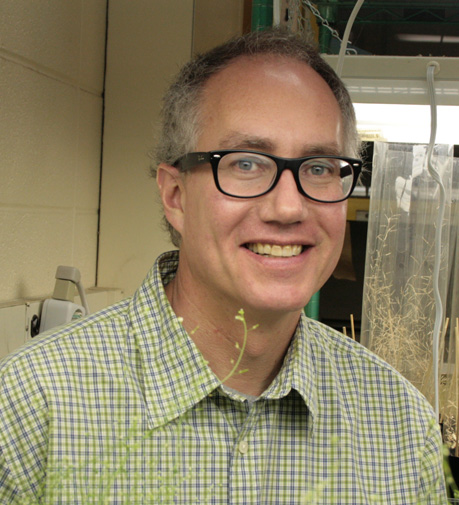 John M. Ward合作论文数College of Food, Agricultural and Natural Resource Sciences, University of Minnesota;Department of Plant and Microbial Biology, College of Biological Sciences, University of Minnesota2Horgan Casie合作论文数2Chen Jefferson合作论文数2Castner Elizabeth合作论文数2
 Frédéric Berger合作论文数Gregor Mendel Institute, Austrian Academy of Sciences, Vienna BioCenter2
 Stephen Liberles合作论文数Department of Cell Biology, Faculty of Arts & Sciences, Harvard Medical School;Howard Hughes Medical Institute2Steven E. Smith合作论文数Department of Plant Sciences;University of Arizona;Department of Plant Sciences, University of Arizona2Stefanie Sprunck合作论文数2Elizabeth M Lord合作论文数2
 Jörg D. Becker合作论文数Centro de Biologia de Desenvolvimento, Instituto Gulbenkian de Ciencia2
 Rodney B. Croteau合作论文数Institute of Biological Chemistry, Washington State University2
 Gilad Barnea合作论文数Department of Molecular Pharmacology, Physiology, and Biotechnology, Brown University/Department of Neuroscience, Brown University/The Robert J. & Nancy D. Carney Institute for Brain Science, Brown University2
 Tatsuya Tsukamoto合作论文数Department of Horticulture, Michigan State University2Julian L. Wong合作论文数2Damayanthi Dunatunga合作论文数2yu jin kim合作论文数1




