This study examines the lithium isotope (delta 7Li) geochemistry of waters flowing through andesitic rocks in order to better constrain the dissolved lithium dynamic in a tropical volcanic island context. We report the first measurements of delta 7Li for eleven of the main rivers in Guadeloupe and four thermal springs on the slopes of La Soufrie`re volcano. These results have important implications for characterizing the mean riverine flux of lithium coming from the weathering of continental volcanic rocks, understanding the global oceanic budget of lithium, and finally, for interpreting the delta 7Li of past seawater. We have measured a large range of delta 7Li values (3.0-31.6%o) that we explained by different water-rock interaction processes at the scale of this small island. The rivers affected by hydrothermal inputs are the most concentrated and isotopically lighter (delta 7Li from 3.0-12.3%o). This is partly attributed to the leaching and dissolution of clay-rich, hydrothermally-altered rocks which are presumed to have low delta 7Li value and to the discharge from the hot-springs on La Soufrie`re volcano. The rivers not impacted by hydrothermal inputs are more diluted and isotopically heavier (delta 7Li from 16.0-31.6%o), highlighting two distinct weathering processes in the regolith: the precipitation and dissolution of secondary minerals. In the youngest part of the island, the rivers are characterized by high delta 7Li values, emphasizing that dissolved lithium is mainly controlled by the dissolution of primary andesitic minerals and the incorporation of 6Li into secondary minerals. In the oldest part of the island, the rivers have lower delta 7Li values, which are partly attributed to a low delta 7Li source from the dissolution of secondary minerals in the regolith. We also show a positive correlation between delta 7Li in river waters and the chemical weathering rates (CWR), related to the weatherable primary minerals content in watersheds. We note that this content is linked to rock age, precipitation, regolith type/thickness and geomorphologic parameters such as elevation and slope.
3-hydroxy fatty acids (3-OH FAs) produced by Gram-negative bacteria were recently proposed as promising temperature proxies. Nevertheless, the lipid adaptation mechanism of such microorganisms to temperature remains largely unexplored. Here, we investigated how growth temperature (5-25 degrees C) affects lipid profiles of nonhydroxylated (non-OH) and 3-OH FAs in two Pseudomonas veronii strains isolated from French alpine lakes. Membrane adaptation to rising temperatures was mainly driven by non-OH-FAs, characterised by a higher saturated/unsaturated ratio, while 3-OH FA total proportion slightly increased from 12 to 15% of total FAs. FA profiles showed a non-linear response, with minor changes between 5 and 18 degrees C cultivation temperature and a marked shift at 25 degrees C, as well as slight differences between the two isolates. Our findings illustrate varied lipid response to temperature with potential implications in using 3-OH FAs as temperature proxies in lakes.
Abstract Weathering plays a central role in the geological carbon cycle. Silicate mineral weathering is invoked as a stabilizing feedback on CO2 emissions, for example from volcanism during the emplacement of Large Igneous Provinces. However, modern-day studies show weathering can emit CO2 during oxidation of rock organic carbon (OCpetro) in sedimentary rocks and function as a positive feedback on climate warming. Here we measure the rhenium isotope composition (δ187Re) of Early Jurassic marine sediments to explore how OCpetro oxidation rates changed during warming across the Toarcian Ocean Anoxic Event (T-OAE). We find a 0.22 ± 0.10‰ decrease in δ187Re values during the T-OAE, with mass balance modeling showing this can be explained by increased OCpetro weathering intensity on land associated with 6–7 °C of global warming. We estimate this could have delivered 7600–20,490 PgC to the oceans and atmosphere, demonstrating that chemical weathering does not simply act as a stabilizing feedback during hyperthermal events.
This Virtual Special Issue (VSI) leverages new observations, techniques, and research questions to provide a holistic understanding of chemical weathering as a central function of the Earth System, thereby maintaining planetary habitability. A total of thirty papers in this VSI cover the main topics discussed in a conference held in Hainan Island (2023) focused on Weathering as the core function of a Habitable Earth. These papers can be categorized into five groups that reflect chemical weathering as the nexus that connects different spheres of the Earth System: (1) development of weathering proxies based on the metals sourced from lithosphere, (2) weathering as a means of release of nutrients and pollutants that influence the biosphere, (3) weathering processes that are influenced by availability of water in the hydrosphere, (4) weathering feedbacks that control CO2 levels in the atmosphere, and (5) weathering reactions limited by soil production in the pedosphere. These five groups correspond to the 'Wuxing' (Five Phases) concept of ancient Chinese philosophy. This concept emphasizes the interplay of five fundamental components of the Earth System - lithosphere (metal), biosphere (wood), hydrosphere (water), atmosphere (fire, i.e., fire as hot air, and gas in atmosphere being of volcanic origin), and pedosphere (dirt). These studies demonstrate the great importance of weathering at the core of Earth System Science.
Agropastoral activities have impacted the habitable part of our planet-the "Critical Zone"-for thousands of years, triggering a major increase in soil erosion in mountain environments. Understanding and quantifying the impact of these activities on soil is central to the well-being of our societies. Here, we investigate the isotope ratios of the trace element lithium in detrital sediments of Lake Bourget, European Alps, and provide a reconstruction of the impact of human activities on the evolution of alpine soil during the Holocene. We demonstrate that during the Early Holocene, soil formation was altered by the development of pastoralism followed by tillage. This led to three major erosive surges (3.8 to 3.0, 2.8 to 1.6, and 1.6 ky cal BP to modern times), thinning soils down to a state close to that of their early development 10,000 y ago. The detailed study of the lithium detrital signal reveals the appearance of an altitudinal decoupling in the response of the Critical Zone in the Alps following the development of the agropastoral activities during the Iron Age. The onset of agropastoral activities disrupted the balance between soil formation and erosion, leading to erosion rates 3 to 10 times faster than soil production since the end of the Ice Age.
Chemical weathering over geological timescales acts as a source or sink of atmospheric carbon dioxide (CO2), while influencing long-term redox cycling and atmospheric oxygen (O-2) at Earth's surface. There is a growing recognition that the oxidative weathering of rock organic carbon (OCpetro) can release more CO2 than is locally drawn down by silicate weathering, and may vary due to changes in erosion and climate. The element rhenium (Re) has emerged as a proxy to track the oxidative weathering of OCpetro, yet uncertainties in its application remain namely that we lack a systematic assessment of the comparative mobility of Re and OCpetro during sedimentary rock weathering. Here we measure Re and OCpetro loss across gradients in rock weathering at 9 global sites, spanning a range of initial OCpetro values from similar to 0.2 % to >10 %. We use titanium to account for volume changes during weathering and assess Re and OCpetro loss alongside major elements that reflect silicate (Na, Mg), carbonate (Ca, Mg) and sulfide (S) weathering. Across the dataset, Re loss is correlated with OCpetro loss but not with loss of any other major element. Across the weathering profiles, the average molar ratio of OCpetro to Re loss was 0.84 +/- 0.15, with 8 out of 9 sites having a ratio >0.74. At one site (Marcellus Shale), the average ratio was lower at 0.58 +/- 0.11. The excess loss of Re matches expectations that, typically, between similar to 0 and 20 % of the Re liberated by sedimentary rock weathering derives from silicate or sulfide phases, while some OCpetro may be physically or chemically protected from weathering. Overall, our measurements provide validation for the Re proxy of OCpetro oxidation and allow future work to further improve our knowledge of regional and global-scale rates of this important source of CO2 in the geochemical carbon cycle.
The isotopic composition of rhenium (Re) has potential for use as a proxy to infer changes in seafloor redox and/ or global oxidative weathering intensity. Despite an emerging dataset on this nascent isotope system in Earth's surficial environments, very little is known about processes that control Re isotope fractionation, nor the isotopic composition of hydrothermal systems. Here we present Re concentrations and Re isotopic compositions (reported as delta Re-187, relative to NIST 3143) of groundwaters and hydrothermal fluids from three Icelandic settings. First, we show that high-temperature fluids that have experienced vapour-phase segregation (boiling) from the Reykjanes peninsula and the Hengill volcanic system have the highest delta Re-187 values (-0.01 to +0.34 %o) observed to date, inferred to result from Re isotope fractionation during incorporation of Re into secondary reduced minerals. Second, we examine the M & yacute;vatn area in northern Iceland, which has both cold and warm groundwaters. Cold groundwaters (< 10( degrees)C) have delta Re-187 values indistinguishable from Icelandic basalts (-0.36 to -0.32 %o) whilst warm waters have higher delta Re-187 (-0.31 to +0.19 %o) which increase with increasing temperature (up to 45( degrees)C). The variation of delta Re-187 in M & yacute;vatn groundwaters is closely mirrored by variations in S98Mo, consistent with mixing between compositionally distinct water end-members. Finally, geothermal waters from the Geysir field have variable Re concentrations and delta Re-187 values (-0.23 to +0.34 %o), likely reflecting multiple physicochemical processes. Using these results, we show that hydrothermal activity is unlikely to exert a large net impact on the seawater Re budget, nor the secular changes in seawater delta Re-187. These findings also point toward developing a novel Re isotope tracer for redox processes.
Abstract Oxidative weathering of organic carbon in sedimentary rocks is a major source of CO2 to the atmosphere over geological timescales, but the size of this emission pathway in Earth's past has not been directly quantified due to a lack of available proxy approaches. We have measured the rhenium isotope composition of organic‐rich rocks sampled from unweathered drill cores and weathered outcrops in south Texas, whose stratigraphic successions can be tightly correlated. Oxidative weathering of more than 90% of the organic carbon and ∼85% of the rhenium is accompanied by a shift to lower rhenium isotope compositions in the weathered outcrops. The calculated isotope composition of rhenium weathered from the initial bedrock for individual samples varies systematically by ∼0.7‰ with different fractions of rhenium loss. This variation can be empirically modeled with isotope fractionation factors of α = 1.0002–1.0008. Our results indicate that the isotope composition of rhenium delivered to the oceans can be altered by weathering intensity of rock organic matter and that the rhenium isotope composition of seawater is sensitive to past oxidative weathering and associated CO2 emissions.
Recent analytical advances in the measurement of rhenium (Re) isotope ratios allow its potential as a palaeoredox and chemical weathering proxy to be explored. However, a successful isotopic proxy must be grounded by an understanding of its composition and behaviour in the solid Earth. Here, we present Re concentrations and Re isotopic (8187Re) compositions for a well-characterised sequence of lavas from Hekla volcano, Iceland. The concentration of Re varies from 0.02 to 1.4 ng/g, decreasing from basalt to more evolved lavas. We show that the crystallisation and removal of magnetite is responsible for the Re decrease in this system. By contrast, 8187Re values for the same suite of samples show a relatively narrow range (-0.45 to -0.22 %o), suggesting minimal resolvable Re isotope fractionation between magnetite and the silicate melt. Together with other samples, including mid-ocean ridge basalts, these first igneous data can be used to estimate a baseline for terrestrial materials (8187Re = -0.33 +/- 0.15 %o, 2 s.d., n = 14), from which lowtemperature Re isotope variations in Earth's surficial environments can be assessed, alongside the global isotope mass balance of Re.
Lentic waters are biogeochemical reactors, producing and receiving carbon (C) originally fixed by the terrestrial and aquatic biosphere, which is then buried in sediments or respired back to the atmosphere in the forms of carbon dioxide (CO2) and one of the more potent greenhouse gas (GHG) methane (CH4). Additionally, lakes serve as archives of terrestrial and aquatic carbon processes within their sediments, enabling the reconstruction of historical changes spanning thousands of years. These changes encompass alterations in land cover, indicated by pollen records, soil carbon erosion and shifts in lake productivity resulting from changes in land use and climate. Both the burial of C in lakes and the emissions of GHGs are recognised as important components of Earth's climate system, yet they remain poorly understood and constrained due to inadequate quantities and qualities of observations. In the case of GHG emissions from lakes, observations are often sporadic, failing to capture the significant spatial and temporal variations in emissions across diverse lentic systems. To address this challenge, process-based models that incorporate the interconnected biogeochemical processes occurring within lakes and their watersheds would arguably be the best tool to extrapolate from site-level observations to regional and finally global scales, to quantify the anthropogenic impact on these fluxes and to reconstruct long-term shifts in emissions and burial due to changes in land cover and climate. However, the development and evaluation of such models is hampered by the lack of observations in sufficient quality. In this project, we bring together a unique consortium of specialists in aquatic ecology, biogeochemistry, palynology, sedimentology and modelling of terrestrial and aquatic biogeochemistry. This project will put forth a national programme of systematic, long-term observations of lake GHG and C cycling processes of unmet detail, consistency and quality. First, at 40 pilot sites spanning typological and environmental gradients, there will be a comprehensive data acquisition endeavour to evaluate biological processes and mesological factors influencing the sequestration or recycling of organic carbon. This effort will be complemented with a synthesis of existing data (WP1). Second, based on well-dated sediment records, which include both newly-acquired and synthesised existing data, variability of lake C burial and their climate and land-use controls will be reconstructed over the past 150 years (WP2). For 15 of these pilot sites, reconstruction will go back until the mid-Holocene (5,000 years BP), allowing us to shed light on the anthropogenic perturbation of the C cycle in this earlier part of human history, which is commonly excluded from this type of research due to lack of information. The activities of these first two WPs will result in an open-source national database, guaranteeing valorisation of our research far beyond this project. In WP3, we will use the land surface model (LSM) ORCHIDEE C-lateral to assess C cycling in the terrestrial biosphere and the mobilisation of biospheric C into lakes, which is possible due to an explicit representation of soil C leaching and erosion processes and a downscaling scheme permitting us to assess C exports from watersheds at sub-grid scale. While LSMs are used to assess evolution of biospheric C budgets from the beginning of the Industrial Period, we will use it to hindcast the evolution since the mid-Holocene, using lake sediment records for model validation. Moreover, we will develop a new process-based lake C model supported by the database established in WPs 1 and 2, which we will couple to ORCHIDEE C-lateral to simulate lake C burial and GHG emissions in response to climate and processes in the lake watershed. This model set-up will first be used to better constrain contemporary large-scale lake GHG emissions and to disentangle the anthropogenic perturbation of these fluxes from the natural background flux. These estimates will be revolutionary, as they will allow attributing part of lake GHG emissions to anthropogenic emissions for national GHG budget reporting. Then, these models will be emulated to reconstruct evolution of lake GHG budgets and C budgets of the whole lake watershed since the mid-Holocene. While simulations will first be performed at the scales of France and Europe, the development of international partnerships to implement observations from other biomes (WP4) will finally support simulations at the global scale.
A repository of data files, code and python/R environments for the manuscript "Rock organic carbon oxidation CO2 release offsets silicate weathering sink" by Jesse R. Zondervan, Robert G. Hilton, Mathieu Dellinger, Fiona J. Clubb, Tobias Roylands, Mateja Ogrič. This repository contains an Excel file and several zip files. Zip files containing code, data and python environment to run a simulation of the Global OCpetro Oxidation model: River rhenium (Re) and OCpetro oxidation data: Supplementary Tables.xlsx Code only: Global_OCpetro_Oxidation-v1.1.0.zip (uploaded Github repository) Geospatial data files only: input_global_(data files only).zip Python environment only: ocpetro_oxidation_env.zip Code, data and environment: ocpetro_oxidation_code_data_env.zip Outputs of the model presented in the manuscript: Geospatial raster files of Fig 1: Re sample locations shapefile (panel A): Re_sample_locations.zip Re sample catchment shapefile (panel A): Re_sample_catchments.zip Median OCpetro stocks model (panel B): Output_OCpetro_stock_median.zip Median denudation model (panel C): Output_denudation_median.zip Best-fit OCpetro oxidation extrapolation (panel D): Output_OC_petro_oxidation.zip Denudation and OCpetro stock subroutines (for transparency only, not needed to run OCpetro oxidation simulation): Code, data and R environment (python environment from ocpetro_oxidation_env.zip, see above): Submodels_code_data_Renv.zip The easiest way to run the code is by downloading the zip file containing code, data and environment, and then unpacking using packages provided by the OS, or by running the 'anaconda-project unarchive' command. Instructions for this can be found by searching for anaconda-project online, or directly via https://anaconda-project.readthedocs.io/en/latest/user-guide/tasks/create-project-archive.html?highlight=unarchive#extracting-the-archive-file [last accessed 26/01/2023] The code was developed in a python environment detailed in anaconda-project.yml, with every recursive dependency down to the individual build in anaconda-project-locked.yml. The code file is "Glob_newmethod_parr_globalresidual.py" in this repository. This code should be reproducible indefinitely, without depending on online package repositories. Both the commands and the environment have been captured into a fully locked anaconda project with all conda packages unpacked and included using anaconda-project --pack-envs. Note that only packages for running the code on Linux can be unpacked in this way; building on other platforms (Windows, Mac) will still require access to repositories. Notes: This code was run on an HPC environment with a job submitter called SLURM. As such, the code will run according to a slurm job array with numbers from 1-100 (10,000 monte carlo simulations). The command to run the Monte Carlo simulation as 10,000 seperate jobs is done like this: "sbatch --array=1-10000:1 job_script_file_name.sh". Note that the version of code uploaded here is set to run 100 simulations ("sbatch --array=1-100:1 job_script_file_name.sh"). When running 10,000 simulations, please change line 46 to "quantile = float(os.getenv('SLURM_ARRAY_TASK_ID'))/10000." Whilst it is possible to run this code on a single machine such as a personal computer, the user is warned that it takes 24 core hours per simulation to run. For example, a typical 4-core laptop would need 6 hours to run one simulation. Now calculate how many 10,000 would take... To run one simulation, line 46 ("quantile = float(os.getenv('SLURM_ARRAY_TASK_ID'))/100.") can be replaced with ("quantile = float(number between 0 and 1)"). Outputs will be saved for each simulation, which can rack up a lot of space, unless you specifically put in lines to delete these from the disk, or, in the case of the example job script for HPC usage, exclude the files when moving data from the node that ran the job. Example: sbatch --array=1-100:1 run_Glob_OCpetro_model.sh #note that this runs 100 simulations. An example of a job script file has been appended. Please note that the details of this job script depend on your machine or HPC system. Please consult your HPC support or platform's (Linux, Mac, Windows) command prompt instructions.
Convergent plate boundaries are essential components of the global carbon dioxide (CO 2 ) balance of the Earth. Their role of atmospheric CO 2 sink is controlled by silicates weathering. The Nepal Himalaya appears as a natural laboratory for the study of current spatial and temporal variations of CO 2 release at large scale. This chapter presents an up-to-date overview of the known hydrothermal systems in the Nepal Himalaya. It introduces the main hydrothermal sites and presents the associated results separately for thermal springs and gaseous emission zones from Far-Western to Eastern Nepal in the vicinity of the Main Central Thrust and Main Frontal Thrust. The chapter recalls the different measurement techniques used to identify, detects and measures various parameters in thermal spring waters and gaseous emissions.
 Bob Hilton合作论文数Department of Earth Sciences, University of Oxford;St Peter's College, University of Oxford50
 Jérôme Gaillardet合作论文数Institut de Physique du Globe de Paris29
 Julien Bouchez合作论文数Institut de Physique du Globe de Paris, French National Centre for Scientific Research24
 A. Joshua West合作论文数Department of Earth Sciences, College of Letters, Arts and Sciences, University of Southern California15
 Mateja Ogrič合作论文数13
 Valier Galy合作论文数Department of Marine Chemistry and Geochemistry, Woods Hole Oceanographic Institution13
 Damien Calmels合作论文数Institut de Physique du Globe de Paris, Université Paris 711
 Kevin Burton合作论文数Department of Earth Sciences, Faculty of Science, Durham University10Julie Prytulak合作论文数8Alexander J. Dickson合作论文数Royal Holloway, University of London | RHUL · Department of Earth Sciences8Kate Horan合作论文数Dept Clin Sci & Serv, Royal Vet Coll7Philip Pogge Von Strandmann合作论文数Earth Sciences, Faculty of Mathematical & Physical Sciences, University College London7G. Soulet合作论文数CEREGE, Université Paul-Cézanne Aix-Marseille 37
 Caroline Le Bouteiller合作论文数Cemagref UR ETGR, 2 rue de la Papeterie-BP 76, 38402 St-Martin-D’Heres, France6
 Darren R. Gröcke合作论文数Stable Isotope Biogeochemistry Laboratory, Department of Archaeology, Durham University6
 G. M. Nowell合作论文数DEPARTMENT OF GEOLOGICAL SCIENCES;DURHAM UNIVERSITY;DEPARTMENT OF GEOLOGICAL SCIENCES, DURHAM UNIVERSITY6Emily I. Burt合作论文数5
 Grant Katherine E合作论文数5
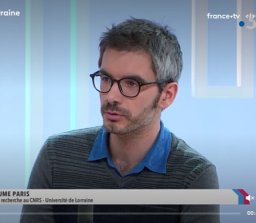 Guillaume Paris合作论文数Department of Geological and Planetary Sciences, California Institute of Technology5
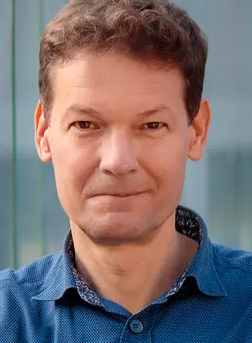 Niels Hovius合作论文数Institute for Earth and Environmental Sciences, University of Potsdam;Deutsches GeoForschungsZentrum GFZ5
 Christian France-Lanord合作论文数Centre de Recherches Pétrographiques et Géochimiques, Université de Lorraine5
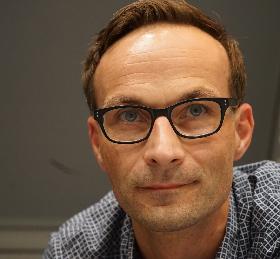 Dirk Sachse合作论文数GFZ German Research Centre for Geosciences5
 Pierre Sabatier合作论文数EDYTEM Laboratory of Environment Dynamics and Territories of the Mountain, Université Savoie Mont Blanc5
 Edward Tipper合作论文数Department of Earth Sciences, University of Cambridge5
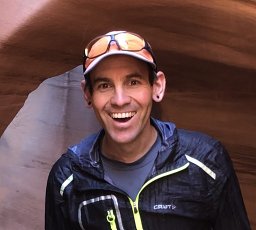 Joel Scheingross合作论文数Division of Geological and Planetary Sciences, California Institute of Technology5Tobias Roylands合作论文数4
 Marisa Repasch合作论文数Ctr Accelerator Mass Spectrometry, Lawrence Livermore Natl Lab4
 David Selby合作论文数Division of Musculoskeletal and Dermatological Sciences, School of Biological Sciences, Faculty of Biology, Medicine and Health, The University of Manchester4
 Wenhao Wang合作论文数The University of Hong Kong, The University of Hong Kong4
 Jérôme Poulenard合作论文数UMR CARRTEL 73376 le Bourget du Lac France, Université de Savoie4
 Josh West合作论文数College of Life Sciences, Brigham Young University;Department of Health Science, Brigham Young University4
 Jess F. Adkins合作论文数Division of Geological and Planetary Sciences, California Institute of Technology4
 Pascale Louvat合作论文数4
 Fabien Arnaud合作论文数Université de Savoie;Campus Savoie Technolac;Campus Savoie Technolac, Université de Savoie4
 Jens M. Turowski合作论文数Swiss Federal Research Institute WSL4Sebastien Klotz合作论文数3Adan Julian Ccahuana Quispe合作论文数3
 Soufian Henchiri合作论文数3
 Jesse R Zondervan合作论文数Sch Geog Earth & Environm Sci, Univ Plymouth3
 Thomas Croissant合作论文数Dept Geog, Univ Durham3Fiona J. Clubb合作论文数3
 Justin Ries合作论文数Department of Marine and Environmental Sciences, Northeastern University3
 Jotis Baronas合作论文数Department of Earth Sciences, Durham University3Pedro Freitas合作论文数3Charlotte L. Bryant合作论文数Environment, NERC Radiocarbon Facility3
 Timothy I. Eglinton合作论文数Geological Instituteh, Department of Earth Sciences, ETH Zuric3
 Helen K. Coxall合作论文数Graduate School of Oceanography, University of Rhode Island3Chris J. Ottley合作论文数3Frank A. Corsetti合作论文数Department of Earth Sciences, University of Southern California3




