Current process-based approaches to regulation are no longer fit for purpose
BACKGROUND:There has been increasing interest in the concept that exposures to environmental chemicals may be contributing factors to the epidemics of diabetes and obesity. On 11-13 January 2011, the National Institute of Environmental Health Sciences (NIEHS) Division of the National Toxicology Program (NTP) organized a workshop to evaluate the current state of the science on these topics of increasing public health concern.OBJECTIVE:The main objective of the workshop was to develop recommendations for a research agenda after completing a critical analysis of the literature for humans and experimental animals exposed to certain environmental chemicals. The environmental exposures considered at the workshop were arsenic, persistent organic pollutants, maternal smoking/nicotine, organotins, phthalates, bisphenol A, and pesticides. High-throughput screening data from Toxicology in the 21st Century (Tox21) were also considered as a way to evaluate potential cellular pathways and generate -hypotheses for testing which and how certain chemicals might perturb biological processes related to diabetes and obesity.CONCLUSIONS:Overall, the review of the existing literature identified linkages between several of the environmental exposures and type 2 diabetes. There was also support for the "developmental obesogen" hypothesis, which suggests that chemical exposures may increase the risk of obesity by altering the differentiation of adipocytes or the development of neural circuits that regulate feeding behavior. The effects may be most apparent when the developmental exposure is combined with consumption of a high-calorie, high-carbohydrate, or high-fat diet later in life. Research on environmental chemical exposures and type 1 diabetes was very limited. This lack of research was considered a critical data gap. In this workshop review, we outline the major themes that emerged from the workshop and discuss activities that NIEHS/NTP is undertaking to address research recommendations. This review also serves as an introduction to an upcoming series of articles that review the literature regarding specific exposures and outcomes in more detail.
The concept of the vanishing zero, which was first discussed 50 years ago in relation to pesticide residues in foods and food crops, focused on the unintended regulatory consequences created by ever-increasing sensitivity and selectivity of analytical methods, in conjunction with the ambiguous wording of legislation meant to protect public health. In the interim, the ability to detect xenobiotics in most substrates has increased from tens of parts per million to parts per trillion or less, challenging our ability to interpret the biological significance of exposures at the lowest detectable levels. As a result the focus of risk assessment, especially for potential carcinogens, has shifted from defining an acceptable level, to extrapolating from the best available analytical results. Analysis of gene expression profiles in exposed target cells using genomic technologies can identify biological pathways induced or repressed by the exposure as a function of dose and time. This treatise explores how toxicogenomic responses at low doses may inform risk assessment and risk management by defining thresholds for cellular responses linked to modes or mechanisms of toxicity at the molecular level.
This study examines the relationship between scheduling (3-, 2-, and 1-dayper-week classes) and achievement in college algebra. The study is grounded in spacing effect theory, which examines how variations in the frequency and timing of instruction affect student learning, and involves 116 Florida community college students. Regression analyses controlling for student and teacher attributes show that the 1-day-per-week group consistently scores the lowest on unit tests and final examinations. The findings suggest that although many students may prefer intensive courses or compressed schedules that minimize the time they spend on campus, these scheduling options may not be optimal for learning, at least not in mathematics.
We studied the effect of administration of 2,3,7,8-tetrachlorodibenzo-p-dioxin (TCDD) by i.p. injection once every 2 weeks in combination with a high-fat (HF) diet for 8 or 16 weeks on the body and organ weight changes as well as on the hepatic enzyme activity for estrogen metabolism in C3H/HeN female mice. Administration of TCDD at 100 mu g/kg b.w. once every 2 weeks for 8 weeks increased the body weight by 46% in the HE diet-fed animals, but not in the regular diet-fed animals. This is the first observation suggesting that TCDD at a high dose (100 mu g/ kg b.w.), but not at lower doses (1 or 10 mu g/kg b.w.), may have a strong obesity-inducing effect in C3H/HeN mice fed an HF diet. While TCDD increased liver weight and decreased thymus weight in animals, these effects were enhanced by feeding animals an HF diet. Metabolism studies showed that TCDD administration for 8 or 16 weeks increased the liver microsomal activity for the 2-and 4-hydroxylation of 17 beta-estradiol in animals fed a control diet, but surprisingly not in animals fed an HF diet. Treatment with TCDD dose-dependently increased the hepatic activity for the O-methylation of catechol estrogens in both control and HF diet-fed animals, and it also decreased the levels of liver microsomal sulfatase activity for hydrolysis of estrone-3 -sulfate. TCDD did not significantly affect the hepatic enzyme activity for the glucuronidation or esterification of endogenous estrogens. It is suggested that enhanced metabolic inactivation of endogenous estrogens by hepatic estrogen-metabolizing enzymes in TCDD-treated, control diet-fed animals contributes importantly to the reduced incidence of estrogen-associated tumors in animals treated with TCDD. (c) 2007 Elsevier Inc. All rights reserved.
“All truths are easy to understand once they are discovered; the point is to discover them.” Galileo Galilei Understanding the clinical and biological effects of drugs and dietary supplements through carefully conducted research is imperative to improve consumer health and safety.
To the Editors: Goodin et al. ([1][1]) reported a 19% decrease in mean serum testosterone levels among 12 men over a 4-week period in response to the daily consumption of 56 g isolated soy protein. These data are inconsistent with the results of a meta-analysis recently completed by the authors of
The purpose of this study was to assess the effect of classroom restructuring involving computer laboratories on student achievement and student attitudes toward computers and computer courses. The effects of the targeted student attributes of gender, previous programming experience, math background, and learning style were also examined. The open lab-based class structure consisted of a traditional lecture class with a separate, unscheduled lab component in which lab assignments were completed outside of class; the closed lab-based class structure integrated a lab component within the lecture class so that half the class was reserved for lecture and half the class was reserved for students to complete lab assignments by working cooperatively with each other and under the supervision and guidance of the instructor. The sample consisted of 71 students enrolled in four intact classes of Computer Science I during the fall and spring semesters of the 2006–2007 school year at two southern universities: two classes were held in the fall (one at each university) and two classes were held in the spring (one at each university). A counterbalanced repeated measures design was used in which all students experienced both class structures for half of each semester. The order of control and treatment was rotated among the four classes. All students received the same amount of class and instructor time.A multivariate analysis of variance (MANOVA) via a multiple regression strategy was used to test the study's hypotheses. Although the overall MANOVA model was statistically significant, independent follow-up univariate analyses relative to each dependent measure found that the only significant research factor was math background: Students whose mathematics background was at the level of Calculus I or higher had significantly higher student achievement than students whose mathematics background was less than Calculus I. The results suggest that classroom structures that incorporate an open laboratory setting are just as effective on student achievement and attitudes as classroom structures that incorporate a closed laboratory setting. The results also suggest that math background is a strong predictor of student achievement in CS 1.
 Th Umbreit合作论文数19William M. Hancock合作论文数14Daniel Magraw合作论文数11
 Jose Benjamin Falck-Zepeda合作论文数International Food Policy Research Institute11
 C. Robin Buell合作论文数Department of Crop & Soil Sciences, College of Agricultural & Environmental Sciences, University of Georgia;Center for Applied Genetic Technologies, University of Georgia11
 Dominique Brossard合作论文数Department of Life Sciences Communication, College of Agricultural and Life Sciences, University of Wisconsin-Madison;Morgridge Institute for Research11
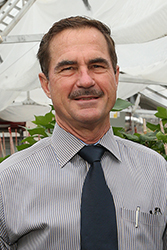 David M. Stelly合作论文数Department of Soil and Crop Sciences, College of Agriculture & Life Sciences, Texas A&M University11
 Neal Stewart合作论文数Center for Agricultural Synthetic Biology, Institute of Agriculture, The University of Tennessee;Department of Plant Sciences, The University of Tennessee11
 Ken E. Giller合作论文数Wageningen University & Research11
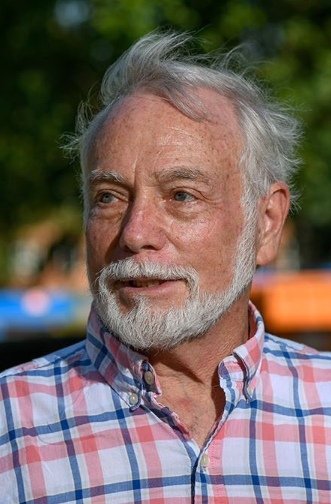 Fred Gould合作论文数Department of Entomology and Plant Pathology, College of Agriculture and Life Science, North Carolina State University;Genetic Engineering and Society Center, North Carolina State University11
 Richard Dixon合作论文数Department of Biological Sciences, College of Science, University of North Texas;BioDiscovery Institute, University of North Texas11
 Elizabeth Ransom合作论文数Department of Sociology and Anthropology, University of Richmond11
 Leland Glenna合作论文数Department of Rural Sociology, Cornell University11
 Carol Mallory-Smith合作论文数11Kevin V. Pixley合作论文数11Michael Rodemeyer合作论文数10
 Bruce Hamaker合作论文数Department of Food Sciences, College of Agriculture, Purdue University;Whistler Center for Carbohydrate Research, College of Agriculture, Purdue University10Robert J. Whitaker合作论文数10Timothy S. Griffin合作论文数9Robbin S. Johnson合作论文数9A. G. Kawamura合作论文数9Gene Hugoson合作论文数9
 Gail Czarnecki-Maulden合作论文数9Julia L. Kornegay合作论文数9
 James W. Jones合作论文数Department of Agricultural and Biological Engineering, University of Florida9
 Charles Rice合作论文数Department of Agronomy, Kansas State University;Department of Soil Science, Federal University of Santa Maria9
 Bob Goldberg合作论文数Department of Molecular, Cell, and Developmental Biology, College of Life Sciences, University of California, Los Angeles;Howard Hughes Medical Institute9
 Peter Kareiva合作论文数Institute of the Environment and Sustainability, University of California, Los Angeles9
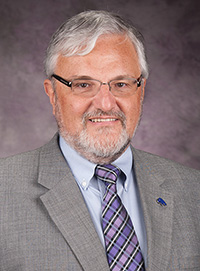 Jim E. Riviere合作论文数Institute of Computational Comparative Medicine, Kansas State University;North Carolina State University9
 Roger A. Sedjo (Roger Sedjo)合作论文数Resources for the Future9
 Kathleen Segerson合作论文数Department of Economics, College of Liberal Arts And Sciences, University of Connecticut9
 Harold L. Bergman合作论文数Department of Zoology and Physiology, University of Wyoming9Susan M. Capalbo合作论文数9
 Gebisa Ejeta合作论文数Department of Agronomy, Purdue University;Purdue Center for Global Food Security, Purdue University9
 Richard M. Amasino合作论文数Department of Biochemistry, College of Agricultural and Life Sciences, University of Wisconsin-Madison;Howard Hughes Medical Institute9
 Mercedes Vazquez-Anon合作论文数9Stephen Kelley合作论文数9Gary F. Hartnell合作论文数9Peggy Barlett合作论文数8
 Molly Jahn合作论文数Department of Plant and Agroecosystem Sciences, College of Agricultural and Life Sciences, University of Wisconsin-Madison;Defense Advanced Research Projects Agency, US Department of Defense8EJ HESSE合作论文数7Robert J. Meeker合作论文数5C S Nessel合作论文数4Robert S. Dipaola合作论文数4
 Michael J. Devito合作论文数National Health and Environmental Effects Research Laboratory, U.S. Environmental Protection Agency3M A Amoruso合作论文数3r mlynar合作论文数2Francisco Shen合作论文数2l rajcakova合作论文数2




