The heterodyne process has been an important part of electronic communications systems for over 100 years. The most common use of the heterodyne process is in modulation and demodulation where a local oscillator produces the heterodyne signal which is then mixed with (multiplied by) the signal of interest to move it from one frequency band to another. For example, the superheterodyne receiver invented by U.S. Army Major Edwin Armstrong in 1918 uses a local oscillator to move the incoming radio signal to an intermediate band where it can be easily demodulated with fixed filters rather than needing a variable filter or series of fixed filters for each frequency being demodulated (Butler, 1989, Duman 2005). Today you will find heterodyne as a critical part of any modern radio or TV receiver, cell phone, satellite communication system, etc. In this chapter we will introduce the concept of making a tunable or adaptive filter using the heterodyne process. The concept is very similar to that of the superheterodyne receiver, but applied to tunable filters. Most tunable filters require a complicated mechanism for adjusting the coefficients of the filter in order to tune the filter. Using the heterodyne approach, we move the signal to a fixed filter and then move the signal back to its original frequency band minus the noise that has been removed by the fixed filter. Thus complicated fixed filters that would be virtually impossible to tune using variation of the filter parameters can be easily made tuneable and adaptive.
The mathematical theory of Residue Number System (RNS) arithmetic existed in the mathematical literature for thousands of years, having first been published by Sun Tzu in 100 A.D. In the mid 1900's RNS number theory began to evolve into many engineering applications as the evolution of digital computers began. In recent times RNS arithmetic has again emerged extensively in cryptography, cyber security, machine learning, fault tolerant signal processing, biomedical signal processing, etc. This paper reviews the history of how over many decades RNS arithmetic has emerged into rapidly developing digital signal processing applications to provide efficient DSP solutions.
Quadratic Residue Number System (QRNS) arithmetic became very popular in the early 1980's. QRNS allows one to compute the multiplication of two complex numbers with only two real multiplies as compared to the four multiplies required in normal complex multiplication. This is particularly useful in the computation of Fast Fourier Transforms (FFT), Complex Number Theoretic Transforms (CNTT) and digital filters with complex coefficients. However, QRNS requires the RNS moduli to be prime numbers of the form 4k+1 or composite numbers with prime factors of that form. This restriction eliminates some of the most desirable moduli for RNS number systems. In 1986, Graham Jullien and William Miller introduced what they called Modified Quadratic Number Systems (MQRNS) which allowed any set of valid RNS moduli to be used in an MQRNS system in which two complex numbers could be multiplied with three real multiplications: one more that QRNS, but one less than normal complex multiplication. This MQRNS system lent itself well to applications in FFT, CNTT and digital filters with complex coefficients including complex heterodyne tunable filters.
Due to the fact that the two authors of this paper were both graduate students during the time when Dr. Sanjit Mitra was approximately ten years into his early academic career, both of the authors' technical careers evolved along trajectories similar to Dr. Mitra's, but with a time delay of approximately ten years. This scenario has enabled the authors to acquire a clear picture of Dr. Mitra's life-long career and they are pleased to have this opportunity to explain their interactive experiences with Dr. Mitra and present a broad historical overview of his professional activities.
Over a three-year period (1982-1985) 35 volunteers converted an old frame chicken coop into an energy efficient solar-based sustainable home called "La Casa del Sol" (The House of the Sun) using recycled and donated parts along with purchased items and services funded from periodic yard sales. The 1500 square-foot super-insulated passive-solar house that Sister Paula Gonzalez and Sister Mary Bookser have now lived in for nearly 30 years was built for less than $10 per square foot and uses less than 500 KWH of power per month. This is proof that sustainable living need not be costly or unpleasant. The success of "La Casa del Sol" led to a three-year year project (1991-1994) during which an unoccupied garage was transformed into EarthConnection Learning Center, an extremely energy efficient building that is sustainable down to the re-use of an old garage as its framework. One of the most sustainable features is its solar assisted geothermal system of 5000 feet of plastic tubing embedded in the ground that connects the thermal collectors filled with water on the roof. Solar PV panels generate electricity to power the heat pump directly and the building is equipped with super insulation and passive solar architecture that are highly energy efficient. The final case study is in mobile solar energy - an electric golf cart whose batteries are recharged by solar photo-voltaic panels.
The highest demonstrated efficiencies in solar power systems are achieved in Concentrated Solar Power (CSP) systems using a two-axis tracking parabolic dish collector (PDC) with a Stirling engine mounted at the focal point (CSP-Stirling System). Such systems have demonstrated 25% efficiency in converting solar energy to electricity. Unfortunately, such systems are also very costly. An alternative system makes use of an array of small (20cm diameter) parabolic collectors with inexpensive mirrors each directing the sunlight to a single optical fiber. The optical fibers from each mirror in the array transport the light to a central receiving unit that converts the light energy to heat for use with the Stirling engine. In addition to the solar heating element, there is also a propane or natural gas heating element that can augment the solar energy when clouds come by or during the evening hours. This system combines the advantages of a CSP-Stirling system with a much less costly solar collection system achieving about 20% solar to useful power (electric plus hot water) conversion in practice. The addition of the propane/natural gas system allows for 24-hour operation and the addition of batteries for electrical storage can serve as an interface to the home or to the grid. Such a system is appropriate for both remote off-grid operation and for on-grid integrated systems.
A simple 2nd-order FIR LMS adaptive filter is shown to track narrow-band interference very well under a variety of conditions. This filter or a more complex slaved filter can then be used in a DSSS-BPSK receiver to attenuate the interference.
The tendency over the last few decades has been for more and more of the analog front end of transmitters and receivers to be taken over by digital components. While some suggest that eventually the entire analog front end will be replaced by digital components (or even a truly software radio) we argue in this paper that it is unlikely that this will occur in the near future. We then identify key analog components that are difficult, if not impossible, to replace and discuss what is likely to occur on both the analog and digital side of the interface in the near future.
Modern broad-band communications systems as well as complex control systems and high-quality audio often require the removal of narrow-band interference through an adaptive band-stop filter with highly linear phase throughout its pass-band. High-Quality fixed linear phase filters can be designed using the Parks-McClellan technique, but these filters require a large number of coefficients and thus are difficult to make tunable or adaptive. Through the use of a new heterodyne approach involving complex heterodyne signals it is possible to take any linear-phase filter and make it adaptive. The process requires a new Nyquist filter that removes signals from the lower half of the z-plane (negative frequencies) and two heterodyne operations that shift the signal to the fixed linear-phase filter and back. Detailed designs are developed for adaptive center-frequency band-stop filters. These filters retain the linear-phase property of the original filter yet are fully adaptive over the range from DC to the Nyquist frequency.
Adaptive band-stop filters used for attenuation of narrow-band interference in spread-spectrum receivers or due to resonances in control systems and instrumentation are becoming more common as we pack more signals into limited bandwidth. Two techniques for implementing these adaptive band-stop filters include adaptive heterodyne filters and adaptive filters based on pre-stored filter coefficients. Simulations show that adaptive heterodyne filters have strong advantages in the case of high-speed applications particularly when the band-stop filter requires many taps with the pre-stored coefficient technique having advantages in low-speed applications and applications that can be achieved with a small number of filter taps.
Applications of adaptive heterodyne filtersModern broad-band wireless systems are designed to be co-located with older narrow-band communications so as to be able to share valuable spectrum (Etkin et al., 2005, Peha, 1998, 2000).This is accomplished by using a pseudorandom number sequence to control the spreading of the spectrum of the modern wireless transmitter so that it appears to be background noise that is easily filtered out by the narrow-band receiver.The five most common techniques for achieving spread-spectrum communications are (1) Frequency Hopping Spread Spectrum (FHSS, e.g.: IEEE 802.11-1997) in which the signal is transmitted at a random series of frequencies across the spectrum, (2) Direct Sequence Spread Spectrum (DSSS, e.g.: IEEE 802.11b and 802.11g) in which the transmitter multiplies the signal by a random sequence to make it appear like background noise, (3) Time Hopping Spread www.intechopen.com
The demand for longer battery life and faster speeds for communications circuits coupled with the exponential expansion of wireless communications devices is creating increasingly serious noise problems for communications circuits. Longer battery life means lower power consumption usually obtained by reduced noise margins that can only be achieved by better circuit design, but at least this under the designer's control. Demand for more spectrum by the explosion of wireless devices creates noise sources outside the designer's control that must be dealt with by increasingly clever noise attenuation circuits. This paper will review the state of the art for adaptive filtering as applied to external noise attenuation in communication circuits highlighting the most promising technologies including adaptive heterodyne filters.
Future wireless systems must find ways to make use of the increase of availability of spectrum for wireless applications that can co-exist with higher-priority users. Such techniques include: (1) Ultra Wideband (UWB) which attempts to share the spectrum by transmitting at very low power so as not to interfere with narrow-band transmissions, (2) Cognitive Radios that use spectrum sampling techniques to transmit at a given time, place and frequency that is in between that of the other users, and (3) advances in CMOS technology that allow operation in higher frequency bands like 60 GHZ. In order to effectively make use of this new spectrum availability, designers must use a multidisciplinary approach making use of new algorithms and modulation techniques, reduced power circuits, new microwave techniques and other innovations.
The standard approach to designing a tunable complex heterodyne filter is to take a high-pass (or low-pass) digital filter and rotate it by multiplying by a complex exponential. This is a three heterodyne process that rotates the filter first to the left, then two to the right, and finally back to the left. An alternative is to use a complex digital filter to eliminate the frequencies in the bottom half of the unit circle such that a two heterodyne process can be used. The advantage of the two heterodyne process is not only the elimination of one heterodyne operation, but also a reduction in hardware due to the need to only calculate the real output of the last heterodyne stage.
Complex arithmetic allows the separation of the poles and zeros in the top half of the z-plane from the poles and zeros in the bottom half of the z-plane. Heterodyne techniques can then be used to move the poles and zeros in the top half of the plane counter-clockwise and the poles and zeros in the bottom half of the z-plane clockwise. For the case of narrow-band band-pass filters, a significant hardware savings can be obtained by using only the real part of the resulting output.
 Louis G. Johnson合作论文数9Hh Loomis合作论文数8R. H. Strandberg合作论文数8k v rangarao合作论文数6D Sasidaran合作论文数5Ke Nelson合作论文数5
 Akbar Azam合作论文数5
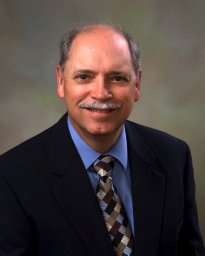 Jenkins, W.K.合作论文数School of Electrical and Computer Engineering, Pennsylvania State University5Wen Feng Leong合作论文数5Grace Yoona Cho合作论文数4karl e nelson合作论文数4Kaluri, K.合作论文数4G Berchin合作论文数3Lg Johnson合作论文数3McCune, E.W.合作论文数3sameer kadam合作论文数3Bustamante, L.G.合作论文数3
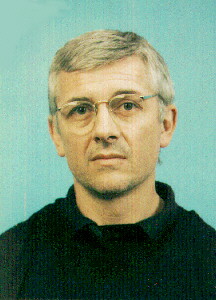 Vojin G. Oklobdzija合作论文数College of Engineering, New Mexico State University3Steven R. Phillips合作论文数2Luis G. Bustamante合作论文数2gary e ford合作论文数2McCune, E.合作论文数2Chu, D.H.合作论文数2Saeid Nooshabadi合作论文数Dept Elect & Comp Engn, Michigan Technol Univ2
 Cecilia Vernia合作论文数Universita di Modena e Reggio Emilia2Kah-Howe Tan合作论文数2M C Vigil合作论文数2R Elangovan合作论文数1MD Hoque合作论文数1H Arichanthiran合作论文数1SSU Chander合作论文数1
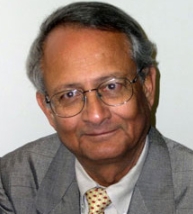 Sanjit K. Mitra合作论文数Department of Electrical & Computer Engineering, University of California, Santa Barbara1R GNANASEKARAN合作论文数1SL Chua合作论文数1SK Kong合作论文数1Sk Mitra合作论文数1Wen Fung Leong合作论文数1Lee, D.J.合作论文数1Johnson, L.G.合作论文数1Gy Cho合作论文数1Dao, P.-V.N.合作论文数1thomas c trujillo合作论文数1Cho, G.Y.合作论文数1Gao, L.合作论文数1Zsu-Yao Yang合作论文数1Veedu, B.M.合作论文数1Awawdeh, A.合作论文数1Lazkani, M.合作论文数1




