This conclusion presents some closing thoughts on the concepts covered in the preceding chapters of the book. The book explains how foreign intervention influences the course of civil wars. It focuses on how foreign resources affect the military power of the recipient belligerent. The book analyses how changes in the balance of capabilities influence the form of warfare that characterises a civil war. It introduces the idea that foreign resources possess both a gross and interactive value. The book explores how changes in one, or more, belligerent's military power will affect the character of the warfare in civil war. It presents evidence that foreign intervention in the Angolan and Afghan civil wars had a significant impact on the contending strategies of the belligerents in those conflicts. Foreign intervention in the Angolan and Afghan civil wars reinforces the notion that foreign resources will have an inconsistent impact on …
When, in the immediate aftermath of the September 1i attacks on the World Trade Center and the Pentagon, Secretary of State Colin Powell declared that the United States was with terrorism, he made a very natural but terrible and irrevocable error. Administration leaders have been trying to put it right ever since. What Powell said made sense if one uses the term against in the sense of a war against crime or against drug trafficking: that is, the mobilization of all available resources against a danger ous, antisocial activity, one that can never be entirely eliminated but can be reduced to, and kept at, a level that does not threaten social stability. The British in their time have fought many such wars-in Palestine, in Ireland, in Cyprus, and in Malaya (modern-day Malaysia), to mention only a few. But they never called them wars; they called them emergencies. This terminology meant that the police and intelligence services were provided with exceptional powers and were reinforced where necessary by the armed forces, but they continued to operate within a peacetime framework of civilian authority. If force had to be used, it was at a minimal level and so far as possible did not interrupt the normal tenor of civil life. The objectives were to isolate the terrorists from the rest of the community and to cut them off from external sources of supply. The terrorists were not dignified with the status of belligerents: they were criminals, to be regarded as such by the general public and treated as such by the authorities. To declare war on terrorists or, even more illiterately, on terrorism is at once to accord terrorists a status and dignity that they seek and that they do not deserve. It confers on them a kind of legitimacy. Do they qualify as befligerents? If so, should they not receive the protection of the laws of war? This protection was something that Irish terrorists always demanded, and it was quite properly refused. But their demands helped to muddy the waters and were given wide credence among their supporters in the United States.
JH>_M. istorians who attempt to look into and prescribe for the future are professionally inclined to offer as much past history as they think they can get away with, and as little prophecy and prescription as they think their readers will accept. Historians have seen too many confident prophets fall flat on their faces to lay themselves open to more humiliation than they can help. We know that all we can do is to help diagnose the problem or, better, expose false diagnoses. We also believe that in doing this it is helpful to consider how a situation has developed, in this instance in casting a backward look over the origins and development of the Western Alliance to see how we have got to where we are now. There is little point in considering where we should be going if we do not first decide where we are starting from. Let us go back 35 years, a third of a century, to the immediate aftermath of the Second World War. It is one of those short-lived periods of the past that we know about from two sources. First, there are the memories of the survivors; men and women not yet in their dotage who played a significant part in the events of the time and recall, or believe they recall, them clearly. Second, those memories can now be checked against the relevant documents; and those documents can still be interpreted in the light of human recollection. It is a period fresh in the minds of many of us, but already digested into that group-memory of the past created and preserved by professional historians. After the Battle of the Books between the revisionist and
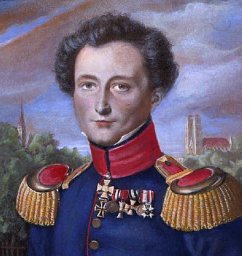 carl von clausewitz合作论文数4
 Peter Paret合作论文数3John C. Cairns合作论文数2Richard K Betts合作论文数1
 Asad Amir Zada合作论文数1Pierre Allan合作论文数1
 William Rosenau合作论文数1Mats Berdal合作论文数1David M Malone合作论文数1Ivan Arreguín-Toft合作论文数1Stephen Biddle合作论文数1fred bridgland合作论文数1Gerald J. Bender合作论文数1Albert Castel合作论文数1horace campbell合作论文数1C. A. Jones合作论文数1Barry Buzan合作论文数1Henry St. Amant Bradsher合作论文数1Jutta Bakonyi合作论文数1
 Peter Chalk合作论文数Sch Int Affairs & Publ Adm, Shanghai Univ Polit Sci & Law1Robert Harris合作论文数1anthony arnold合作论文数1
 bernd beber合作论文数WZB Berlin Social Sci Ctr1Bernard Brodie合作论文数1
 James F. Adams合作论文数Department of Political Science, University of California, Davis1
 Duncan Snidal合作论文数Nuffield College, University Of Oxford1Mark M. Lowenthal合作论文数1
 Laia Balcells合作论文数Department of Political Science;Yale University;Department of Political Science, Yale University1
 Kirsti Stuvøy合作论文数1Bernard B. Brodie合作论文数1
 Daniel L. Byman合作论文数School of Foreign Service, Georgetown University1
 Adam Lockyer合作论文数Department of Government and International Relations;University of Sydney;Department of Government and International Relations, University of Sydney1Derek J. Clark合作论文数Department of Economics;University of Tromsø;Department of Economics, University of Tromsø1
 Halvard Buhaug合作论文数Peace Research Institute Oslo;Norwegian University of Science and Technology1
 Boaz Atzili合作论文数1Christopher H. Achen合作论文数1Jan Angstrom合作论文数1Andrew J. Enterline合作论文数University of North Texas;University of North Texas, University of North Texas1Aysegul Aydin合作论文数Department of Political Science;Binghamton University1Dylan Balch-Lindsay合作论文数1
 Scott Gates合作论文数Department of Political Science, University of Oslo1
 Kristian Skrede Gleditsch合作论文数Department of Government, University of Essex1Eliot A. Cohen合作论文数1Risa Brooks合作论文数1
 Bruce Hoffman合作论文数Edmund A. Walsh School of Foreign Service, Georgetown University1Albert A. Stahel合作论文数1
 Patrick Regan合作论文数University of Notre Dame1




