StarCraft II is one of the most challenging simulated reinforcement learning environments; it is partially observable, stochastic, multi-agent, and mastering StarCraft II requires strategic planning over long time horizons with real-time low-level execution. It also has an active professional competitive scene. StarCraft II is uniquely suited for advancing offline RL algorithms, both because of its challenging nature and because Blizzard has released a massive dataset of millions of StarCraft II games played by human players. This paper leverages that and establishes a benchmark, called AlphaStar Unplugged, introducing unprecedented challenges for offline reinforcement learning. We define a dataset (a subset of Blizzard's release), tools standardizing an API for machine learning methods, and an evaluation protocol. We also present baseline agents, including behavior cloning, offline variants of actor-critic and MuZero. We improve the state of the art of agents using only offline data, and we achieve 90% win rate against previously published AlphaStar behavior cloning agent.
In this work we create agents that can perform well beyond a single, individual task, that exhibit much wider generalisation of behaviour to a massive, rich space of challenges. We define a universe of tasks within an environment domain and demonstrate the ability to train agents that are generally capable across this vast space and beyond. The environment is natively multi-agent, spanning the continuum of competitive, cooperative, and independent games, which are situated within procedurally generated physical 3D worlds. The resulting space is exceptionally diverse in terms of the challenges posed to agents, and as such, even measuring the learning progress of an agent is an open research problem. We propose an iterative notion of improvement between successive generations of agents, rather than seeking to maximise a singular objective, allowing us to quantify progress despite tasks being incomparable in terms of achievable rewards. We show that through constructing an open-ended learning process, which dynamically changes the training task distributions and training objectives such that the agent never stops learning, we achieve consistent learning of new behaviours. The resulting agent is able to score reward in every one of our humanly solvable evaluation levels, with behaviour generalising to many held-out points in the universe of tasks. Examples of this zero-shot generalisation include good performance on Hide and Seek, Capture the Flag, and Tag. Through analysis and hand-authored probe tasks we characterise the behaviour of our agent, and find interesting emergent heuristic behaviours such as trial-and-error experimentation, simple tool use, option switching, and cooperation. Finally, we demonstrate that the general capabilities of this agent could unlock larger scale transfer of behaviour through cheap finetuning.
Many real-world applications require artificial agents to compete and coordinate with other agents in complex environments. As a stepping stone to this goal, the domain of StarCraft has emerged as an important challenge for artificial intelligence research, owing to its iconic and enduring status among the most difficult professional esports and its relevance to the real world in terms of its raw complexity and multi-agent challenges. Over the course of a decade and numerous competitions(1-3), the strongest agents have simplified important aspects of the game, utilized superhuman capabilities, or employed hand-crafted sub-systems(4). Despite these advantages, no previous agent has come close to matching the overall skill of top StarCraft players. We chose to address the challenge of StarCraft using general-purpose learning methods that are in principle applicable to other complex domains: a multi-agent reinforcement learning algorithm that uses data from both human and agent games within a diverse league of continually adapting strategies and counter-strategies, each represented by deep neural networks(5,6). We evaluated our agent, AlphaStar, in the full game of StarCraft II, through a series of online games against human players. AlphaStar was rated at Grandmaster level for all three StarCraft races and above 99.8% of officially ranked human players.
Deep learning, in particular neural networks, achieved remarkable success in the recent years. However, most of it is based on supervised learning, and relies on ever larger datasets, and immense computing power. One step towards general artificial intelligence is to build a model of the world, with enough knowledge to acquire a kind of “common sense”. Representations learned by such a model could be reused in a number of other tasks. It would reduce the requirement for labeled samples and possibly acquire a deeper understanding of the problem. The vast quantities of knowledge required to build common sense preclude the use of supervised learning, and suggest to rely on unsupervised learning instead. The concept of uncertainty is central to unsupervised learning. The task is usually to learn a complex, multimodal distribution. Density estimation and generative models aim at representing the whole distribution of the data, while predictive learning consists of predicting the state of the world given the context and, more often than not, the prediction is not unique. That may be because the model lacks the capacity or the computing power to make a certain prediction, or because the future depends on parameters that are not part of the observation. Finally, the world can be chaotic of truly stochastic. Representing complex, multimodal continuous distributions with deep neural networks is still an open problem. In this thesis, we first assess the difficulties of representing probabilities in high dimensional spaces, and review the related work in this domain. We then introduce two methods to address the problem of video prediction, first using a novel form of linearizing auto-encoder and latent variables, and secondly using Generative Adversarial Networks (GANs). We show how GANs can be seen as trainable loss functions to represent uncertainty, then how they can be used to disentangle factors of variation. Finally, we explore a new non-probabilistic framework for GANs.
We introduce the "Energy-based Generative Adversarial Network" model (EBGAN) which views the discriminator as an energy function that attributes low energies to the regions near the data manifold and higher energies to other regions. Similar to the probabilistic GANs, a generator is seen as being trained to produce contrastive samples with minimal energies, while the discriminator is trained to assign high energies to these generated samples. Viewing the discriminator as an energy function allows to use a wide variety of architectures and loss functionals in addition to the usual binary classifier with logistic output. Among them, we show one instantiation of EBGAN framework as using an auto-encoder architecture, with the energy being the reconstruction error, in place of the discriminator. We show that this form of EBGAN exhibits more stable behavior than regular GANs during training. We also show that a single-scale architecture can be trained to generate high-resolution images.
Learning to predict future images from a video sequence involves the construction of an internal representation that models the image evolution accurately, and therefore, to some degree, its content and dynamics. This is why pixel-space video prediction may be viewed as a promising avenue for unsupervised feature learning. In addition, while optical flow has been a very studied problem in computer vision for a long time, future frame prediction is rarely approached. Still, many vision applications could benefit from the knowledge of the next frames of videos, that does not require the complexity of tracking every pixel trajectories. In this work, we train a convolutional network to generate future frames given an input sequence. To deal with the inherently blurry predictions obtained from the standard Mean Squared Error (MSE) loss function, we propose three different and complementary feature learning strategies: a multi-scale architecture, an adversarial training method, and an image gradient difference loss function. We compare our predictions to different published results based on recurrent neural networks on the UCF101 dataset
We introduce a conditional generative model for learning to disentangle the hidden factors of variation within a set of labeled observations, and separate them into complementary codes. One code summarizes the specified factors of variation associated with the labels. The other summarizes the remaining unspecified variability. During training, the only available source of supervision comes from our ability to distinguish among different observations belonging to the same class. Examples of such observations include images of a set of labeled objects captured at different viewpoints, or recordings of set of speakers dictating multiple phrases. In both instances, the intra-class diversity is the source of the unspecified factors of variation: each object is observed at multiple viewpoints, and each speaker dictates multiple phrases. Learning to disentangle the specified factors from the unspecified ones becomes easier when strong supervision is possible. Suppose that during training, we have access to pairs of images, where each pair shows two different objects captured from the same viewpoint. This source of alignment allows us to solve our task using existing methods. However, labels for the unspecified factors are usually unavailable in realistic scenarios where data acquisition is not strictly controlled. We address the problem of disentaglement in this more general setting by combining deep convolutional autoencoders with a form of adversarial training. Both factors of variation are implicitly captured in the organization of the learned embedding space, and can be used for solving single-image analogies. Experimental results on synthetic and real datasets show that the proposed method is capable of generalizing to unseen classes and intra-class variabilities.
Training deep feature hierarchies to solve supervised learning tasks has achieved state of the art performance on many problems in computer vision. However, a principled way in which to train such hierarchies in the unsupervised setting has remained elusive. In this work we suggest a new architecture and loss for training deep feature hierarchies that linearize the transformations observed in unlabeled natural video sequences. This is done by training a generative model to predict video frames. We also address the problem of inherent uncertainty in prediction by introducing latent variables that are non-deterministic functions of the input into the network architecture.
We study the connection between the highly non-convex loss function of a simple model of the fully-connected feed-forward neural network and the Hamiltonian of the spherical spin-glass model under the assumptions of: i) variable independence, ii) redundancy in network parametrization, and iii) uniformity. These assumptions enable us to explain the complexity of the fully decoupled neural network through the prism of the results from random matrix theory. We show that for large-size decoupled networks the lowest critical values of the random loss function form a layered structure and they are located in a well-defined band lower-bounded by the global minimum. The number of local minima outside that band diminishes exponentially with the size of the network. We empirically verify that the mathematical model exhibits similar behavior as the computer simulations, despite the presence of high dependencies in real networks. We conjecture that both simulated annealing and SGD converge to the band of low critical points, and that all critical points found there are local minima of high quality measured by the test error. This emphasizes a major difference between large-and small-size networks where for the latter poor quality local minima have nonzero probability of being recovered. Finally, we prove that recovering the global minimum becomes harder as the network size increases and that it is in practice irrelevant as global minimum often leads to overfitting.
We examine the performance profile of Convolutional Neural Network training on the current generation of NVIDIA Graphics Processing Units. We introduce two new Fast Fourier Transform convolution implementations: one based on NVIDIA's cuFFT library, and another based on a Facebook authored FFT implementation, fbfft, that provides significant speedups over cuFFT (over 1.5x) for whole CNNs. Both of these convolution implementations are available in open source, and are faster than NVIDIA's cuDNN implementation for many common convolutional layers (up to 23.5x for some synthetic kernel configurations). We discuss different performance regimes of convolutions, comparing areas where straightforward time domain convolutions outperform Fourier frequency domain convolutions. Details on algorithmic applications of NVIDIA GPU hardware specifics in the implementation of fbfft are also provided.
We present a novel architecture, the "stacked what-where auto-encoders" (SWWAE), which integrates discriminative and generative pathways and provides a unified approach to supervised, semi-supervised and unsupervised learning without relying on sampling during training. An instantiation of SWWAE uses a convolutional net (Convnet) (LeCun et al. (1998)) to encode the input, and employs a deconvolutional net (Deconvnet) (Zeiler et al. (2010)) to produce the reconstruction. The objective function includes reconstruction terms that induce the hidden states in the Deconvnet to be similar to those of the Convnet. Each pooling layer produces two sets of variables: the "what" which are fed to the next layer, and its complementary variable "where" that are fed to the corresponding layer in the generative decoder.
Recurrent neural network is a powerful model that learns temporal patterns in sequential data. For a long time, it was believed that recurrent networks are difficult to train using simple optimizers, such as stochastic gradient descent, due to the so-called vanishing gradient problem. In this paper, we show that learning longer term patterns in real data, such as in natural language, is perfectly possible using gradient descent. This is achieved by using a slight structural modification of the simple recurrent neural network architecture. We encourage some of the hidden units to change their state slowly by making part of the recurrent weight matrix close to identity, thus forming kind of a longer term memory. We evaluate our model in language modeling experiments, where we obtain similar performance to the much more complex Long Short Term Memory (LSTM) networks (Hochreiter & Schmidhuber, 1997).
We present an integrated framework for using Convolutional Networks for classification, localization and detection. We show how a multiscale and sliding window approach can be efficiently implemented within a ConvNet. We also introduce a novel deep learning approach to localization by learning to predict object boundaries. Bounding boxes are then accumulated rather than suppressed in order to increase detection confidence. We show that different tasks can be learned simultaneously using a single shared network. This integrated framework is the winner of the localization task of the ImageNet Large Scale Visual Recognition Challenge 2013 (ILSVRC2013) and obtained very competitive results for the detection and classifications tasks. In post-competition work, we establish a new state of the art for the detection task. Finally, we release a feature extractor from our best model called OverFeat.
Convolutional networks are one of the most widely employed architectures in computer vision and machine learning. In order to leverage their ability to learn complex functions, large amounts of data are required for training. Training a large convolutional network to produce state-of-the-art results can take weeks, even when using modern GPUs. Producing labels using a trained network can also be costly when dealing with web-scale datasets. In this work, we present a simple algorithm which accelerates training and inference by a significant factor, and can yield improvements of over an order of magnitude compared to existing state-of-the-art implementations. This is done by computing convolutions as pointwise products in the Fourier domain while reusing the same transformed feature map many times. The algorithm is implemented on a GPU architecture and addresses a number of related challenges.
A new method to represent and approximate rotation matrices is introduced. The method represents approximations of a rotation matrix $Q$ with linearithmic complexity, i.e. with $\frac{1}{2}n\lg(n)$ rotations over pairs of coordinates, arranged in an FFT-like fashion. The approximation is "learned" using gradient descent. It allows to represent symmetric matrices $H$ as $QDQ^T$ where $D$ is a diagonal matrix. It can be used to approximate covariance matrix of Gaussian models in order to speed up inference, or to estimate and track the inverse Hessian of an objective function by relating changes in parameters to changes in gradient along the trajectory followed by the optimization procedure. Experiments were conducted to approximate synthetic matrices, covariance matrices of real data, and Hessian matrices of objective functions involved in machine learning problems.
 Yann LeCun合作论文数Department of Electrical and Computer Engineering, Tandon School of Engineering, New York University;AMI Labs13
 Wojciech Marian Czarnecki合作论文数Google DeepMind4
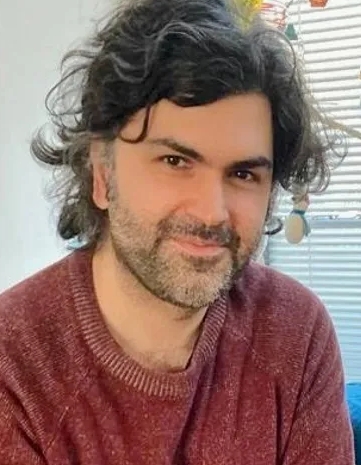 Caglar Gulcehre合作论文数École Polytechnique Fédérale de Lausanne;Google DeepMind4
 Petko Georgiev合作论文数Google DeepMind3
 Igor Babuschkin合作论文数xAI3
 Richard Powell合作论文数3Valentin Dalibard合作论文数Microsoft AI3
 Tom Le Paine合作论文数Google DeepMind3
 Junbo Zhao (赵俊博)合作论文数College of Computer Science and Technology, Zhejiang University;Institute of Computer innovation, Zhejiang University3
 Koray Kavukcuoglu合作论文数Google DeepMind;Google3
 Pierre Sermanet合作论文数Google DeepMind3
 Oriol Vinyals合作论文数Google DeepMind3Timo Ewalds合作论文数Department of Chemical and Materials Engineering, University of Alberta3
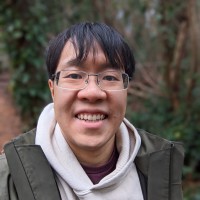 David H. Choi合作论文数Anthropic3
 Aja Huang (黄士杰)合作论文数Google DeepMind;Department of Computer Science and Information Engineering, National Taiwan Normal University3
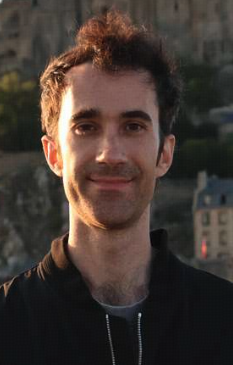 Mikael Henaff合作论文数AMI Labs3
 Max Jaderberg合作论文数Isomorphic Labs3
 Dan Horgan合作论文数Google DeepMind2Chris Apps合作论文数2
 Junhyuk Oh合作论文数DeepMind2
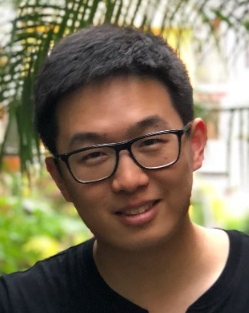 Yuhuai (Tony) Wu (吴宇怀)合作论文数xAI2James Molloy合作论文数DeepMind2Andrew Dudzik合作论文数DeepMind2Katrina McKinney合作论文数2Trevor Cai合作论文数OpenAI2
 Roman Ring合作论文数DeepMind;University of Tartu2Yury Sulsky合作论文数DeepMind, London, England2Oliver Smith合作论文数2
 Demis Hassabis (戴密斯·哈萨比斯)合作论文数DeepMind;Isomorphic Labs2
 Laurent Sifre合作论文数DeepMind2
 Ross Goroshin合作论文数Google Brain Montreal Team;Mila2
 Junyoung Chung合作论文数Google DeepMind2Kroiss Manuel合作论文数LMU Munich;TU Munich.2
 Shangtong Zhang合作论文数Department of Computer Science, School of Engineering and Applied Science, University of Virginia2
 Ziyu Wang合作论文数Haiper2
 Tom Schaul合作论文数DeepMind2
 Xiang Zhang合作论文数Clarifai2
 David Eigen合作论文数Clarifai2
 John P Agapiou合作论文数Google DeepMind2
 Marc'Aurelio Ranzato合作论文数DeepMind2
 David Silver合作论文数Department of Computer Science, University College London;Ineffable Intelligence2
 Soumith Chintala合作论文数Thinking Machines Lab2
 Sherjil Ozair合作论文数Tesla2
 David Budden合作论文数Google DeepMind;Blackbird Limited2Ivo Danihelka合作论文数DeepMind2
 Rob Fergus合作论文数CILVR Lab, Courant Institute of Mathematical Sciences, New York University;DeepMind New York2
 Dani Yogatama合作论文数Reka;Department of Computer Science, University of Southern California2
 Timothy Lillicrap合作论文数Google DeepMind2
 Sumit Chopra合作论文数Computer Science Department, Courant Institute of Mathematical Sciences, New York University;Department of Radiology, Grossman School of Medicine, New York University2