Redesign the Parkinson's Foundation Learning Institute for the Black community living with Parkinson's
BACKGROUND:Population reflective research enrollment improves study generalizability and disease knowledge. Nevertheless, the proportion of underrepresented groups (URGs) in Parkinson's disease (PD) research remains low. Hence, the current manuscript describes the process of designing a study to analyze the effectiveness of strategies to overcome barriers to URG recruitment in PD research.METHODS:The Fostering Inclusivity in Research Engagement for Underrepresented Populations in Parkinson's Disease (FIRE-UP PD) study asked participating sites to identify a URG or geographical region to target to assess knowledge and attitudes toward PD research as well as increase Fox Insight (an online study with The Michael J. Fox Foundation) participation across eight months. URGs were defined as racial and ethnic minorities, women, rural populations, and low socioeconomic status groups. Participating sites were paired based on their proposed interventions and were randomly assigned to either the intervention or control condition.RESULTS:The FIRE-UP PD study was divided into pre-intervention, intervention, and post-intervention periods to measure changes in awareness and trust in PD research along with engagement and interest in PD protocols through the use of several surveys. Interventions included developing educational tools to engage local communities, building partnerships within local PD communities, and recruiting stakeholders to reimagine medical and research information for the community.CONCLUSION:Improving representation in research is a crucial step toward improving access to PD diagnoses and treatments. This is one of the first multi-site PD research studies to include community engagement to address barriers to research participation and improve research recruitment of URGs.
Background and Objectives To review the current evidence on the options available for initiating dopaminergic treatment of motor symptoms in early-stage Parkinson disease and provide recommendations to clinicians. Methods A multidisciplinary panel developed practice recommendations, integrating findings from a systematic review and following an Institute of Medicine–compliant process to ensure transparency and patient engagement. Recommendations were supported by structured rationales, integrating evidence from the systematic review, related evidence, principles of care, and inferences from evidence. Results Initial treatment with levodopa provides superior motor benefit compared to treatment with dopamine agonists, whereas levodopa is more likely than dopamine agonists to cause dyskinesia. The comparison of different formulations of dopamine agonists yielded little evidence that any one formulation or method of administration is superior. Long-acting forms of levodopa and levodopa with entacapone do not appear to differ in efficacy from immediate-release levodopa for motor symptoms in early disease. There is a higher risk of impulse control disorders associated with the use of dopamine agonists than levodopa. Recommendations on initial therapy for motor symptoms are provided to assist the clinician and patient in choosing between treatment options and to guide counseling, prescribing, and monitoring of efficacy and safety.
 Anthony E. Lang合作论文数Krembil Research Institute, University of Toronto;Department of Medicine, University of Toronto;Division of Neurology, University of Toronto;Tanz Centre for Research in Neurodegenerative Diseases, Temerty Faculty of Medicine, University of Toronto2
 Deborah A Hall合作论文数1Emmanuel Roze合作论文数1
 Chantale Branson合作论文数1Reversa Mills合作论文数1Stephanie Bissonnette合作论文数1Casey Gallagher合作论文数1Justin P. Martello合作论文数1Heather Silsbee合作论文数1Nicole Licking合作论文数1Mary Dolan O'Brien合作论文数1Bernadette Siddiqi合作论文数1Alex Rae-Grant合作论文数1Nicholas Cothros合作论文数1
 Don Smith合作论文数1Hiral Shah合作论文数1Catherine L. Wielinski合作论文数1Pinky Agarwal合作论文数1
 Melissa J Armstrong合作论文数1Angie V Sanchez合作论文数1H. Hemley合作论文数1
 Juliana M Ison合作论文数1C. Evers合作论文数1
 Michelle Fullard合作论文数1
 O. Gershanik合作论文数Inst Neurosci, Favaloro Fdn Univ Hosp1Christine Ulysse合作论文数Massachusetts Gen Hosp, Dept Med, Div Biostat, Boston, MA 02114 USA1Karen Williams合作论文数1Danielle N Larson合作论文数1
 Janis M Miyasaki合作论文数From the Department of Neurology (M.N.),, Icahn School of Medicine at Mount Sinai;Department of Neurology (J. McFarlin),, University of Kentucky;Medical Center, University of Rochester;Medical Center, University of Rochester;Department of Medicine (J. Miyasaki),, University of Alberta;Department of Neurology, Rush University;and Department of Internal Medicine (N.M.K.),, Rush University;Rush University, Rush University1
 Miriam R Rafferty合作论文数Department of Physical Medicine & Rehabilitation, Feinberg School of Medicine, Northwestern University1Lori Billinghurst合作论文数Department of Neurology, Perelman School of Medicine, University of Pennsylvania1
 Allison Willis合作论文数Department of Biostatistics, Epidemiology and Informatics, Perelman School of Medicine, University of Pennsylvania1
 Per Svenningsson合作论文数Department of Clinical Neuroscience, Karolinska Institutet;Department of Neurology, Karolinska University Hospital1Gary S Gronseth合作论文数1
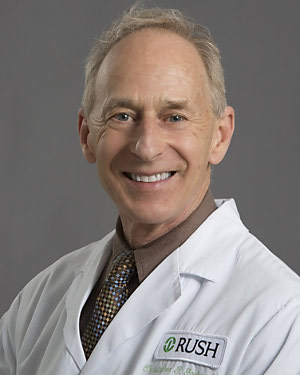 Christopher G. Goetz合作论文数Department of Neurological Sciences, Rush Medical College, Rush University1
 Okubadejo Njideka U合作论文数College of Medicine, University of Lagos1
 Ronald B Postuma合作论文数Department of Neurology and Neurosurgery, Faculty of Medicine and Health Sciences, McGill University;Montreal Neurological Institute, McGill University;McGill University Health Centre1Meissner Wassilios G合作论文数1
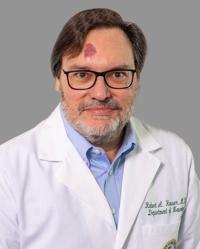 Robert Alan Hauser合作论文数Byrd Alzheimer's Institute, University of South Florida1
 Mestre Tiago A合作论文数Neurology Department, Hospital of Santa Maria1
 Jackson Jonathan D合作论文数Department of Psychology, Washington University in St. Louis1
 Claudia Trenkwalder合作论文数Paracelsus-Elena-Klinik;Klinik Für Neurochirurgie Der Universitätsmedizin Göttingen Inne1
 Gregory S Day合作论文数Department of Medicine, University of Toronto1
 Francisco Eduardo Costa Cardoso合作论文数Departamento de Clínica Médica, Faculdade de Medicina, Universidade Federal de Minas Gerais1
 Cristina Sampaio合作论文数Department of Neurology, Universidade de Lisboa;Instituto de Medicina Molecular, Universidade de Lisboa;CHDI Foundation1
 Irene Litvan合作论文数Department of Neurosciences, University of California, San Diego;Parkinson and Other Movement Disorder Center, University of California, San Diego1Afshari Mitra合作论文数Feinberg School of Medicine, Northwestern University1Khan Tarannum合作论文数1
 Thomas Gasser合作论文数Center of Neurology, Hertie Institute for Clinical Brain Research, University of Tübingen1




