Wie ist die Zusammenarbeit in einem Forschungsverbund, an dem mehrere Disziplinen beteiligt sind, zu gestalten? Was ist zu beachten, wenn Personen aus der Praxis mitwirken? Wie sind gemeinsame Ziele und Fragen zu formulieren? Wie lässt sich die Vernetzung im Verbund fördern, wie kommt er zu einer Synthese? Wie kann das Engagement für das Gemeinsame erhalten werden? Das Handbuch liefert allen, die für die Planung und Durchführung von inter- und transdisziplinären Forschungsprojekten verantwortlich sind, handlungsorientierte Grundlagen. Es beschreibt die Anforderungen und Aufgaben des Forschungsverbundmanagements, bietet Management-verantwortlichen zahlreiche Tips und Beispiele und weist auf drohende Gefahren hin. Das Buch basiert auf einer empirischen Untersuchung von vier Forschungsprogrammen aus Deutschland, Österreich und der Schweiz (DACH-Erhebung). Es verbindet Ansätze aus verschiedenen Disziplinen und beruht auf den Erfahrungen der Autorin und der Autoren im Management von Forschungsverbünden, in der Beratung von Projekten und wissenschaftlichen Organisationen und in der Durchführung von Weiterbildungsveranstaltungen für Verantwortliche inter- und trans-disziplinärer Forschungsprojekte.
Reduced precision computation is a key enabling factor for energy-efficient acceleration of deep learning (DL) applications. This article presents a 7-nm four-core mixed-precision artificial intelligence (AI) chip that supports four compute precisions—FP16, Hybrid-FP8 (HFP8), INT4, and INT2—to support diverse application demands for training and inference. The chip leverages cutting-edge algorithmic advances to demonstrate leading-edge power efficiency for 8-bit floating-point (FP8) training and INT4 inference without model accuracy degradation. A new HFP8 format combined with separation of the floating- and fixed-point pipelines and aggressive circuit/architecture optimization enables performance improvements while maintaining high compute utilization. A high-bandwidth ring protocol enables efficient data communication, while power management using workload-aware clock throttling maximizes performance within a given power budget. The AI chip demonstrates 3.58-TFLOPS/W peak energy efficiency and 26.2-TFLOPS peak performance for HFP8 iso-accuracy training, and 16.9-TOPS/W peak energy efficiency and 104.9-TOPS peak performance for INT4 iso-accuracy inference.
3-D integration using through-silicon-vias (TSVs) is emerging as one of the key technology options for continued miniaturization. However, because of increased device and current density, the reliability of the 3-D power grid and its integrity must be studied and analyzed. Due to the geometry of TSVs and connections to the global power grid, significant current crowding can occur. Current densities at these connections can be much higher than the expected average values, so extra care is required for accurate analysis. In prior work, TSVs are modeled as single resistors along with power grid wire segments. Such models do not capture detailed current density distribution and may miss hotspots associated with current crowding. This paper studies current crowding and its impact on 3-D power grid integrity. First, we explore the current density distribution within a TSV and its connections to the global chip power grid. Second, we implement simple TSV models to obtain current density distributions within a TSV and its local environment. These models are checked for accuracy by comparing with models simulated using finite element modeling methods. Finally, the simple TSV models are integrated with the global power grid for detailed chip-scale power analysis.
BerichtIntelligente Steuerung der Forschung durch EvaluationHans Spada, Urs Baumann, Amelie Mummendey, Rolf Steyer, and Michael ScheuermannHans SpadaSearch for more papers by this author, Urs BaumannSearch for more papers by this author, Amelie MummendeySearch for more papers by this author, Rolf SteyerSearch for more papers by this author, and Michael ScheuermannSearch for more papers by this authorPublished Online:September 01, 2006https://doi.org/10.1026//0033-3042.54.4.246PDFView Full Text ToolsAdd to favoritesDownload CitationsTrack Citations ShareShare onFacebookTwitterLinkedInReddit SectionsMoreFiguresReferencesRelatedDetails Volume 54Issue 4Oktober 2003ISSN: 0033-3042eISSN: 2190-6238 InformationPsychologische Rundschau (2003), 54, pp. 246-248 https://doi.org/10.1026//0033-3042.54.4.246.© 2003Hogrefe-Verlag GöttingenPDF download
ReportsPsychological Research Supported by the European Science FoundationHans Spada, Peter Reimann, and Michael ScheuermannHans Spada University of Freiburg, Germany Search for more papers by this author, Peter Reimann University of Freiburg, Germany Search for more papers by this author, and Michael Scheuermann University of Freiburg, Germany Search for more papers by this authorPublished Online:November 10, 2006https://doi.org/10.1027/1016-9040.1.1.65PDFView Full Text ToolsAdd to favoritesDownload CitationsTrack Citations ShareShare onFacebookTwitterLinkedInReddit SectionsMoreFiguresReferencesRelatedDetailsCited byOntologies About Human Behavior A Review of Knowledge Modeling SystemsAngel Blanch, Roberto García, Jordi Planes, Rosa Gil, Ferran Balada, Eduardo Blanco, and Anton Aluja7 September 2017 | European Psychologist, Vol. 22, No. 3 Volume 1Issue 1March 1996ISSN: 1016-9040eISSN: 1878-531X InformationEuropean Psychologist (1996), 1, pp. 65-67 https://doi.org/10.1027/1016-9040.1.1.65.© 1996Hogrefe & Huber PublishersPDF download
 Rico Defila合作论文数5
 Hans Spada合作论文数Institut für Psychologie, Universität Freiburg4
 Antonietta Di Giulio合作论文数4gary d carpenter合作论文数3
 Mateo Valero合作论文数Department of Computer Architecture, Universitat Politecnica de Catalunya;Barcelona Supercomputing Center, Centro Nacional de Supercomputación3
 Phillip J. Restle合作论文数IBM Thomas J. Watson Research Center3
 Pradip Bose合作论文数Department of Computer Science, IBM T.J. Watson Research Center2
 Michael S. Floyd合作论文数2
 Matthew R. Wordeman合作论文数2Kyu-Hyoun Kim合作论文数1
 Kailash Gopalakrishnan合作论文数EnCharge AI1
 Alyssa Herbert合作论文数1
 Xin Zhang合作论文数1
 Mingu Kang合作论文数Department of Electrical and Computer Engineering, Jacobs School of Engineering, University of California, San Diego1
 James Bonanno合作论文数[IBM Systems Group, Poughkeepsie, NY]1
 Marcel Schaal合作论文数IBM Res, Yorktown Hts, NY 10598 USA1Scot Rider合作论文数[IBM Systems Group, Poughkeepsie, NY]1
 Radhika Jain合作论文数IBM Res, Yorktown Hts, NY 10598 USA1Joel Silberman合作论文数IBM T. J. Watson Research Center, Yorktown Heights, NY, USA1
 Ching Zhou合作论文数IBM T. J. Watson Research Center, Yorktown Heights, NY, USA1
 Vidhi Zalani合作论文数IBM Res, Yorktown Hts, NY 10598 USA1
 Vinay Shah合作论文数[IBM Systems Group, Hursley, United Kingdom]1
 Howard Haynie合作论文数IBM Systems Group, Poughkeepsie, NY, USA1
 hung tran合作论文数ibm1Robert Casatuta合作论文数IBM Systems Group, Hopewell Junction, NY1
 Nianzheng Cao合作论文数IBM T. J. Watson Research Center, Yorktown Heights, NY, USA1
 Matthew Cohen合作论文数1Martin Lutz合作论文数IBM TJ Watson Research center, Yorktown Heights, NY#TAB#1Zhibin Ren合作论文数IBM Res, Yorktown Hts, NY 10598 USA1
 Peter Reimann合作论文数Sydney School of Education and Social Work, Faculty of Arts and Social Sciences, The University of Sydney1Guillorn, M.A.合作论文数1
 Andreas Ernst合作论文数1
 Jinwook Jung合作论文数Grad. Sch. of Syst. Inf., Kobe Univ.;c;Grad. Sch. of Syst. Inf., Kobe Univ.1
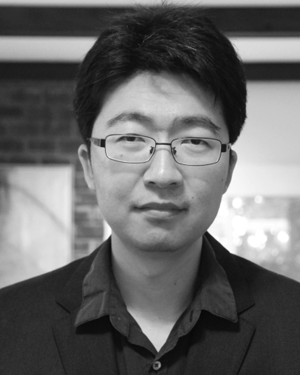 Yulong Li合作论文数1
 Monodeep Kar合作论文数1
 Chia-Yu Chen合作论文数IBM Thomas J. Watson Research Center1
 Michael Stumpf合作论文数1Urs Baumann合作论文数1
 Sung Kyu Lim合作论文数Ming Hsieh Department of Electrical and Computer Engineering, Viterbi School of Engineering, University of Southern California1
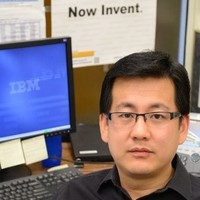 Naigang Wang合作论文数IBM T. J. Watson Research Center1
 Xiao Sun合作论文数XAI1
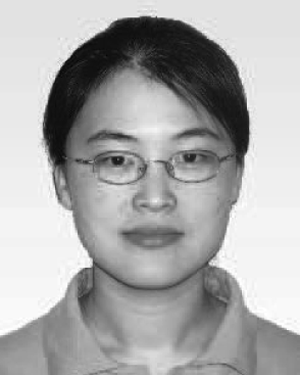 Xin Zhao合作论文数Georgia Institute of Technology1
 Wei Wang合作论文数School of Chemical, Biological and Environmental Engineering, Oregon State University1
 Jinwook Oh合作论文数1
 Vijayalakshmi Srinivasan合作论文数IBM T.J. Watson Research Center1
 Michael P. Beakes合作论文数IBM T. J. Watson Research Center1Joel Abraham Silberman合作论文数1
 Sunil Shukla合作论文数IBM T.J. Watson Research Center1
 Silvia M. Mueller合作论文数1




