Archaeological, osteological and genetic evidence suggests that Neanderthals lived in small groups1,2; however, less is known about whether these groups were part of isolated communities or belonged to larger, well-connected populations3. The dense concentration of broadly contemporaneous Neanderthal sites in the Meuse Basin, Belgium4, provides a rare opportunity to study regional populations at high resolution. Here we generated genetic data from 27 Neanderthals who lived less than approximately 52,500 years ago from ten archaeological sites in Belgium and France, including a high-coverage genome from a 45,000-year-old individual from Goyet, Belgium. We show that most of these individuals are more closely related to one another than to other contemporaneous late Neanderthals in Europe. Further, some of these individuals carry DNA from a Neanderthal lineage predating the split of late Neanderthals. Although these Neanderthals overlapped temporally with early modern humans in northwestern Europe from around 47,000 years ago, we find no evidence of recent gene flow from modern humans. They also do not show the genetic signatures of mating among close relatives found in Altai Neanderthals, suggesting that they lived in larger or better-connected groups. Moreover, genetic load did not accumulate over time, arguing against progressive genetic deterioration as a driver of Neanderthal extinction.
While the introduction of the Neolithic way of life in central Belgium around 5300 BCE is well-documented, the provenance and mobility patterns of Middle to Final Neolithic groups in southern Belgium (Wallonia) remain unclear. This work presents the first multi-element isotopic (strontium, 87Sr/86Sr; oxygen, δ18O; carbon, δ13C) data from prehistoric human dental enamel from the region. The study includes a total of 29 individuals, coming from karstic caves in the Meuse basin, the mining complex of Spiennes, and the megalithic tomb of Wéris II. The study also explores the variability of bioavailable strontium ratios in the geologically heterogeneous Meuse basin using modern plants. The analysis of multi-element isotopic data reveals high δ18O values and diverse 87Sr/86Sr ratios. The findings suggest that these individuals likely originated from or spent their childhood in present-day Belgium. Furthermore, the study highlights limited mobility during the Final Neolithic period, characterized by a combination of local residency and potential short-distance mobility or post-mortem movements. Overall, this study provides the first δ18O values from ancient human remains in the region and reshapes our understanding of human mobility during the Neolithic in present-day Belgium.
Present-day humans have small and retracted midfaces, while Neanderthals possess large and forwardly projected midfaces. To understand the ontogenetic patterns underlying these characteristic morphologies, we compared maxillary growth and development from birth to adulthood in present-day humans (Homo sapiens; n = 128), Neanderthals (Homo neanderthalensis; n = 13), and chimpanzees (Pan troglodytes verus; n = 33) using macroscopic (i.e., geometric morphometrics) and microscopic (i.e., surface histology) approaches. Using geometric morphometrics to quantify macroscopic patterns of growth and development, we found that the midfaces of present-day humans are on average already smaller at birth than those of Neanderthals and grow more slowly after birth. In particular, we find an early cessation of growth around adolescence, which is unique to our species. Microscopically, this is reflected in reduced amounts of bone resorption, indicative of decreased cellular activities linked to bone development. Greater amounts of bone formation in the infraorbital and nasal regions and faster growth rates are responsible for the large Neanderthal midface. These results highlight the importance of postnatal ontogeny (especially in late stages) for explaining facial differences between Neanderthals and present-day humans, as well as part of the gracilization process characteristic of present-day humans.
The first phase of the ancient DNA revolution painted a broad-brush picture of European Holocene prehistory, whereby 6500-4000 BCE, farmers descending from western Anatolians mixed with local hunter-gatherers resulting in 70-100% ancestry turnover, then 3000-2500 BCE people associated with the Corded Ware complex spread steppe ancestry into north-central Europe. We document an exception to this pattern in the wider Rhine-Meuse area in communities in the wetlands, riverine areas, and coastal areas of the western and central Netherlands, Belgium and western Germany, where we assembled genome-wide data for 109 people 8500-1700 BCE. Here, a distinctive population with high hunter-gatherer ancestry (~50%) persisted up to three thousand years later than in continental European regions, reflecting limited incorporation of females of Early European Farmer ancestry into local communities. In the western Netherlands, the arrival of the Corded Ware complex was also exceptional: lowland individuals from settlements adopting Corded Ware pottery had hardly any steppe ancestry, despite a characteristic early Corded Ware Y-chromosome. The limited influx may reflect the unique ecology of the region's river-dominated landscapes, which were not amenable to wholesale adoption of the early Neolithic type of farming introduced by Linearbandkeramik, making it possible for previously established groups to thrive, and creating a persistent but permeable boundary that allowed transfer of ideas and low-level gene flow. This changed with the formation-through-mixture of Bell Beaker using populations ~2500 BCE by fusion of local Rhine-Meuse people (9-17%) and Corded Ware associated migrants of both sexes. Their expansion from the Rhine-Meuse region then had a disruptive impact across a much wider part of northwest Europe, including Britain where its arrival was the main source of a 90-100% replacement of local Neolithic peoples.
The ancient cemetery of Pommerœul, Belgium, was classified as Gallo-Roman in the 1970s', yielding 76 cremation graves and one inhumation. However, subsequent radiocarbon analyses dated the inhumation to the Late Neolithic (4th-3rd millennium calBC). We report osteoarchaeological analysis indicating that the inhumation was composed of bones from multiple individuals, afterwards buried as "one". Ancient DNA analyses also finds evidence of multiple individuals and revealed another surprise: the cranium is post-Neolithic and genetically related to a pair of siblings from another Belgian Gallo-Roman site. This composite burial may have been created in Late Neolithic times, with Gallo-Romans adding the cranium, or alternatively the burial may have been fully assembled in the Gallo-Roman periods. This exceptional burial documents unexpected burial practices for both prehistoric and Roman times.
OBJECTIVES:So far, no 87 Sr/86 Sr mobility studies have been done for Neolithic remains from Belgium and information on the Sr isotopic variability in the region is scarce. This study aims to explore mobility in a Final Neolithic population from the funerary cave 'Grotte de La Faucille', contribute to the understanding of the isotopic composition of bioavailable Sr in Belgium, assess evidence for male mobility using proteomic analysis, and explore possible places of origin for nonlocal individuals.MATERIALS AND METHODS:The 87 Sr/86 Sr isotope ratio of dental enamel from six adults and six juveniles was determined. Liquid chromatography mass spectrometry-based protein analysis was employed to identify individuals of male biological sex. 87 Sr/86 Sr of micromammal teeth, snail shells, and modern plants from three geological areas in Belgium were measured to establish isotopic signatures for bioavailable strontium. Nonlocality was assessed by comparing human 87 Sr/86 Sr isotope ratios to the 87 Sr/86 Sr range for bioavailable Sr.RESULTS:Four individuals yielded 87 Sr/86 Sr isotope ratios consistent with a nonlocal origin. No statistical differences were found between adults and juveniles. Three males were detected in the sample set, of which two show nonlocal 87 Sr/86 Sr values.DISCUSSION:This study provides evidence for mobility in Final Neolithic Belgium. The four nonlocal 87 Sr/86 Sr signatures correspond with the 87 Sr/86 Sr of bio-available Sr in Dutch South Limburg, the Black Forest in Southwest Germany, and regions of France, such as parts of the Paris Basin and the Vosges. The results support the ruling hypothesis of connections with Northern France, brought to light by archeological research.
Early Neolithic (Linear Pottery Culture) adzes originate from settlements and workshops accompany the neolithization of Belgium. They are made from a wide range of extraregional lithic raw materials such as metamorphic green rocks (amphibolite) and black volcanic rocks (“basalt’) beside more local or regional raw material as flints, light-coloured (sedimentary and lightly metamorphic) quartzites, black lydites (Cambrian nodular phtanite of Céroux-Mousty and Lower Namurian banded phtanites) and dark grey Lower Namurian silicified sandstones previously called “Micaceous sandstones of Horion-Hozémont’. The discovery of the workshop of Noirfontaine near the city of Liège in the 1970s and 1980s provides exceptional assemblage available for updating analytical studies. This research focuses on the multi-scale characterization, the discrimination and sourcing both Cambrian and Namurian black sedimentary rocks rich in secondary silica composing Early Neolithic adzes found in Belgium. Their black colour results from finely dispersed organic matter, but the absence of palynomorphs does not allow a biostratigraphic ascription. Additional petrographical analyses (Optical Petrography, Scanning Electron Microscope), X-ray diffraction, chemical analyses (Energy Dispersive Spectroscopy) and measuring the degree of graphitization of the organic matter through Raman microspectrometry have been decisive in identifying the geological and geographical provenances by comparing the acquired results with geological reference samples collected in the field or through reference collections. Cambrian lydites are coming from a very restricted area and were preferred to other more local rock sources.
Van Peer (1) contests the conclusions of our article on Neanderthal disappearance in Northwest Europe (2), but we think his argument may reflect a misunderstanding of the stratigraphy at Spy Cave and/or incomplete reading of our article. We provide here a response to his arguments. The idea that the discovery time of the Neanderthal bones impacts the results is not scientifically valid and indicates an incomplete review of the literature. Among the oldest radiocarbon dates obtained on the Spy Neanderthals are those measured on collagen from material collected on the slope: Spy 737a (OxA10560) and Spy 94a (GrA-32623) (3, 4). In addition, although found on the slope, the maxillary fragment and the attached molar refit with the maxilla from the original collection excavated in 1886 as described and illustrated in figure 2B of ref. 2. Van Peer argues that we rejected the young dates on the scapula Spy 572a “on the grounds of probable contamination.” However, we demonstrated, using genomic analysis, that all dates on Spy 572a are younger than those of the other Neanderthal specimens because a modern collagenous glue made from bovid was applied on this specimen. Therefore, all the radiocarbon dates of Spy 572a are inaccurate, even those made on hydroxyproline (HYP). The attribution of the remains to Spy I or Spy II is not the subject of our article. These attributions, discussed since the discovery of the bones in 1886, are the subject of ongoing research by Rougier and colleagues. Given the high level of uncertainty for assigning the bones to any individual, it is not reasonable to raise any stratigraphic argument for Spy I and Spy II. The only data we have, so far, to discuss their contemporaneity are the dates obtained on collagen extracted from teeth of each individual (Spy 92b and Spy 94a). These dates suggest the contemporaneity of both individuals (3, 4). Redating of these specimens with the HYP method (5) would be ideal, but this would require resampling. A reworked position of Spy I is probable and unfortunately unverifiable. The argument proposed by Van Peer that mentions the presence of an erosive facies on the terrace is a misunderstanding of the literature. Indeed, the reworked sediment that Van Peer attributes to a natural erosive process (3? in figure 1A of ref. 1) is in fact the backfill from previous excavations, as de Loë and Rahir state in their publication (6). The stratigraphic units and their succession that Van Peer refers to in his letter vary greatly from one publication to another (7). These approximations raise questions on their relevance to the present discussion. Finally, Van Peer argues that Neanderthals possibly lived more recently in the Meuse Valley than the individuals from Spy, Fonds-de-Forêt, and Engis. The discovery of more recent Neanderthal fossils may indeed, in the future, challenge the conclusions of our study. In addition to human remains, bone tools and/or faunal remains bearing anthropogenic
Elucidating when Neanderthal populations disappeared from Eurasia is a key question in paleoanthropology, and Belgium is one of the key regions for studying the Middle to Upper Paleolithic transition. Previous radiocarbon dating placed the Spy Neanderthals among the latest surviving Neanderthals in Northwest Europe with reported dates as young as 23,880 ± 240 B.P. (OxA-8912). Questions were raised, however, regarding the reliability of these dates. Soil contamination and carbon-based conservation products are known to cause problems during the radiocarbon dating of bulk collagen samples. Employing a compound-specific approach that is today the most efficient in removing contamination and ancient genomic analysis, we demonstrate here that previous dates produced on Neanderthal specimens from Spy were inaccurately young by up to 10,000 y due to the presence of unremoved contamination. Our compound-specific radiocarbon dates on the Neanderthals from Spy and those from Engis and Fonds-de-Forêt demonstrate that they disappeared from Northwest Europe at 44,200 to 40,600 cal B.P. (at 95.4% probability), much earlier than previously suggested. Our data contribute significantly to refining models for Neanderthal disappearance in Europe and, more broadly, show that chronometric models regarding the appearance or disappearance of animal or hominin groups should be based only on radiocarbon dates obtained using robust pretreatment methods.
The discovery of the nearly complete Plio-Pleistocene skeleton StW 573 Australopithecus prometheus from Sterkfontein Member 2, South Africa, has intensified debates as to whether Sterkfontein Member 4 contains a hominin species other than Australopithecus africanus. For example, it has recently been suggested that the partial skeleton StW 431 should be removed from the A. africanus hypodigm and be placed into A. prometheus. Here we re-evaluate this latter proposition, using published information and new comparative data. Although both StW 573 and StW 431 are apparently comparable in their arboreal (i.e., climbing) and bipedal adaptations, they also show significant morphological differences. Surprisingly, StW 431 cannot be unequivocally aligned with either StW 573 or other hominins from Sterkfontein commonly attributed to A. africanus (nor with Paranthropus robustus and Australopithecus sediba). This finding, together with considerations about the recent dating of Plio-Pleistocene hominin-bearing sites in South Africa and palaeoecological/palaeoclimatic conditions, raises questions whether it is justified to subsume hominins from Taung, Makapansgat and Sterkfontein (and Gladysvale) within a single taxon. Given the wealth of fossil material and analytical techniques now available, we call for a re-evaluation of the taxonomy of South African Plio-Pleistocene hominins. Such an endeavour should however go beyond the current (narrow) focus on establishing an A. africanus-A. prometheus dichotomy.
Little is known about the population history of Neandertals over the hundreds of thousands of years of their existence. We retrieved nuclear genomic sequences from two Neandertals, one from Hohlenstein-Stadel Cave in Germany and the other from Scladina Cave in Belgium, who lived around 120,000 years ago. Despite the deeply divergent mitochondrial lineage present in the former individual, both Neandertals are genetically closer to later Neandertals from Europe than to a roughly contemporaneous individual from Siberia. That the Hohlenstein-Stadel and Scladina individuals lived around the time of their most recent common ancestor with later Neandertals suggests that all later Neandertals trace at least part of their ancestry back to these early European Neandertals.
Following a brief presentation of some geologic and geomorphologic specificities of Belgium in connection with Neandertals (e.g. caves, flint), we briefly focus on the changing environment in Neandertal times. Some historiographic aspects are then developed, recalling that in the nineteenth century, several Belgian sites played a key role in the emerging sciences of prehistory and palaeoanthropology. The first ever found hominin anatomically distinct from modern man was unearthed in 1829-1830 in Engis Cave, near Liege, while the world famous discovery of Spy in 1886 helped to definitively demonstrate the existence of Neandertal man. General information about Neandertals introduces the presentation of the caves of Spy and Scladina. The recent complete reassessment of the archaeological, anthropological, and faunal collections at Spy exemplifies the interest of re-examining ancient collections. As for Scladina, it illustrates the potential of new excavations where modern investigation techniques are applied directly in the field. In these two sites, modern interdisciplinary researches led to prominent results on topics such as ancient DNA, dental development, age at death, palaeodiet, or archaeology, complemented in the case of Scladina by site formation processes and detailed palaeoenvironmental and chronostratigraphic reconstructions. Finally, a few aspects related to territorial exploitation by Neandertals are exposed, focusing on lithic resource management.
OBJECTIVES:We describe a hominin permanent lower left third premolar unearthed in 1997 at Walou Cave (Belgium), found in direct association with a Mousterian lithic industry, in a layer directly dated to 40-38,000 years BP.MATERIALS AND METHODS:The taxonomical attribution of the tooth is addressed through comparative morphometric analyses, and stable isotope analyses aimed at determining the diet of the individual.RESULTS:The Walou P3 plots within the Neandertal range of variation and is significantly different from recent modern humans in all morphometric assessments. The isotope data showed that like other Neandertals, the Walou individual acquired its dietary proteins primarily from terrestrial food sources.DISCUSSION:We discuss the implications of the existence of a clearly Neandertal premolar dating to the period of the Middle to Upper Paleolithic transition in the Meuse river basin.
Fossil remains are the only physical evidence of past forms of life which researchers can use to study the evolutionary biology of a species, especially regarding the human lineage. We review and consider the way in which the conditions surrounding a fossil's discovery and its use for scientific research impacts its long-term preservation. The deterioration of the body starts soon after death, continues in the sediments and only a subsample of the anatomical elements will persist and may finally be unearthed by archeologists. From their recovery onwards, fossil remains are exposed to many sources of further damage: from handling, restoration, measuring to invasive sampling. On the one hand, curators are faced with the inherent challenge of balancing their responsibility to protect fossil specimens with allowing researchers to perform specific analyses or invasive sampling detrimental to the preservation of the fossil. On the other hand, scientists may find their analyses complicated by multiple factors including taphonomy, or restoration techniques (e.g., consolidants, cleaning chemicals). We provide several historical examples illustrating the complex nature of the factors acting on fossil preservation. We discuss concerns about producing and sharing (digital) data from fossils. Finally, we also suggest and support some curatorial practices which maximize the traceability of treatments underwent by a fossil.
A summary of published and unpublished data on the stratigraphy of the early Middle Pleistocene of the Southern Urals region is presented in this paper. It follows previous reviews about the characteristics of the Pleistocene deposits of the easternmost part of Europe. Deposits of different origin, which constitute the regional stratigraphic units, are characterized. Mammalian data form the base for the (bio)stratigraphical subdivision. Fossil mollusca, ostracoda, mammals and pollen are used for the reconstruction of the palaeoenvironmental conditions and the stratigraphical position of the main localities is discussed.The beginning of the early Middle Pleistocene (Minzitarovo time) coincides with a stabilization of the hydrographic network. Palaeontological remains from that period are rare. Pinus–Picea forests with small admixture of broad-leaved species were spread at the beginning of this interval. Later, the role of forests decreased and the role of herbs and Chenopodiaceae increased. Palynological data indicate that the climate was cool during that time. The landscapes of the Baza time were dominated by herbaceous-Artemisia associations and small birch forests with an admixture of broadleaved and coniferous trees and the terminal time was characterized by the wide development of taiga. Ostracods and molluscs are known from those deposits. Ecological composition of the small mammalian faunas indicates forest-steppe conditions for the southern part of this natural zone. Small mammals of that time belong to the Tiraspol faunal assemblage. The climate was warm and dry. The initial Tanyp time was characterized by the development of herbaceous–Artemisia–Chenopodiaceae steppes and broadleaved birch forests, which were subsequently replaced by a dominance of taiga associations, which tolerate cold climatic conditions. Molluscs are represented by rare terrestrial and freshwater species. The assemblage of freshwater ostracods includes cold-resistant species. In the Atasevo time, broadleaved birch forests and meadow-steppes characterized the landscape. The presence of stenothermic–thermophilic ostracods species indicates warm climatic conditions. Molluscs are represented by terrestrial and numerous freshwater species. The small mammalian fauna is characterized by the smaller percentage of Mimomys voles; it post-dates the Baza fauna. The Atasevo fauna is unique because of the occurrence of Arvicola mosbachensis Schmidtgen among the typical early Middle Pleistocene species.At the end of this period during the Chusovskoi timespan, the herbaceous–Artemisia–Chenopodiaceae steppes, which covered spacious open areas, were subsequently replaced by coniferous-birch forests with an admixture of broadleaved trees. Fossil remains are rare. Ostracods represent cold-resistant species indicating that the climate was cold.
The Lower and Middle Palaeolithic in Belgium are represented in 442 find-sites dispersed across a small territory with contrasting geographical and geological characteristics. The close proximity of caves and open-air sites, as well as the variable access to good sources of flint between regions are of special interest. The dataset is composed primarily of lithic assemblages, rich palaeontological and archaeozoological documentation as well as Neandertal remains from 8 cave sites. This large amount of data facilitates the development of a chronostratigraphic framework from the very beginning of the Middle Palaeolithic (onset of MIS 8) to the end (within the MIS 3, around 36 ka uncal BP). This archaeological documentation also reveals that lithic production variability is multifactorial and includes site function, cultural perspectives, and mobility patterns related to the exploitation of natural resources in contrasting environments. (C) 2015 Elsevier Ltd and INQUA. All rights reserved.
 Stephane Pirson合作论文数Royal Belgian Institute of Natural Sciences30
 Marcel Otte合作论文数Service de Préhistoire, Université de Liège20Damien Flas合作论文数Département de Préhistoire, Université de Liège15
 Jean-Jacques Hublin合作论文数Department of Human Evolution, Max Planck Institute for Evolutionary Anthropology13
 Pierre Cattelain合作论文数CRéA-Patrimoine, Université Libre de Bruxelles13
 Rebecca E Miller合作论文数School of Botany, The University of Melbourne13Patrick Semal合作论文数Laboratoire d'Anthropologie et de Génétique humaine, Université Libre de Bruxelles12
 Hervé Bocherens合作论文数Laboratoire de Biogeochimie Isotopique, Universite Pierre et Marie Curie, CNRS–INRA, UMR 7618, 4 place Jussieu, 75252 Paris Cedex 05, France11
 Kevin Di Modica合作论文数10
 Dominique Bonjean合作论文数8
 Anthony J. Olejniczak合作论文数Department of Human Evolution, Max Planck Institute for Evolutionary Anthropology, Deutscher Platz 6, D-04103 Leipzig, Germany8Helene Rougier合作论文数8Le Cabec Adeline合作论文数ESRF-The European Synchrotron;Department of Human Evolutionary Biology, Harvard University;Department of Human Evolution, Max Planck Institute for Evolutionary Anthropology, Deutscher Platz 6, D-04103, Leipzig, Germany.;Max Planck Institute for Evolutionary Anthropology, Harvard University7
 B. Maureille合作论文数Laboratoire d’Anthropologie des Populations du Passé, Université de Bordeaux7
 Tanya M. Smith合作论文数Department of Human Evolution, Max Planck Institute for Evolutionary Anthropology, Deutscher Platz 6, D-04103 Leipzig, Germany7
 Anne Hauzeur合作论文数6Grégory Abrams合作论文数Fac Archaeol, Leiden Univ6
 Isabelle Crevecoeur合作论文数Laboratory of Anthropology and Prehistory, Royal Belgian Institute of Natural Sciences6
 Isabelle De Groote合作论文数5
 Pierre Noiret合作论文数5
 Jakov Radovcic合作论文数Croatian Natural History Museum5Paul Haesaerts合作论文数5
 Thomas Higham合作论文数The Higham Lab, Department of Evolutionary Anthropology, Faculty of Life Sciences, University of Vienna5
 Cecile Jungels合作论文数5Christelle Draily合作论文数4claire letourneux合作论文数4
 Paul Tafforeau合作论文数4Christine Verna合作论文数4
 Matt Skinner合作论文数Department of Biological Sciences, Purdue University4
 Wim Van Neer合作论文数IPA V-09, Royal Museum of Central Africa4
 Kornelius Kupczik合作论文数Hull York Medical School, The University of York4Sireen El Zaatari合作论文数Department of Human Evolution, Max Planck Institute for Evolutionary Anthropology, Deutscher Platz 6, D-04103 Leipzig, Germany4d bonjean合作论文数3d billiou合作论文数3jeanmarie cordy合作论文数3juan alaez farreres合作论文数3marylise lejeune合作论文数3vincent ancion合作论文数3philippe lacroix合作论文数3
 paula jardon giner合作论文数Institut Universitari de Creativitat i Innovacions Educatives, Universitat de València3
 Mateja Hajdinjak合作论文数Max Planck Inst Evolutionary Anthropol, Dept Evolutionary Genet, D-04103 Leipzig, Germany3Matthias Meyer合作论文数Institute for Evolutionary Anthropology3
 Michael P. Richards合作论文数Department of Archaeology,Simon Fraser University3
 Ignacio Lopez Bayon合作论文数3
 Achilles Gautier合作论文数3Jean-Marc Léotard合作论文数3
 Caroline Polet合作论文数Laboratoire d'Anthropologie et de Préhistoire, Institut royal des Sciences naturelles de Belgique3Mona Court-Picon合作论文数Institut méditerranéen d'écologie et de paléoécologie (IMEP),, Europôle méditerranéen de l'Arbois3
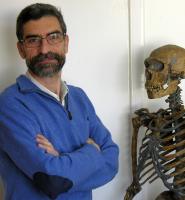 Rosas González Antonio合作论文数Museo Nacional de Ciencias Naturales3




