Theoretical studies have long proposed that adaptation allows the brain to effectively use the limited response range of sensory neurons to encode widely varying natural inputs. However, despite this influential view, experimental studies have exclusively focused on how the neural code adapts to a range of stimuli lying along a single feature axis, such as orientation or contrast. Here, we performed electrical recordings in macaque visual cortex (area V4) to reveal significant adaptive changes in the neural code of single cells and populations across multiple feature axes. Both during free viewing and passive fixation, populations of cells improved their ability to encode image features after rapid exposure to stimuli lying on orthogonal feature axes even in the absence of initial tuning to these stimuli. These results reveal a remarkable adaptive capacity of visual cortical populations to improve network computations relevant for natural viewing despite the modularity of the functional cortical architecture.
One influential view in neuroscience is that pairwise cell interactions explain the firing patterns of large populations. Despite its prevalence, this view originates from studies in the retina and visual cortex of anesthetized animals. Whether pairwise interactions predict the firing patterns of neurons across multiple brain areas in behaving animals remains unknown. Here, we performed multi-area electrical recordings to find that 2nd-order interactions explain a high fraction of entropy of the population response in macaque cortical areas V1 and V4. Surprisingly, despite the brain-state modulation of neuronal responses, the model based on pairwise interactions captured ∼90% of the spiking activity structure during wakefulness and sleep. However, regardless of brain state, pairwise interactions fail to explain experimentally observed entropy in neural populations from the prefrontal cortex. Thus, while simple pairwise interactions explain the collective behavior of visual cortical networks across brain states, explaining the population dynamics in downstream areas involves higher-order interactions.
The complete characterization of the activity of a neural population is a challenging task that is complicated by the number of potential interactions that grows exponentially as the size of the population increases. One influential view that has emerged several decades ago is that simple pairwise interactions between neurons can account for the observed firing patterns of large networks. However, despite its prevalence, this view originates from computational and electrophysiological studies in the retina and the primary visual cortex (V1) of anesthetized animals. Therefore, whether or not pairwise interactions predict the observed distribution of firing patterns across multiple brain areas in behaving animals remains unknown. Here we performed multi-electrode recordings from 3 cortical areas to report that second-order neuronal interactions can explain a high fraction of the entropy of the population response in early and mid-level visual cortex (areas V1 and V4) while providing a good approximation of the probability of spiking for groups of neurons. Surprisingly, despite the fact the firing pattern of neurons is controlled by brain state, the model based on pairwise interactions captures more than 90% of the structure in the detailed patterns of spiking observed during wakefulness and sleep. In contrast, regardless of brain state, pairwise interactions fail to explain experimentally observed entropy in neural populations from executive brain areas, such as the dorsolateral prefrontal cortex (dlPFC). These results indicate that higher-order interactions explain the population dynamics in downstream, executive areas, whereas simple pairwise interactions account for the dynamic behavior of neuronal networks in sensory cortical areas.
Neural responses in the cerebral cortex change dramatically between the 'synchronized' state during sleep and 'desynchronized' state during wakefulness. Our understanding of cortical state emerges largely from experiments performed in sensory areas of head-fixed or tethered rodents due to technical limitations of recording from larger freely-moving animals for several hours. Here, we report a system integrating wireless electrophysiology, wireless eye tracking, and real-time video analysis to examine the dynamics of population activity in a high-level, executive area - dorsolateral prefrontal cortex (dlPFC) of unrestrained monkey. This technology allows us to identify cortical substates during quiet and active wakefulness, and transitions in population activity during rest. We further show that narrow-spiking neurons exhibit stronger synchronized fluctuations in population activity than broad-spiking neurons regardless of state. Our results show that cortical state is controlled by behavioral demands and arousal by asymmetrically modulating the slow response fluctuations of local excitatory and inhibitory cell populations.
As economists, we believe that the Second Circuit's ruling, by not allowing the consideration of important information about the relationships between the benefits and costs of alternatives, is economically unsound. In particular, we believe that, as a general principle, regulators cannot make rational decisions unless they are allowed to compare costs and benefits and to use the results, along with other factors as appropriate, to choose among alternatives.To the extent permissible under the statute and case law, EPA should be allowed to consider benefits and costs in establishing rules for implementing s316(b). The Court's allowing EPA to consider benefits and costs would improve both the decision making process - by making it more transparent - and the regulatory decisions by allowing important relevant information to be considered explicitly.
As we understand it, the D.C. Circuit did not allow the EPA to consider the costs of complying with ozone and PM NAAQS. As we further understand it, this legal ruling can be overturned only by this Court. As economists, we believe that the D.C. Circuit's ruling not allowing the EPA to consider important information relating to the consequences of its regulatory actions is economically unsound. Without delving into the legal aspects of the case, we present below why we think the Court should allow the EPA to consider costs in setting standards. In particular, we believe that, as a general principle, regulators should be allowed to consider explicitly the full consequences of their regulatory decisions. These consequences include the regulation's benefits, costs, and any other relevant factors.
Benefit-cost analysis can play an important role in legislative and regulatory policy debates on protecting and improving health, safety, and the natural environment. Although formal benefit-cost analysis should not be viewed as either necessary or sufficient for designing sensible public policy, it can provide an exceptionally useful framework for consistently organizing disparate information, and in this way, it can greatly improve the process and, hence, the outcome of policy analysis. If properly done, benefit-cost analysis can be of great help to agencies participating in the development of environmental, health, and safety regulations, and it can likewise be useful in evaluating agency decision-making and in shaping statutes.
If the industrialized countries take steps to reduce their emissions and contribute money and technology for developing countries to do their part, China will participate in an international global warming treaty. Without these measures, the Chinese are not going to push greenhouse gas reductions on their own because they have more pressing problems. If the world wants them to move on greenhouse gas reduction, the relative incentives to the Chinese have to change in their favour, especially in light of the fact that they have not used up their share of the global commons.
If the industrialized countries take steps to reduce their emissions and contribute money and technology for developing countries to do their part, China will participate in an international global warming treaty. Without these measures, the Chinese are not going to push greenhouse gas reductions on their own because they have more pressing problems. If the world wants them to move on greenhouse gas reduction, the relative incentives to the Chinese have to change in their favour, especially in light of the fact that they have not used up their share of the global commons.
This article presents an analysis of the prospective costs of RCRA corrective action for private, nonfederal facilities. Two data bases developed by Research Triangle Institute and a remedial action cost model developed by CH2M Hill provide the foundation for this work. The methodology has two components, a remedial action knowledge base and a discrete‐state Monte Carlo analysis. Under base case assumptions, it is estimated that the total costs of RCRA corrective action will be $240 billion, with a 5 percent chance the costs will be less than $170 billion and a 5 percent chance the costs will be more than $377 billion.
Risk AnalysisVolume 11, Issue 1 p. 71-74 Cleanup of Old Wastes: Is Superfund Broke?1 Milton Russell, Milton Russell University of Tennessee, Knoxville, and Oak Ridge National Laboratory, Oak Ridge, Tennessee.Search for more papers by this author Milton Russell, Milton Russell University of Tennessee, Knoxville, and Oak Ridge National Laboratory, Oak Ridge, Tennessee.Search for more papers by this author First published: March 1991 https://doi.org/10.1111/j.1539-6924.1991.tb00573.x 1 Received September 12, 1990. AboutPDF ToolsRequest permissionExport citationAdd to favoritesTrack citation ShareShare Give accessShare full text accessShare full-text accessPlease review our Terms and Conditions of Use and check box below to share full-text version of article.I have read and accept the Wiley Online Library Terms and Conditions of UseShareable LinkUse the link below to share a full-text version of this article with your friends and colleagues. Learn more.Copy URL Share a linkShare onFacebookTwitterLinked InRedditWechat Volume11, Issue1March 1991Pages 71-74 RelatedInformation
This article addresses an essential question facing the US natural gas industry: How to accommodate a fluctuating demand for the product which inherently costs more per unit sold under that condition than it would under a stable demand. The author shows that this is a question of who best among producers, pipelines, distributors, and customers can absorb the economic and other costs of the fluctuations, under what circumstances, and to what degree.
Rectifying natural-gas underpricing and distortions in production has benefited the overall economy, but transition costs are large, and problems and strains continue. The natural-gas price story began with the 1954 price controls that developed into a wasteful, inefficient, and unfair system of too-low gas prices that resulted in the 1978 Natural Gas Policy Act (NGPA). While meeting a number of goals, NGPA has also led to current large increases in gas prices, ironically at a time when producers complain of more gas than they can sell. This glut, however, may be a surplus of short-run deliverability rather than an increase in supply. Prices have not fallen even temporarily because long-term contracts common between pipelines and producers typically prevent downward adjustment of prices to meet demand fluctuations, and the economy (hence the consumer) cannot escape the costof sustaining capacity through up-and-down demand. Transportation and delivery costs that, while getting smaller in relation to wellhead prices, are rising, and inflation, higher interest rates, and costs of uncollectables add to the price. In addition, while a straightforward supply, demand, and cost explanation of the price picture is accurate enough on a national basis, the average cost of gas as it enters a particularmore » pipeline is affected by such complexities as historical accident, location, timing, bargaining power, and management decisions.« less
It has been hard to put a satisfactory energy policy in place because of conflicts in goals, along with institutions that do not force their reconciliation. The road ahead can be made less dangerous by moving as many issues as possible into arenas where reconciliation rather than conflict is possible. What may occur, however, is that institutions will change so that some goals can be satisfied while others are rejected. Two ways that apparent conflicts can be reconciled are (1) through broadened public understanding of the implications of the energy-related choices that exist and further analysis applied to where the apparent conflict lies, and (2) through broadening the opportunity-cost paradigm as it is applied to energy choices. The cost of ignoring optimal location in exchange for less opposition to an installation may be less than the cost of the delay itself. On the other hand, it may also cost less than the social distress that results from overriding the strongly held views of even a small minority. The best efforts at recasting the options may not be enough to allow any energy policy to be implemented that will satisfy the majority with the foreign policy and economic risks that itmore » entails. The ecnomic danger lies in the consequences of these divisions; the political danger lies in the means by which they may be closed when the majority finally acts. A comment by Paul Macavoy follows.« less
 Robert N. Stavins合作论文数Harvard Kennedy School, Harvard University;Resources for the Future;National Bureau of Economic Research;Centre for Economic Policy Research4
 Robert W. Hahn合作论文数Council of Economic4Valentin Dragoi合作论文数Department of Brain and Cognitive Sciences;Massachusetts Institute of Technology;Department of Brain and Cognitive Sciences, Massachusetts Institute of Technology4
 Paul Portney合作论文数4george c eads合作论文数3
 Lester B. Lave合作论文数Engineering and Public Policy Department, Carnegie Mellon University3
 Kenneth J. Arrow (肯尼斯·约瑟夫·阿罗)合作论文数Stanford University3
 Maureen Cropper合作论文数Department of Economics, College of Behavioral & Social Sciences, University of Maryland;Maryland Population Research Center, University of Maryland;CESifo;Resources for the Future3
 Roger G. Noll合作论文数Stanford University Stanford3
 V. Kerry Smith合作论文数Department of Economics, Arizona State University;Julie Ann Wrigley Global Futures Laboratory, Global Institute of Sustainability and Innovation, Arizona State University3Robert E. Litan合作论文数2
 Sarah L. Eagleman合作论文数Department of Neurobiology and Anatomy, University of Texas–Houston Medical School2
 W. Kip Viscusi合作论文数Department of Economics, Vanderbilt University;Law School, Vanderbilt University;Owen Graduate School of Management, Vanderbilt University2
 Richard Zeckhauser合作论文数National Bureau of Economic Research;John F. Kennedy School of Government, Harvard University2
 Richard Schmalensee合作论文数Sloan School of Management, Massachusetts Institute of Technology2
 Robert W. Crandall合作论文数2
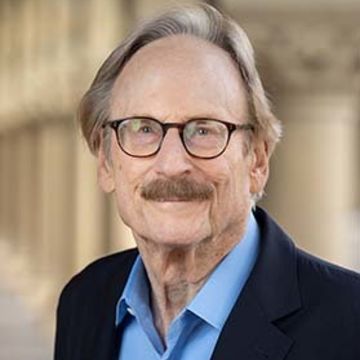 Michael Boskin合作论文数Department of Economics, School of Humanities and Sciences, Stanford University;Hoover Institution, Stanford University;National Bureau of Economic Research;Institute for Economic Policy Research, Stanford University2Paul W. Macavoy合作论文数2
 Wallace Oates合作论文数College of Behavioral and Social Sciences, University of Maryland2
 Sam Peltzman合作论文数Graduate School of Business;University of Chicago;Graduate School of Business, University of Chicago2
 William J. Baumol合作论文数Department of Economics, Leonard N. Stern School of Business, New York University2William A. Niskanen合作论文数2E. William Colglazier合作论文数2
 Jagdish N. Bhagwati合作论文数Economics Department, Columbia University2Alfred E. Kahn合作论文数2Robert D. Perlack合作论文数2Peter Passell合作论文数2Albert L. Nichols合作论文数1Elizabeth E. Bailey合作论文数1Sorin Pojoga合作论文数1Natasha Kharas合作论文数1Ariana R Andrei合作论文数Univ Texas Houston, Dept Neurobiol & Anat, McGovern Med Sch, Houston, TX 77030 USA1
 Sunny Nigam合作论文数Dept Neurobiol, Univ Texas Houston1David F. Bradford合作论文数1
 Laura D. Tyson合作论文数Haas School of Business, University of California, Berkeley1
 Joseph E. Stiglitz合作论文数Department of Economics, Columbia Business School, Columbia University;School of International and Public Affairs, Columbia University;Graduate School of Arts and Sciences, Columbia University1
 Vernon Smith合作论文数Economic Science Institute, Chapman University;Dale E. Fowler School of Law, Chapman University;The George L. Argyros College of Business and Economics, Chapman University1
 William D. Nordhaus合作论文数Department of Economics, School of Forestry and Environmental Studies, Yale University1
 Mircea Chelaru合作论文数1
 Michael Greenstone合作论文数Kenneth C. Griffin Department of Economics, University of Chicago;Institute for Climate and Sustainable Growth, University of Chicago;Interdisciplinary Energy Policy Institute, University of Chicago;Energy Policy Institute, University of Chicago;Climate impact Lab, University of Chicago;Urban Labs, Energy and Environment Lab Pritzker, University of Chicago1
 John D. Graham合作论文数O’Neill School of Public and Environmental Affairs, Indiana University1
 Lawrence J. White合作论文数Department of Economics, Leonard N. Stern School of Business, New York University1Bruce Tonn合作论文数Three 31
 Paul L. Joskow合作论文数Department of Economics, Massachusetts Institute of Technology;National Bureau of Economic Research1
 Alice M Rivlin合作论文数1
 Thomas C. Schelling合作论文数Department of Economics, College of Behavioral & Social Sciences, University of Maryland1
 Robert Solow合作论文数Department of Economics, Massachusetts Institute of Technology1
 Paul R. Krugman合作论文数Princeton School of Public and International Affairs, Princeton University;London School of Economics and Political Science;Graduate Center, City University of New York1
 Neda Shahidi合作论文数1




