Groundwater is a common-pool resource that is subject to depletion in many places around the world as a result of increased use of irrigation and water-demanding cash crops. Where state capacity to control groundwater use is limited, collective action is important to increase recharge and restrict highly water-consumptive crops. We present results of field experiments in hard rock areas of Andhra Pradesh, India, to examine factors affecting groundwater use. Two nongovernmental organizations (NGOs) ran the games in communities where they were working to improve watershed and water management. Results indicate that, when the links between crop choice and groundwater depletion is made explicit, farmers can act cooperatively to address this problem. Longer NGO involvement in the villages was associated with more cooperative outcomes in the games. Individuals with more education and higher perceived community social capital played more cooperatively, but neither gender nor method of payment had a significantly effect on individual behavior. When participants could repeat the game with communication, similar crop choice patterns were observed. The games provided an entry point for discussion on the understanding of communities of the interconnectedness of groundwater use and crop choice.
On-going efforts to understand the dynamics of coupled social-ecological (or more broadly, coupled infrastructure) systems and common pool resources have led to the generation of numerous datasets based on a large number of case studies. This data has facilitated the identification of important factors and fundamental principles which increase our understanding of such complex systems. However, the data at our disposal are often not easily comparable, have limited scope and scale, and are based on disparate underlying frameworks inhibiting synthesis, meta-analysis, and the validation of findings. Research efforts are further hampered when case inclusion criteria, variable definitions, coding schema, and inter-coder reliability testing are not made explicit in the presentation of research and shared among the research community. This paper first outlines challenges experienced by researchers engaged in a large-scale coding project; then highlights valuable lessons learned; and finally discusses opportunities for further research on comparative case study analysis focusing on social-ecological systems and common pool resources.
Governing common pool resources (CPR) in the face of disturbances such as globalization and climate change is challenging. The outcome of any CPR governance regime is the influenced by local combinations of social, institutional, and biophysical factors, as well as cross-scale interdependencies. In this study, we take a step towards understanding multiple-causation of CPR outcomes by analyzing 1) the co-occurrence of Destign Principles (DP) by activity (irrigation, fishery and forestry), and 2) the combination(s) of DPs leading to social and ecological success. We analyzed 69 cases pertaining to three different activities: irrigation, fishery, and forestry. We find that the importance of the design principles is dependent upon the natural and hard human made infrastructure (i.e. canals, equipment, vessels etc.). For example, clearly defined social bounduaries are important when the natural infrastructure is highly mobile (i.e. tuna fish), while monitoring is more important when the natural infrastructure is more static (i.e. forests or water contained within an irrigation system). However, we also find that congruence between local conditions and rules and proportionality between investment and extraction are key for CPR success independent from the natural and human hard made infrastructure. We further provide new visualization techniques for co-occurrence patterns and add to qualitative comparative analysis by introducing a reliability metric to deal with a large meta-analysis dataset on secondary data where information is missing or uncertain.
Large-N comparative studies have helped common pool resource scholars gain general insights into the factors that influence collective action and governance outcomes. However, these studies are often limited by missing data, and suffer from the methodological limitation that important information is lost when we reduce textual information to quantitative data. This study was motivated by nine case studies that appeared to be inconsistent with the expectation that the presence of Ostrom’s Design Principles increases the likelihood of successful common pool resource governance. These cases highlight the limitations of coding and analysing Large-N case studies. We examine two issues: 1) the challenge of missing data and 2) potential approaches that rely on context (which is often lost in the coding process) to address inconsistencies between empirical observations theoretical predictions. For the latter, we conduct a post-hoc qualitative analysis of a large-N comparative study to explore 2 types of inconsistencies: 1) cases where evidence for nearly all design principles was found, but available evidence led to the assessment that the CPR system was unsuccessful and 2) cases where the CPR system was deemed successful despite finding limited or no evidence for design principles. We describe inherent challenges to large-N comparative analysis to coding complex and dynamically changing common pool resource systems for the presence or absence of design principles and the determination of “success”. Finally, we illustrate how, in some cases, our qualitative analysis revealed that the identity of absent design principles explained inconsistencies hence de-facto reconciling such apparent inconsistencies with theoretical predictions. This analysis demonstrates the value of combining quantitative and qualitative analysis, and using mixed-methods approaches iteratively to build comprehensive methodological and theoretical approaches to understanding common pool resource governance in a dynamically changing context.
Previous statistical analyses of Elinor Ostroms design principles have demonstrated that they have some predictive capacity to explain successful self-governance and CPR management regimes. But their implementation does not ensure success in multiple dimensions. Critiques have shown that there are important contexts and contingencies that these principles do not consider, and that other scholars working from different approaches could develop a different set of principles with similar explanatory power. In this study, we take the statistical analysis of a large-N meta-analysis as a starting point. We examine 9 cases that do not fit the mould; those cases that were inconsistent with the conclusions of our earlier empirical work on design principles. We ask; 1) What happened in cases where nearly all design principles were met, but governance was deemed unsuccessful and 2) what happened in other cases where governance was successful despite finding limited or no design principles? We qualitatively examine inconsistent cases to further demonstrate the importance of context, and other processes occurring in CPR cases. In some cases, qualitative analysis revealed that the design principles could explain these inconsistencies. In others, however, other processes were important, including market integration, social cohesion, technology, time lags, and the influence of non-state actors. Additionally, while the design principles can explain CPR outcomes, they are often proximal causes along a causal-chain. By tracing back from proximate to ultimate causes, we can understand the nested nature of the interactions and outcomes occurring in cases. This approach is complementary to, and reflects the spirit of the diagnostic approach to understanding Social-Ecological Systems, as suggested by Ostrom and others. We thus recommend an iterative approach between deductive, and inductive, quantitative and qualitative, and dialogue between different theoretical and methodological approaches to CPR problems and recommended solutions.
Research on collective action and common-pool resources is extensive. However, little work has concentrated on the effect of variability in resource availability and collective action, especially in the context of asymmetric access to resources. Earlier works have demonstrated that environmental variability often leads to a reduction of collective action in the governance of shared resources. Here we assess how environmental variability may impact collective action. We performed a behavioral experiment involving an irrigation dilemma. In this dilemma participants invested first into a public fund that generated water resources for the group, which were subsequently appropriated by one participant at a time from head end to tail end. The amount of resource generated for the given investment level was determined by a payoff table and a stochastic event representing environmental variability, i.e., rainfall. Results show that that (1) upstream users' behavior is by far the most important variable in determining the outcome of collective action; (2) environmental variability (i.e. risk level in investing in the resource) has little effect on individual investment and extraction levels; and (3) the action-reaction feedback is fundamental in determining the success or failure of communities.
Over the past 15 years many organizations have researched the use of Static-Random Access Memory (SRAM)-based Field-Programmable Gate Arrays (FPGAs) in space. Although the components can provide a performance improvement over radiation-hardened processing components, random soft errors can occur from the naturally occurring space radiation environment. Many organizations have been developing methods for characterizing, emulating, and simulating radiation-induced events; mitigating and removing radiation-induced computational errors; and designing fault-tolerant reconfigurable spacecraft. Los Alamos National Laboratory has fielded one of the longest space-based FPGAs experiments, called the Cibola Flight Experiment (CFE), using Xilinx Virtex FPGAs. CFE has successfully deployed commercial SRAM FPGAs into a low-Earth orbit with Single-Event Upset (SEU) mitigation and was able to exploit effectively the reconfigurability and customization of FPGAs in a harsh radiation environment. Although older than current state-of-the-art FPGAs, these same concepts are used to deploy newer FPGA-based space systems since the launch of the CFE satellite and will continue to be useful for newer systems. In this article, we present how the system was designed to be fault tolerant, prelaunch predictions of expected on-orbit behaviors, and on-orbit results.
We present a repository for disseminating the computational models associated with publications in the social and life sciences. The number of research projects using computational models has been steadily increasing but the resulting publications often lack model code and documentation which hinders replication, verification of results and accumulation of knowledge. We have developed an open repository, the CoMSES Net Computational Model Library, to address this problem. Submissions to the library can be original models accompanying publications or replications of previous studies. Researchers can request that their models undergo a certification process that verifies that the model code successfully compiles and runs and that it follows documentation best practices. Models that pass the certification process are assigned persistent URLs and identifiers. We present the basic components of our repository, discuss our initial experiences with the library, and elaborate on future steps in the development of this cyberinfrastructure.
Research on collective action and common pool resources is extensive. However, little work has concentrated on the effect of uncertainty in resource availability and collective action, especially in the context of asymmetric access to resources. Earlier works have demonstrated that uncertainty often leads to a reduction of collective action in the governance of shared resources. Here we assess how uncertainty in the resource availability may impact collective action. We perform a behavioral experiment of an irrigation dilemma. In this dilemma participants invest first into a public fund that generates water resources for the group, which is subsequently appropriated one participant at the time from head-end to tail-end. The amount of resource generated for the given investment level is determined by a payoff table and a stochastic event representing rainfall. Results show that access asymmetry and resulting inequalities dominate any effects from uncertainty about the resource condition. The strategic uncertainty about the decisions of other players dominates potential effects from the environmental uncertainty.
Tuberculosis is a common and deadly disease that an nually causes about two million deaths, mainly in developing countries. It is belie ved that the ineffectiveness of tuberculosis vaccines can be attributed to the pres ence of intestinal parasites and that campaigns to protect people from tuberculosis will fa in areas with endemic helminth infestation. Reducing helminth loads requires a com bined intervention involving altered individual behavior—improved hygiene practices—and collective action—sanitation infrastructure. Traditionally the focus of tubercul osis research is on treatment, which will remain unsuccessful if it does not address behavior l and collective action problems. Based on a traditional epidemic model of tuberculos is within a networked population of agents, we introduce factors that affect helminth l oads. Agents with helminthes have increased probability to derive the active stage of tuberculosis and are more likely to die from the disease. Public health infrastructure impr ovements can reduce the environmental occurrence of helminthes, and improved individual h ygiene (e.g. hand washing and wearing of shoes) reduces the infection rates of tu berculosis and helminthes. In order to identify trade-offs between solving public-health c ollective action problems ( public health and prevention or group level behavioral changes) vs. failing to solve those problems ( medical treatment or individual reliance of treatment of active TB), we analyze the model for different levels of solutions to collective action problems. We show that in social networks with more long-distance int eractions, which are increasingly experienced in a globalizing world, tuberculosis ca nnot be effectively reduced with treatment only and require a significant behavioral changes.
This paper is a study of collective action in asymmetric access to a common resource. An example is an irrigation system with upstream and downstream resource users. While both contribute to the maintenance of the common infrastructure, the upstream participant has first access to the resource. Results of our two-player asymmetric commons game show that privileged resource access player invest more than the downstream players. Investments by the downstream player into the common resource are rewarded by a higher share from the common resource by the upstream player. Decisions are mainly explained by the levels of trust and trustworthiness. Introducing uncertainty in the production function of the common resource did not affect the results in a significant way.
Softcore processors are an attractive alternative to using expensive radiation-hardened processors for space-based applications. Since they can be implemented in the latest SRAM-based FPGA technologies, they are fast, flexible and significantly less expensive. However, unlike ASIC-based processors, the logic and routing of a softcore processor are vulnerable to the effects of single-event upsets (SEUs). To protect softcore processors from SEUs, this dissertation explores the processor design-space for the LEON3 softcore processor implemented in a commercial SRAM-based FPGA. The traditional mitigation techniques of triple modular redundancy (TMR) and duplication with compare (DWC) and checkpointing provide reliability to a softcore processor at great spatial cost. To reduce the spatial cost, terrestrial ASIC-based processor protection techniques are applied to the LEON3 processor. These techniques come at the cost of time instead of area. The software fault-tolerance techniques used to protect the logic and routing of the LEON3 softcore processor include a modified version of software implemented fault tolerance (SWIFT), consistency checks, software indications, and checkpointing. To measure the reliability of a mitigated LEON3 softcore processor, an updated hardware fault-injection model is created, and novel reliability metrics are employed. The improvement in reliabilty over an unmitigated LEON3 is measured using four metrics: architectural vulnerability factor (AVF), mean time to failure (MTTF), mean useful instructions to failure (MuITF), and reliability-area-performance (RAP). Traditional reliability techniques provide the best reliability: DWC with checkpointing improves the MTTF and MuITF by almost 35x and TMR with triplicated input and outputs improves the MTTF and MuITF by almost 6000x. Software fault-tolerance provides significant reliability for a much lower area cost. Each of these techniques provides greater processor protection than a popular state-of-the-art rad-hard processor.
This paper reports the results of the inaugural modeling competition sponsored by the Network for Computational SocioEcological Sciences (CoMSES Network). Competition participants were provided with a dataset collected from human-subjects experiments and were asked to develop an agent-based model that replicated behavioral patterns reflected in the data with the goal of using the model to predict behavioral changes in a slightly modified experimental treatment. The data were collected in a resource foraging experiment in which human subjects moved avatars on a computer screen to harvest tokens in a common pool resource. In the original experiments, on which the competition participants based their models, the subjects possessed full information about the state of the resource and the actions of the other group members sharing the resource. The competition challenged participants to predict what would happen if the experimental subjects had limited vision. Using only the data from the original experiment, participants had to design a model that would predict the behavioral changes that would be observed in the new experiment treatment. We compared the models on their assumptions about speed, direction, and harvesting decisions agents make. All the submitted models underestimated the amount of resources harvested. The best performing model was the simplest model submitted and had the best fit with the original dataset provided.
Field experiments with asymmetric commons dilemmas have shown that groups who are able to derive high social efficiency also had higher equity compared to groups who were not able to derive significant levels of social efficiency. We present an agent-based model based on cultural group selection that shows that the patterns observed in the field experiments can be evolved only in cases where agents participate regularly in less challenging social dilemmas. These preliminary results indicate that cooperation in asymmetric dilemmas can only evolve and persist when the agents have social dilemmas beyond the asymmetric dilemmas.
Softcore processors are an attractive alternative to using radiation-hardened processors in space-based applications. Unlike traditional processors however, the logic and routing of a softcore processor are vulnerable to the effects of single-event upsets (SEUs). This paper applies two common SEU mitigation techniques, TMR with checkpointing and DWC with checkpointing, to the LEON3 softcore processor. The improvement in reliabilty over an unmitigated version of the processor is measured using three metrics: the architectural vulnerability factor (AVF), mean time to failure (MTTF), and mean useful instructions to failure (MuITF). Using configuration memory fault injection, we found that DWC with checkpointing improves the MTTF and MuITF by over 35 x, and that TMR, with triplicated input and outputs improves the MTTF and MITF by over 6000x.
This paper compares the effectiveness and cost of different fault-tolerant techniques for FPGA memories (BRAMs, LUTRAMs, and SRLs). TMR, parity with duplication, compliment duplicate (CD) with duplication, single-error correction/double-error detection (SEC/DED), and SEC/DED with duplication are the techniques used in this study to protect FPGA memories. Memory scrubbing is also added to each of these techniques. The effectiveness of each technique is measured by the number of sensitive bits in each design as well as the number of critical failures. A critical failure is defined as an upset whose effects can only be repaired through device reconfiguration. Cost is measured in terms of FPGA slices and BRAMs. This study finds that for BRAMs and LUTRAMs scrubbing with TMR provides the best protection. For SRLs scrubbing is unnecessary, and TMR provides the best protection. This study also provides a variety of reliability-area trade-off points with fault-tolerant techniques other than TMR.
Reconfigurable computing systems remain difficult to use and program. One way to increase design productivity for these systems is through reuse of previously developed and verified intellectual property (IP) cores. This paper presents CHREC XML, a XML schema that facilitates IP reuse by encapsulating the details of reusable IP cores at multiple levels of abstraction. This schema is independent from any design language or tool and can be used by any tool to understand many details about the interface of a reusable circuit. An IP integration tool was also created based on this schema to demonstrate the ease of IP reuse when cores are described in this meta-data description. This IP integration tool allows a designer to easily select and integrate IP cores from a variety of languages/tools and automatically run the appropriate tools to generate the cores in a form usable by downstream implementation tools.
 Mike Wirthlin合作论文数Department of Electrical and Computer Engineering, Ira A. Fulton College of Engineering, Brigham Young University21
 Paul Graham合作论文数Los Alamos National Laboratory13
 Jacopo Alessandro Baggio合作论文数School of International Development, University of East Anglia8
 Irene Pérez合作论文数Department of Computer Technology, University of Alicante7
 Marco Janssen合作论文数Arizona State University7
 Eric Johnson合作论文数6
 Elicia Ratajczyk合作论文数Inst Built Environm, Colorado State Univ5
 Ute Brady合作论文数Sch Sustainabil, Arizona State Univ5
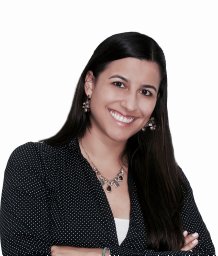 Cathy Rubiños合作论文数Sch Business, Univ Pacifico5
 Rimjhim Aggarwal合作论文数Department of Economics, University of North Texas5
 Michael P. Caffrey合作论文数5
 David Yu合作论文数5
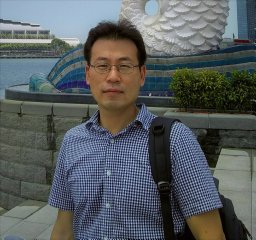 Hoon C. Shin合作论文数Lee Kuan Yew Sch Publ Policy, Inst Water Policy4
 Allain. Barnett合作论文数4M. Caffrey合作论文数4
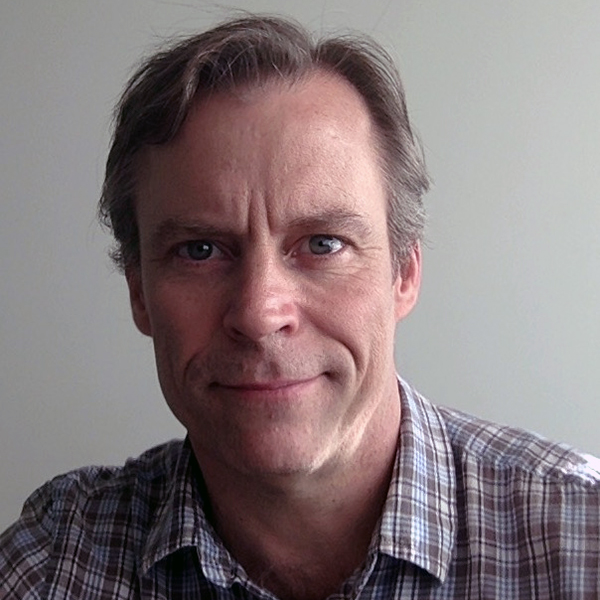 Marty Anderies (John Anderies)合作论文数School of Human Evolution and Social Change, College of Liberal Arts and Sciences, Arizona State University;Global Institute of Sustainability and Innovation, School of Sustainability, College of Global Futures, Arizona State University4Adam Arnesen合作论文数NSF Center for High-Performance Reconfigurable Computing;Dept . of Electrical and Computer Engineering;Brigham Young University2Tony Nelson合作论文数1Diane Roussel-Dupré合作论文数1
 William Howes合作论文数1Rahul Chaturvedi合作论文数1
 Michael Barton合作论文数School of Complex Adaptive Systems, Arizona State University;School of Human Evolution and Social Change, Arizona State University;Center for Social Dynamics and Complexity, Arizona State University1
 Brian Pratt合作论文数1
 Sandeep Kandikuppa合作论文数Environm Ecol & Energy Program, Univ N Carolina1Megan Fuller合作论文数1
 Jon Johnson合作论文数1Marco A. Janssen合作论文数1
 Ruth Meinzen Dick合作论文数International Food Policy Research Institute1
 Allen Lee合作论文数1
 Maya Gokhale合作论文数Computer Scientist, Center for Applied Scientific Computing, Lawrence Livermore National Laboratory (LLNL), Livermore, CA1Heather Quinn合作论文数My name is Heather Quinn and I love to laugh and have fun!! I am a junior and majoring in Early Childhood Education at Valdosta State University1Jim Krone合作论文数1
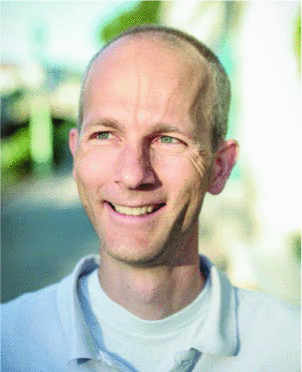 Keith S. Morgan合作论文数1Anthony Salazar合作论文数1
 Sean Bergin合作论文数1Laia Domenech合作论文数1Xilinx Virtex合作论文数1
 Ghate Rucha合作论文数1




