In every liter of seawater there are between 10 and 100 billion life forms, mostly invisible, called marine plankton or marine microbiome, which form the largest and most dynamic ecosystem on our planet, at the heart of global ecological and economic processes. While physical and chemical parameters of planktonic ecosystems are fairly well measured and modeled at the planetary scale, biological data are still scarce due to the extreme cost and relative inflexibility of the classical vessels and instruments used to explore marine biodiversity. Here we introduce ‘Plankton Planet’, an initiative whose goal is to engage the curiosity and creativity of researchers, makers, and mariners to ( i ) co-develop a new generation of cost-effective (frugal) universal scientific instrumentation to measure the genetic and morphological diversity of marine microbiomes in context, ( ii ) organize their systematic deployment through coastal or open ocean communities of sea-users/farers, to generate uniform plankton data across global and long-term spatio-temporal scales, and ( iii ) setup tools to flow the data without embargo into public and explorable databases. As proof-of-concept, we show how 20 crews of sailors were able to sample plankton biomass from the world surface ocean in a single year, generating the first seatizen-based, planetary dataset of marine plankton biodiversity based on DNA barcodes. The quality of this dataset is comparable to that generated by Tara Oceans and is not biased by the multiplication of samplers. The data unveil significant genetic novelty and can be used to explore the taxonomic and ecological diversity of plankton at both regional and global scales. This pilot project paves the way for construction of a miniaturized, modular, evolvable, affordable and open-source citizen field-platform that will allow systematic assessment of the eco/morpho/genetic variation of aquatic ecosystems and microbiomes across the dimensions of the Earth system.
In every liter of seawater there are between 10 and 100 billion life forms, mostly invisible, called plankton, which form the largest and most dynamic ecosystem on our planet, at the heart of global ecological and economic processes. While physical and chemical parameters of planktonic ecosystems are fairly well measured and modelled at the planetary scale, but biological data are still scarce due to the extreme cost and relative inflexibility of the classical vessels and instruments used to explore marine biodiversity. Here we introduce ‘ Plankton Planet ’, an initiative whose goal is to merge the creativity of researchers, makers, and mariners to ( i ) develop frugal scientific instrumentation and protocols to assess the genetic and morphological diversity of plankton life, and ( ii ) organize their systematic deployment through fleets of volunteer sailors, fishermen, or cargo-ships to generate comparable and open-access plankton data across global and long-term spatio-temporal scales. As proof-of-concept, we show how 20 crews of sailors (“planktonauts”) were abl to sample plankton biomass from the world surface ocean in a single year, generating the first citizen-based, planetary dataset of plankton biodiversity based on DNA barcodes. The quality of this dataset is comparable to that generated by Tara Oceans and is not biased by the multiplication of samplers. This dataset has unveiled significant genetic novelty and can be used to explore the taxonomic and ecological diversity of plankton at both regional and global scales. This pilot project paves the way for construction of a miniaturized, modular, evolvable, affordable and open-source citizen field-platform that will allow systematic assessment of the eco/morpho/genetic variation of aquatic ecosystems across the dimensions of the Earth system.
Dinoflagellates (Alveolata) are one of the ecologically most important groups of modern phytoplankton. Their biological complexity makes assessment of their global diversity and community structure difficult. We used massive V9 18S rDNA sequencing from 106 size-fractionated plankton communities collected across the world's surface oceans during the Tara Oceans expedition (2009-2012) to assess patterns of pelagic dinoflagellate diversity and community structuring over global taxonomic and ecological scales. Our data and analyses suggest that dinoflagellate diversity has been largely underestimated, representing overall ∼ 1/2 of protistan rDNA metabarcode richness assigned at ≥ 90% to a reference sequence in the world's surface oceans. Dinoflagellate metabarcode diversity and abundance display regular patterns across the global scale, with different order-level taxonomic compositions across organismal size fractions. While the pico to nano-planktonic communities are composed of an extreme diversity of metabarcodes assigned to Gymnodiniales or are simply undetermined, most micro-dinoflagellate metabarcodes relate to the well-referenced Gonyaulacales and Peridiniales orders, and a lower abundance and diversity of essentially symbiotic Peridiniales is unveiled in the meso-plankton. Our analyses could help future development of biogeochemical models of pelagic systems integrating the separation of dinoflagellates into functional groups according to plankton size classes.
The Tara Oceans expedition (2009-2013) sampled contrasting ecosystems of the world oceans, collecting environmental data and plankton, from viruses to metazoans, for later analysis using modern sequencing and state-of-the-art imaging technologies. It surveyed 210 ecosystems in 20 biogeographic provinces, collecting over 35000 samples of seawater and plankton. The interpretation of such an extensive collection of samples in their ecological context requires means to explore, assess and access raw and validated data sets. To address this challenge, the Tara Oceans Consortium offers open science resources, including the use of open access archives for nucleotides (ENA) and for environmental, biogeochemical, taxonomic and morphological data (PANGAEA), and the development of on line discovery tools and collaborative annotation tools for sequences and images. Here, we present an overview of Tara Oceans Data, and we provide detailed registries (data sets) of all campaigns (from port-to-port), stations and sampling events.
Marine plankton support global biological and geochemical processes. Surveys of their biodiversity have hitherto been geographically restricted and have not accounted for the full range of plankton size. We assessed eukaryotic diversity from 334 size-fractionated photic-zone plankton communities collected across tropical and temperate oceans during the circumglobal Tara Oceans expedition. We analyzed 18 S ribosomal DNA sequences across the intermediate plankton-size spectrum from the smallest unicellular eukaryotes (protists, >0.8 micrometers) to small animals of a few millimeters. Eukaryotic ribosomal diversity saturated at ~150,000 operational taxonomic units, about one-third of which could not be assigned to known eukaryotic groups. Diversity emerged at all taxonomic levels, both within the groups comprising the ~11,200 cataloged morphospecies of eukaryotic plankton and among twice as many other deep-branching lineages of unappreciated importance in plankton ecology studies. Most eukaryotic plankton biodiversity belonged to heterotrophic protistan groups, particularly those known to be parasites or symbiotic hosts.
The interrogation of genetic markers in environmental meta-barcoding studies is currently seriously hindered by the lack of taxonomically curated reference data sets for the targeted genes. The Protist Ribosomal Reference database (PR2, http://ssu-rrna.org/) provides a unique access to eukaryotic small sub-unit (SSU) ribosomal RNA and DNA sequences, with curated taxonomy. The database mainly consists of nuclear-encoded protistan sequences. However, metazoans, land plants, macrosporic fungi and eukaryotic organelles (mitochondrion, plastid and others) are also included because they are useful for the analysis of high-troughput sequencing data sets. Introns and putative chimeric sequences have been also carefully checked. Taxonomic assignation of sequences consists of eight unique taxonomic fields. In total, 136 866 sequences are nuclear encoded, 45 708 (36 501 mitochondrial and 9657 chloroplastic) are from organelles, the remaining being putative chimeric sequences. The website allows the users to download sequences from the entire and partial databases (including representative sequences after clustering at a given level of similarity). Different web tools also allow searches by sequence similarity. The presence of both rRNA and rDNA sequences, taking into account introns (crucial for eukaryotic sequences), a normalized eight terms ranked-taxonomy and updates of new GenBank releases were made possible by a long-term collaboration between experts in taxonomy and computer scientists.
 Frédéric Mahé合作论文数6
 Colomban de Vargas合作论文数CNRS, Stn Biol Roscoff6
 Johan Decelle合作论文数CNRS;Grenoble Alpes University;Laboratoire Physiologie Cellulaire & Végétale, CEA-Grenoble5
 Ian Probert合作论文数CNRS, Université Pierre et Marie Curie5
 Gabriel Gorsky合作论文数5
 Margaux Carmichael合作论文数4Céline Dimier合作论文数ecole normale superieure4
 Sarah Romac合作论文数Sorbonne Université, CNRS, Station Biologique de Roscoff4
 Nicolas Henry合作论文数CNRS, Sorbonne Univ4Julie Poulain合作论文数CEA, Inst Genom, F-91057 Evry, France4
 Fabrice Not合作论文数UMR 7127 CNRS, INSU et Université Pierre et Marie Curie4
 Stéphane Audic合作论文数Institut de Microbiologie de la Méditerranée (IM2, IFR-88), Aix-Marseille University4
 Raffaele Siano合作论文数TIMP, Stazione Zoologica Anton Dohrn4Sébastien Colin合作论文数4Romain Troublé合作论文数3Sarah Searson合作论文数Observ Oceanol, Lab Oceanog Villefranche, CNRS, UMR 7093, F-06230 Villefranche Sur Mer, France3
 Cedric Berney合作论文数3
 Dunthorn Micah合作论文数Dept Ecol, Univ Kaiserslautern3
 Morard Raphaël合作论文数Laboratoire de Géologie de Lyon: Terre, Université Lyon 13
 Speich Sabrina合作论文数Laboratoire de Physique des Océans, Centre de Brest3
 Lucie Bittner合作论文数UMR CNRS 7138 Systématique, Adaptation, Evolution, Muséum National d'Histoire Naturelle3
 Ramiro Logares合作论文数Department of Marine Biology and Oceanography, Institut de Ciències del Mar, Consejo Superior de Investigaciones Científicas3
 Patrick Wincker合作论文数Centre National de Recherche en Génomique Humaine;University of Paris-Saclay3
 Enrique Lara合作论文数WSL Wetlands Research Group, Swiss Federal Research Institute3
 Daniele Iudicone合作论文数Stazione Zoologica Anton Dohrn3
 Stefanie Kandels合作论文数3Marc Picheral合作论文数Université Pierre et Marie Curie-Paris6, UMR 7093, Laboratoire d'Océanographie de Villefranche, Villefranche sur Mer, France3
 Stephane Pesant合作论文数3
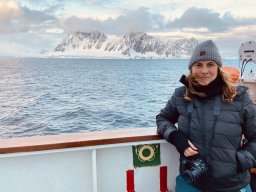 Silvia G. Acinas合作论文数Centro de Biologı́a Molecular y Celular, Universidad Miguel Hernández3Calixte Berger合作论文数2Emmanuel Malpot合作论文数2Damien Guiffant合作论文数2David Le Guen合作论文数2Carole Beaumont合作论文数2
 Lionel Guidi合作论文数2
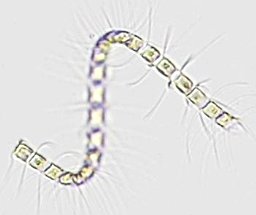 Thibaut Pollina合作论文数Stn Biol Roscoff & Atelier PontonZ Morlaix, Plankton Planet Non Govt Org NGO2
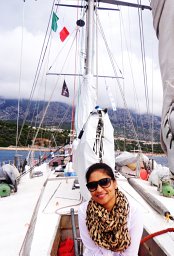 Shruti Malviya合作论文数Simons Centre for the Study of Living Machines, National Centre for Biological Sciences, Tata Institute of Fundamental ResearchBangalore India2B. B. Cael合作论文数National Oceanography Centre2Nils Haëntjens合作论文数Univ Maine, Sch Marine Sci, Orono, ME USA2
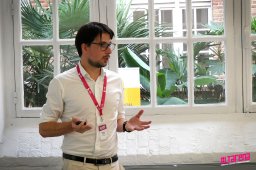 Matthieu Mulot合作论文数Lab Soil Biodivers, Univ Neuchatel2
 Shinichi Sunagawa合作论文数Department of Biology, Eidgenossische Technische Hochschule Zurich2
 Ales Horak合作论文数2
 Vincent Flora合作论文数Institut de Biologie de l'ENS (IBENS),, Ecole Normale Supérieure2
 Xavier Pochon合作论文数Institute of Marine Science, Faculty of Science, The University of Auckland2Flegontova Olga合作论文数Institute of Parasitology, Czech Academy of Sciences2
 Eric Karsenti合作论文数European Molecular Biology Laboratory2
 Jean Weissenbach合作论文数Genoscope2
 Emmanuel S. Boss合作论文数Maine In-situ Sound & Color Lab, School of Marine Sciences, University of Maine2
 Hiroyuki Ogata (緒方博之)合作论文数Bioinformatics Center, Institute for Chemical Research, Kyoto University2




