Solar Energetic Particles from suprathermal (few keV) up to relativistic (few GeV) energies constitute an important contributor to the characterization of the space environment. Emitted from the Sun they are associated with solar flares and shock waves driven by Coronal Mass Ejections. This review presents important recent results of the study of Interplanetary CMEs and shocks in relation to energetic particle acceleration and transport, taking advantage of multi-point, multi-instrument observations available by a fleet of spacecraft in the heliosphere. In particular, the Solar Orbiter and Parker Solar Probe pioneering missions providing unprecedented measurements of energetic particles in the near-Sun environment offer promising insights into several unresolved questions particularly regarding the mechanisms responsible for the acceleration and transport of energetic particles in the heliosphere and their relative contributions.
Providing reliable forecasts of Solar Energetic Particle (SEP) events is mandatory for human spaceflight beyond low-Earth orbit, especially outside the Earth's magnetosphere. High-energy SEPs are tracked because they penetrate deeper into the terrestrial atmosphere and contribute to the radiation dose aboard spacecraft specifically over Canada and the Southern Indian Ocean, due to the tilt of the Earth on its axis. Based on the Relativistic Electron Alert System for Exploration (REleASE) forecasting scheme], the HESPERIA REleASE product was developed by the HESPERIA H2020 project (Project Coordinator: Dr. Olga Malandraki) and generating real-time predictions of the proton flux (30-50 MeV) at L1, making use of relativistic and near-relativistic electron measurements by the SOHO/EPHIN and ACE/EPAM experiments, respectively. The HESPERIA REleASE tools are operational through the Space Weather Operational Unit of the National Observatory of Athens, accessible through the dedicated website (http://www.hesperia.astro.noa.gr). HESPERIA REleASE has attracted attention from various space organizations (e.g., NASA/CCMC, SRAG), due to the real-time, highly accurate and timely performance offered. ESA selected the HESPERIA REleASE products that were integrated and provided through the ESA Space Weather (SWE) Service Network (https://swe.ssa.esa.int/noa-hesperia-federated) under the Space Radiation Expert Service Center (R-ESC). Solar cycle 25 solar radiation storms successfully predicted by HESPERIA REleASE are presented and discussed. Moreover, we present an innovative upgrade implemented, namely HESPERIA REleASE+, that is using the novel approach of combining for the first time real-time type III solar radio burst observations by the STEREO S/WAVES instrument, thus incorporating clear evidence of particle escape from the Sun, within the HESPERIA REleASE system. To this end, a robust automated algorithm has been developed for the real-time identification and classification of Type III radio burst characteristics, related to intense SEP events at Earth’s orbit. This new implementation leads to a substantial step forward in improving the accuracy and reduction of false alarms.
Solar Energetic Particle (SEPs) with energies ranging from tens of keV to a few GeV, are a significant component in the description of the space environment. In this work, the HESPERIA REleASE product is emphasized, which, based on the Relativistic Electron Alert System for Exploration (REleASE) forecasting scheme, generates real-time predictions of the proton flux (30–50 meV) at L1, making use of relativistic and near-relativistic electron measurements by the SOHO/EPHIN and ACE/EPAM experiments, respectively. The HESPERIA REleASE Alert is a notification system based on the forecasts produced by the HESPERIA REleASE product and informs about the expected radiation impact in real-time using an illustration and a distribution system for registered users. We also present and discuss the Advance Warning Times derived for the compiled list of major SEP events successfully forecasted over the last 2.5 years during solar cycle 25 by HESPERIA REleASE and recent developments.
On 2022 January 20, the Energetic Particle Detector on board Solar Orbiter detected a solar energetic particle (SEP) event showing unusual sunward-directed fluxes. Near-Earth spacecraft separated by 17° in longitude from Solar Orbiter measured classic antisunward-directed fluxes. Parker Solar Probe and MAVEN, separated by 130° and 216° respectively from Solar Orbiter, observed the particle event as well, suggesting a widespread event of nearly 360° in the heliosphere. The SEP event was associated with an M5-class X-ray flare and a CME with a speed of 1400 km/s. The energetic particles reached 3 MeV and 100 MeV energies for electrons and protons, respectively.The aim of this study is to disentangle how the particles are able to spread throughout the heliosphere and how the local heliospheric conditions affect the acceleration and transport of the particles at different spacecraft locations. This work presents the observations and analyses that lead to a scenario in which the solar source injected energetic particles into the solar wind and within a preceding interplanetary coronal mass ejection (ICME) that was already present in the heliosphere at the time of the SEP event onset. In particular, Solar Orbiter measured the particles injected along the longest leg of an ICME still connected to the Sun at the time of the particle release.
This work reports on the real‐time implementation of a local solar proton event forecasting system at the Solar Terrestrial Relations Observatory—Ahead (STEREO‐A) spacecraft, namely STEREO REleASE+. The forecasting uses the finding that relativistic electrons provide the “earliest indication” that a solar particle event has started, arriving at near‐Earth distance earlier than protons at ∼30% of the speed of light. In addition to relativistic electrons, we use a requirement of a radio burst of type III to be observed before issuing a proton alert. A similar system, HESPERIA REleASE+, has already been implemented using electrons observed by SOHO and ACE near Earth, which creates local forecasts for the Earth‐moon system. The radio observations from STEREO‐A are used in both systems, as radio bursts in part of the emission spectrum can be observed all around the Sun. Usefulness of adding a radio burst requirement to an electron‐based forecasting system lies in the potential for suppression of known sources of false alarms, that is, added robustness. While this work describes the establishment of the real‐time system, we plan on using the two local and robust forecasts to test how far away from the spacecraft the validity and usefulness of the local forecasts extend. Moreover, the STEREO REleASE+ system, currently located between Earth and Earth‐Sun L4, adds an additional safeguard for exploration of the moon, in particular from solar particle events originating behind the western limb of the Sun.
Context. On 2022 January 20, the Energetic Particle Detector (EPD) on board Solar Orbiter measured a solar energetic particle (SEP) event showing unusual first arriving particles from the anti-Sun direction. Near-Earth spacecraft separated by 17 degrees in longitude to the west of Solar Orbiter measured classic anti-sunward-directed fluxes. STEREO-A and MAVEN, separated by 18 degrees to the east and by 143 degrees to the west of Solar Orbiter, respectively, also observed the event, suggesting that particles spread over at least 160 degrees in the heliosphere. Aims. The aim of the present study is to investigate how SEPs are accelerated and transported towards Solar Orbiter and near-Earth spacecraft, as well as to examine the influence of a magnetic cloud (MC) present in the heliosphere at the time of the event onset on the propagation of energetic particles. Methods. We analysed remote-sensing data, including flare, coronal mass ejection (CME), and radio emission to identify the parent solar source of the event. We investigated energetic particles, solar wind plasma, and magnetic field data from multiple spacecraft. Results. Solar Orbiter was embedded in a MC erupting on 16 January from the same active region as that related to the SEP event on 20 January. The SEP event is related to a M5.5 flare and a fast CME-driven shock of similar to 1433 km s(-1), which accelerated and injected particles within and outside the MC. Taken together, the hard SEP spectra, the presence of a Type II radio burst, and the co-temporal Type III radio burst being observed from 80 MHz that appears to emanate from the Type II burst, suggest that the shock is likely the main accelerator of the particles. Conclusions. Our detailed analysis of the SEP event strongly suggests that the energetic particles are mainly accelerated by a CME-driven shock and are injected into and outside of a previous MC present in the heliosphere at the time of the particle onset. The sunward-propagating SEPs measured by Solar Orbiter are produced by the injection of particles along the longer (western) leg of the MC still connected to the Sun at the time of the release of the particles. The determined electron propagation path length inside the MC is around 30% longer than the estimated length of the loop leg of the MC itself (based on the graduated cylindrical shell model), which is consistent with the low number of field line rotations.
A major impact on human and robotic space exploration activities is the sudden and prompt occurrence of solar energetic ion events. In 2023 and 2024, {STEREO} is approaching the Earth from a behind position, soon passing Earth inside its orbit and thereafter moving ahead of Earth. {STEREO} thus offers several unique opportunities during this passage. In the period from June 1 to November 1, 2023, 5 {SEP} events have been measured that cause proton fluxes of above 25~MeV to rise above 0.1 /(cm$^2$\; s\; sr\; MeV). Taking into account systematic and statistical uncertainties of the particle measurements we find a good agreement between both spacecraft.The SOHO/EPHIN and STEREO/SEPTproject is supported under Grant 50~OC~2102 by the German Bundesministerium für Wirtschaft through the Deutsches Zentrum für Luft- und Raumfahrt (DLR). This study has received funding from the European Union’s Horizon 2020 research and innovation programme under grant agreement No. 101004159 (SERPENTINE).
Solar Energetic Particle (SEP) events can pose a significant radiation hazard for human and robotic space exploration activities. Therefore SEP forecasting systems are needed to support operations. The REleASE system (A. Posner, 2007) utilizes the fact that near relativistic electrons (1 MeV electrons have 94% of the speed of light) travel faster than ions (30 MeV protons have 25% of the speed of light) and are always present in hazardous SEP events. Their early arrival can be used to forecast the expected proton flux. Originally REleASE uses real time data from SOHO/EPHIN near Earth. Since the instrument is aging we recently adapted the method to STEREO-A/HET and used the period from June to November 2023 when STEREO-A passed the Earth to compare the REleASE forecasts from the different instruments.This study has received funding from the National Aeronautics and Space Administration under grant agreement No. TXS0150642 (HESPERIA RELEASE).
We report observations of direct evidence of energetic protons being accelerated above ∼400 keV within the reconnection exhaust of a heliospheric current sheet (HCS) crossing by NASA’s Parker Solar Probe (PSP) at a distance of ∼16.25 solar radii ( R _s ) from the Sun. Inside the exhaust, both the reconnection-generated plasma jet and the accelerated protons up to ∼400 keV propagated toward the Sun, unambiguously establishing their origin from HCS reconnection sites located antisunward of PSP. Within the core of the exhaust, PSP detected stably trapped energetic protons up to ∼400 keV, which is ≈1000 times greater than the available magnetic energy per particle. The differential energy spectrum of the accelerated protons behaved as a pure power law with spectral index of ∼−5. Supporting simulations using the kglobal model suggest that the trapping and acceleration of protons up to ∼400 keV in the reconnection exhaust are likely facilitated by merging magnetic islands with a guide field between ∼0.2 and 0.3 of the reconnecting magnetic field, consistent with the observations. These new results, enabled by PSP’s proximity to the Sun, demonstrate that magnetic reconnection in the HCS is a significant new source of energetic particles in the near-Sun solar wind. Our findings of in situ particle acceleration via magnetic reconnection at the HCS provide valuable insights into this fundamental process, which frequently converts the large magnetic field energy density in the near-Sun plasma environment and may be responsible for heating the Sun’s atmosphere, accelerating the solar wind, and energizing charged particles to extremely high energies in solar flares.
Solar Energetic Particles (SEPs) constitute an important contributor to the characterization of the space environment. They are emitted from the Sun in association with solar flares and Coronal Mass ejection (CME)-driven shock waves. SEP radiation storms may have durations from a period of hours to days or even weeks and have a large range of energy spectrum profiles. These events pose a threat to modern technology strongly relying on spacecraft, are a serious radiation hazard to humans in space, and are additionally of concern for avionics and commercial aviation in extreme circumstances. However, our knowledge of the origin, acceleration and transport of these particles from close to the Sun through the interplanetary medium has advanced dramatically in the last 40 years, many puzzles have still remained unsolved due to the scarcity of in situ measurements well inside 1 AU. The Solar Orbiter (SolO) ESA mission and NASA Parker Solar Probe (PSP) pioneering missions have been providing unprecedented measurements of energetic particles in the near-Sun environment. In this work, unexpected energetic particle observations as measured by the PSP Integrated Science Investigation of the Sun (ISʘIS) and the SolO Energetic Particle Detector (EPD) experiments will be presented which revealed surprises that challenge our understanding.
Space weather is a multidisciplinary research area connecting scientists from across heliophysics domains seeking a coherent understanding of our space environment that can also serve modern life and society's needs. COSPAR's ISWAT (International Space Weather Action Teams) 'clusters' focus attention on different areas of space weather study while ensuring the coupled system is broadly addressed via regular communications and interactions. The ISWAT cluster "H3: Radiation Environment in the Heliosphere" (https://www.iswat-cospar.org/h3) has been working to provide a scientific platform to understand, characterize and predict the energetic particle radiation in the heliosphere with the practical goal of mitigating radiation risks associated with areospace activities, satellite industry and human space explorations. In particular, present approaches help us understand the physical phenomena at large, optimizing the output of multi-viewpoint observations and pushing current models to their limits. In this paper, we review the scientific aspects of the radiation environment in the heliosphere covering four different radiation types: Solar Energetic Particles (SEPs), Ground Level Enhancement (GLE, a type of SEP events with energies high enough to trigger the enhancement of ground-level detectors), Galactic Cosmic Rays (GCRs) and Anomalous Cosmic Rays (ACRs). We focus on related advances in the research community in the past 10-20 years and what we still lack in terms of understanding and predictive capabilities. Finally we also consider some recommendations related to the improvement of both observational and modeling capabilities in the field of space radiation environment.
We present an event observed by Parker Solar Probe at $\sim$0.2 au on March 2, 2022 in which imaging and \emph{in situ} measurements coincide. During this event, PSP passed through structures on the flank of a streamer blowout CME including an isolated flux tube in front of the CME, a turbulent sheath, and the CME itself. Imaging observations and \emph{in situ} helicity and principal variance signatures consistently show the presence of flux ropes internal to the CME. In both the sheath, and the CME interval, the distributions are more isotropic, the spectra are softer, and the abundance ratios of Fe/O and He/H are lower than those in the isolated flux tube, and yet elevated relative to typical plasma and SEP abundances. These signatures in the sheath and the CME indicate that both flare populations and those from the plasma are accelerated to form the observed energetic particle enhancements. In contrast, the isolated flux tube shows large streaming, hard spectra and large Fe/O and He/H ratios, indicating flare sources. Energetic particle fluxes are most enhanced within the CME interval from suprathermal through energetic particle energies ($\sim$ keV to $>10$ MeV), indicating particle acceleration, and confinement local to the closed magnetic structure. The flux-rope morphology of the CME helps to enable local modulation and trapping of energetic particles, particularly along helicity channels and other plasma boundaries. Thus, the CME acts to build-up energetic particle populations, allowing them to be fed into subsequent higher energy particle acceleration throughout the inner heliosphere where a compression or shock forms on the CME front.
Abstract This work reports on an attempt toward improving the Relativistic Electron Alert System for Exploration (REleASE): the occurrence of a type‐III radio burst as a precondition for a REleASE forecast. REleASE forecasts are based on the detection of early arrival of near‐relativistic electrons ahead of more hazardous protons from Solar Energetic Particle (SEP) events. The goal is to allow astronauts on a Lunar or Mars mission sufficient advance warning to reach a radiation shelter to minimize radiation dose exposure. We test a new system that sets a condition of the occurrence of a type‐III radio burst, thus adding independent evidence of particle escape from the Sun, with the aim of reducing known sources of false‐alarms of the existing REleASE system. The High Energy Solar Particle Events foRecastIng and Analysis (HESPERIA) REleASE+ system, which takes advantage of availability of real‐time solar radio observations during the passage of STEREO‐A by Earth in 2023, has now been incorporated in the HESPERIA framework. We discuss the techniques used for automatic detection of type‐III radio bursts preparing for its real‐time implementation, the determination of selection criteria for type‐III bursts that are candidates for solar proton events in the Earth‐moon system, and first results of the combined system.
Abstract A Ground Level Enhancement (GLE) event can be observed as an increase in the background of ground‐based neutron monitor observations and is often associated with an increase of >500 MeV space‐based proton flux measurements. GLE events begin as very high‐energy SEP events associated with GeV protons. For such events to be detected at sea level, proton energies must exceed about 433 MeV. Since the increased flux of such particles can be a major problem to technology in space and on Earth and pose a threat for human health, developing real time warning systems is of great importance. GLE Alert++ is a product, built by the Athens Cosmic Ray Group of the National and Kapodistrian University of Athens, that issues alerts when a GLE event starts to register and is based on ground‐based neutron monitor observations. From the space‐based approach, the HESPERIA UMASEP‐500 product, jointly developed within the framework of the EU HORIZON2020 HESPERIA project by the Universidad de Malaga, Spain and National Observatory of Athens, Greece, provides forecasts of GLE events and >500 MeV protons relying on GOES satellite Soft X‐Ray and high energy proton observations. These two products are fully integrated as federated products on the ESA SWE Portal and are provided as part of the ESA Space Safety Program Space Weather Service Network. In this paper we present how the products were built, provide examples of their outputs as seen on the ESA SWE Portal, and show how the products complement each other and how using them together can in some instances provide more information for users of these services.
We present analyses of 0.05–2 MeV ions from the 2022 February 16 energetic storm particle event observed by Parker Solar Probe's (PSP) IS⊙IS/EPI-Lo instrument at 0.35 au from the Sun. This event was characterized by an enhancement in ion fluxes from a quiet background, increasing gradually with time with a nearly flat spectrum, rising sharply near the arrival of the coronal mass ejection (CME)–driven shock, becoming nearly a power-law spectrum, then decaying exponentially afterward, with a rate that was independent of energy. From the observed fluxes, we determine diffusion coefficients, finding that far upstream of the shock the diffusion coefficients are nearly independent of energy, with a value of 10 20 cm 2 s −1 . Near the shock, the diffusion coefficients are more than 1 order of magnitude smaller and increase nearly linearly with energy. We also determine the source of energetic particles, by comparing ratios of the intensities at the shock to estimates of the quiet-time intensity to predictions from diffusive shock acceleration theory. We conclude that the source of energetic ions is mostly the solar wind for this event. We also present potential interpretations of the near-exponential decay of the intensity behind the shock. One possibility we suggest is that the shock was overexpanding when it crossed PSP and the energetic particle intensity decreased behind the shock to fill the expanding volume. Overexpanding CMEs could well be more common closer to the Sun, and this is an example of such a case.
This white paper recognizes gaps in observations that will, when addressed, much improve solar radiation hazard and geomagnetic storm forecasting. Radiation forecasting depends on observations of the entire "Solar Radiation Hemisphere" that we will define. Mars exploration needs strategic placement of radiation-relevant observations. We also suggest an orbital solution that will improve geomagnetic storm forecasting through improved in situ and solar/heliospheric remote sensing.
Solar energetic particles (SEPs) from suprathermal (few keV) up to relativistic (∼few GeV) energies are accelerated at the Sun in association with solar flares and coronal mass ejection-driven shock waves. Although our knowledge of the origin, acceleration, and transport of these particles from close to the Sun through the interplanetary medium has advanced dramatically in the last 40 years, many puzzles have still remained unsolved due to the scarcity of in situ measurements well inside 1 AU. Furthermore, energetic particle intensity enhancements associated with high-speed streams or stream interaction regions (SIRs) have been routinely observed at interplanetary spacecraft near Earth orbit since the 1960s. Since only a small sample of SIR events were observed by the Helios spacecraft inside 1 AU, additional observations well inside 1 AU were also needed to further investigate the energization and transport effects of SIR-associated ions and to compare with expectations from contemporary SIR-associated particle acceleration and transport models and theories. The Solar Orbiter (SolO) and Parker Solar Probe (PSP) pioneering missions have been providing unprecedented measurements of energetic particles in the near-Sun environment. This review presents the unexpected observations of SEP and SIR-related ion events as measured by the PSP/IS⊙IS and SolO/EPD experiments, which revealed surprises that challenge our understanding.
<p>For human spaceflight beyond low-Earth orbit, particularly outside the Earth's magnetosphere, it is essential to provide accurate predictions of Solar Energetic Particle (SEP) occurrences. SEPs with energies ranging from tens of keV to a few GeV, are a significant component in the description of the space environment. SEP events feature a wide range of energy spectrum profiles and can last for a few hours to several days or even weeks. As well as posing a threat to modern technology that heavily relies on spacecraft and posing a major radiation hazard to astronauts, they can also constitute a threat to avionics and commercial aircraft in extreme circumstances. The SEP Real-Time Forecasting HESPERIA products have been developed under the HESPERIA H2020 project (Project Coordinator: Dr. Olga Malandraki) and since 2015 provide significant results concerning the prediction of SEP events. More specifically, the HESPERIA UMASEP-500 product makes real-time predictions of the occurrence of >500 MeV proton events and Ground Level Enhancement (GLE) events based on the analysis of soft X-ray and high energy differential proton fluxes measured by the GOES satellite network. The HESPERIA REleASE product, based on the Relativistic Electron Alert System for Exploration (REleASE) forecasting scheme, generates real-time predictions of the proton flux (30-50 MeV) at L1, making use of relativistic and near-relativistic electron measurements by the SOHO/EPHIN and ACE/EPAM experiments, respectively. Lastly, the HESPERIA REleASE Alert is a notification system based on the forecasts produced by the HESPERIA REleASE product and informs about the expected radiation impact in real-time using an illustration and a distribution system for registered users. The real-time and highly accurate forecasts as well as the timely performance offered by the HESPERIA products have attracted the attention of various space organizations (e.g. NASA/CCMC, SRAG) and also led to the selection and integration of them into the ESA Space Weather (SWE) Service Network (https://swe.ssa.esa.int/noa-hesperia-federated). The integration process, based on the strict guidelines posed by ESA, has determined the current form of the HESPERIA products using state-of-the-art technologies and paradigms concerning both the graphical user interface and the mechanisms to provide the forecasting results to the end users with a high-quality experience. We will present the HESPERIA products as provided through the ESA SWE Service Network under the Space Radiation Expert Service Centre (R-ESC). Moreover, solar radiation storms successfully predicted during Solar cycle 25 will also be presented and discussed. (Work performed in the frame of ESA Space Safety Programme&#8217;s network of space weather service development and pre-operational activities and supported under ESA Contract 4000134036/21/D/MRP).</p>
Context. After their acceleration and release at the Sun, solar energetic particles (SEPs) are injected into the interplanetary medium and are bound to the interplanetary magnetic field (IMF) by the Lorentz force. The expansion of the IMF close to the Sun focuses the particle pitch-angle distribution, and scattering counteracts this focusing. Solar Orbiter observed an unusual solar particle event on 9 April 2022 when it was at 0.43 astronomical units (au) from the Sun. Aims. We show that the inferred IMF along which the SEPs traveled was about three times longer than the nominal length of the Parker spiral and provide an explanation for this apparently long path. Methods. We used velocity dispersion analysis (VDA) information to infer the spiral length along which the electrons and ions traveled and infer their solar release times and arrival direction. Results. The path length inferred from VDA is approximately three times longer than the nominal Parker spiral. Nevertheless, the pitch-angle distribution of the particles of this event is highly anisotropic, and the electrons and ions appear to be streaming along the same IMF structures. The angular width of the streaming population is estimated to be approximately 30 degrees. The highly anisotropic ion beam was observed for more than 12 h. This may be due to the low level of fluctuations in the IMF, which in turn is very probably due to this event being inside an interplanetary coronal mass ejection The slow and small rotation in the IMF suggests a flux-rope structure. Small flux dropouts are associated with very small changes in pitch angle, which may be explained by different flux tubes connecting to different locations in the flare region. Conclusions. The unusually long path length along which the electrons and ions have propagated virtually scatter-free together with the short-term flux dropouts offer excellent opportunities to study the transport of SEPs within interplanetary structures. The 9 April 2022 solar particle event offers an especially rich number of unique observations that can be used to limit SEP transport models.
Solar Energetic Particle (SEP) events are interesting from a scientific perspective as they are the product of a broad set of physical processes from the corona out through the extent of the heliosphere, and provide insight into processes of particle acceleration and transport that are widely applicable in astrophysics. From the operations perspective, SEP events pose a radiation hazard for aviation, electronics in space, and human space exploration, in particular for missions outside of the Earth's protective magnetosphere including to the Moon and Mars. Thus, it is critical to improve the scientific understanding of SEP events and use this understanding to develop and improve SEP forecasting capabilities to support operations. Many SEP models exist or are in development using a wide variety of approaches and with differing goals. These include computationally intensive physics-based models, fast and light empirical models, machine learning-based models, and mixed-model approaches. The aim of this paper is to summarize all of the SEP models currently developed in the scientific community, including a description of model approach, inputs and outputs, free parameters, and any published validations or comparisons with data.
 Bernd Heber合作论文数Christian-Albrechts-Universität57
 Nina Dresing合作论文数Institut für Experimentelle und Angewandte Physik, Christian-Albrechts University36
 Karl-Ludwig Klein合作论文数30
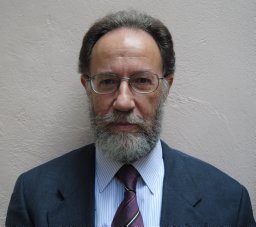 Emmanuel T. Sarris合作论文数Space Research Laboratory;Democritus University of Thrace;Space Research Laboratory, Democritus University of Thrace29
 Rami Vainio合作论文数Department of Physics and Astronomy, University of Turku;Space Research Laboratory, University of Turku;Centre of Excellence in Research of Sustainable Space, University of Turku25David Lario合作论文数Potchefstroom University24R. Gómez‐Herrero合作论文数24Andreas Klassen合作论文数23
 C. M. S. Cohen合作论文数CALTECH, Pasadena, CA 91125 USA22
 Arik Posner合作论文数Southwest Research Institute21
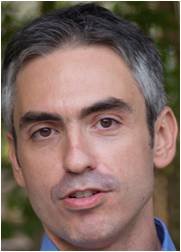 A. Papaioannou合作论文数Physics Department, National and Kapodistrian University of Athens18
 Robert F. Wimmer-Schweingruber合作论文数Institut für Experimentelle und Angewandte Physik, Universität Kiel;Mathematisch-Naturwissenschaftliche Fakultät, Christian-Albrechts-Universität zu Kiel18Raul Gomez-Herrero合作论文数18George C. Ho合作论文数18
 David J. McComas合作论文数Department of Astrophysical Sciences, Princeton University17
 Olga V. Khabarova合作论文数17
 G. Tsiropoula合作论文数Institute for Space Applications and Remote Sensing (ISARS),, National Observatory of Athens (NOA),17
 Richard Mewaldt合作论文数Aspen Global Change Institute;Space Radiation Laboratory, California Institute of Technology16Athanasios Geranios合作论文数16
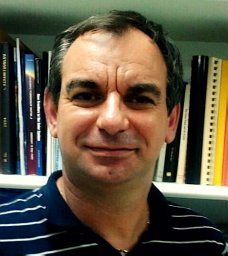 Kostas Tziotziou合作论文数Institute for Environmental Research and Sustainable Development, National Observatory of Athens16
 Joe Giacalone合作论文数Department of Planetary Sciences, College of Science, University of Arizona15
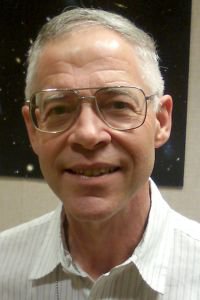 Mark Wiedenbeck合作论文数Earth and Space Sciences Division, Jet Propulsion Laboratory, California Institute of Technology15
 William H. Matthaeus合作论文数Department of Physics and Astronomy, University of Delaware15
 Nathan Schwadron合作论文数College of Engineering and Physical Sciences, University of New Hampshire15
 Matthew E Hill合作论文数Applied Physics Laboratory, Johns Hopkins University14
 Donald Mitchell合作论文数13
 Stuart Bale合作论文数Department of Physics, University of California, Berkeley;Space Sciences Laboratory, University of California, Berkeley13
 Eric Christian合作论文数Energetic Particle Laboratory, Heliophysics Science Division, Goddard Space Flight Center, NASA;Department of Physics, College of Arts & Sciences, Washington University in St. Louis13S. Dalla合作论文数University of Manchester13F. Espinosa Lara合作论文数Laboratoire d'Astrophysique de Toulouse et Tarbes13
 Angels Aran合作论文数Departament d’Astronomia i Meteorologia, Universitat de Barcelona13
 Jamey R. Szalay合作论文数Department of Astrophysical Sciences, Princeton University12
 Louis Lanzerotti合作论文数Center for Solar-Terrestrial Research, New Jersey Institute of Technology12R. A. Leske合作论文数12Cecil Tranquille合作论文数12
 Ralph L. Mcnutt合作论文数The Johns Hopkins University Applied Physics Laboratory12Norma B. Crosby合作论文数Space Weather Group, Royal Belgian Institute for Space Aeronomy12
 Emilia Kilpua合作论文数Department of Physics, Faculty of Science, University of Helsinki11M. Pulupa合作论文数11R. G. Marsden合作论文数11
 Edward C. Stone合作论文数The Division of Physics, Mathematics and Astronomy, California Institute of Technology;NASA Jet Propulsion Laboratory11Alexander Nindos合作论文数Physics Department, University of Ioannina11M. I. Desai合作论文数10Patrick Kuehl合作论文数10J. S. Rankin合作论文数10
 Robert Colby Allen合作论文数Space Sci. Center, Univ. of New Hampshire (UNH),;c;Space Sci. Center, Univ. of New Hampshire (UNH),10
 Justin C. Kasper合作论文数Climate and Space Sciences and Engineering Department, College of Engineering, University of Michigan;High Energy Astrophysics Division, Smithsonian Astrophysical Observatory, Harvard-Smithsonian Center for Astrophysics;Astronomy Department, Harvard University;BWX Technologies Inc10
 Blai Sanahuja合作论文数Departament d’Astronomia i Meteorologia, Universitat de Barcelona10Yulia Kartavykh合作论文数10




