Přestože je psychoterapie prokazatelně účinnou formou pomoci, její efektivita již několik desetiletí naráží na pomyslný strop. Jedním z možných důvodů je nedostatek bezprostřední zpětné vazby, která by terapeutům umožnila včas zachytit nejrůznější nesnáze v terapeutickém procesu a adekvátně na ně reagovat. Dosavadní výzkumy ukazují, že jako terapeuti máme tendenci nadhodnocovat své dovednosti a mnohdy nedokážeme u svých klientů včas rozpoznat nespokojenost či zhoršování stavu. Cílem tohoto textu je představit webovou aplikaci DeePsy – nástroj pro průběžné monitorování procesu a výsledků psychoterapie. Aplikace terapeutům nabízí průběžnou a systematickou zpětnou vazbu na jejich práci pomocí pravidelně administrovaných dotazníků a automatické analýzy nahrávek terapeutických sezení. Článek objasňuje základní principy, na nichž je aplikace postavena, a popisuje její aktuální podobu. Nabízí též zamyšlení nad problematikou zpětné vazby v širším kontextu kultury psychoterapeutické práce.
This paper summarizes our efforts in the NIST Language Recognition Evaluations 2022 resulting in systems providing competitive performance. We provide both the description and analysis of the systems. We describe what data we have used to train our models, and we follow with embedding extractors and backend classifiers. After covering the architecture, we concentrate on post-evaluation analysis. We compare different topologies of DNN, different backend classifiers, and the impact of the data used to train them. We also report results with XLS-R pretrained models. We present the performance of the systems in the Fixed condition, where participants are required to use only predefined data sets, and also in the Open condition allowing to use any data to train the systems.
In this contribution, we provide a description of the ABC team’s collaborative efforts toward the development of speaker verification systems for the NIST Speaker Recognition Evaluation 2021 (NIST-SRE2021). Cross-lingual and cross-dataset trials are the two main challenges introduced in the NIST-SRE2021. Submissions of ABC team are the result of active collaboration of researchers from BUT, CRIM, Omilia and Innovatrics. We took part in all three close condition tracks for audio-only, audio-visual and visual-only verification tasks. Our audio-only systems follow deep speaker embeddings (e.g., x-vectors) with a subsequent PLDA scoring paradigm. As embeddings extractor, we select some variants of residual neural network (ResNet), factored time delay neural network (FTDNN) and Hybrid Neural Network (HNN) architectures. The HNN embeddings extractor employs CNN, LSTM and TDNN networks and incorporates a multi-level global-local statistics pooling method in order to aggregate the speaker information within short time-span and utterance-level context. Our visual-only systems are based on pretrained embeddings extractors employing some variants of ResNet and the scoring is based on cosine distance. When developing an audio-visual system, we simply fuse the outputs of independent audio and visual systems. Our final submitted systems are obtained by performing score level fusion of subsystems followed by score calibration.
In this paper, we analyze the behavior and performance of speaker embeddings and the back-end scoring model under domain and language mismatch. We present our findings regarding ResNet-based speaker embedding architectures and show that reduced temporal stride yields improved performance. We then consider a PLDA back-end and show how a combination of small speaker subspace, language-dependent PLDA mixture, and nuisance-attribute projection can have a drastic impact on the performance of the system. Besides, we present an efficient way of scoring and fusing class posterior logit vectors recently shown to perform well for speaker verification task. The experiments are performed using the NIST SRE 2021 setup.
This paper describes the system developed by the BUT team for the fourth track of the VoxCeleb Speaker Recognition Challenge, focusing on diarization on the VoxConverse dataset. The system consists of signal pre-processing, voice activity detection, speaker embedding extraction, an initial agglomerative hierarchical clustering followed by diarization using a Bayesian hidden Markov model, a reclustering step based on per-speaker global embeddings and overlapped speech detection and handling. We provide comparisons for each of the steps and share the implementation of the most relevant modules of our system. Our system scored second in the challenge in terms of the primary metric (diarization error rate) and first according to the secondary metric (Jaccard error rate).
An expert team from Brno University of Technology and Masaryk University is developing a web application to provide therapists with feedback based on automatic processing of regularly collected questionnaire data and audio recordings from therapy sessions (from project report).
In this paper, we present a brief history and a "longitudinal study" of all important milestone modelling techniques used in text independent speaker recognition since Brno University of Technology (BUT) first participated in the NIST Speaker Recognition Evaluation (SRE) in 2006-GMM MAP, GMM MAP with eigen-channel adaptation, Joint Factor Analysis, i-vector and DNN embedding (x-vector). To emphasize the historical context, the techniques are evaluated on all NIST SRE sets since 2004 on a time-machine principle, i.e. a system is always trained using all data available up till the year of evaluation. Moreover, as user-contributed audiovisual content dominates nowadays' Internet, we representatively include the Speakers In The Wild (SITW) and VOiCES challenge datasets in the evaluation of our systems. Not only we present a comparison of the modelling techniques, but we also show the effect of sampling frequency. (c) 2019 Elsevier Ltd. All rights reserved.
In this paper, we present the winning BUT submission for the text-dependent task of the SdSV challenge 2020. Given the large amount of training data available in this challenge, we explore successful techniques from text-independent systems in the text-dependent scenario. In particular, we trained x-vector extractors on both in-domain and out-of-domain datasets and combine them with i-vectors trained on concatenated MFCCs and bottleneck features, which have proven effective for the text-dependent scenario. Moreover, we proposed the use of phrase-dependent PLDA backend for scoring and its combination with a simple phrase recognizer, which brings up to 63% relative improvement on our development set with respect to using standard PLDA. Finally, we combine our different i-vector and x-vector based systems using a simple linear logistic regression score level fusion, which provides 28% relative improvement on the evaluation set with respect to our best single system.
This paper describes the winning systems developed by the BUT team for the four tracks of the Second DIHARD Speech Diarization Challenge. For tracks 1 and 2 the systems were mainly based on performing agglomerative hierarchical clustering (AHC) of x-vectors, followed by another x-vector clustering based on Bayes hidden Markov model and variational Bayes inference. We provide a comparison of the improvement given by each step and share the implementation of the core of the system. For tracks 3 and 4 with recordings from the Fifth CHiME Challenge, we explored different approaches for doing multi-channel diarization and our best performance was obtained when applying AHC on the fusion of per channel probabilistic linear discriminant analysis scores.
We present a condensed description and analysis of the joint submission of ABC team for NIST SRE 2019, by BUT, CRIM, Phonexia, Omilia and UAM. We concentrate on challenges that arose during development and we analyze the results obtained on the evaluation data and on our development sets. The conversational telephone speech (CMN2) condition is challenging for current state-of-the-art systems, mainly due to the language mismatch between training and test data. We show that a combination of adversarial domain adaptation, backend adaptation and score normalization can mitigate this mismatch. On the VAST condition, we demonstrate the importance of deploying diarization when dealing with multi-speaker utterances and the drastic improvements that can be obtained by combining audio and visual modalities.
This paper is a post-evaluation analysis of our efforts in VOiCES 2019 Speaker Recognition challenge. All systems in the fixed condition are based on x-vectors with different features and DNN topologies. The single best system reaches minDCF of 0.38 (5.25% EER) and a fusion of 3 systems yields minDCF of 0.34 (4.87% EER). We also analyze how speaker verification (SV) systems evolved in last few years and show results also on SITW 2016 Challenge. EER on the core-core condition of the SITW 2016 challenge dropped from 5.85% to 1.65% for system fusions submitted for SITW 2016 and VOiCES 2019, respectively. The less restrictive open condition allowed us to use external data for PLDA adaptation and achieve additional small performance improvement. In our submission to open condition, we used three x-vector systems and also one system based on i-vectors.
This paper describes the systems developed by the BUT team for the four tracks of the second DIHARD speech diarization challenge. For tracks 1 and 2 the systems were based on performing agglomerative hierarchical clustering (AHC) over x-vectors, followed by the Bayesian Hidden Markov Model (HMM) with eigenvoice priors applied at x-vector level followed by the same approach applied at frame level. For tracks 3 and 4, the systems were based on performing AHC using x-vectors extracted on all channels.
This is a description of our effort in VOiCES 2019 Speaker Recognition challenge. All systems in the fixed condition are based on the x-vector paradigm with different features and DNN topologies. The single best system reaches 1.2% EER and a fusion of 3 systems yields 1.0% EER, which is 15% relative improvement. The open condition allowed us to use external data which we did for the PLDA adaptation and achieved less than ~10% relative improvement. In the submission to open condition, we used 3 x-vector systems and also one i-vector based system.
In this work we revisit discriminative training of the i-vector extractor component in the standard speaker verification (SV) system. The motivation of our research lies in the robustness and stability of this large generative model, which we want to preserve, and focus its power towards any intended SV task. We show that after generative initialization of the i-vector extractor, we can further refine it with discriminative training and obtain i-vectors that lead to better performance on various benchmarks representing different acoustic domains.
Recently several end-to-end speaker verification systems based on deep neural networks (DNNs) have been proposed. These systems have been proven to be competitive for text-dependent tasks as well as for text-independent tasks with short utterances. However, for text-independent tasks with longer utterances, end-to-end systems are still outperformed by standard i-vector + PLDA systems. In this work, we present an end-to-end speaker verification system that is initialized to mimic an i-vector + PLDA baseline. The system is then further trained in an end-to-end manner but regularized so that it does not deviate too far from the initial system. In this way we mitigate overfitting which normally limits the performance of end-to-end systems. The proposed system outperforms the i-vector + PLDA baseline on both long and short duration utterances.
In this report, we describe the submission of Brno University of Technology (BUT) team to the VoxCeleb Speaker Recognition Challenge (VoxSRC) 2019. We also provide a brief analysis of different systems on VoxCeleb-1 test sets. Submitted systems for both Fixed and Open conditions are a fusion of 4 Convolutional Neural Network (CNN) topologies. The first and second networks have ResNet34 topology and use two-dimensional CNNs. The last two networks are one-dimensional CNN and are based on the x-vector extraction topology. Some of the networks are fine-tuned using additive margin angular softmax. Kaldi FBanks and Kaldi PLPs were used as features. The difference between Fixed and Open systems lies in the used training data and fusion strategy. The best systems for Fixed and Open conditions achieved 1.42% and 1.26% ERR on the challenge evaluation set respectively.
In this work, we present a language identification (LID) system based on embeddings. In our case, an embedding is a fixed-length vector (similar to i-vector) that represents the whole utterance, but unlike i-vector it is designed to contain mostly information relevant to the target task (LID). In order to obtain these embeddings, we train a deep neural network (DNN) with sequence summarization layer to classify languages. In particular, we trained a DNN based on bidirectional long short-term memory (BLSTM) recurrent neural network (RNN) layers, whose frame-by-frame outputs are summarized into mean and standard deviation statistics. After this pooling layer, we add two fully connected layers whose outputs correspond to embeddings. Finally, we add a softmax output layer and train the whole network with multi-class cross-entropy objective to discriminate between languages. We report our results on NIST LRE 2015 and we compare the performance of embeddings and corresponding i-vectors both modeled by Gaussian Linear Classifier (GLC). Using only embeddings resulted in comparable performance to i-vectors and by performing score-level fusion we achieved 7.3% relative improvement over the baseline.
 Ondrej Glembek合作论文数Phrase63
 Oldrich Plchot合作论文数Department of Computer Graphics and Multimedia, Faculty of Information Technology, Brno University of Technology54
 Jan Černocký合作论文数Department of Computer Graphics and Multimedia, Faculty of Information Technology, Brno University of Technology51
 Lukáš Burget合作论文数Department of Computer Graphics and Multimedia, Faculty of Information Technology, Brno University of Technology40
 Petr Schwarz合作论文数Faculty of Information Technology;University of Technology;Faculty of Information Technology, University of Technology36
 Ondřej Novotný合作论文数NenoVision s.r.o.26
 Anna Silnova合作论文数Brno University of Technology21
 Martin Karafiat合作论文数DCGM21
 Frantisek Grezl合作论文数School of Science & Engineering, OGI;Computer Science Institute, International;Qualcomm Inc;OGI School of Science & Engineering, International Computer Science Institute21
 Mireia Díez合作论文数Dept Elect & Elect, Univ Basque Country UPV EHU18
 Johan Andréas Rohdin合作论文数Department of Computer Graphics and Multimedia, Faculty of Information Technology, Brno University of Technology16
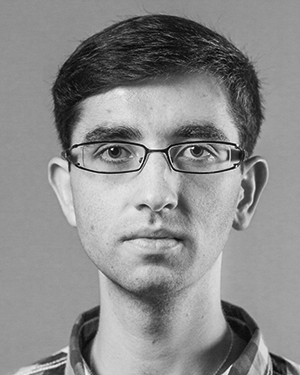 Ladislav Mosner合作论文数Brno University of Technology14
 Niko Brümmer合作论文数Brno University of Technology12
 Lukas Burget合作论文数Department of Computer Graphics and Multimedia (DCGM)10Michal Fapso合作论文数9Valiantsina Hubeika合作论文数Faculty of Information Technology, Brno University of Technology9
 Alicia Lozano-Diez合作论文数8
 Igor Szöke合作论文数Faculty of Information Technology, Brno University of Technology8Hossein Zeinali合作论文数Brno University of Technology7
 Karel Veselý合作论文数Department of cybernetics;University of West Bohemia;Department of cybernetics, University of West Bohemia7
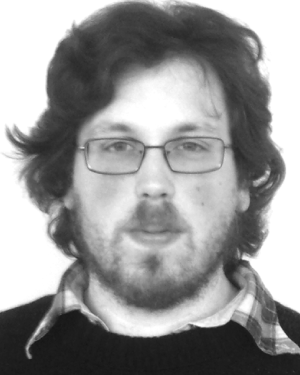 Sandro Cumani合作论文数Politecn Torino7
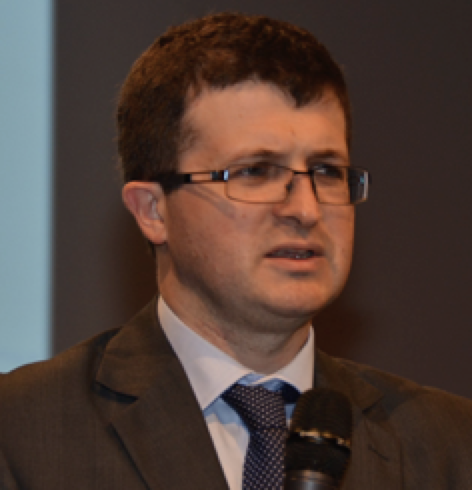 Sébastien Marcel合作论文数Idiap Research Institute;University of Lausanne6
 Chris Mccool合作论文数Image and Video Research Laboratory;Queensland University of Technology;Image and Video Research Laboratory, Queensland University of Technology6Josef Slavicek合作论文数5
 Jahangir Alam合作论文数TasWater5
 Hynek Hermansky合作论文数Department of Electrical and Computer Engineering, Whiting School of Engineering, Johns Hopkins University5
 Jan Pesan合作论文数5
 Joaquin Gonzalez-Rodriguez合作论文数4Filip Povolný合作论文数Phonexia Brno, Brno, Czech Republic4
 Federico Landini合作论文数Deepgram4
 Norman Poh合作论文数university of surrey4
 Jeff Ma合作论文数4
 Tomas Mikolov合作论文数Czech Institute of Informatics, Robotics and Cybernetics, Czech Technical University4
 Patrick Kenny合作论文数Centre de Recherche Informatique de Montreal4Jiří Kopecký合作论文数4
 Spyros Matsoukas合作论文数Amazon4
 Themos Stafylakis合作论文数Department of Informatics, Athens University of Economics and Business;Omilia - Conversational Intelligence4
 Shuai Wang (王帅)合作论文数School of Intelligence Science and Technology, Nanjing University3
 Santosh Kesiraju合作论文数Department of Computer Graphics and Multimedia, Faculty of Information Technology, Brno University of Technology3Radek Fer合作论文数3
 Kateřina Žmolíková合作论文数Meta3
 Bing Zhang合作论文数Raytheon BBN Technol3
 Mehdi Soufifar合作论文数3
 Philip A Tresadern合作论文数Wright Dose Ltd3Edward De Villiers合作论文数3
 Mirko Hannemann合作论文数Magdeburg University;Johns Hopkins University;IDIAP Research Institute;Magdeburg University, Johns Hopkins University3
 Gilles Boulianne合作论文数Centre De Recherche Informatique De Montreal3Lucas Ondel合作论文数Speech FIT and IT4I Center of Excellence, Brno University of Technology3