This work addresses the issue of attaching the force-centring part (a round ball) to the load cell of a force sensor, a piezoresistive thick-film Wheatstone bridge deposited onto a ceramic cantilever. As the current soldering process requires expensive metallisation steps for both the ball and the cantilever, and subjects the solder pads used for mounting the cantilever to an additional reflow cycle, an alternative adhesive bonding process was developed, allowing both simpler production and the use of other ball materials such as ceramic and glass. The self-centring action of solder capillary forces was ensured by structuring the adhesive so as to form a mechanical cuvette allowing centring of the ball by gravity. The selected adhesive materials exhibited good printability and bonding, as well as surviving the subsequent soldering and cleaning process steps.
Biogas is a fuel made from the anaerobic digestion of organic material to form methane. It can be used to power a stationary engine to generate electricity making it a viable method of decentralised power generation from renewables. However, biogas is a mixture of methane and carbon dioxide, and other trace gases such as hydrogen, hydrogen sulphide and oxygen. As such the quality can vary and setting the air-fuel ratio for efficient combustion can be problematic under these conditions. The Wobbe Index, or Wobbe Number, is a quality of combustible gases that allows the air-fuel requirement to be determined. This work presents a novel type of Wobbe Index sensor based on a miniaturised capillary viscometer that can be used with biogas. The sensor is validated at a biogas cogeneration plant which uses a stationary engine and the results are compared to a methane sensor installed at the plant.
AbstractMiniature ceramic cantilevers have been successfully applied to the fabrication of simple and low-cost piezoresistive thick-film force-sensing cells, using different thick-film and LTCC (low-temperature co-fired ceramic) substrates. The availability of thin substrates for some materials allows much improved sensitivity compared to classical thick-film technology, with LTCC also featuring rather low substrate elastic modulus and fine structurability. However, practical applicability may be hindered by processing difficulties, such as printing and handling very thin fired substrates, or, in the case of co-fired tapes, warpage during firing. Also, signal drift is observed with some devices. In this work, we show that most of the previously-observed signal drift in some LTCC sensors is not due to self-heating, and therefore stems from defects such as micro-cracks within the ceramic cantilevers or plastic deformations in internal conductors. In a second step, we explore manufacturability of thick-film cantilevers on very thin substrates, and show that it is possible to print a single-sided design on substrates with thickness as low as 45 μm, although a lower limit of ~100 μm, depending on substrate material, is more practical.
The present contribution gives an overview of our work on non-conventional magnetic coil sensors for diagnostics and plasma stability control of nuclear fusion experiments in tokamaks. Instead of wire wound around a core, these devices consist of printed conductor wire coils on ceramic substrates, and are based on LTCC (low-temperature co-fired ceramic) and thick-film technology, which allow creation of monolithic multilayer coils with excellent stability. For 3D sensing, an innovative modular design combining LTCC coils and an alumina base has been developed. Finally, the important aspects of integration, manufacturing, mounting and interconnection are discussed.
To monitor high-frequency fluctuations of the equilibrium magnetic field in tokamaks, a 3D magnetic sensor has been developed. The sensor, which is positioned inside the vacuum vessel behind the protective tiles of the tokamak and is exposed to potential temperatures up to 400°C, is based on thick-film and LTCC (low-temperature co-fired ceramic) technology. To connect the sensor to the cabling that runs inside the vacuum vessel, mineral-insulated cables have to be brazed to the sensor to ensure electrical connection together with mechanical robustness and sufficient thermal stability. As the brazing temperature is about 600°C, direct brazing to the alumina sensor substrate can cause failure by cracking induced by thermal stresses. It arises both by temperature gradients stemming from the localised heating and by the high thermal mismatch of alumina with the braze and wire materials. In previous work, high stresses from temperature gradients were efficiently decoupled by brazing indirectly to alumina beams attached to the main substrate, and local thermal stresses between alumina and braze/wire by using a porous metallisation. However, as the slender alumina beams protruding out of the substrate are somewhat cumbersome and fragile, three alternatives were studied in the present work: 1) testing shorter and more robust beams, 2) replacing the alumina beam by a silver wire, and 3) depositing a porous temperature- and stress-decoupling dielectric to enable direct brazing on the main alumina substrate. These solutions are characterised with respect to their mechanical robustness and of the degree of thermal decoupling with the substrate they provide.
A novel sensor based on thick-film + LTCC (low-temperature cofired ceramic) technology has been recently developed for sensing high-frequency 3D magnetic fields in tokamak fusion devices. For integration within the walls of the tokamak, the sensor has to be connected to the mineral-insulated cabling, which is carried out by brazing to ensure sufficient thermal stability. However, thermal mismatch stresses between the braze and the cable vs. the alumina substrate may cause local cracking of the latter during cooling, as the basic dense silver metallisation of the alumina does not provide a sufficient degree of stress decoupling. To address this issue, a series of porous metallisations have been formulated by incorporation of a mix of silver and fugitive graphite powder into a thick-film paste. To allow co-firing of thick, multi-layered prints. Such porous metallisations have allowed successful brazing operations, without cracking of the alumina substrate. Metallisations were assessed by measuring their electrical resistivity and shear stress have been realised as preliminary results to measure the influence of the porosity on the maximal stress before cracking.
A complete line of resistors materials are tested for the manufacture of thick-film piezoresistive sensors and associated simple adjustment / amplification circuits: 10 kΩ compositions for the gauge resistors, together with 100 Ω and 100 kΩ ones for electronics and trimming, as well as PTC compositions for temperature compensation. Several aspects are considered, such as process sensitivity, overglazing and trimming.
Although inorganic thick-film materials are usually very stable, load sensors (i.e. force, torque and pressure) based on the piezoresistive effect of thick-film resistors often exhibit some drift, with major contributions stemming from a) temperature changes or gradients, coupled with the temperature coefficient of resistance (TCR) of the sensing bridge resistors, and b) ill- defined mechanical boundary conditions, due to insufficient decoupling, plastic deformation used materials, friction or loading errors. These problems also potentially affect test samples for measuring piezoresistive response, a.k.a. the gauge factors. Here, we examine and discuss effects on the output signal of simple cantilever force sensors of two disturbances: parasitic loads and temperature gradients, and discuss / demonstrate mitigation options, and a system to reliably measure gauge factor.
Readily-available and low-cost commercial polymer-based composite materials, such as standard epoxy-fibreglass printed circuit board (PCB) substrates and resin-carbon thick-film piezoresistors, were evaluated as a solution for medical force sensors, such as a wrist rehabilitation device and an implantable wireless artificial knee force sensor. We show that such materials have high sensitivity, and sufficient short-term stability – provided careful mechanical design and materials selection are made - to allow fabrication of low-cost, robust sensors, with low processing temperatures compatible with electronics integration. Example load-sensing applications are a multi-axis wrist rehabilitation device and a knee prosthesis.
Total knee arthroplasty is a widely performed surgical technique. Soft tissue force balancing during the operation relies strongly on the experience of the surgeon in equilibrating tension in the collateral ligaments. Little information on the forces in the implanted prosthesis is available during surgery and post-operative treatment. This paper presents the design, fabrication and testing of an instrumented insert performing force measurements in a knee prosthesis. The insert contains a closed structure composed of printed circuit boards and incorporates a microfabricated polyimide thin-film piezoresistive strain sensor for each condylar compartment. The sensor is tested in a mechanical knee simulator that mimics in-vivo conditions. For characterization purposes, static and dynamic load patterns are applied to the instrumented insert. Results show that the sensors are able to measure forces up to 1.5 times body weight with a sensitivity fitting the requirements for the proposed use. Dynamic testing of the insert shows a good tracking of slow and fast changing forces in the knee prosthesis by the sensors.
Purpose – The purpose of this paper is to study tuneable positive temperature coefficient (PTC) effect in polymer-wax-carbon composite resistors. The resistivity dependence on temperature of composite resistors made of carbon fillers dispersed in an organic matrix is known to be strongly affected by the matrix thermal expansion. High PTC effects, i.e. essentially switching from resistive to quasi-insulating behaviour, can be caused by phase changes in the matrix and the assorted volume expansion, a behaviour that has been previously shown with both simple organic waxes and semi-crystalline polymers. However, waxes become very liquid on melting, possibly resulting in carbon sedimentation, and tuneability of semi-crystalline polymers is limited. Design/methodology/approach – The authors therefore study a ternary polymer-wax-conductor (ethylcellulose-octadecanol-graphite) composite resistor system, where polymer and wax fuse to a viscous liquid on heating, and re-solidify and separate by crystallisation of the wax on cooling. Findings – It is shown that with appropriate formulation, the resulting resistors exhibit strong PTC effects, linked with the melting and crystallisation of the wax component. The behaviour somewhat depends on sample history, and notably cooling speed. Research limitations/implications – The phase equilibria and transformation kinetics of the polymer-wax system (including possible wax polymorphism), as well as the exact mechanism of the conductivity transition, remain to be investigated. Originality/value – As many compatible polymer-wax systems with different melting/solidification behaviours are available, ternary polymer-wax-conductor composite PTC resistors allow a high tuneability of properties. Moreover, the high viscosity in the liquid state should largely avoid the sedimentation issues present with binary wax-conductor systems.
This work describes the fabrication and test of a high temperature (+200°C) capable high frequency transformer. It was manufactured using Low Temperature Co-fired Ceramic (LTCC) technology, which allowed the complex multilayer structure of ceramic and metal windings to be formed. However, the selected LTCC composition is a free sintering ceramic and there is an interaction between the metal conductor and the ceramic substrate during lamination and firing that can lead to significant deformation, presenting a significant engineering challenge. Here the fabrication process for the LTCC is described (screen printing, collation, lamination and firing) for a number of iterations of the transformer design, each of which was analysed for deformation and subjected to electrical tests. In addition a silicone adhesive for assembling the LTCC with the transformer was analysed for high-temperature performance. A test vehicle was assembled and it was subjected to 1000 hours at 210°C. Shear tests were performed at intervals to quantify the loss in bond strength over time. After a good solution for manufacture was found, a batch of transformers was produced, characterized and tested to demonstrate a high reproducibility and manufacturing yield.
1. Introduction 2. Structuration techniques 3. Examples - integration 4. Mechanical sensors & reliability 5. Thermal & chemical issues 6. Conclusion & outlook
The connectedness percolation threshold (η(c)) and critical coordination number (Z(c)) of systems of penetrable spherocylinders characterized by a length polydispersity are studied by way of Monte Carlo simulations for several aspect ratio distributions. We find that (i) η(c) is a nearly universal function of the weight-averaged aspect ratio, with an approximate inverse dependence that extends to aspect ratios that are well below the slender rod limit and (ii) that percolation of impenetrable spherocylinders displays a similar quasiuniversal behavior. For systems with a sufficiently high degree of polydispersity, we find that Z(c) can become smaller than unity, in analogy with observations reported for generalized and complex networks.
We show that the formation of a gel by conducting colloidal particles leads to a dramatic enhancement in bulk conductivity, due to interparticle electron tunneling, combining predictions from molecular-dynamics simulations with structural measurements in an experimental colloid system. Our results show how colloidal gelation can be used as a general route to huge enhancements of conductivity, and suggest a feasible way for developing cheap materials with novel properties and low metal content.
Depending on the materials and processing parameters, composite materials consisting of an insulating matrix and a conductive filler may be electrically insulating, resistive or conducting. Previously, we had manufactured composites consisting of a resin and a conducting magnetic filler, and shown that polymerisation under magnetic field could achieve oriented conductors, with essentially unidirectional electrical conduction. In this work, we explore the possibility of replacing the resin matrix by a thermoplastic material, allowing in principle free reconfiguration of the filler by re-melting the matrix under different magnetic field strengths and orientations, and thereby tuning of the electrical transport properties. The formulation, fabrication and first results are reported on such materials, with an ethylcellulose - wax matrix and conducting powders based on Ag-coated Fe3O4 and Fe2CoO4 ferrites.
We study by simulation and theory how the addition of insulating spherical particles affects the conductivity of fluids of conducting rods, modeled by spherocylinders. The electrical connections are implemented as tunneling processes, leading to a more detailed and realistic description than a discontinuous percolation approach. We find that the spheres enhance the tunneling conductivity for a given concentration of rods and that the enhancement increases with rod concentration into the regime where the conducting network is well established. By reformulating the network of rods using a critical path analysis, we quantify the effect of depletion-induced attraction between the rods due to the spheres. Furthermore, we show that our conductivity data are quantitatively reproduced by an effective-medium approximation, which explicitly relates the system tunneling conductance to the structure of the rod-sphere fluid.
The Quantime project aims at developing a miniature atomic clock suited for the telecom market, requiring a wide operating temperature range (from -40 to +85°C), and a low production cost. The CPT (Coherent Population Trapping) technique for atomic interrogation is used for miniaturization and low power consumption. In the first phase of the project, the clock architecture was chosen, and the main sub-systems were developed. A clock breadboarding demonstrator was assembled and the measured Allan deviation of 1E-11 at 400 s confirms the operation of all the sub-systems.
 Thomas Maeder合作论文数156
 Caroline Jacq合作论文数82
 Claudio Grimaldi合作论文数Institut de Production et Robotique;Ecole Polytechnique Federale de Lausanne;Institut de Production et Robotique, Ecole Polytechnique Federale de Lausanne49
 Hansu Birol合作论文数Institut de Production et Robotique;Laboratoire de Production Microtechnique;Institut de Production et Robotique, Laboratoire de Production Microtechnique39
 Yannick Fournier合作论文数25
 Giancarlo Corradini合作论文数20
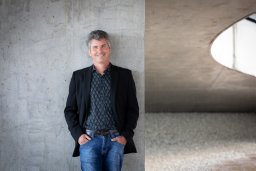 Eric Meurville合作论文数Laboratoire de Production Microtechnique, Ecole Polytechnique Fédérale de Lausanne18
 Sigfrid Straessler合作论文数Laboratoire de Production Microtechnique, Ecole Polytechnique Fédérale de Lausanne17
 S. Strässler合作论文数15Conor Slater合作论文数15
 Niklaus Johner合作论文数Laboratoire de Production Microtechnique;Ecole Polytechnique Fédérale de Lausanne;Laboratoire de Production Microtechnique, Ecole Polytechnique Fédérale de Lausanne12
 Fabrizio Vecchio合作论文数IRCCS “S. Giovanni di Dio-F.B.F.”,12sonia vionnet menot合作论文数9Sonia Vionnet-Menot合作论文数9igor saglini合作论文数7Nigro B合作论文数7
 Jacques Jacot合作论文数7Y. Fournier合作论文数6
 Bo Jiang合作论文数6Gael Farine合作论文数6N. Serra合作论文数5
 Nicolas Craquelin合作论文数5Frank Seigneur合作论文数4Antoine Barraud合作论文数4M. Kohli合作论文数4
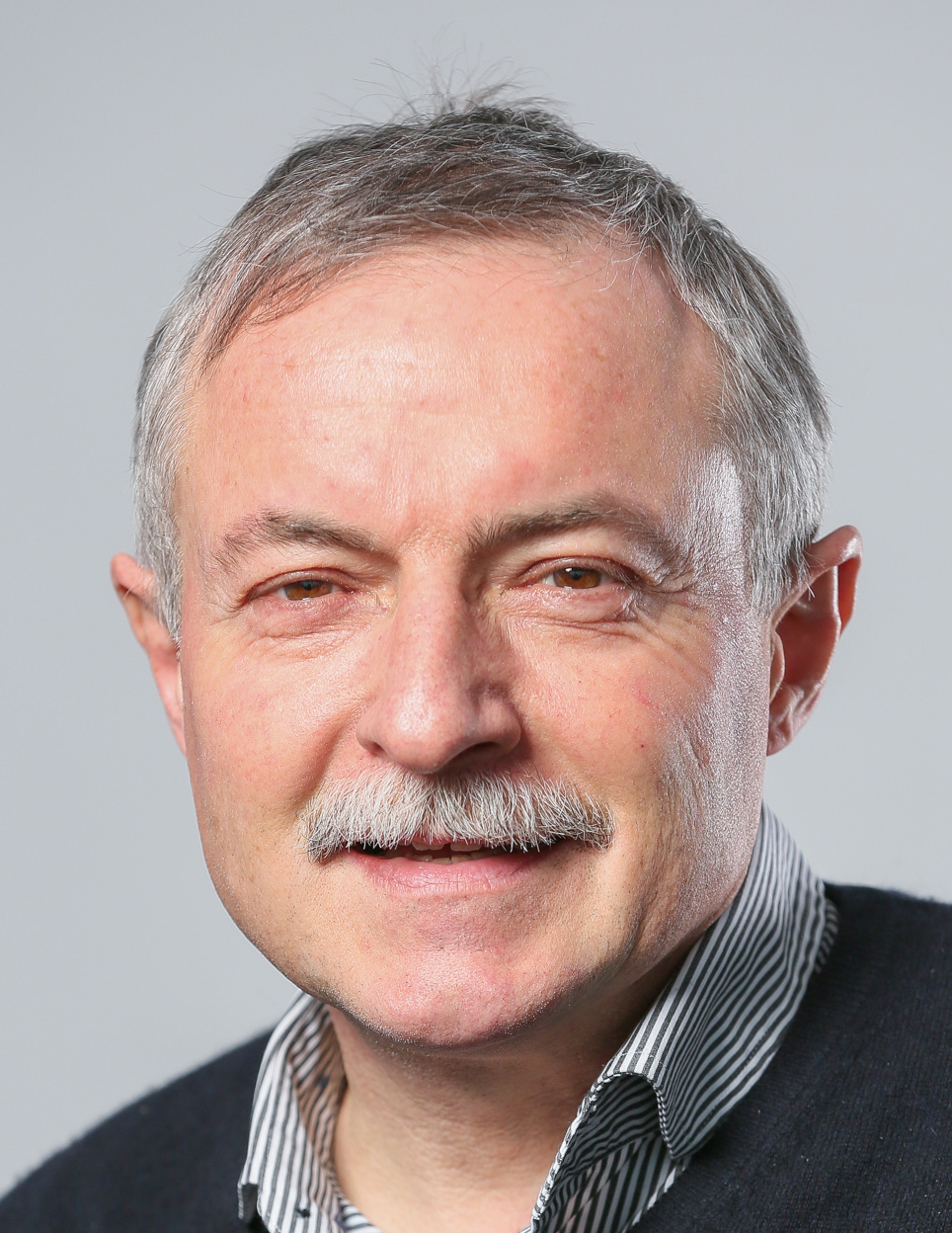 Paul Muralt合作论文数Ecole Polytechnique Federale de Lausanne4
 Matteo Simoncini合作论文数4Simon Kuenzi合作论文数4Christophe Boss合作论文数Institute of Bioengineering, Swiss Federal Institute of Technology Lausanne (EPFL),4D. Wieser合作论文数3N. Suaudeau合作论文数3nao takano合作论文数3raphael willigens合作论文数3P. Lockwood合作论文数3F. Fernández合作论文数3
 Steve Tanner合作论文数3
 Philippe J. Renaud合作论文数Ecole Polytech Fed Lausanne, Lab Microsyst LMIS4, CH-1015 Lausanne, Switzerland3Jean-Michel Sallese合作论文数School of Engineering, Ecole Polytechnique Federale de Lausanne3Hraiz, W.合作论文数3S. Vionnet合作论文数3G. Ambrosetti合作论文数3
 Arnaud Bertsch合作论文数Laboratory of Microsystems, Ecole Polytechnique Fédérale de Lausanne3
 D. Testa合作论文数3C. Tompkin合作论文数3
 Kamiar Aminian合作论文数School of Engineering, Ecole Polytechnique Federale de Lausanne;Laboratory of Movement Analysis and Measurement, Ecole Polytechnique Federale de Lausanne3
 Jérôme Boudy合作论文数3Michael Ansorge合作论文数Institute of Microtechnology, University of Neuchatel3
 Constantine Kotropoulos合作论文数Department of Informatics, Aristotle University of Thessaloniki3S. Vionnet-Menot合作论文数3




