Demonstrative pronouns in German occur in various paradigms such as 'die, diese, jene, diejenige, dieselbe', etc. Among these only the most frequent paradigm, die, has received attention from psycholinguistic research. In this paper, we investigate constraints on demonstrative pronouns from the 'diese' paradigm. Diese-demonstratives are considered to be limited to formal language by native speakers, and in contemporary grammar they are assumed to prefer the most recent or the last mentioned antecedent. If these constraints really hold, diese-demonstratives seem to behave very differently from die-demonstratives which have been shown to prefer the antecedent that is not maximally prominent. We report three forced-choice experiments that test the constraints of language formality, order of mention and prominence through subjecthood. The results demonstrate that diese-demonstratives strongly prefer the formal language register as expected by native speakers. However, instead of the last mentioned antecedent, they prefer the antecedent that is non-prominent in terms of subjecthood which is similar to the preference that has been reported in the literature for die-demonstratives. We suggest that in a restricted context diese-demonstratives are formal counterparts of die-demonstratives.
Dit rapport bevat een erratum d.d. 19-02-2020 op pagina 123. Door klimaatverandering stijgt de temperatuur, waardoor er meer hittegolven zijn met meer hete dagen en nachten. Alle overheden (gemeenten, provincies en waterschappen) in Nederland moeten daarom voor 2020 knelpunten van wateroverlast, hitte, droogte en overstromingen in beeld brengen. Het RIVM doet een voorstel om deze 'test voor hittestress' te standaardiseren. Hiertoe is een leidraad opgesteld voor gemeenten waarmee zij 24 mogelijke risico's in kaart kunnen brengen, verdeeld over vijf thema's: gezondheid, netwerken, water, leefbaarheid en buitenruimte. Om de hittestress te beoordelen is een nieuwe methode ontwikkeld om hittekaarten te berekenen, met de gevoelstemperatuur als uitgangspunt. Met deze nieuwe methode kan de standaard hittekaart met gevoelstemperatuur op een hete dag berekend worden. Op dit moment zijn er veel hittekaarten beschikbaar die op uiteenlopende wijze de hitte in beeld brengen. In steden is het vaak warmer dan in landelijke gebieden, onder andere door het gebruik van donkere materialen zoals asfalt en door lagere windsnelheden (hitte-eiland). Bij de standaardberekening wordt rekening gehouden met verschillende weersomstandigheden en de plaatselijke ruimtelijke situatie, het landgebruik, en de ligging van gebouwen en bomen. De gestandaardiseerde kaarten zijn in dit onderzoek uitgewerkt voor de stad Wageningen. Om de stresstest beter toepasbaar te maken is het belangrijk dat de nieuwe hittekaarten op nationale schaal worden uitgewerkt en beschikbaar komen in de Klimaat Effect Atlas. In deze digitale atlas is nu al de kaart met het aantal warme nachten opgenomen. Langdurig aanhoudende hitte kan hinder veroorzaken, varierend van slecht slapen tot een levensbedreigende verstoring van lichamelijke functies zoals bij een zonnesteek. Als gevolg van hitte overlijden meer mensen dan 'normaal', vooral ouderen en mensen met een chronische aandoening als long- en hartklachten. Het RIVM beveelt aan deze gezondheidsrisico's voor Nederland in beeld te brengen. Het gaat daarbij vooral om het aantal extra ziekenhuisopnamen als gevolg van de hitte en het aantal mensen dat extra overlijdt.
City managers need indicators for target setting, performance assessment, monitoring, management and decision-making purposes. The choice of the most suitable indicator framework is crucial, but difficult, as it requires expert knowledge. To help cities in their choice, this paper compares seven recently published indicator standards for Smart sustainable cities. A taxonomy was developed to evaluate each of their 413 indicators against five conceptual urban focuses (types of urban sustainability and smartness), ten sectoral application domains (energy, transport, ICT, economy, etc.) and five indicator types (input, process, output, outcome, impact). The results clearly discriminate between indicator standards suited for evaluating the implementation of predominantly smart city approaches versus standards more focused on sustainability assessment. A further distinction is possible in standards almost fully oriented towards impacts reached, and standards that allow for progress evaluation according to steps in the implementation process. Some standards provide a narrow focus on output indicators evaluating the progress in implementing smart urban ICT solutions (e.g. number of smart meters installed). Cities are encouraged to complement such evaluations with impact indicators that demonstrate the effects of those solutions. This paper provides guidance for city managers and policy makers to select the indicators and standard that best correspond to their assessment need and goals, and align with their stage in Smart sustainable city implementation.
In this paper we take a close look at the behaviour of German demonstrative pronouns (DPros) in the complement clauses of propositional attitude verbs. Building on and partially revising Hinterwimmer and Bosch (Demonstrative pronouns and perspective. In: Patel P, Patel-Grosz P (eds) The impact of pronominal form on interpretation, Studies in generative grammar. De Gruyter, Berlin/New York, 2016), we show that DPros are anti-logophoric pronouns whose behaviour is similar (though not identical) to that of epithets (Dubinsky and Hamilton, Ling Inq 29:685–693, 1998; Schlenker, Proc SuB 9:385–416, 2005; Patel-Grosz, Epithets as De re pronouns. In: Piñón C (ed) Empirical issues in syntax and semantics 10, 2014). In particular, we argue that while Hinterwimmer and Bosch (Demonstrative pronouns and perspective. In: Patel P, Patel-Grosz P (eds) The impact of pronominal form on interpretation, Studies in generative grammar. De Gruyter, Berlin/New York, 2016) were right in assuming that DPros are prohibited from being bound by or co-referring with the currently most prominent perspective holder, they were wrong in assuming that the subjects of propositional attitude verbs are necessarily the most prominent perspective holders with respect to the DPros contained in their complement clauses. Evidence for this comes from two sources: First, in cases where a sentence with a propositional attitude verb is the complement of another propositional attitude verb in the matrix clause, a DPro contained in the complement clause of the lower propositional attitude verb can be bound by the subject of that verb, but not by the subject of the higher one. Secondly, if the speaker makes her own perspective particularly prominent by using an evaluative expression in referring to (the individual denoted by) the subject of a propositional attitude verb α, a DPro contained in the complement clause of α can at least for some speakers be interpreted as bound by the subject of α. We therefore now propose a pragmatic strategy that determines the most prominent perspective holder not only for the novel data discussed in this paper, but also for the data discussed in Hinterwimmer and Bosch (Demonstrative pronouns and perspective. In: Patel P, Patel-Grosz P (eds) The impact of pronominal form on interpretation, Studies in generative grammar. De Gruyter, Berlin/New York, 2016). Finally, we argue that the allergy of DPros against (maximally prominent) perspective holders is related to their status as demonstrative items which as such require an external reference point.
This paper presents a holistic performance measurement framework for harmonized and transparent monitoring and comparability of the European cities activities during the implementation of Smart City solutions. The work methodology was based on extensive collaboration and communication with European cities in order to develop a set of Key Performance Indicators (KPIs) specific for Smart Cities initiatives evaluation and comparability. The baseline was established by analysis and integration of existing results from previous initiatives. The research developed and validated a performance evaluation framework, including KPIs definition, guidelines for data collections, a performance system prototype and testing in case-cities. In addition recommendations for the implementation of the performance system into the cities decision-making process and recommendations for the development of new business opportunities are discussed.
479-Pos Board B259 Activation and Drug Design of a Muscarinic G-Protein Coupled Receptor Yinglong Miao1, J. Andrew McCammon1,2. Howard Hughes Medical Institute/University of California at San Diego, La Jolla, CA, USA, Pharmacology, Chemistry and Biochemistry, University of California at San Diego, La Jolla, CA, USA. The M2 muscarinic acetylcholine receptor is a key G-protein coupled receptor (GPCR) that regulates the human heart rate and contractile forces of cardiomyocytes, and is thus targeted for treating many heart diseases. Here, we have performed long-timescale accelerated molecular dynamics (aMD) simulations and captured activation of theM2muscarinic receptor at an atomistic level(1). The receptor activation is characterized by large-scale structural rearrangements of the transmembrane helices and conformational changes in the inter-helical salt bridge and hydrogen bond interactions(1, 2). Furthermore, using the aMD simulationderived structural ensembles that account for the receptor flexibility,wehavemapped the receptor surface for druggable allosteric sites(3) and then targeted the extracellular vestibule for designing allosteric modulators. Retrospective docking of known ligands is first carried out to validate the simulation receptor ensembles, followed by prospective docking to predict new allosteric modulators from the National Cancer Institute (NCI) compound library. The computationally selected compoundswill be testedusing experimental bindingand functional assays,which may allow us to discover selective allosteric drugs of theM2muscarinic receptor. References 1. Miao Y, Nichols SE, Gasper PM, Metzger VT, McCammon JA (2013) Activation and dynamic network of the M2muscarinic receptor. Proc Natl Acad Sci U S A 110(27):10982-10987. 2. Miao Y, Nichols SE, McCammon JA (2014) Free Energy Landscape of G-Protein Coupled Receptors, Explored by Accelerated Molecular Dynamics. Phys Chem Chem Phys 16(14):6398 6406. 3. Miao Y, Nichols SE, McCammon JA (2013) Mapping of Allosteric Druggable Sites in Activation-Associated Conformers of the M2 Muscarinic Receptor. Chem Biol Drug Des 83(2):237-246.
G-protein coupled receptors (GPCR) activity is precisely regulated in space and time, however the exact molecular mechanisms regulating GPCR localization within the plasma membrane are still poorly defined. Combining single receptor tracking and a diffusion state classification method together with imaging of early downstream signaling events, we explored the activity of two GPCR subtypes, the prostanoid EP2 and EP4 receptors. Although both receptors trigger the Gαs-cAMP pathway, we found that EP4-mediated cAMP production is stronger but transient, whereas EP2 induces shallow but continuous cAMP levels. This is structured by the dynamic localization of slowly diffusing EP4, but not EP2, in elongated areas of the cell membrane that are templated by the underlying cortical microtubule network and allow EP4 to interact with its downstream interactors. These results reveal a new paradigm of dynamic plasma membrane organization based on sub-membraneous microtubules that scaffold hubs for GPCR signaling initiation and attenuation.
Despite all international, national and local initiatives to mitigate climate change, a certain degree of climate change is unavoidable. Urban environments in particular seem vulnerable to the consequences of climate change. How can cities, which are dynamic systems where most people live and work, prepare for such changes in climate? In the Netherlands, the Climate Proof Cities (CPC) research program (2010–2014) was established, aimed at: “strengthening the adaptive capacity and reducing the vulnerability of the urban system against climate change and to develop strategies and policy instruments for adapting our cities and buildings”. The program has contributed to the knowledge on assessing vulnerability of cities, on adaptation options and their effectiveness, and on governance of adaptation. Important features are the role of green infrastructures in combination with available water, improved building designs and collaboration between urban planners and water managers. Nonetheless, in spite of this effort and many other national and international efforts, research in these fields is still in its infancy, and much remains to be done. The broad scope of the CPC research program incited the establishment of this Special Issue. In addition, also papers from other researchers have been added to this Special Issue, in an attempt to provide a valuable – albeit inexhaustive – view on the challenges and achievements in adaptation of cities to climate change.
Single-molecule tracking has become a widely used technique for studying protein dynamics and their organization in the complex environment of the cell. In particular, the spatiotemporal distribution of membrane receptors is an active field of study due to its putative role in the regulation of signal transduction. The SNAP-tag is an intrinsically monovalent and highly specific genetic tag for attaching a fluorescent label to a protein of interest. Little information is currently available on the choice of optimal fluorescent dyes for single-molecule microscopy utilizing the SNAP-tag labeling system. We surveyed 6 green and 16 red excitable dyes for their suitability in single-molecule microscopy of SNAP-tag fusion proteins in live cells. We determined the nonspecific binding levels and photostability of these dye conjugates when bound to a SNAP-tag fused membrane protein in live cells. We found that only a limited subset of the dyes tested is suitable for single-molecule tracking microscopy. The results show that a careful choice of the dye to conjugate to the SNAP-substrate to label SNAP-tag fusion proteins is very important, as many dyes suffer from either rapid photobleaching or high nonspecific staining. These characteristics appear to be unpredictable, which motivated the need to perform the systematic survey presented here. We have developed a protocol for evaluating the best dyes, and for the conditions that we evaluated, we find that Dy 549 and CF 640 are the best choices tested for single-molecule tracking. Using an optimal dye pair, we also demonstrate the possibility of dual-color single-molecule imaging of SNAP-tag fusion proteins. This survey provides an overview of the photophysical and imaging properties of a range of SNAP-tag fluorescent substrates, enabling the selection of optimal dyes and conditions for single-molecule imaging of SNAP-tagged fusion proteins in eukaryotic cell lines.
Based on the experience acquired in the Bergpolder Zuid district in the city of Rotterdam, The Netherlands, this paper presents lessons learned so far on science-policy interactions supporting the adaptation to climate change in an urban district. Two types of integration issues were considered: (1) Integration within science including integration of disciplines, methods, models and data, and (2) integration between science and the local stakeholders' society, involving a synthesis of scientific and practical knowledge, linking sectors, governance arrangements and organisations. At first sight, the issues around integration within science and beyond the science of climate change adaptation in cities resemble those generally observed in science-policy integration. However, the relative newness of urban adaptation to climate change poses specific challenges for both the scientists and the stakeholders involved in the process. The Rotterdam example discusses the use of multiple means of integration for enhancing integration between scientific disciplines and integration between scientific and stakeholder knowledge.
Single molecule tracking of membrane proteins by fluorescence microscopy is a promising method to investigate dynamic processes in live cells. Translating the trajectories of proteins to biological implications, such as protein interactions, requires the classification of protein motion within the trajectories. Spatial information of protein motion may reveal where the protein interacts with cellular structures, because binding of proteins to such structures often alters their diffusion speed. For dynamic diffusion systems, we provide an analytical framework to determine in which diffusion state a molecule is residing during the course of its trajectory. We compare different methods for the quantification of motion to utilize this framework for the classification of two diffusion states (two populations with different diffusion speed). We found that a gyration quantification method and a Bayesian statistics-based method are the most accurate in diffusion-state classification for realistic experimentally obtained datasets, of which the gyration method is much less computationally demanding. After classification of the diffusion, the lifetime of the states can be determined, and images of the diffusion states can be reconstructed at high resolution. Simulations validate these applications. We apply the classification and its applications to experimental data to demonstrate the potential of this approach to obtain further insights into the dynamics of cell membrane proteins.
Over the past 10 years the European Environment Agency (EEA) has published assessments and indicators on most European environmental issues. These assessments and indicators are changing to reflect the increasingly cross-cutting nature of new environmental issues such as water management, biodiversity and ecosystem services, climate change and biofuels, health, and chemicals. Assessments are also needed to capture changes across the enlarged European Union (EU)—which covers more socially, economically, and biogeographically diverse countries—to cover longer time spans, and to include more scenario analyses and models. These new and increasingly demanding challenges put a spotlight on the manner and underlying assumptions of knowledge creation. In this context, this chapter presents some key EEA frameworks that underpin the approaches taken to build environmental data, information, and indicators. These frameworks have already proved useful to the EEA and others and appear to be robust. However, to help improve and extend their application to complex and persistent environmental problems, we welcome extended peer review as a step toward their improvement. Why do we need frameworks? Applying frameworks to analyze and structure information helps us move from data to information and on to the structured knowledge needed to elucidate environmental and sustainability issues and to design effective responses. However, experience shows that available knowledge is not systematically put to use in policy: “Policy-makers only take that knowledge in consideration that does not cause too great tension with their values. . . . These values are embedded in ‘policy frames’ or ‘policy theories.’ Knowledge that does not fit into these policy theories is not agreeable and will be discarded” (Veld ‘t 2004:83).
 v rovers合作论文数5Ogunlade Davidson合作论文数5Bert Metz合作论文数4Johannes S. Kanger合作论文数4
 V. Subramaniam (Vinod)合作论文数University of Twente4Stefan Hinterwimmer合作论文数4Jean P. Palutikof合作论文数4Dennis Tirpak合作论文数3osvaldo canziani合作论文数3Leo Meyer合作论文数3Leonard Nurse合作论文数3Saleemul Huq合作论文数3
 Aapo Huovila合作论文数Corresponding author.3
 Susan Solomon合作论文数Department of Earth, Atmospheric and Planetary Sciences, Massachusetts Institute of Technology;Department of Chemistry, Massachusetts Institute of Technology3
 Cynthia Rosenzweig合作论文数Goddard Institute for Space Studies, National Aeronautics and Space Administration;Center for Climate Systems Research, Columbia Climate School;Department of Environmental Science, Barnard College3
 Neville Nicholls合作论文数School of Earth Atmosphere and Environment, Monash University3David J. Karoly合作论文数3
 Keywan Riahi合作论文数International Institute for Applied Systems Analysis3Carla Umbach合作论文数3
 Taishi Sugiyama合作论文数3William Hare合作论文数3
 Rob Swart合作论文数3
 Miimu Airaksinen合作论文数Technical Research Centre of Finland3
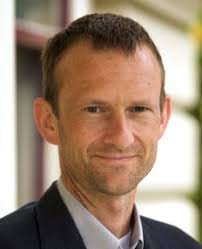 Andy Reisinger合作论文数Climate Change Research Institute, Victoria University3
 Matilde Rusticucci合作论文数Departamento de Ciencias de la Atmósfera y los Océanos, Facultad de Ciencias Exactas y Naturales, Universidad de Buenos Aires3
 N H Ravindranath合作论文数Centre for Sustainable Technologies, Indian Institute of Science3Lenny Bernstein合作论文数3Rajendra K Pachauri合作论文数3
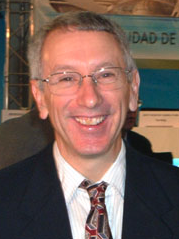 Ronald Stouffer合作论文数Department of Geosciences, College of Science, The University of Arizona3
 Peter Stott合作论文数Met Office;University of Exeter3Renate Christ合作论文数2jean e bogner合作论文数2Monirul Mirza合作论文数2
 Bettina Menne合作论文数2
 Sandra De Keijzer合作论文数2Steve Schneider合作论文数2
 Anke Karabanov合作论文数Department of Nutrition, Exercise and Sports, Faculty of Science, University of Copenhagen2Ulrike Lohmann合作论文数2Hans-Martin Neumann合作论文数2Samantha L Schwartz合作论文数2
 G. J. M. M. Nabuurs合作论文数Wageningen University & Research2Matsuno T合作论文数2
 Jian Liu (刘健)合作论文数School of Geography, Nanjing Normal University2
 Marjolein B M Meddens合作论文数2B. Metz合作论文数2
 Parry Martin Lewis (Martin Parry)合作论文数Grantham Institute, Imperial College London;Centre for Environmental Policy, Imperial College London2R. Dave合作论文数2
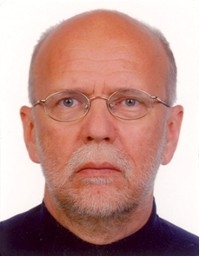 Zbigniew Kundzewicz合作论文数Laboratory of Climate and Water Resources, Institute For Agricultural and Forest Environment, Polish Academy of Sciences2
 Diane S. Lidke合作论文数Department of Molecular Biology, Max Planck Institute for Biophysical Chemistry2




