Achieving net-zero global emissions of carbon dioxide (CO2), with declining emissions of other greenhouse gases, is widely expected to halt global warming. CO2 emissions will continue to drive warming until fully balanced by active anthropogenic CO2 removals. For practical reasons, however, many greenhouse gas accounting systems allow some 'passive' CO2 uptake, such as enhanced vegetation growth owing to CO2 fertilization, to be included as removals in the definition of net anthropogenic emissions. By including passive CO2 uptake, nominal net-zero emissions would not halt global warming, undermining the Paris Agreement. Here we discuss measures to address this problem, to ensure residual fossil fuel use does not cause further global warming: land management categories should be disaggregated in emissions reporting and targets to better separate the role of passive CO2 uptake; where possible, claimed removals should be additional to passive uptake; and targets should acknowledge the need for Geological Net Zero, meaning one tonne of CO2 permanently restored to the solid Earth for every tonne still generated from fossil sources. We also argue that scientific understanding of Net Zero provides a basis for allocating responsibility for the protection of passive carbon sinks during and after the transition to Geological Net Zero.
Proposed emission reduction targets and the scarcity of fossil fuel resources make a transition of the energy system towards an emission-free electricity supply necessary.Australia represents an interesting case for energy system transformation modelling.While it currently has a power system dominated by fossil fuels, and specifically with a heavy coal component, there is a vast potential for expansion and use of renewable energy, in particular solar and wind energy.However, integrating high shares of such variable renewable energy sources challenges the power system due to their temporal fluctuations and geographical dispersion.This paper applies a state-resolved energy system model for Australia, based on linear optimization.We investigate the cost-optimal configuration of a renewable-based Australian power system and its transformation pathway inline with the ambitious proposed climate targets.We particularly analyze the implications of storage and power transmission grid extensions in a prospective, highly renewable Australian power system.Spatial smoothening effects of a powerful transmission grid reduces the required backup and renewable capacities and thus contributes to further reduction of the total system costs.
National net zero emission targets could, if fully implemented, reduce best estimates of projected global average temperature increase to 2.0–2.4 °C by 2100, bringing the Paris Agreement temperature goal within reach. A total of 131 countries are discussing, have announced or have adopted net zero targets, covering 72% of global emissions. These targets could substantially lower projected warming as compared to currently implemented policies (2.9–3.2 °C) or pledges submitted to the Paris Agreement (2.4–2.9 °C). Current pledges for emissions cuts are insufficient to meet the Paris Agreement temperature goal. The wave of net zero targets being discussed and adopted could make the Paris goal possible if further countries follow suit.
Abstract Scientifically rigorous guidance to policy makers on mitigation options for meeting the Paris Agreement long-term temperature goal requires an evaluation of long-term global-warming implications of greenhouse gas emissions pathways. Here we employ a uniform and transparent methodology to evaluate Paris Agreement compatibility of influential “institutional” emission scenarios from the grey literature. We compare a selection of these scenarios analyzed with this methodology to the Integrated Assessment Model scenarios assessed by the Intergovernmental Panel on Climate Change. We harmonize emissions to a consistent base-year and account for all greenhouse gases and aerosol precursor emissions, ensuring a self-consistent comparison of climate variables. An evaluation of peak and end-of-century temperatures is made, with both being relevant to the Paris Agreement goal. We find that few published scenarios that claim to be compatible with the Paris Agreement are so, and investigate root causes based on the underlying energy system transformation.
Parties to the UNFCCC and Paris Agreement have agreed to pursue efforts to limit the global average temperature increase to 1.5 ° C. To meet this goal, the international community will have to aggressively reduce emissions and also remove CO 2 from the atmosphere on an unprecedented scale, through an array of biological and technical Carbon Dioxide Removal (CDR) options. This paper considers governance challenges that arise from the need to rely on CDR to meet the Paris Agreement ’ s long-term temperature goal. It looks at how heavy this reliance may have to be, over what timeframe, involving what options and, crucially, how best to ensure that CDR does not, while trying to address one problem, create many other challenges for sustainable development. After identifying the potential scale and pace of CO 2 removal needed to meet the 1.5 ° C goal, we identify key governance gaps and challenges that arise from large-scale CDR implementation and propose a series of policy responses to be addressed by policy makers as a matter of priority, to enable CDR to contribute to 1.5 ° C-consistent pathways at the scale and pace required.
Climate change is projected to detrimentally affect African countries' economic development, while income inequalities across economies is among the highest on the planet. However, it is projected that income levels would converge on the continent. Hitherto there is limited evidence on how climate change could affect projected income convergence, accelerating, slowing down, or even reversing this process. Here, we analyze convergence considering climate-change damages, by employing an economic model embedding the three dimensions of risks at the country-level: exposure, vulnerability and hazards. The results show (1) with historical mean climate-induced losses between 10 and 15 percent of GDP per capita growth, the majority of African economies are poorly adapted to their current climatic conditions, (2) Western and Eastern African countries are projected to be the most affected countries on the continent and (3) As a consequence of these heightened impacts on a number of countries, inequalities between countries are projected to widen in the high warming scenario compared to inequalities in the low and without warming scenarios. To mitigate the impacts of economic development and inequalities across countries, we stress (1) the importance of mitigation ambition and Africa's leadership in keeping global mean temperature increase below 1.5 degrees C, (2) the need to address the current adaptation deficit as soon as possible, (3) the necessity to integrate quantitatively climate risks in economic and development planning and finally (4) we advocate for the generalization of a special treatment for the most vulnerable countries to access climate-related finance. The analysis raises issues on the ability of African countries to reach their SDGs targets and the potential increasing risk of instability, migration across African countries, of decreased trade and economic cooperation opportunities as a consequence of climate change exacerbating its negative consequences. (C) 2019 Elsevier Ltd. All rights reserved.
Current global mitigation ambition up to 2030 under the Paris Agreement, reflected in the National Determined Contributions (NDCs), is insufficient to achieve the agreement's 1.5 ∘C long-term temperature limit. As governments are preparing new and updated NDCs for 2020, the question as to how much collective improvement is achieved is a pivotal one for the credibility of the international climate regime. The recent Special Report on Global Warming of 1.5 ∘C by the Intergovernmental Panel on Climate Change has assessed a wide range of scenarios that achieve the 1.5 ∘C limit. Those pathways are characterised by a substantial increase in near-term action and total greenhouse gas (GHG) emission levels about 50 % lower than what is implied by current NDCs. Here we assess the outcomes of different scenarios of NDC updating that fall short of achieving this 1.5 ∘C benchmark. We find that incremental improvements in reduction targets, even if achieved globally, are insufficient to align collective ambition with the goals of the Paris Agreement. We provide estimates for global mean temperature increase by 2100 for different incremental NDC update scenarios and illustrate climate impacts under those median scenarios for extreme temperature, long-term sea-level rise and economic damages for the most vulnerable countries. Under the assumption of maintaining ambition as reflected in current NDCs up to 2100 and beyond, we project a reduction in the gross domestic product (GDP) in tropical countries of around 60 % compared to a no-climate-change scenario and median long-term sea-level rise of close to 2 m in 2300. About half of these impacts can be avoided by limiting warming to 1.5 ∘C or below. Scenarios of more incremental NDC improvements do not lead to comparable reductions in climate impacts. An increase in aggregated NDC ambition of big emitters by 33 % in 2030 does not reduce presented climate impacts by more than about half compared to limiting warming to 1.5 ∘C. Our results underscore that a transformational increase in 2030 ambition is required to achieve the goals of the Paris Agreement and avoid the worst impacts of climate change.
To achieve the Paris Agreement’s long-term temperature goal, current energy systems must be transformed. Australia represents an interesting case for energy system transformation modeling: with a power system dominated by fossil fuels and, specifically, with a heavy coal component, there is at the same time a vast potential for expansion and use of renewables. We used the multi-sectoral Australian Energy Modeling System (AUSeMOSYS) to perform an integrated analysis of implications for the electricity, transport, and selected industry sectors to the mid-century. The state-level resolution allows representation of regional discrepancies in renewable supply and the quantification of inter-regional grid extensions necessary for the physical integration of variable renewables. We investigated the impacts of different CO2 budgets and selected key factors on energy system transformation. Results indicate that coal-fired generation has to be phased out completely by 2030 and a fully renewable electricity supply achieved in the 2030s according to the cost-optimal pathway implied by the 1.5 °C Paris Agreement-compatible carbon budget. Wind and solar PV can play a dominant role in decarbonizing Australia’s energy system with continuous growth of demand due to the strong electrification of linked energy sectors.
Addressing emissions of non-CO2 greenhouse gases (GHGs) is an integral part of efficient climate change mitigation and therefore an essential part of climate policy. Metrics are used to aggregate and compare emissions of short- and long-lived GHGs and need to account for the difference in both magnitude and persistence of their climatic effects. Different metrics describe different approaches and perspectives, and hence yield different numerical estimates for aggregated GHG emissions. When interpreting GHG emission reduction targets, being mindful of the underlying metrical choices thus proves to be essential. Here we present the impact a recently proposed GHG metric related to the concept of CO2 forcing-equivalent emissions (called GWP*) would have on the internal consistency and environmental integrity of the Paris Agreement. We show that interpreting the Paris Agreement goals in a metric like GWP* that is significantly different from the standard metric used in the IPCC Fifth Assessment Report can lead to profound inconsistencies in the mitigation architecture of the Agreement. It could even undermine the integrity of the Agreement's mitigation target altogether by failing to deliver net-zero CO2 emissions and therewith failing to ensure warming is halted. Our results indicate that great care needs to be taken when applying new concepts that appear scientifically favourable to a pre-existing climate policy context.
To honour and celebrate Dr. William Hare's important contributions to educational studies on the occasion of his retirement, a two-day conference was held at Mount Saint Vincent University, Halifax, Nova Scotia in October, 2008. As part of one of the working seminars, we interviewed William Hare. Beginning with questions on the complex concept of open-mindedness, he discusses the use of case studies in education, the controversial link between open-mindedness and neutrality, the challenging task for teachers of posing questions for which there are no definitive answers, and the central role he assigns the philosophy of education in teacher education. Hare also reflects on his lifelong commitment to the topic of open-mindedness and why it has fascinated him for so long. This interview and the video-taped format will be valuable educational resources for teachers and educators working in diverse discipline areas, including the philosophy of education.
Differentiating the impacts of climate change between 1.5°C and 2°C requires a regional and sector-specific perspective. Whereas for some regions and sectors the difference in climate variables might be indistinguishable from natural variability, other areas especially in the tropics and subtropics will experience significant shifts. In addition to region-specific changes in climatic conditions, vulnerability and exposure also differ substantially across the world. Even small differences in climate hazards can translate into sizeable impact differences for particularly vulnerable regions or sectors. Here, we review scientific evidence of regional differences in climate hazards at 1.5°C and 2°C and provide an assessment of selected hotspots of climate change, including small islands as well as rural, urban, and coastal areas in sub-Saharan Africa and South Asia, that are particularly affected by the additional 0.5°C global mean temperature increase. We interlink these with a review of the vulnerability and exposure literature related to these hotspots to provide an integrated perspective on the differences in climate impacts between 1.5°C and 2°C.
The adoption of the 1.5 degrees C long-term warming limit in the Paris Agreement made 1.5 degrees C a "hot topic" in the scientific community, with researchers eager to address this issue. Long-term warming limits have a decade-long history in international policy. To effectively inform the climate policy debate, geoscience research hence needs a core understanding of their legal and policy context. Here we describe this context in detail and illustrate its importance by showing the impact it can have on global carbon budget estimates. We show that definitional clarity is essential on this important matter.
 Michiel Schaeffer合作论文数Institute of Public Health and the Environment25
 Joeri Rogelj合作论文数Centre for Environmental Policy, Faculty of Natural Sciences, Imperial College London;Grantham Institute, Imperial College London;International Institute for Applied Systems Analysis14
 Malte Meinshausen合作论文数School of Geography, Earth and Atmospheric Sciences, Faculty of Science, The University of Melbourne;Potsdam Institute for Climate Impact Research13
 Katja Frieler合作论文数Potsdam Institute for Climate Impact Research;Institute for Environmental Science and Geography, University of Potsdam9
 Olivia Serdeczny合作论文数8
 Keywan Riahi合作论文数International Institute for Applied Systems Analysis8
 Mahé Perrette合作论文数Potsdam Institute for Climate Impact Research;Potsdam Institute for Climate Impact Research7
 Sophie Marie Adams合作论文数School of Humanities & Languages, Faculty of Arts, Design & Architecture, The University of New South Wales6Schleussner Carl-Friedrich合作论文数6
 Dim Coumou合作论文数Faculty of Science, Water and Climate Risk, Vrije Universiteit Amsterdam;Beyond Weather6
 Niklas Hohne合作论文数ECOFYS Energy and Environment, Cologne, Germany6Marcia Rocha合作论文数5Steve Schneider合作论文数5Jacob Schewe合作论文数Potsdam Institute for Climate Impact Research;Potsdam Institute for Climate Impact Research5
 Alexander Robinson合作论文数Universidad Complutense de Madrid;Instituto de Geociencias, Consejo Superior de Investigaciones Científicas–Universidad Complutense de Madrid;Universidad Complutense de Madrid, Consejo Superior de Investigaciones Científicas–Universidad Complutense de Madrid5Jason Lowe合作论文数5
 Reto Knutti合作论文数Institute for Atmospheric and Climate Science, Department of Environmental Systems Science, ETH Zurich5
 Gary Wynn Yohe (Gary W. Yohe)合作论文数Department of Economics, College of Social Studies, Wesleyan University5maria fernanda martin合作论文数4Claudine Chen合作论文数4Andreas Geiges合作论文数4
 Ilona M. Otto合作论文数Potsdam Inst Climate Impact Res PIK, Potsdam, Germany4
 Susan Solomon合作论文数Department of Earth, Atmospheric and Planetary Sciences, Massachusetts Institute of Technology;Department of Chemistry, Massachusetts Institute of Technology4
 Wang Xiaoxi合作论文数Hefei University of Technology, Hefei University of Technology4
 Kejun Jiang (姜克隽)合作论文数4
 Detlef Van Vuuren合作论文数Department of Global Sustainability, PBL Netherlands Environmental Assessment Agency4
 Lila Warszawski合作论文数4
 Matt Gidden合作论文数Joint Global Change Research Institute, Department of Energy’s Pacific Northwest National Laboratory;Center for Global Sustainability, University of Maryland School of Public Policy4
 Peter Stott合作论文数Met Office;University of Exeter4osvaldo canziani合作论文数3
 Florent Baarsch合作论文数3
 tabea lissner合作论文数Climate Analytics, 10961 Berlin, Germany;Climate Analytics, 10961 Berlin, Germany;3Leonard Nurse合作论文数3Saleemul Huq合作论文数3
 Alexander Nauels合作论文数Climate Analyt, D-10969 Berlin, Germany3
 Stefan Rahmstorf合作论文数Institute of Physics and Astronomy, University of Potsdam;Potsdam Institute for Climate Impact Research3
 Cynthia Rosenzweig合作论文数Goddard Institute for Space Studies, National Aeronautics and Space Administration;Center for Climate Systems Research, Columbia Climate School;Department of Environmental Science, Barnard College3
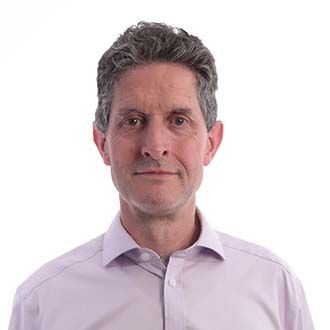 Myles Allen合作论文数Environmental Change Institute, School of Geography and the Environment, University of Oxford;Department of Physics, University of Oxford3Ben Matthews合作论文数3
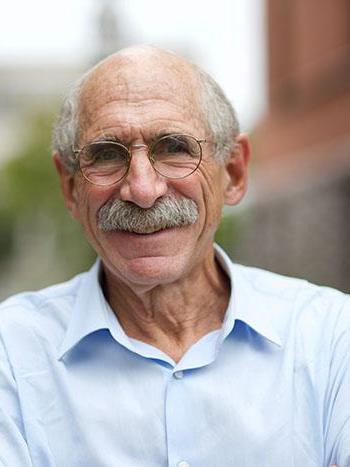 Michael Oppenheimer合作论文数High Meadows Environmental Institute, Princeton University;Center for Policy Research on Energy and the Environment, Princeton School of Public and International Affairs, Princeton University;Department of Geosciences, Princeton School of Public and International Affairs, Princeton University3
 Neville Nicholls合作论文数School of Earth Atmosphere and Environment, Monash University3David J. Karoly合作论文数3Joel B. Smith合作论文数3
 Taishi Sugiyama合作论文数3
 Andy Reisinger合作论文数Climate Change Research Institute, Victoria University3
 Matilde Rusticucci合作论文数Departamento de Ciencias de la Atmósfera y los Océanos, Facultad de Ciencias Exactas y Naturales, Universidad de Buenos Aires3
 N H Ravindranath合作论文数Centre for Sustainable Technologies, Indian Institute of Science3Rajendra K Pachauri合作论文数3Kirsten Macey合作论文数3




