Das Konzept der Wissenschaftsskepsis gewann im Zuge der Covid-19 Pandemie an Popularität. Epistemische Unsicherheit und Konflikte, das katastrophische Potenzial nicht-konformen Verhaltens, Polarisierungen in der öffentlichen Debatte, autoritäre Bedrohungen und jene neuartige Akteurskategorie der Wissenschaftsskeptiker:innen, Impfgegner:innen und Corona-Leugner:innen waren Elemente jener Gemengelage, in der Politik, Medien und Teile der Sozialwissenschaften vermehrt den Begriff Wissenschaftsskepsis bemühten. Die Beiträge der vorliegenden Collection nähern sich diesem Konzept durch Analysen an, die (1) auf Semantik fokussieren, womit der Diskurs um Faktizität und ihre Krise bzw. Wissenschaftsskepsis in der politischen Öffentlichkeit gemeint ist, die sich (2) mit Wissen näher auseinandersetzen, was Gegenwissen, Nicht-Wissen und Heterodoxie oder Verschwörung einschließt, und die schließlich (3) das Verhältnis von Wissenschaft und Politik reflektieren. Mit diesen Schwerpunkten zielt die Collection darauf, reflexiv-historisierend die politische Funktion des Begriffs und seine Verwendung, die Entstehung eines Forschungsstrangs und das (vermeintliche) Phänomen als ein empirisches zu beleuchten.
Professionalisierung und Digitalisierung sind gegenwärtig schillernde Lösungsformeln zur Bewältigung gesellschaftlicher Herausforderungen. Der Beitrag untersucht den Zusammenhang beider Prozesse am Fall des österreichischen Polizeinotrufs. Mit Hilfe einer Praxisformanalyse verbindet der Beitrag die Analyse massenmedialer Diskurse, der Implementierung eines neuen Einsatzleitsystems und der Praxis in Notrufleitstellen. Dabei werden Kompetenzkonflikte um die Ausgestaltung eines digitalen Mediatisierungsprozesses nachgezeichnet und gezeigt, wie Medientechnik und professionelle Kompetenzen wechselseitig rekonfiguriert werden. Das titelgebende Konzept der De/Professionalisierung verweist dabei auf die Gleichzeitigkeit heterogener und umkämpfter Professionalitätsansprüche und -anforderungen. Ausgehend von den empirischen Befunden wird ein theoretisches Modell zur Analyse des Spannungsverhältnisses von Professionalisierung und digitaler Mediatisierung entwickelt, das über den Fall hinaus anwendbar ist, um die Wechselwirkungen beider Prozesse zu erfassen.
The concept of science skepticism was diffused during the Covid-19 pandemic. Epistemic uncertainty and conflicts, the potentially catastrophic effects of non-compliance with state-enforced anti-pandemic restrictions, polarization in public debate, the specter of authoritarian threats and a novel category of actors-science skeptics, anti-vaxxers and Covid-19 denialists/pandemic skeptics-conditioned the situation in which the concept of science skepticism was increasingly mobilized in politics, media and the social sciences. The contributions to this special collection engage with the concept through analyses that can be grouped under three broad themes. The first theme concerns semantics, i.e. discourses about facticity and its crisis or science skepticism in the public sphere. The second theme revolves around knowledge and includes analyses of counter knolwedge, not/knowing and conspiracy. The third theme engages with the relationship between politics and Wissenschaft (the scientific field). The collection seeks to illuminate the political function of the concept of science skepticism and its usage, trace the emergence of a research field and analyze the (apparent) phenomenon of science skepticism through empirical studies.
Professionalisation and digitalisation have become ubiquitous concepts for overcoming all kinds of social challenges. This article examines the relation between these two processes in the case of the Austrian police emergency service. Based on a practice form analysis of mass media discourse, the implementation of a computer-aided dispatch system and the practices in emergency control rooms, we trace conflicts of competence regarding the digital mediatisation. The article shows how media technology and professional competences are mutually reconfigured in this process. In this context, the concept of de/professionalisation refers to the simultaneity of heterogeneous professional demands and requirements. Based on the empirical findings, a grounded theoretical model is developed, which can be applied beyond the case to capture the interactions and contested nature of professionalisation and digital mediatisation.
The article discusses the relevance of epistemic authorities in the field of illegitimate knowledge, with a particular focus on small life worlds of vaccine skeptics during the COVID-19 pandemic. From a sociology of knowledge perspective, we explore how illegitimate knowledge emerges as a product of social and discursive mechanisms of exclusion. Based on qualitative interviews and vignette-based focus groups, we analyze how such authorities are negotiated and established in the life worlds of vaccine skeptics and how they contribute to the consolidation of attitudes critical of public health interventions. Our findings show that in the realm of illegitimate knowledge, epistemic authorities gain recognition by addressing questions of high complexity with definitiveness that institutionalized scientific communities cannot provide with evidence. Furthermore, the results highlight the transfer of symbolic capital-such as the professional recognition associated with medical expertise-from legitimate to illegitimate knowledge. This transfer, along with the role of lifeworld embeddedness, plays a vital role in stabilizing these authorities. At the same time, we also point to their precarious dependence on current discourses. Finally, the paper emphasizes that productive exclusion through legitimate knowledge opens new spaces for alternative bodies of knowledge and stresses the central role of lifeworld negotiation processes in knowledge production.
Der Artikel untersucht die Relevanz epistemischer Autoritäten im Bereich des illegitimen Wissens, mit besonderem Fokus auf die Lebenswelten von Impfskeptiker:innen während der COVID-19-Pandemie. Aus einer wissenssoziologischen Perspektive beleuchten wir, wie illegitimes Wissen als Produkt sozialer und diskursiver Ausschlussmechanismen entsteht. Anhand qualitativer Interviews und vignettenbasierter Fokusgruppen wird analysiert, wie solche Autoritäten in den Lebenswelten von Impfskeptiker:innen verhandelt und etabliert werden und wie sie dazu beitragen, maßnahmenkritische Haltungen zu festigen. Es wird gezeigt, dass epistemische Autoritäten im illegitimen Wissen insbesondere deshalb Anerkennung finden, weil sie komplexe Fragestellungen mit einer Eindeutigkeit adressieren, die im institutionalisierten Wissenschaftsbetrieb nicht beansprucht werden will. Die Ergebnisse zeigen zudem, dass symbolisches Kapital – zum Beispiel die Anerkennung, die mit der ärztlichen Profession verbunden ist – in den Bereich illegitimen Wissens transferiert werden kann. Diese Übertragung sowie die Verankerung in kleinen Lebenswelten tragen wesentlich zur Stabilisierung dieser Autoritäten bei. Gleichzeitig weisen wir auch auf deren prekäre Abhängigkeit von aktuellen Diskursen hin. Der Artikel hebt hervor, dass der produktive Ausschluss durch legitimes Wissen neue Räume für alternative Wissensbestände eröffnet und betont die zentrale Rolle lebensweltlicher Aushandlungsprozesse in der Wissensproduktion.
This paper assesses the notion of ‘digital public spaces’ and grasps it as a discursive conglomerate which combines multiple ideology-laden concepts: the ‘public sphere’ as an ‘open’ and ‘democratic’ space (as opposed to closed private ‘bubbles’), and ‘digital communication’, which is often strictly divided from the non-digital and perceived as either a threat or the great promise of social assemblage. From the perspective of metapragmatic sociolinguistics and the sociology of knowledge, we follow discursive traces of the ‘the public sphere’ and its suturing with ‘digital communication’ within and outside of our own fields in order to show how the conceptual conglomerate ‘digital public spaces’ is bound to evaluations, expectations and projections which need more critical reflection in media studies in order to escape ideological short circuits and simplifications that haunt the field. On the other hand, we argue that the notion of ‘digital publics spaces’ serves important discursive functions in the lifeworlds of media users, as it fuels into contingency-reducing ideological complexes: ideologies of communication ( Kommunikationsideologien ) which guide social actors’ interaction, and related ideologies of communification ( Vergemeinschaftungsideologien ) which guide them in the ways they socially align with each others.
The announcement of mandatory vaccination in Austria in November 2021 was part of a long series of political ordinances to contain the COVID-19 pandemic. These measures, which were perceived as an interventionist state interfering in private matters, led to widespread protests and criticism. The latters' interpretation as a conspiracy-theoretical position from the fringes, however, is not compatible with the range of institutional and science scepticism expressed in connection with rejecting the COVID-19 vaccination. This article presents the findings of ethnographic interviews with people in the centre of society who are critical of the measures. The combination of lifeworld analysis and subjectivation analysis brings to light discourse-related self-positionings and their relevance as well as the shift in social references that took place during the pandemic. The empirically obtained self-positioning as a "knowledgeable minority without a resonance space" reveals the experience of a "we" that presents itself as a reference group in the sense of "small lifeworlds". The latter's reconstruction reveals a transformative potential that is likely to be relevant not least with view to the interventionist policies that are to be expected in tackling the climate crisis.
Zusammenfassung Die Ankündigung einer Impfpflicht im November 2021 in Österreich steht in einer langen Reihe politischer Verordnungen zur Eindämmung der COVID-19-Pandemie. Diese als Eingriffe eines interventionistischen Staates in private Belange wahrgenommenen Maßnahmen hatten umfassende Proteste und Kritik zur Folge. Deren Deutung als verschwörungstheoretische Haltung am gesellschaftlichen Rand ist nicht mit der Bandbreite von Institutionen- und Wissenschaftsskepsis kompatibel, die in der Ablehnung der COVID-19-Impfung zum Ausdruck kommt. Der vorliegende Beitrag präsentiert die Befunde ethnographischer Interviews mit maßnahmenkritischen Personen in der Mitte der Gesellschaft. Die Kombination von Lebensweltanalyse und Subjektivierungsanalyse fördert diskursbezogene Selbstpositionierungen und deren Relevanzsetzungen sowie die Verschiebung sozialer Bezugnahmen während der Pandemie zutage. Die empirisch gewonnene Selbstpositionierung als „wissende Minderheit ohne Resonanzraum“ offenbart die Erfahrung eines Wir, das sich als Bezugsgruppe im Sinne von „small lifeworlds“ darstellt. Ihre Rekonstruktion legt ein transformatorisches Potenzial frei, das nicht zuletzt im Hinblick auf die zu gewärtigende Interventionspolitik zur Bewältigung der Klimakrise gesellschaftlich relevant sein dürfte.
The aim of this article is to more precisely define the field of research on the automation of communication, which is still only vaguely discernible. The central thesis argues that to be able to fully grasp the transformation of the media environment associated with the automation of communication, our view must be broadened from a preoccupation with direct interactions between humans and machines to societal communication. This more widely targeted question asks how the dynamics of societal communication change when communicative artificial intelligence—in short: communicative AI—is integrated into aspects of societal communication. To this end, we recommend an approach that follows the tradition of figurational sociology.
The ideas linked to the formulation "Social Construction of Reality" (SoCo) have spilled over from the Social Sciences and Humanities to public discourses, e.g. on gender and truth, and form in epistemic terms the crossroads of the polarization of liberal and anti-liberal world views par excellence. By focusing on the "academic debate" about the theory of Social Construction of Reality we argue that the polemical misuse of "social construc-tion," quite common in public and political discourse, also characterizes New Realism. This recent philosophical movement frames its innovative character first by reframing the problem of the social construction of reality from social theory to philosophy and such failing the basic idea of the entire approach, and second, by referring not to Social Con-struction of Reality but to a specific understanding of "Social Constructionism." How -ever, the numerous critiques of SoCo over time have led to Communicative Construc-tivism (CoCo) as a comprehensive reformulation within Sociology of Knowledge. As an empirically grounded theory, CoCo relates to new forms of realisms constituted in their to SoCo.
The objective of this article is to define more precisely the field of research into the automation of communication, which is currently only vaguely discernible. The central thesis is that, in order to be able to grasp the transformation of the media environment associated with the automation of communication, the view must be broadened from the “direct interaction of humans and machines” to “societal communication”. Broadening our perspective as such allows us to ask how the dynamics of societal communication as a whole change when “communicative AI” becomes part of societal communication. To support this thesis, the article first takes a closer look at the automation of communication as a phenomenon. Against this background, the concept of communicative AI is then developed in more detail as a “sensitizing concept” that sensitizes to both the breadth and depth of the phenomenon. On this basis, the bridging concept of the “hybrid figuration” is developed in order to grasp the agency of communicative AI and to be able to connect to “definitive concepts” of social science and media and communication research. It becomes apparent that with communicative AI as a field of research, the basic concepts of communication and media research—“communication” and “media”—are themselves challenged. The article is concluded by a conclusion that shows the research perspectives resulting from such an approach.
In this article, we argue for making the frequently invoked notion of "crises of journalism" itself the proper subject of sociological analysis. Based on a case study of a public controversy over an adversarial TV interview with a well-known politician on Austria's public service broadcaster ORF, we provide an analysis of the practical use of crisis claims in metajournalistic discourse. Drawing on ethnomethodology, interactionism, and situational analysis and suggesting the discursive trajectory as an analytic tool, we show that crisis accounts serve as an instrument of politicizing journalistic expertise, i.e., as a discursive strategy of mobilizing heterogeneous actors to impose interpretations of how journalism ought to be.
The ongoing COVID-19 pandemic has confronted us with constantly new challenges. We need to browse new inventories of scientific knowledge to reflect on previous experiences and thus facilitate societal learning. In line with the first volume on the COVID-19 pandemic in this series, contributions from different disciplines and fields of practice create an awareness of the complexity of this crisis and help us to understand the diversity of challenges it poses. The first part focuses on philosophical, sociological and psychological problem diagnoses, the second on reactive strategies in the fields of medicine, nursing care, the economy and law. After taking a look at religious contexts and fields of practice, leading experts from the healthcare sector share their experiences of the COVID-19 pandemic. With contributions by Mahmoud Abdallah, Désirée Amschl-Strablegg, Cornelia Baptist-Kröpfl, Herbert Beiglböck, Ulrike Berdnik, Alois Birklbauer, Anneliese Derkits, Reinhold Esterbauer, Franziska Grossschädl, Katharina Heimerl, Andreas Heller, Marie-Christin Hinteregger, Hartmann Jörg Hohensinner, Elisabeth Horvath, Isabella Jonveaux, Anna-Christina Kainradl, Ulla Kriebernegg, Wolfgang Kröll, Ulrike Kylianek, Martin M. Lintner, Saskia Löser, Christa Lohrmann, Sandra Müller, Gerold Muhri, Manfred Novak, Sabine Petritsch, Eva Peyker, Michaela Pfadenhauer, Barbara Pichler, Johann Platzer, Lisa Pongratz, Maria Puntigam, Elisabeth Reitinger, Hans-Walter Ruckenbauer, Hellmut Samonigg, Walter Schaupp, Georg Tafner, Christa Tax, Wolfgang Toller and Jürgen Wallner.
 Ronald Hitzler合作论文数17
 Tilo Grenz合作论文数11Kerstin Gothe合作论文数7Christoph Dukat合作论文数7Peter L. Berger合作论文数6
 Paul Eisewicht合作论文数FK17 Sozialwissensch, TU Dortmund5Katharina Miko-Schefzig合作论文数4Heiko Kirschner合作论文数3
 Andreas Hepp合作论文数ZeMKI-Lab Datafication and Mediatization, Centre for Media, Communication and Information Research, University of Bremen, Germany3
 Satomi Sugiyama合作论文数2Wolfgang Schulz合作论文数2
 Sigrid Kannengießer合作论文数2
 Christian Katzenbach合作论文数Alexander von Humboldt Inst Internet & Soc2
 Rainer Malaka合作论文数Center for Computing Technologies, University of Bremen;Digital Media Lab, Faculty of Mathematics and Computer Science, University of Bremen2Anne Honer合作论文数2
 Stephan Dreyer合作论文数2
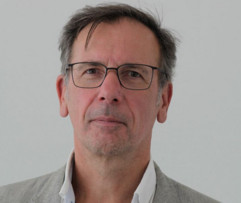 Hubert Knoblauch合作论文数Institut für Soziologie, Technischen Universität Berlin2
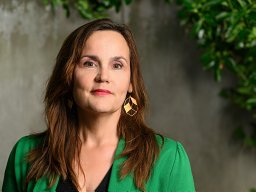 Wiebke Loosen合作论文数Institut für Journalistik und Kommunikationswissenschaft, Universität Hamburg2
 Juliane Jarke合作论文数2
 Cornelius Puschmann合作论文数Institute of Language and Information, Heinrich-Heine-University Duesseldorf2Achim Brosziewski合作论文数2
 Charles Ess合作论文数Interdisciplinary Studies Center Springfield, Drury University2Tobias Sander合作论文数1
 Alexander Antony合作论文数1
 Eleanor Sandry合作论文数Sch Media Creat Arts & Social Inquiry, Curtin Univ1
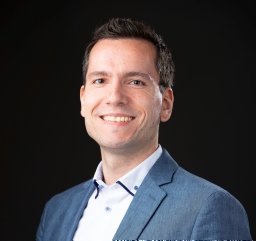 Christian Haas合作论文数Karlsruhe Service Research Institute, Karlsruhe Institute of Technology1
 Christof Weinhardt合作论文数Institute of Information Systems and Marketing, Karlsruher Institut für Technologie1
 Maximiliane Wilkesmann合作论文数1Winfried Gebhardt合作论文数1
 Simon James Caton合作论文数Karlsruhe Institute of Technology1
 Silke Steets合作论文数1
 Gregor J. Betz合作论文数Berlin Institute of Philosophy, Free University1Knud Böhle合作论文数1
 Bernt Schnettler合作论文数Institut für Soziologie, TU Berlin1Ilja Srubar合作论文数1




