Life and evolution often appear purposeful, but goals and purpose are not parts of reductionist sciences (e.g., modern physics, chemistry). This contradiction has been an enduring conundrum. Traditionally, explanations that invoke goal directedness and agency have been treated cautiously, but a new move argues that we should recognize multiple levels of biological organization-cells, tissues, and organisms-as agents with agendas. In the present article, we offer clarity on when and why the concept of goal directedness is applicable in biology. We offer grounds for distinguishing whether something is a candidate for goal directedness, and we consider whether explanations involving goal directedness (teleonomic explanations) are useful. Teleonomic explanations can be briefer and less computationally demanding than algorithmic explanations, and they can help pose hypotheses for how something might function. However, they risk omitting critical details and misdirecting conclusions. Therefore, although there is a place for goal-directed explanations in biology, they should be used with care.
Evolutionary "fitness" is operationalized in many different ways in models. Its role is to quantify that which is favored by natural selection. Generally, short-term ability to survive and reproduce (e.g. expected number of surviving offspring) is assigned to genotypes or phenotypes and used to non-trivially derive longer-term quantities (e.g. invasion rate or fixation probability) that provide insight as to which organismal strategies tend to evolve due to natural selection. Assigned fitness operationalizations either explicitly or implicitly specify organismal vital rates (i.e. births, deaths, organismal growth). Derived operationalizations also depend on assumptions regarding demographic stochasticity; environmental stochasticity; feedbacks whereby births, deaths, and organismal growth cause environmental change; and the impact of migration and niche construction on which environment is experienced. The choice of derived operationalization can impact conclusions, as we illustrate for the evolution of bet hedging when treated by invasion probability vs expected Malthusian parameter within an adaptive dynamics approach. After reviewing existing derived fitness operationalizations, we propose a new one that meets the particular challenges posed by balancing selection. Population genetic models generally sidestep ultra-high-dimensional phenotype and genotype spaces by deriving the long-term evolutionary fate/fitness of a lower-dimensional set of genetically encoded "strategies." Strategies (e.g. costly developmental commitment to producing armaments) are causally upstream from realized phenotypes (e.g. armament size), but downstream from how an organism's early environment (e.g. maternal effects) might inform developmental commitments. While selection is best understood in terms of differences in organismal vital rates, its derived outcomes are most easily understood as properties of genetic lineages.
This paper investigates the concept of reproduction in an evolutionary context. It draws a distinction between objects that are reproduced (reproducees), objects that reproduce thanks to some reproductive autonomy (reproducers), and Darwinian individuals that are reproducers with a high degree of reproductive causal control. This threefold distinction is then applied to different biological objects classically invoked in reproduction processes (e.g., genes, viruses, cells) to explain why they do not have the same status with respect to reproduction. The distinction also provides some fuel for the view proposed by Griesemer: that material overlap during reproduction is a condition for reproduction.
The hierarchy of life is the result of a succession of evolutionary transitions in individuality (ETIs). During an ETI, individuals at a particular level of organization interact in such a way as to produce larger-level entities that become individuals in their own right. These new individuals are defined by their capacity to exhibit Darwinian properties of variation, differences in fitness, and heredity. One difficulty in accounting for ETIs is articulating how these properties are acquired at a higher level from the lower ones. Collaborators and I recently proposed the 'ecological scaffolding' model in which imposing an ecological scaffold (that is, a structure in the environment) on lower-level entities initiates an ETI. Here, I present a new model that extends this work. Within this new model, I propose a mechanism of scaffold endogenization, demonstrating that collectives can become resilient to the ecological scaffold being removed. This type of resilience is not observed in the ecological scaffolding model. However, classically, a biological individual would be regarded as an entity capable of withstanding environmental changes. Thus, the new model proposed here represents a step towards a more complete explanation for ETIs.
I extend work from Krakauer et al. (2020), who propose a conception of individuality as the capacity to propagate information through time. From this conception, they develop information-theoretic measures. I identify several shortcomings with these measures—in particular, that they are associative rather than causal. I rectify this shortcoming by deriving a causal information-theoretic measure of individuality. I then illustrate how this measure can be implemented and extended in the context of evolutionary transitions in individuality.
Fitness has taken center stage in debates concerning how best to identify evolutionary transitions in individuality (ETIs). An influential framework proposes that an ETI occurs only when fitness is exported from constituent particles to a collective. We reformulate the conceptual structure of this framework as involving three steps. The culminating step compares “counterfactual” fitnesses against a long-run measure of fitness. This comparison assumes that collective-level fitness mereologically supervenes on particle fitness. However, if this assumption is rigorously enforced, the proposed conditions for identifying ETIs prove to be too weak. We here suggest an alternative model of ETIs centered around traits.
The new foundation for the propensity interpretation of fitness (PIF), developed by Pence and Ramsey (Br J Philos Sci 64:851–881, 2013), describes fitness as a probability distribution that encompasses all possible daughter populations to which the organism may give rise, including daughter populations in which traits might change and the possible environments that members of the daughter populations might encounter. This long-term definition of fitness is general enough to avoid counterexamples faced by previous mathematical conceptions of PIF. However, there seem to be downsides to its generality: the ecological role of fitness involves describing the degree of adaptedness between an organism and the specific environment it inhabits. When all possible changes in traits and all possible environments that a daughter population may encounter are included in the concept, it becomes difficult to see how fitness can fulfill this role. In this paper, we argue that this is a feature of Pence and Ramsey’s view rather than a bug: long-term fitness accommodates evolvability considerations, which concern the role that variation plays in evolutionary processes. Building on the foundations, we show that Pence and Ramsey’s fitness—F—can be partitioned into fourths: adaptedness, robustness of adaptedness, and two facets of evolvability. Conceptualizing these last three components forces us to consider the role played by grains of description of both organisms and the environment when thinking about long-term fitness. They track the possibility that there could be a change in type in a daughter population as a way of responding to environmental challenges, or that the type persists in the face of novel environments. We argue that these components are just as salient as adaptedness for long-term fitness. Together, this decomposition of F provides a more accurate picture of the factors involved in long-term evolutionary success.
Evolutionary transitions in individuality (ETIs), such as the emergence of multicellularity, are events in the history of life during which entities at one level of organisation (particles) form collective-level entities that subsequently become individuals in their own right. Recent empirical and theoretical studies advocate the importance of an externally imposed meta-population structure or “ecological scaffold” for the emergence of new levels of individuality. Such a scaffold enables survival and reproduction at the collective level and thus the possibility of selection for beneficial traits on that level. However, a long-standing difficulty for the ecological scaffolding approach has been its inability to adequately explain how collective-level trait values that evolved under scaffolding conditions can be retained once these conditions are lifted. We call this difficulty “the problem of endogenisation.” Here, we derive general conditions for the possibility of endogenisation. Key to endogenisation is the existence of a fitness valley that can be circumvented when scaffolding occurs. Using a stochastic meta-population model, we implement two versions of ecological scaffolding (one temporal and one spatial) and study subsequent evolutionary trajectories using the modelling techniques of adaptive dynamics. Our analysis yields several important results. The temporal model reveals that only collective traits based on particle-particle interactions can be endogenised when a temporary scaffold is applied to the entire population. The spatial model shows that, given the presence of an environmental gradient of externally imposed meta-population structure, ecological scaffolding can only occur in a limited “Goldilocks” zone of the environment. Further, if endogenisation conditions are also fulfilled, scaffolded collectives can colonise non-scaffolding areas of the environment. We conjecture that Goldilocks zones could act as initiators of ETIs and help explain the near ubiquity of collective-level individuality even if the conditions that promote it prove to be rare.
The idea that selection can go in opposite directions or, more generally, be independent at different levels is well entrenched in both the biological and philosophical literatures. However, this idea is difficult to render precise. On the face of it, it seems unclear how two levels of selection could conflict with one another – and thus be independent if they ultimately refer to the same Darwinian substrate. In this paper, I present an analysis of this problem. I argue that it is impossible for selection at one level to be independent from selection at a different level if independence is to be understood in a strong (metaphysical) sense. However, I propose that independence can be understood in a weaker sense, so long as our conception of independence does not violate the metaphysical dependence of the higher levels on the lower ones. From there, I argue that none of the notions of particle-level or collective-level selection used in the classical formal approaches to multilevel selection capture this weaker form of independence. Finally, I propose a different approach that is compatible with both metaphysical dependence and the weaker form of independence outlined in this paper.
Philosophers have proposed many accounts of biological function. A coarse-grained distinction can be made between backward-looking views, which emphasise historical contributions to fitness, and forward-looking views, which emphasise the current contribution to fitness or role of a biological component within some larger system. These two views are often framed as being incompatible and conflicting with one another. The emerging field of synthetic biology, which involves applying engineering principles to the design and construction of biological systems, complicates things further by adding intentional design as a source of function. In the current study we explored how biology experts and novices think about function in the context of single-celled, multi-celled, and synthetic organisms. We also explored the extent to which each group were function pluralists, and if they were function pluralists, which accounts of function tended to be endorsed together. The results showed a surprising degree of similarity between experts and novices in most contexts, although certain differences were apparent. Most surprisingly, we found evidence not only of function pluralism in both groups, but pluralism between backward-looking and forward-looking accounts. We discuss these findings in the context of the philosophical debate on function and consider the practical implications for public acceptance of synthetic biology. First, we argue that philosophers of biology should re-examine the purported incompatibility between accounts of function. Second, we argue that due to the introduction of an intentional aetiology in synthetic biology, there may be an inherent conflict between the views of experts and novices when thinking about synthetic biology.
In a recent reply to Takacs and Bourrat’s article (Biol Philos 37:12, 2022), Autzen and Okasha (Biol Philos 37:37, 2022) question our characterization of the relationship between the geometric mean and arithmetic mean measures of fitness. We here take issue with the claim that our characterization falls prey to the mistakes they highlight. Briefly revisiting what Takacs and Bourrat (Biol Philos 37:12, 2022) accomplished reveals that the key issue of difference concerns cases of deterministic but nonconstant growth. Restricting focus to such cases shows that there is in fact no reason for disagreement.
We propose a novel account of evolutionary transitions in individuality as life cycle closure : that is, the emergence of a new embedding life cycle. To characterize this process, we show how the life trajectory of lower-level entities (e.g., cells) can be coarse-grained into classes of a higher-level entity. We argue that only higher-level entities displaying two necessary conditions for the existence of a life cycle (e.g., multicellular organisms) have achieved life cycle closure. Throughout, we illustrate our point with stage-structured demographic models that yield a rigorous characterization of the conditions for life cycle closure.
ABSTRACT The evolution of complex life forms, exemplified by multicellular organisms, can be traced through a series of evolutionary transitions in individuality, beginning with the origin of life, followed by the emergence of the eukaryotic cell, and, among other transitions, culminating in the shift from unicellularity to multicellularity. Several attempts have been made to explain the origins of such transitions, many of which have been internalist (i.e., based largely on internal properties of ancestral entities). Here, we show how externalist perspectives can shed new light on questions pertaining to evolutionary transitions in individuality. We do this by presenting the ecological scaffolding framework in which properties of complex life forms arise from an external scaffold. Ultimately, we anticipate that progress will come from recognition of the importance of both the internalist and externalist modes of explanation. We illustrate this by considering an extension of the ecological scaffolding model in which cells modify the environment that later becomes the scaffold giving rise to multicellular individuality.
“Fitness” quantifies the ability to survive and reproduce, but is operationalized in many different ways. Generally, short-term fitness (e.g., expected number of surviving offspring) is assigned to genotypes or phenotypes, and used to non-trivially derive longer-term operationalizations of fitness (e.g. fixation probability or sojourn time), providing insight as to which organismal strategies tend to evolve due to natural selection. Assigned fitness operationalizations vary, but all summarize currently expected organismal vital rates (i.e. births, deaths, organismal growth). Derived operationalizations depend also on assumptions regarding demographic stochasticity, environmental stochasticity, feedbacks whereby births, deaths, and organismal growth cause environmental change, and the impact of migration and niche construction on which environment is experienced. After reviewing existing derived fitness operationalizations, we propose a new one tailored to balancing selection. Population genetic models generally sidestep ultra-high-dimensional phenotype space and genotype spaces by instead deriving the long-term evolutionary fate of a lower-dimensional set of genetically encoded “strategies”. Strategies (e.g. costly developmental commitment to producing armaments) are causally upstream from realized phenotypes (e.g. armament size). While selection is best understood in terms of differences in organismal vital rates, its derived outcomes are most easily understood as properties of genetic lineages.
Mismatch is a prominent concept in evolutionary medicine and a number of philosophers have published analyses of this concept. The word ‘mismatch’ has been used in a diversity of ways across a range of sciences, leading these authors to regard it as a vague concept in need of philosophical clarification. Here, in contrast, we concentrate on the use of mismatch in modelling and experimentation in evolutionary medicine. This reveals a rigorous theory of mismatch within which the term ‘mismatch’ is indeed used in several ways, not because it is ill-defined but because different forms of mismatch are.distinguished within the theory. Contemporary evolutionary medicine has unified the idea of ‘evolutionary mismatch’, derived from the older idea of ‘adaptive lag’ in evolution, with ideas about mismatch in development and physiology derived from the Developmental Origins of Health and Disease (DOHaD) paradigm. A number of publications in evolutionary medicine have tried to make this theoretical framework explicit. We build on these to present the theory in as simple and general a form as possible. We introduce terminology, largely drawn from the existing literature, to distinguish the different forms of mismatch. This integrative theory of mismatch captures how organisms track environments across space and time on multiple scales in order to maintain an adaptive match to the environment, and how failures of adaptive tracking lead to disease. Mismatch is a productive organising concept within this theory which helps researchers articulate how physiology, development and evolution interact with one another and with environmental change to explain health outcomes.
The distinction between multilevel selection 1 (MLS1) and multilevel selection 2 (MLS2) is classically regarded as a distinction between two multilevel selection processes involving two different kinds of higher-level fitness. It has been invoked to explain evolutionary transitions in individuality as a shift from an MLS1 to an MLS2 process. In this paper, I argue against the view that the distinction involves two different kinds of processes. I show, starting from the MLS2 version of the Price equation, that it contains the MLS1 version if, following the assumption that a collective constitutively depends (i.e., mereologically supervenes) on its particles, one considers that a necessary map between fitness at two levels exists. I defend the necessity of such a map, making the distinction between MLS1 and MLS2 a matter of perspective and limited knowledge (i.e., epistemic limitations) rather than objective facts. I then provide some reasons why the MLS1/MLS2 distinction nonetheless has some pragmatic value and might be invoked usefully in some contexts, particularly within the context of explaining evolutionary transitions in individuality.
 Doulcier Guilhem合作论文数Institut de Biologie de l'Ecole Normale Supérieure (IBENS),, University of Arizona12
 Paul Rainey合作论文数Max Planck Institute for Evolutionary Biology, Max-Planck-Gesellschaft6
 Hugo Viciana合作论文数Institute d’Histoire et Philosophie des sciences et des techniques, Universite de Paris-1/ENS/CNRS6
 Katrin Hammerschmidt合作论文数Department of Animal and Plant Sciences, The University of Sheffield6
 Paul Griffiths合作论文数School of Humanities, The University of Sydney5
 Andrew James Black合作论文数School of Mathematical Sciences, The University of Adelaide4
 Qiaoying Lu (陆俏颖)合作论文数Department of Philosophy and Religious Studies, Peking University4
 Christie Joshua R合作论文数School of Biological Sciences, The University of Sydney;Centre for Mathematical Biology, The University of Sydney;The University of Sydney, The University of Sydney2
 Carl Brusse合作论文数Research School of Population Health, Australian National University2
 Caroline Rose合作论文数Allan Wilson Centre for Molecular Ecology &, New Zealand Institute for Advanced Study;Massey University;New Zealand Institute for Advanced Study, Massey University2
 Matthew Cody Nitschke合作论文数Bachelor of Science;University of North Dakota;Bachelor of Science, University of North Dakota2
 Ryan T Mckay合作论文数1María J. Ferreira Ruiz合作论文数1
 Cristina Villegas合作论文数1
 Andrew Roberts合作论文数Dept Cognit Sci, Macquarie Univ1
 Kate E Lynch合作论文数Department of Biological Sciences,Macquarie University,North Ryde,Australia1Maureen A O'Malley合作论文数1
 Mathieu Charbonneau合作论文数Faculté de Gouvernance Sciences Économiques &Technopolis, Université Mohammed VI Polytechnique;Technopolis, Université Mohammed VI Polytechnique1Olivier Rivoire合作论文数Laboratoire Interdisciplinaire de Physique, Université Grenoble Alpes;Laboratoire Interdisciplinaire de Physique, Centre National de la Recherche Scientifique1
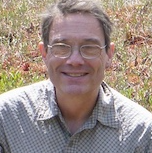 Nicholas J. Gotelli合作论文数Department of Biology, College of Arts and Sciences, University of Vermont;Gund Institute for Environment, University of Vermont1
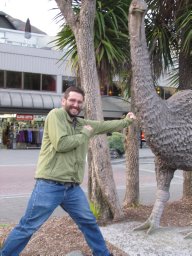 William Godsoe合作论文数1
 Etienne Rajon合作论文数Department of Biology, University of Pennsylvania1
 Louis Le Sergeant d'Hendecourt合作论文数Laboratoire de Physique des Interactions Ioniques et Moléculaires, Aix-Marseille Université;Centre National de la Recherche Scientifique1Pillai Pradeep合作论文数1
 Eva Jablonka合作论文数Faculty of Humanities, Tel Aviv University1
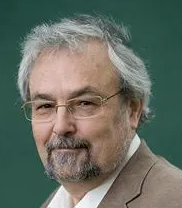 Robin Dunbar合作论文数Department of Experimental Psychology, Medical Sciences Division, University of Oxford;Magdalen College, University of Oxford1
 Werner Ulrich合作论文数Department of Ecology and Biogeography, Nicolaus Copernicus University1
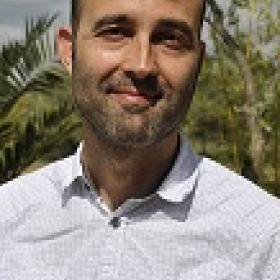 Nicolas Lartillot合作论文数UMR CNRS 5558 - Laboratoire de Biometrie et Biologie Evolutive, Universite Claude Bernard Lyon 11
 Christophe Malaterre合作论文数Institut d’Histoire et Philosophies des Sciences et Techniques, Université Paris 1—Panthéon Sorbonne1Zorana Zeravcic合作论文数Inst Lorentz, Leiden Univ1Philippe Nghe合作论文数1
 Matteo Smerlak合作论文数Centre de Physique Theorique1
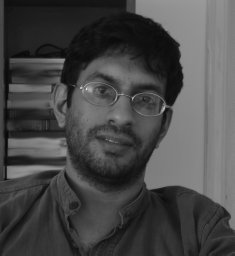 Sandeep Krishna合作论文数Niels Bohr Institute1
 Andre Ariew合作论文数University of Rhode Island1
 Matthijs Van Veelen合作论文数university of amsterdam1
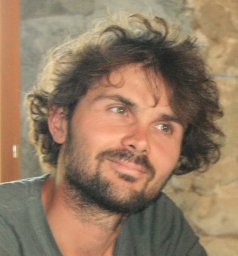 Sylvain Charlat合作论文数Institut Jacques Monod, CNRS - Universités1Thomas Heams合作论文数1Philippe Huneman合作论文数1
 Joanna Masel合作论文数Dpt . Ecology & Evolutionary Biology;University of Arizona;Dpt . Ecology & Evolutionary Biology, University of Arizona1
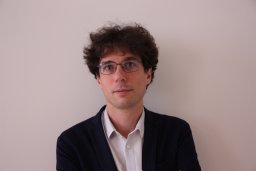 Nicolas Baumard合作论文数Institute of Cognitive and Evolutionary Anthropology, University of Oxford1Tarik C. Gouhier合作论文数Department of Biology;McGill University1




