Concrete structures in the Hong Kong–Zhuhai–Macau (HZM) sea link project are designed for a working life of 120 years; to ensure this length of service life, an efficient yet rational strategy for the long-term durability planning and management must be established. Herein, we comprehensively review various data-driven and model-based approaches to the long-term durability planning and management of these concrete structures. To this purpose, we constructed a smart durability database with self-cleaning and self-predicting capacities. Durability models used in the durability assessment and planning are described, together with their different combinations adapted to different scenarios. Using the constructed database and models, we developed a method for durability planning based on life cycle cost analysis and devised basic maintenance schemes and plans. Lastly, several crucial aspects related to long-term durability maintenance and planning of concrete structures were highlighted.
Inherent nonstationarity of the wind speed records is frequently captured during downburst and typhoon events, however, the significance of nonstationary effects on the bridge aerodynamics has not been widely investigated yet. In this study, the nonstationary wind-induced effects on aerodynamics under downburst and typhoon events were discussed. More specifically, the wind field input was generated using the instantaneous information embedded in the Hilbert spectrum, which was extracted from full-scale measurements of downburst and typhoon wind. The two-dimensional (2D) indicial response function was employed in the time domain buffeting analysis of a long-span bridge, and the transient effects on the bridge aerodynamics under downburst and typhoon were discussed. The results from the present study highlighted the significant transient nature of the downburst wind and its transient effects on the indicial response function, aeroelastic loads and buffeting response, while negligible transient effects under typhoon events.
The Hong Kong Zhuhai Macao Bridge (HZMB) link is currently one of the largest fixed links ever realised. The link comprises various bridges, causeways, artificial islands and tunnels and has a total length of more than 55 km with an investment of about RMB 120billion (approx. (sic)15 billion). The Link accommodates a dual carriageway with three traffic lanes in each direction. The construction of the Link started at the end of 2010 and was opened to traffic in October 2018. The HZMB Link is internationally regarded as one of the most challenging sea crossing projects in China and a demonstration of China's comprehensive breakthrough in technology, scientific research and other related fields. The offshore part of the HZMB Link, crossing the Pearl River Estuary involves one of the world's longest and deepest immersed tunnels. The tunnel was designed and constructed to meet state-of-the-art requirements and challenging structural, geotechnical and marine/offshore conditions. The HZMB tunnel won the ITA Tunnelling Award Major Project of the Year 2018. This paper presents the project from the Client perspective. The paper will give a general introduction of the project, will provide information regarding the challenging environment in which the tunnel had to be realized and the high demanding design criteria that were applicable. Furthermore, the evaluation of the various technical options will be discussed, ultimately leading to the selection of the immersed tunnel option. The paper will also look into the background of selecting the Design & Build contract approach for this project and the experiences that were built up using this type of contract, new to China on this scale. Finally, the paper introduces how operation and maintenance of the tunnel is planned and executed so as to guarantee the 120-year design lifetime. In Ref. (The Islands and Tunnel Project of HZM link et al., 2022) more details of the project are discussed from the D&B contractors' perspective.
The presence of rigid central clamps (RCCs) minimises the damage potential of short suspenders and expansion joints in in-service long-span suspension bridges. The study presented in this paper evaluated the impact of the presence of RCCs on the longitudinal deformation of a long-span suspension bridge under live load with vehicle braking and random traffic flow excitations. Two finite element (FE) models of the bridge were developed - one with RCCs and the other with a traditional suspender (TS) at mid-span. The impact of RCCs and TS on the structural system response was evaluated by comparing the dynamic characteristics of the models. The exceeding probabilities of longitudinal deformation under different traffic flow levels during the design reference period were obtained. The simulation results show that the RCCs are capable of reducing the longitudinal deformation by 35% to 45%. The unfavourable exceeding probabilities of longitudinal deformation over the design threshold decreased from 1.0 to 0.0002, showing that the RCCs could be an effective measure to enhance the service life of the shortest suspender and expansion joints of long-span suspension bridges.
The long-span bridges in the tornado-prone area would be potentially struck by extreme transient winds. In this study, the tornado-like wind field is simulated by the numerical Ward-type tornado simulator based on computational fluid dynamics (CFD) techniques. To minimize the discrepancy between the simulated and field-measured tornado winds, the optimization strategy is developed to achieve optimal parameters of the numerical Ward-type tornado simulator, namely the inflow angle (θ) and translation speed (VT). To facilitate the optimization process, a multi-fidelity surrogate model is utilized to effectively integrate both low-fidelity and high-fidelity data for accurate and efficient simulations. Specifically, the cokriging model is constructed by the CFD data associated with both low-cost Reynolds-averaged Navier-Stokes (RANS) equations and high-cost large-eddy simulation (LES) techniques. The "best" parameters (i.e., θ and VT) based on the multi-fidelity surrogate model are input to the numerical Ward-type tornado simulator (using LES technique), and the obtained wind field matches excellently with the field measurements. Finally, the transient wind field generated using the validated numerical Ward-type tornado simulator is employed as the dynamic inputs to the finite element (FE) model of a long-span bridge, and the results highlight the important contribution of the transient bridge aerodynamics.
为实现以实测数据为目标的龙卷风高精度数值模拟,在总结已有研究成果的基础上,基于计算流体力学(CFD)方法建立了ISU型龙卷风数值模型,通过参数灵敏度分析确定拟优化模拟参数;提出了以实测数据为目标的龙卷风模拟参数优化方法,引入代理模型提高计算效率并通过数值模型计算设计样本点响应来训练代理模型,采用最大切向速度、最大切向速度处半径及标准化风剖面线形误差3个指标建立目标函数;通过一组数值算例验证了所提出优化方法的可靠性,采用所提出的优化方法分别以龙卷风物理模拟器试验数据和龙卷风现场实测数据为目标进行模拟参数优化,并基于此进行CFD数值模拟.研究结果表明:入口切向速度Ut、模拟器离地面高度Hg和地面移动速度VT三个参数对龙卷风场影响较大,因此选作为待优化模拟参数;引入代理模型进行参数优化,避免了数值模型直接参与优化迭代过程,提高了优化效率;以龙卷风物理模拟器试验数据为目标的数值模拟结果,与试验数据的标准化风剖面线形误差VMp仅为0.0344;以龙卷风现场实测数据为目标的数值模拟结果,在h=250 m及h=450 m高度处与实测结果的风剖面综合误差VM分别为0.0240、0.0351,均小于训练样本集中模拟结果的误差,采用优化后的模拟参数进行龙卷风数值模拟很好地改善了模拟精度.
The Hong Kong–Zhuhai–Macao Bridge (HZMB) located at the Pearl River Estuary on the south coast of China, links Hong Kong in the east with Zhuhai-Macao in the west with a total length of 55 km; It is the longest sea-crossing made of artificial island, immersed tunnel and steel bridge in the world, and was opened to traffic in October 2018. The environment where HZMB located is almost the most severe subtropical marine corrosive environments in China, the durability, maintenance and operation are undoubtedly amongst the major work of this project. In the view of the prominence of this bridge, it is a huge challenge for the engineers to achieve this. This paper describes the durability and integrated structure health monitoring system of HZMB.
The Hong Kong–Zhuhai–Macao Bridge (HZMB) is located at the Pearl River Estuary on the south of China, It is the longest sea-crossing infrastructure made of island, tunnel and bridge. It links Hong Kong in the east with Zhuhai-Macao in the west with a total length of 55 km. The HZMB was built according to the highway standard of due three lanes. It has a design life of 120 years to meet the Hong Kong standard that is the first in China Mainland. The HZMB has greatly improved traffic conditions on the east and west sides of the coast of the Pearl River Estuary and strengthened the communication, transportation, and economic integration of the three regions, thus accelerating the formation of the Guangdong-Hong Kong-Macao Greater Bay Area. This paper outlines the key construction technologies and strategies used in HZMB to provide references for the design and construction of other mega-projects in China or abroad.
港珠澳大桥连接粤港澳三地,全长55 km,是目前世界上最长的跨海大桥,综合考虑大桥高温、高湿、高盐、多风的外海建设运营环境、桥位航线密集和阻水率要求、不同的标准体系、120年设计使用寿命和环保要求等建设条件限制,最终选择了钢结构桥梁作为主选桥型.大桥钢结构桥梁总长约22.9 km,用钢量42.5万t,是目前国内外建设规模最大、设计使用寿命最长的海上钢结构长桥,大桥钢结构制造充满了挑战.为了应对挑战,港珠澳大桥在项目初期开展了国内外钢结构制造行业深度调研,重点研究了计算机辅助设计、自动化制造、检测技术、施工管理方面的国内外差距和改进方向.经过分析发现,当时的钢结构制造加工水平无法保障在48个月的制造周期内优质高效地完成42.5万t钢结构制造.为此,大桥开展了系统性的制造模式转型升级和管理创新策划,包括:钢箱梁板单元制造自动化智能化,钢箱梁总拼和涂装车间工业化,检测手段全覆盖,项目管理扁平化、国际化,制造加工信息化管理等,成功实现了港珠澳大桥桥梁钢结构制造综合创新体系的构建和运行,高质量完成了大桥钢结构制造,也取得了丰富的技术成就,主要有:建成首条板单元自动化生产线,首次实现大节段工厂化总拼与机械化涂装,首次形成U肋角焊缝PUAT技术标准,采用了群焊信息管理系统,形成大节段海上安装与控制技术,开展了可达可检可维护设计,开展了优质优价和港澳质量顾问等项目管理创新等.最后基于港珠澳大桥的实践经验,提出关于中国钢结构桥梁行业发展的思考和建议.通过港珠澳大桥钢结构制造的策划和实践可以看出:1)标准化、工厂化、大型化生产要求,促进了钢结构各施工环节的工艺创新;机械化、自动化、信息化技术的应用,提升了钢结构加工企业的总体制作能力和管理水平.2)海上装配化施工促进了海上大型设备的开发应用和吊装工法的创新.3)技术和管理标准化使得全过程控制的理念得以有效实施.4)按照建养并重的理念,开展可达可检和可维护设计,能够促进钢结构桥梁全寿命周期成本最低.港珠澳大桥的建设促进了中国钢结构行业的进步,也为行业发展提供了丰富和有价值的经验.
为实现运营阶段中央扣对悬索桥动力特性及车载激励下短吊索响应影响的量化分析,进而为悬索桥设计及维养策略提供参考,基于已编制的车-桥耦合分析系统,引入制动惯性力及俯仰力矩模拟车辆制动力,建立了考虑车辆制动过程的车-桥耦合分析系统;以一座单跨地锚式悬索桥为工程背景,建立无、有中央扣2种缆梁连接体系的全桥空间有限元模型,研究中央扣对悬索桥动力特性及行车激励下短吊索缆梁相对位移响应的影响;采用建立的分析系统,考虑不同制动位置、初速度及减速度研究中央扣对短吊索制动激励响应的控制作用;考虑短吊索因缆梁相对错动产生的弯曲应力,建立车流激励下短吊索疲劳损伤的分析流程,研究中央扣对短吊索的等效疲劳应力幅值及疲劳损伤度的影响.分析结果表明:中央扣提高了悬索桥的纵飘及扭转刚度,改变了缆梁间的相对运动特性,减小了缆梁错动循环次数及位移幅值,可有效控制行车激励下60.3% 以上的短吊索缆梁相对位移响应;考虑不同制动位置、初速度及减速度的取值,中央扣对短吊索缆梁相对位移幅值的减弱率可分别达92.9%、85.1% 及85% 以上,有效降低了短吊索制动激励响应对3个制动参数的敏感性;中央扣对随机车载下短吊索轴向应力幅值的影响较小,而对因缆梁相对错动产生的弯曲应力幅值影响较大,减弱了短吊索的等效疲劳应力幅值及疲劳损伤度,尤其是距中央扣位置最近的短吊索,疲劳损伤度降低了近71.4%;因此,中央扣可有效控制运营阶段悬索桥短吊索的车载激励响应.
PurposeThe megaproject is a vital innovation ecosystem for participants engaging in technological adoption and integration to achieve project goals. The purpose of this paper is to examine how ecosystem captains build and operate a megaproject innovation ecosystem (MIE). To be more specific, we conducted an in-depth case study to identify the roles played by ecosystem captains in establishing and managing a megaproject innovation ecosystem.Design/methodology/approachBased on the Hong Kong-Zhuhai-Macau Bridge project, the data we collected range from 2010 to 2019 and include semi-structured interviews, informal conversations, and archival documents. We employed an inductive theory building approach to address our research question and analyzed our data using the coding process and Atlas.ti software.FindingsWe find that the ecosystem captains themselves are client organizations that have evolved with the ecosystem during four distinct yet inter-related phases. In addition, we find that the captains’ roles of the client organizations include two typical activities: ecosystem establishment and ecosystem collaboration. The ecosystem captains first frame problems, plan innovative activities, set rules, and select participants for the establishment of the ecosystem, and then orchestrate resources, buffer conflicts, incorporate innovative networks, and cultivate an innovation culture to create a collaborative ecosystem.Originality/valueThis study proposes a theoretical framework showing how ecosystem captains engage in MIE to manage innovative activities during different stages. It highlights the importance of captainship roles in client organizations in a megaproject.
<span id="ChDivSummary" name="ChDivSummary" class="abstract-text">重大基础设施工程是国家社会经济发展的生命线,并已经成为我国技术创新的重要平台。本文聚焦港珠澳大桥技术创新管理,基于扎根理论方法 ,研究重大工程全景式创新范式,从全方位创新、全过程创新和全主体创新3个维度进行分析,揭示重大工程全景式创新的治理逻辑,为推动重大工程高质量发展提供理论支撑。</span>
近年来,跨海大桥的建设越来越受到重视.杭州湾跨海大桥、舟山跨海大桥和港珠澳大桥等跨海工程已在中国成功建成;作为目前世界上难度最大的桥隧一体化跨海工程,深中通道工程正在施工.中国已经在跨海大桥设计和施工领域取得了显著成绩,特别是在桥隧一体化跨海工程技术创新中实现了高水平的技术跨越.本专辑收集了相关科研人员和工程管理人员在设计理论、施工工艺、新材料应用、养护管理技术等方面取得的一批核心技术成果,包括大跨度跨海桥梁抗风抗震性能、大型沉管隧道结构体系的受力机理及防灾设计、船舶碰撞跨海桥梁的致灾风险识别及安全防护等突出问题.这些宝贵经验对未来的甬舟铁路、渤海海峡通道和琼州海峡跨海通道等大型跨海工程具有重要的参考价值.
The 55-km-long Hong Kong–Zhuhai–Macao Bridge (HZMB) is the world’s longest sea-crossing bridge, connecting Hong Kong with Zhuhai and Macao at the mouth of the Pearl River Estuary in China, comprising 22.9-km-long steel bridges. HZMB is the leading steel bridge in China, with top-level manufacturing and installation technology. This paper outlines the steel bridge construction experiences of HZMB to provide comparisons for the construction of other long sea-crossing steel bridges at home or abroad. The main considerations of construction constraints, scheme selection, structural and aesthetic design of HZMB are presented, and the following points related to new strategies in the steel bridge construction of HZMB are elaborated: (1) construction quality assurance, (2) automatic manufacturing technology, (3) large segment offshore installation, (4) eco-friendly paint (content limitation of volatile organic compounds) and new multifunctional inspection gantry, and (5) Guss Mastic Asphalt steel deck pavement system. The successful implementation of those strategies shows that the steel bridge construction of HZMB promotes improvement in the overall construction and management level of the Chinese bridge industry. The advanced experience of HZMB has opened up broad prospects for the design and construction of offshore bridge engineering in China.
The steel deck pavement construction of the Hong Kong-Zhuhai-Macao Bridge is characterized by high technical standards, large scale, and harsh environmental conditions in the open sea. These characteristics demand very high standards for construction quality control and management. Based on the application conditions of this project, research on the materials, construction equipment, construction technology, and other aspects have been carried out. The special modifier for the Gussasphalt mixture, the automatic two-component waterproof material spraying system, and the compound asphalt mixture system have been developed. From the steel bridge pavement construction process and quality evaluation results, the proposed innovative technology is very useful and necessary to improve project quality, reduce quality risk, and guarantee the achievement of construction goals.
<span id="ChDivSummary" name="ChDivSummary" class="abstract-text">不同于一般工程创新和企业创新,重大工程技术创新以需求为导向,是基于"目标锁定"的技术创新活动。重大工程创新生态系统的完备构建与有效运转对于重大工程的顺利实施和创新主体的价值共创具有重要意义。本文解构重大工程创新生态系统的创新主体构成,揭示重大工程创新生态系统的动态演化规律(主要表现为多主体共生竞合、多阶段交互演化、跨项目动态迁移),探讨创新场对于创新力提升的影响机理。基于港珠澳大桥工程案例,分析其创新生态系统的要素构成和动态演化,发现对于创新生态位专一和创新生态势较低的创新主体,创新生态网络对于其竞争力提升的效应更加明显。最后讨论了研究贡献和实践启示,以期为重大工程创新力提升提供理论依据。</span>
A series of multi-point shaking table tests are conducted on a long immersed tunnel designed for the Hongkong-Zhuhai-Macau linkage (HMZ linkage) under non-uniform seismic excitations. Details of experimental setup are first presented with particular focuses on: shaking table array of the four independent shaking tables; dynamic similitude design between scale model of soil and tunnel structure and prototype model; design and fabrication of the scaled model tunnel and model soil; and procedure for simulation of non-uniform seismic waves. A series of testing cases of the shaking tables are carried out on the model tunnel using input motions with different seismic amplitudes. Dynamic responses measured from the experiment include acceleration of soil stratum and model tunnel, as well as extension and closure of immersion joints. Acceleration and deformation responses in the tunnel segments and their connecting joints are investigated and analyzed in the test cases under both uniform and non-uniform seismic loadings, and the capacity of critical structural components, such as extension of joints is evaluated. Results show that the non-uniform seismic excitation significantly aggravates the extension of immersion joints compared to the uniform excitation, and thus the non-uniform seismic effect should be considered in the design of immersed tunnels.
Infrastructure mega-project (IMP) innovation is a complex process characterized by highly diverse innovators, a dynamic life-cycle, and stickiness of innovation knowledge. The IMP's innovation network can be easily broken due to the fact that the network involves many different innovators across different industries and different projects. Further reasons for the fragility of the IMP's innovation network are the dynamics of the IMP life-cycle, the diversity of the IMP's innovative entities, the uniqueness of each IMP, and the temporary nature of each IMP's organizations. The innovation island formed by the breaking of an IMP's innovation network can stifle and harm innovation performance. Drawing from the knowledge-based view as well as innovation network theory, our research identifies the heterogeneous characteristics of IMP innovation. We propose a framework to analyze the formation mechanism of the IMP innovation island from three dimensions-the horizontal innovation island, the vertical innovation island, and the longitudinal innovation island. We look at the Hong Kong-Zhuhai-Macao Bridge project to elaborate the innovation island concept that negatively impacts IMP innovation. We also offer theoretical implications regarding the broader question of how IMPs can manage their innovation in practice.
A 40-m long test was conducted to estimate the seismic performance of the tunnel of the Hong Kong–Zhuhai–Macau Bridge project under non-uniform earthquake loadings. The test used twelve connected model boxes, a synthetic model soil and a scaled model tunnel. The model boxes included four “active” boxes, which were fixed to four isolated shaking tables that worked as excitation sources, and eight “inactive” boxes, which were passively excited by the active boxes through connections. The soil at the tunnel location was simulated with a mixture of sawdust and sand with mass proportion 1:2.5, that yielded dynamic properties analogous to those of the in situ soil. The tunnel model, at a 1/60 scale, was composed of 98 sections, each with dimensions 600 × 375 × 170 mm, that were made of aluminum, which best approximated the target response of the actual tunnel, given the size of the model, geometry and scaled engineering properties required. In the tests, a non-uniform seismic excitation was provided by imposing the seismic wave to the active model boxes with a time lag equal to the time that would take a seismic wave to travel from one active box to the next along the axis of the tunnel. The test started with the assembly of the tunnel sections and installation of transducers on the tunnel at critical locations. After placement of the soil and the tunnel, the seismic loadings were applied through the active boxes. The test results showed that the acceleration response of the tunnel was larger than that of the surrounding soil. It was also found that the deformation of the tunnel joints under non-uniform excitation was larger than under uniform excitation, to the extent that it could jeopardize the safety of the tunnel had it been designed solely using the uniform excitation. The results of the experiments clearly showed that the effects of non-uniform seismic excitation should be considered for the seismic design of long tunnels.
港珠澳大桥横跨伶仃洋海域.这是"一国两制"框架下粤港澳三地首次合作建设的世界级超大型跨海交通工程.按照《珠江口跨江通道统筹规划研究》珠江口规划布置7条公路通道、5条铁路通道.工程包括珠海、澳门接线,珠海澳门口岸,海中桥隧主体工程,香港接线及香港口岸,总长55k m,建成后将成为世界最长的跨海大桥.海中桥隧主体工程长约29.6km,包含桥、岛、隧工程,估算投资约381亿元.
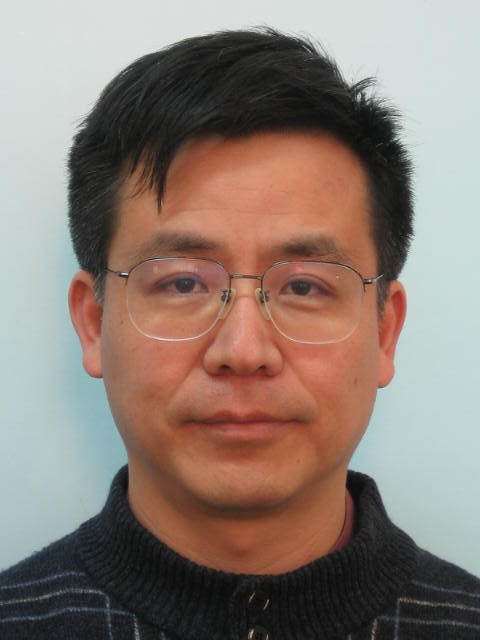 Yong Yuan (袁勇)合作论文数Department of Geotechnical Engineering, College of Civil Engineering, Tongji University12
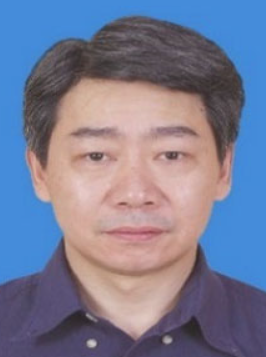 Shengnian Wang (王胜年)合作论文数China Communications Fourth Navigation Engineering Bureau Co., Ltd.;Southern Marine Science and Engineering Guangdong Laboratory (Zhuhai)6
 Xian Liu (柳献)合作论文数College of Civil Engineering, Tongji University6
 Guoping Xu (徐国平)合作论文数China Communications Highway Planning and Design Institute Co., Ltd.6
 Wei Jiang (姜伟)合作论文数School of Material Science and Engineering, Tongji University5
 Haitao Yu (禹海涛)合作论文数Department of Geotechnical Engineering, College of Civil Engineering, Tongji University5
 Wanshui Han (韩万水)合作论文数长安大学公路学院5
 Hongquan Chen (陈宏权)合作论文数Sino-US Global Logistics Institute, Shanghai Jiao Tong University4
 Xiao Yan (闫晓)合作论文数School of Aerospace Engineering and Applied Mechanics, Tongji University3
 Jianming Hao合作论文数Dept Civil Struct & Environm Engn, SUNY Buffalo3
 Yu Feng (冯宇)合作论文数School of Electronics and Control Engineering, Chang'an University3
 Wenbo Gao (高文博)合作论文数3
 Kefei Li (李克非)合作论文数Department of Civil Engineering, School of Civil Engineering, Tsinghua University3Zhi-hong Fan (范志宏)合作论文数2Yongling Zhu合作论文数2Zhizhou Jin合作论文数2Zili Xia合作论文数2Xie Hong-bing合作论文数2Hongbing Xie合作论文数2
 Wenhao Xiao合作论文数2
 Guangling Li合作论文数2
 Jinwen Zhang合作论文数2Yao Luo (罗垚)合作论文数2Jizhu LIU (刘吉柱)合作论文数2ZongXian Su (苏宗贤)合作论文数2Weisheng Wu (吴伟胜)合作论文数CCCC Highway Consultants Co.,Ltd.2SaiXing Ceng (曾赛星)合作论文数2JianLin Ma (马建林)合作论文数2
 Xin Liu (刘鑫)合作论文数Institute of Tunnel and Underground Engineering, College of Civil and Transportation Engineering, Hohai University2Quanwang Li (李全旺)合作论文数2Shenyou Song (宋神友)合作论文数1Gaoyu Yue合作论文数1Hans de Wit合作论文数1
 Haifeng Wang合作论文数1Xingang Zhou合作论文数1Xiong Jianbo (熊建波 Xiong Jianbo)合作论文数1LIU Kairui (刘凯锐)合作论文数1Dong-xing CHEN (陈东兴)合作论文数1Peter Huber合作论文数1Min ZHANG (张民)合作论文数1YAN Chao (严超)合作论文数1Shui-jin LI (李水金)合作论文数1Wei WANG (王伟)合作论文数1Qiang Jing合作论文数1Quan-lin ZHANG (张全林)合作论文数1




