The direct intramolecular stereospecific substitution of the hydroxyl group in enantiomerically enriched secondary benzylic, allylic, propargylic, and alkyl alcohols was successfully accomplished by phosphinic acid catalysis. The hydroxyl group was displaced by O-, S-, and N-centered nucleophiles to provide enantioenriched five-membered tetrahydrofuran, pyrrolidine, and tetrahydrothiophene as well as six-membered tetrahydroquinolines and chromanes in up to a 99% yield and 100% enantiospecificity with water as the only byproduct. Mechanistic studies using both experiments and calculations have been performed for substrates generating 5-membered heterocycles. Rate studies show dependences in a catalyst, an internal nucleophile, and an electrophile, however, independence in an external nucleophile, an electrophile, or water. Kinetic isotope effect studies show an inverse KIE of k(H)/k(D) = 0.79. Furthermore, phosphinic acid does not promote S(N)1 reactivity. Computational studies support a bifunctional role of the phosphinic acid in which activation of both nucleofuge and nucleophile occurs in a bridging S(N)2-type transition state. In this transition state, the acidic hydrogen of phosphinic acid protonates the leaving hydroxyl group simultaneously as the oxo group partially deprotonates the nucleophile. Thereby, phosphinic acid promotes the substitution of the nonderivatized hydroxyl group in enantioenriched secondary alcohols by uncharged nucleophiles with conservation of the chirality from the alcohol to the heterocycle.
Optically pure alcohols are abundant in nature and attractive as feedstock for organic synthesis but challenging for further transformation using atom efficient and sustainable methodologies, particularly when there is a desire to conserve the chirality. Usually, substitution of the OH group of stereogenic alcohols with conservation of chirality requires derivatization as part of a complex, stoichiometric procedure. We herein demonstrate that a simple, inexpensive, and environmentally benign iron(III) catalyst promotes the direct intramolecular substitution of enantiomerically enriched secondary and tertiary alcohols with O-, N-, and S-centered nucleophiles to generate valuable 5-membered, 6-membered and aryl-fused 6-membered heterocyclic compounds with chirality transfer and water as the only byproduct. The power of the methodology is demonstrated in the total synthesis of (+)-lentiginosine from D-glucose where iron-catalysis is used in a key step. Adoption of this methodology will contribute towards the transition to sustainable and bio-based processes in the pharmaceutical and agrochemical industries.
Chiral α-sulfenylated ketones are versatile building blocks, although there are still several limitations with their preparation. Here we report a new two-step procedure, consisting of Pd-catalyzed hydrothiolation of propargylic alcohols followed by an enantioselective Rh isomerization of allylic alcohols. The isomerization reaction is the key step for obtaining the ketones in their enantioenriched form. The new methodology has a high atom economy and induces good to high levels of enantioselectivity; no waste is produced. A mechanism involving a Rh-hydride-enone intermediate is proposed for the isomerization reaction.
The importance of organometallic chemistry for developing organic processes is briefly reviewed with a historical perspective, for the readers to appreciate the contents of this special volume. In addition to highlighting popular name reactions, a section was devoted to emerging technologies with a hope that some of these technologies might mature into real-world applications within a few years. Examples include photocatalysis, flow chemistry, electroorganic synthesis, and computational predictions.
We herein report a Fe(OTf)3-catalyzed stereospecific substitution of the hydroxyl (OH) group in secondary and tertiary alcohols by N-, and O-centered nucleophiles to generate synthetically precious ...
H3PO2-catalyzed intramolecular stereospecific nucleophilic substitution of the hydroxyl group in stereogenic alcohols
Correction for 'Remote meta C-H bond functionalization of 2-phenethylsulphonic acid and 3-phenylpropanoic acid derivatives' by Atanu Modak et al., Chem. Commun., 2016, 52, 13916-13919.
This discovery illustrates selective meta C-H bond activation from multiple non-equivalent C-H bonds present in medicinally relevant arylethanesulfonic acid and the 2-arylpropanoic acid moiety using weakly coordinating nitrile as a directing group. Transformation of the meta olefinated compounds to important organic molecules has been demonstrated. Efforts were made to obtain mechanistic detail of the meta C-H bond functionalization reaction.
Tremendous progress has been made towards ortho-selective C-H functionalization in the last three decades. However, the activation of distal C-H bonds and their functionalization has remained fairly underdeveloped. Herein, we report sequential meta-C-H functionalization by performing selective mono-olefination and bis-olefination with late stage modification of the C-Si as well as Si-O bonds. Temporary silyl connection was found to be advantageous due to its easy installation, easy removal and wide synthetic diversification.
An atom-efficient synthesis of keto thioethers was devised via tandem gold/palladium catalysis. The reaction proceeds through a regioselective thiol attack at the β-position of the alcohol, followed by an alkyl, aryl, or benzyl 1,2-shift. Both acyclic and cyclic systems were studied, in the latter case leading to the ring expansion of cyclic substrates.
An efficient and highly atom-economical tandem Pd/Au-catalyzed route to α-sulfenylated carbonyl compounds from terminal propargylic alcohols and thiols has been developed. This one-step procedure has a wide substrate scope with respect to substituents at the α-position of the alcohol. Both aromatic and aliphatic thiols generated the α-sulfenylated carbonyl products in good to excellent yields. A mechanism is proposed in which the reaction proceeds through a Pd-catalyzed regioselective hydrothiolation at the terminal triple bond of the propargyl alcohol followed by an Au-catalyzed 1,2-hydride migration.
An efficient RuCl2(p-cymene)/DPPE catalyzed addition of secondary amines and CO2 to terminal alkynes was reported affording anti-Markovnikov adducts of alkenyl carbamates in good yield with excellent regioselectivity.
AbstractThe reaction is proposed to proceed through a Pd‐catalyzed regioselective hydrothiolation at the terminal triple bond followed by an Au‐catalyzed 1,2‐hydride migration.
Gold(I)-chloride-catalyzed synthesis of α-sulfenylated carbonyl compounds from propargylic alcohols and aryl thiols showed a wide substrate scope with respect to both propargylic alcohols and aryl thiols. Primary and secondary aromatic propargylic alcohols generated α-sulfenylated aldehydes and ketones in 60-97% yield. Secondary aliphatic propargylic alcohols generated α-sulfenylated ketones in yields of 47-71%. Different gold sources and ligand effects were studied, and it was shown that gold(I) chloride gave the highest product yields. Experimental and theoretical studies demonstrated that the reaction proceeds in two separate steps. A sulfenylated allylic alcohol, generated by initial regioselective attack of the aryl thiol on the triple bond of the propargylic alcohol, was isolated, evaluated, and found to be an intermediate in the reaction. Deuterium labeling experiments showed that the protons from the propargylic alcohol and aryl thiol were transferred to the 3-position, and that the hydride from the alcohol was transferred to the 2-position of the product. Density functional theory (DFT) calculations showed that the observed regioselectivity of the aryl thiol attack towards the 2-position of propargylic alcohol was determined by a low-energy, five-membered cyclic protodeauration transition state instead of the strained, four-membered cyclic transition state found for attack at the 3-position. Experimental data and DFT calculations supported that the second step of the reaction is initiated by protonation of the double bond of the sulfenylated allylic alcohol with a proton donor coordinated to gold(I) chloride. This in turn allows for a 1,2-hydride shift, generating the final product of the reaction.
A highly efficient one-step copper(I)-catalyzed method for the synthesis of alpha-sulfenylated carbonyl compounds from propargylic alcohols and aryl thiols in aqueous media is described. A variety of alpha-sulfenylated carbonyl compounds can be synthesized in good to excellent yields. The catalyst has been successfully recycled up to 4 times without any loss of activity in an aqueous medium.
A highly efficient catalytic protocol using polymer supported diol functionalized ionic liquids (PS-DFILX) was developed for cyclic carbonates synthesis from carbon dioxide and epoxide providing remarkable yields of desired products under solvent free conditions. The developed methodology was found to be applicable for a wide variety of epoxides producing the corresponding cyclic carbonate in good to excellent yields. Besides this, the catalyst could be reused for five consecutive recycles without any significant loss in its catalytic activity. The hydroxyl groups present on the vicinal carbon of the catalyst seems to be vital for efficiency of the catalyst endowing high activity, stability and recyclability. The present protocol thus offers appreciable advantages with respect to excellent yield, short reaction time, operational simplicity and environmentally benign characteristics.
 Bhalchandra M. Bhanage合作论文数Department of Chemistry, Institute of Chemical Technology10
 Joseph S. M. Samec合作论文数9
 Srijit Biswas合作论文数Department of Chemistry, Jadavpur University9
 Anon Bunrit合作论文数The Center of Excellence on Environmental Health, Toxicology and Management of Chemicals, Chulabhorn Graduate Institute5
 Dattatraya B. Bagal合作论文数Institut für Organische Chemie, Universität Regensburg4Emi Lagerspets合作论文数Univ Helsinki, Chem, Helsinki, Finland3
 Christian Dahlstrand合作论文数3
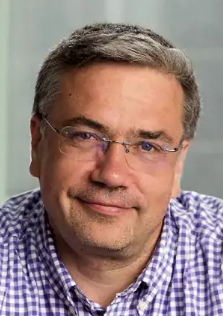 Timo Repo合作论文数Department of Chemistry, University of Helsinki3
 Debabrata Maiti合作论文数Department of Chemistry, Indian Institute of Technology Bombay3
 Kishor Dhake合作论文数3Joseph Samec合作论文数2vilvanathan sivakumar合作论文数2
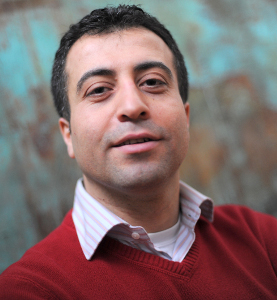 Fahmi Himo合作论文数Arrhenius Laboratory, Department of Organic Chemistry, Stockholm University2
 Semanti Mukherjee合作论文数Department of Medicine, Memorial Sloan Kettering Cancer Center;Weill Cornell Medical College, Cornell University2
 Modak Atanu合作论文数Department of Chemistry, Indian Institute of Technology Bombay2Pemikar Srifa合作论文数2Margalef Jèssica合作论文数2
 Thanya Rukkijakan合作论文数2
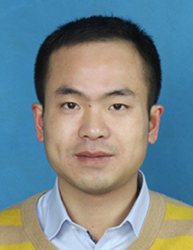 Genping Huang (黄跟平)合作论文数School of Science, Tianjin University2
 Thomas J. Colacot合作论文数Johnson Matthey2
 Krishna M. Deshmukh合作论文数Institute of Chemical Technology, (Autonomous),2
 Yogesh P. Patil合作论文数Institute of Chemical Technology (Autonomous) Department of Chemistry N. Parekh Marg, Matunga Mumbai 400 019 India2Anirban Mondal合作论文数Center for Information Fusion, Institute of Industrial Science, University of Tokyo2
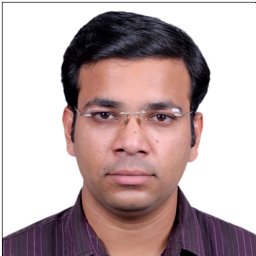 mayur v khedkar合作论文数Department of Chemistry, Institute of Chemical Technology, N. Parekh Marg, Matunga (E), Mumbai 400 019, India1
 Sunisa Akkarasamiyo合作论文数Stockholm Univ, Dept Organ Chem, S-10691 Stockholm, Sweden1
 Rabia Ayub合作论文数Uppsala Univ, Dept Chem, Angstrom Lab, SE-75120 Uppsala, Sweden1
 Agasti Soumitra合作论文数Department of Chemistry, Indian Institute of Technology Bombay1
 Cadu Alban合作论文数Department of Chemistry-BMC, Uppsala University1
 Naveen Togati合作论文数Department of Chemistry, Indian Institute of Technology Bombay1
 Olsson Sandra K合作论文数†Department of Chemistry, Uppsala University1
 Patra Tuhin合作论文数Department of Chemistry, IIT Bombay1
 Shinichiro Fujita合作论文数1Masahiko Arai合作论文数Division of Chemical Process Engineering Faculty of Engineering1
 Andreas Orthaber合作论文数Department of Chemistry, University of Graz1
 Kushal D. Bhatte合作论文数Department of Chemistry, Institute of Chemical Technology (Autonomous), N.M. Parekh Marg, Matunga, Mumbai – 400 019, India1
 Ingela Lanekoff合作论文数Department of Chemistry Kemivagen, University of Gothenburg1Per J. R. Sjöberg合作论文数1
 Dinesh Sawant合作论文数Department of Chemistry, Institute of Chemical Technology (Autonomous), N. Parekh Marg, Matunga, Mumbai 400019, Maharashtra, India1Marcin Kalek合作论文数1




