The success of gragh neural networks (GNNs) in the past years has aroused grow-ing interest and effort in designing best models to handle graph-structured data. Asthe neural architecture search technique has been witnessed to rival against humanexperts in discovering performant network topologies, recently, it has been appliedto the field of graphic network engineering. However, such works on graphic NASso far are purely software design and not considering hardware constraints at all.To address this problem, we propose the first SW-HW codesign framework forautomating the deployment of GNNs. Using FPGA as the target platform, ourframework is able to performs the FPGA-aware graph neural architecture search(FGNAS). To evaluate our design, we experiment on benckmark datasets, namelyCora, CiteCeer, and PubMed, and the results show FGNAS has better capabil-ity in optimizing the accuracy of GNNs when their hardware implementation isspecifically constrained.
A pruning-based AutoML framework for run-time re-configurability, namely RT3, is proposed in this work. This enables Transformer-based large Natural Language Processing (NLP) models to be efficiently executed on resource-constrained mobile devices and reconfigured (i.e., switching models for dynamic hardware conditions) at run-time. Such reconfigurability is the key to save energy for battery-powered mobile devices, which widely use dynamic voltage and frequency scaling (DVFS) technique for hardware reconfiguration to prolong battery life. In this work, we creatively explore a hybrid block-structured pruning (BP) and pattern pruning (PP) for Transformer-based models and first attempt to combine hardware and software reconfiguration to maximally save energy for battery-powered mobile devices. Specifically, RT3 integrates two-level optimizations: First, it utilizes an efficient BP as the first-step compression for resource-constrained mobile devices; then, RT3 heuristically generates a shrunken search space based on the first level optimization and searches multiple pattern sets with diverse sparsity for PP via reinforcement learning to support lightweight software reconfiguration, which corresponds to available frequency levels of DVFS (i.e., hardware reconfiguration). At run-time, RT3 can switch the lightweight pattern sets within 45ms to guarantee the required realtime constraint at different frequency levels. Results further show that RT3 can prolong battery life over 4x improvement with less than 1% accuracy loss for Transformer and 1.5% score decrease for DistilBERT.
Unique Challenges for AI Inference Hardware at the Edge • Peak TOPS or TOPS/Watt are not ideal measures of performance at the edge. Cannot prioritize performance over power efficiency (throughput/watt) • Many AI Hardware rely on batching to improve utilization. Unsuitable for streaming data (batch size 1) use-case at the edge • AI hardware architectures that fully cache network parameters using large on-chip SRAM cannot be scaled down easily to sizes applicable for edge workloads. • Need adaptability to new workloads and the ability to deploy multiple AI models • AI-specific accelerator needs to operate within heterogenous compute environments • Need for efficient compiler & scheduling to maximize compute utilization • Need for high software robustness and usability
We propose a novel hardware and software co-exploration framework for efficient neural architecture search (NAS). Different from existing hardware-aware NAS which assumes a fixed hardware design and explores the NAS space only, our framework simultaneously explores both the architecture search space and the hardware design space to identify the best neural architecture and hardware pairs that maximize both test accuracy and hardware efficiency. Such a practice greatly opens up the design freedom and pushes forward the Pareto frontier between hardware efficiency and test accuracy for better design tradeoffs. The framework iteratively performs a two-level (fast and slow) exploration. Without lengthy training, the fast exploration can effectively fine-tune hyperparameters and prune inferior architectures in terms of hardware specifications, which significantly accelerates the NAS process. Then, the slow exploration trains candidates on a validation set and updates a controller using the reinforcement learning to maximize the expected accuracy together with the hardware efficiency. In this article, we demonstrate that the co-exploration framework can effectively expand the search space to incorporate models with high accuracy, and we theoretically show that the proposed two-level optimization can efficiently prune inferior solutions to better explore the search space. The experimental results on ImageNet show that the co-exploration NAS can find solutions with the same accuracy, 35.24% higher throughput, 54.05% higher energy efficiency, compared with the hardware-aware NAS.
Hardware and neural architecture co-search that automatically generates artificial intelligence (AI) solutions from a given dataset are promising to promote AI democratization; however, the amount of time that is required by current co-search frameworks is in the order of hundreds of GPU hours for one target hardware. This inhibits the use of such frameworks on commodity hardware. The root cause of the low efficiency in existing co-search frameworks is the fact that they start from a “cold” state (i.e., search from scratch). In this article, we propose a novel framework, namely, HotNAS, that starts from a “hot” state based on a set of existing pretrained models (also known as model zoo) to avoid lengthy training time. As such, the search time can be reduced from 200 GPU hours to less than 3 GPU hours. In HotNAS, in addition to hardware design space and neural architecture search space, we further integrate a compression space to conduct model compressing during the co-search, which creates new opportunities to reduce latency, but also brings challenges. One of the key challenges is that all of the above search spaces are coupled with each other, e.g., compression may not work without hardware design support. To tackle this issue, HotNAS builds a chain of tools to design hardware to support compression, based on which a global optimizer is developed to automatically co-search all the involved search spaces. Experiments on ImageNet dataset and Xilinx FPGA show that, within the timing constraint of 5 ms, neural architectures generated by HotNAS can achieve up to 5.79% Top-1 and 3.97% Top-5 accuracy gain, compared with the existing ones.
Dynamic portfolio optimization is the process of sequentially allocating wealth to a collection of assets in some consecutive trading periods, based on investors' return-risk profile. Automating this process with machine learning remains a challenging problem. Here, we design a deep reinforcement learning (RL) architecture with an autonomous trading agent such that, investment decisions and actions are made periodically, based on a global objective, with autonomy. In particular, without relying on a purely model-free RL agent, we train our trading agent using a novel RL architecture consisting of an infused prediction module (IPM), a generative adversarial data augmentation module (DAM) and a behavior cloning module (BCM). Our model-based approach works with both on-policy or off-policy RL algorithms. We further design the back-testing and execution engine which interact with the RL agent in real time. Using historical real financial market data, we simulate trading with practical constraints, and demonstrate that our proposed model is robust, profitable and risk-sensitive, as compared to baseline trading strategies and model-free RL agents from prior work.
In order to mimic the human ability of continual acquisition and transfer of knowledge across various tasks, a learning system needs the capability for life-long learning, effectively utilizing the previously acquired skills. As such, the key challenge is to transfer and generalize the knowledge learned from one task to other tasks, avoiding interference from previous knowledge and improving the overall performance. In this paper, within the continual learning paradigm, we introduce a method that effectively forgets the less useful data samples continuously across different tasks. The method uses statistical leverage score information to measure the importance of the data samples in every task and adopts frequent directions approach to enable a life-long learning property. This effectively maintains a constant training size across all tasks. We first provide some mathematical intuition for the method and then demonstrate its effectiveness with experiments on variants of MNIST and CIFAR100 datasets.
In order to mimic the human ability of continual acquisition and transfer of knowledge across various tasks, a learning system needs the capability for continual learning, effectively utilizing the previously acquired skills. As such, the key challenge is to transfer and generalize the knowledge learned from one task to other tasks, avoiding forgetting and interference of previous knowledge and improving the overall performance. In this paper, within the continual learning paradigm, we introduce a method that effectively forgets the less useful data samples continuously and allows beneficial information to be kept for training of the subsequent tasks, in an online manner. The method uses statistical leverage score information to measure the importance of the data samples in every task and adopts frequent directions approach to enable a continual or life-long learning property. This effectively maintains a constant training size across all tasks. We first provide mathematical intuition for the method and then demonstrate its effectiveness in avoiding catastrophic forgetting and computational efficiency on continual learning of classification tasks when compared with the existing state-of-the-art techniques.
Reinforcement learning methods require careful design involving a reward function to obtain the desired action policy for a given task. In the absence of hand-crafted reward functions, prior work on the topic has proposed several methods for reward estimation by using expert state trajectories and action pairs. However, there are cases where complete or good action information cannot be obtained from expert demonstrations. We propose a novel reinforcement learning method in which the agent learns an internal model of observation on the basis of expert-demonstrated state trajectories to estimate rewards without completely learning the dynamics of the external environment from state-action pairs. The internal model is obtained in the form of a predictive model for the given expert state distribution. During reinforcement learning, the agent predicts the reward as a function of the difference between the actual state and the state predicted by the internal model. We conducted multiple experiments in environments of varying complexity, including the Super Mario Bros and Flappy Bird games. We show our method successfully trains good policies directly from expert game-play videos.
Reinforcement learning typically requires carefully designed reward functions in order to learn the desired behavior. We present a novel reward estimation method that is based on a finite sample of optimal state trajectories from expert demon- strations and can be used for guiding an agent to mimic the expert behavior. The optimal state trajectories are used to learn a generative or predictive model of the “good” states distribution. The reward signal is computed by a function of the difference between the actual next state acquired by the agent and the predicted next state given by the learned generative or predictive model. With this inferred reward function, we perform standard reinforcement learning in the inner loop to guide the agent to learn the given task. Experimental evaluations across a range of tasks demonstrate that the proposed method produces superior performance compared to standard reinforcement learning with both complete or sparse hand engineered rewards. Furthermore, we show that our method successfully enables an agent to learn good actions directly from expert player video of games such as the Super Mario Bros and Flappy Bird.
In this work, we present an application of domain randomization and generative adversarial networks (GAN) to train a near real-time object detector for industrial electric parts, entirely in a simulated environment. Large scale availability of labelled real world data is typically rare and difficult to obtain in many industrial settings. As such here, only a few hundred of unlabelled real images are used to train a Cyclic-GAN network, in combination with various degree of domain randomization procedures. We demonstrate that this enables robust translation of synthetic images to the real world domain. We show that a combination of the original synthetic (simulation) and GAN translated images, when used for training a Mask-RCNN object detection network achieves greater than 0.95 mean average precision in detecting and classifying a collection of industrial electric parts. We evaluate the performance across different combinations of training data.
Capturing and labeling camera images in the real world is an expensive task, whereas synthesizing labeled images in a simulation environment is easy for collecting large-scale image data. However, learning from only synthetic images may not achieve the desired performance in the real world due to a gap between synthetic and real images. We propose a method that transfers learned detection of an object position from a simulation environment to the real world. This method uses only a significantly limited dataset of real images while leveraging a large dataset of synthetic images using variational autoen-coders. Additionally, the proposed method consistently performed well in different lighting conditions, in the presence of other distractor objects, and on different backgrounds. Experimental results showed that it achieved accuracy of 1.5 mm to 3.5 mm on average. Furthermore, we showed how the method can be used in a real-world scenario like a “pick-and-place” robotic task.
The dynamic Boltzmann machine (DyBM) has been proposed as a stochastic generative model of multi-dimensional time series, with an exact, learning rule that maximizes the log-likelihood of a given time series. The DyBM, however, is defined only for binary valued data, without any nonlinear hidden units. Here, in our first contribution, we extend the DyBM to deal with real valued data. We present a formulation called Gaussian DyBM, that can be seen as an extension of a vector autoregressive (VAR) model. This uses, in addition to standard (explanatory) variables, components that captures long term dependencies in the time series. In our second contribution, we extend the Gaussian DyBM model with a recurrent neural network (RNN) that controls the bias input to the DyBM units. We derive a stochastic gradient update rule such that, the output weights from the RNN can also be trained online along with other DyBM parameters. Furthermore, this acts as nonlinear hidden layer extending the capacity of DyBM and allows it to model nonlinear components in a given time-series. Numerical experiments with synthetic datasets show that the RNN-Gaussian DyBM improves predictive accuracy upon standard VAR by up to 35%. On real multi-dimensional time-series prediction, consisting of high nonlinearity and non-stationarity, we demonstrate that this nonlinear DyBM model achieves significant improvement upon state of the art baseline methods like VAR and long short-term memory (LSTM) networks at a reduced computational cost.
The dynamic Boltzmann machine (DyBM) has recently been proposed as a model of an artificial recurrent neural network that can be trained via spike-timing-dependent plasticity, a learning rule that has been postulated and experimentally confirmed for biological neural networks. More specifically, the parameters such as weights and biases of a DyBM can be optimized via this learning “rule” in a way that the likelihood of given time-series data is maximized (i.e., the time-series data are most likely to be generated according to the probability distributions defined by the DyBM with the optimized parameters). However, a DyBM has hyperparameters that need to be tuned by other means. These hyperparameters include the decay rates of eligibility traces and the lengths of first-in-first-out queues. Here, we propose ways to learn the values of the hyperparameters of a DyBM. In particular, we tune the value of the decay rate via a stochastic gradient method with an approximation, to keep the learning time in each step independent of the length of the time-series used for learning. We empirically demonstrate the effectiveness of the proposed approaches in the settings of predicting sequential patterns, including music.
Dynamic Boltzmann Machine (DyBM) has been shown highly efficient to predict time-series data. Gaussian DyBM is a DyBM that assumes the predicted data is generated by a Gaussian distribution whose first-order moment (mean) dynamically changes over time but its second-order moment (variance) is fixed. However, in many financial applications, the assumption is quite limiting in two aspects. First, even when the data follows a Gaussian distribution, its variance may change over time. Such variance is also related to important temporal economic indicators such as the market volatility. Second, financial time-series data often requires learning datasets generated by the generalized Gaussian distribution with an additional shape parameter that is important to approximate heavy-tailed distributions. Addressing those aspects, we show how to extend DyBM that results in significant performance improvement in predicting financial time-series data.
 Poramate Manoonpong合作论文数Embodied AI & Neurorobotics Lab, The Maersk Mc-Kinney Moller Institute, University of Southern Denmark;School of Information Science & Technology, Vidyasirimedhi Institute of Science and Technology14
 Takayuki Osogami (恐神貴行)合作论文数IBM Research - Tokyo;The University of Electro-Communications11
 Florentin Wörgötter合作论文数Department for Computational Neuroscience, Bernstein Center for Computational Neuroscience, Third Institute of Physics, Georg August University of Göttingen11
 Dennis Goldschmidt合作论文数Bernstein Center for Computational Neuroscience (BCCN),, University of Göttingen8
 Subhajit Chaudhury合作论文数IBM TJ Watson Research Center5
 Florentin Woergoetter合作论文数4
 Yiyu Shi合作论文数Department of Computer Science and Engineering, College of Engineering, University of Notre Dame4
 Weiwen Jiang合作论文数Volgenau School of Engineering, George Mason University;College of Engineering and Computing, George Mason University;Electrical and Computer Engineering Department, George Mason University4
 Ryuki Tachibana合作论文数Tokyo Research Laboratory, IBM Japan4
 Christian Tetzlaff合作论文数Network Dynamics Group, Max Planck Institute for Dynamics and Self-Organization, 37073 Göttingen, Niedersachsen, Germany4
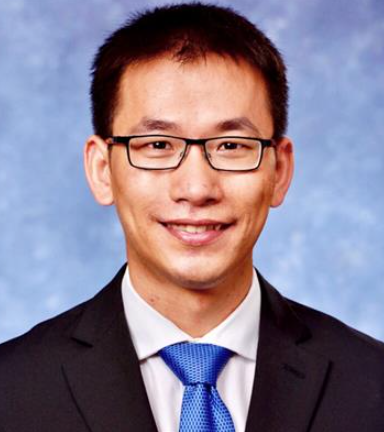 Jingtong Hu合作论文数Department of Electrical and Computer Engineering, Swanson School of Engineering, University of Pittsburgh3
 Tomas Kulvicius合作论文数Vytautas Magnus University, University Göttingen3
 Guanjiao Ren合作论文数2RRH Putra合作论文数2
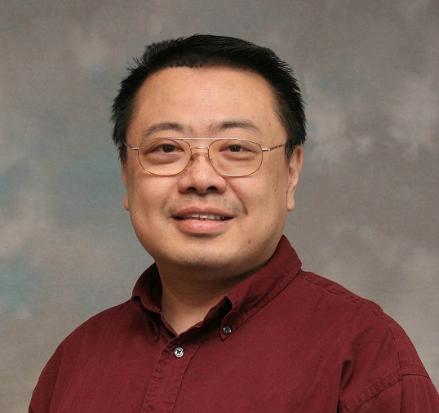 Edwin Sha (沙行勉)合作论文数College of Computer Science, Chongqing University;East China Normal University2
 Lei Yang合作论文数College of Computer Science, Chongqing University2
 Qingfeng Zhuge (诸葛晴凤)合作论文数School of Computer Science and Technology, East China Normal University2
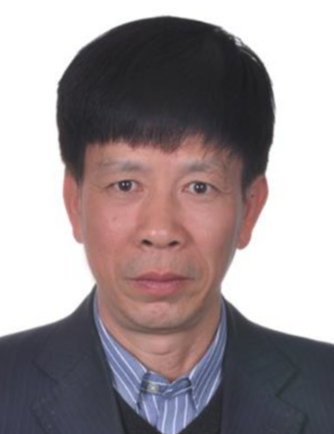 Weihai Chen (陈伟海)合作论文数School of Automation Science and Electrical Engineering, Beihang University;Hangzhou Innovation Institute, Beihang University2Md. Aquil Khan合作论文数Department of Mathematics and Statistics, Indian Institute of Technology2
 Taro Toyoizumi合作论文数Brain Sci Inst, RIKEN2
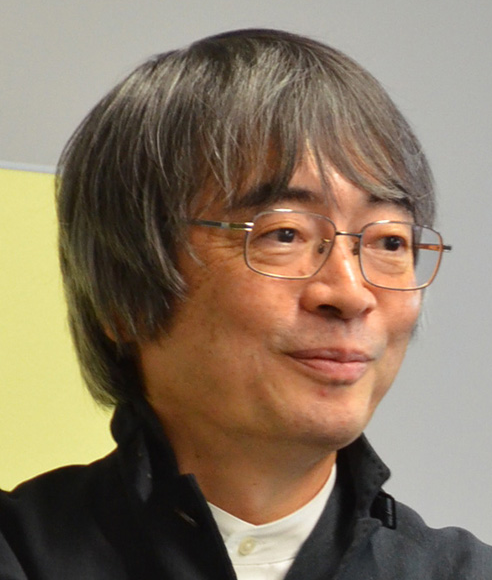 Kazuyuki Aihara (合原一幸)合作论文数International Research Center for Neurointelligence, The University of Tokyo;Laboratories for Mathematics, Lifesciences, and Informatics, The University of Tokyo2
 Dan Teng合作论文数Physics Department, University of Notre Dame2Isao Nishikawa合作论文数2Christoph Kolodziejski合作论文数2
 Daiki Kimura合作论文数Tokyo Institute of Technology2
 Asim Munawar合作论文数Graduate School of Information Science and Technology, Hokkaido University2
 Zekun Shi合作论文数Deep Learning Lab, School of Computing, National University of Singapore;Sea AI Lab1Samuel A. Neymotin合作论文数1Jaehyung Kwon合作论文数1Mads Hansen合作论文数1
 Paula Sanz-Leon合作论文数1kongshen guixing (貴行恐神)合作论文数1Hyeonsu Lee合作论文数1Udo A Ernst合作论文数1Farhan Shafiq合作论文数1Andrew R. Gallimore合作论文数1Chungho Lee合作论文数1Alan Diamond合作论文数1Safura Rashid Shomali合作论文数1Won Sup Kim合作论文数1
 Rajnish Ranjan合作论文数1Jinseop S Kim合作论文数1Hoon-Hee Kim合作论文数1Jan Grewe合作论文数1Julia M Warburton合作论文数1Stöckel David合作论文数1Nam Jung合作论文数1
 Petra Ritter合作论文数1Katherine A Holman合作论文数1




