This study presents a general analysis of how the transverse rotational symmetry of a beam imposes equality constraints among transverse beam moments. Efficient analytic methods are developed to derive symmetry-imposed constraints among kth order moments in beams with continuous or n-fold rotational symmetry for arbitrary k and n. The formalism also enables one to construct symmetry arguments based on how discrete and continuous rotational symmetries manifest themselves differently in terms of beam moments. Three case studies on beams with continuous, twofold, and threefold rotational symmetries are conducted. We prove that, regardless of their triangulation, beams with threefold rotational symmetry (e.g., from electron cyclotron resonance ion source) always have the same rms properties as beams with cylindrical symmetry. These counterintuitive results derived purely from symmetry considerations have clarified beam dynamics at the Facility for Rare Isotope Beams.
Allison-type emittance scanners are widely used to measure projected 2D phase space distributions of low energy beams. This paper extends the conventional data analysis model to introduce three significant corrections that commonly arise in the pursuit of high resolution measurements. First, effective longitudinal asymmetry in the E-dipole placement (typically resulting from directional choice of relief cuts in thick slitplates) causes deviation from the ideal voltage-to-angle conversion relation. Second, finite slit thickness generates variation in weights of data points that should be compensated. Third, when the interval between data points is smaller than the device resolution (ordinary in the angular data accumulation), a detailed account of the phase space region contributing to each data point can be used to resolve the beam distribution more accurately. These findings are illustrated by simulations with numerically generated phase space distributions. The improved model is applied to experimental measurements of an Ar ion beam with an Allison scanner operating at the front-end of the Facility for Rare isotope Beams (FRIB) at Michigan State University. Results show that the improved model obtains better agreement among a set of measurements and modifies beam moments significantly (can be similar to 10% relative to conventional methods, with larger deviations at increasing angular divergence), thus rendering the corrections important for accurate high resolution phase-space characterizations. PYTHON code tools that implement the improved analysis described are made available. These tools arc readily applicable to any Allison scanner given a specification of the device geometry and scan ranges associated with each measurement.
Expansion dynamics of single-species, non-neutral clouds, such as electron bunches used in ultrafast electron microscopy, show novel behavior due to high acceleration of particles in the cloud interior. This often leads to electron bunching and dynamical formation of a density shock in the outer regions of the bunch. We develop analytic fluid models to capture these effects, and the analytic predictions are validated by PIC and N-particle simulations. In the space-charge dominated regime, two and three dimensional systems with Gaussian initial densities show bunching and a strong shock response, while one dimensional systems do not; moreover these effects can be tuned using the initial particle density profile and velocity chirp.
To meet the beam power requirements of 400 kW at the fragmentation target for facility for Rare Isotope Beams (FRIB), simultaneous acceleration of two-charge states should be used for heavier ions. These intense multi-charged ion beams will be produced by a 28 GHz electron cyclotron resonance (ECR) ion source at a high voltage of 35 kV. After extraction, the ion beam will be pre-accelerated to 12 keV/u with a 50 kV platform, transported down to an achromatic charge state selection (CSS) system followed by a vertical transport line, and then injected into a radio frequency quadrupole accelerator. The TRACK code developed at ANL is used to perform the simulations of the ECR beam extraction and low energy beam transport for FRIB. In this study, we include the magnetic field of ECR ion source into simulations. Different initial beam conditions as well as different space charge neutralization levels are tested for the ECR beamline. The beam loss in CSS system and the corresponding protective measures are discussed. The detailed results about the beam dynamic simulation and beam loss in CSS system will be presented in this paper.
A stack of thin, closely spaced conducting foils has been investigated by Lund et al. [Phys. Rev. ST Accel. Beams 16, 044202 (2013)] as a passive focusing lens for intense ion beams. The foils mitigate space-charge defocusing forces to enable the beam self-magnetic field to focus. In this study, we analyze possible degradation of focusing due to scattering of beam ions resulting from finite foil thickness using an envelope model and numerical simulations with the particle-in-cell code WARP. Ranges of kinetic energy where scattering effects are sufficient to destroy passive focusing are quantified. The scheme may be utilized to focus protons produced in intense laser-solid accelerator schemes. As an example, the spot size of an initially collimated 30 MeV proton beam with initial rms radius $200\text{ }\text{ }\ensuremath{\mu}\mathrm{m}$, perveance $Q=1.8\ifmmode\times\else\texttimes\fi{}{10}^{\ensuremath{-}2}$, and initial transverse emittance ${ϵ}_{x,\mathrm{rms}}=0.87\text{ }\text{ }\mathrm{mm}\text{ }\mathrm{mrad}$ propagating through a stack of $6.4\text{ }\text{ }\ensuremath{\mu}\mathrm{m}$ thick foils, spaced $100\text{ }\text{ }\ensuremath{\mu}\mathrm{m}$ apart, gives a $127.5\text{ }\text{ }\ensuremath{\mu}\mathrm{m}$ spot with scattering and a $81.0\text{ }\text{ }\ensuremath{\mu}\mathrm{m}$ spot without scattering, illustrating the importance of including scattering effects.
Measurement of beam phase-space area via rms emittances in solenoid focusing channels with x-y coupling is complicated relative to transport channels with decoupled plane focusing. This stems from correlated azimuthal flow of the beam induced by the coupled focusing influencing how the thermal component of the flow should be measured. This is exacerbated when the beam has net canonical angular momentum — as is the case for beams born in a magnetic field within ECR-type sources. In this study, a systematic analysis is carried out to derive an multi-species beam envelopeequation and motivate measures of rms emittance and phase-space area for use in solenoid transport for beams with canonical angular momentum. These results are applied in Warp PIC simulations of the near-source region of the front-end of the Facility for Rare Isotope Beams (FRIB) linac. In these simulations, a multi-species heavyion DC beam emerging from an ECR source are simulated in transverse slice mode using a realistic lattice description. Emittance growth due to nonlinear applied fields and spacecharge is analyzed including the influence of net canonical angular momentum. It is found that emittance growth in the near source region of FRIB front-end should in most cases be minimal and that the beam size can be readily controlled over a wide range of parameter uncertainties.
An overview is given of the novel beam-dynamics experiments based on compact non-neutral plasma traps at Hiroshima University. We have designed and constructed two different classes of trap systems, one of which uses a radio-frequency electric field (Paul trap) and the other uses an axial magnetic field (Penning trap) for transverse plasma confinement. These systems are called “S-POD” (Simulator for Particle Orbit Dynamics). The S-POD systems can approximately reproduce the collective motion of a charged-particle beam propagating through long alternating-gradient (AG) quadrupole focusing channels using the Paul trap and long continuous focusing channels using the Penning trap. This allows us to study various beam-dynamics issues in compact and inexpensive experiments without relying on large-scale accelerators. So far, the linear Paul traps have been applied for the study of resonance-related issues including coherent-resonance-induced stop bands and their dependence on AG lattice structures, resonance crossing in fixed-field AG accelerators, ultralow-emittance beam stability, etc. The Penning trap with multi-ring electrodes has been employed primarily for the study of beam halo formation driven by initial distribution perturbations. In this paper, we briefly overview the S-POD systems, and then summarize recent experimental results on resonance effects and halo formation.
We present a summary of recent experiments on focusing of laser target-normal-sheath-accelerated (TNSA) proton beam with a stack of thin conducting foils. The experiments were performed using the Phelix laser (GSI-Darmstadt) and the Titan laser, Lawrence Livermore National Laboratory. The phenomena consistent with self-collimation (or weak self-focusing) of TNSA protons were experimentally observed for the first time at the Phelix laser user facility, in a specially engineered structure ("lens") consisting of a stack of 300 thin aluminum foils separated by 50 μm vacuum gaps. Follow up experiments using the Titan laser obtained results consistent with the collimation/focusing observed in the initial experiments using the Phelix. The Titan experiments employed improved, 25 μm- and 50 μm-gap targets and the new fine mesh diagnostic. All the experiments were carried out in a “passive environment,” i.e., no external fields were applied, and no neutralization plasma or injection of secondary charged particles was imposed. A plausible interpretation of the observed phenomena is that the combination of magnetic self-pinch forces generated by the beam current together with the simultaneous reduction of the repulsive electrostatic forces due to the conducting foils inhibits radial expansion of the beam.
The tabletop plasma trap experiment named “S-POD” is employed to explore the stability of intense charged-particle beams focused by a series of quadrupole doublet cells. S-POD is a compact linear Paul-trap, where we generate a single-species non-neutral ion plasma that can approximately reproduce the collective motion of an intense beam focused by periodic linear forces. Unlike conventional beam-dynamics experiments relying on large-scale transport channels and accelerators, it is straightforward in S-POD to control the functional form of quadrupole beam focusing over a wide range of variation to explore a variety of quadrupole focusing lattices. We systematically measure the loss rate of trapped particles as a function of bare betatron tune to locate resonance bands in which the plasma becomes unstable. It is confirmed that a few bands of coherent resonances appear depending on the beam intensity. When there is an imbalance between the horizontal and vertical focusing, those instability bands split. Experimental results indicate that the instability band is relatively insensitive to the phase of quadrupole focusing element placement within the doublet configuration over a significant range of parameters. Experimental observations are compared with transverse slice particle-in-cell simulations carried out using the Warp code.
We introduce a deterministic discrete-particle simulation approach, the Linearly-Transformed Particle-In-Cell (LTPIC) method, that employs linear deformations of the particles to reduce the noise traditionally associated with particle schemes. Formally, transforming the particles is justified by local first order expansions of the characteristic flow in phase space. In practice the method amounts of using deformation matrices within the particle shape functions; these matrices are updated via local evaluations of the forward numerical flow. Because it is necessary to periodically remap the particles on a regular grid to avoid excessively deforming their shapes, the method can be seen as a development of Denavit's Forward Semi-Lagrangian (FSL) scheme (Denavit, 1972 [8]). However, it has recently been established (Campos Pinto, 2012 [20]) that the underlying Linearly-Transformed Particle scheme converges for abstract transport problems, with no need to remap the particles; deforming the particles can thus be seen as a way to significantly lower the remapping frequency needed in the FSL schemes, and hence the associated numerical diffusion. To couple the method with electrostatic field solvers, two specific charge deposition schemes are examined, and their performance compared with that of the standard deposition method. Finally, numerical 1d1v simulations involving benchmark test cases and halo formation in an initially mismatched thermal sheet beam demonstrate some advantages of our LTPIC scheme over the classical PIC and FSL methods. Benchmarked test cases also indicate that, for numerical choices involving similar computational effort, the LTPIC method is capable of accuracy comparable to or exceeding that of state-of-the-art, high-resolution Vlasov schemes.
Phenomena consistent with self-collimation (or weak self-focusing) of laser target-normal-sheath-accelerated protons was experimentally observed for the first time, in a specially engineered structure (“lens”) consisting of a stack of 300 thin aluminum foils separated by 50 μm vacuum gaps. The experiments were carried out in a “passive environment,” i.e., no external fields applied, neutralization plasma or injection of secondary charged particles was imposed. Experiments were performed at the petawatt “PHELIX” laser user facility (E = 100 J, Δt = 400 fs, λ = 1062 nm) at the “Helmholtzzentrum für Schwerionenforschung–GSI” in Darmstadt, Germany. The observed rms beam spot reduction depends inversely on energy, with a focusing degree decreasing monotonically from 2 at 5.4 MeV to 1.5 at 18.7 MeV. The physics inside the lens is complex, resulting in a number of different mechanisms that can potentially affect the particle dynamics within the structure. We present a plausible simple interpretation of the experiment in which the combination of magnetic self-pinch forces generated by the beam current together with the simultaneous reduction of the repulsive electrostatic forces due to the foils are the dominant mechanisms responsible for the observed focusing/collimation. This focusing technique could be applied to a wide variety of space-charge dominated proton and heavy ion beams and impact fields and applications, such as HEDP science, inertial confinement fusion in both fast ignition and heavy ion fusion approaches, compact laser-driven injectors for a Linear Accelerator (LINAC) or synchrotron, medical therapy, materials processing, etc.
Ion beams (including protons) with low emittance and high space-charge intensity can be propagated with normal incidence through a sequence of thin metallic foils separated by vacuum gaps of order the characteristic transverse beam extent to transport/collimate the beam or to focus it to a small transverse spot. Energetic ions have sufficient range to pass through a significant number of thin foils with little energy loss or scattering. The foils reduce the (defocusing) radial electric self-field of the beam while not altering the (focusing) azimuthal magnetic self-field of the beam, thereby allowing passive self-beam focusing if the magnetic field is sufficiently strong relative to the residual electric field. Here we present an envelope model developed to predict the strength of this passive (beam generated) focusing effect under a number of simplifying assumptions including relatively long pulse duration. The envelope model provides a simple criterion for the necessary foil spacing for net focusing and clearly illustrates system focusing properties for either beam collimation (such as injecting a laser-produced proton beam into an accelerator) or for magnetic pinch focusing to a small transverse spot (for beam driven heating of materials). An illustrative example is worked for an idealization of a recently performed laser-produced proton-beam experiment to provide guidance on possible beam focusing and collimation systems. It is found that foils spaced on the order of the characteristic transverse beam size desired can be employed and that envelope divergence of the initial beam entering the foil lens must be suppressed to limit the total number of foils required to practical values for pinch focusing. Relatively modest proton-beam current at 10 MeV kinetic energy can clearly demonstrate strong magnetic pinch focusing achieving a transverse rms extent similar to the foil spacing (20-50 mu m gaps) in beam propagation distances of tens of mm. This is a surprisingly optimistic result since placing many foils per characteristic beam radius, which one might expect to be necessary to strongly attenuate the self-electric field, would likely result in excessive scattering and loss of focusing from the current neutralization due to the beam propagating too far through solid metal. Results from the envelope model are compared with particle-in-cell simulations to help clarify limits related to envelope-model idealizations. Possible degradations of focusing in situations where strong halo can be generated and where pulse duration is short are clarified. DOI: 10.1103/PhysRevSTAB.16.044202
The Warp code (and its framework of associated tools) was initially developed for particle-in-cell simulations of space-charge-dominated ion beams in accelerators, for heavy-ion-driven inertial fusion energy, and related experiments. It has found a broad range of applications, including nonneutral plasmas in traps, stray electron clouds in accelerators, laser-based acceleration, and the focusing of ion beams produced when short-pulse lasers irradiate foil targets. We summarize novel methods used in Warp, including: time-stepping conducive to diagnosis and particle injection; an interactive Python-Fortran-C structure that enables scripted and interactive user steering of runs; a variety of geometries (3-D x, y, z; 2-D r, z; 2-D x, y); electrostatic and electromagnetic field solvers; a cut-cell representation for internal boundaries; the use of warped coordinates for bent beam lines; adaptive mesh refinement, including a capability for time-dependent space-charge-limited flow from curved surfaces; models for accelerator lattice elements (magnetic or electrostatic quadrupole lenses, accelerating gaps, etc.) at user-selectable levels of detail; models for particle interactions with gas and walls; moment/envelope models that support sophisticated particle loading; a drift-Lorentz mover for rapid tracking through regions of strong and weak magnetic field; a Lorentz-boosted frame formulation with a Lorentz-invariant modification of the Boris mover; an electromagnetic solver with tunable dispersion and stride-based digital filtering; and a pseudospectral electromagnetic solver. Warp has proven useful for a wide range of applications, described very briefly herein. It is available as an open-source code under a BSD license. This paper describes material presented during the Prof. Charles K. (Ned) Birdsall Memorial Session of the 2013 IEEE Pulsed Power and Plasma Science Conference. In addition to our overview of the computational methods used in Warp, we summarize a few aspects of Ned's contributions to plasma simulation and to the careers of those he mentored.
This paper investigates prospects of utilizing a high-power laser-driven target-normal-sheath-acceleration proton beam for the experimental demonstration of the magnetic self-focusing phenomenon in charged particle beams. In the proposed concept, focusing is achieved by propagating a space-charge dominated ion beam through a stack of thin conducting and grounded foils separated by vacuum gaps. As the beam travels through the system, image charges build up at the foils and generate electric field that counteracts the beam's electrostatic self-field - a dominant force responsible for expansion of a high current beam. Once the electrostatic self-field is "neutralized" by the image charges, the beam currents magnetic self-field will do the focusing. The focal spot size and focal length depends on the choice of a number of foils and distance between foils. Considering the typical electrical current level of a target-normal-sheath-acceleration proton beam, we conclude that it is feasible to focus or collimate a beam within tens of millimeters distance, e.g., using 200-1000 Al foils, 0.5 mu m thick each, with foil spacing ranging from 25 mu m to 100 mu m. These requirements are within technical capabilities of modern target fabrication, thus allowing the first possible demonstration of the pinch effect with heavy ion beams.
In a recent paper, S. M. Lund, A. Friedman, and G. Bazouin, Sheet beam model for intense space-charge: with application to Debye screening and the distribution of particle oscillation frequencies in a thermal equilibrium beam, in press, Phys. Rev. Special Topics - Accel. and Beams (2011), a 1D sheet beam model was extensively analyzed. In this complementary paper, we present details of a numerical procedure developed to construct the self-consistent electrostatic potential and density profile of a thermal equilibrium sheet beam distribution. This procedure effectively circumvents pathologies which can prevent use of standard numerical integration techniques when space-charge intensity is high. The procedure employs transformations and is straightforward to implement with standard numerical methods and produces accurate solutions which can be applied to thermal equilibria with arbitrarily strong space-charge intensity up to the applied focusing limit.
NDCX-II is a newly completed accelerator facility at LBNL, built to study ion-heated warm dense matter, as well as aspects of ion-driven targets and intense-beam dynamics for inertial-fusion energy. The baseline design calls for using 12 induction cells to accelerate 30–50nC of Li+ ions to 1.2MeV. During commissioning, though, we plan to extend the source lifetime by extracting less total charge. Over time, we expect that NDCX-II will be upgraded to substantially higher energies, necessitating the use of heavier ions to keep a suitable deposition range in targets. For operational flexibility, the option of using a helium plasma source is also being investigated. Each of these options requires development of an alternate acceleration schedule. The schedules here are worked out with a fast-running 1-D particle-in-cell code ASP.
A one-dimensional Vlasov-Poisson model for sheet beams is reviewed and extended to provide a simple framework for analysis of space-charge effects. Centroid and rms envelope equations including image-charge effects are derived and reasonable parameter equivalences with commonly employed 2D transverse models of unbunched beams are established. This sheet-beam model is then applied to analyze several problems of fundamental interest. A sheet-beam thermal equilibrium distribution in a continuous focusing channel is constructed and shown to have analogous properties to two- and three-dimensional thermal equilibrium models in terms of the equilibrium structure and Debye screening properties. The simpler formulation for sheet beams is exploited to explicitly calculate the distribution of particle oscillation frequencies within a thermal equilibrium beam. It is shown that as space-charge intensity increases, the frequency distribution becomes broad, suggesting that beams with strong space-charge can have improved stability relative to beams with weak space-charge.
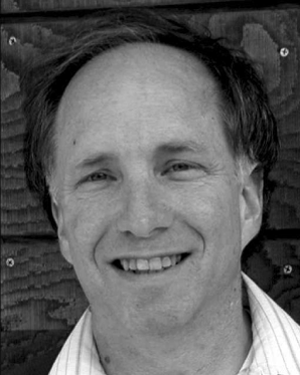 A. Friedman合作论文数Lawrence Livermore National Laboratory76
 D. P. Grote合作论文数63John J. Barnard合作论文数56
 Arthur W Molvik合作论文数Lawrence Livermore National Laboratory48R. H. Cohen合作论文数47
 William M. Sharp合作论文数42
 Peter a Seidl合作论文数Lawrence Berkeley National Laboratory42
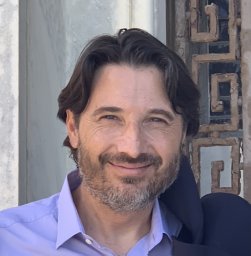 J.-L. Vay合作论文数Lawrence Berkeley National Laboratory38Francis Bieniosek合作论文数37
 Ronald C. Davidson合作论文数Plasma Physics Laboratory, Princeton University33B G Logan合作论文数29e p lee合作论文数24J.W. Kwan合作论文数24Andris Faltens合作论文数23w l waldron合作论文数22C.M. Celata合作论文数22M. Kireeff Covo合作论文数22Enrique Henestroza合作论文数21Thomas Sangster合作论文数University of Rochester19
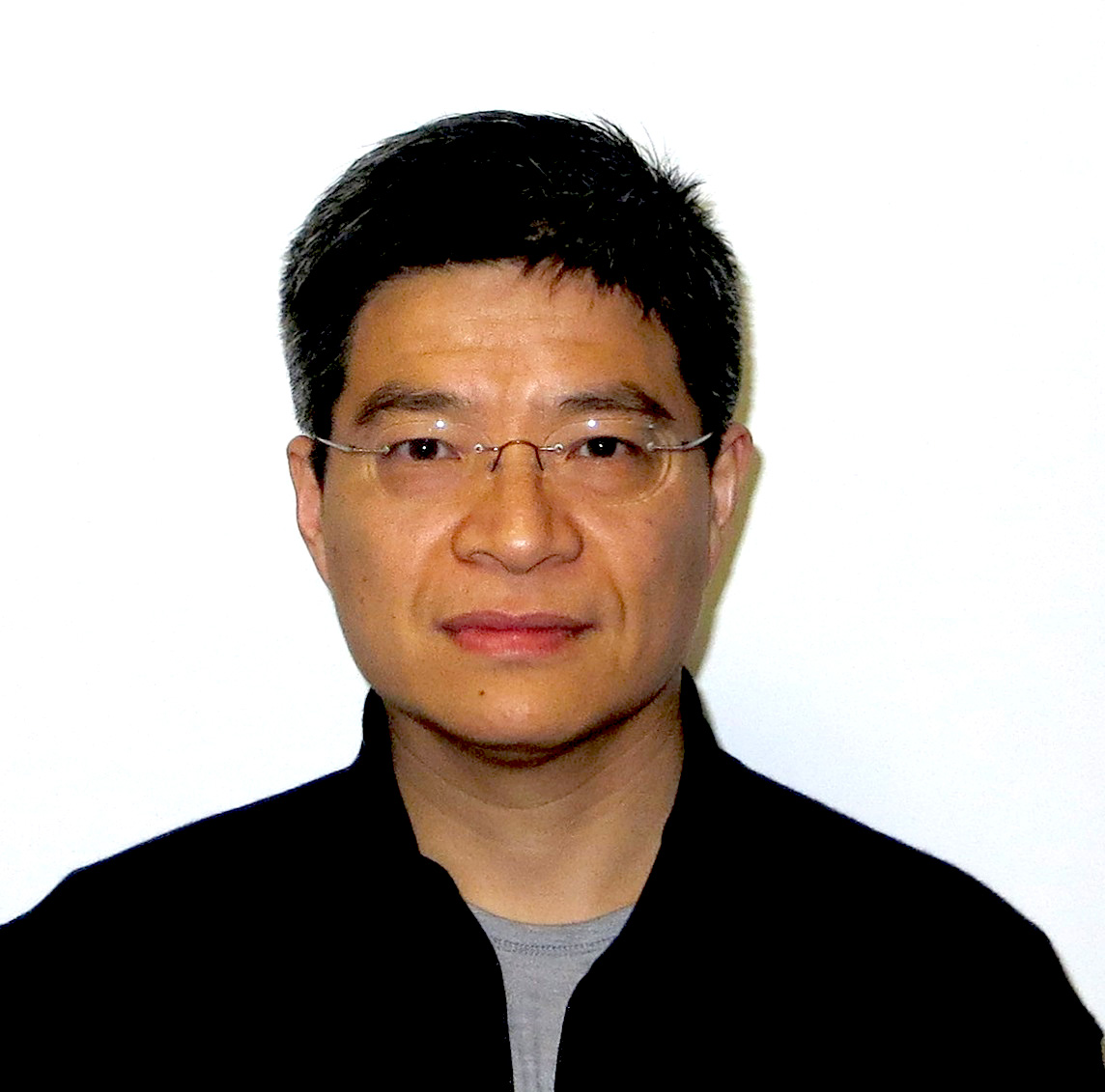 Hong Qin (秦宏)合作论文数School of Physical Sciences, University of Science and Technology of China;School of Nuclear Science and Technology, University of Science and Technology of China;Chinese Academy of Sciences19
 Igor Kaganovich合作论文数Princeton Plasma Physics Laboratory;Princeton University19L. Prost合作论文数17
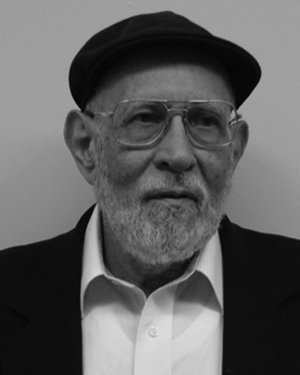 I. Haber合作论文数17
 M. Leitner合作论文数Lawrence Berkeley National Laboratory16s eylon合作论文数15Edward A. Startsev合作论文数15T. J. Fessenden合作论文数Lawrence Berkeley Laboratory14
 H. C. Kirbie合作论文数13LR GRISHAM合作论文数13Erik P. Gilson合作论文数13P. Seidl合作论文数11
 P.K. Roy合作论文数lawrence berkeley national laboratory11
 Rami A. Kishek合作论文数University of Maryland11
 Philip C. Efthimion合作论文数Princeton Plasma Physics Laboratory, Princeton University10Da Callahan合作论文数9
 Josh Coleman合作论文数9David Baca合作论文数9D. L. Judd合作论文数9
 Wayne R. Meier合作论文数Lawrence Livermore National Laboratory;Department of Physics and Astronomy and Ames, Iowa State University;Lawrence Livermore National Laboratory9
 Debra Callahan合作论文数Focused Energy Inc.9r l hanks合作论文数8l ahle合作论文数8P. Ni合作论文数8
 Dale R. Welch合作论文数Voss Scientific8
 Adam Sefkow合作论文数Department of Mechanical Engineering, Hajim School of Engineering & Applied Sciences, University of Rochester;Laboratory for Laser Energetics, University of Rochester;Department of Physics, University of Rochester;Department of Computer Science, University of Rochester8Idith Haber合作论文数University of Chicago8e halaxa合作论文数7G.A. Westenskow合作论文数7Michael D. Cable合作论文数7




