Both architected materials and granular media have been independently shown to significantly improve mechanical energy absorption by intentionally leveraging different energy dissipation mechanisms. Yet it is almost completely unknown how these two classes of materials can be combined to beneficially interact under compression to failure. Herein, we propose the concept of “architected granular media”, or AGMs, where an architected lattice is filled with granular media and show their combination can increase specific energy absorption up to 80% over the empty lattice. We experimentally characterize the quasi-static stress-strain compressional response to failure of auxetic and non-auxetic AGMs filled with different types of granular media, supported by image analysis, flowability measurements, and micro-CT. Results show that the auxetic AGMs preferentially activate the embedded granular media to increase specific energy absorption, and the embedded granular media properties dictate failure modes and stress-strain response. Finally, we show that patterned AGMs, where different granular media are filled in different portions of the lattice, can control failure in a predictable way, opening the possibility of engineered failure with AGMs. This paper demonstrates AGMs are promising for certain energy absorbing applications and could improve critical protective devices such as wave shielding, mechanical impact and crashworthiness, aerospace materials, and sports gear.
Twisted and coiled polymer actuators (TCPAs) offer the advantages of large stroke and large specific work compared to other actuators. Despite extensive experimental investigations aimed at understanding their actuation response, a computational model with a full material description has not been utilized to probe the underlying mechanisms responsible for their large actuation. In this work, we develop a three-dimensional finite element model that includes the physics of the fabrication process to simulate the actuation of TCPAs under various loading and boundary conditions. We implemented a novel approach to estimate the temperature-dependent anisotropic elasticity tensor based on experimental observations. The model is validated against the experimental data and used to explore the factors responsible for actuation under free and isobaric conditions. The model captures the physics of the angle of twist in the fiber, and the distinct response of the homochiral and heterochiral nature of TCPAs. The results show that there exists an optimal angle of twist at which the actuation peaks, and it can be determined through these simulations for any novel TCPA concept. The simulations reveal that the anisotropy in the thermal expansion coefficient (CTE) matrix plays a major role in large actuation irrespective of the anisotropy or isotropy in the elasticity tensor. For the first time, the studies on the extent of anisotropy in thermal expansion show that the key for TCPA actuation is the absolute value of mismatch in thermal expansion irrespective of the sign of CTE in axial and transverse directions of the fiber. Furthermore, to demonstrate the application of this model on a non-homogeneous cross-section, we propose a new shell-core composite-based TCPA concept by combining the epoxy and hollow Nylon tubes to suppress the creep in TCPAs. The results show that the volume fraction of epoxy-core can be tuned to attain a desired actuation while offering a stiffer and creep-resistant response. Therefore, this work sets forth a framework for probing various kinds of TCPAs and opens opportunities to enhance their actuation performance under complex loading conditions as an element of a device or a robotic system.
The natural cardiac cycle is divided into the systole and diastole phases which encompass four distinct stages: isovolumetric contraction and ejection during systole, followed by isovolumetric relaxation and filling during diastole. Cardiovascular modeling of this cycle ranges from high-fidelity multiphysics simulations to reduced-order lumped-parameter (Windkessel) representation of the heart-artery coupling. However, current models do not relate the mechanics of the actuator driving the ventricle pump to the hemodynamics. In this study, we develop and experimentally validate a predictive design framework for ventricle-like pumps using various types of soft contractile actuators. We build a circulatory loop which reproduces the entire loop including the isovolumetric phases-where pressure changes occur without volume shifts. The framework is based on a lumped-parameter model, hereafter referred to as the phase-dependent Actuator-driven Windkessel 3-element (AWK3) model, to bridge soft actuator mechanics to the cardiac pressure-volume (P-V) loop. Unlike traditional models that require either pressure or volume as a fixed input to estimate the other, our proposed model predicts both variables when informed by the isometric characteristics of the actuators. We validate the model using a ventricle-inspired pump driven by a linear contractile series-elastic actuator or twisted and coiled polymer actuators (TCPA). We relate the actuator isometric testing protocol to the phase-dependent AWK3 model, which replicates the Frank-Starling law, accurately describing cardiac behavior under varying conditions of preload, afterload, and inotropy (contractility). This approach provides a robust platform for the design and high-fidelity control of bio-inspired soft robotic circulatory systems.
A common challenge for manufacturing supply chains is to determine whether parts were made correctly, using the intended machines and processes. This study presents a deep learning framework that can discover and verify the source of additively manufactured (AM) components from surface texture visible in part images, with minimal pre-training or supervision. We develop a machine learning (ML) architecture that integrates self-supervised feature extraction using a vision transformer masked autoencoder (ViT-MAE) with unsupervised Gaussian mixture model (GMM) clustering. A simple classification head guides feature extraction when labels are available. To evaluate the model performance, we procured 3744 AM parts from six contract manufacturers. These manufacturers produced the parts using a total of 11 Digital Light Synthesis (DLS) printers. Part images were used to evaluate the model across various unsupervised and semi-supervised tasks for predicting manufacturing origin. With no part labels, the model achieves an F1 score of 0.595 identifying the specific printer that produced the part. With minimally labeled data, only 36 parts from a single build per printer, the F1 score exceeds 0.9, outperforming existing supervised models. The architecture identifies anomalous parts from unknown sources in complex recognition tasks, including Open Set Recognition (OSR) and Generalized Category Discovery (GCD). The model identifies other fine-grained manufacturing attributes including the printer model, material, specific build, and location of the part in the printer. The research presents an image-based deep learning method that could enable manufacturers to validate parts from suppliers in data-scarce environments.
ABSTRACT Soft pneumatic actuators are attractive for robotics due to their speed, force capacity, and material simplicity, yet their performance is difficult to tune because the actuation mechanism is typically tightly coupled to the fabrication method. We present a manufacturing and modeling approach for fiber polymer composite pneumatic twisted coiled actuators (PTCAs) that decouples these constraints and enables precise encoding of actuation behavior. The resulting actuators achieve rapid (<0.1 s) contraction, low‐pressure operation (<80 psi), large contractile strain (>80%), forces up to 20 N, and efficiencies near 50%. A mechanical model captures the dominant deformation mechanics and accurately predicts actuation behavior across diverse designs, allowing systematic exploration of how PTCA geometry and fiber orientation influence twisting, force transmission, and strain amplification. We demonstrate the versatility of this platform with a chameleon‐tongue–inspired PTCA system and a durable integrated module that lifts its pump, batteries, electronics, and additional weight for over 10,000 cycles. This framework provides tunable, scalable artificial muscles for soft robotic applications.
Additive manufacturing (AM) imparts machine-specific fingerprints into the surface texture of printed parts, which can be used to identify the machine or factory of origin. Deep learning methods can detect these fingerprints even when they are not detectable by humans; however, these methods suffer from poor data efficiency and have not been shown to generalize to diverse camera views and other practical imaging conditions. This study develops a novel deep learning network referred to as a Learned Region Fingerprint Model (LRFM) that combines a Differentiable Patch Selection (DPS) module that identifies key textural features, a Fingerprinting (FP) module that extracts latent identifiable features from the image patches, and a consolidation network that aggregates extracted features and makes source predictions. To develop the LRFM, we designed and produced a total of 1,620 AM parts with nine different designs from six contract manufacturers. Data collection is enabled by a unique custom robotic imaging system which photographed each part from 132 unique view angles, creating a dataset of 213,840 images with highly varied appearance due to diverse lighting and shadows. The LRFM predicts the manufacturing source with 98
ABSTRACT A key design motif of skeletal muscles is their arrangement in pairs to enable the cyclic, contra‐lateral contractions necessary for motion. This mechanism may initially appear inefficient, since the contraction of a muscle group stretches the antagonist, increasing resistance and energy consumption. However, the hierarchical architecture of muscles provides a clever solution. By giving rise to J‐shaped stress–strain responses, muscle tissue is soft at small strains, thus minimizing resistance, while it stiffens at large strains to enable economical energy release and prevent excessive elongation and damage. Here, we develop hierarchical supercoiled artificial muscles by plying fishing line fibers that recapitulate this behavior and thus allow antagonistic actuation. Computational models based on Cosserat rods reveal the physical mechanisms underlying the observed J‐shaped responses. The artificial muscles are used in an antagonistic biceps/triceps arm mechanism and a vertical rope‐climbing robot that weighs 14.4 grams and carries a payload 14.6 times heavier than its own weight.
Contractile actuators are promising candidates for soft robotics, but selecting a suitable actuator for a specific mechanism requires the combination of performance metrics such as free stroke, blocking force, or work density. For a specific elastic actuator, the available stroke is strongly dependent on the force imposed by the intrinsic stiffness of the robot or the external structure. Here, we present a framework for characterizing and selecting contractile actuators typical uses operating in the quasistatic regime. To characterize the actuators, we use the longitudinal force–displacement curves, measured in the passive state via tensile test and in the active state via isometric or isobaric test. The force–displacement curves in these two states define the boundary of the operational range of achievable strokes. We demonstrate the framework on three representative and distinct contractile actuators: electrically stimulated thermal twisted‐and‐coiled polymer actuators, heat‐stimulated liquid crystal elastomer actuators, and McKibben‐type pneumatic actuators. To select actuators, we propose the incidence matrix formulation for actuator groups arranged in series and/or in parallel. We validate the approach experimentally in two design problems: an insect‐scale jumping robot with nonlinear buckling loads, and an antagonistic structure. This framework for actuator characterization and selection replaces trial‐and‐error with a predictive, materials‐agnostic design workflow, providing a foundation for the rational integration of emerging contractile actuators into soft robotics.
Growing complex shapes requires control over both where growth begins and how it evolves in time. Here, we introduce a geometric framework for growing prescribed 2D shapes using a disk packing algorithm. In this approach, a target geometry is filled by disks whose centers define where growth is initiated and whose radii define how long each region is allowed to grow. The allowed disk sizes are constrained by the physics of the process, including the growth velocity, the time required to initiate each growth event, and the number of initiations that can occur in parallel. To generate physically realizable packings, we introduce the Largest Gap Algorithm (LGA), which sequentially fills the largest remaining gaps in a target shape with the largest disk that satisfies both geometric and kinetic constraints. We show that this method produces high coverage packings for a variety of geometries and that the resulting packings can be directly converted into spatiotemporal packing instructions. We then demonstrate that these instructions can be realized experimentally using multi-point initiation of frontal polymerization in viscosified dicyclopentadiene (DCPD) resin using CO_2 laser. Our results show that complex shapes can be grown by programming a small number of local initiation events, providing a simple connection between geometry and dynamics of growth.
Additive manufacturing (AM) provides agile and flexible manufacturing in modern supply chains; however, there are concerns that AM may be vulnerable to inferior materials, poor process control, or counterfeit parts. There is a need for new measurement technologies capable of monitoring AM suppliers and certifying the quality and authenticity of AM parts and materials. This study demonstrates a method to predict the source of AM parts from part photographs using a deep learning model. A total of 9192 parts were produced from 21 printers, with three unique designs and four AM processes. A 2D photo scanner captures high-resolution images of each part; these images train a deep-learning model to predict the specific printer that produced each part. A novel analytical framework is developed for analyzing the high resolution image data. This framework achieves >98% prediction accuracy identifying the origin of 1050 parts. The model can authenticate the source of parts without cooperation from the manufacturer, potentially enabling applications in part authentication and detecting changes in materials or production processes. The research demonstrates the potential for high-resolution image data to be used for deep learning in manufacturing and shows that image-based source identification can monitor the quality and authenticity of AM parts.
Frontal polymerization (FP) of thermoset fiber-reinforced composites involves the propagation of a reaction front that cures the composite rapidly and efficiently. In this work, we present a numerical model based on a homogenized thermo-chemical framework to simulate FP in composites at the mesoscale by homogenizing the fiber and resin, and capture the impact of the composite morphology on the propagation of the polymerization front. We use homogenization principles to predict the average macroscopic front speed in the composite and compare the analytical models to the numerical solutions. The study involves two classes of composites-laminated and woven composites-and investigates the effect of the fiber volume fraction and composite design on the front speed. We find that finite-dimensional effects may cause the front speed to deviate from the homogenized prediction in composite laminates. Likewise, the front speed may exceed the homogenized prediction in woven composites due to the heterogeneity in resin distribution and the emergence of temperature overshoots at lower fiber volume fractions.
Aquatic animals like fishes and larval amphibians have flexible gills with a large surface area for gas exchange. When exposed to air, gills typically collapse and coalesce due to the elastocapillary effect, reducing gas exchange and potentially causing death. To resist these effects, some amphibians are hypothesized to have evolved stiffened gills, but these elastocapillarity effects have not been investigated empirically or theoretically. Here, we examine the deformations of artificial elastomeric gill lamellae under quasi-static and dynamic liquid crossing scenarios, inspired by conditions faced by amphibious animals when leaving water. First, we discovered multiple equilibrium states when the liquid interface is pinned to the lamellae tips, where lamellae either coalesce or remain separated depending on the liquid volume constraints. Moreover, we observe a unidirectional collapse pattern, termed the 'dominos pattern', under spatially variant drainage rate. A reduced-order dynamic model provides quantitative insights into these equilibria based on the lamellae properties, liquid volumes and drainage conditions leading to dominos patterns. These results inspire novel hypotheses about how elastocapillary may influence the evolution of gill structure in amphibious species, and also provide bioinspiration for engineering applications such as polymorphic display devices using flexible lamellae.
Rotating magnets are suitable for producing ultra-low frequency signals for through-earth and through-seawater communications. Magneto-mechanical resonator (MMR) arrays, which are magnetized torsional rotors with a restoring torque, are a promising implementation of this idea that use resonance to enhance the magnetic signal generation. The fundamental challenge in MMR design is to have a suspension system for the rotors capable of resisting large transverse magnetic forces while allowing for a large angle of motion at low dissipation and hence high efficiency. Here, we study flexure-based pivot bearings as compliant support elements for MMR rotors which address this challenge and demonstrate their efficient low damping operation. A crossed-flexure configuration enables large angular rotation around a central axis, large transverse stiffness, and compact assembly of closely spaced rotor arrays via geometric flexure interlocking. We characterize the eigen frequency performance and the structural damping of MMR supported by these proposed pivot bearings. We develop analytical and numerical models to study their static and dynamic behaviors, including their coupled dynamic modes. We demonstrate that their damping coefficient is up to 80 times lower than corresponding ball bearing MMR. This study is broadly applicable to various systems that leverage arrays of coupled torsional oscillators such as magneto-mechanical transmitters, metamaterials, and energy harvesters.
Frontal ring-opening metathesis polymerization (FROMP) offers an energy-efficient method for manufacturing high-performance thermoset resins. However, the background reaction attributed to ring-opening metathesis polymerization (ROMP) results in a complex trade-off between the resin shelf life─necessary for practical manufacturability─and the front velocity. Here, we study the influence of alkylidene ligand selection in Grubbs' second-generation Ru-initiators on the kinetics of FROMP and background ROMP. We reveal that ligand identity differentially affects FROMP and background ROMP reactivity, enabling tunable control over pot life and front speed. Leveraging this insight, we use active learning with multiobjective Bayesian optimization to efficiently explore the FROMP resin design space and identify superior resin formulations. This work advances the rational design of FROMP resins, expanding the range of accessible formulations and accelerating the discovery of high-performance materials for energy-efficient manufacturing applications.
The manufacturing of carbon fiber-reinforced polymer (CFRP) composites demands rapid and energy-efficient strategies. Frontal polymerization (FP) enables the manufacturing of CFRP using dicyclopentadiene (DCPD) thermoset polymer which meets these requirements. In this work, we introduce reactive extrusion of CFRP (RE-CFRP), where two rollers provide localized heat and pressure to sustain the curing reaction and the consolidation of a continuous carbon fiber tow pre-impregnated with DCPD. We study the effect of the extrusion speed, temperature, and compaction force on the properties of the produced CFRP. Mechanical testing confirms that the resulting fiber volume fraction and the elastic modulus are similar to bulk cured tows. A homogenized thermo-chemical model is developed to study the effect of the process parameters on the polymerization reaction. The process produces hollow woven composite tubes directly via extrusion and in situ curing. Overall, this process offers advantages in curing, tooling, speed, and energy.
A symmetrically buckled arch whose boundaries are clamped at an angle has two stable equilibria: an inverted and a natural state. When the distance between the clamps is increased (i.e., the confinement is decreased), the system snaps from the inverted to the natural state. Depending on the rate at which the confinement is decreased ("unloading"), the symmetry of the system during snap through may change: slow unloading results in snap-through occurring asymmetrically, while fast unloading results in a symmetric snap-through. It has recently been shown [Wang et al., Phys. Rev. Lett. 132, 267201 (2024)0031-900710.1103/PhysRevLett.132.267201] that the transient asymmetry observed at slow unloading rates is the result of the amplification of small asymmetric precursor oscillations (shape perturbations) introduced dynamically to the system, even when the system itself is perfectly symmetric. In reality, however, imperfections, such as small asymmetries in the boundary conditions, are present too. Using numerical simulations and a simple toy model, we discuss the relative importance of imperfections in the boundary conditions and initial asymmetric shape perturbations in determining the transient asymmetry that is observed. We show that for small initial shape perturbations, the magnitude of the asymmetry grows in proportion to the size of the imperfection, but that when initial shape perturbations are large, imperfections are unimportant-the asymmetry of the system is dominated by the transient amplification of the initial asymmetric shape perturbations. We also show that the dominant origin of asymmetry changes the way that asymmetry grows dynamically. Our results may guide the engineering and design of snapping beams used to control insect-sized jumping robots.
While artificial muscles provide giant work and power densities compared to natural muscles, their reported energy conversion efficiencies have so far been low. We here demonstrate a tension optimization process (TOP) for fabricating coiled carbon nanotube artificial muscles having record efficiencies. These TOP muscles were made by applying about 20 times higher tensile stress during pre-coiling twist insertion than the tensile stress applied during coiling, resulting in high twist density and high spring index. The TOP muscles driven by the tetrabutylammonium cation provide 6.1 J/g contractile work, which is similar to 152 times the maximum capability of human skeletal muscles, and 13.1 % contractile energy efficiency. In addition, the contractile energy efficiency of the TOP muscles driven by the bis(trifluoromethanesulfonyl)imide anion is maximized to 38.8 % by minimizing side redox reactions. In the case of full-cycle actuation, which considers the whole cycle of contraction and relaxation, we increased the full-cycle energy conversion efficiency of TOP muscles to 6.7 %, which is 4.5 times that previously reported for ion-driven artificial muscles.
 A. John Hart合作论文数Department of Mechanical Engineering, Massachusetts Institute of Technology54
 Michael De Volder合作论文数Department of Engineering, University of Cambridge;St John’s College, University of Cambridge35
 Alexander F Vakakis合作论文数Linear and Nonlinear Dynamics and Vibrations Laboratory, Department of Mechanical Science and Engineering & Department of Aerospace Engineering, University of Illinois at Urbana-Champaign19
 Sei Jin Park合作论文数18
 William P. King合作论文数Department of Biomedical and Translational Sciences, Carle Illinois College of Medicine, University of Illinois at Urbana-Champaign;Department of Mechanical Science and Engineering, Grainger College of Engineering, University of Illinois at Urbana-Champaign;Department of Electrical and Computer Engineering, University of Illinois at Urbana-Champaign;Department of Materials Science and Engineering, University of Illinois at Urbana-Champaign;SyBridge Technologies;EDM Intelligent Solutions15
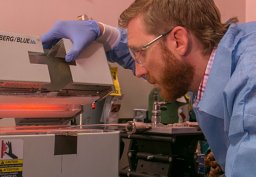 Eric R. Meshot合作论文数Mechanosynthesis Group, University of Michigan12Qiong Wang合作论文数11
 Kaihao Zhang合作论文数Univ Illinois, Mech Sci & Engn, Urbana, IL 61801 USA11
 Ali Kanj合作论文数University of Illinois at Urbana-Champaign11
 Mostafa Bedewy合作论文数11
 Chongan Wang合作论文数Department of Mechanical Science and Engineering, University of Illinois9
 Davis J. McGregor合作论文数Department of Mechanical Science and Engineering, University of Illinois Urbana-Champaign9
 Copic Davor合作论文数Department of Mechanical Engineering, University of Michigan9
 Mitisha Surana合作论文数Dept Mat Sci & Engn, Univ Illinois7Jonathan Bunyan合作论文数Dept Mech Sci & Engn, Univ Illinois7
 Jeff Baur合作论文数Department of Aerospace Engineering, The Grainger College of Engineering, University of Illinois at Urbana-Champaign7
 Philippe Geubelle合作论文数Department of Aerospace Engineering, The Grainger College of Engineering, University of Illinois Urbana-Champaign7Michael Zakoworotny合作论文数6
 Alireza Mojahed合作论文数Department of Mechanical Engineering, Massachusetts Institute of Technology6
 Kim Seong Y合作论文数6
 Eric Verploegen合作论文数Dept Mat Sci & Engn, MIT6K. Anne Juggernauth合作论文数6
 Gaurav Bahl合作论文数Department of Electrical & Computer Engineering, The Grainger College of Engineering, University of Illinois at Urbana-Champaign;Department of Physics, University of Illinois at Urbana-Champaign;Illinois Quantum Information Science and Technology Center, University of Illinois at Urbana-Champaign6
 Nancy R Sottos合作论文数Department of Materials Science and Engineering, The Grainger College of Engineering, University of Illinois at Urbana-Champaign6Miles Bimrose合作论文数5Ryan Siu合作论文数5
 Yuzhe Wang合作论文数Department of Mechanical Engineering, National University of Singapore, Singapore5
 Yongyi Zhang (张永毅)合作论文数Suzhou Institute of Nano-Tech and Nano-Bionics, Chinese Academy of Sciences5Polsen Erik S合作论文数5
 Chenhui Shao合作论文数Department of Mechanical Science and Engineering, The Grainger College of Engineering, University of Illinois at Urbana-Champaign5
 Matthew Maschmann合作论文数School of Mechanical Engineering, Purdue University5
 Randy H. Ewoldt合作论文数Department of Mechanical Science and Engineering, The Grainger College of Engineering, University of Illinois at Urbana-Champaign5Jiheng Jing合作论文数4Alexander Pagano合作论文数University of Illinois at Urbana-Champaign4Jonghyun Ha合作论文数4
 Aimy Wissa合作论文数The Department of Mechanical and Aerospace Engineering, Princeton University4Zhao Zhouzhou合作论文数4
 Jeffrey S. Moore合作论文数The Moore Lab, Beckman Institute for Advanced Science and Technology, Department of Chemistry, College of Liberal Arts & Sciences, University of Illinois Urbana-Champaign;Department of Materials Science and Engineering, The Grainger College of Engineering, University of Illinois Urbana-Champaign4Shoultz Anna Brieland合作论文数4
 Michael J. Leamy合作论文数George W. Woodruff School of Mechanical Engineering, Georgia Institute of Technology4
 Mingchao Liu (刘明超)合作论文数Department of Mechanical Engineering, School of Engineering, University of Birmingham4
 Daniel O. Vidaud合作论文数Mechanosynthesis Group, University of Michigan4
 Ray Baughman合作论文数Alan G. MacDiarmid NanoTech Institute, School of Natural Sciences and Mathematics, The University of Texas at Dallas4
 Harley T Johnson合作论文数Department of Mechanical Science and Engineering, The Grainger College of Engineering, University of Illinois at Urbana-Champaign4
 Hyeongkeun Kim合作论文数Elect Mat & Device Res Ctr, Korea Elect Technol Inst4
 Dominic Vella合作论文数Mathematical Institute, University of Oxford;Lincoln College, University of Oxford4Francisco Javier Balta Bonner合作论文数3Tongxi Yan合作论文数3Matthew Poss合作论文数3




