Structure-from-Motion (SfM) is a cornerstone of 3D perception, yet current methods often fail when applied to complex videos involving challenging camera motions or dynamic scenes.Compounding the problem, the field lacks reliable ground-truth benchmarks for such difficult scenarios, making it hard to gauge real-world progress, or pinpoint where improvements are most needed.To address this gap, we introduce a new benchmark for evaluating camera pose estimation.Our key insight is to leverage online panoramic 360° as a source of data from which to construct challenging clips, while still enabling robust ground-truth trajectory recovery.The panoramic nature of these videos provides richer visual context for tracking camera motion, even when parts of the view are affected by blur, motion, or dynamic objects.By tracking camera motion across full 360° videos, we crop and reproject selected portions to generate perspective-view clips that serve as our benchmark---ORBIT---a diverse collection of 100 video clips.Experiments show that COLMAP and other state-of-the-art SfM methods struggle to accurately estimate camera positions on our benchmark, indicating that it remains a challenging and open problem space for future research.As a result, ORBIT provides a valuable testbed where researchers can meaningfully compete and measure progress on truly challenging, real-world SfM problems.
3D Gaussian Splatting (3DGS) is a promising technique for 3D reconstruction, offering efficient training and rendering speeds, making it suitable for real-time applications.However, current methods require highly controlled environments (no moving people or wind-blown elements, and consistent lighting) to meet the inter-view consistency assumption of 3DGS. This makes reconstruction of real-world captures problematic. We present SpotlessSplats, an approach that leverages pre-trained and general-purpose features coupled with robust optimization to effectively ignore transient distractors. Our method achieves state-of-the-art reconstruction quality both visually and quantitatively, on casual captures.
In this thesis we discuss architectural designs and training methods for a neural network to have the ability of dissecting an image into objects of interest without supervision. The main challenge in 2D unsupervised object segmentation is distinguishing between foreground objects of interest and background. FlowCapsules uses motion as a cue for the objects of interest in 2D scenarios. The last part of this thesis focuses on 3D applications where the goal is detecting and removal of the object of interest from the input images. In these tasks, we leverage the geometric consistency of scenes in 3D to detect the inconsistent dynamic objects. Our transient object masks are then used for designing robust optimization kernels to improve 3D modelling in a casual capture setup. One of our goals in this thesis is to show the merits of unsupervised object based approaches in computer vision. Furthermore, we suggest possible directions for defining objects of interest or foreground objects without requiring supervision. Our hope is to motivate and excite the community into further exploring explicit object representations in image understanding tasks.
There has been extensive progress in the reconstruction and generation of 4D scenes from monocular casually-captured video. While these tasks rely heavily on known camera poses, the problem of finding such poses using structure-from-motion (SfM) often depends on robustly separating static from dynamic parts of a video. The lack of a robust solution to this problem limits the performance of SfM camera-calibration pipelines. We propose a novel approach to video-based motion segmentation to identify the components of a scene that are moving w.r.t. a fixed world frame. Our simple but effective iterative method, RoMo, combines optical flow and epipolar cues with a pre-trained video segmentation model. It outperforms unsupervised baselines for motion segmentation as well as supervised baselines trained from synthetic data. More importantly, the combination of an off-the-shelf SfM pipeline with our segmentation masks establishes a new state-of-the-art on camera calibration for scenes with dynamic content, outperforming existing methods by a substantial margin.
Neural radiance fields (NeRF) excel at synthesizing new views given multi-view, calibrated images of a static scene. When scenes include distractors, which are not persistent during image capture (moving objects, lighting variations, shadows), artifacts appear as view-dependent effects or 'floaters'. To cope with distractors, we advocate a form of robust estimation for NeRF training, modeling distractors in training data as outliers of an optimization problem. Our method successfully removes outliers from a scene and improves upon our baselines, on synthetic and real-world scenes. Our technique is simple to incorporate in modern NeRF frameworks, with few hyper-parameters. It does not assume a priori knowledge of the types of distractors, and is instead focused on the optimization problem rather than pre-processing or modeling transient objects. More results at https://robustnerf.github.io/public.
We introduce a technique for pairwise registration of neural fields that extends classical optimization-based local registration (i.e. ICP) to operate on Neural Radiance Fields (NeRF) -- neural 3D scene representations trained from collections of calibrated images. NeRF does not decompose illumination and color, so to make registration invariant to illumination, we introduce the concept of a ''surface field'' -- a field distilled from a pre-trained NeRF model that measures the likelihood of a point being on the surface of an object. We then cast nerf2nerf registration as a robust optimization that iteratively seeks a rigid transformation that aligns the surface fields of the two scenes. We evaluate the effectiveness of our technique by introducing a dataset of pre-trained NeRF scenes -- our synthetic scenes enable quantitative evaluations and comparisons to classical registration techniques, while our real scenes demonstrate the validity of our technique in real-world scenarios. Additional results available at: https://nerf2nerf.github.io
Data is the driving force of machine learning, with the amount and quality of training data often being more important for the performance of a system than architecture and training details. But collecting, processing and annotating real data at scale is difficult, expensive, and frequently raises additional privacy, fairness and legal concerns. Synthetic data is a powerful tool with the potential to address these shortcomings: 1) it is cheap 2) supports rich ground-truth annotations 3) offers full control over data and 4) can circumvent or mitigate problems regarding bias, privacy and licensing. Unfortunately, software tools for effective data generation are less mature than those for architecture design and training, which leads to fragmented generation efforts. To address these problems we introduce Kubric, an open-source Python framework that interfaces with PyBullet and Blender to generate photo-realistic scenes, with rich annotations, and seamlessly scales to large jobs distributed over thousands of machines, and generating TBs of data. We demonstrate the effectiveness of Kubric by presenting a series of 13 different generated datasets for tasks ranging from studying 3D NeRF models to optical flow estimation. We release Kubric, the used assets, all of the generation code, as well as the rendered datasets for reuse and modification.
Object-centric representations are a promising path toward more systematic generalization by providing flexible abstractions upon which compositional world models can be built. Recent work on simple 2D and 3D datasets has shown that models with object-centric inductive biases can learn to segment and represent meaningful objects from the statistical structure of the data alone without the need for any supervision. However, such fully-unsupervised methods still fail to scale to diverse realistic data, despite the use of increasingly complex inductive biases such as priors for the size of objects or the 3D geometry of the scene. In this paper, we instead take a weakly-supervised approach and focus on how 1) using the temporal dynamics of video data in the form of optical flow and 2) conditioning the model on simple object location cues can be used to enable segmenting and tracking objects in significantly more realistic synthetic data. We introduce a sequential extension to Slot Attention which we train to predict optical flow for realistic looking synthetic scenes and show that conditioning the initial state of this model on a small set of hints, such as center of mass of objects in the first frame, is sufficient to significantly improve instance segmentation. These benefits generalize beyond the training distribution to novel objects, novel backgrounds, and to longer video sequences. We also find that such initial-state-conditioning can be used during inference as a flexible interface to query the model for specific objects or parts of objects, which could pave the way for a range of weakly-supervised approaches and allow more effective interaction with trained models.
The GLOM architecture proposed by Hinton [2021] is a recurrent neural network for parsing an image into a hierarchy of wholes and parts. When a part is ambiguous, GLOM assumes that the ambiguity can be resolved by allowing the part to make multi-modal predictions for the pose and identity of the whole to which it belongs and then using attention to similar predictions coming from other possibly ambiguous parts to settle on a common mode that is predicted by several different parts. In this study, we describe a highly simplified version of GLOM that allows us to assess the effectiveness of this way of dealing with ambiguity. Our results show that, with supervised training, GLOM is able to successfully form islands of very similar embedding vectors for all of the locations occupied by the same object and it is also robust to strong noise injections in the input and to out-of-distribution input transformations.
We propose a self-supervised capsule architecture for 3D point clouds. We compute capsule decompositions of objects through permutation-equivariant attention, and self-supervise the process by training with pairs of randomly rotated objects. Our key idea is to aggregate the attention masks into semantic keypoints, and use these to supervise a decomposition that satisfies the capsule invariance/equivariance properties. This not only enables the training of a semantically consistent decomposition, but also allows us to learn a canonicalization operation that enables object-centric reasoning. To train our neural network we require neither classification labels nor manually-aligned training datasets. Yet, by learning an object-centric representation in a self-supervised manner, our method outperforms the state-of-the-art on 3D point cloud reconstruction, canonicalization, and unsupervised classification.
Capsule networks aim to parse images into a hierarchy of objects, parts and relations. While promising, they remain limited by an inability to learn effective low level part descriptions. To address this issue we propose a way to learn primary capsule encoders that detect atomic parts from a single image. During training we exploit motion as a powerful perceptual cue for part definition, with an expressive decoder for part generation within a layered image model with occlusion. Experiments demonstrate robust part discovery in the presence of multiple objects, cluttered backgrounds, and occlusion. The part decoder infers the underlying shape masks, effectively filling in occluded regions of the detected shapes. We evaluate FlowCapsules on unsupervised part segmentation and unsupervised image classification.
Adversarial examples raise questions about whether neural network models are sensitive to the same visual features as humans. In this paper, we first detect adversarial examples or otherwise corrupted images based on a class-conditional reconstruction of the input. To specifically attack our detection mechanism, we propose the Reconstructive Attack which seeks both to cause a misclassification and a low reconstruction error. This reconstructive attack produces undetected adversarial examples but with much smaller success rate. Among all these attacks, we find that CapsNets always perform better than convolutional networks. Then, we diagnose the adversarial examples for CapsNets and find that the success of the reconstructive attack is highly related to the visual similarity between the source and target class. Additionally, the resulting perturbations can cause the input image to appear visually more like the target class and hence become non-adversarial. This suggests that CapsNets use features that are more aligned with human perception and have the potential to address the central issue raised by adversarial examples.
Adversarial examples raise questions about whether neural network models are sensitive to the same visual features as humans. In this paper, we first detect adversarial examples or otherwise corrupted images based on a class-conditional reconstruction of the input. To specifically attack our detection mechanism, we propose the Reconstructive Attack which seeks both to cause a misclassification and a low reconstruction error. This reconstructive attack produces undetected adversarial examples but with much smaller success rate. Among all these attacks, we find that CapsNets always perform better than convolutional networks. Then, we diagnose the adversarial examples for CapsNets and find that the success of the reconstructive attack is highly related to the visual similarity between the source and target class. Additionally, the resulting perturbations can cause the input image to appear visually more like the target class and hence become non-adversarial. This suggests that CapsNets use features that are more aligned with human perception and have the potential to address the central issue raised by adversarial examples.
Lingvo is a Tensorflow framework offering a complete solution for collaborative deep learning research, with a particular focus towards sequence-to-sequence models. Lingvo models are composed of modular building blocks that are flexible and easily extensible, and experiment configurations are centralized and highly customizable. Distributed training and quantized inference are supported directly within the framework, and it contains existing implementations of a large number of utilities, helper functions, and the newest research ideas. Lingvo has been used in collaboration by dozens of researchers in more than 20 papers over the last two years. This document outlines the underlying design of Lingvo and serves as an introduction to the various pieces of the framework, while also offering examples of advanced features that showcase the capabilities of the framework.
Adversarial examples raise questions about whether neural network models are sensitive to the same visual features as humans. In this paper, we first detect adversarial examples or otherwise corrupted images based on a class-conditional reconstruction of the input. To specifically attack our detection mechanism, we propose the Reconstructive Attack which seeks both to cause a misclassification and a low reconstruction error. This reconstructive attack produces undetected adversarial examples but with much smaller success rate. Among all these attacks, we find that CapsNets always perform better than convolutional networks. Then, we diagnose the adversarial examples for CapsNets and find that the success of the reconstructive attack was proportional to the visual similarity between the source and target class. Additionally, the resulting perturbations can cause the input image to appear visually more like the target class and hence become nonadversarial. These suggest that CapsNets use features that are more aligned with human perception and address the central issue raised by adversarial examples.
We present Optimal Completion Distillation (OCD), a training procedure for optimizing sequence to sequence models based on edit distance. OCD is efficient, has no hyper-parameters of its own, and does not require pretraining or joint optimization with conditional log-likelihood. Given a partial sequence generated by the model, we first identify the set of optimal suffixes that minimize the total edit distance, using an efficient dynamic programming algorithm. Then, for each position of the generated sequence, we use a target distribution that puts equal probability on the first token of all the optimal suffixes. OCD achieves the state-of-the-art performance on end-to-end speech recognition, on both Wall Street Journal and Librispeech datasets, achieving $9.3\%$ WER and $4.5\%$ WER respectively.
Objects are composed of a set of geometrically organized parts. We introduce an unsupervised capsule autoencoder (SCAE), which explicitly uses geometric relationships between parts to reason about objects. Since these relationships do not depend on the viewpoint, our model is robust to viewpoint changes. SCAE consists of two stages. In the first stage, the model predicts presences and poses of part templates directly from the image and tries to reconstruct the image by appropriately arranging the templates. In the second stage, SCAE predicts parameters of a few object capsules, which are then used to reconstruct part poses. Inference in this model is amortized and performed by off-the-shelf neural encoders, unlike in previous capsule networks. We find that object capsule presences are highly informative of the object class, which leads to state-of-the-art results for unsupervised classification on SVHN (55%) and MNIST (98.7%). The code is available at this https URL
We present a simple technique that allows capsule models to detect adversarial images. In addition to being trained to classify images, the capsule model is trained to reconstruct the images from the pose parameters and identity of the correct top-level capsule. Adversarial images do not look like a typical member of the predicted class and they have much larger reconstruction errors when the reconstruction is produced from the top-level capsule for that class. We show that setting a threshold on the $l2$ distance between the input image and its reconstruction from the winning capsule is very effective at detecting adversarial images for three different datasets. The same technique works quite well for CNNs that have been trained to reconstruct the image from all or part of the last hidden layer before the softmax. We then explore a stronger, white-box attack that takes the reconstruction error into account. This attack is able to fool our detection technique but in order to make the model change its prediction to another class, the attack must typically make the "adversarial" image resemble images of the other class.
A capsule is a group of neurons whose outputs represent different properties of the same entity. Each layer in a capsule network contains many capsules. We describe a version of capsules in which each capsule has a logistic unit to represent the presence of an entity and a 4x4 matrix which could learn to represent the relationship between that entity and the viewer (the pose). A capsule in one layer votes for the pose matrix of many different capsules in the layer above by multiplying its own pose matrix by trainable viewpoint-invariant transformation matrices that could learn to represent part-whole relationships. Each of these votes is weighted by an assignment coefficient. These coefficients are iteratively updated for each image using the Expectation-Maximization algorithm such that the output of each capsule is routed to a capsule in the layer above that receives a cluster of similar votes. The transformation matrices are trained discriminatively by backpropagating through the unrolled iterations of EM between each pair of adjacent capsule layers. On the smallNORB benchmark, capsules reduce the number of test errors by 45\% compared to the state-of-the-art. Capsules also show far more resistance to white box adversarial attacks than our baseline convolutional neural network.
 Geoffrey E. Hinton合作论文数Department of Computer Science, University of Toronto;Vector Institute9
 Andrea Tagliasacchi合作论文数Google Brain;School of Computing Science, Simon Fraser University8
 David J. Fleet合作论文数Department of Computer Science, University of Toronto;Department of Computer and Mathematical Sciences, University of Toronto Scarborough;Google Research;Vector Institute for Artificial Intelligence7
 Nick Frosst合作论文数Cohere5
 Colin Raffel合作论文数Department of Computer Science, University of Toronto;Vector Institute;Hugging Face3
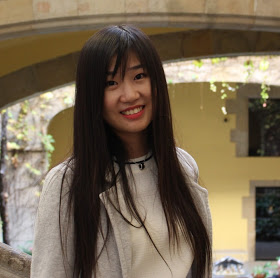 Yao Qin合作论文数Department of Electrical and Computer Engineering, University of California Santa Barbara;Google3
 Dmitry Lagun合作论文数Google3
 Daniel Rebain合作论文数Computer Vision Group, Computer Vision and Robotics Lab, University of British Columbia2
 Saurabh Saxena合作论文数Google Deepmind2
 Thomas Kipf合作论文数Google DeepMind2
 Lily Goli合作论文数2Suhani Vora合作论文数Google Research2
 Austin C Stone合作论文数Google DeepMind2
 William Chan (陳俊樂)合作论文数Ideogram AI2
 Adam Kosiorek合作论文数Google DeepMind2
 Mark Matthews合作论文数Computer Science, of;University of Calgary;Computer Science, University of Calgary2
 Kwang Moo Yi合作论文数Department of Computer Science, Faculty of Science, University of British Columbia2
 Soroosh Yazdani合作论文数Google2
 Klaus Greff合作论文数Swiss AI Lab, IDSIA2
 Alec Jacobson合作论文数Department of Computer Science, University of Toronto;Department of Mathematics, University of Toronto;Adobe Research;Vector Institute2
 Deqing Sun合作论文数Google2
 Garrison W. Cottrell合作论文数Computer Science & Engineering Department, University of California, San Diego2
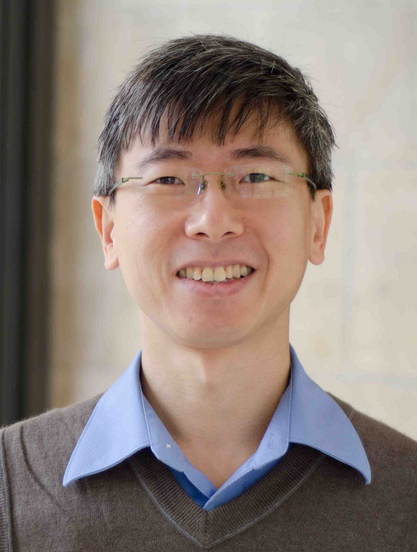 Yee Whye Teh合作论文数Department of Statistics, University of Oxford;Google DeepMind2
 Daniel Duckworth合作论文数Google Research2Ivan Krasin合作论文数1Tianhao Wu合作论文数1Pat Rondon合作论文数1
 Benoit Jacob合作论文数AMD1Naveen Ari合作论文数1Laura Culp合作论文数1
 Georg Heigold合作论文数Google1Benjamin Lee合作论文数Google1Maxim Krikun合作论文数Google1Fangcheng Zhong合作论文数1
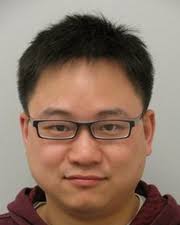 Zhifeng Chen合作论文数Apple1
 George Kopanas合作论文数Google DeepMind1Ben Vanik合作论文数1Stella Laurenzo合作论文数1
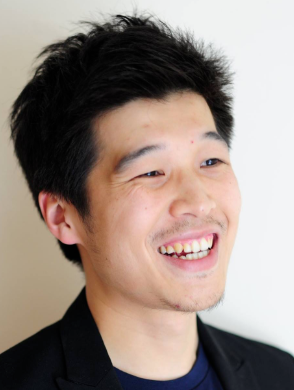 Wei-Ning Hsu (徐煒甯)合作论文数Meta1
 Kuan-Chieh (Jackson) Wang (王冠傑)合作论文数Snap Inc.1Bowen Liang合作论文数1Dan Gnanapragasam合作论文数1
 Ron Weiss合作论文数Google1
 Gamaleldin F. Elsayed合作论文数1James Qin合作论文数Google1Deepti Bhatia合作论文数Google Inc, Mountain View, CA 94043 USA1
 Etienne Pot合作论文数Google1
 Florian Golemo合作论文数Mila1