BACKGROUND:Current sequencing technology makes it practical to sequence many samples of a given organism, raising new challenges for the processing and interpretation of large genomics data sets with associated metadata. Traditional computational phylogenetic methods are ideal for studying the evolution of gene/protein families and using those to infer the evolution of an organism, but are less than ideal for the study of the whole organism mainly due to the presence of insertions/deletions/rearrangements. These methods provide the researcher with the ability to group a set of samples into distinct genotypic groups based on sequence similarity, which can then be associated with metadata, such as host information, pathogenicity, and time or location of occurrence. Genotyping is critical to understanding, at a genomic level, the origin and spread of infectious diseases. Increasingly, genotyping is coming into use for disease surveillance activities, as well as for microbial forensics. The classic genotyping approach has been based on phylogenetic analysis, starting with a multiple sequence alignment. Genotypes are then established by expert examination of phylogenetic trees. However, these traditional single-processor methods are suboptimal for rapidly growing sequence datasets being generated by next-generation DNA sequencing machines, because they increase in computational complexity quickly with the number of sequences.RESULTS:Nephele is a suite of tools that uses the complete composition vector algorithm to represent each sequence in the dataset as a vector derived from its constituent k-mers by passing the need for multiple sequence alignment, and affinity propagation clustering to group the sequences into genotypes based on a distance measure over the vectors. Our methods produce results that correlate well with expert-defined clades or genotypes, at a fraction of the computational cost of traditional phylogenetic methods run on traditional hardware. Nephele can use the open-source Hadoop implementation of MapReduce to parallelize execution using multiple compute nodes. We were able to generate a neighbour-joined tree of over 10,000 16S samples in less than 2 hours.CONCLUSIONS:We conclude that using Nephele can substantially decrease the processing time required for generating genotype trees of tens to hundreds of organisms at genome scale sequence coverage.
SpatialML is an annotation scheme for marking up references to places in natural language. It covers both named and nominal references to places, grounding them where possible with geo-coordinates, and characterizes relationships among places in terms of a region calculus. A freely available annotation editor has been developed for SpatialML, along with several annotated corpora. Inter-annotator agreement on SpatialML extents is 91.3 F-measure on a corpus of SpatialML-annotated ACE documents released by the Linguistic Data Consortium. Disambiguation agreement on geo-coordinates on ACE is 87.93 F-measure. An automatic tagger for SpatialML extents scores 86.9 F on ACE, while a disambiguator scores 93.0 F on it. Results are also presented for two other corpora. In adapting the extent tagger to new domains, merging the training data from the ACE corpus with annotated data in the new domain provides the best performance.
We present the results of the BioCreative II.5 evaluation in association with the FEBS Letters experiment, where authors created Structured Digital Abstracts to capture information about protein-protein interactions. The BioCreative II.5 challenge evaluated automatic annotations from 15 text mining teams based on a gold standard created by reconciling annotations from curators, authors, and automated systems. The tasks were to rank articles for curation based on curatable protein-protein interactions; to identify the interacting proteins (using UniProt identifiers) in the positive articles (61); and to identify interacting protein pairs. There were 595 full-text articles in the evaluation test set, including those both with and without curatable protein interactions. The principal evaluation metrics were the interpolated area under the precision/recall curve (AUC iP/R), and (balanced) F-measure. For article classification, the best AUC iP/R was 0.70; for interacting proteins, the best system achieved good macroaveraged recall (0.73) and interpolated area under the precision/recall curve (0.58), after filtering incorrect species and mapping homonymous orthologs; for interacting protein pairs, the top (filtered, mapped) recall was 0.42 and AUC iP/R was 0.29. Ensemble systems improved performance for the interacting protein task.
There is an urgent need to capture metadata on the rapidly growing number of genomic, metagenomic and related sequences, such as 16S ribosomal genes. This need is a major focus within the Genomic Standards Consortium (GSC), and Habitat is a key metadata descriptor in the proposed “Minimum Information about a Genome Sequence” (MIGS) specification. The goal of the work described here is to provide a light-weight, easy-to-use (small) set of terms (“Habitat-Lite”) that captures high-level information about habitat while preserving a mapping to the recently launched Environment Ontology (EnvO). Our motivation for building Habitat-Lite is to meet the needs of multiple users, such as annotators curating these data, database providers hosting the data, and biologists and bioinformaticians alike who need to search and employ such data in comparative analyses. Here, we report a case study based on semiautomated identification of terms from GenBank and GOLD. We estimate that the terms in the initial version of Habitat-Lite would provide useful labels for over 60% of the kinds of information found in the GenBank isolation_source field, and around 85% of the terms in the GOLD habitat field. We present a revised version of Habitat-Lite defined within the EnvO Environmental Ontology through a new category, EnvO-Lite-GSC. We invite the community's feedback on its further development to provide a minimum list of terms to capture high-level habitat information and to provide classification bins needed for future studies.
We attack each task through a combination of statistical and linguistic approaches. The proposed statistical approaches extend existing methods in IR by performing computations within the context of another query or document. The proposed linguistic approaches build on existing work in information extraction and rely on a new technique for trainable partial parsing. In short, our integrated approach uses both statistical and linguistic sources to identify selected relationships among important terms in a query or text.
OBJECTIVE:This paper describes a successful approach to de-identification that was developed to participate in a recent AMIA-sponsored challenge evaluation.METHOD:Our approach focused on rapid adaptation of existing toolkits for named entity recognition using two existing toolkits, Carafe and LingPipe.RESULTS:The "out of the box" Carafe system achieved a very good score (phrase F-measure of 0.9664) with only four hours of work to adapt it to the de-identification task. With further tuning, we were able to reduce the token-level error term by over 36% through task-specific feature engineering and the introduction of a lexicon, achieving a phrase F-measure of 0.9736.CONCLUSIONS:We were able to achieve good performance on the de-identification task by the rapid retargeting of existing toolkits. For the Carafe system, we developed a method for tuning the balance of recall vs. precision, as well as a confidence score that correlated well with the measured F-score.
One of the new WordNet features to be found in version 2.1 is the instance relation, which replaces the hypernym relation for noun synsets that denote instances rather than types (Miller and Hristea, forthcoming). The creation of this distinction serendipitously coincided with project work at SPAWAR Systems Center (SSC) and the MITRE Corporation to produce a tailored gazetteer database of place names for use in research on question answering by participants in a U.S. government-sponsored research program (Irie and Sundheim 2004). The millions of place names contained in this database, called the Integrated Gazetteer Database (IGDB) (Mardis and Burger), are drawn from publicly available sources provided by the National Geospatial-Intelligence Agency, the U.S. Geological Survey, the CIA World Factbook, and the Tipster Text research program. The IGDB project includes a task that is being carried out in collaboration with Princeton University to incorporate the instance synsets that define places into the database as an additional source of gazetteer information.
As part of MITRE's work under the DARPA TIDES (Translingual Information Detection, Extraction and Summarization) program, we are preparing a series of demonstrations to showcase the TIDES Integrated Feasibility Experiment on Bio-Security (IFE-Bio). The current demonstration illustrates some of the resources that can be made available to analysts tasked with monitoring infectious disease outbreaks and other biological threats.
Catalyst is a framework for creating and experimenting with Human Language Technology (HLT) systems. Quanda is the MITRE's entry in the question-answering track of the TREC conference
The primary goal of the Cornell/Sabir TIPSTER Phase III project is to develop techniques to improve the end-user efficiency of information retrieval (IR) systems. We have focused our investigations in four related research areas:1. High Precision Information Retrieval . The goal of our research in this area is to increase the accuracy of the set of documents given to the user.
Current research in Information Retrieval and Information Extraction demands high-precision syntactic and semantic information from natural language text. We propose a plan for developing a framework to identify, with high-precision, the linguistic relationships between pairs of words in natural language text. Related research is reviewed and preliminary results are given. In our plan we outline the linguistic identification task: a new way to evaluate NLP systems.
 Lynette Hirschman合作论文数The MITRE Corporation, Bedford, MA7
 Claire Cardie合作论文数Department of Computer Science, Cornell University;Department of Information Science, Cornell University;Ann S. Bowers College of Computing and Information Science, Cornell University3
 John D. Burger合作论文数The MITRE Corporation3
 Ben Wellner合作论文数Department of Computer Science Brandeis University3
 Janet A. Walz合作论文数2
 Morgan Alexander合作论文数School of Pharmacy, Faculty of Science, University of Nottingham2
 Martin Krallinger合作论文数Barcelona Supercomputing Center2
 Mandar Mitra合作论文数Computer Vision and Pattern Recognition Unit, Indian Statistical Institute2
 Chris Buckley合作论文数Ge Healthcare UK Limited;GE Healthcare2
 Gianni Cesareni合作论文数Molecular Genetics Laboratory, Dipartimento di Biologia, University of Rome "Tor Vergata"2
 Alfonso Valencia合作论文数Life Science Department, Barcelona Supercomputing Centre;INB Spanish National Bioinformatics Institute;IMPaCT Spanish Personalised Medicine initiative of the ISC-III2
 Inderjeet Mani合作论文数Indian Urban Data2Marc E. Colosimo合作论文数The MITRE Corporation2Alexander S. Yeh合作论文数Cisco Systems2
 Florian Leitner合作论文数Structural Computational Biology Group, Spanish National Cancer Research Centre (CNIO),2Janet Hitzeman合作论文数MITRE Corporation2
 Kiri L. Wagstaff合作论文数Oregon State University2David Pierce合作论文数Cornell University, Ithaca, NY2Beverly Nunam合作论文数1Dave Harris合作论文数1Keith Miller合作论文数1David Anderson合作论文数1Cheryl Clark合作论文数1
 James Cole合作论文数Department of Plant, Soil and Microbial Sciences, College of Agriculture & Natural Resources, Michigan State University1Marc Light合作论文数1
 Leonid Peshkin合作论文数Harvard University1John Griffith合作论文数1Victor Markowitz合作论文数1
 Eric Nyberg合作论文数School of Computer Science, Carnegie Mellon University;Language Technologies Institute, Carnegie Mellon University1Dawn Field合作论文数Center for Ecology and Hydrology, NERC1Laurie Damianos合作论文数1C. Matthew Peterson合作论文数1
 Kevin Cohen合作论文数Department of Linguistics, College of Arts and Sciences, University of Colorado Boulder1
 David A. Ferrucci合作论文数Unqork;The Center for Global Enterprise1Seamus Clancy合作论文数1Pranav Anand合作论文数1
 Luana Licata合作论文数Department of Molecular Biology, University of Rome Tor Vergata1Kristian Concepcion合作论文数1Jeff Kurtz合作论文数1
 Norman Morrison合作论文数School of Computer Science, University of Manchester1Florence Reeder合作论文数MITRE Corporation1
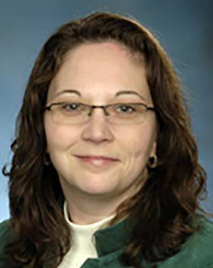 Lynn M. Schriml合作论文数Department of Epidemiology and Public Health, School of Medicine, University of Maryland;Institute of Genome Science, School of Medicine, University of Maryland1Tom Mcentee合作论文数1Lisa Ferro合作论文数1
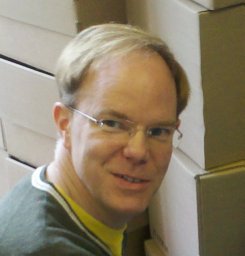 John S. Aberdeen合作论文数The MITRE Corporation1
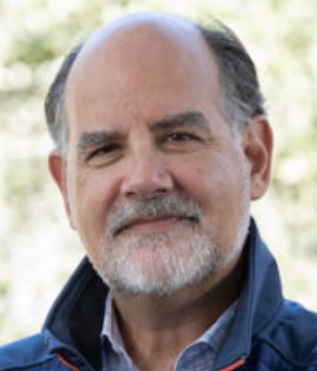 Nikos Kyrpides合作论文数Joint Genome Institute, Lawrence Berkeley National Laboratory, U.S. DOE Office of Science National Laboratory1
 David Day合作论文数Department of Human Language Technology, MITRE1Rob Quimby合作论文数1Justin Richer合作论文数1




