Weather and life cycles, fuel markets, reliability rules, scheduled and random outages, renewables and demand response programs, all constitute pieces of the electricity market puzzle. In such a complex environment, forecasting electricity prices is a very challenging task; nonetheless, it is of paramount importance for market participants and system operators. Day-ahead price forecasting is performed in the present paper using a kernel-based method. This machine learning approach offers unique advantages over existing alternatives, especially in systematically exploiting the spatio-temporal nature of locational marginal prices (LMPs), while nonlinear cause-effect relationships can be captured by carefully selected similarities. Beyond conventional time-series data, non-vectorial attributes (e.g., hour of the day, day of the week, balancing authority) are transparently utilized. The novel approach is tested on real data from the Midwest ISO (MISO) day-ahead electricity market over the summer of 2012, during which MISO's load peak record was observed. The resultant day-ahead LMP forecasts outperform price repetition and ordinary linear regression, thus offering a promising inference tool for the electricity market.
Named entities in text are persons, places, companies, etc. that are explicitly mentioned in text using proper nouns. The process of finding named entities in a text and classifying them to a semantic type, is called named entity recognition. Resolution of named entities is the process of linking a mention of a name in text to a pre-existing database entry. This grounds the mention in something analogous to a real world entity. For example, a mention of a judge named Mary Smith might be resolved to a database entry for a specific judge of a specific district of a specific state. This recognition and resolution of named entities can be leveraged in a number of ways including providing hypertext links to information stored about a particular judge: their education, who appointed them, their other case opinions, etc. This paper discusses named entity recognition and resolution in legal documents such as US case law, depositions, and pleadings and other trial documents. The types of entities include judges, attorneys, companies, jurisdictions, and courts. We outline three methods for named entity recognition, lookup, context rules, and statistical models. We then describe an actual system for finding named entities in legal text and evaluate its accuracy. Similarly, for resolution, we discuss our blocking techniques, our resolution features, and the supervised and semi-supervised machine learning techniques we employ for the final matching.
Integrating rules and statistical systems is a challenge often faced by natural language processing system builders. A common subclass is integrating high precision rules with a Markov statistical sequence classifier. In this paper we suggest that using such rules to constrain the sequence classifier decoder results in superior accuracy and efficiency. In a case study of a named entity tagging system, we provide evidence that this method of combination does prove efficient than other methods. The accuracy was the same.
This is a position paper that describes a number of use cases and their corresponding evaluation metrics. We discuss three types of resolution problems: linking entity mentions in text to records in a database, mapping records in one database to those in another database, and clustering records in a single database. The use cases arose at the Thomson Corporation and the systems developed support a number of products.
Computing precision and recall metrics for named entity tagging and resolution involves classifying text spans as true positives, false positives, or false negatives. There are many factors that make this classification complicated for real world systems. We describe an evaluation system that attempts to control this complexity through a set of rules and a forward chaining inference engine.
We present a study of the degree to which annotations overlap when several researchers read the same set of scientific articles. Our objective is to determine whether there is sufficient evidence to suggest that information about which passages initial readers tend to annotate might be used to recommend important passages to later readers of the same material. We found that readers exhibit a high degree of overlap in the passages they annotate, that these passages account for a small but significant fraction of the total document, and that such passages are distributed throughout a document rather than concentrated in the same few sections in each paper (e.g., the results section). These findings indicate that work on developing a passage recommendation model based on annotation is warranted.
The use of text mining and natural language processing can extend into the realm of knowledge acquisition and management for biomedical applications. In this paper, we describe how we implemented natural language processing and text mining techniques on the transcribed verbal descriptions from retinal experts of biomedical disease features. The feature-attribute pairs generated were then incorporated within a user interface for a collaborative ontology development tool. This tool, IDOCS, is being used in the biomedical domain to help retinal specialists reach a consensus on a common ontology for describing age-related macular degeneration (AMD). We compare the use of traditional text mining and natural language processing techniques with that of a retinal specialist's analysis and discuss how we might integrate these techniques for future biomedical ontology and user interface development.
We have built web interfaces to a number of Natural Language Processing technologies. These interfaces allow students to experiment with different inputs and view corresponding output and inner workings of the systems. When possible, the interfaces also enable the student to modify the knowledge bases of the systems and view the resulting change in behavior. Such interfaces are important because they allow students without computer science background to learn by doing. Web interfaces also sidestep issues of platform dependency in software packages, available computer lab times, etc. We discuss our basic approach and lessons learned.
Understanding the decoding algorithm for hidden Markov models is a difficult task for many students. A comprehensive understanding is difficult to gain from static state transition diagrams and tables of observation production probabilities. We have built a number of visualizations depicting a hidden Markov model for part-of-speech tagging and the operation of the Viterbi algorithm. The visualizations are designed to help students grasp the operation of the HMM. In addition, we have found that the displays are useful as debugging tools for experienced researchers.
We presented initial work on the task of automatic highlighting of bioscience literature. We discuss a small set of highlighted documents and queries, both of which were acquired from biology researchers. An automated system is presented along with a performance evaluation on the data set. A novel webdefinition-based query expansion method is introduced and it produces an encouraging performance enhancement.
Biologists read large quantities of scientific literature. Their knowledge synthesis process involves extracting tables of facts, important passages, lists of relevant elements, etc. We describe the Machete system, now in development, that can both help the biologist extract such information and capture what has been extracted. In the process, Machete provides a means of curating scientific knowledge for a community of researchers with little or no addition effort.
Molecular events are central to molecular biology. An important type of event is the interaction between proteins. PML interacts with Tif1alpha (10610177) 1 is a clause that denotes such an interaction. The written language of molecular biology contains discussions of such interactions, their precursers, their ramifications, evidence for them, etc. In the work reported on here, we focus on relations between such protein interactions and other elements. We annotated relations between such clauses and syntactic units either preceeding or following them. We focused on marking text coherency relations, using the inventory of coherency relations discussed in (Kehler, 2002). We discuss how such discourse-level information aids the automatic construction of molecular pathway representations, features of our data set, the discourse annotation exercise we performed, and ways of automating the extraction of such discourse-level information from bioscience literature. All examples in the paper are from abstracts available at the Nation Library of Medicine PubMed webpage (currently http://www.ncbi.nlm.nih.gov/PubMed/). The PubMed identifier is provided following each sentence and searching for this number as a key word will retrieve the corresponding abstract.
We explore the use of speculative language in MEDLINE abstracts. Results from a manual annotation experiment suggest that the notion of speculative sentence can be reliably annotated by humans. In addition, an experiment with automated methods also suggest that reliable automated methods might also be developed. Distributional observations are also presented as well as a discussion of possible uses for a system that can recognize speculative language.
Our system for novelty this year is a refinement of that used for last year. One of the challenges in preparing for the 2002 novelty track was the nature of the training data. Our experiments with using the 2002 evaluation data as training data for this year have shown that the novelty task can in fact be tuned to trade off precision and recall at least across the range of what a given system can detect as novel. Our tuning involved establishing a similarity threshold for sentence relevance and an new entity threshold for novelty.
People when asked a number of questions about a particular topic begin to become knowledgeable about the topic as they look for and find answers to the questions. A question answering system should also possess this ability to “reuse” information used in answering previous questions. This article defines and exemplifies a dozen categories of reuse that were found in usergenerated question sets. The corpus of question sets is also discussed.
Selectional preferences have a long history in both generative and computational linguistics. However, since the publication of Resnik’s dissertation in 1993, a new approach has surfaced in the computational linguistics community. This new line of research combines knowledge represented in a pre-defined semantic class hierarchy with statistical tools including information theory, statistical modeling, and Bayesian inference. These tools are used to learn selectional preferences from examples in a corpus. Instead of simple sets of semantic classes, selectional preferences are viewed as probability distributions over various entities. We survey research that extends Resnik’s initial work, discuss the strengths and weaknesses of each approach, and show how they together form a cohesive line of research.
Ask questions, get personalized answers.
In this paper we analyze two question answering tasks: the TREC-8 question answering task and a set of reading comprehension exams. First, we show that Q/A systems perform better when there are multiple answer opportunities per question. Next, we analyze common approaches to two subproblems: term overlap for answer sentence identification, and answer typing for short answer extraction. We present general tools for analyzing the strengths and limitations of techniques for these sub-problems. Our results quantify the limitations of both term overlap and answer typing to distinguish between competing answer candidates.
Catalyst is a framework for creating and experimenting with Human Language Technology (HLT) systems. Quanda is the MITRE's entry in the question-answering track of the TREC conference
 Eric Breck合作论文数Google, Inc.8
 John D. Burger合作论文数The MITRE Corporation6
 Shannon Bradshaw合作论文数Department of Computer Science;Intelligent Information Laboratory5
 Harsha Veeramachaneni合作论文数Applied Mathematics Group, NextEra Analytics Inc.;WindLogics4
 Ellen Riloff合作论文数Department of Computer Science, University of Arizona3
 Inderjeet Mani合作论文数Indian Urban Data3
 Lenhart K. Schubert合作论文数Department of Computer Science, Hajim School of Engineering & Applied Sciences, University of Rochester3
 Lisa Ferro合作论文数3
 Christopher Dozier合作论文数Thomson Legal and Regulatory3
 Gideon Mann合作论文数Millennium3Michael Thelen合作论文数2
 Wenhui Liao合作论文数2
 Massimo Poesio合作论文数School of Electronic Engineering and Computer Science, Queen Mary University of London2
 David Eichmann合作论文数School of Library and Information Science, The University of Iowa2
 David R Traum合作论文数Department of Computer Science, University of Southern California;Institute for Creative Technologies, University of Southern California2
 Mark T. Maybury合作论文数Lockheed Martin;READY Robotics;Halo.energy2
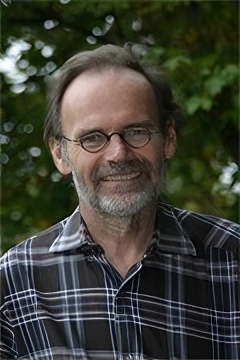 James F. Allen合作论文数Department of Computer Science, Hajim School of Engineering & Applied Sciences, University of Rochester2Ravi Kondadadi合作论文数Avalara Inc.2
 George Ferguson合作论文数Dept. of Computer Science
University of Rochester2
George Ferguson合作论文数Dept. of Computer Science
University of Rochester2 Padmini Srinivasan合作论文数Department of Computer Science, College of Liberal Arts and Sciences, University of Iowa2
 Peter Heeman合作论文数School of Medicine, Oregon Health & Science University2Warren R. Greiff合作论文数2
 Xinying Qiu (丘心颖)合作论文数School of Information Science and Technology, Guangdong University of Foreign Studies2Chung Hee Hwang合作论文数[ home | news | mission | search | submit | schools | staff | links | faq | recently ]2
 Lynette Hirschman合作论文数The MITRE Corporation, Bedford, MA2David House合作论文数KTH - Royal Institute of Technology
TMH - Department of Speech, Music and Hearing
CSC – School of Computer Science and Communication2
Lynette Hirschman合作论文数The MITRE Corporation, Bedford, MA2David House合作论文数KTH - Royal Institute of Technology
TMH - Department of Speech, Music and Hearing
CSC – School of Computer Science and Communication2 Mats Rooth合作论文数Department of Linguistics, College of Arts & Sciences, Cornell University2Terry Heinze合作论文数2
 Nathaniel Martin合作论文数1John R. Lee合作论文数1Nancy Mccracken合作论文数Syracuse University1Xin Lu合作论文数1David Anderson合作论文数1
 Morgan Alexander合作论文数School of Pharmacy, Faculty of Science, University of Nottingham1Tsuneaki Kato合作论文数1George Thomas合作论文数1
 Georgios Giannakis合作论文数Department of Electrical and Computer Engineering, College of Science and Engineering, University of Minnesota1
 Frank Schilder合作论文数R&D, Thomson Corp., Eagan1
 Nazario Martín León合作论文数Departamento de Química Orgánica, Facultad de Ciencias Químicas, Universidad Complutense Madrid1Pranav Anand合作论文数1
 Bradford W Miller合作论文数University of Rochester1
 Jason D. M. Rennie合作论文数Department of Electrical Engineering and Computer Science1Abraham Ittycheriah合作论文数1Robert Arens合作论文数1Tasha R. Inniss合作论文数1Michael A. Grassi合作论文数Department of Ophthalmology & Visual Science, University of Chicago1Aditya Kumar Sehgal合作论文数Parity Computing1Andrew Latto合作论文数1Hudong Wang合作论文数1




