Submitted for the MAR17 Meeting of The American Physical Society Strong coupling between light and subwavelength microstructure of the carbon aerogels AI DU, WEI SUN, YU FENG, HONGQIANG WANG, JUN SHEN, BIN ZHOU, Tongji University — Owing to its diverse compositions and unique properties which could fill the gap between condensed and gas-state matter aerogels are now regarded as a new state of matter. Recently, we found that subwavelength microstructure obviously affect the reflectivity. The subwavelength structure of carbon aerogels was controlled by adjusting the sol-gel process and carbonizing the resorcinol-formaldehyde aerogels. A roughly positive correlation between reflectivity and density was found. Moreover, the smaller the skeleton and pore size is, the lower the reflectivity is. We got the minimum reflectance about 0.19 %. Carbon aerogels were activated using CO2 at 1000 oC to induce the micropore (<2 nm) without changing the density. The reflectivity of carbon aerogels decreased sharply after activation, indicating that the structure much smaller than wavelength could affect the light propagation. We attribute this behavior to the indirect electromagneticelectronmicrostructure interaction. The mean free path λ of the electrons strongly decreases when the conductor is smaller than λ, leading to an extra absorption besides considering the Joule’s effect In addition we induced nanostructured metal to increase the hot electron loss, to further reduce the reflectivity. Ai Du Tongji University Date submitted: 11 Nov 2016 Electronic form version 1.4
Fe24+xCO24-x,Cr15Mo14C15B6Y2 (x=0, 2, 4, 6, 8, at%) bulk amorphous alloys were prepared by a non-consumable arc-melting furnace. The thermal expansion coefficient and thermal conductivity of the amorphous alloy were tested by thermal expansion test instrument and laser indeed thermal conductivity tester, respectively, and the results were compared with the differential scanning calorimetry (DSC) curves and XRD patterns. Linear thermal expansion behavior with the temperature change of FeCo-based amorphous alloys with different Co contents and the effect of different Co element contents and different organizations on thermal conductivity of FeCo-base amorphous alloy were investigated. The results show that with the decrease of Co content, FeCo-base amorphous alloys have two crystallization processes, and the initial and the secondary crystallization temperature increase in turn. Thermal expansion coefficient of Fe24CO24Cr15Mo14C15B6Y2 has the third maximum point around 875 degrees C. At 25 degrees C, thermal conductivity of the Fe24+xCO24-x,Cr15Mo14C15B6Y2 (x=0, 2, 4, 6, 8) iron cobalt base amorphous alloy is between 7.12 similar to 7.35 W/(m.K.), while thermal conductivity of the Fe24+xCO24-x,Cr15Mo14C15B6Y2 (x=0, 2, 4, 6, 8) iron cobalt base amorphous alloys treated at 700 degrees C ranges from 7.5 to 9.46 W/(m.K). However, the thermal conductivity of Fe24+xCO24-x,Cr15Mo14C15B6Y2 (x=0, 2, 4, 6, 8) iron cobalt base amorphous alloys treated at 920 degrees C has a maximum value when x is up to 2 at%.
The first-principles calculation had been adopted to investigate the intrinsic vacancies in bulk PbTiO3. The atomic relaxation and the formation energy of isolated neutral vacancy were studied respectively. And the defect reaction energies of Pb partial Schottky (VPb2-+VO2+), Ti partial Schottky (VTi4-+2VO2+), and full Schottky (VPb2-+ VTi4-+3VO2+), were obtained. It was found that both the formation energy of vacancy and the defect reaction energy were connected closely with the thermodynamic condition. By comparing the calculated formation energy values, Pb partial Schottky (VPb2-+VO2+) was considered to be the dominant defect species in the seven thermodynamic conditions, consistent with the experimental reports.
Co–BaTiO3 epitaxial films were successfully deposited on (001) SrTiO3 substrates using the laser molecular beam epitaxy deposition. The growth behaviors were well controlled and monitored in situ by reflection high energy electron diffraction. Both the ex situ characterizations with high resolution transmission electron microscopy and X-ray dispersive analysis revealed that the Co nanocrystals in the face-center cubic structure dispersed well in the single BaTiO3 matrix. Our controllable process might provide an efficient way to engineer Co–BaTiO3 nanocomposite films with desired qualities.
The Rayleigh scattering method is widely adopted in measuring cluster size.In general,it is considered that the intensity of scattering corresponds to the cluster size directly.However,this paper deduces that the intensity is not only related to cluster size,but also to gas density and binding probability.It suggests that gas density should be taken into account in analyzing the measurement results of Rayleigh scattering method.Furthermore,the method is applied in measuring the size distribution of argon cluster along the axis of nozzle.It is found that the cluster size doesn't vary linearly along the nozzle axis,whereas it reaches maximum at a certain position which depends on some parameters including the background pressure.
Ambient pressure dried V_2O_5 aerogels were prepared from VO(OC_3H_7)_3、acetone and H_2O by sol-gel method and solvent exchange process.The crystalstructure,crystalform structure and the aper- ture distribution of the V_2O_5 aerogels were investigated by SEM,TEM,XRD and BET.The experimental Results show that V_2O_5 ambient dried aerogels exhibited a fibrous microstructure,surface area was 138. 9 m~2/g and average pore diameter was about 15 nm.V_2O_5 aerogels were crystalline when annealed at 300℃.The electrochemical impedance spectra(EIS)with different potentials were studied by fitting EIS date to an equivalent circuit,and then some kinetics parameters were analyzed and discussed.The elec- trochemical measurements have shown that the specific capacity of V_2O_5 aerogels derived by the ambient pressure dry is 300.45mAh/g,and it can be used as a good cathode material for Lithium batteries.
This paper introduces the fabrication of the porous anodic alumina films which have ordered pore arrangement by using a two-step anodization process. The films have a parallel channel structure which nanopore diameter can be 20-100 nm, and depth can reach 50 μm. The change of pore structure in the first and second anodization, moving the alumina layer, widening process was analysed. The effect of the parameters such as different electrolytes, anodization temperature and the voltage on the nanopore structure was studied. The surface and profile structure through FE-SEM (field emission scanning electron microscopy), the element composition in tiny area of the anodic aluminum oxide (AAO) surface were studied. The result indicates the pore diameter of AAO which is anodized in oxalic acid solution is larger than which anodized in sulfuric acid solution. The anodization temperature and voltage can enlarge the nanopore diameter of AAO in a range.
With the development of large-scale high power laser system, large size shortwave-band(such as 355nm)antireflective coatings are needed. In this paper, the Sol-Gel deriving SiO2 nano-structure shortwave-band antireflective coatings were prepared. Ellipsometer, FTIR, UV-Vis-VIR spectrometer and AFM were used to characterize the properties of the films. The refractive index of the film is about 1.22, and the thickness is 75nm. The reflectance of the film(on silica substrate)at 355nm is reduced to 0.2%. The scratch-resistant property of film was improved obviously after ammonia treatment, the maximum transmission values of the film are only reoluced 0.13% and 0.39% after 20 and 50 times scratch by the tampon with dirty. After surface modification the hydrophobicity of the film is improved and the contact angle is about 110°.
Sol-gel process is one of the simplest techniques to manufacture thin films. The quality of the prepared films depends on the parameters of the sol-gel process and the used technique for deposition. A great variety of the sol-gel derived films have been prepared for different applications. We present a review on the sol-gel derived coatings. The description of the process is introduced in details. Different sol-gel deposition techniques are mentioned. The optical applications of the sol-gel derived coatings are reviewed.
 Fangfang Ge (葛芳芳)合作论文数Ningbo Institute of Industrial Technology, Chinese Academy of Sciences3
 Bin Zhou (周斌)合作论文数Shanghai Key Laboratory of Special Artificial Microstructure Materials and Technology, Tongji University;School of Physics Science and Engineering, Tongji University3
 Haiping Wang合作论文数2Hongbin Wang合作论文数2
 Guangming Wu (吴广明)合作论文数School of Physics Science and Engineering, Tongji University2Xuemin Wang合作论文数2Linhong Cao合作论文数2Yongjun Ma合作论文数1Jian Wang合作论文数1Xingmei Fang合作论文数1Xinyou An合作论文数1Wei Sun合作论文数1Yiqun Xiao合作论文数1Di WU (邬镝)合作论文数1Jianhua Ma合作论文数1XIAO Kun (肖锟)合作论文数1
 Weidong Wu (吴卫东)合作论文数Laser Fusion Research Center, China Academy of Engineering Physics1Yang Dai合作论文数1Ping Yu合作论文数1Shan Wang合作论文数1
 Hongqiang Wang (王洪强)合作论文数School of Management Shanghai University1
 Dongying Hu (胡冬英)合作论文数School of Resources, Environment and Materials, Guangxi University1Zhan Xu (徐展)合作论文数1Shangjun Han (韩尚君)合作论文数1Xiaoli Wang合作论文数1Li Bai合作论文数1
 Qingjun Chen (陈庆军)合作论文数School of Materials Science and Engineering, Nanchang Hangkong University1
 Xiang Xu (徐翔)合作论文数College of Arts & Media, Tongji University1
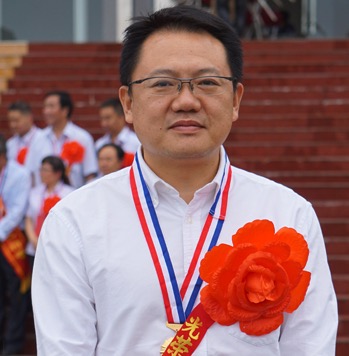 Yuqiu Gu (谷渝秋)合作论文数Laser Fusion Research Center, China Academy of Engineering Physics1
 Fan Yang (杨帆)合作论文数School of Aerospace Engineering and Applied Mechanics, Tongji University1
 Xianliang Zhou合作论文数Department of Environmental Health Sciences, College of Integrated Health Sciences, University at Albany;Department of Health, Wadsworth Center, New York State Department of Health1Wang Jue合作论文数1
 Lei Wang (王磊)合作论文数College of Physics, Sichuan University1
 S. M. Attia合作论文数1Lanfang Yao合作论文数1
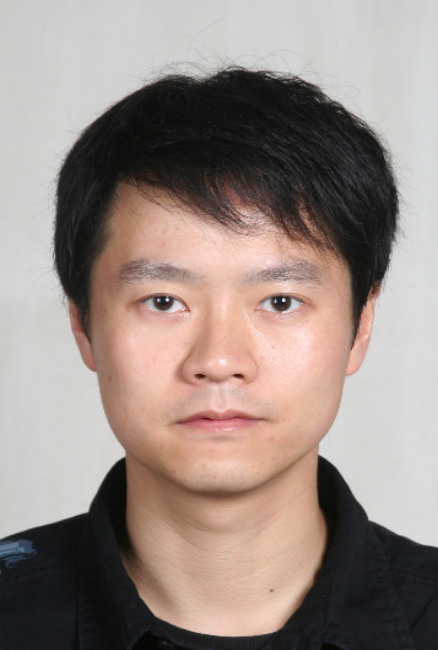 Yuchi Wu (吴玉迟)合作论文数Laser Fusion Research Center, China Academy of Engineering Physics1Xiao-Zhen Hua合作论文数1Airong Wang合作论文数1




