Ensuring medical support of patients of advanced age in rural areas is a major challenge. Moreover, the number of registered doctors—medical specialists in particular—will decrease in such areas over the next years. These unmet medical needs in combination with communication deficiencies among different types of health-care professionals pose threats to the quality of patient treatment. This work presents a novel solution combining telemedicine, telecooperation, and IHE profiles to tackle these challenges. We present a telecooperation platform that supports longitudinal electronic patient records and allows for intersectoral cooperation based on shared electronic medication charts and other documents. Furthermore, the conceived platform allows for an integration into the planned German telematics infrastructure.
Purpose The aim of the study was to assess the use of the Therapeutic Intervention Scoring System 28 (TISS 28) in surgical intensive care unit (ICU) patients and the relationship of the score to the type of surgery, seventy of illness, and outcome in these patientsMaterials and Methods Prospectively collected data from all patients admitted to a postoperative ICU between March 1 2004 and June 30 2006 were analyzed retrospectivelyResults A total of 6903 patients were admitted during the study period (63 5% male, mean age 62 3 years) constituting 29 140 observation days The mean Simplified Acute Physiology Score (SAPS) II, Sequential Organ Failure Assessment (SOFA) and TISS-28 scores on the day of ICU admission were 369 +/- 182 5 8 +/- 3 9 and 43 2 +/- 10 8 respectively The highest admission TISS 28 was observed in patients who underwent cardiothoracic surgery (47 7 +/- 10 1), the lowest in neurosurgical patients (40 +/- 9 6) and both declined during the 2 weeks after ICU admission however in trauma patients and those admitted after gastrointestinal surgery TISS scores increased gradually after the first 2 to 5 days in the ICU The TISS-28 score was moderately correlated to SAPS II (R-2 = 042, P < 001) and SOFA score (R-2 = 048, P < 001) throughout the ICU stay and was consistently higher in nonsurvivors than in survivors during the first 2 weeks in the ICUConclusions There are marked variations in TISS 28 scores according to the type of surgery Therapeutic Intervention Scoring System 28 correlates with the severity of illness and outcome in these patients (C) 2010 Elsevier Inc All rights reserved
BACKGROUND:The Simplified Acute Physiology Score (SAPS) 3 has recently been developed, but not yet validated in surgical intensive care unit (ICU) patients. We compared the performance of SAPS 3 with SAPS II and the Acute Physiology and Chronic Health Evaluation (APACHE) II score in surgical ICU patients.METHODS:Prospectively collected data from all patients admitted to a German university hospital postoperative ICU between August 2004 and December 2005 were analysed. The probability of ICU mortality was calculated for SAPS II, APACHE II, adjusted APACHE II (adj-APACHE II), SAPS 3, and SAPS 3 customized for Europe [C-SAPS3 (Eu)] using standard formulas. To improve calibration of the prognostic models, a first-level customization was performed, using logistic regression on the original scores, and the corresponding probability of ICU death was calculated for the customized scores (C-SAPS II, C-SAPS 3, and C-APACHE II).RESULTS:The study included 1851 patients. Hospital mortality was 9%. Hosmer and Lemeshow statistics showed poor calibration for SAPS II, APACHE II, adj-APACHE II, SAPS 3, and C-SAPS 3 (Eu), but good calibration for C-SAPS II, C-APACHE II, and C-SAPS 3. Discrimination was generally good for all models [area under the receiver operating characteristic curve ranged from 0.78 (C-APACHE II) to 0.89 (C-SAPS 3)]. The C-SAPS 3 score appeared to have the best calibration curve on visual inspection.CONCLUSIONS:In this group of surgical ICU patients, the performance of SAPS 3 was similar to that of APACHE II and SAPS II. Customization improved the calibration of all prognostic models.
The aim of this study was to assess the comparative performance of the SAPS 3 score with that of the APACHE II and SAPS II scores in surgical ICU patients.
Internal quality management is an important task for the entire interdisciplinary and interprofessional team in the intensive care unit. The enormous growth in our knowledge brought about by randomized controlled studies of different treatment strategies applied to such typical intensive care problems as, for example, sepsis therapy or the ventilation of patients with severe lung failure, require the implementation of structured internal quality management. The aim must be the introduction of these new evidence-based therapeutic concepts into daily routine. In a collaborative effort, the scientific working group Intensive Care Medicine of the German Society for Anaesthesiology and Intensive Care Medicine (DGAI) the Interdisciplinary Working Group (IAG) "Quality Assurance in Intensive Care Medicine" of the German Interdisciplinary Association for Intensive Care and Emergency Medicine (DIVI) and the German Society for Intensive Care and Emergency Medicine (DGIIN) have reviewed the possibility for the introduction of quality management. After presentation of the necessary structural and processual requirements, practice-orientated possibilities for implementation through establishment of teamwork are presented. Step by step, through the selection of the first project, the role of leadership, the stepwise implantation, and the selection of quality indicators, it is described how continuous quality management with the involvement of all those concerned can be introduced.
In recent years, great scientific progress has been achieved in intensive care medicine. This is evidenced in randomized controlled trails by a reduction of mortality and morbidity in the treatment of sepsis, in ventilation therapy, in sedation and in other forms of treatment. Despite our knowledge of these studies and their importance for patient outcome, implementation in daily routine often takes a long time. The prerequisite for prompt and successful implementation is barrier analysis and subsequent management of changes aimed at achieving agreed action by all participants.
In the area of intensive care great gains can be achieved by improvements in quality. The greatest progress will come about as soon as we begin to translate the "industrial revolution" to the field of medicine by establishing a culture of quality. There are three key points to improving the quality of medical care: 1) a scientifically-based improvement process, 2) introduction of the process at the lowest possible organizational level, and 3) reliable measurement of any changes in the results [2]. Benchmarking is desirable for many reasons: compliance with minimum standards, development of best practice or the provision of cost-effective health care. Intensive care-based mortality prediction models provide a global measure of quality and, despite their inherent deficiencies, remain the most robust and useful clinical indicators [4]. The Thuringian intensive care register is based on an anonymized minimal standard data set and aims to assess ICUs by means of the Simplified Acute Physiology Score 11 for the severity of illness, and the TISS-28 for the quality of care provided. The register allows individual ICUs to compare themselves with the consortium based on the SAPS-II standardized mortality-ratio model. ICU benchmarking on the internet: In 2005 the Thuringian Medical Council had put its intensive care benchmarking process on the internet to enable members to access data immediately. This article describes the structure of the Thuringian benchmarking process and how it can fit into the DGAI "dual concept quality initiative".
In the future patients and referring physicians will, more and more, choose the most suitable hospital for treatment, on the basis of quality indicator benchmarks. Changing values in society have led to a decline in public confidence in the reliability of medical care. In the year 2004 political decisions put responsibility for external quality assurance in the hands of the German National Institute for Quality Control in Health Care (Bundesgeschaftsstelle Qualitatssicherung (BQS)). A current proposal by the scientific working group Intensive Care Medicine (WAKIM) of the DGAI would lead, via benchmarking of intensive care medicine, to a certification of intensive care units, and thus further expand quality assurance in intensive care medicine. The dual system, which comprises one arm that collects such data as SAPS 11 and length of hospitalisation, and a second that establishes quality management through the setting up of regional networks, is described. The final objective envisaged are audits and the certification of intensive care units in accordance with ISO.
BACKGROUND:Because few studies have addressed postoperative hypoalbuminaemia in relation to hospital mortality, we evaluated this association and the prognostic value of increased procalcitonin (PCT) after cardiopulmonary bypass (CPB) surgery. METHODS:In 454 consecutive patients undergoing CPB, minimal serum albumin, colloid osmotic pressure (COP) and maximal PCT were retrospectively obtained from the 2nd to 10th postoperative day. Receiver operating characteristic (ROC) and multiple regression analyses determined independent predictive strength for 28-day mortality from preoperative albumin, Euroscore, postoperative minimal albumin and COP, and maximal PCT. Cut-off points for the four strongest predictors were calculated by the area under the curve (AUC) in the ROC for the 28-day mortality. RESULTS:Maximal PCT showed the largest AUC (0.85; 95% CI 0.79-0.90) and the highest relative risk (RR 12.17; 95%CI 5.26-28.16; P < 0.001), compared with postoperative albumin (AUC 0.72; 95% CI 0.62-0.81; RR 5.35; 95%CI 2.99-9.56; P < 0.001) and EuroSCORE (AUC 0.73; 95%CI 0.63-0.83; RR 4.48; 95%CI: 1.78-11.28; P < 0.01). By logistic regression, postoperative albumin was the strongest predictor of mortality (odds ratio 0.86; 95% CI 0.84-0.89). Cut-off values for predicting 28-day mortality were found for postoperative albumin and PCT at 17.8 g l(-1) and 2.5 ng l(-1), respectively. A slight but significant inverse correlation between PCT and albumin was found. Patients with albumin less than the cut-off showed significantly higher median values for PCT levels (2.5 vs. 1.0 g l-1), a higher 28-day mortality rate (20.8% vs. 4.5%), and a longer ICU stay (6 vs. 3 days) in comparison with patients with minimal albumin greater than 18 g l(-1). CONCLUSIONS:Post-operative serum albumin <18 g l(-1) and PCT >2.5 ng l(-1) are predictive for a higher 28-day mortality rate in cardiosurgical patients. Both peak PCT and minimal albumin were better outcome predictors than the Euroscore, which better represents the preoperative condition of the patient.
Objectives: The quadratic phase-coupling QPC within burst patterns during electroencephalic burst suppression has been quantified.Methods: It can be shown that a QPC exists between the frequency ranges 0-2.5 and 3-7.5 Hz and between the frequency ranges 0-2.5 and 8-12 Hz. By means of time-variant bicoherence analysis, a strong phase-locking between the modulating and the modulated component can be identified. The phase-locking is demonstrable within the first 250 ms after the burst onset and comes up to the maximum between 750 and 1250 ms.Results: The effect is maintained over the whole first part of the burst (2 s) with a decreasing tendency after 1250 ms. All these effects cannot be found in the EEG before: entering the burst suppression period (BSP). The transient coupling phenomena in the EEG bursts during BSP can be regarded as indicators for short-term interrelations between the underlying electrophysiologic processes.Conclusions: It can be suggested that the method introduced for the quantification of the sedation depth should be used. (C) 2001 Elsevier Science Ireland Ltd. All rights reserved.
Zuerst erschienen in: Biomedizinische Technik = Biomedical Engineering. Berlin [u.a.] : de Gruyter. 46 (2001), S1, S. 316-317. Jahrestagung der Deutschen Gesellschaft für Biomedizinische Technik (DGBM) im VDE ; 35 (Bochum) : 2001.09.19-21 Erstveröffentlichung: 2001 Datum Digitalisierung: 2009-08-06 ISSN (online): 1862-278X ISSN(print) 0013-5585 DOI: 10.1515/bmte.2001.46.s1.316 [Zuletzt gesehen: 2019-12-06]
The time dynamics of the quadratic phase coupling within burst patterns during electroencephalic burst-suppression has been quantified. It can be shown that a transient quadratic phase coupling (QPC) exists between the frequency ranges 0 to 2.5 and 3 to 7.5 Hz and between the frequency ranges 0 to 2.5 and 8 to 12 Hz. The QPC can be explained by an amplitude modulation, where the slow rhythm modulates the rhythmic activities with a higher frequency. By means of time-variant bicoherence analysis, a strong phase-locking between the modulating and the modulated component can be identified. The phase-locking is demonstrable within the first 250 ms after the burst onset and comes up to the maximum between 750 and 1250 ms. The effect is maintained over the whole first part of the burst (2 s) with a decreasing tendency after 1250 ms. All these effects cannot be found in the EEG before entering the burst suppression period (BSP). The transient coupling phenomena in the EEG bursts during BSP can be regarded as indicators for short-term interrelations between the underlying electrophysiologic processes.
An automatic EEG pattern detection unit was developed and tested for the recognition of burst-suppression periods and for the separation of burst from suppression patterns. The median, standard deviation and the 95% edge frequency were computed from single channels of the EEG within a moving window and completed by the continuous computation of frequency band power via an adapted Hilbert resonance filter. These parameters were given to the inputs of two hierarchically arranged artificial neural networks (NNs). The output signals of NNs indicate the suppression and burst phases. The burst recognition was focused on the precise recognition of the burst onset. In subsequent processing steps the time course of percentages of burst patterns within their corresponding burst-suppression-phases was calculated and the time locations of burst onsets can be used to trigger an averaging for a burst-related analysis. The data for our investigations were derived from the routine EEG derivations of 12 patients with various neurosurgical diseases. A group-related training of the NNs was realized. For the group-related trained NNs EEG data for 6 patients were used for training and the data of 6 other patients for testing the classification performance of the pattern recognition units. Additionally, the reliability of the detection algorithm was tested with data of two patients with convulsive state, resistant to treatment, and burst-suppression like pattern EEG.
In this contribution, a methodology for the simultaneous adaptation of preprocessing units (PPUs) for feature extraction and of neural classifiers that can be used for time series classification is presented. The approach is based upon an extension of the backpropagation algorithm for the correction of the preprocessing parameters. In comparison with purely neural systems, the reduced input dimensionality improves the generalization capability and reduces the numerical effort. In comparison with PPUs with fixed parameters, the success of the adaptation is less sensitive to the choice of the parameters. The efficiency of the developed method is demonstrated via the use of quadratic filters with adaptable transmission bands as preprocessing units for the segmentation of two different types of discontinuous EEG: discontinuous neonatal EEG (burst-interburst segmentation) and EEG in deep stages of sedation (burst-suppression segmentation).
The EEG during basic sedation and burst patterns during electroencephalic burst-suppression patterns (BSP) were analyzed. The aim of EEG analysis was the characterization and quantification of the interrelations between distinct frequency components in both states of sedation. The data for the investigations were derived from the routine EEG derivations of 12 patients with various neurosurgical diseases. It can be demonstrated that the degree of interrelation (amplitude modulation) between a low-frequency component (0–2.5 Hz) and oscillations with higher frequency (3–7.5 and 8–12 Hz) is increased in burst patterns during BSP compared with the EEG during basic sedation. It can be concluded that the degree of interrelations depends on the sedation depth induced by hypnotic drugs.
Objective: To assess the effects of dopexamine on splanchnic blood flow and splanchnic oxygen uptake in septic patients.Design:A prospective, controlled trial.Setting: A ten-bed intensive care unit (ICU) in a university hospital.Patients: Twelve patients with severe sepsis (according to the criteria of the 1992 American College of Chest Physicians/Society of Critical Care Medicine consensus conference) being stabilized by volume loading and treated to an elevated oxygen delivery by dobutamine infusion. Interventions: Infusion of increasing dosages of dopexamine (0.5, 1.0, 2.0, and 4.0 mu g/kg/min).Measurements and Main Results: Systemic and splanchnic hemodynamic and oxygen transport parameters as well as gastric mucosal pH (pHi) were measured. A hepatic venous catheter technique with indocyanine green dye dilution was used to determine splanchnic blood flow. Dopexamine increased global and splanchnic oxygen delivery without affecting oxygen consumption ((V) over dot O-2). Splanchnic blood flow increased proportionally to cardiac output, indicating that there was no selective effect of dopexamine an the splanchnic flow, Dopexamine decreased pHi in a dose-dependent fashion in all 12 patients.Conclusions: In hemodynamically stable, hyperdynamic septic patients being treated with dobutamine, dopexamine has no selective effect on splanchnic blood flow, In fact, a decreased pHi suggests a harmful effect on gastric mucosal perfusion.
Society of Critical Care Medicine; 27th Educational and Scientific Symposium; San Antonio, Texas, USA; February 4-8, 1998: Poster Hall: Thursday, February 5, 1998 5: 45-7: 15 pm; Friday, February 6, 1998 11: 40 am-1: 00 pm; Saturday, February 7, 1998 11: 40 am-1: 00 pm: Poster Presentations: Neurology/Neurosurgery
OBJECTIVETo assess the effects of epinephrine on splanchnic perfusion and splanchnic oxygen uptake in patients with septic shock.DESIGNProspective, controlled trial.SETTINGUniversity hospital intensive care unit (ICU).PATIENTSEight patients with septic shock, according to the criteria of the 1992 American College of Chest Physicians/Society of Critical Care Medicine Consensus Conference, requiring treatment with vasopressors.INTERVENTIONSWe compared in crossover design a 2-hr infusion of epinephrine with dobutamine plus norepinephrine in eight ICU patients with septic shock. Systemic and splanchnic hemodynamics and oxygen transport were measured before and during treatment with epinephrine.MEASUREMENTS AND MAIN RESULTSThere was essentially no effect of epinephrine on the global parameters, except for increased lactate concentrations. There were marked effects on the regional variables; epinephrine caused lower splanchnic flow and oxygen uptake, lower mucosal pH, and higher hepatic vein lactate.CONCLUSIONWe conclude that undesirable splanchnic effects on patients in whom that region is particularly fragile should be considered when using epinephrine for septic shock treatment.
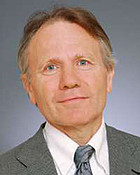 Konrad Reinhart合作论文数Jena University Hospital;Charité Universitätsmedizin Berlin27
 Lutz Hannemann合作论文数24
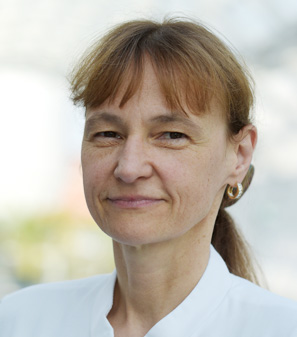 Claudia Spies合作论文数Department of Anesthesiology and Intensive Care Medicine, Charité - Universitätsmedizin Berlin20
 Andreas Meier-Hellmann合作论文数18Hans Rommelspacher合作论文数9Ch Schelenz合作论文数7Donald L Bredle合作论文数6Tim Neumann合作论文数5G Brummer合作论文数5
 Herbert Witte合作论文数5Walter Schaffartzik合作论文数5H Jäger合作论文数4S Blum合作论文数4
 Wolfgang M. Heckl合作论文数School of Education, Technische Universität München4Lutz Leistritz合作论文数4Hans Walter Striebel合作论文数4Gernot Marx合作论文数4W. Kuckelt合作论文数3
 Maximilian Ragaller合作论文数3N Dubisz合作论文数3K. Reinhart合作论文数3M. Max合作论文数3Bause Hw合作论文数3Herwig Gerlach合作论文数3Ralf Kuhlen合作论文数3Alexander Schleppers合作论文数3Barbel Schack合作论文数3
 Yasser Sakr合作论文数Department of Anaesthesiology and Intensive Care Medicine, Friedrich Schiller University Jena3
 Marko Helbig合作论文数3P Putsche合作论文数3C Marks合作论文数2H. Hassel合作论文数2Carsten Sanft合作论文数2J. Martin合作论文数2
 Florian Rissner合作论文数2Hw Striebel合作论文数2E. Muhl合作论文数2
 Alvaro Rea-Neto合作论文数Hospital de Clínicas, Federal University of Paraná2
 Andre Carlos Amaral合作论文数Sunnybrook Research Institute;Interdepartmental Division of Critical Care Department of Medicine, Temerty Faculty of Medicine, University of Toronto2U. Janssens合作论文数2
 Christian Waydhas合作论文数2
 Michael Georgieff合作论文数2Wolfram Wilhelm合作论文数2
 Jean Louis Vincent合作论文数Université Libre de Bruxelles;Department of Intensive Care, Erasmus Hospital2Karsten Schmidt合作论文数2
 Theodor W. Hänsch合作论文数Max-Planck-Institut fur Quantenoptik;Faculty of Physics Laser Spectroscopy & Quantum Physics, Ludwig-Maximilians-Universität München2




