People who are blind or have low vision regularly use their hands to interact with the physical world to gain access to objects' shape, size, weight, and texture. However, many rich visual features remain inaccessible through touch alone, making it difficult to distinguish similar objects, interpret visual affordances, and form a complete understanding of objects. In this work, we present TouchScribe, a system that augments hand-object interactions with automated live visual descriptions. We trained a custom egocentric hand interaction model to recognize both common gestures (e.g., grab to inspect, hold side-by-side to compare) and unique ones by blind people (e.g., point to explore color, or swipe to read available texts). Furthermore, TouchScribe provides real-time and adaptive feedback based on hand movement, from hand interaction states, to object labels, and to visual details. Our user study and technical evaluations demonstrate that TouchScribe can provide rich and useful descriptions to support object understanding. Finally, we discuss the implications of making live visual descriptions responsive to users' physical reach.
Recent advancements in Large Language Models (LLMs) and Vision-Language Models (VLMs) have sparked significant interest in developing GUI visual agents. We introduce MONDAY (Mobile OS Navigation Task Dataset for Agents from YouTube), a large-scale dataset of 313K annotated frames from 20K instructional videos capturing diverse real-world mobile OS navigation across multiple platforms. Models that include MONDAY in their pre-training phases demonstrate robust cross-platform generalization capabilities, consistently outperforming models trained on existing single OS datasets while achieving an average performance gain of 18.11%p on an unseen mobile OS platform. To enable continuous dataset expansion as mobile platforms evolve, we present an automated framework that leverages publicly available video content to create comprehensive task datasets without manual annotation. Our framework comprises robust OCR-based scene detection (95.04% F1-score), near-perfect UI element detection (99.87% hit ratio), and novel multi-step action identification to extract reliable action sequences across diverse interface configurations. We contribute both the MONDAY dataset and our automated collection framework to facilitate future research in mobile OS navigation, available at https://github.com/runamu/monday.
Low-rank adaptation (LoRA) is widely used for parameter-efficient fine-tuning, but its standard all-token, all-head design ignores the heterogeneous structure of vision language model (VLM) inputs. We introduce Image-LoRA, a vision-oriented PEFT recipe that views LoRA as a token-level residual update and applies this update only to visual tokens. Image-LoRA further restricts adaptation to the value path of a compact subset of attention heads, selected using a one-pass influence estimate from a rank-1 visual-token-only probe. This token-, head-, and value-selective design reduces trainable parameters and adapter-only training FLOPs while leaving the pure-text forward pass of the frozen backbone unchanged when no visual tokens are present. Across visual localization benchmarks with controlled text:image token ratios, Image-LoRA matches or closely approaches standard LoRA, while showing especially favorable trade-offs in image-token-heavy regimes. We further validate its generality on TextVQA and VideoQA, verify pure-text preservation on GSM8K, and show on ViLP that a stronger information bottleneck can yield gains over standard LoRA.
We introduce RegionFocus, a visual test-time scaling approach for Vision Language Model Agents. Understanding webpages is challenging due to the visual complexity of GUI images and the large number of interface elements, making accurate action selection difficult. Our approach dynamically zooms in on relevant regions, reducing background clutter and improving grounding accuracy. To support this process, we propose an image-as-map mechanism that visualizes key landmarks at each step, providing a transparent action record and enables the agent to effectively choose among action candidates. Even with a simple region selection strategy, we observe significant performance gains of 28+% on Screenspot-pro and 24+% on WebVoyager benchmarks on top of two state-of-the-art open vision language model agents, UI-TARS and Qwen2.5-VL, highlighting the effectiveness of visual test-time scaling in interactive settings. We achieve a new state-of-the-art grounding performance of 61.6% on the ScreenSpot-Pro benchmark by applying RegionFocus to a Qwen2.5-VL-72B model. Our code will be released publicly at https://github.com/tiangeluo/RegionFocus.
Vision-Language Models (VLMs) may over-rely on visual language priors from their training data rather than true visual reasoning. To investigate this, we introduce ViLP, a benchmark featuring deliberately out-of-distribution images synthesized via image generation models and out-of-distribution Q\&A pairs. Each question in ViLP is coupled with three potential answers and three corresponding images: one that can be resolved by text priors alone and two that demand visual reasoning. Although humans achieve near-perfect accuracy, modern VLMs falter; for instance, GPT-4o achieves only 66.17\% on ViLP. To alleviate this, we propose a self-improving framework in which models generate new VQA data and then apply pixel-level and semantic corruptions to form ``good-bad" image pairs for self-training. Our proposed training objective, Image-DPO, compels VLMs to focus more on the actual visual inputs, and we demonstrate its effectiveness in LLaVA-v1.5 and Cambrian. Project Page: \href{https://vilp-team.github.io/}{ViLP}.
This paper introduces CDiffSDF, a lightweight Text-to-Shape model designed for efficient 3D shape generation. By harnessing latent-code-based signed distance functions (SDFs), CDiffSDF not only produces high-resolution shapes but also features diffusion denoising capabilities within the latent space. Its generation ability is further boosted by integrating Gaussian noise during the SDF training phase, effectively counterbalancing the diffusion sampling perturbations. Transitioning from the core concept of Text-to-SDF, our model is versatile, as it can seamlessly adapt and generate shapes influenced by a range of inputs, including text, class, and image conditions. Experimental results demonstrate CDiffSDF's ability to produce detailed shapes, all within a compact design.
Scalable annotation approaches are crucial for constructing extensive 3D-text datasets, facilitating a broader range of applications. However, existing methods sometimes lead to the generation of hallucinated captions, compromising caption quality. This paper explores the issue of hallucination in 3D object captioning, with a focus on Cap3D method, which renders 3D objects into 2D views for captioning using pre-trained models. We pinpoint a major challenge: certain rendered views of 3D objects are atypical, deviating from the training data of standard image captioning models and causing hallucinations. To tackle this, we present DiffuRank, a method that leverages a pre-trained text-to-3D model to assess the alignment between 3D objects and their 2D rendered views, where the view with high alignment closely represent the object's characteristics. By ranking all rendered views and feeding the top-ranked ones into GPT4-Vision, we enhance the accuracy and detail of captions, enabling the correction of 200k captions in the Cap3D dataset and extending it to 1 million captions across Objaverse and Objaverse-XL datasets. Additionally, we showcase the adaptability of DiffuRank by applying it to pre-trained text-to-image models for a Visual Question Answering task, where it outperforms the CLIP model.
We introduce Cap3D, an automatic approach for generating descriptive text for 3D objects. This approach utilizes pretrained models from image captioning, image-text alignment, and LLM to consolidate captions from multiple views of a 3D asset, completely side-stepping the time-consuming and costly process of manual annotation. We apply Cap3D to the recently introduced large-scale 3D dataset, Objaverse, resulting in 660k 3D-text pairs. Our evaluation, conducted using 41k human annotations from the same dataset, demonstrates that Cap3D surpasses human-authored descriptions in terms of quality, cost, and speed. Through effective prompt engineering, Cap3D rivals human performance in generating geometric descriptions on 17k collected annotations from the ABO dataset. Finally, we finetune Text-to-3D models on Cap3D and human captions, and show Cap3D outperforms; and benchmark the SOTA including Point-E, Shape-E, and DreamFusion.
Diffusion probabilistic models have shown great success in generating high-quality images controllably, and researchers have tried to utilize this controllability into text generation domain. Previous works on diffusion-based language models have shown that they can be trained without external knowledge (such as pre-trained weights) and still achieve stable performance and controllability. In this paper, we trained a diffusion-based model on StylePTB dataset, the standard benchmark for fine-grained text style transfers. The tasks in StylePTB requires much more refined control over the output text compared to tasks evaluated in previous works, and our model was able to achieve state-of-the-art performance on StylePTB on both individual and compositional transfers. Moreover, our model, trained on limited data from StylePTB without external knowledge, outperforms previous works that utilized pretrained weights, embeddings, and external grammar parsers, and this may indicate that diffusion-based language models have great potential under low-resource settings.
3D shapes have complementary abstractions from low-level geometry to part-based hierarchies to languages, which convey different levels of information. This paper presents a unified framework to translate between pairs of shape abstractions: $\textit{Text}$ $\Longleftrightarrow$ $\textit{Point Cloud}$ $\Longleftrightarrow$ $\textit{Program}$. We propose $\textbf{Neural Shape Compiler}$ to model the abstraction transformation as a conditional generation process. It converts 3D shapes of three abstract types into unified discrete shape code, transforms each shape code into code of other abstract types through the proposed $\textit{ShapeCode Transformer}$, and decodes them to output the target shape abstraction. Point Cloud code is obtained in a class-agnostic way by the proposed $\textit{Point}$VQVAE. On Text2Shape, ShapeGlot, ABO, Genre, and Program Synthetic datasets, Neural Shape Compiler shows strengths in $\textit{Text}$ $\Longrightarrow$ $\textit{Point Cloud}$, $\textit{Point Cloud}$ $\Longrightarrow$ $\textit{Text}$, $\textit{Point Cloud}$ $\Longrightarrow$ $\textit{Program}$, and Point Cloud Completion tasks. Additionally, Neural Shape Compiler benefits from jointly training on all heterogeneous data and tasks.
Real-world tasks consist of multiple inter-dependent subtasks (e.g., a dirty pan needs to be washed before it can be used for cooking). In this work, we aim to model the causal dependencies between such subtasks from instructional videos describing the task. This is a challenging problem since complete information about the world is often inaccessible from videos, which demands robust learning mechanisms to understand the causal structure of events. We present Multimodal Subtask Graph Generation (MSG2), an approach that constructs a Subtask Graph defining the dependency between a task's subtasks relevant to a task from noisy web videos. Graphs generated by our multimodal approach are closer to human-annotated graphs compared to prior approaches. MSG2 further performs the downstream task of next subtask prediction 85% and 30% more accurately than recent video transformer models in the ProceL and CrossTask datasets, respectively.
Robustness of convolutional neural networks (CNNs) has gained in importance on account of adversarial examples, i.e., inputs added as well-designed perturbations that are imperceptible to humans but can cause the model to predict incorrectly. Recent research suggests that the noises in adversarial examples break the textural structure, which eventually leads to wrong predictions. To mitigate the threat of such adversarial attacks, we propose defective convolutional networks that make predictions relying less on textural information but more on shape information by properly integrating defective convolutional layers into standard CNNs. The defective convolutional layers contain defective neurons whose activations are set to be a constant function. As defective neurons contain no information and are far different from standard neurons in its spatial neighborhood, the textural features cannot be accurately extracted, and so the model has to seek other features for classification, such as the shape. We show extensive evidence to justify our proposal and demonstrate that defective CNNs can defense against black-box attacks better than standard CNNs. In particular, they achieve state-of-the-art performance against transfer-based attacks without any adversarial training being applied.
We address the problem of discovering 3D parts for objects in unseen categories. Being able to learn the geometry prior of parts and transfer this prior to unseen categories pose fundamental challenges on data-driven shape segmentation approaches. Formulated as a contextual bandit problem, we propose a learning-based agglomerative clustering framework which learns a grouping policy to progressively group small part proposals into bigger ones in a bottom-up fashion. At the core of our approach is to restrict the local context for extracting part-level features, which encourages the generalizability to unseen categories. On the large-scale fine-grained 3D part dataset, PartNet, we demonstrate that our method can transfer knowledge of parts learned from 3 training categories to 21 unseen testing categories without seeing any annotated samples. Quantitative comparisons against four shape segmentation baselines shows that our approach achieve the state-of-the-art performance.
Robustness of convolutional neural networks has recently been highlighted by the adversarial examples, i.e., inputs added with well-designed perturbations which are imperceptible to humans but can cause the network to give incorrect outputs. Recent research suggests that the noises in adversarial examples break the textural structure, which eventually leads to wrong predictions by convolutional neural networks. To help a convolutional neural network make predictions relying less on textural information, we propose defective convolutional layers which contain defective neurons whose activations are set to be a constant function. As the defective neurons contain no information and are far different from the standard neurons in its spatial neighborhood, the textural features cannot be accurately extracted and the model has to seek for other features for classification, such as the shape. We first show that predictions made by the defective CNN are less dependent on textural information, but more on shape information, and further find that adversarial examples generated by the defective CNN appear to have semantic shapes. Experimental results demonstrate the defective CNN has higher defense ability than the standard CNN against various types of attack. In particular, it achieves state-of-the-art performance against transfer-based attacks without applying any adversarial training.
Robustness of neural networks has recently been highlighted by the adversarial examples, i.e., inputs added with well-designed perturbations which are imperceptible to humans but can cause the network to give incorrect outputs. In this paper, we design a new CNN architecture that by itself has good robustness. We introduce a simple but powerful technique, Random Mask, to modify existing CNN structures. We show that CNN with Random Mask achieves state-of-the-art performance against black-box adversarial attacks without applying any adversarial training. We next investigate the adversarial examples which “fool” a CNN with Random Mask. Surprisingly, we find that these adversarial examples often “fool” humans as well. This raises fundamental questions on how to define adversarial examples and robustness properly.
Recently, large-scale few-shot learning (FSL) becomes topical. It is discovered that, for a large-scale FSL problem with 1,000 classes in the source domain, a strong baseline emerges, that is, simply training a deep feature embedding model using the aggregated source classes and performing nearest neighbor (NN) search using the learned features on the target classes. The state-of-the-art large-scale FSL methods struggle to beat this baseline, indicating intrinsic limitations on scalability. To overcome the challenge, we propose a novel large-scale FSL model by learning transferable visual features with the class hierarchy which encodes the semantic relations between source and target classes. Extensive experiments show that the proposed model significantly outperforms not only the NN baseline but also the state-of-the-art alternatives. Furthermore, we show that the proposed model can be easily extended to the large-scale zero-shot learning(ZSL) problem and also achieves the state-of-the-art results.
The invention provides an image classification method, a neural network training method and a neural network training device. The invention relates to the field of artificial intelligence, in particular to computer vision. The image classification method comprises the steps: obtaining a to-be-processed image; and performing convolution processing on the to-be-processed image according to a pre-trained neural network model to obtain a convolution feature map of the to-be-processed image, and classifying the to-be-processed image according to the convolution feature map of the to-be-processed image to obtain a classification result of the to-be-processed image. The neural network model not only adopts labels of a plurality of training images during training, but also adopts class hierarchical structure information of the plurality of training images, and the neural network model utilizes richer information of the training images during training, so that the neural network model can better classify the images.
In this paper, we propose to tackle the challenging fewshot learning (FSL) problem by learning global class representations using both base and novel class training samples. In each training episode, an episodic class mean computed from a support set is registered with the global representation via a registration module. This produces a registered global class representation for computing the classification loss using a query set. Though following a similar episodic training pipeline as existing meta learning based approaches, our method differs significantly in that novel class training samples are involved in the training from the beginning. To compensate for the lack of novel class training samples, an effective sample synthesis strategy is developed to avoid overfitting. Importantly, by joint base-novel class training, our approach can be easily extended to a more practical yet challenging FSL setting, i.e., generalized FSL, where the label space of test data is extended to both base and novel classes. Extensive experiments show that our approach is effective for both of the two FSL settings.
Fine-grained classification is challenging due to the difficulty of finding discriminative features. Finding those subtle traits that fully characterize the object is not straightforward. To handle this circumstance, we propose a novel self-supervision mechanism to effectively localize informative regions without the need of bounding-box/part annotations. Our model, termed NTS-Net for Navigator-Teacher-Scrutinizer Network, consists of a Navigator agent, a Teacher agent and a Scrutinizer agent. In consideration of intrinsic consistency between informativeness of the regions and their probability being ground-truth class, we design a novel training paradigm, which enables Navigator to detect most informative regions under the guidance from Teacher. After that, the Scrutinizer scrutinizes the proposed regions from Navigator and makes predictions. Our model can be viewed as a multi-agent cooperation, wherein agents benefit from each other, and make progress together. NTS-Net can be trained end-to-end, while provides accurate fine-grained classification predictions as well as highly informative regions during inference. We achieve state-of-the-art performance in extensive benchmark datasets.
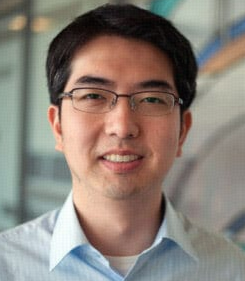 Honglak Lee合作论文数Electrical Engineering and Computer Science Department, College of Engineering, University of Michigan;LG AI Research10
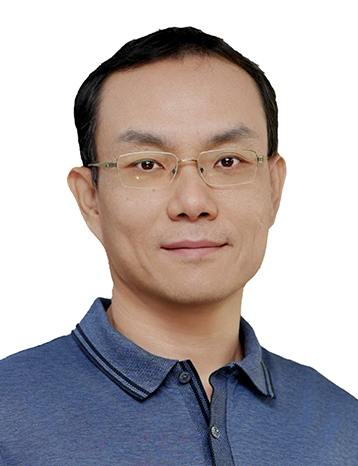 Liwei Wang (王立威)合作论文数Department of Machine Intelligence, School of Electronics Engineering and Computer Science, Peking University;School of Intelligence Science Technology, Peking University8
 Justin Johnson合作论文数World Labs7
 Lajanugen Logeswaran合作论文数LG AI Research4
 Siyu Chen合作论文数3
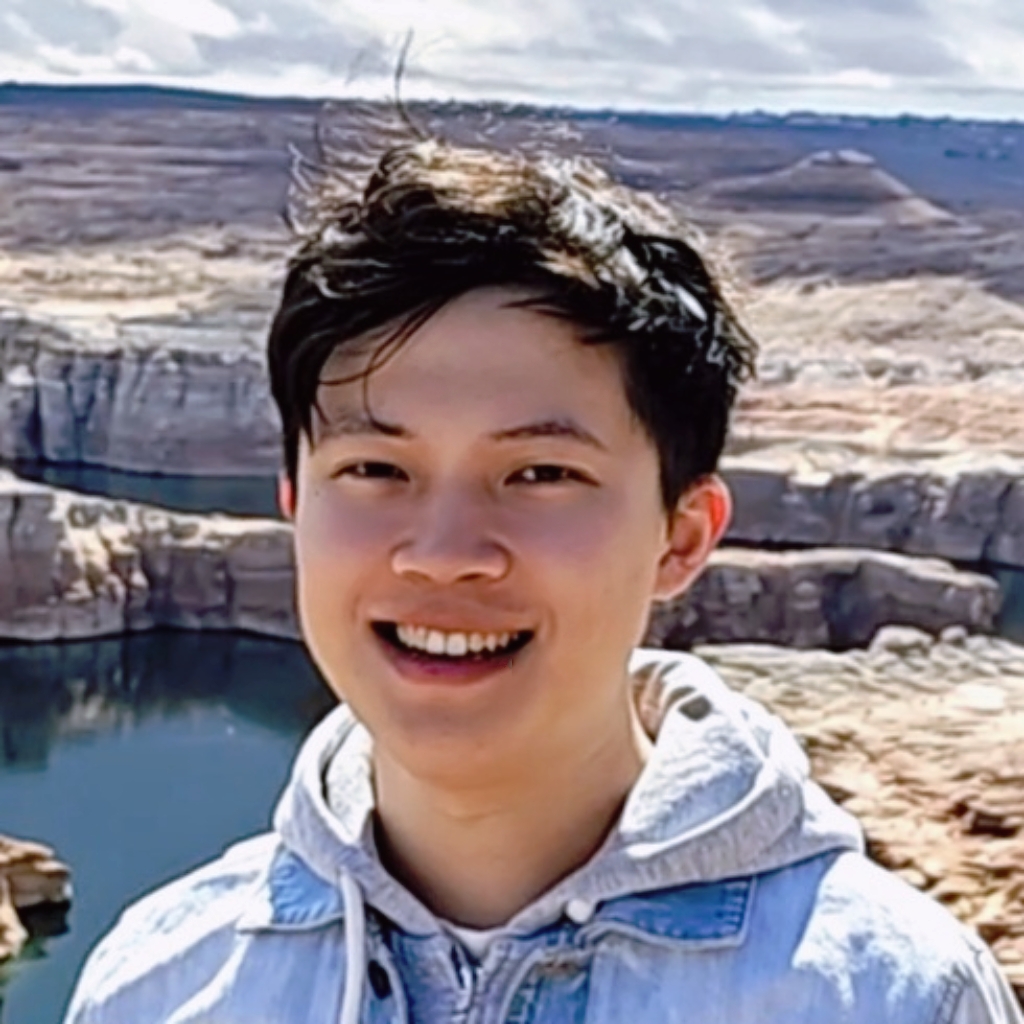 Tianle Cai (蔡天乐)合作论文数Princeton University3
 Aoxue Li合作论文数Huawei Noah’s Ark Lab3
 Mengxiao Zhang (张梦晓)合作论文数Department of Business Analytics, Tippie College of Business, The University of Iowa3
 Yunseok Jang合作论文数Seoul Natl Univ, Seoul, South Korea2
 Weiran Huang (黄维然)合作论文数MIFA Lab, Shanghai Jiao Tong University;Shanghai Innovation Institute;Shanghai AI Lab2
 Sungryull Sohn合作论文数LG Global AI Center2
 Tao Xiang合作论文数Facebook AI Applied Research;Centre for Vision Speech and Signal Processing, Department of Computer Vision and Machine Learning, Faculty of Engineering and Physical Sciences, University of Surrey2
 Di He (贺笛)合作论文数School of Intelligence Science and Technology, Peking University2Gunhee Lee合作论文数1GyungHoon Bae合作论文数1
 Jiarui Xu合作论文数University of California, San Diego1
 Chris Rockwell合作论文数Fouhey AI Lab, University of Michigan;Michigan Vision Lab, University of Michigan1
 Yeda Song合作论文数Seoul National University1
 Rosiana Natalie (王玉美)合作论文数Singapore Management University1
 Dong-Ki Kim合作论文数1Dong Wang合作论文数1
 Ruei-Che Chang (張睿哲)合作论文数Department of Electrical Engineering and Computer Science, College of Engineering, University of Michigan;Apple1
 Todd Hollon合作论文数MLiNS Lab, Department of Neurosurgery, Medical School, University of Michigan;Michigan Institute for Data Science, University of Michigan1
 Jaekyeom Kim合作论文数LG AI Research Center1
 Zhiao Huang (黄志翱)合作论文数Hillbot Inc.1
 Anhong Guo (郭安鸿)合作论文数Division of Computer Science and Engineering, Department of Electrical Engineering and Computer Science, College of Engineering, University of Michigan;School of Information, University of Michigan1
 Moontae Lee合作论文数Department of Information and Decision Sciences, University of Illinois at Chicago;Superintelligence Lab, LG AI Research1
 Ze Yang (杨泽)合作论文数Department of Computer Science, University of Toronto;Waabi;Vector Institute1Zhiqiang Hu合作论文数SenseTime Research1
 Zhiwu Lu (卢志武)合作论文数Gaoling School of Artificial Intelligence, Renmin University of China1
 Jun Gao合作论文数Machine Learning Group, Department of Computer Science, University of Toronto;NVIDIA AI Lab1
 Zhenguo Li合作论文数Noah's Ark Lab, Huawei Technologies;Department of Computer Science and Engineering, Hong Kong University of Science and Technology1
 Siyu Hu (胡思玉)合作论文数1
 Ang Cao合作论文数University of Michigan1
 Hao Su (苏昊)合作论文数College of Intelligent Robotics and Advanced Manufacturing, Fudan University1
 Yiwei Lyu合作论文数Department of Electrical and Computer Engineering, Carnegie Mellon University1
 Kaichun Mo (莫凯淳)合作论文数NVIDIA1




