We introduce Imagen 3, a latent diffusion model that generates high quality images from text prompts. We describe our quality and responsibility evaluations. Imagen 3 is preferred over other state-of-the-art (SOTA) models at the time of evaluation. In addition, we discuss issues around safety and representation, as well as methods we used to minimize the potential harm of our models.
In this report, we introduce the Gemini 1.5 family of models, representing the next generation of highly compute-efficient multimodal models capable of recalling and reasoning over fine-grained information from millions of tokens of context, including multiple long documents and hours of video and audio. The family includes two new models: (1) an updated Gemini 1.5 Pro, which exceeds the February version on the great majority of capabilities and benchmarks; (2) Gemini 1.5 Flash, a more lightweight variant designed for efficiency with minimal regression in quality. Gemini 1.5 models achieve near-perfect recall on long-context retrieval tasks across modalities, improve the state-of-the-art in long-document QA, long-video QA and long-context ASR, and match or surpass Gemini 1.0 Ultra's state-of-the-art performance across a broad set of benchmarks. Studying the limits of Gemini 1.5's long-context ability, we find continued improvement in next-token prediction and near-perfect retrieval (>99 as Claude 3.0 (200k) and GPT-4 Turbo (128k). Finally, we highlight real-world use cases, such as Gemini 1.5 collaborating with professionals on completing their tasks achieving 26 to 75 categories, as well as surprising new capabilities of large language models at the frontier; when given a grammar manual for Kalamang, a language with fewer than 200 speakers worldwide, the model learns to translate English to Kalamang at a similar level to a person who learned from the same content.
Inspired by progress in large-scale language modeling, we apply a similar approach towards building a single generalist agent beyond the realm of text outputs. The agent, which we refer to as Gato, works as a multi-modal, multi-task, multi-embodiment generalist policy. The same network with the same weights can play Atari, caption images, chat, stack blocks with a real robot arm and much more, deciding based on its context whether to output text, joint torques, button presses, or other tokens. In this report we describe the model and the data, and document the current capabilities of Gato.
In this work, we introduce Gemma 2, a new addition to the Gemma family of lightweight, state-of-the-art open models, ranging in scale from 2 billion to 27 billion parameters. In this new version, we apply several known technical modifications to the Transformer architecture, such as interleaving local-global attentions (Beltagy et al., 2020a) and group-query attention (Ainslie et al., 2023). We also train the 2B and 9B models with knowledge distillation (Hinton et al., 2015) instead of next token prediction. The resulting models deliver the best performance for their size, and even offer competitive alternatives to models that are 2-3 times bigger. We release all our models to the community.
We introduce DeepNash, an autonomous agent that plays the imperfect information game Stratego at a human expert level. Stratego is one of the few iconic board games that artificial intelligence (AI) has not yet mastered. It is a game characterized by a twin challenge: It requires long-term strategic thinking as in chess, but it also requires dealing with imperfect information as in poker. The technique underpinning DeepNash uses a game-theoretic, model-free deep reinforcement learning method, without search, that learns to master Stratego through self-play from scratch. DeepNash beat existing state-of-the-art AI methods in Stratego and achieved a year-to-date (2022) and all-time top-three ranking on the Gravon games platform, competing with human expert players.
Nash equilibrium is a central concept in game theory. Several Nash solvers exist, yet none scale to normal-form games with many actions and many players, especially those with payoff tensors too big to be stored in memory. In this work, we propose an approach that iteratively improves an approximation to a Nash equilibrium through joint play. It accomplishes this by tracing a previously established homotopy that defines a continuum of equilibria for the game regularized with decaying levels of entropy. This continuum asymptotically approaches the limiting logit equilibrium, proven by McKelvey and Palfrey (1995) to be unique in almost all games, thereby partially circumventing the well-known equilibrium selection problem of many-player games. To encourage iterates to remain near this path, we efficiently minimize average deviation incentive via stochastic gradient descent, intelligently sampling entries in the payoff tensor as needed. Monte Carlo estimates of the stochastic gradient from joint play are biased due to the appearance of a nonlinear max operator in the objective, so we introduce additional innovations to the algorithm to alleviate gradient bias. The descent process can also be viewed as repeatedly constructing and reacting to a polymatrix approximation to the game. In these ways, our proposed approach, average deviation incentive descent with adaptive sampling (ADIDAS), is most similar to three classical approaches, namely homotopy-type, Lyapunov, and iterative polymatrix solvers. The lack of local convergence guarantees for biased gradient descent prevents guaranteed convergence to Nash, however, we demonstrate through extensive experiments the ability of this approach to approximate a unique Nash in normal-form games with as many as seven players and twenty one actions (several billion outcomes) that are orders of magnitude larger than those possible with prior algorithms.
We propose a multi-agent learning approach for designing crowdsourcing contests and All-Pay auctions. Prizes in contests incentivise contestants to expend effort on their entries, with different prize allocations resulting in different incentives and bidding behaviors. In contrast to auctions designed manually by economists, our method searches the possible design space using a simulation of the multi-agent learning process, and can thus handle settings where a game-theoretic equilibrium analysis is not tractable. Our method simulates agent learning in contests and evaluates the utility of the resulting outcome for the auctioneer. Given a large contest design space, we assess through simulation many possible contest designs within the space, and fit a neural network to predict outcomes for previously untested contest designs. Finally, we apply mirror ascent to optimize the design so as to achieve more desirable outcomes. Our empirical analysis shows our approach closely matches the optimal outcomes in settings where the equilibrium is known, and can produce high quality designs in settings where the equilibrium strategies are not solvable analytically.
Programming is a powerful and ubiquitous problem-solving tool. Systems that can assist programmers or even generate programs themselves could make programming more productive and accessible. Recent transformer-based neural network models show impressive code generation abilities yet still perform poorly on more complex tasks requiring problem-solving skills, such as competitive programming problems. Here, we introduce AlphaCode, a system for code generation that achieved an average ranking in the top 54.3% in simulated evaluations on recent programming competitions on the Codeforces platform. AlphaCode solves problems by generating millions of diverse programs using specially trained transformer-based networks and then filtering and clustering those programs to a maximum of just 10 submissions. This result marks the first time an artificial intelligence system has performed competitively in programming competitions.
The success of human civilization is rooted in our ability to cooperate by communicating and making joint plans. We study how artificial agents may use communication to better cooperate in Diplomacy, a long-standing AI challenge. We propose negotiation algorithms allowing agents to agree on contracts regarding joint plans, and show they outperform agents lacking this ability. For humans, misleading others about our intentions forms a barrier to cooperation. Diplomacy requires reasoning about our opponents' future plans, enabling us to study broken commitments between agents and the conditions for honest cooperation. We find that artificial agents face a similar problem as humans: communities of communicating agents are susceptible to peers who deviate from agreements. To defend against this, we show that the inclination to sanction peers who break contracts dramatically reduces the advantage of such deviators. Hence, sanctioning helps foster mostly truthful communication, despite conditions that initially favor deviations from agreements.
We propose a system for conducting an auction over locations in a continuous space. It enables participants to express their preferences over possible choices of location in the space, selecting the location that maximizes the total utility of all agents. We prevent agents from tricking the system into selecting a location that improves their individual utility at the expense of others by using a pricing rule that gives agents no incentive to misreport their true preferences. The system queries participants for their utility in many random locations, then trains a neural network to approximate the preference function of each participant. The parameters of these neural network models are transmitted and processed by the auction mechanism, which composes these into differentiable models that are optimized through gradient ascent to compute the final chosen location and charged prices.
Inspired by progress in large-scale language modeling, we apply a similar approach towards building a single generalist agent beyond the realm of text outputs. The agent, which we refer to as Gato, works as a multi-modal, multi-task, multi-embodiment generalist policy. The same network with the same weights can play Atari, caption images, chat, stack blocks with a real robot arm and much more, deciding based on its context whether to output text, joint torques, button presses, or other tokens. In this report we describe the model and the data, and document the current capabilities of Gato.
One of the fundamental challenges of governance is deciding when and how to intervene in multi-agent systems in order to impact group-wide metrics of success. This is particularly challenging when proposed interventions are novel and expensive. For example, one may wish to modify a building’s layout to improve the efficiency of its escape route. Evaluating such interventions would generally require access to an elaborate simulator, which must be constructed ad-hoc for each environment, and can be prohibitively costly or inaccurate. Here we examine a simple alternative: Optimize By Observational Extrapolation (OBOE). The idea is to use observed behavioural trajectories, without any interventions, to learn predictive models mapping environment states to individual agent outcomes, and then use these to evaluate and select changes. We evaluate OBOE in socially complex gridworld environments and consider novel physical interventions that our models were not trained on. We show that neural network models trained to predict agent returns on baseline environments are effective at selecting among the interventions. Thus, OBOE can provide guidance for challenging questions like: “which wall should I tear down in order to minimize the Gini index of this group?”
We propose a multi-agent learning approach for designing crowdsourcing contests and all-pay auctions. Prizes in contests incentivise contestants to expend effort on their entries, with different prize allocations resulting in different incentives and bidding behaviors. In contrast to auctions designed manually by economists, our method searches the possible design space using a simulation of the multi-agent learning process, and can thus handle settings where a game-theoretic equilibrium analysis is not tractable. Our method simulates agent learning in contests and evaluates the utility of the resulting outcome for the auctioneer. Given a large contest design space, we assess through simulation many possible contest designs within the space, and fit a neural network to predict outcomes for previously untested contest designs. Finally, we apply mirror descent to optimize the design so as to achieve more desirable outcomes. Our empirical analysis shows our approach closely matches the optimal outcomes in settings where the equilibrium is known, and can produce high quality designs in settings where the equilibrium strategies are not solvable analytically.
Zero-sum games have long guided artificial intelligence research, since they possess both a rich strategy space of best-responses and a clear evaluation metric. What's more, competition is a vital mechanism in many real-world multi-agent systems capable of generating intelligent innovations: Darwinian evolution, the market economy and the AlphaZero algorithm, to name a few. In two-player zero-sum games, the challenge is usually viewed as finding Nash equilibrium strategies, safeguarding against exploitation regardless of the opponent. While this captures the intricacies of chess or Go, it avoids the notion of cooperation with co-players, a hallmark of the major transitions leading from unicellular organisms to human civilization. Beyond two players, alliance formation often confers an advantage; however this requires trust, namely the promise of mutual cooperation in the face of incentives to defect. Successful play therefore requires adaptation to co-players rather than the pursuit of non-exploitability. Here we argue that a systematic study of many-player zero-sum games is a crucial element of artificial intelligence research. Using symmetric zero-sum matrix games, we demonstrate formally that alliance formation may be seen as a social dilemma, and empirically that na\"ive multi-agent reinforcement learning therefore fails to form alliances. We introduce a toy model of economic competition, and show how reinforcement learning may be augmented with a peer-to-peer contract mechanism to discover and enforce alliances. Finally, we generalize our agent model to incorporate temporally-extended contracts, presenting opportunities for further work.
We introduce a human-compatible reinforcement-learning approach to a cooperative game, making use of a third-party hand-coded human-compatible bot to generate initial training data and to perform initial evaluation. Our learning approach consists of imitation learning, search, and policy iteration. Our trained agents achieve a new state-of-the-art for bridge bidding in three settings: an agent playing in partnership with a copy of itself; an agent partnering a pre-existing bot; and an agent partnering a human player.
Recent advances in deep reinforcement learning (RL) have led to considerable progress in many 2-player zero-sum games, such as Go, Poker and Starcraft. The purely adversarial nature of such games allows for conceptually simple and principled application of RL methods. However real-world settings are many-agent, and agent interactions are complex mixtures of common-interest and competitive aspects. We consider Diplomacy, a 7-player board game designed to accentuate dilemmas resulting from many-agent interactions. It also features a large combinatorial action space and simultaneous moves, which are challenging for RL algorithms. We propose a simple yet effective approximate best response operator, designed to handle large combinatorial action spaces and simultaneous moves. We also introduce a family of policy iteration methods that approximate fictitious play. With these methods, we successfully apply RL to Diplomacy: we show that our agents convincingly outperform the previous state-of-the-art, and game theoretic equilibrium analysis shows that the new process yields consistent improvements.
Reciprocity is an important feature of human social interaction and underpins our cooperative nature. What is more, simple forms of reciprocity have proved remarkably resilient in matrix game social dilemmas. Most famously, the tit-for-tat strategy performs very well in tournaments of Prisoner's Dilemma. Unfortunately this strategy is not readily applicable to the real world, in which options to cooperate or defect are temporally and spatially extended. Here, we present a general online reinforcement learning algorithm that displays reciprocal behavior towards its co-players. We show that it can induce pro-social outcomes for the wider group when learning alongside selfish agents, both in a 2-player Markov game, and in 5-player intertemporal social dilemmas. We analyse the resulting policies to show that the reciprocating agents are strongly influenced by their co-players' behavior.
We study the problem of emergent communication, in which language arises because speakers and listeners must communicate information in order to solve tasks. In temporally extended reinforcement learning domains, it has proved hard to learn such communication without centralized training of agents, due in part to a difficult joint exploration problem. We introduce inductive biases for positive signalling and positive listening, which ease this problem. In a simple one-step environment, we demonstrate how these biases ease the learning problem. We also apply our methods to a more extended environment, showing that agents with these inductive biases achieve better performance, and analyse the resulting communication protocols.
In nature, group behaviours such as flocking as well as cross-species symbiotic partnerships are observed in vastly different forms and circumstances. We hypothesize that such strategies can arise in response to generic predator-prey pressures in a spatial environment with range-limited sensation and action. We evaluate whether these forms of coordination can emerge by independent multi-agent reinforcement learning in simple multiple-species ecosystems. In contrast to prior work, we avoid hand-crafted shaping rewards, specific actions, or dynamics that would directly encourage coordination across agents. Instead we test whether coordination emerges as a consequence of adaptation without encouraging these specific forms of coordination, which only has indirect benefit. Our simulated ecosystems consist of a generic food chain involving three trophic levels: apex predator, mid-level predator, and prey. We conduct experiments on two different platforms, a 3D physics engine with tens of agents as well as in a 2D grid world with up to thousands. The results clearly confirm our hypothesis and show substantial coordination both within and across species. To obtain these results, we leverage and adapt recent advances in deep reinforcement learning within an ecosystem training protocol featuring homogeneous groups of independent agents from different species (sets of policies), acting in many different random combinations in parallel habitats. The policies utilize neural network architectures that are invariant to agent individuality but not type (species) and that generalize across varying numbers of observed other agents. While the emergence of complexity in artificial ecosystems have long been studied in the artificial life community, the focus has been more on individual complexity and genetic algorithms or explicit modelling, and less on group complexity and reinforcement learning emphasized in this article. Unlike what the name and intuition suggests, reinforcement learning adapts over evolutionary history rather than a life-time and is here addressing the sequential optimization of fitness that is usually approached by genetic algorithms in the artificial life community. We utilize a shift from procedures to objectives, allowing us to bring new powerful machinery to bare, and we see emergence of complex behaviour from a sequence of simple optimization problems.
The field of reinforcement learning (RL) is facing increasingly challenging domains with combinatorial complexity. For an RL agent to address these challenges, it is essential that it can plan effectively. Prior work has typically utilized an explicit model of the environment, combined with a specific planning algorithm (such as tree search). More recently, a new family of methods have been proposed that learn how to plan, by providing the structure for planning via an inductive bias in the function approximator (such as a tree structured neural network), trained end-to-end by a model-free RL algorithm. In this paper, we go even further, and demonstrate empirically that an entirely model-free approach, without special structure beyond standard neural network components such as convolutional networks and LSTMs, can learn to exhibit many of the characteristics typically associated with a model-based planner. We measure our agent's effectiveness at planning in terms of its ability to generalize across a combinatorial and irreversible state space, its data efficiency, and its ability to utilize additional thinking time. We find that our agent has many of the characteristics that one might expect to find in a planning algorithm. Furthermore, it exceeds the state-of-the-art in challenging combinatorial domains such as Sokoban and outperforms other model-free approaches that utilize strong inductive biases toward planning.
 Janos Kramar合作论文数Google DeepMind9
 Yoram Bachrach合作论文数Google DeepMind8
 Andrea Tacchetti合作论文数Google DeepMind7
 Thomas William Anthony合作论文数DeepMind6
 Oriol Vinyals合作论文数Google DeepMind6
 Ian Gemp合作论文数Google DeepMind6
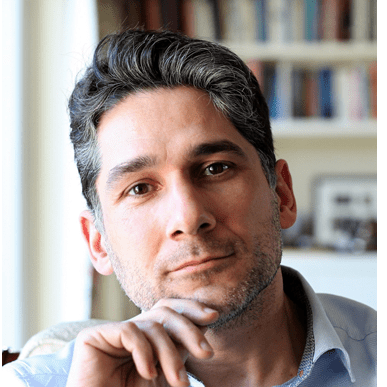 Thore Graepel合作论文数Department of Computer Science, University College London;Altos Labs5
 Demis Hassabis (戴密斯·哈萨比斯)合作论文数DeepMind;Isomorphic Labs4
 Joel Z Leibo合作论文数Google DeepMind;King's College London4
 Koray Kavukcuoglu合作论文数Google DeepMind;Google4
 Nando de Freitas合作论文数Microsoft AI;Canadian Institute for Advanced Research4
 Edward Hughes合作论文数Google DeepMind;Godwine Choir4
 Eli Collins合作论文数3
 Matthew Rahtz合作论文数Google DeepMind3Mai Gimenez合作论文数3Mahyar Bordbar合作论文数3Yury Sulsky合作论文数DeepMind, London, England3
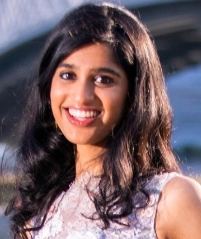 Tulsee Doshi合作论文数Google;Lemonade3
 Sebastian Borgeaud合作论文数DeepMind3
 Konrad Żołna合作论文数Google DeepMind3
 Alicia Vail Parrish合作论文数Google3
 David Silver合作论文数Department of Computer Science, University College London;Ineffable Intelligence3
 Raia Hadsell合作论文数Google DeepMind3
 Sergio Gómez Colmenarejo合作论文数Microsoft AI3
 Marc Lanctot合作论文数Google DeepMind3Emilio Parisotto合作论文数Machine Learning Department, Carnegie Mellon University3
 Nicolas Heess合作论文数Google DeepMind3
 Ali Razavi合作论文数DeepMind3
 Anca Dragan合作论文数Department of Electrical Engineering & Computer Sciences, University of California, Berkeley;Google DeepMind3Ágoston Weisz合作论文数2
 Jake Bruce合作论文数DeepMind2Ben Caine合作论文数2Sammy Jerome合作论文数2Thibault Sottiaux合作论文数2Charlie Chen合作论文数2Minh Giang合作论文数2
 Canfer Akbulut合作论文数Google DeepMind2Jenny Brennan合作论文数2Ravin Kumar合作论文数2Alanna Walton合作论文数2Jeff Stanway合作论文数2Roopal Garg合作论文数2
 Peter Choy合作论文数DeepMind2
 Joost Van Amersfoort合作论文数Google DeepMind2
 Kaushik Shivakumar合作论文数Google DeepMind;ZeroUI;Robotics Without Limits2
 Mina Khan合作论文数Deepmind, Google2
 Ramona Comanescu合作论文数Google DeepMind2
 Jackie Kay合作论文数DeepMind;UCL2
 Petko Georgiev合作论文数Google DeepMind2




