Parameter uncertainty contributes to a significant portion of the overall uncertainty in future climate projections due to the considerable computational cost in running modern climate models. Current approaches to estimating parameter uncertainty often rely on randomly sampling parameter configurations, e.g. by using Latin hypercube sampling (LHS). However, this can be wasteful of computational resources because this sampling process does not take into account any observational constraints. With the goal of using computational resources more efficiently, we formulate the problem of calibrating the parameters in atmospheric model parameterizations as an active learning problem . Specifically, we leverage ideas from the field of Bayesian experimental design (BED) to incorporate the information from observations directly into the model calibration process. We further utilize the links to the BED literature to describe how to compare the performance of these active learning strategies. Empirically, we test the utility of active learning approaches on data from the Single Column Atmospheric Model, a single column version of the atmospheric model used in the Community Earth System Model version 2, as well as on an emulator of the full Community Atmosphere Model Version 6 with a 45-dimensional input parameter space. Our findings suggest that active learning can lead to smaller parameter uncertainty compared to LHS, even in high-dimensional input spaces, but the improvements in efficiency are reliant on having sufficiently strong observational constraints for the model parameterization.
We propose a general-purpose approach for improving the ability of large language models (LLMs) to intelligently and adaptively gather information from a user or other external source using the framework of sequential Bayesian experimental design (BED). This enables LLMs to act as effective multi-turn conversational agents and interactively interface with external environments. Our approach, which we call BED-LLM (Bayesian experimental design with large language models), is based on iteratively choosing questions or queries that maximize the expected information gain (EIG) about the task of interest given the responses gathered previously. We show how this EIG can be formulated (and then estimated) in a principled way using a probabilistic model derived from the LLM's predictive distributions and provide detailed insights into key decisions in its construction and updating procedure. We find that BED-LLM achieves substantial gains in performance across a wide range of tests based on the 20 Questions game and using the LLM to actively infer user preferences, compared to direct prompting of the LLM and other adaptive design strategies.
We present DiffBED, a Bayesian experimental design (BED) approach that scales to problems with high-dimensional design spaces. Our key insight is that current BED approaches typically cannot be scaled to real high--dimensional design problems because of the need to specify a likelihood model that remains accurate throughout the design space. We show that without this, their design optimisation procedures exploit deficiencies in the likelihood and produce implausible designs. We overcome this issue by introducing a generative prior over feasible designs using a diffusion model. By guiding this diffusion model using principled information-theoretic experimental design objectives, we are then able to generate highly informative yet realistic designs at an unprecedented scale: while previous applications of BED have been restricted to design spaces with a handful of dimensions, we show that DiffBED can successful scale to designing high-resolution images.
Active testing provides a label–efficient approach to risk estimation by adaptively selecting which test points should be labelled. However, existing estimators fail to exploit the informative predictions of powerful black–box models, even though such predictions are increasingly available in settings where labels remain expensive. To address this, we propose Prediction–Powered Active Testing (PPAT), a novel label–efficient risk estimation framework that combines the unbiased LURE estimator with a prediction–powered control variate. Rather than using proxy predictions as biased pseudo–labels, PPAT uses them to residualise the loss, preserving unbiasedness while reducing variance. Beyond the estimator itself, PPAT also changes which points should be acquired: we derive oracle and practical surrogate–based acquisition rules tailored to reducing the variance of our estimator. Moreover, we establish asymptotic normality for PPAT, yielding asymptotically valid confidence intervals and thus a principled estimate of the uncertainty around our estimates. Across tabular regression and image–classification tasks, PPAT outperforms existing methods in risk estimation, while its confidence intervals attain the target coverage with substantially fewer labels and smaller widths.
Frameworks for ensuring fairness in machine learning typically focus on learning fair models from existing data. But this endeavor is often undermined by biases already present in that data. We therefore look to modify the data acquisition process itself to help gather fairer data that is inherently more suitable for training fair predictors. To this end, we introduce FairBED, which provides novel formulations for quantifying the fairness of datasets themselves based on the idea that fair datasets should be uninformative about sensitive attributes. We then use this to construct practical fairness-aware Bayesian experimental design (BED) objectives that maximize expected information gain about the target quantity of interest while minimizing expected information gain about sensitive attributes. We further derive a theoretical link between FairBED and demographic parity, and show empirically that models trained on data gathered using FairBED provide improved fairness-accuracy trade-offs compared to randomly acquired data and conventional BED.
Bayesian experimental design (BED) has traditionally been based on maximising expected uncertainty reductions from prior to posterior. A major shortfall of this approach is that it leads to doubly intractable objectives that are difficult to optimise, while customising them to particular downstream tasks of interest can also be difficult. Following first principles decision theory, we demonstrate that BED can alternatively be formulated in terms of an expected future loss (EFL) on downstream actions, providing a simple and naturally task-driven framework. Critically, we then show that all such EFLs can be rearranged into singly intractable objectives that can be jointly optimised with respect to both the design policy and a downstream action policy using stochastic gradients, an approach we refer to as ACTION-BED. This formulation further sidesteps the need for any explicit posterior or marginal likelihood estimation and is naturally implicit, requiring only the ability to sample from the joint model over model parameters and data, and evaluate the downstream loss function. It thus allows design policies to be learned more effectively, efficiently, and simply than existing methods, while providing easy customisation to different downstream tasks and losses.
The central goal of active learning is to gather data that maximises downstream predictive performance, but popular approaches have limited flexibility in customising this data acquisition to different downstream problems and losses. We propose a rigorous loss-driven approach to Bayesian active learning that allows data acquisition to directly target the loss associated with a given decision problem. In particular, we show how any loss can be used to derive a unique objective for optimal data acquisition. Critically, we then show that any loss taking the form of a weighted Bregman divergence permits analytic computation of a central component of its corresponding objective, making the approach applicable in practice. In regression and classification experiments with a range of different losses, we find our approach reduces test losses relative to existing techniques.
Policy-based approaches to Bayesian experimental design (BED) allow the learning of deep policy networks that adaptively make intelligent design decisions based on previously collected data. However, the training of such policies is often held back by a fundamental challenge: the double intractability of the expected information gain (EIG). This necessitates expensive or complex approximations that restrict the effort one can invest in optimising the policy itself. To address this, we show that the double intractability of the EIG can be isolated from the policy learning by first solving a score matching problem that is independent of the policy used, then using the learned score approximation to train the policy in a singly intractable manner. This turns the key multiplicative cost into an additive one and reduces the computational burden on the policy training itself, making it far cheaper to train the policy multiple times when needed, e.g. for architecture search, hyperparameter tuning, or avoiding local optima. In our experiments we train multiple competitive policies without inducing a multiplicative cost in likelihood evaluations, which can increase performance by allowing us to select the best policy even without performing hyperparameter or architecture searches.
Learning effective policies for adaptive data acquisition remains challenging: posterior-based methods rely on surrogate models and posterior approximations that can be misspecified or biased, while direct policy-learning methods map from historical observations and fail to exploit available model representations, making learning harder. We introduce policy learning with belief representations (POLAR), based on the insight that optimal data acquisition depends on the observation history only through a sufficient belief state. Specifically, POLAR decouples representation learning from policy learning by leveraging pretrained predictive foundation models as belief-state encoders, training a policy head on top of their representations. This yields a simple, unified amortised policy learning framework for Bayesian experimental design, Bayesian optimisation, and active learning, differing only in the task-specific utility used to train the policy. Empirically, we find that POLAR outperforms state-of-the-art amortised methods across diverse tasks while requiring far fewer training samples, demonstrating a significant step in the scalability and efficiency of amortised data acquisition.
The ideas of aleatoric and epistemic uncertainty are widely used to reason about the probabilistic predictions of machine-learning models. We identify incoherence in existing discussions of these ideas and suggest this stems from the aleatoric-epistemic view being insufficiently expressive to capture all the distinct quantities that researchers are interested in. To address this we present a decision-theoretic perspective that relates rigorous notions of uncertainty, predictive performance and statistical dispersion in data. This serves to support clearer thinking as the field moves forward. Additionally we provide insights into popular information-theoretic quantities, showing they can be poor estimators of what they are often purported to measure, while also explaining how they can still be useful in guiding data acquisition.
Active testing enables label-efficient evaluation of predictive models through careful data acquisition, but it can pose a significant computational cost. We identify cost-saving measures that enable active testing to be scaled up to large language models (LLMs). In particular we show that the surrogate model used to guide data acquisition can be constructed cheaply using in-context learning, does not require updating within an active-testing loop, and can be smaller than the target model. We even find we can make good data-acquisition decisions without making predictions with the target model. As a result we are able to achieve much more accurate evaluations of LLM performance relative to using randomly acquired data. We additionally introduce a bootstrap estimator of evaluation error, which we show to be a useful indicator of how well active testing is working within a single run.
We introduce a novel geometric framework for optimal experimental design (OED). Traditional OED approaches, such as those based on mutual information, rely explicitly on probability densities, leading to restrictive invariance properties. To address these limitations, we propose the mutual transport dependence (MTD), a measure of statistical dependence grounded in optimal transport theory which provides a geometric objective for optimizing designs. Unlike conventional approaches, the MTD can be tailored to specific downstream estimation problems by choosing appropriate geometries on the underlying spaces. We demonstrate that our framework produces high-quality designs while offering a flexible alternative to standard information-theoretic techniques.
Data is often generated in streams, with new observations arriving over time. A key challenge for learning models from data streams is capturing relevant information while keeping computational costs manageable. We explore intelligent data subsampling for offline learning, and argue for an information-theoretic method centred on reducing uncertainty in downstream predictions of interest. Empirically, we demonstrate that this prediction-oriented approach performs better than a previously proposed information-theoretic technique on two widely studied problems. At the same time, we highlight that reliably achieving strong performance in practice requires careful model design.
Statistics as a scientific discipline is currently facing the great challenge of finding its place in data science once more. At the beginning of the last century, the development of the discipline of statistics was initiated by data-related research questions. Nowadays, it is often viewed to have not kept up with the current developments in data science, which are largely focused on algorithmic, exploratory, and computational aspects and often driven by other disciplines, such as computer science. However, statistics can-and should-contribute to the advances of data science. Of most interest are the strengths of statistics, such as the mathematical focus that leads to theoretical guarantees. This includes methods for formal modeling, hypothesis tests, uncertainty quantification, and statistical inference. Of particular interest are also established statistical frameworks to handle causality or data deficiencies such as dependence, missingness, biases, or confounding. This article summarizes the findings of a discussion workshop on the topic that was held in June 2023 in Hannover, Germany. The discussion centered around the following questions: How must statistics be set up so that it can contribute (more) to modern data science? In which direction should it develop further? Which strengths can already be used now? What conditions must be created so that this can succeed? What can be done to arrive at a common language? What is the added value of formal modeling, inference, and the mathematical perspective taken in statistics?
We empirically investigate how well popular approximate inference algorithms for Bayesian Neural Networks (BNNs) respect the theoretical properties of Bayesian belief updating. We find strong evidence on synthetic regression and real-world image classification tasks that common BNN algorithms such as variational inference, Laplace approximation, SWAG, and SGLD fail to update in a consistent manner, forget about old data under sequential updates, and violate the predictive coherence properties that would be expected of Bayesian methods. These observed behaviors imply that care should be taken when treating BNNs as true Bayesian models, particularly when using them beyond static prediction settings, such as for active, continual, or transfer learning.
Large language models (LLMs) are often deployed to perform constrained tasks, with narrow domains. For example, customer support bots can be built on top of LLMs, relying on their broad language understanding and capabilities to enhance performance. However, these LLMs are adversarially susceptible, potentially generating outputs outside the intended domain. To formalize, assess, and mitigate this risk, we introduce domain certification; a guarantee that accurately characterizes the out-of-domain behavior of language models. We then propose a simple yet effective approach, which we call VALID that provides adversarial bounds as a certificate. Finally, we evaluate our method across a diverse set of datasets, demonstrating that it yields meaningful certificates, which bound the probability of out-of-domain samples tightly with minimum penalty to refusal behavior.
Data-driven scientific discovery requires iterative cycles of literature search, hypothesis generation, and data analysis. Substantial progress has been made towards AI agents that can automate scientific research, but all such agents remain limited in the number of actions they can take before losing coherence, thus limiting the depth of their findings. Here we present Kosmos, an AI scientist that automates data-driven discovery. Given an open-ended objective and a dataset, Kosmos runs for up to 12 hours performing cycles of parallel data analysis, literature search, and hypothesis generation before synthesizing discoveries into scientific reports. Unlike prior systems, Kosmos uses a structured world model to share information between a data analysis agent and a literature search agent. The world model enables Kosmos to coherently pursue the specified objective over 200 agent rollouts, collectively executing an average of 42,000 lines of code and reading 1,500 papers per run. Kosmos cites all statements in its reports with code or primary literature, ensuring its reasoning is traceable. Independent scientists found 79.4% of statements in Kosmos reports to be accurate, and collaborators reported that a single 20-cycle Kosmos run performed the equivalent of 6 months of their own research time on average. Furthermore, collaborators reported that the number of valuable scientific findings generated scales linearly with Kosmos cycles (tested up to 20 cycles). We highlight seven discoveries made by Kosmos that span metabolomics, materials science, neuroscience, and statistical genetics. Three discoveries independently reproduce findings from preprinted or unpublished manuscripts that were not accessed by Kosmos at runtime, while four make novel contributions to the scientific literature.
We develop a semi-amortized, policy-based, approach to Bayesian experimental design (BED) called Stepwise Deep Adaptive Design (Step-DAD). Like existing, fully amortized, policy-based BED approaches, Step-DAD trains a design policy upfront before the experiment. However, rather than keeping this policy fixed, Step-DAD periodically updates it as data is gathered, refining it to the particular experimental instance. This test-time adaptation improves both the flexibility and the robustness of the design strategy compared with existing approaches. Empirically, Step-DAD consistently demonstrates superior decision-making and robustness compared with current state-of-the-art BED methods.
Active learning has the potential to be especially useful for messy, uncurated pools where datapoints vary in relevance to the target task. However, state-of-the-art approaches to this problem currently rely on using fixed, unsupervised representations of the pool, focusing on modifying the acquisition function instead. We show that this model setup can undermine their effectiveness at dealing with messy pools, as such representations can fail to capture important information relevant to the task. To address this, we propose using task-driven representations that are periodically updated during the active learning process using the previously collected labels. We introduce two specific strategies for learning these representations, one based on directly learning semi-supervised representations and the other based on supervised fine-tuning of an initial unsupervised representation. We find that both significantly improve empirical performance over using unsupervised or pretrained representations.
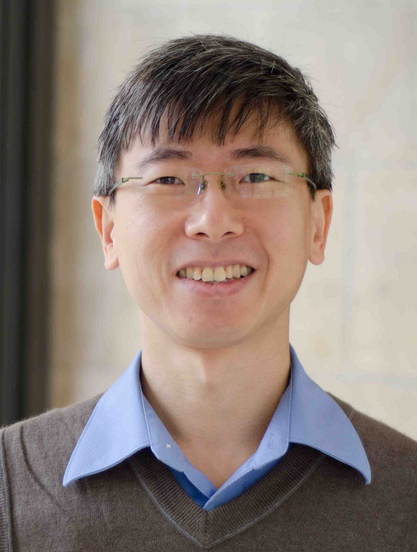 Yee Whye Teh合作论文数Department of Statistics, University of Oxford;Google DeepMind26
 Frank Wood合作论文数Department of Computer Science, Faculty of Science, University of British Columbia;Inverted AI;Invrea Ltd.20
 Adam Foster合作论文数Microsoft Research15
 Yarin Gal合作论文数Department of Computer Science, University of Oxford;Christ Church College, University of Oxford;Alan Turing Institute for Data Science10
 Siddharth N.合作论文数School of Informatics, University of Edinburgh9
 Hongseok Yang合作论文数Department of Computer Science, University of Oxford9
 Emile Mathieu合作论文数8
 Adam Golinski合作论文数University of York8
 Ning Miao (苗宁)合作论文数Department of Statistics, University of Oxford7
 Philip H. S. Torr合作论文数Department of Engineering Science, University of Oxford;St Catherine's College, University of Oxford;Orphic7
 Jannik Kossen合作论文数Department of Computer Science, University of Oxford7
 Yuan Zhou合作论文数Department of Computer Science, University of Oxford;Department of Statistics, University of Oxford6
 Jan-Willem van de Meent合作论文数Amsterdam Machine Learning Lab, University of Amsterdam;Informatics Institute, University of Amsterdam;Khoury College of Computer Sciences, Northeastern University6
 Freddie Bickford Smith合作论文数5
 Stefan Webb合作论文数Univ Oxford, Dept Engn Sci, Oxford, England5
 Bradley Gram-Hansen合作论文数Univ Oxford5
 Sebastian Farquhar合作论文数Google DeepMind;University of Oxford5
 Hyunjik Kim合作论文数Google DeepMind4Tim Reichelt合作论文数4
 Robert Cornish合作论文数4
 Andrew Campbell合作论文数Google DeepMind4
 Tuan Anh Le合作论文数Google4
 Arnaud Doucet合作论文数DeepMind;Department of Statistics, University of Oxford4Robert Zinkov合作论文数4
 Luke Ong合作论文数Department of Computer Science, University of Oxford;School of Computer Science and Engineering, Nanyang Technological University4
 Desi R. Ivanova合作论文数Department of Statistics, University of Oxford3
 Andrew Warrington合作论文数University of Oxford3
 Brooks Paige合作论文数Department of Computer Science, University College London;Centre for Artificial Intelligence, University College London3
 Sebastian M. Schmon合作论文数Latent Labs3Xiaoyu Lu合作论文数Amazon3
 Yann Dubois合作论文数OpenAI3
 Alexander Dante Camuto合作论文数Protocol Labs3
 Tom Joy合作论文数University of Oxford3
 Stephen Roberts合作论文数University of Oxford;Mind Foundry3
 Christian Schroeder de Witt合作论文数St Catherine’s College, University of Oxford;Department of Engineering Science, University of Oxford3
 Martin Jankowiak合作论文数Generate Biomedicines3
 Matthew Willetts合作论文数Bulkbit Systems3
 Atılım Güneş Baydin合作论文数Department of Computer Science, Jesus College, University of Oxford3
 Christopher Holmes合作论文数Department of Statistics, University of Oxford3
 Saeid Naderiparizi合作论文数The University of British Columbia2
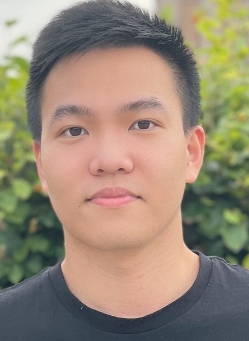 Daolang Huang合作论文数Department of Computer Science, School of Science, Aalto University;Finnish Center for Artificial Intelligence;University of Helsinki2
 Andreas M. Munk合作论文数AWAITED AI Ltd;Pacific Laboratory for Artificial Intelligence Research Group, Department of Computer Science, University of British Columbia2
 Mehrdad Ghadiri合作论文数Laboratory for Information & Decision Systems, Massachusetts Institute of Technology;Institute for Data, Systems, and Society, Massachusetts Institute of Technology2
 Valentin De Bortoli合作论文数Google DeepMind;Center for Data Science, Centre National de la Recherche Scientifique2
 Adam Scibior合作论文数university of cambridge2Eli Bingham合作论文数Uber AI Labs, Uber Technologies, Inc., San Francisco, CA2Tobias Kohn合作论文数Univ Utrecht2
 Gabriele Abbati合作论文数Univ Oxford, Dept Engn Sci, Oxford, England2
 Benjamin Bloem-Reddy合作论文数Department of Statistics, Faculty of Science, The University of British Columbia2




