Despite the rapid integration of video perception capabilities into Large Multimodal Models (LMMs), what drives their video perception remains poorly understood. Consequently, many design decisions in this domain are made without proper justification or analysis. The high computational cost of training and evaluating such models and limited open research hinder the development of video-LMMs. To address this, we present a comprehensive study that helps uncover what effectively drives video understanding in LMMs. We begin by critically examining the primary contributors to the high computational requirements associated with video-LMM research and discover Scaling Consistency, wherein design and training decisions made on smaller models and datasets (up to a critical size) effectively transfer to larger models. Leveraging these insights, we explored many video-specific aspects of video-LMMs, including video sampling, architectures, data composition, training schedules, and more. Guided by these findings, we introduce Apollo, a state-of-the-art family of LMMs that achieve superior performance across different model sizes. Our models process over 1-hour videos efficiently, with the 3B parameter variant outperforming most existing 7B models. Apollo-7B is state-of-the-art compared to 7B LMMs with a 70.9 on MLVU, and 63.3 on Video-MME.
Self-attention performs well in long context but has quadratic complexity. Existing RNN layers have linear complexity, but their performance in long context is limited by the expressive power of their hidden states. We present a practical framework for instantiating sequence modeling layers with linear complexity and expressive hidden states. The key idea is to make the hidden state a machine learning model itself, and the update rule a step of self-supervised learning. Since the hidden state is updated by training even on test sequences, our layers are called Test-Time Training (TTT) layers. We consider two instantiations: TTT-Linear and TTT-MLP, whose hidden state is a linear model and a two-layer MLP respectively. We evaluate our instantiations at the scale of 125M to 1.3B parameters, comparing with a strong Transformer and Mamba, a modern RNN. Similar to Transformer, TTT-Linear and TTT-MLP can keep reducing perplexity by conditioning on more tokens, while Mamba cannot after 16k context. TTT-MLP still faces challenges in memory I/O, but shows larger potential in long context, pointing to a promising direction for future research.
The o1 model series is trained with large-scale reinforcement learning to reason using chain of thought. These advanced reasoning capabilities provide new avenues for improving the safety and robustness of our models. In particular, our models can reason about our safety policies in context when responding to potentially unsafe prompts, through deliberative alignment. This leads to state-of-the-art performance on certain benchmarks for risks such as generating illicit advice, choosing stereotyped responses, and succumbing to known jailbreaks. Training models to incorporate a chain of thought before answering has the potential to unlock substantial benefits, while also increasing potential risks that stem from heightened intelligence. Our results underscore the need for building robust alignment methods, extensively stress-testing their efficacy, and maintaining meticulous risk management protocols. This report outlines the safety work carried out for the OpenAI o1 and OpenAI o1-mini models, including safety evaluations, external red teaming, and Preparedness Framework evaluations.
Recent advances in Language Model (LM) agents and tool use, exemplified by applications like ChatGPT Plugins, enable a rich set of capabilities but also amplify potential risks—such as leaking private data or causing financial losses. Identifying these risks is labor-intensive, necessitating implementing the tools, setting up the environment for each test scenario manually, and finding risky cases. As tools and agents become more complex, the high cost of testing these agents will make it increasingly difficult to find high-stakes, long-tail risks. To address these challenges, we introduce ToolEmu: a framework that uses an LM to emulate tool execution and enables scalable testing of LM agents against a diverse range of tools and scenarios. Alongside the emulator, we develop an LM-based automatic safety evaluator that examines agent failures and quantifies associated risks. We test both the tool emulator and evaluator through human evaluation and find that 68.8% of failures identified with ToolEmu would be valid real-world agent failures. Using our curated initial benchmark consisting of 36 high-stakes toolkits and 144 test cases, we provide a quantitative risk analysis of current LM agents and identify numerous failures with potentially severe outcomes. Notably, even the safest LM agent exhibits such failures 23.9% of the time according to our evaluator, underscoring the need to develop safer LM agents for real-world deployment.
LLM-based auto-annotators have become a key component of the LLM development process due to their cost-effectiveness and scalability compared to human-based evaluation. However, these auto-annotators can introduce biases that are hard to remove. Even simple, known confounders such as preference for longer outputs remain in existing automated evaluation metrics. We propose a simple regression analysis approach for controlling biases in auto-evaluations. As a real case study, we focus on reducing the length bias of AlpacaEval, a fast and affordable benchmark for instruction-tuned LLMs that uses LLMs to estimate response quality. Despite being highly correlated with human preferences, AlpacaEval is known to favor models that generate longer outputs. We introduce a length-controlled AlpacaEval that aims to answer the counterfactual question: "What would the preference be if the model's and baseline's output had the same length?" To achieve this, we first fit a generalized linear model to predict the biased auto-annotator's preferences based on the mediators we want to control for (length difference) and other relevant features. We then obtain length-controlled preferences by predicting preferences while conditioning the GLM with a zero difference in lengths. Length-controlling not only improves the robustness of the metric to manipulations in model verbosity, but we also find that it increases the Spearman correlation with LMSYS Chatbot Arena from 0.94 to 0.98.
We introduce Alpaca 7B, a model fine-tuned from the LLaMA 7B model on 52K instruction-following demonstrations. On our preliminary evaluation of single-turn instruction following, Alpaca behaves qualitatively similarly to OpenAI’s text-davinci-003, while being surprisingly small and easy/cheap to reproduce (<600$). Checkout our code release on GitHub.
Self-supervised learning (SSL) pipelines differ in many design choices such as the architecture, augmentations, or pretraining data. Yet SSL is typically evaluated using a single metric: linear probing on ImageNet. This does not provide much insight into why or when a model is better, now how to improve it. To address this, we propose an SSL risk decomposition, which generalizes the classical supervised approximation-estimation decomposition by considering errors arising from the representation learning step. Our decomposition consists of four error components: approximation, representation usability, probe generalization, and encoder generalization. We provide efficient estimators for each component and use them to analyze the effect of 30 design choices on 169 SSL vision models evaluated on ImageNet. Our analysis gives valuable insights for designing and using SSL models. For example, it highlights the main sources of error and shows how to improve SSL in specific settings (full- vs few-shot) by trading off error components. All results and pretrained models are at https://github.com/YannDubs/SSL-Risk-Decomposition.
We introduce InstaAug, a method for automatically learning input-specific augmentations from data. Previous data augmentation methods have generally assumed independence between the original input and the transformation applied to that input. This can be highly restrictive, as the invariances that the augmentations are based on are themselves often highly input dependent; e.g., we can change a leaf from green to yellow while maintaining its label, but not a lime. InstaAug instead allows for input dependency by introducing an invariance module that maps inputs to tailored transformation distributions. It can be simultaneously trained alongside the downstream model in a fully end-to-end manner, or separately learned for a pre-trained model. We empirically demonstrate that InstaAug learns meaningful input-dependent augmentations for a wide range of transformation classes, which in turn provides better performance on both supervised and self-supervised tasks.
Instruction-following models such as GPT-3.5 (text-davinci-003), ChatGPT, Claude, and Bing Chat have become increasingly powerful. Many users now interact with these models regularly and even use them for work. However, despite their widespread deployment, instruction-following models still have many deficiencies: they can generate false information, propagate social stereotypes, and produce toxic language.
Large language models (LLMs) such as ChatGPT have seen widespread adoption due to their ability to follow user instructions well. Developing these LLMs involves a complex yet poorly understood workflow requiring training with human feedback. Replicating and understanding this instruction-following process faces three major challenges: the high cost of data collection, the lack of trustworthy evaluation, and the absence of reference method implementations. We address these bottlenecks with AlpacaFarm, a simulator that enables research and development for learning from feedback at a low cost. First, we design LLM based simulator for human feedback that is 45x cheaper than crowdworkers and displays high agreement with humans. Second, we identify an evaluation dataset representative of real-world instructions and propose an automatic evaluation procedure. Third, we contribute reference implementations for several methods (PPO, best-of-n, expert iteration, among others) that learn from pairwise feedback. Finally, as an end-to-end validation of AlpacaFarm, we train and evaluate eleven models on 10k pairs of human feedback and show that rankings of models trained in AlpacaFarm match rankings of models trained on human data. As a demonstration of the research possible in AlpacaFarm, we find that methods that use a reward model can substantially improve over supervised fine-tuning and that our reference PPO implementation leads to a +10% win-rate improvement against Davinci003.
The development of CLIP (Radford et al., 2021) has sparked a debate on whether adding language supervision can yield vision models with more transferable representations than traditional image-only methods. Our work studies this question through a carefully controlled comparison of two approaches, in terms of their ability to learn representations that generalize to downstream classification tasks. We find that when the pre-training data meets certain criteria—it is sufficiently large and contains descriptive captions with low variability—-image-only methods do not match CLIP’s performance even when they are trained with more image data. However, contrary to what one might expect, there are practical settings in which these criteria are not met, wherein added supervision through captions is actually detrimental . Motivated by our findings, we devise simple data and algorithmic interventions to improve the transfer performance of CLIP-style models
nstruction-following models such as GPT-3.5 (text-davinci-003), ChatGPT, Claude, and Bing Chat have become increasingly powerful. Many users now interact with these models regularly and even use them for work. However, despite their widespread deployment, instruction-following models still have many deficiencies: they can generate false information, propagate social stereotypes, and produce toxic language.
The development of CLIP [Radford et al., 2021] has sparked a debate on whether adding language supervision can yield vision models with more transferable representations than traditional image-only methods. Our work studies this question through a carefully controlled comparison of two approaches, in terms of their ability to learn representations that generalize to downstream classification tasks. We find that when the pre-training data meets certain criteria---it is sufficiently large and contains descriptive captions with low variability----image-only methods do not match CLIP's performance even when they are trained with more image data. However, contrary to what one might expect, there are practical settings in which these criteria are not met, wherein added supervision through captions is actually detrimental. Motivated by our findings, we devise simple data and algorithmic interventions to improve the transfer performance of CLIP-style models.
We introduce InstaAug, a method for automatically learning input-specific augmentations from data. Previous methods for learning augmentations have typically assumed independence between the original input and the transformation applied to that input. This can be highly restrictive, as the invariances we hope our augmentation will capture are themselves often highly input dependent. InstaAug instead introduces a learnable invariance module that maps from inputs to tailored transformation parameters, allowing local invariances to be captured. This can be simultaneously trained alongside the downstream model in a fully end-to-end manner, or separately learned for a pre-trained model. We empirically demonstrate that InstaAug learns meaningful input-dependent augmentations for a wide range of transformation classes, which in turn provides better performance on both supervised and self-supervised tasks.
We introduce InstaAug, a method for automatically learning input-specific augmentations from data. Previous data augmentation methods have generally assumed independence between the original input and the transformation applied to that input. This can be highly restrictive, as the invariances that the augmentations are based on are themselves often highly input dependent; e.g., we can change a leaf from green to yellow while maintaining its label, but not a lime. InstaAug instead allows for input dependency by introducing an invariance module that maps inputs to tailored transformation distributions. It can be simultaneously trained alongside the downstream model in a fully end-to-end manner, or separately learned for a pre-trained model. We empirically demonstrate that InstaAug learns meaningful input-dependent augmentations for a wide range of transformation classes, which in turn provides better performance on both supervised and self-supervised tasks. Codes are available at https://github.com/NingMiao/InstaAug.
Machine learning systems often experience a distribution shift between training and testing. In this paper, we introduce a simple variational objective whose optima are exactly the set of all representations on which risk minimizers are guaranteed to be robust to any distribution shift that preserves the Bayes predictor, e.g., covariate shifts. Our objective has two components. First, a representation must remain discriminative for the task, i.e., some predictor must be able to simultaneously minimize the source and target risk. Second, the representation's marginal support needs to be the same across source and target. We make this practical by designing self-supervised objectives that only use unlabelled data and augmentations to train robust representations. Our objectives give insights into the robustness of CLIP, and further improve CLIP's representations to achieve SOTA results on DomainBed.
Despite the empirical successes of self-supervised learning (SSL) methods, it is unclear what characteristics of their representations lead to high downstream accuracies. In this work, we characterize properties that SSL representations should ideally satisfy. Specifically, we prove necessary and sufficient conditions such that for any task invariant to given data augmentations, desired probes (e.g., linear or MLP) trained on that representation attain perfect accuracy. These requirements lead to a unifying conceptual framework for improving existing SSL methods and deriving new ones. For contrastive learning, our framework prescribes simple but significant improvements to previous methods such as using asymmetric projection heads. For non-contrastive learning, we use our framework to derive a simple and novel objective. Our resulting SSL algorithms outperform baselines on standard benchmarks, including SwAV+multicrops on linear probing of ImageNet.
The development of CLIP [Radford et al., 2021] has sparked a debate on whether language supervision can result in vision models with more transferable representations than traditional image-only methods. Our work studies this question through a carefully controlled comparison of two approaches in terms of their ability to learn representations that generalize to downstream classification tasks. We find that when the pre-training dataset meets certain criteria -- it is sufficiently large and contains descriptive captions with low variability -- image-only methods do not match CLIP's transfer performance, even when they are trained with more image data. However, contrary to what one might expect, there are practical settings in which these criteria are not met, wherein added supervision through captions is actually detrimental. Motivated by our findings, we devise simple prescriptions to enable CLIP to better leverage the language information present in existing pre-training datasets.
Most data is automatically collected and only ever seen by algorithms. Yet, data compressors preserve perceptual fidelity rather than just the information needed by algorithms performing downstream tasks. In this paper, we characterize the bit-rate required to ensure high performance on all predictive tasks that are invariant under a set of transformations, such as data augmentations. Based on our theory, we design unsupervised objectives for training neural compressors. Using these objectives, we train a generic image compressor that achieves substantial rate savings (more than $1000\times$ on ImageNet) compared to JPEG on 8 datasets, without decreasing downstream classification performance.
We address the question of characterizing and finding optimal representations for supervised learning. Traditionally, this question has been tackled using the Information Bottleneck, which compresses the inputs while retaining information about the targets, in a decoder-agnostic fashion. In machine learning, however, our goal is not compression but rather generalization, which is intimately linked to the predictive family or decoder of interest (e.g. linear classifier). We propose the Decodable Information Bottleneck (DIB) that considers information retention and compression from the perspective of the desired predictive family. As a result, DIB gives rise to representations that are optimal in terms of expected test performance and can be estimated with guarantees. Empirically, we show that the framework can be used to enforce a small generalization gap on downstream classifiers and to predict the generalization ability of neural networks.
 Tatsunori Hashimoto合作论文数Department of Computer Science, Stanford University12
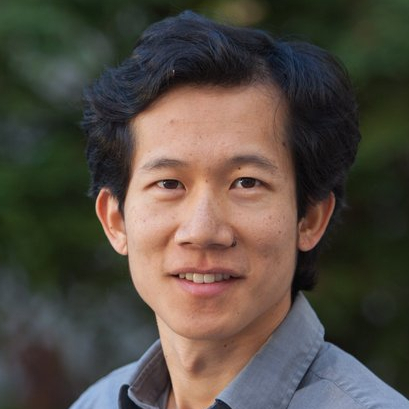 Percy Liang合作论文数Department of Computer Science, School of Engineering, Stanford University10
 Rohan Taori合作论文数Computer Science Department, School of Engineering, Stanford University7
 Carlos Guestrin合作论文数Computer Science Department, Stanford University;Visual Layer;Virtue AI5
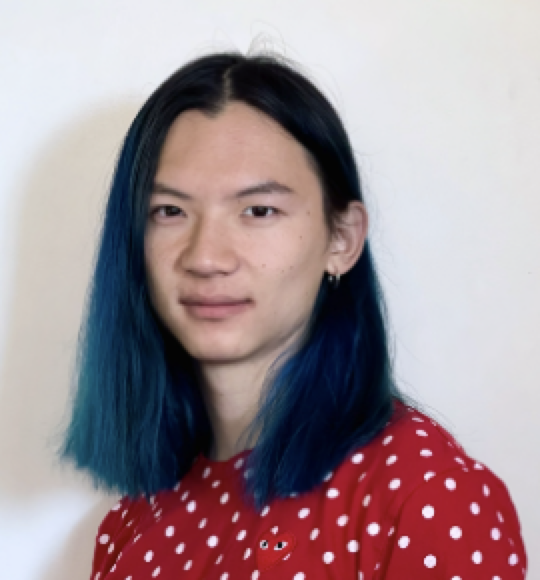 Tianyi Zhang合作论文数Thinking Machines Lab4
 Ishaan Gulrajani合作论文数OpenAI4
 Shibani Santurkar合作论文数Stanford University4
 Hyunjik Kim合作论文数Google DeepMind3
 Emile Mathieu合作论文数3
 Ning Miao (苗宁)合作论文数Department of Statistics, University of Oxford3
 Adam Foster合作论文数Microsoft Research3
 Tom Rainforth合作论文数Dept. of Statistics, University of Oxford3
 Chris J. Maddison合作论文数Department of Statistical Sciences, Faculty of Arts & Science, University of Toronto;Vector Institute;DeepMind3
 Wessel Bruinsma合作论文数Microsoft Research AI4Science2
 Rich Turner合作论文数Information Engineering Division, Department of Engineering, University of Cambridge2
 James Ryan Requeima合作论文数University of Toronto;Vector Institute2
 Yangjun Ruan合作论文数Machine Learning Group, Department of Computer Science, University of Toronto;Vector Institute;Department of Computer Science, Stanford University2
 Jimmy Ba合作论文数Department of Computer Science, University of Toronto2
 Jonathan Gordon合作论文数OpenAI2
 Andrew Y. K. Foong合作论文数Department of Radiation Oncology, Mayo Clinic2
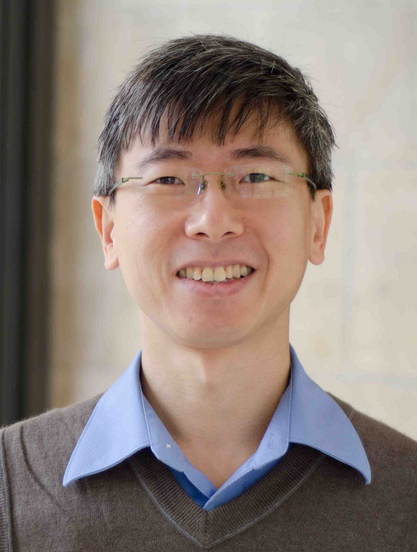 Yee Whye Teh合作论文数Department of Statistics, University of Oxford;Google DeepMind2Wenting Zhan合作论文数1
 Arjun Vikram合作论文数1Xiaofang Wang合作论文数1Tong Xiao合作论文数1Suvansh Sanjeev合作论文数1John Hallman合作论文数1Irina Kofman合作论文数1Enoch Cheung合作论文数1Andy Applebaum合作论文数1Ally Bennett合作论文数1Kevin Yu合作论文数1Kai Chen合作论文数1Foivos Tsimpourlas合作论文数1Boaz Barak合作论文数1Alexander Wei合作论文数1David Robinson合作论文数1Lorenz Kuhn合作论文数1Max Schwarzer合作论文数1Borys Minaiev合作论文数1Wenda Zhou合作论文数1Nikhil Mehta合作论文数1Andre Saraiva合作论文数1Rahul Arora合作论文数1Ahmed El-Kishky合作论文数1Mostafa Rohaninejad合作论文数1Lindsay McCallum合作论文数1Troy Peterson合作论文数1




