Vitamin B-1 ( thiamine) is an essential cofactor for several key enzymes of carbohydrate metabolism. Mammals have to salvage this crucial nutrient from their diet to complement their deficiency of de novo synthesis. In contrast, bacteria, fungi, plants and, as reported here, Plasmodium falciparum, possess a vitamin B-1 biosynthesis pathway. The plasmodial pathway identified consists of the three vitamin B-1 biosynthetic enzymes 5-(2-hydroxy-ethyl)-4-methylthiazole (THZ) kinase (ThiM), 4-amino-5-hydroxymethyl-2-methylpyrimidine (HMP)/HMP-P kinase ( ThiD) and thiamine phosphate synthase (ThiE). Recombinant PfThiM and PfThiD proteins were biochemically characterised, revealing K-m(app) values of 68 mu M for THZ and 12 mu M for HMP. Furthermore, the ability of PfThiE for generating vitamin B1 was analysed by a complementation assay with thiE-negative E. coli mutants. All three enzymes are expressed throughout the developmental blood stages, as shown by Northern blotting, which indicates the presence of the vitamin B-1 biosynthesis enzymes. However, cultivation of the parasite in minimal medium showed a dependency on the provision of HMP or thiamine. These results demonstrate that the human malaria parasite P. falciparum possesses active vitamin B-1 biosynthesis, which depends on external provision of thiamine precursors.
A new pathway for cysteine biosynthesis has been elucidated in Mycobacterium tuberculosis. This pathway involves a protein-bound thiocarboxylate (CysO-SH) as the sulfide donor, similar to thiamin biosynthesis. Cysteine synthase M (CysM) catalyzes the addition of cysteine to the carboxy terminus of the protein-bound thiocarboxylate to generate a CysO-cysteine adduct. A protease, Mec+, hydrolyzes the CysO-cysteine adduct to release cysteine and regenerate CysO. Mec+ contains a JAMM motif, and this work provides the first functional characterization of the JAMM motif in prokaryotes. MoeZ, a paralogue of ThiF, has been shown to transfer sulfur onto CysO.
ABSTRACT Two Bacillus subtilis genes encoding two proteins (currently annotated ThiD and YjbV) were overexpressed and characterized. YjbV has 4-amino-5-hydroxymethyl-2-methylpyrimidine and 4-amino-5-hydroxymethyl-2-methylpyrimidine pyrophosphate kinase activity and should be reannotated ThiD, and B. subtilis ThiD has pyridoxine, pyridoxal, and pyridoxamine kinase activity and should be reannotated PdxK.
The bifunctional CO dehydrogenase/acetyl-CoA synthase (CODH/ACS) plays a central role in the Wood-Ljungdahl pathway of autotrophic CO(2) fixation. A recent structure of the Moorella thermoacetica enzyme revealed that the ACS active site contains a [4Fe-4S] cluster bridged to a binuclear Cu-Ni site. Here, biochemical and x-ray absorption spectroscopic (XAS) evidence is presented that the copper ion at the M. thermoacetica ACS active site is essential. Depletion of copper correlates with reduction in ACS activity and in intensity of the "NiFeC" EPR signal without affecting either the activity or the EPR spectroscopic properties associated with CODH. In contrast, Zn content is negatively correlated with ACS activity without any apparent relationship to CODH activity. Cu is also found in the methanogenic CODH/ACS from Methanosarcina thermophila. XAS studies are consistent with a distorted Cu(I)-S(3) site in the fully active enzyme in solution. Cu extended x-ray absorption fine structure analysis indicates an average Cu-S bond length of 2.25 A and a metal neighbor at 2.65 A, consistent with the Cu-Ni distance observed in the crystal structure. XAS experiments in the presence of seleno-CoA reveal a Cu-S(3)Se environment with a 2.4-A Se-Cu bond, strongly implicating a Cu-SCoA intermediate in the mechanism of acetyl-CoA synthesis. These results indicate an essential and functional role for copper in the CODH/ACS from acetogenic and methanogenic organisms.
Thiamin pyrophosphate was synthesized in 71% yield, on a multi-milligram scale, using overexpressed thiazole kinase, pyrimidine kinase, thiamin phosphate synthase, and thiamin phosphate kinase. This provides a facile route to isotopically labeled thiamin pyrophosphate from its readily available pyrimidine and thiazole precursors.
Prolyl-4-hydroxylase catalyzes the formation of 4-hydroxyproline in collagens. In contrast to deacetoxy/deacetylcephalosporin C synthase, p-hydroxyphenylpyruvate hydroxylase, lysyl hydroxylase and α-ketoisocaproate oxygenase, no incorporation of 18O-labeled water into the hydroxylated product was found for the human type I prolyl-4-hydroxylase when N-Cbz-Gly-L-Phe-L-Pro-Gly-OEt was used as a substrate. This suggests that the ferryl intermediate for this enzyme is not solvent accessible.
Proline analogs (3-F, 3-Cl, 3-Br, 3,3-cyclopropyl, 3,3-methylene, 3-Me, and 4-Me) were synthesized, incorporated into CbzGlyPheXGlyOEt, and tested as substrate analogues/mechanistic probes for the human prolyl-4-hydroxylase catalyzed hydroxylation reaction. With the exception of the 3-fluoroproline containing peptide, none of these peptides were substrates for the enzyme.
 Fred McLafferty合作论文数Department of Chemistry and Chemical Biology, The College of Arts and Sciences, Cornell University5
 Ke Burns合作论文数3
 Pieter C Dorrestein合作论文数Departments of Pharmacology and Pediatrics, Skaggs School of Pharmacy and Pharmaceutical Sciences, University of California, San Diego;Collaborative Mass Spectrometry Innovation Center, University of California, San Diego;Institute for Metabolomics Medicine, University of California, San Diego3A.V. Toms合作论文数2HL Zhai合作论文数2manish tandon合作论文数ArQule Inc2
 Linda Nicholson合作论文数College of Agriculture and Life Sciences, Cornell University2
 Neil Kelleher合作论文数Department of Chemistry, Weinberg College of Arts and Sciences, Northwestern University;Chemistry of Life Processes Institute, Northwestern University;Department of Molecular Biosciences, Weinberg College of Arts & Sciences, Northwestern University2
 Kari I. Kivirikko合作论文数Department of Medical Biochemistry and Molecular Biology, University of Oulu;FibroGen Inc.2Min Wu合作论文数2Sabine Baumgart合作论文数2Cynthia Kinsland合作论文数2
 Johanna Myllyharju合作论文数Faculty of Biochemistry and Molecular Medicine, University of Oulu2Jun Xi合作论文数2
 Erick Strauss合作论文数Department of Chemistry and Chemical Biology, Cornell University2Ga Valaskovic合作论文数1E.C. Settembre合作论文数1MEHL RYAN AARON合作论文数1Kl Colabroy合作论文数1JH Park合作论文数1M P Weiner合作论文数1Reb Ketchum合作论文数1Nathan P. Laun合作论文数1Reddick J J合作论文数1
 Stephen Ragsdale合作论文数Department of Biological Chemistry, University of Michigan Medical School1
 Harold A. Scheraga合作论文数College of Arts and Sciences, Cornell University1Rolf D. Walter合作论文数1
 Michael Louis Shuler合作论文数Meinig School of Biomedical Engineering, Cornell University;Smith School of Chemical and Biomolecular Engineering, Cornell University;Hesperos Inc.1Parmesh G. Nayar合作论文数1
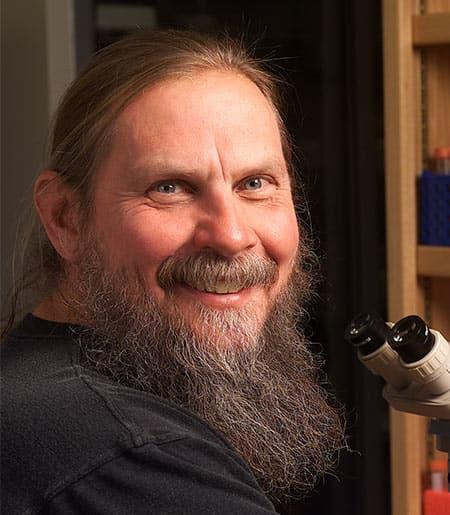 Steven Edward Ealick合作论文数Department of Chemistry and Chemical Biology, College of Arts & Sciences, Cornell University1Marie-Luise Eschbach合作论文数1
 Donna M. Gibson合作论文数Department of Counseling and Special Education, School of Education, Virginia Commonwealth University1Weiwei Gu合作论文数1Parmesh Nayar合作论文数1Carsten Wrenger合作论文数Department of Biochemistry, Bernhard Nocht Institute for Tropical Medicine1
 Rodney B. Croteau合作论文数Institute of Biological Chemistry, Washington State University1Huili Zhai合作论文数1
 Stephen Cramer合作论文数Department of Chemistry, University of California, Davis;SETI Institute1Javier Seravalli合作论文数Departments of Chemistry and Biochemistry and Higuchi Biosciences Center, University of Kansas1
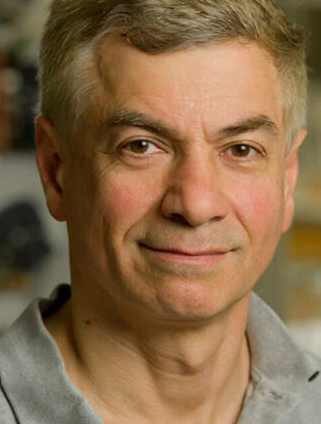 Shahriar Mobashery合作论文数Department of Chemistry & Biochemistry, College of Science, University of Notre Dame1A Pirskanen合作论文数1
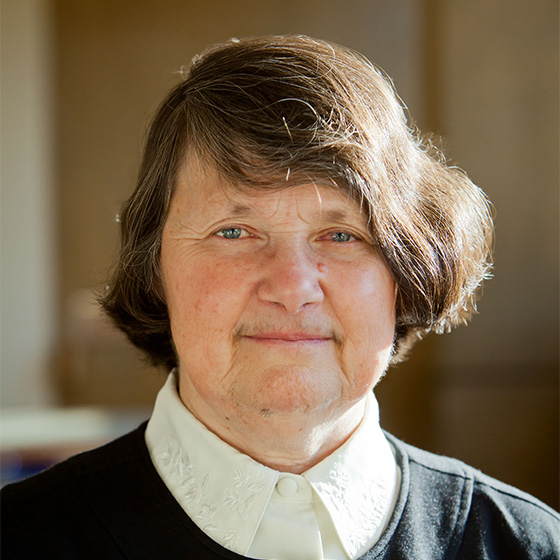 Suzanne Mahlburg Kay合作论文数Department of Earth and Atmospheric Sciences, College of Agriculture and Life Sciences, Cornell University1
 Andrei Osterman合作论文数Graduate School of Biomedical Sciences, Sanford Burnham Prebys;Infectious and Inflammatory Diseases Center, Sanford Burnham Prebys;NCI-Designated Cancer Center, Sanford Burnham Prebys1I. B. Müller合作论文数1Mark R. Witmer合作论文数1Jonathan S Melnick合作论文数1




