Abstract Measurement has a special role in quantum theory1: by collapsing the wavefunction it can enable phenomena such as teleportation2 and thereby alter the "arrow of time" that constrains unitary evolution. When integrated in many-body dynamics, measurements can lead to emergent patterns of quantum information in space-time3-10 that go beyond established paradigms for characterizing phases, either in or out of equilibrium11-13. On present-day NISQ processors14, the experimental realization of this physics is challenging due to noise, hardware limitations, and the stochastic nature of quantum measurement. Here we address each of these experimental challenges and investigate measurement-induced quantum information phases on up to 70 superconducting qubits. By leveraging the interchangeability of space and time, we use a duality mapping9,15-17 to avoid mid-circuit measurement and access different manifestations of the underlying phases—from entanglement scaling3,4 to measurement-induced teleportation18—in a unified way. We obtain finite-size signatures of a phase transition with a decoding protocol that correlates the experimental measurement record with classical simulation data. The phases display sharply different sensitivity to noise, which we exploit to turn an inherent hardware limitation into a useful diagnostic. Our work demonstrates an approach to realize measurement-induced physics at scales that are at the limits of current NISQ processors.
We demonstrate a high dynamic range Josephson parametric amplifier (JPA) in which the active nonlinear element is implemented using an array of rf-SQUIDs. The device is matched to the 50 Ω environment with a Klopfenstein-taper impedance transformer and achieves a bandwidth of 250-300 MHz, with input saturation powers up to -95 dBm at 20 dB gain. A 54-qubit Sycamore processor was used to benchmark these devices, providing a calibration for readout power, an estimate of amplifier added noise, and a platform for comparison against standard impedance matched parametric amplifiers with a single dc-SQUID. We find that the high power rf-SQUID array design has no adverse effect on system noise, readout fidelity, or qubit dephasing, and we estimate an upper bound on amplifier added noise at 1.6 times the quantum limit. Lastly, amplifiers with this design show no degradation in readout fidelity due to gain compression, which can occur in multi-tone multiplexed readout with traditional JPAs.
The leakage of quantum information out of the two computational states of a qubit into other energy states represents a major challenge for quantum error correction. During the operation of an error-corrected algorithm, leakage builds over time and spreads through multi-qubit interactions. This leads to correlated errors that degrade the exponential suppression of the logical error with scale, thus challenging the feasibility of quantum error correction as a path towards fault-tolerant quantum computation. Here, we demonstrate a distance-3 surface code and distance-21 bit-flip code on a quantum processor for which leakage is removed from all qubits in each cycle. This shortens the lifetime of leakage and curtails its ability to spread and induce correlated errors. We report a tenfold reduction in the steady-state leakage population of the data qubits encoding the logical state and an average leakage population of less than 1 × 10 −3 throughout the entire device. Our leakage removal process efficiently returns the system back to the computational basis. Adding it to a code circuit would prevent leakage from inducing correlated error across cycles. With this demonstration that leakage can be contained, we have resolved a key challenge for practical quantum error correction at scale.
Superconducting qubits typically use a dispersive readout scheme, where a resonator is coupled to a qubit such that its frequency is qubit-state dependent. Measurement is performed by driving the resonator, where the transmitted resonator field yields information about the resonator frequency and thus the qubit state. Ideally, we could use arbitrarily strong resonator drives to achieve a target signal-to-noise ratio in the shortest possible time. However, experiments have shown that when the average resonator photon number exceeds a certain threshold, the qubit is excited out of its computational subspace, which we refer to as a measurement-induced state transition. These transitions degrade readout fidelity, and constitute leakage which precludes further operation of the qubit in, for example, error correction. Here we study these transitions using a transmon qubit by experimentally measuring their dependence on qubit frequency, average photon number, and qubit state, in the regime where the resonator frequency is lower than the qubit frequency. We observe signatures of resonant transitions between levels in the coupled qubit-resonator system that exhibit noisy behavior when measured repeatedly in time. We provide a semi-classical model of these transitions based on the rotating wave approximation and use it to predict the onset of state transitions in our experiments. Our results suggest the transmon is excited to levels near the top of its cosine potential following a state transition, where the charge dispersion of higher transmon levels explains the observed noisy behavior of state transitions. Moreover, occupation in these higher energy levels poses a major challenge for fast qubit reset.
Leakage of quantum information out of computational states into higher energy states represents a major challenge in the pursuit of quantum error correction (QEC). In a QEC circuit, leakage builds over time and spreads through multi-qubit interactions. This leads to correlated errors that degrade the exponential suppression of logical error with scale, challenging the feasibility of QEC as a path towards fault-tolerant quantum computation. Here, we demonstrate the execution of a distance-3 surface code and distance-21 bit-flip code on a Sycamore quantum processor where leakage is removed from all qubits in each cycle. This shortens the lifetime of leakage and curtails its ability to spread and induce correlated errors. We report a ten-fold reduction in steady-state leakage population on the data qubits encoding the logical state and an average leakage population of less than $1 \times 10^{-3}$ throughout the entire device. The leakage removal process itself efficiently returns leakage population back to the computational basis, and adding it to a code circuit prevents leakage from inducing correlated error across cycles, restoring a fundamental assumption of QEC. With this demonstration that leakage can be contained, we resolve a key challenge for practical QEC at scale.
The interplay of interactions and strong disorder can lead to an exotic quantum many-body localized (MBL) phase of matter. Beyond the absence of transport, the MBL phase has distinctive signatures, such as slow dephasing and logarithmic entanglement growth; they commonly result in slow and subtle modifications of the dynamics, rendering their measurement challenging. Here, we experimentally characterize these properties of the MBL phase in a system of coupled superconducting qubits. By implementing phase sensitive techniques, we map out the structure of local integrals of motion in the MBL phase. Tomographic reconstruction of single and two-qubit density matrices allows us to determine the spatial and temporal entanglement growth between the localized sites. In addition, we study the preservation of entanglement in the MBL phase. The interferometric protocols implemented here detect affirmative quantum correlations and exclude artifacts due to the imperfect isolation of the system. By measuring elusive MBL quantities, our work highlights the advantages of phase sensitive measurements in studying novel phases of matter.
Using 47 superconducting qubits, we implement the kicked Ising model which exhibits Majorana edge modes (MEMs) protected by Z 2 parity symmetry. Remarkably, we find that any multi-qubit Pauli operator overlapping with the MEMs exhibits a uniform decay rate comparable to single-qubit relaxation rates, irrespective of its size or composition. This finding allows us to accurately reconstruct the exponentially localized spatial profiles of the MEMs. Spectroscopic measurements further indicate exponentially suppressed hybridization between the MEMs at larger system sizes, which manifests as a strong resilience against low-frequency noise. Our work elucidates the noise sensitivity of symmetry-protected edge modes in a solid-state environment.
We demonstrate the application of the Google Sycamore superconducting qubit quantum processor to combinatorial optimization problems with the quantum approximate optimization algorithm (QAOA). Like past QAOA experiments, we study performance for problems defined on the (planar) connectivity graph of our hardware; however, we also apply the QAOA to the Sherrington-Kirkpatrick model and MaxCut, both high dimensional graph problems for which the QAOA requires significant compilation. Experimental scans of the QAOA energy landscape show good agreement with theory across even the largest instances studied (23 qubits) and we are able to perform variational optimization successfully. For problems defined on our hardware graph we obtain an approximation ratio that is independent of problem size and observe, for the first time, that performance increases with circuit depth. For problems requiring compilation, performance decreases with problem size but still provides an advantage over random guessing for circuits involving several thousand gates. This behavior highlights the challenge of using near-term quantum computers to optimize problems on graphs differing from hardware connectivity. As these graphs are more representative of real world instances, our results advocate for more emphasis on such problems in the developing tradition of using the QAOA as a holistic, device-level benchmark of quantum processors.
Interaction in quantum systems can spread initially localized quantum information into the many degrees of freedom of the entire system. Understanding this process, known as quantum scrambling, is the key to resolving various conundrums in physics. Here, by measuring the time-dependent evolution and fluctuation of out-of-time-order correlators, we experimentally investigate the dynamics of quantum scrambling on a 53-qubit quantum processor. We engineer quantum circuits that distinguish the two mechanisms associated with quantum scrambling, operator spreading and operator entanglement, and experimentally observe their respective signatures. We show that while operator spreading is captured by an efficient classical model, operator entanglement requires exponentially scaled computational resources to simulate. These results open the path to studying complex and practically relevant physical observables with near-term quantum processors.
Scalable quantum computing can become a reality with error correction, provided that coherent qubits can be constructed in large arrays1,2. The key premise is that physical errors can remain both small and sufficiently uncorrelated as devices scale, so that logical error rates can be exponentially suppressed. However, impacts from cosmic rays and latent radioactivity violate these assumptions. An impinging particle can ionize the substrate and induce a burst of quasiparticles that destroys qubit coherence throughout the device. High-energy radiation has been identified as a source of error in pilot superconducting quantum devices3–5, but the effect on large-scale algorithms and error correction remains an open question. Elucidating the physics involved requires operating large numbers of qubits at the same rapid timescales necessary for error correction. Here, we use space- and time-resolved measurements of a large-scale quantum processor to identify bursts of quasiparticles produced by high-energy rays. We track the events from their initial localized impact as they spread, simultaneously and severely limiting the energy coherence of all qubits and causing chip-wide failure. Our results provide direct insights into the impact of these damaging error bursts and highlight the necessity of mitigation to enable quantum computing to scale. Cosmic rays flying through superconducting quantum devices create bursts of excitations that destroy qubit coherence. Rapid, spatially resolved measurements of qubit error rates make it possible to observe the evolution of the bursts across a chip.
Realizing the potential of quantum computing will require achieving sufficiently low logical error rates. Many applications call for error rates in the $10^{-15}$ regime, but state-of-the-art quantum platforms typically have physical error rates near $10^{-3}$. Quantum error correction (QEC) promises to bridge this divide by distributing quantum logical information across many physical qubits so that errors can be detected and corrected. Logical errors are then exponentially suppressed as the number of physical qubits grows, provided that the physical error rates are below a certain threshold. QEC also requires that the errors are local and that performance is maintained over many rounds of error correction, two major outstanding experimental challenges. Here, we implement 1D repetition codes embedded in a 2D grid of superconducting qubits which demonstrate exponential suppression of bit or phase-flip errors, reducing logical error per round by more than $100\times$ when increasing the number of qubits from 5 to 21. Crucially, this error suppression is stable over 50 rounds of error correction. We also introduce a method for analyzing error correlations with high precision, and characterize the locality of errors in a device performing QEC for the first time. Finally, we perform error detection using a small 2D surface code logical qubit on the same device, and show that the results from both 1D and 2D codes agree with numerical simulations using a simple depolarizing error model. These findings demonstrate that superconducting qubits are on a viable path towards fault tolerant quantum computing.
Quantum many-body systems display rich phase structure in their low-temperature equilibrium states. However, much of nature is not in thermal equilibrium. Remarkably, it was recently predicted that out-of-equilibrium systems can exhibit novel dynamical phases that may otherwise be forbidden by equilibrium thermodynamics, a paradigmatic example being the discrete time crystal (DTC). Concretely, dynamical phases can be defined in periodically driven many-body localized systems via the concept of eigenstate order. In eigenstate-ordered phases, the entire many-body spectrum exhibits quantum correlations and long-range order, with characteristic signatures in late-time dynamics from all initial states. It is, however, challenging to experimentally distinguish such stable phases from transient phenomena, wherein few select states can mask typical behavior. Here we implement a continuous family of tunable CPHASE gates on an array of superconducting qubits to experimentally observe an eigenstate-ordered DTC. We demonstrate the characteristic spatiotemporal response of a DTC for generic initial states. Our work employs a time-reversal protocol that discriminates external decoherence from intrinsic thermalization, and leverages quantum typicality to circumvent the exponential cost of densely sampling the eigenspectrum. In addition, we locate the phase transition out of the DTC with an experimental finite-size analysis. These results establish a scalable approach to study non-equilibrium phases of matter on current quantum processors.
Strongly correlated quantum systems give rise to many exotic physical phenomena, including high-temperature superconductivity. Simulating these systems on quantum computers may avoid the prohibitively high computational cost incurred in classical approaches. However, systematic errors and decoherence effects presented in current quantum devices make it difficult to achieve this. Here, we simulate the dynamics of the one-dimensional Fermi-Hubbard model using 16 qubits on a digital superconducting quantum processor. We observe separations in the spreading velocities of charge and spin densities in the highly excited regime, a regime that is beyond the conventional quasiparticle picture. To minimize systematic errors, we introduce an accurate gate calibration procedure that is fast enough to capture temporal drifts of the gate parameters. We also employ a sequence of error-mitigation techniques to reduce decoherence effects and residual systematic errors. These procedures allow us to simulate the time evolution of the model faithfully despite having over 600 two-qubit gates in our circuits. Our experiment charts a path to practical quantum simulation of strongly correlated phenomena using available quantum devices.
Twelve-qubit quantum computing for chemistryAccurate electronic structure calculations are considered one of the most anticipated applications of quantum computing that will revolutionize theoretical chemistry and other related fields. Using the Google Sycamore quantum processor, Google AI Quantum and collaborators performed a variational quantum eigensolver (VQE) simulation of two intermediate-scale chemistry problems: the binding energy of hydrogen chains (as large as H12) and the isomerization mechanism of diazene (see the Perspective by Yuan). The simulations were performed on up to 12 qubits, involving up to 72 two-qubit gates, and show that it is possible to achieve chemical accuracy when VQE is combined with error mitigation strategies. The key building blocks of the proposed VQE algorithm are potentially scalable to larger systems that cannot be simulated classically.Science, this issue p.1084; see also p.1054
Two-level-system (TLS) defects in amorphous dielectrics are a major source of noise and decoherence in solid-state qubits. Gate-dependent non-Markovian errors caused by TLS-qubit coupling are detrimental to fault-tolerant quantum computation and have not been rigorously treated in the existing literature. In this work, we derive the non-Markovian dynamics between TLS and qubits during a SWAP-like two-qubit gate and the associated average gate fidelity for frequency-tunable Transmon qubits. This gate dependent error model facilitates using qubits as sensors to simultaneously learn practical imperfections in both the qubit's environment and control waveforms. We combine the-state-of-art machine learning algorithm with Moiré-enhanced swap spectroscopy to achieve robust learning using noisy experimental data. Deep neural networks are used to represent the functional map from experimental data to TLS parameters and are trained through an evolutionary algorithm. Our method achieves the highest learning efficiency and robustness against experimental imperfections to-date, representing an important step towards in-situ quantum control optimization over environmental and control defects.
Future quantum computing systems will require cryogenic integrated circuits to control and measure millions of qubits. In this paper, we report the design and characterization of a prototype cryogenic CMOS integrated circuit that has been optimized for the control of transmon qubits. The circuit has been integrated into a quantum measurement setup and its performance has been validated through multiple quantum control experiments.
While quantum processors are typically cooled to <; 25 mK to avoid thermal disturbances to their delicate quantum states, all qubits still suffer decoherence and gate errors. As such, quantum error correction is needed to fully harness the power of quantum computing (QC). Current projections indicate that > 1,000 physical qubits will be required to encode one error-corrected qubit [1]. Implementing a system with 1,000 error-corrected qubits will likely require moving from the contemporary paradigm where control and readout of the quantum processor is carried out using racks of room temperature electronics to one in which integrated control/readout circuits are located within the cryogenic environment and connected to the quantum processor through superconducting interconnects [2]. This is a major challenge, as the cryo ICs must be high performance and very low power (eventually <; 1 mW/qubit). In this paper, we report the design and system-level characterization of a prototype cryo-CMOS IC for performing XY gate operations on transmon (XMON) qubits.
Implementation of an error-corrected quantum computer is believed to require a quantum processor with a million or more physical qubits, and, in order to run such a processor, a quantum control system of similar scale will be required.Such a controller will need to be integrated within the cryogenic system and in close proximity with the quantum processor in order to make such a system practical.Here, we present a prototype cryogenic CMOS quantum controller designed in a 28-nm bulk CMOS process and optimized to implement a 16-word (4-bit) XY gate instruction set for controlling transmon qubits.After introducing the transmon qubit, including a discussion of how it is controlled, design considerations are discussed, with an emphasis on error rates and scalability.The circuit design is then discussed.Cryogenic performance of the underlying technology is presented, and the results of several quantum control experiments carried out using the integrated controller are described.This article ends with a comparison to the state of the art and a discussion of further research to be carried out.It has been shown that the quantum control IC achieves promising performance while dissipating less than 2 mW of total ac and dc power and requiring a digital data stream of less than 500 Mb/s.
The promise of quantum computers is that certain computational tasks might be executed exponentially faster on a quantum processor than on a classical processor1. A fundamental challenge is to build a high-fidelity processor capable of running quantum algorithms in an exponentially large computational space. Here we report the use of a processor with programmable superconducting qubits2-7 to create quantum states on 53 qubits, corresponding to a computational state-space of dimension 253 (about 1016). Measurements from repeated experiments sample the resulting probability distribution, which we verify using classical simulations. Our Sycamore processor takes about 200 seconds to sample one instance of a quantum circuit a million times-our benchmarks currently indicate that the equivalent task for a state-of-the-art classical supercomputer would take approximately 10,000 years. This dramatic increase in speed compared to all known classical algorithms is an experimental realization of quantum supremacy8-14 for this specific computational task, heralding a much-anticipated computing paradigm.
 Yu Chen合作论文数Google AI Quantum Lab20
 Kunal Arya合作论文数Google, Goleta, CA 94043 USA19
 Marissa Giustina合作论文数Google, Goleta, CA 94043 USA19
 Brian Burkett合作论文数Google, Goleta, CA 94043 USA19
 Chris Quintana合作论文数Department of Physics, University of California19
 Andrew Dunsworth合作论文数Google AI Quantum19
 Charles Neill合作论文数Google;University of California, Santa Barbara19
 Paul V Klimov合作论文数Google19
 Evan Jeffrey合作论文数19
 Matthew Neeley合作论文数Department of Physics;University of California , Santa Barbara;Department of Physics, University of California , Santa Barbara19
 Matt McEwen合作论文数Dept Phys, Univ Calif Santa Barbara18
 B. Foxen合作论文数Department of Physics, University of California, Santa Barbara, California 93106-9530, USA18
 Kelly J合作论文数Department of Physics, University of California18
 Joseph Bardin合作论文数Department of Electrical and Computer Engineering, College of Engineering, University of Massachusetts Amherst18
 Ofer Naaman合作论文数National Institute of Standards and Technology18
 Hartmut Neven合作论文数Google18
 Daniel Sank合作论文数Google18
 Erik Lucero合作论文数Department of Physics;University of California , Santa Barbara;Department of Physics, University of California , Santa Barbara17Roberto Collins合作论文数16Xiao Mi合作论文数16
 Kevin Satzinger合作论文数Google Inc16
 Austin Fowler合作论文数Stairway Invest16
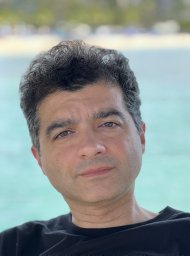 Pedram Roushan合作论文数Joseph Henry Labs, Princeton Univ16
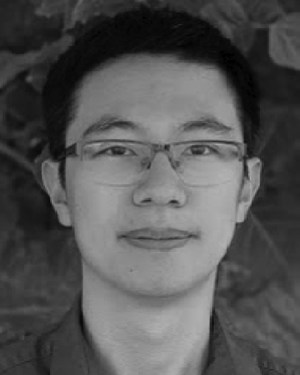 Z. Chen合作论文数Google15
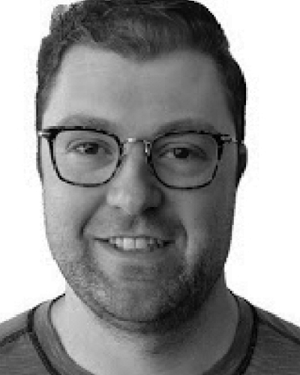 Frank Arute合作论文数Google Quantum, Mountain View, CA 94043 USA15
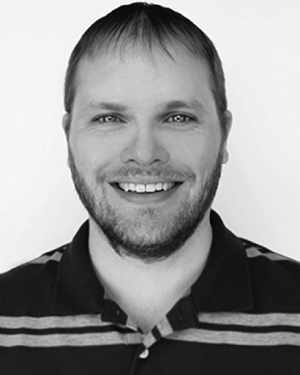 Anthony Megrant合作论文数Google, Goleta, CA 94043 USA15Fedor Kostritsa合作论文数14Seon Kim合作论文数14Z. Jamie Yao合作论文数14
 Sabrina Hong合作论文数Google Quantum AI, Santa Barbara, CA 93105 USA14White T C合作论文数Department of Physics, University of California14
 Vadim N. Smelyanskiy合作论文数Computation Science Division, NASA Ames Research Center14
 Dvir Kafri合作论文数13David A. Buell合作论文数13Nicholas Bushnell合作论文数13Pavel Laptev合作论文数13Ping Yeh合作论文数13David Landhuis合作论文数13
 Sean Harrington合作论文数Google13
 Josh Mutus合作论文数Department of Physics, University of California13
 Rami Barends合作论文数Peter Grünberg Institute for Functional Quantum Systems, Forschungszentrum Jülich13Adam Zalcman合作论文数12
 Marco Szalay合作论文数Google Res, Mountain View, CA 94043 USA12Andre Petukhov合作论文数12
 Alexander N. Korotkov合作论文数Department of Electrical and Computer Engineering, University of California, Riverside12
 Bob Buckley合作论文数Ctr Spintron & Quantum Computat, Univ Calif Santa Barbara12
 Sergio Boixo合作论文数Google12
 Catherine Erickson合作论文数11
 Jiang Zhang (张江)合作论文数School of Systems Science, Beijing Normal University11




