Résumé Cette étude explore les effets du degré d'adhésion d'un locuteur A à une proposition sur le choix de la forme syntaxique utilisée par un locuteur B pour modifier cette proposition. L'hypothèse est que plus A se montre certain de ce qu'il avance, plus B préférera la forme clivée à la forme simple pour modifier cette croyance. Cette hypothèse est vérifiée dans une première expérience d'appariement : la forme clivée est associée au contexte où la croyance contestée a été exprimée par A avec un haut degré de certitude et la forme simple au contexte où A s'est montré plus hésitant. Dans une seconde expérience (tâche de production), les sujets reproduisent cette tendance quand l'élément modifié est autre que l'agent. Le degré de conviction de A influence également le caractère complet ou elliptique de la phrase clivée et son accompagnement par une phrase négative. Les résultats sont discutés en termes de facilitation du traitement de l'information par l'interlocuteur. Mots clés : phrase clivée, fonction contrastive, production.
The present study focuses on the effects of contextual demands on the selection of a particular syntactic device, in asking whether French-speaking children from 4 to 10 years old will spontaneously produce it-cleft sentences if there is a functional necessity arising from the context. Taking into account recent studies that have specified the discourse function(s) served by this marked sentence form, it was hypothesized that the cleft formulation would be more likely than its uncleft counterpart whenever the child's intention was to contrast their own belief or knowledge with that of their addressee. The study showed this to be the case when the matter of the disagreement concerned the agent of an action: that situation elicited an overwhelming majority (from 80% to 97%) of cleft constructions, even from the youngest children. On the other hand, when the matter of the disagreement concerned the patient, there were only a few cleft constructions, even with the oldest children; contrastive stress on the object constituent was the predominant device employed for marking information in that situation. The high proportion of clefts in the Agent condition, and the high proportion of stressed object constituents in the Patient condition, both differ from previously reported data. These differences are discussed with reference to differences in task requirements and to differences between the prosodic constraints of French and English.
Contextual factors influencing the acceptability and understanding of cleft and corresponding uncleft sentences were investigated in four experiments. Experiments 1 to 3 used a sentence-choice paradigm within short dialogs between two interlocutors. Experiment 1 showed that the cleft construction was highly preferred over the corresponding uncleft in contexts where the speaker's utterance was to provide new information which was incompatible with the addressee's belief; on the contrary, in contexts where there was no incompatibility between the interlocutors' positions, the standard uncleft formulation was preferred. Experiment 2 showed that, in the belief-change contexts, unclefts preceded by an interjected No were preferred to unclefts not preceded by an interjected No. Experiment 3, however, contradicted the idea of a functional equivalence between clefts and unclefts preceded by an interjected No. Experiments 1 to 3 actually indicate that clefts do something that the unclefts do not, be they preceded or not by an interjected No, when contrastive information has to be conveyed. Using a simple comprehension time paradigm, Experiment 4 found that contextually appropriate formulations were understood faster than contextually inappropriate ones; cleft sentences, in particular, were understood faster than the corresponding unclefts when used for conveying contrastive information. These effects were analyzed in reference to H. H. Clark and S. E. Haviland's (in R. O. Freedle (Ed.), Discourse Production and Comprehension (Vol. 1), Norwood, NJ: Ablex, 1977) sketch of the Given-New Comprehension strategy applied to denials.
 Michel Hupet合作论文数5janet e davidson合作论文数1Joseph Paul Stemberger合作论文数1Susan Bovair合作论文数1stephen j eady合作论文数1Charles R. Fletcher合作论文数1Robert J Weber合作论文数1William M Hazelett合作论文数1
 Richard P. Meier合作论文数Department of French and Italian, College of Liberal Arts, University of Texas at Austin1Gm Stephenson合作论文数1Meredyth Daneman合作论文数1
 Fred Conrad合作论文数Department of Psychology, College of Literature, Science, and the Arts, University of Michigan-Ann Arbor1
 Daniel G. Morrow合作论文数Department of Educationa, College of Education, University of Illinois Urbana-Champaign1
 Jacques Mehler合作论文数Language, Cognition and Development Lab, International School for Advanced Studies1
 Steve Greenspan合作论文数1
 Michael Masson合作论文数Department of Psychology, Faculty of Social Sciences, University of Victoria1
 Rebecca Treiman合作论文数Department of Education, College of Arts and Sciences, Washington University;Reading and Language Lab, College of Arts and Sciences, Washington University1
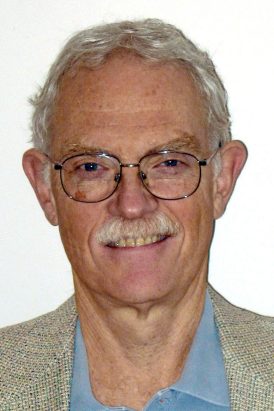 Henry Wellman合作论文数Department of Psychology, College of Literature, Science, and the Arts, University of Michigan;Center for Human Growth and Development, University of Michigan1
 Raymond W. Gibbs Jr.合作论文数Department of Psychology, University of California, Santa Cruz1
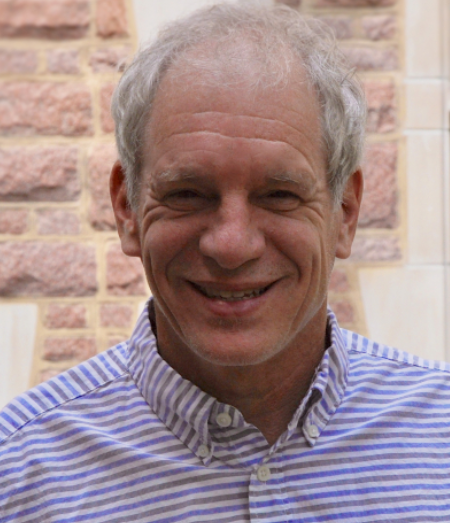 Mark McDaniel合作论文数Psychological & Brain Sciences, Washington University1
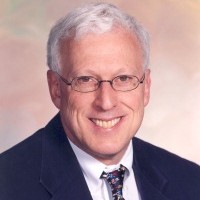 Robert J. Sternberg合作论文数Department of Psychology, College of Human Ecology, Cornell University1
 Marta Kutas合作论文数Department of Cognitive Science, University of California, San Diego1
 John Jonides合作论文数Department of Psychology, College of Literature, Science and the Arts, University of Michigan1
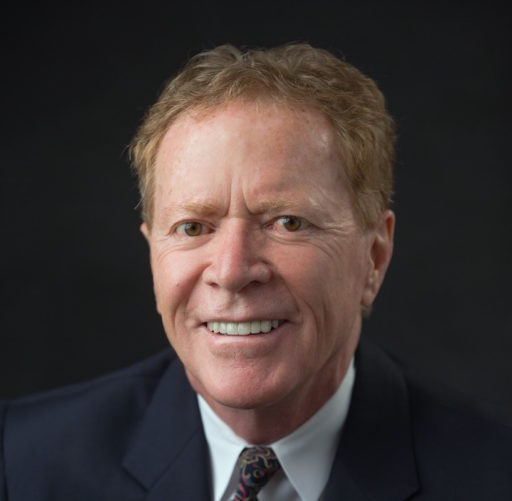 Gilles O. Einstein合作论文数Department of Psychology, Furman University1
 Lance Rips合作论文数Department of Psychology, Weinberg College of Arts and Sciences, Northwestern University1
 Dennis Norris合作论文数MRC Cognition and Brain Sciences Unit, University of Cambridge1
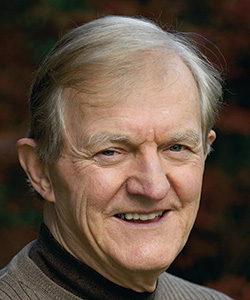 Gordon H. Bower合作论文数Department of Psychology, Stanford University1William Prinzmetal合作论文数1
 Fergus Craik合作论文数Department of Psychology, Faculty of Arts & Science, University of Toronto;Rotman Research Institute, Baycrest Centre for Geriatric Care1
 David A. Rosenbaum合作论文数Department of Psychology, University of California, Riverside/Department of Psychology, Pennsylvania State University1Franz Schmalhofer合作论文数1
 William E. Cooper合作论文数Department of Biology, Indiana University-Purdue University Fort Wayne;Savannah River Ecology Lab, University Of Georgia1
 Lorraine K. Tyler合作论文数Centre for Speech, Language, and the Brain, Department of Psychology, University of Cambridge1
 Fernanda M. Ferreira合作论文数Department of Psychology, University of Edinburgh1Michael H. Kelly合作论文数Department of Psychology, University of Pennsylvania1Judith Kiely合作论文数1Albert L. Schmidt合作论文数1Karl F. Haberlandt合作论文数1Van Hindorff合作论文数1N. K. Clark合作论文数1
 Helen Neville合作论文数Brain Development Lab, Psychology Department, University of Oregon1
 Moshe Naveh Benjamin合作论文数Department of Psychological Sciences, University of Missouri/Memory and Cognitive Aging Laboratory, University of Missouri1Jay G. Rueckl合作论文数University of Connecticut1
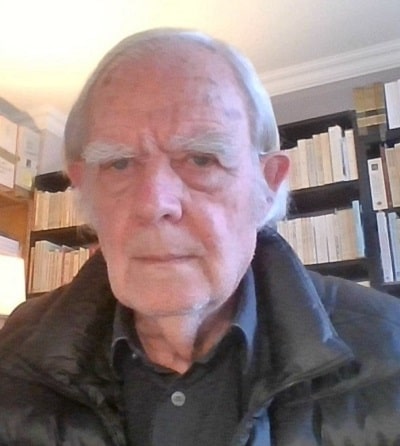 Juan Segui合作论文数Centre National De La Recherche Scientifique1D. R. Rutter合作论文数1Anne Cutler合作论文数Language Comprehension Group 1
 Gregg C. Oden合作论文数Department of Psychology, University of Wisconsin1Robert G. Crowder合作论文数1Paul K. Dunay合作论文数1




