Weakly supervised semantic segmentation (WSSS) is a challenging yet important research field in vision community. In WSSS, the key problem is to generate high-quality pseudo segmentation masks (PSMs). Existing approaches mainly depend on the discriminative object part to generate PSMs, which would inevitably miss object parts or involve surrounding image background, as the learning process is unaware of the full object structure. In fact, both the discriminative object part and the full object structure are critical for deriving of high-quality PSMs. To fully explore these two information cues, we build a novel end-to-end learning framework, alternate self-dual teaching (ASDT), based on a dual-teacher single-student network architecture. The information interaction among different network branches is formulated in the form of knowledge distillation (KD). Unlike the conventional KD, the knowledge of the two teacher models would inevitably be noisy under weak supervision. Inspired by the Pulse Width (PW) modulation, we introduce a PW wave-like selection signal to alleviate the influence of the imperfect knowledge from either teacher model on the KD process. Comprehensive experiments on the PASCAL VOC 2012 and COCO-Stuff 10K demonstrate the effectiveness of the proposed ASDT framework, and new state-of-the-art results are achieved.
With the goal of learning to localize specific object semantics using the low-cost image-level annotation, weakly supervised object localization (WSOL) has been receiving increasing attention in recent years. Although existing literatures have studied a number of major issues in this field, one important yet challenging scenario, where the test object semantics may appear in the training phase (seen categories) or never been observed before (unseen categories), is still beyond the exploration of the existing works. We define this scenario as the generalized WSOL (GWSOL) and make a pioneering effort to study it in this article. By leveraging attribute vectors to associate seen and unseen categories, we involve threefold modeling components, i.e., the class-sensitive modeling, semantic-agnostic modeling, and content-aware modeling, into a unified end-to-end learning framework. Such design enables our model to recognize and localize unconstrained object semantics, learn compact and discriminative features that could represent the potential unseen categories, and customize content-aware attribute weights to avoid localizing on misleading attribute elements. To advance this research direction, we contribute the bounding-box manual annotations to the widely used AwA2 dataset and benchmark the GWSOL methods. Comprehensive experiments demonstrate the effectiveness of our proposed learning framework and each of the considered modeling components.
Recent advances in high-fidelity simulators [22, 44, 82] have enabled closed-loop training of autonomous driving agents, potentially solving the distribution shift in training v.s. deployment and allowing training to be scaled both safely and cheaply. However, there is a lack of understanding of how to build effective training benchmarks for closed-loop training. In this work, we present the first empirical study which analyzes the effects of different training benchmark designs on the success of learning agents, such as how to design traffic scenarios and scale training environments. Furthermore, we show that many popular RL algorithms cannot achieve satisfactory performance in the context of autonomous driving, as they lack long-term planning and take an extremely long time to train. To address these issues, we propose trajectory value learning (TRAVL), an RL-based driving agent that performs planning with multistep look-ahead and exploits cheaply generated imagined data for efficient learning. Our experiments show that TRAVL can learn much faster and produce safer maneuvers compared to all the baselines.
In recent years, weakly supervised object detection has attracted great attention in the computer vision community. Although numerous deep learning-based approaches have been proposed in the past few years, such an ill-posed problem is still challenging and the learning performance is still behind the expectation. In fact, most of the existing approaches only consider the visual appearance of each proposal region but ignore to make use of the helpful context information. To this end, this paper introduces two levels of context into the weakly supervised learning framework. The first one is the proposal-level context, i.e., the relationship of the spatially adjacent proposals. The second one is the semantic-level context, i.e., the relationship of the co-occurring object categories. Therefore, the proposed weakly supervised learning framework contains not only the cognition process on the visual appearance but also the reasoning process on the proposal- and semantic-level relationships, which leads to the novel deep multiple instance reasoning framework. Specifically, built upon a conventional CNN-based network architecture, the proposed framework is equipped with two additional graph convolutional network-based reasoning models to implement object location reasoning and multi-label reasoning within an end-to-end network training procedure. Comprehensive experiments on the widely used PASCAL VOC and MS COCO benchmarks have been implemented, which demonstrate the superior capacity of the proposed approach when compared with other state-of-the-art methods and baseline models.
In this paper, we propose an end-to-end self-driving network featuring a sparse attention module that learns to automatically attend to important regions of the input. The attention module specifically targets motion planning, whereas prior literature only applied attention in perception tasks. Learning an attention mask directly targeted for motion planning significantly improves the planner safety by performing more focused computation. Furthermore, visualizing the attention improves interpretability of end-to-end self-driving.
Self-driving vehicles must perceive and predict the future positions of nearby actors in order to avoid collisions and drive safely. A learned deep learning module is often responsible for this task, requiring large-scale, high-quality training datasets. As data collection is often significantly cheaper than labeling in this domain, the decision of which subset of examples to label can have a profound impact on model performance. Active learning techniques, which leverage the state of the current model to iteratively select examples for labeling, offer a promising solution to this problem. However, despite the appeal of this approach, there has been little scientific analysis of active learning approaches for the perception and prediction (P&P) problem. In this work, we study active learning techniques for P&P and find that the traditional active learning formulation is ill-suited for the P&P setting. We thus introduce generalizations that ensure that our approach is both cost-aware and allows for fine-grained selection of examples through partially labeled scenes. Our experiments on a real-world, large-scale self-driving dataset suggest that fine-grained selection can improve the performance across perception, prediction, and downstream planning tasks.
Self-driving vehicles must perceive and predict the future positions of nearby actors to avoid collisions and drive safely. A deep learning module is often responsible for this task, requiring large-scale, high-quality training datasets. Due to high labeling costs, active learning approaches are an appealing solution to maximizing model performance for a given labeling budget. However, despite its appeal, there has been little scientific analysis of active learning approaches for the perception and prediction (P&P) problem. In this work, we study active learning techniques for P&P and find that the traditional active learning formulation is ill-suited. We thus introduce generalizations that ensure that our approach is both cost-aware and allows for fine-grained selection of examples through partially labeled scenes. Extensive experiments on a real-world dataset suggest significant improvements across perception, prediction, and downstream planning tasks.
Self-supervised representation learning is able to learn semantically meaningful features; however, much of its recent success relies on multiple crops of an image with very few objects. Instead of learning view-invariant representation from simple images, humans learn representations in a complex world with changing scenes by observing object movement, deformation, pose variation and ego motion. Motivated by this ability, we present a new self-supervised learning representation framework that can be directly deployed on a video stream of complex scenes with many moving objects. Our framework features a simple flow equivariance objective that encourages the network to predict the features of another frame by applying a flow transformation to the features of the current frame. Our representations, learned from high-resolution raw video, can be readily used for downstream tasks on static images. Readout experiments on challenging semantic segmentation, instance segmentation, and object detection benchmarks show that we are able to outperform representations obtained from previous state-of-the-art methods including SimCLR [6] and BYOL [18].
In the past few years we have seen great advances in object perception (particularly in 4D space-time dimensions) thanks to deep learning methods. However, they typically rely on large amounts of high-quality labels to achieve good performance, which often require time-consuming and expensive work by human annotators. To address this we propose an automatic annotation pipeline that generates accurate object trajectories in 3D space (i.e., 4D labels) from LiDAR point clouds. The key idea is to decompose the 4D object label into two parts: the object size in 3D that's fixed through time for rigid objects, and the motion path describing the evolution of the object's pose through time. Instead of generating a series of labels in one shot, we adopt an iterative refinement process where online generated object detections are tracked through time as the initialization. Given the cheap but noisy input, our model produces higher quality 4D labels by re-estimating the object size and smoothing the motion path, where the improvement is achieved by exploiting aggregated observations and motion cues over the entire trajectory. We validate the proposed method on a large-scale driving dataset and show a 25% reduction of human annotation efforts. We also showcase the benefits of our approach in the annotator-in-the-loop setting.
Compressing large neural networks is an important step for their deployment in resource-constrained computational platforms. In this context, vector quantization is an appealing framework that expresses multiple parameters using a single code, and has recently achieved state-of-the-art network compression on a range of core vision and natural language processing tasks. Key to the success of vector quantization is deciding which parameter groups should be compressed together. Previous work has relied on heuristics that group the spatial dimension of individual convolutional filters, but a general solution remains unaddressed. This is desirable for pointwise convolutions (which dominate modern architectures), linear layers (which have no notion of spatial dimension), and convolutions (when more than one filter is compressed to the same codeword). In this paper we make the observation that the weights of two adjacent layers can be permuted while expressing the same function. We then establish a connection to rate-distortion theory and search for permutations that result in networks that are easier to compress. Finally, we rely on an annealed quantization algorithm to better compress the network and achieve higher final accuracy. We show results on image classification, object detection, and segmentation, reducing the gap with the uncompressed model by 40 to 70% w.r.t. the current state of the art. All our experiments can be reproduced using the code at https://github.com/uber-research/permute-quantize-finetune.
Forecasting the future behaviors of dynamic actors is an important task in many robotics applications such as self-driving. It is extremely challenging as actors have latent intentions and their trajectories are governed by complex interactions between the other actors, themselves, and the map. In this paper, we propose LaneRCNN, a graph-centric motion forecasting model that captures the actor-to-actor and the actor-to-map relations in a distributed and structured manner. Relying on a specially designed graph encoder, we learn a local graph representation per actor (LaneRoI) to encode its past motions and the local map topology. We further develop an interaction module which permits efficient message passing among local graph representations within a shared global lane graph. Moreover, we parameterize the output trajectories based on lane graphs, a more amenable prediction parameterization. We demonstrate the effectiveness of our approach on the challenging Argoverse [1] motion forecasting benchmark and achieve state-of-the-art performance.
In this paper we address an important problem in self-driving, forecasting multi-pedestrian motion and their shared scene occupancy map, which is critical for safe navigation. Our contributions are two-fold. First, we advocate for predicting both the individual motions as well as the scene occupancy map in order to effectively deal with missing detections caused by postprocessing, e.g. confidence thresholding and non-maximum suppression. Second, we propose a Scene-Actor Graph Neural Network (SA-GNN) which captures the interactions among pedestrians within the same scene, including those that have not been detected, by preserving the relative spatial information of pedestrians via 2D convolution and via message passing. We show that our scene-occupancy predictions are more accurate than those from state-of-the-art motion forecasting methods, while also matching their performance in pedestrian motion forecasting metrics on two large-scale real-world datasets, nuScenes and ATG4D.
An intelligent agent operating in the real-world must balance achieving its goal with maintaining the safety and comfort of not only itself, but also other participants within the surrounding scene. This requires jointly reasoning about the behavior of other actors while deciding its own actions as these two processes are inherently intertwined – a vehicle will yield to us if we decide to proceed first at the intersection but will proceed first if we decide to yield. However, this is not captured in most self-driving pipelines, where planning follows prediction. In this paper we propose a novel data-driven, reactive planning objective which allows a self-driving vehicle to jointly reason about its own plans as well as how other actors will react to them. We formulate the problem as an energy-based deep structured model that is learned from observational data and encodes both the planning and prediction problems. Through simulations based on both real-world driving and synthetically generated dense traffic, we demonstrate that our reactive model outperforms a non-reactive variant in successfully completing highly complex maneuvers (lane merges/turns in traffic) faster, without trading off collision rate. Please see our supplementary document https://tinyurl.com/3nukpn5b for all additional details.
Network pruning can significantly reduce the computation and memory footprint of large neural networks. To achieve a good trade-off between model size and performance, popular pruning techniques usually rely on hand-crafted heuristics and require manually setting the compression ratio for each layer. This process is typically time-consuming and requires expert knowledge to achieve good results. In this paper, we propose NAP, a unified and automatic pruning framework for both fine-grained and structured pruning. It can find out unimportant components of a network and automatically decide appropriate compression ratios for different layers, based on a theoretically sound criterion. Towards this goal, NAP uses an efficient approximation of the Hessian for evaluating the importances of components, based on a Kronecker-factored Approximate Curvature method. Despite its simpleness to use, NAP outperforms previous pruning methods by large margins. For fine-grained pruning, NAP can compress AlexNet and VGG16 by 25x, and ResNet-50 by 6.7x without loss in accuracy on ImageNet. For structured pruning (e.g. channel pruning), it can reduce flops of VGG16 by 5.4x and ResNet-50 by 2.3x with only 1% accuracy drop. More importantly, this method is almost free from hyper-parameter tuning and requires no expert knowledge. You can start NAP and then take a nap!
In this paper, we address the important problem in self-driving of forecasting multi-pedestrian motion and their shared scene occupancy map, critical for safe navigation. Our contributions are two-fold. First, we advocate for predicting both the individual motions as well as the scene occupancy map in order to effectively deal with missing detections caused by postprocessing, e.g., confidence thresholding and non-maximum suppression. Second, we propose a Scene-Actor Graph Neural Network (SA-GNN) which preserves the relative spatial information of pedestrians via 2D convolution, and captures the interactions among pedestrians within the same scene, including those that have not been detected, via message passing. On two large-scale real-world datasets, nuScenes and ATG4D, we showcase that our scene-occupancy predictions are more accurate and better calibrated than those from state-of-the-art motion forecasting methods, while also matching their performance in pedestrian motion forecasting metrics.
In this paper, we tackle the problem of detecting objects in 3D and forecasting their future motion in the context of self-driving. Towards this goal, we design a novel approach that explicitly takes into account the interactions between actors. To capture their spatial-temporal dependencies, we propose a recurrent neural network with a novel Transformer [1] architecture, which we call the Interaction Transformer. Importantly, our model can be trained end-to-end, and runs in real-time. We validate our approach on two challenging real-world datasets: ATG4D [2] and nuScenes [3]. We show that our approach can outperform the state-of-the-art on both datasets. In particular, we significantly improve the social compliance between the estimated future trajectories, resulting in far fewer collisions between the predicted actors.
In this paper, we explore the use of vehicle-to-vehicle (V2V) communication to improve the perception and motion forecasting performance of self-driving vehicles. By intelligently aggregating the information received from multiple nearby vehicles, we can observe the same scene from different viewpoints. This allows us to see through occlusions and detect actors at long range, where the observations are very sparse or non-existent. We also show that our approach of sending compressed deep feature map activations achieves high accuracy while satisfying communication bandwidth requirements.
We tackle the problem of joint perception and motion forecasting in the context of self-driving vehicles. Towards this goal we propose PnPNet, an end-to-end model that takes as input sequential sensor data, and outputs at each time step object tracks and their future trajectories. The key component is a novel tracking module that generates object tracks online from detections and exploits trajectory level features for motion forecasting. Specifically, the object tracks get updated at each time step by solving both the data association problem and the trajectory estimation problem. Importantly, the whole model is end-to-end trainable and benefits from joint optimization of all tasks. We validate PnPNet on two large-scale driving datasets, and show significant improvements over the state-of-the-art with better occlusion recovery and more accurate future prediction.
3D shape completion for real data is important but challenging, since partial point clouds acquired by real-world sensors are usually sparse, noisy and unaligned. Different from previous methods, we address the problem of learning 3D complete shape from unaligned and real-world partial point clouds. To this end, we propose a weakly-supervised method to estimate both 3D canonical shape and 6-DoF pose for alignment, given multiple partial observations associated with the same instance. The network jointly optimizes canonical shapes and poses with multi-view geometry constraints during training, and can infer the complete shape given a single partial point cloud. Moreover, learned pose estimation can facilitate partial point cloud registration. Experiments on both synthetic and real data show that it is feasible and promising to learn 3D shape completion through large-scale data without shape and pose supervision.
In this paper, we propose the Deep Structured self-Driving Network (DSDNet), which performs object detection, motion prediction, and motion planning with a single neural network. Towards this goal, we develop a deep structured energy based model which considers the interactions between actors and produces socially consistent multimodal future predictions. Furthermore, DSDNet explicitly exploits the predicted future distributions of actors to plan a safe maneuver by using a structured planning cost. Our sample-based formulation allows us to overcome the difficulty in probabilistic inference of continuous random variables. Experiments on a number of large-scale self driving datasets demonstrate that our model significantly outperforms the state-of-the-art.
 Raquel Urtasun合作论文数Department of Computer Science, Faculty of Arts and Science, University of Toronto;Waabi22
 Bin Yang (杨斌)合作论文数MiniMax9
 Mengye Ren合作论文数Department of Computer Science, New York University7
 Sergio Casas合作论文数Perception and Behavior Reasoning Team, Waabi7
 Yuwen Xiong (熊郁文)合作论文数Machine Learning Group, Department of Computer Science, University of Toronto6
 Ming Liang (梁鸣)合作论文数6
 Renjie Liao (廖仁杰)合作论文数Department of Electrical and Computer Engineering, Faculty of Applied Science, The University of British Columbia;Google Brain4
 Sean Segal合作论文数Uber Advanced Technologies Group TAB3
 Dingwen Zhang (张鼎文)合作论文数School of Automation, Northwestern Polytechnical University3
 Junwei Han (韩军伟)合作论文数School of Automation, Northwestern Polytechnical University3
 Wenjie Luo (骆文杰)合作论文数Waymo3Siva Manivasagam合作论文数University of Toronto2
 Katie Luo合作论文数Cornell University;Department of Aeronautics and Astronautics, Stanford University2
 Nishanth Kumar合作论文数Department of Computer Science, Brown University2
 Yankai Lin (林衍凯)合作论文数Gaoling School of Artificial Intelligence, Renmin University of China2
 Xinchen Yan (严欣辰)合作论文数Luma AI2
 Simon Suo合作论文数LlamaIndex2
 Rui Hu合作论文数Waabi2
 Jingkang Wang (王靖康)合作论文数Waabi2
 Zhiyuan Liu (刘知远)合作论文数Department of Computer Science and Technology, Tsinghua University2
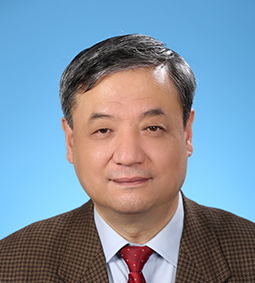 Maosong Sun (孙茂松)合作论文数Department of Computer Science and Technology, Tsinghua University2
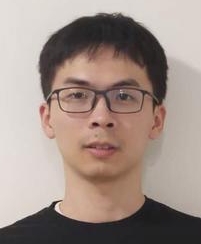 Yun Chen合作论文数Department of Computer Science, University of Toronto;Waabi.AI2
 Abbas Sadat合作论文数Waabi2Tsun-Hsuan Wang合作论文数1
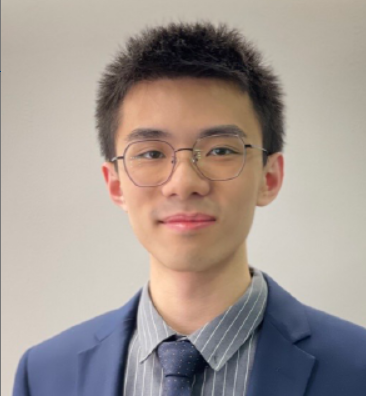 Hao Li (Leo Li) (李昊)合作论文数Northwestern Polytechnical University1Runsheng Guo合作论文数1Lei Li合作论文数1Tingwei Liu合作论文数1
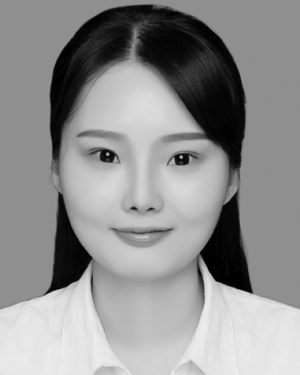 Jieru YAO (姚洁茹)合作论文数1
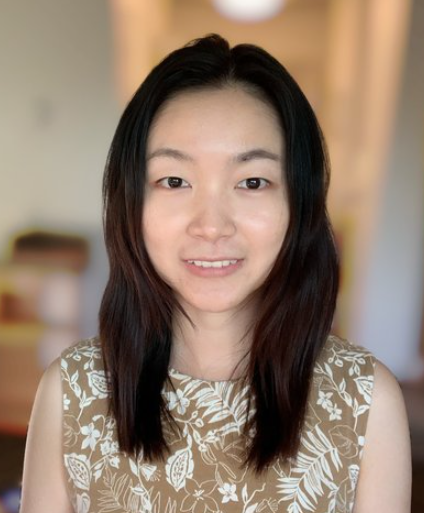 Jiaman Li (李佳蔓)合作论文数The Movement Lab, Stanford University1
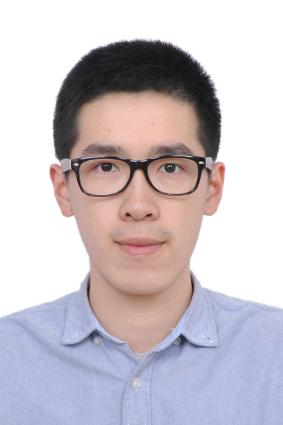 Jiayuan Gu (顾家远)合作论文数School of Information Science and Technology, ShanghaiTech University1Jashan Shewakramani合作论文数1
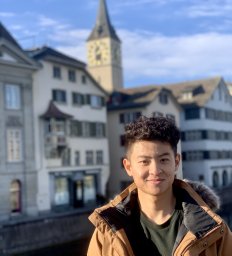 Bob Wei合作论文数Uber ATG1Lingyun Luke Li合作论文数Uber Advanced Technologies Group#TAB#1
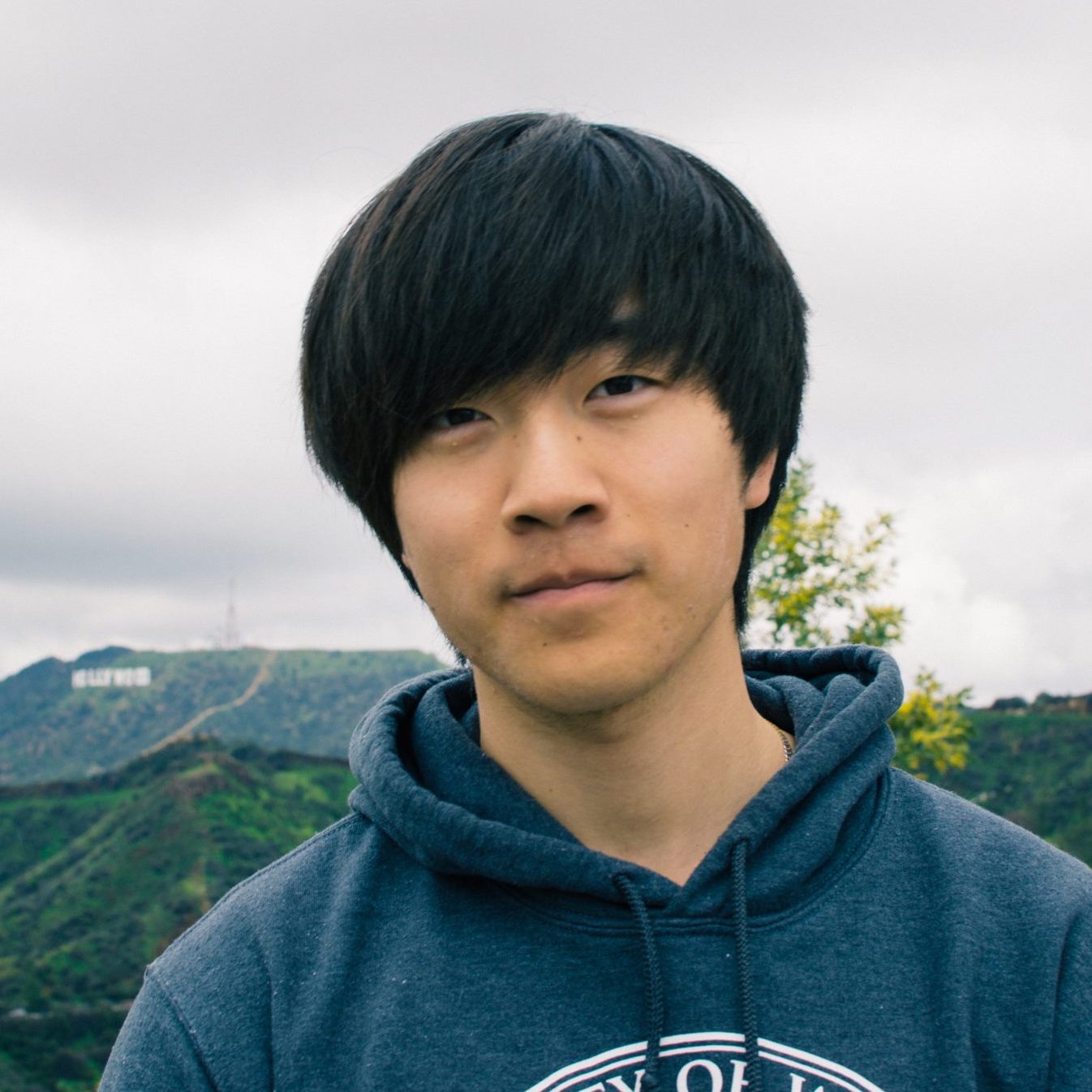 Chris Zhang合作论文数Waabi Innovation Inc;Machine Learning Group, University of Toronto1
 Guangyu Guo合作论文数Northwestern Polytech Univ, Xian, Shaanxi, Peoples R China1
 Jerry Liu合作论文数Uber ATG1
 Shenlong Wang (王申龙)合作论文数Department of Computer Science, The Grainger College of Engineering, University of Illinois at Urbana-Champaign1
 Wei-Chiu Ma (馬惟九)合作论文数Department of Computer Science, College of Computing and Information Science, Cornell University;University of Washington1
 Julieta Martinez合作论文数Meta1
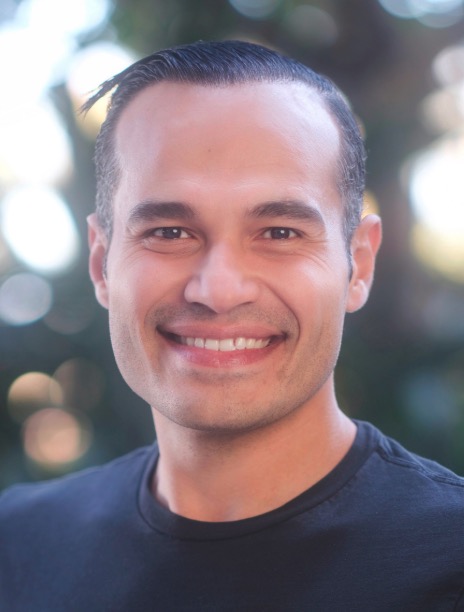 Ersin Yumer合作论文数Adobe1
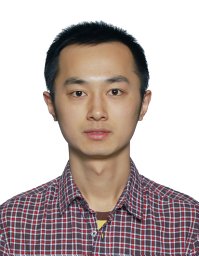 Binbin Dai合作论文数Dept Elect & Comp Engn, Univ Toronto1
 Chaowei Fang (方超伟)合作论文数School of Artificial Intelligence, Xidian University1
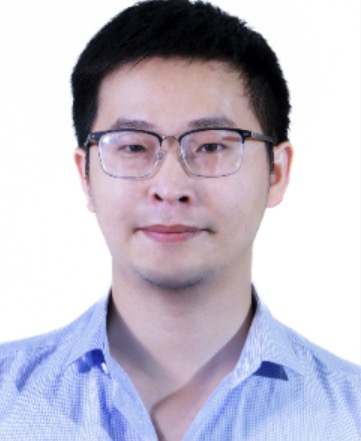 Lechao Cheng (程乐超)合作论文数School of Computer Science and Information Engineering, Hefei University of Technology1
 Chaoqi Wang合作论文数Department of Computer Science, University of Chicago1Zihao Wang合作论文数Ningbo University1
 Guodong Zhang (张国栋)合作论文数xAI1
 Ming-Ming Cheng (程明明)合作论文数Department of Computer Science and Technology, College of Computer Science, Nankai University1
 Roger Grosse合作论文数Department of Computer Science, University of Toronto;Schwartz Reisman Institute for Technology and Society;Anthropic1




