While recent vision-language-action models trained on diverse robot datasets exhibit promising generalization capabilities with limited in-domain data, their reliance on compact action heads to predict discretized or continuous actions constrains adaptability to heterogeneous action spaces. We present Dita, a scalable framework that leverages Transformer architectures to directly denoise continuous action sequences through a unified multimodal diffusion process. Departing from prior methods that condition denoising on fused embeddings via shallow networks, Dita employs in-context conditioning – enabling fine-grained alignment between denoised actions and raw visual tokens from historical observations. This design explicitly models action deltas and environmental nuances. By scaling the diffusion action denoiser alongside the Transformer's scalability, Dita effectively integrates cross-embodiment datasets across diverse camera perspectives, observation scenes, tasks, and action spaces. Such synergy enhances robustness against various variances and facilitates the successful execution of long-horizon tasks. Evaluations across extensive benchmarks demonstrate state-of-the-art or comparative performance in simulation. Notably, Dita achieves robust real-world adaptation to environmental variances and complex long-horizon tasks through 10-shot finetuning, using only third-person camera inputs. The architecture establishes a versatile, lightweight and open-source baseline for generalist robot policy learning. Project Page: https://robodita.github.io.
Recent years have witnessed remarkable advances in Large Vision-Language Models (LVLMs), which have achieved human-level performance across various complex vision-language tasks. Following LLaVA's paradigm, mainstream LVLMs typically employ a shallow MLP for visual-language alignment through a two-stage training process: pretraining for cross-modal alignment followed by instruction tuning. While this approach has proven effective, the underlying mechanisms of how MLPs bridge the modality gap remain poorly understood. Although some research has explored how LLMs process transformed visual tokens, few studies have investigated the fundamental alignment mechanism. Furthermore, the MLP adapter requires retraining whenever switching LLM backbones. To address these limitations, we first investigate the working principles of MLP adapters and discover that they learn to project visual embeddings into subspaces spanned by corresponding text embeddings progressively. Based on this insight, we propose LangBridge, a novel adapter that explicitly maps visual tokens to linear combinations of LLM vocabulary embeddings. This innovative design enables pretraining-free adapter transfer across different LLMs while maintaining performance. Our experimental results demonstrate that a LangBridge adapter pre-trained on Qwen2-0.5B can be directly applied to larger models such as LLaMA3-8B or Qwen2.5-14B while maintaining competitive performance. Overall, LangBridge enables interpretable vision-language alignment by grounding visual representations in LLM vocab embedding, while its plug-and-play design ensures efficient reuse across multiple LLMs with nearly no performance degradation. See our project page at https://curryx-001.github.io/LangBridge.github.io/
Self-supervised learning has driven significant progress in learning from single-subject, _iconic_ images.However, there are still unanswered questions about the use of minimally-curated, naturalistic video data, which contain _dense_ scenes with many independent objects, imbalanced class distributions, and varying object sizes.In this paper, we propose PooDLe, a self-supervised learning method that combines an invariance-based objective on pooled representations with a dense SSL objective that enforces equivariance to optical flow warping.Our results show that a unified objective applied at multiple feature scales is essential for learning effective image representations from naturalistic videos.We validate our method with experiments on the BDD100K driving video dataset and the Walking Tours first-person video dataset, demonstrating its ability to capture spatial understanding from a dense objective and semantic understanding via a pooled representation objective.
Learning world models can teach an agent how the world works in an unsupervised manner. Even though it can be viewed as a special case of sequence modeling, progress for scaling world models on robotic applications such as autonomous driving has been somewhat less rapid than scaling language models with Generative Pre-trained Transformers (GPT). We identify two reasons as major bottlenecks: dealing with complex and unstructured observation space, and having a scalable generative model. Consequently, we propose Copilot4D, a novel world modeling approach that first tokenizes sensor observations with VQVAE, then predicts the future via discrete diffusion. To efficiently decode and denoise tokens in parallel, we recast Masked Generative Image Transformer as discrete diffusion and enhance it with a few simple changes, resulting in notable improvement. When applied to learning world models on point cloud observations, Copilot4D reduces prior SOTA Chamfer distance by more than 65% for 1s prediction, and more than 50% for 3s prediction, across NuScenes, KITTI Odometry, and Argoverse2 datasets. Our results demonstrate that discrete diffusion on tokenized agent experience can unlock the power of GPT-like unsupervised learning for robotics.
In this paper, we introduce the big.LITTLE Vision Transformer, an innovative architecture aimed at achieving efficient visual recognition. This dual-transformer system is composed of two distinct blocks: the big performance block, characterized by its high capacity and substantial computational demands, and the LITTLE efficiency block, designed for speed with lower capacity. The key innovation of our approach lies in its dynamic inference mechanism. When processing an image, our system determines the importance of each token and allocates them accordingly: essential tokens are processed by the high-performance big model, while less critical tokens are handled by the more efficient little model. This selective processing significantly reduces computational load without sacrificing the overall performance of the model, as it ensures that detailed analysis is reserved for the most important information. To validate the effectiveness of our big.LITTLE Vision Transformer, we conducted comprehensive experiments on image classification and segment anything task. Our results demonstrate that the big.LITTLE architecture not only maintains high accuracy but also achieves substantial computational savings. Specifically, our approach enables the efficient handling of large-scale visual recognition tasks by dynamically balancing the trade-offs between performance and efficiency. The success of our method underscores the potential of hybrid models in optimizing both computation and performance in visual recognition tasks, paving the way for more practical and scalable deployment of advanced neural networks in real-world applications.
We introduce Deformable Convolution v4 (DCNv4), a highly efficient and effective operator designed for a broad spectrum of vision applications. DCNv4 addresses the limitations of its predecessor, DCNv3, with two key enhancements: 1. removing softmax normalization in spatial aggregation to enhance its dynamic property and expressive power and 2. optimizing memory access to minimize redundant operations for speedup. These improvements result in a significantly faster convergence compared to DCNv3 and a substantial increase in processing speed, with DCNv4 achieving more than three times the forward speed. DCNv4 demonstrates exceptional performance across various tasks, including image classification, instance and semantic segmentation, and notably, image generation. When integrated into generative models like U-Net in the latent diffusion model, DCNv4 outperforms its baseline, underscoring its possibility to enhance generative models. In practical applications, replacing DCNv3 with DCNv4 in the InternImage model to create FlashInternImage results in up to 80% speed increase and further performance improvement without further modifications. The advancements in speed and efficiency of DCNv4, combined with its robust performance across diverse vision tasks, show its potential as a foundational building block for future vision models.
Recent large vision-language-action models pretrained on diverse robot datasets have demonstrated the potential for generalizing to new environments with a few in-domain data. However, those approaches usually predict individual discretized or continuous action by a small action head, which limits the ability in handling diverse action spaces. In contrast, we model the continuous action sequence with a large multi-modal diffusion transformer, dubbed as Diffusion Transformer Policy, in which we directly denoise action chunks by a large transformer model rather than a small action head for action embedding. By leveraging the scaling capability of transformers, the proposed approach can effectively model continuous end-effector actions across large diverse robot datasets, and achieve better generalization performance. Extensive experiments demonstrate the effectiveness and generalization of Diffusion Transformer Policy on Maniskill2, Libero, Calvin and SimplerEnv, as well as the real-world Franka arm, achieving consistent better performance on Real-to-Sim benchmark SimplerEnv, real-world Franka Arm and Libero compared to OpenVLA and Octo. Specifically, without bells and whistles, the proposed approach achieves state-of-the-art performance with only a single third-view camera stream in the Calvin task ABC->D, improving the average number of tasks completed in a row of 5 to 3.6, and the pretraining stage significantly facilitates the success sequence length on the Calvin by over 1.2.
Generative models have significantly improved the generation and prediction quality on either camera images or LiDAR point clouds for autonomous driving. However, a real-world autonomous driving system uses multiple kinds of input modality, usually cameras and LiDARs, where they contain complementary information for generation, while existing generation methods ignore this crucial feature, resulting in the generated results only covering separate 2D or 3D information. In order to fill the gap in 2D-3D multi-modal joint generation for autonomous driving, in this paper, we propose our framework, HoloDrive, to jointly generate the camera images and LiDAR point clouds. We employ BEV-to-Camera and Camera-to-BEV transform modules between heterogeneous generative models, and introduce a depth prediction branch in the 2D generative model to disambiguate the un-projecting from image space to BEV space, then extend the method to predict the future by adding temporal structure and carefully designed progressive training. Further, we conduct experiments on single frame generation and world model benchmarks, and demonstrate our method leads to significant performance gains over SOTA methods in terms of generation metrics.
Developing generative models for interleaved image-text data has both research and practical value. It requires models to understand the interleaved sequences and subsequently generate images and text. However, existing attempts are limited by the issue that the fixed number of visual tokens cannot efficiently capture image details, which is particularly problematic in the multi-image scenarios. To address this, this paper presents MM-Interleaved, an end-to-end generative model for interleaved image-text data. It introduces a multi-scale and multi-image feature synchronizer module, allowing direct access to fine-grained image features in the previous context during the generation process. MM-Interleaved is end-to-end pre-trained on both paired and interleaved image-text corpora. It is further enhanced through a supervised fine-tuning phase, wherein the model improves its ability to follow complex multi-modal instructions. Experiments demonstrate the versatility of MM-Interleaved in recognizing visual details following multi-modal instructions and generating consistent images following both textual and visual conditions. Code and models are available at .
In this paper, we study the problem of unsupervised object detection from 3D point clouds in self-driving scenes. We present a simple yet effective method that exploits (i) point clustering in near-range areas where the point clouds are dense, (ii) temporal consistency to filter out noisy unsupervised detections, (iii) translation equivariance of CNNs to extend the auto-labels to long range, and (iv) self-supervision for improving on its own. Our approach, OYSTER (Object Discovery via Spatio-Temporal Refinement), does not impose constraints on data collection (such as repeated traversals of the same location), is able to detect objects in a zero-shot manner without supervised finetuning (even in sparse, distant regions), and continues to self-improve given more rounds of iterative self-training. To better measure model performance in self-driving scenarios, we propose a new planning-centric perception metric based on distance-to-collision. We demonstrate that our unsupervised object detector significantly outperforms unsupervised baselines on PandaSet and Argoverse 2 Sensor dataset, showing promise that self-supervision combined with object priors can enable object discovery in the wild. For more information, visit the project website: https://waabi.ai/research/oyster.
LiDAR provides accurate geometric measurements of the 3D world. Unfortunately, dense LiDARs are very expensive and the point clouds captured by low-beam LiDAR are often sparse. To address these issues, we present UltraLiDAR, a data-driven framework for scene-level LiDAR completion, LiDAR generation, and LiDAR manipulation. The crux of UltraLiDAR is a compact, discrete representation that encodes the point cloud's geometric structure, is robust to noise, and is easy to manipulate. We show that by aligning the representation of a sparse point cloud to that of a dense point cloud, we can densify the sparse point clouds as if they were captured by a real high-density LiDAR, drastically reducing the cost. Furthermore, by learning a prior over the discrete codebook, we can generate diverse, realistic LiDAR point clouds for self-driving. We evaluate the effectiveness of UltraLiDAR on sparse-to-dense LiDAR completion and LiDAR generation. Experiments show that densifying real-world point clouds with our approach can significantly improve the performance of downstream perception systems. Compared to prior art on LiDAR generation, our approach generates much more realistic point clouds. According to A/B test, over 98.5% of the time human participants prefer our results over those of previous methods. Please refer to project page https://waabi.ai/research/ultralidar/ for more information.
Difference between AeConv and previous works. The main difference between AeConv and previous works (e.g. DCN [1], STN [3] and MVDeTr [2]) is: the offset of AeConv is azimuth-equivalent and designed according to the inherent property of the BEV features, while the offset/transformation of the previous works is learned from the features. In practice, the learning of the offset is difficult in BEV space of multi-view 3D detection for the following reasons: (1) The offset/transformation convolution is translation-invariant, which is unfriendly for learning the azimuth-equivalent offset. (2) The projected BEV features are inaccurate and noisy because the depth predicted from the monocular camera is inaccurate. Experimentally, we replaced the convolution with DCN in BEV network, and the model crashed during training. Instead, the offset of AeConv is designed according to the radial symmetry of the BEV features, providing a strong prior to the network. It thus largely reduces the variability of data and the learning difficulty.
A major bottleneck to scaling-up training of self-driving perception systems are the human annotations required for supervision. A promising alternative is to leverage "auto-labelling" offboard perception models that are trained to automatically generate annotations from raw LiDAR point clouds at a fraction of the cost. Auto-labels are most commonly generated via a two-stage approach -- first objects are detected and tracked over time, and then each object trajectory is passed to a learned refinement model to improve accuracy. Since existing refinement models are overly complex and lack advanced temporal reasoning capabilities, in this work we propose LabelFormer, a simple, efficient, and effective trajectory-level refinement approach. Our approach first encodes each frame's observations separately, then exploits self-attention to reason about the trajectory with full temporal context, and finally decodes the refined object size and per-frame poses. Evaluation on both urban and highway datasets demonstrates that LabelFormer outperforms existing works by a large margin. Finally, we show that training on a dataset augmented with auto-labels generated by our method leads to improved downstream detection performance compared to existing methods. Please visit the project website for details https://waabi.ai/labelformer
Self-driving vehicles (SDVs) must be rigorously tested on a wide range of scenarios to ensure safe deployment. The industry typically relies on closed-loop simulation to evaluate how the SDV interacts on a corpus of synthetic and real scenarios and verify it performs properly. However, they primarily only test the system's motion planning module, and only consider behavior variations. It is key to evaluate the full autonomy system in closed-loop, and to understand how variations in sensor data based on scene appearance, such as the shape of actors, affect system performance. In this paper, we propose a framework, Adv3D, that takes real world scenarios and performs closed-loop sensor simulation to evaluate autonomy performance, and finds vehicle shapes that make the scenario more challenging, resulting in autonomy failures and uncomfortable SDV maneuvers. Unlike prior works that add contrived adversarial shapes to vehicle roof-tops or roadside to harm perception only, we optimize a low-dimensional shape representation to modify the vehicle shape itself in a realistic manner to degrade autonomy performance (e.g., perception, prediction, and motion planning). Moreover, we find that the shape variations found with Adv3D optimized in closed-loop are much more effective than those in open-loop, demonstrating the importance of finding scene appearance variations that affect autonomy in the interactive setting.
Recent advances in high-fidelity simulators [22, 44, 82] have enabled closed-loop training of autonomous driving agents, potentially solving the distribution shift in training v.s. deployment and allowing training to be scaled both safely and cheaply. However, there is a lack of understanding of how to build effective training benchmarks for closed-loop training. In this work, we present the first empirical study which analyzes the effects of different training benchmark designs on the success of learning agents, such as how to design traffic scenarios and scale training environments. Furthermore, we show that many popular RL algorithms cannot achieve satisfactory performance in the context of autonomous driving, as they lack long-term planning and take an extremely long time to train. To address these issues, we propose trajectory value learning (TRAVL), an RL-based driving agent that performs planning with multistep look-ahead and exploits cheaply generated imagined data for efficient learning. Our experiments show that TRAVL can learn much faster and produce safer maneuvers compared to all the baselines.
Recent work on hyperparameters optimization (HPO) has shown the possibility of training certain hyperparameters together with regular parameters. However, these online HPO algorithms still require running evaluation on a set of validation examples at each training step, steeply increasing the training cost. To decide when to query the validation loss, we model online HPO as a time-varying Bayesian optimization problem, on top of which we propose a novel \textit{costly feedback} setting to capture the concept of the query cost. Under this setting, standard algorithms are cost-inefficient as they evaluate on the validation set at every round. In contrast, the cost-efficient GP-UCB algorithm proposed in this paper queries the unknown function only when the model is less confident about current decisions. We evaluate our proposed algorithm by tuning hyperparameters online for VGG and ResNet on CIFAR-10 and ImageNet100. Our proposed online HPO algorithm reaches human expert-level performance within a single run of the experiment, while incurring only modest computational overhead compared to regular training.
Self-supervised representation learning is able to learn semantically meaningful features; however, much of its recent success relies on multiple crops of an image with very few objects. Instead of learning view-invariant representation from simple images, humans learn representations in a complex world with changing scenes by observing object movement, deformation, pose variation and ego motion. Motivated by this ability, we present a new self-supervised learning representation framework that can be directly deployed on a video stream of complex scenes with many moving objects. Our framework features a simple flow equivariance objective that encourages the network to predict the features of another frame by applying a flow transformation to the features of the current frame. Our representations, learned from high-resolution raw video, can be readily used for downstream tasks on static images. Readout experiments on challenging semantic segmentation, instance segmentation, and object detection benchmarks show that we are able to outperform representations obtained from previous state-of-the-art methods including SimCLR [6] and BYOL [18].
In this paper we address an important problem in self-driving, forecasting multi-pedestrian motion and their shared scene occupancy map, which is critical for safe navigation. Our contributions are two-fold. First, we advocate for predicting both the individual motions as well as the scene occupancy map in order to effectively deal with missing detections caused by postprocessing, e.g. confidence thresholding and non-maximum suppression. Second, we propose a Scene-Actor Graph Neural Network (SA-GNN) which captures the interactions among pedestrians within the same scene, including those that have not been detected, by preserving the relative spatial information of pedestrians via 2D convolution and via message passing. We show that our scene-occupancy predictions are more accurate than those from state-of-the-art motion forecasting methods, while also matching their performance in pedestrian motion forecasting metrics on two large-scale real-world datasets, nuScenes and ATG4D.
Network pruning can significantly reduce the computation and memory footprint of large neural networks. To achieve a good trade-off between model size and performance, popular pruning techniques usually rely on hand-crafted heuristics and require manually setting the compression ratio for each layer. This process is typically time-consuming and requires expert knowledge to achieve good results. In this paper, we propose NAP, a unified and automatic pruning framework for both fine-grained and structured pruning. It can find out unimportant components of a network and automatically decide appropriate compression ratios for different layers, based on a theoretically sound criterion. Towards this goal, NAP uses an efficient approximation of the Hessian for evaluating the importances of components, based on a Kronecker-factored Approximate Curvature method. Despite its simpleness to use, NAP outperforms previous pruning methods by large margins. For fine-grained pruning, NAP can compress AlexNet and VGG16 by 25x, and ResNet-50 by 6.7x without loss in accuracy on ImageNet. For structured pruning (e.g. channel pruning), it can reduce flops of VGG16 by 5.4x and ResNet-50 by 2.3x with only 1% accuracy drop. More importantly, this method is almost free from hyper-parameter tuning and requires no expert knowledge. You can start NAP and then take a nap!
In this paper, we address the important problem in self-driving of forecasting multi-pedestrian motion and their shared scene occupancy map, critical for safe navigation. Our contributions are two-fold. First, we advocate for predicting both the individual motions as well as the scene occupancy map in order to effectively deal with missing detections caused by postprocessing, e.g., confidence thresholding and non-maximum suppression. Second, we propose a Scene-Actor Graph Neural Network (SA-GNN) which preserves the relative spatial information of pedestrians via 2D convolution, and captures the interactions among pedestrians within the same scene, including those that have not been detected, via message passing. On two large-scale real-world datasets, nuScenes and ATG4D, we showcase that our scene-occupancy predictions are more accurate and better calibrated than those from state-of-the-art motion forecasting methods, while also matching their performance in pedestrian motion forecasting metrics.
 Raquel Urtasun合作论文数Department of Computer Science, Faculty of Arts and Science, University of Toronto;Waabi24
 Renjie Liao (廖仁杰)合作论文数Department of Electrical and Computer Engineering, Faculty of Applied Science, The University of British Columbia;Google Brain9
 Jifeng Dai (代季峰)合作论文数Department of Electronic Engineering, Tsinghua University9
 Mengye Ren合作论文数Department of Computer Science, New York University8
 Rui Hu合作论文数Waabi6
 Wenyuan Zeng合作论文数Ubiquant6
 Sergio Casas合作论文数Perception and Behavior Reasoning Team, Waabi6
 Wei-Chiu Ma (馬惟九)合作论文数Department of Computer Science, College of Computing and Information Science, Cornell University;University of Washington5
 Xizhou Zhu合作论文数Shanghai AI Laboratory;Tsinghua University5
 Yuntao (Simon) Chen合作论文数Faculty of Brain Science, University College London4
 Yu Qiao (乔宇)合作论文数Multimedia Laboratory, Shenzhen Institutes of Advanced Technology, Chinese Academy of Sciences;Shanghai AI Laboratory;Shenzhen University of Advanced Technology4
 Haochao Ying (应豪超)合作论文数School of Medicine, Zhejiang University3
 Lewei Lu合作论文数SenseTime Research3
 Jian Wu (吴健)合作论文数School of Medicine, Zhejiang University3
 Jingkang Wang (王靖康)合作论文数Waabi3
 Liang Chen (陈亮)合作论文数School of Computer Science and Engineering, Sun Yat-Sen University3Hengjun Pu合作论文数2Ronglei Tong合作论文数2Tianyi Zhang合作论文数2Anqi Joyce Yang合作论文数2
 Tong Lu (路通)合作论文数National Key Laboratory for Novel Software Technology, Department of Computer Science and Technology, Nanjing University2Siva Manivasagam合作论文数University of Toronto2
 Katie Luo合作论文数Cornell University;Department of Aeronautics and Astronautics, Stanford University2
 Lunjun Zhang合作论文数University of Toronto2
 Changyao Tian合作论文数MMLab, The Chinese University of Hong Kong2Lisa Zhang合作论文数Department of Mathematical & Computational Sciences, University of Toronto Mississauga2
 Sean Segal合作论文数Uber Advanced Technologies Group TAB2
 Justin Liang合作论文数Waabi2
 Xinchen Yan (严欣辰)合作论文数Luma AI2
 Ersin Yumer合作论文数Adobe2
 Namdar Homayounfar合作论文数Waabi2
 Yoon Kijung合作论文数Center for Learning and Memory, University of Texas at Austin2
 Hengshuang Zhao (赵恒爽)合作论文数Division of AI & Data Science, School of Computing and Data Science, The University of Hong Kong2
 Wenhai Wang (王文海)合作论文数Multimedia Laboratory, The Chinese University of Hong Kong2
 Jie Zhou (周杰)合作论文数Department of Automation, Tsinghua University2
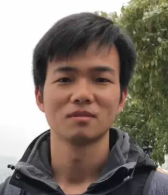 Zhi Hou合作论文数The University of Sydney2
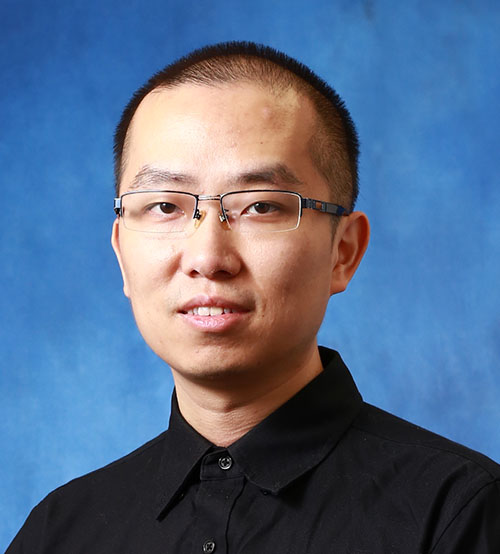 Hongsheng Li (李鴻升)合作论文数Department of Electronic Engineering, The Chinese University of Hong Kong;Multimedia Laboratory, The Chinese University of Hong Kong2
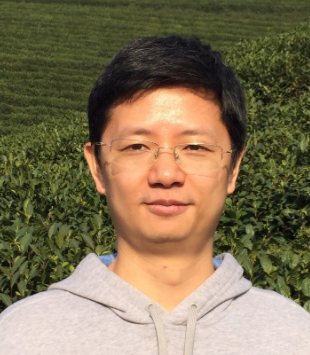 Yichen Wei (危夷晨)合作论文数SHUKUN Technology2
 Richard Zemel合作论文数Department of Computer Science, Faculty of Arts and Science, University of Toronto;Vector Institute for Artificial Intelligence2
 Ethan Fetaya合作论文数Faculty of Engineering, Bar-Ilan University2
 Xaq Pitkow合作论文数College of Engineering, Carnegie Mellon University;Neuroscience Institute, Carnegie Mellon University2
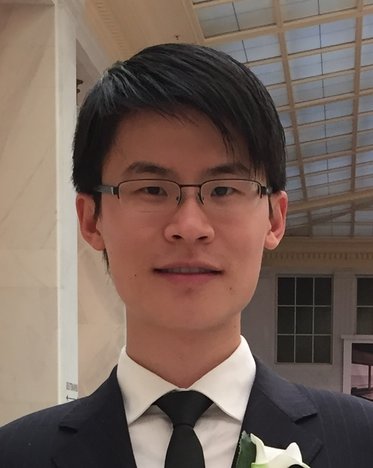 Min Bai合作论文数Amazon Web Services2Chengyang Zhao合作论文数1Yinuo Du合作论文数1Yuwei Niu合作论文数1Christopher Hoang合作论文数1Jiaqi Liao合作论文数OpenGVLab, Shanghai AI Laboratory1Haonan Duan合作论文数1
 Alex N. Wang合作论文数New York University1




