The need for handling the deep uncertainty surrounding the future climate has led to various novel and robust approaches for decision-making under deep uncertainty (DMDU) when adapting to climate change. Here, an online and self-explanatory web-based tool was developed and tested with civil servants from five municipalities in Sweden challenged by rising sea levels. The municipalities used the tool by themselves and were then interviewed about the usability of the tool, the perceived urgency of climate change adaptation, and the possibilities for municipalities for handling the flexible solutions that are at the core of DMDU. Results were that the civil servants reported that the urgency of climate change adaptation has increased, that the tool changed their perspectives compared to traditional planning methods, and that changes in laws and regulations to accommodate decisions about flexible solutions were recommended.
To date, values are not widely acknowledged or discussed within physical climate science. Yet, effective management of values in physical climate science is required for the benefit of both science and society.
Philosophers argue that many choices in science are influenced by values or have value-implications, ranging from the preference for some research method’s qualities to ethical estimation of the consequences of error. Based on the argument that awareness of values in the scientific process is a necessary first step to both avoid bias and attune science best to the needs of society, an analysis of the role of values in the physical climate science production process is provided. Model-based assessment of climate sensitivity is taken as an illustrative example; climate sensitivity is useful here because of its key role in climate science and relevance for policy, by having been the subject of several assessments over the past decades including a recent shift in assessment method, and because it enables insights that apply to numerous other aspects of climate science. It is found that value-judgements are relevant at every step of the model-based assessment process, with a differentiated role of non-epistemic values across the steps, impacting the assessment in various ways. Scrutiny of current philosophical norms for value-management highlights the need for those norms to be re-worked for broader applicability to climate science. Recent development in climate science turning away from direct use of models for climate sensitivity assessment also gives the opportunity to start investigating the role of values in alternative assessment methods, highlighting similarities and differences in terms of the role of values that encourage further study.
Science provides society with information that helps solve the ethical, societal and social implications of climate change, the most urgent and far-reaching global problem of our time. Owing to the complexity of the problems that arise, they are not solved with knowledge or one responsible goodwill alone, but often require value judgements, for example, decisions on the relative importance of different stakeholders. Interdisciplinary scholarship, first of all, philosophy of science, argues that some of these and other value judgements can already play a role in the scientific process that both produces such information and that develops more foundational scientific tools, methods, and results underlying it. Here, it is argued that it is time for the scientific community itself to become more aware of, acknowledge, and discuss the role of values, to enable their effective management and thus make science observe its responsibility to society even better.The state of the debate in climate science as represented by the latest assessment report by the Intergovernmental Panel on Climate Change is summarised. Examples from the recent philosophical literature are given that illustrate value influence beyond that acknowledged in the report. Key messages are suggestedto the scientific community as to how the topic of values could be progressed, including strategies such as transparency and diversity, cross-disciplinary cooperation and education besides, and aiding, the fostering of awareness by individual scientists in their research. As an attempt to advance and illustrate this awareness and acknowledgement of values from a scientist perspective, a case study is further presented. There, value judgements are identified that are relevant to multi-model based assessments such as those performed until recently for climate sensitivity and still in use for various other climate metrics. The whole series of assessment steps is considered, from choosing the research question over model building, deriving the metric of interest, and combining model results to publishing and communicating the findings. It is discussed that neither sensitivity studies nor the use of multiple, other lines of evidence instead of model estimates provide a way to avoid value judgements, hence not diminishing the need for reflection on values. While especially timely now in climate science, the question of value acknowledgement and management more generally applies to any science, including other areas of geosciences that are similarly addressing questions of high societal relevance.
Adaptive and flexible approaches based on implementing different measures as new information emerges have been proposed as a way of enabling robustness towards uncertain future climate change. However, the success of flexible approaches in practice depends on the stability of the relevant organizational landscapes. In this paper, we draw upon key insights from the institutional theories of organizations and research on public administration and climate adaptation in Sweden. We argue that potential organizational instabilities pose a substantial challenge for the mainstreaming of flexible approaches to climate adaptation. Given the unstable character of the relevant organizational landscape in a very stable country such as Sweden, it seems reasonable to also seriously doubt the capacity of the relevant authorities in less stable countries to carry out a great number of monitoring-intensive, and hence attention-demanding, adaptive governance processes over time. Based on our results we argue that it is perilous to simply assume that flexible approaches to climate adaptation will lead to greater robustness.
Value sensitive design (VSD) aims at creating better technology based on social and ethical values. However, VSD has not been applied to long-term and uncertain future developments, such as societal planning for climate change. This paper describes a new method that combines elements from VSD with scenario planning. The method was developed for and applied to a case study of adaptation to sea level rise (SLR) in southern Sweden in a series of workshops. The participants of the workshops found that the method provided a framework for discussing long-term planning, enabled identification of essential values, challenged established planning practices, helped find creative solutions, and served as a reminder that we do not know what will happen in the future. Finally, we reflect on the limitations of the method and suggest further research on how it can be improved for value sensitive design of adaptation measures to manage uncertain future sea level rise.
The need for norms ensuring ethical decision-making in policy is well established, extending to decisions made in the scientific practice that informs policy. Values, including non-epistemic ones such as social values, may guide decision-making in the scientific research process where evidence supports more than one decision given uncertainty, and are thus targeted by many normative suggestions from the philosophical literature. How value-judgements enter the body of research that underlies climate change information, with its immediate relevance for urgent mitigation and adaptation decisions, and how the norms may apply here, is however unclear.In a practical contribution to the debate on values in climate science, we discuss the process of assessing equilibrium climate sensitivity (ECS), an idealised property of the real world of high scientific and societal relevance that has as the ‘holy grail’ of climate science been regularly assessed by the Intergovernmental Panel of Climate Change. We develop a framework consisting of the steps model building, deriving ECS, combining model results, and communicating the findings along with the overarching choice of research question and publishing, and present and summarise uncertainties, choices, and possible value-judgements involved in each step. We discuss this in the context of scientific objectivity, scrutinise existing normative, action-guiding literature on values, and suggest requirements for applicable norms and ideas.We find that both epistemic and non-epistemic values are likely to come into play in scientific practice, with the latter arguably playing a relatively larger role further along the assessment steps. A review of existing literature shows that many of the norms proposed do not reflect the characteristics and complexities of assessments drawing on climate modelling: We find that, among others, it is particularly the distribution of epistemic agency; the technical nature of many of the choices; the unpredictability of a decision for further/future model outcomes; the multi-purposeness of models; and the type of value-judgements -other than risk preferences- involved that pose challenges for existing normative ideas. This calls for the development of new such framings more easily applicable to climate science, potentially guided by the insights presented including the step-framework suggested as a way to structure the analysis of the assessment process.2.11.0.0
Value judgments in environmental risk assessments can sometimes have critical influences on policies. The phenomenon that values can have lasting effects is conceptualized as “value-inertia.” Value-inertia is exemplified and demonstrated through assessments of climate change risks. The problems of value-inertia are discussed, and suggestions to mitigate the problems are provided. Most importantly, decision-makers need to be aware that environmental risk assessments may be affected by value-inertia. However, because it is often difficult for decision-makers to both identify and compensate for previous value judgments, scientists and experts also have a moral responsibility to mitigate problems caused by value-inertia.
The Dynamic Adaptive Policy Pathways (DAPP) approach has successfully been used to manage uncertainties in large infrastructure projects. However, the viability of the DAPP approach for spatial planning in smaller municipal settings is not clear. This paper examines opportunities and constraints of using adaptive pathways approaches to help small municipalities plan for future sea-level rise. The methodology was based on developing a simplified DAPP-approach, which was tested in a multiple experimental case study of spatial planning projects in three municipalities in Sweden. The results show that the approach promoted vulnerability-based thinking among the end-users and generated new ideas on how to manage the uncertain long-term impacts of future sea-level rise. However, the increased understanding of uncertainties was used to justify static, rather than adaptive, solutions. This somewhat surprising outcome can be explained by perceived legal constraints, lack of experience of adaptive pathways, and unwillingness to prescribe actions that could prove difficult to enforce in the future. More research is needed to further understand at what planning phases dynamic policy pathway approaches work best and how current barriers in legislation, practices, mind-set, organization, and resources can be overcome.
Handling uncertainties is a major challenge in climate change adaptation. A variety of robust decision support approaches that aim for better management of uncertainty have recently been emerging and are used in environmental planning. The present study examined to what extent existing processes of planning for future sea-level rise in Sweden utilised similar approaches. Three core principles of robust decision support approaches were identified and used as a tool for analyzing five cases of planning for future sea-level rise in companies and authorities at different levels in society. The results show that planning processes typically do not embrace uncertainties, do not use a bottom-up approach and do not specifically aim for robustness, which points to a discrepancy between current planning paradigms and the core principles of robust decision support approaches.
Standard tools used in societal risk management such as probabilistic risk analysis or cost-benefit analysis typically define risks in terms of only probabilities and consequences and assume a utilitarian approach to ethics that aims to maximize expected utility. The philosopher Carl F. Cranor has argued against this view by devising a list of plausible aspects of the acceptability of risks that points towards a non-consequentialist ethical theory of societal risk management. This paper revisits Cranor's list to argue that the alternative ethical theory responsibility-catering prioritarianism can accommodate the aspects identified by Cranor and that the elements in the list can be used to inform the details of how to view risks within this theory. An approach towards operationalizing the theory is proposed based on a prioritarian social welfare function that operates on responsibility-adjusted utilities. A responsibility-catering prioritarian ethical approach towards managing risks is a promising alternative to standard tools such as cost-benefit analysis.
Computer simulation models can generate large numbers of scenarios, far more than can be effectively utilized in most decision support applications. How can one best select a small number of scenarios to consider? One approach calls for choosing scenarios that illuminate vulnerabilities of proposed policies. Another calls for choosing scenarios that span a diverse range of futures. This paper joins these two approaches for the first time, proposing an optimization-based method for choosing a small number of relevant scenarios that combine both vulnerability and diversity. The paper applies the method to a real case involving climate resilient infrastructure for three African river basins (Volta, Orange and Zambezi). Introducing selection criteria in a stepwise manner helps examine how different criteria influence the choice of scenarios. The results suggest that combining vulnerability- and diversity-based criteria can provide a systematic and transparent method for scenario selection.
A plausible worst-case scenario of a gradually increasing level of multidrug-resistant bacteria (carbapenem-resistant E. coli) in the human population was developed and used to study how Swedish authorities would manage this situation and to identify preventive measures that could be taken. Key findings include: (1) a scenario in which 5% of the population in southern Sweden become carriers of carbapenem-resistant E. coli is possible or even likely in 10 to 15 years; (2) it is not clear when and how the increase of E. coli resistant to carbapenems as in the scenario would be detected in the general human population; (3) identified negative consequences of the scenario on society were primarily due to increased demands on the healthcare system and potential consequences for food-producing animals, food safety, and environmental health; and (4) a number of preventive and mitigation measures were suggested, including initiating long-term screening programs for public and animal health as well as for food and water production to monitor increasing levels of carbapenem resistance. Strategies and plans to prevent and handle future increasing prevalence of multidrug-resistant bacteria need to be developed.
A warmer climate leads to rising sea levels. Despite uncertainties about how rapid and substantial future sea-level rise (SLR) will be, society needs to prepare and adapt. This study examines the state of planning for future SLR in Sweden by surveying 33 coastal municipalities in southern Sweden and interviewing local, regional and national authorities with relevant accountability. The results reveal that there are considerable gaps in current planning for SLR. Almost one-third of municipalities lack guiding planning documents for SLR, and more than two-thirds do not discuss SLR beyond 2100. We argue that the prevailing uncertainty and ambiguity in assessments of future SLR is problematic within a traditional “predict-then-act” paradigm, and that robust approaches, such as scenario planning, can reduce many of these problems.
This thesis is based on the assumption that the intersection of moral philosophy and practical risk management is a rewarding area to study. In particular, the thesis assumes that concepts, ideas, ...
Nuclear power generation require protection against harmful effects of ionizing radiation. Radiation protection is based on the linear, no-threshold model of health risks at low doses and three fundamental principles: justification, optimization, and limitation. The practical application of radiation protection is divided into three areas: planned, emergency, and existing exposure situations. Planned exposure situations include difficult social issues related to the exposure of large populations, exposure of future generations, protection against accidents, and protection of the environment. Emergency and existing exposure situations are both characterized by heterogeneous distributions of exposures and complex social and economic aspects, which make assessment and evaluation of protective strategies complicated and value laden. Four problem areas of social and ethical issues stand out as central for radiation protection: The first is uncertainty and the influence of value judgments in scientific risk assessments. The second is distributions of risks and benefits between different individuals, both in space and time. The third is the problem of setting limits when there is no known level of exposure that is associated with a zero risk. The fourth central problem area is related to stakeholder influence and risk communication. (C) 2012 John Wiley & Sons, Ltd.
 Annika Carlsson-Kanyama合作论文数Environmental Strategies Research Group7
 Karoliina Pulkkinen合作论文数Division of Philosophy, KTH Royal Institute of Technology4
 Sabine Undorf合作论文数Stockholm University4
 Frida Bender合作论文数4
 Jacob von Oelreich合作论文数3Karin Mossberg Sonnek合作论文数3Henrik Carlsen合作论文数Swedish Defence Research Agency3
 Åsa Svenfelt合作论文数Division of Strategic Sustainability Studies, Department of Sustainable Development, Environmental Science and Engineering, School of Architecture and the Built Environment, KTH Royal Institute of Technology3Christoffer Carstens合作论文数2
 Jonathan Metzger合作论文数Division of Urban and Regional Studies, Department of Urban Planning and Environment, School of Architecture and the Built Environment, KTH Royal Institute of Technology2Chatarina Holmberg合作论文数1Anna Lindberg合作论文数1
 Aiden Jonsson合作论文数1
 Gah-Kai Leung合作论文数1
 Joe Roussos合作论文数Inst Futures Studies, Stockholm, Sweden1Anna Wedin合作论文数1Clare M. Flynn合作论文数1
 Lars Lindblom合作论文数1Räty Riitta合作论文数1
 Robert J. Lempert合作论文数School of Public Policy, RAND1
 Erica Thompson合作论文数Data Science Institute, London School of Economics and Political Science1
 Theodore G. Shepherd合作论文数Department of Meteorology, University of Reading1
 Martin Peterson合作论文数Department of Languages and Culture, Lulea University of Technology1
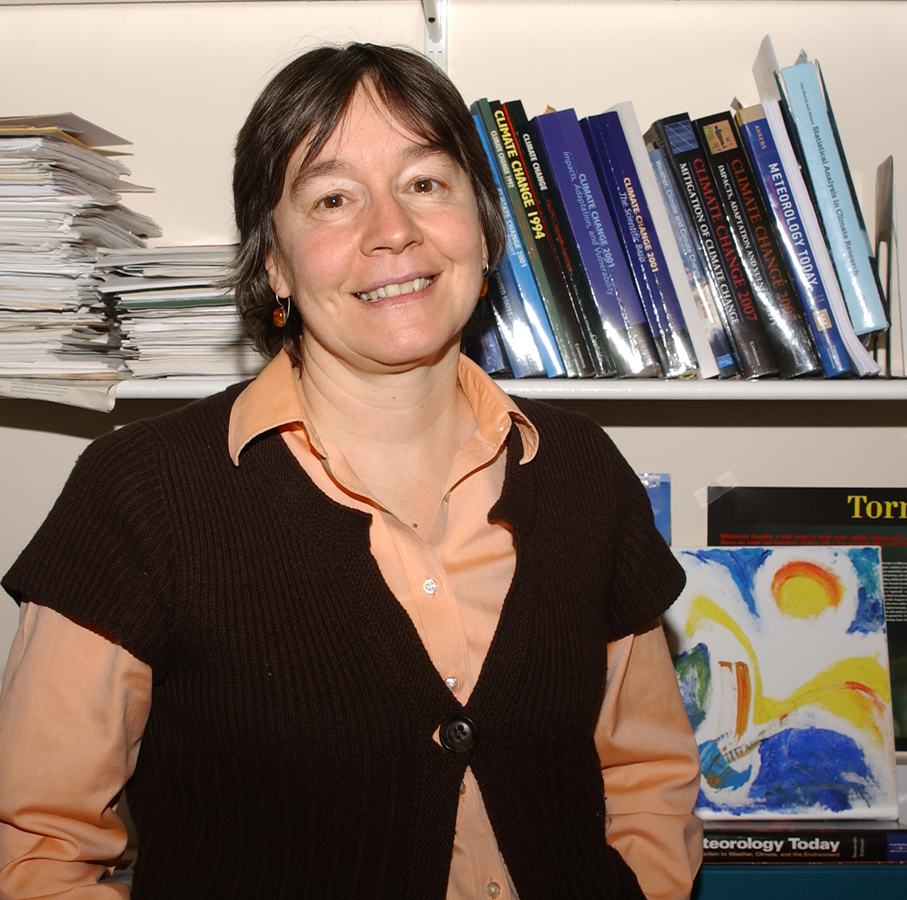 Gabriele Clarissa Hegerl合作论文数Global Change, School of GeoSciences, The University of Edinburgh1
 Vanessa Jine Schweizer合作论文数Engineering and Public Policy;Carnegie Mellon University;Carnegie Mellon University1
 Richard J. T. Klein合作论文数Stockholm Environment Institute1Roger Roffey合作论文数1
 Jorge Luis Zapico合作论文数KTH Royal Institute of Technology1
 Francisco J Doblas Reyes合作论文数Department of Earth Sciences, Barcelona Supercomputing Center;Catalan Institution for Research and Advanced Studies1Karl Henrik Dreborg合作论文数1Niklas Moller合作论文数1
 Sven Ove Hansson合作论文数Department of Philosophy & History of Technology, School of Architecture & the Built Environment, Royal Institute of Technology1Misse Wester合作论文数1




