Token reduction is an effective way to accelerate long-video vision-language models (VLMs), but most existing methods are designed for dense Transformers and do not directly account for hybrid architectures that interleave attention with linear-time state-space blocks (e.g., Mamba). We study query-conditioned token reduction for hybrid video VLMs and analyze reduction behavior through two properties: layerwise sparsity (how many tokens capture query-relevant information) and importance stability (whether token-importance rankings persist across depth). Although token importance is sparse within each layer, the set of important tokens changes across layers, so aggressive early pruning is unreliable. Motivated by this, we propose a low-to-high progressive reduction schedule and a unified language-aware scoring mechanism for both attention and Mamba blocks (using an implicit-attention proxy for Mamba), enabling all-layer token reduction in hybrids. Under an aggressive compression setting (retaining 25
Vision foundation models are bottlenecked by the quadratic cost of self-attention, which limits usable resolution and increases the cost of large-scale pretraining. Subquadratic alternatives such as linear attention and state-space models reduce this cost, but often serialize images into 1D token streams and weaken the 2D spatial structure important for vision. Generalized Spatial Propagation Networks (GSPN) instead propagate context directly on the 2D grid through line-scan recurrences, achieving near-linear complexity without positional embeddings, but have seen little use as foundation-scale encoders. We present C-GSPN, a foundation-scale vision encoder based on 2D spatial propagation. C-GSPN makes the operator practical through three improvements: (1) a fast GSPN CUDA kernel that fuses per-step launches into a single warp-specialized implementation with shared-memory tiling, coalesced access, and a compact multi-channel propagation, reaching over 90
The recent revolution in data-driven methods for weather forecasting has lead to a fragmented landscape of complex, bespoke architectures and training strategies, obscuring the fundamental drivers of forecast accuracy. Here, we demonstrate that state-of-the-art probabilistic skill requires neither intricate architectural constraints nor specialized training heuristics. We introduce a scalable framework for learning multi-scale atmospheric dynamics by combining a directly downsampled latent space with a history-conditioned local projector that resolves high-resolution physics. We find that our framework design is robust to the choice of probabilistic estimator, seamlessly supporting stochastic interpolants, diffusion models, and CRPS-based ensemble training. Validated against the Integrated Forecasting System and the deep learning probabilistic model GenCast, our framework achieves statistically significant improvements on most of the variables. These results suggest scaling a general-purpose model is sufficient for state-of-the-art medium-range prediction, eliminating the need for tailored training recipes and proving effective across the full spectrum of probabilistic frameworks.
Retrieval-Augmented Generation (RAG) has recently been extended to multimodal settings, connecting multimodal large language models (MLLMs) with vast corpora of external knowledge such as multimodal knowledge graphs (MMKGs). Despite their recent success, multimodal RAG in the audio-visual domain remains challenging due to 1) limited modality coverage and multi-hop connectivity of existing MMKGs, and 2) retrieval based solely on similarity in a shared multimodal embedding space, which fails to filter out off-topic or redundant knowledge. To address these limitations, we propose M^3KG-RAG, a Multi-hop Multimodal Knowledge Graph-enhanced RAG that retrieves query-aligned audio-visual knowledge from MMKGs, improving reasoning depth and answer faithfulness in MLLMs. Specifically, we devise a lightweight multi-agent pipeline to construct multi-hop MMKG (M^3KG), which contains context-enriched triplets of multimodal entities, enabling modality-wise retrieval based on input queries. Furthermore, we introduce GRASP (Grounded Retrieval And Selective Pruning), which ensures precise entity grounding to the query, evaluates answer-supporting relevance, and prunes redundant context to retain only knowledge essential for response generation. Extensive experiments across diverse multimodal benchmarks demonstrate that M^3KG-RAG significantly enhances MLLMs' multimodal reasoning and grounding over existing approaches.
Efficient vision transformer remains a bottleneck for high-resolution images and long-video related real-world applications. Generalized Spatial Propagation Network (GSPN) \cite{wang2025parallel} addresses this by replacing quadratic self-attention with a line-scan propagation scheme, bringing the cost close to linear in the number of rows or columns, while retaining accuracy. Despite this advancement, the existing GSPN implementation still suffers from (i) heavy overhead due to repeatedly launching GPU kernels, (ii) excessive data transfers from global GPU memory, and (iii) redundant computations caused by maintaining separate propagation weights for each channel. We introduce GSPN-2, a joint algorithm–system redesign. In particular, we eliminate thousands of micro-launches from the previous implementation into one single 2D kernel, explicitly pin one warp to each channel slice, and stage the previous column's activations in shared memory. On the model side, we introduce a set of channel-shared propagation weights that replace per-channel matrices, trimming parameters, and align naturally with the affinity map used in transformer attention. Experiments demonstrate GSPN-2's effectiveness across image classification and text-to-image synthesis tasks, matching transformer-level accuracy with significantly lower computational cost. GSPN-2 establishes a new efficiency frontier for modeling global spatial context in vision applications through its unique combination of structured matrix transformations and GPU-optimized implementation.
As inference-time scaling becomes critical for enhanced reasoning capabilities, it is increasingly becoming important to build models that are efficient to infer. We introduce Nemotron-H, a family of 8B and 56B/47B hybrid Mamba-Transformer models designed to reduce inference cost for a given accuracy level. To achieve this goal, we replace the majority of self-attention layers in the common Transformer model architecture with Mamba layers that perform constant computation and require constant memory per generated token. We show that Nemotron-H models offer either better or on-par accuracy compared to other similarly-sized state-of-the-art open-sourced Transformer models (e.g., Qwen-2.5-7B/72B and Llama-3.1-8B/70B), while being up to 3× faster at inference. To further increase inference speed and reduce the memory required at inference time, we created Nemotron-H-47B-Base from the 56B model using a new compression via pruning and distillation technique called MiniPuzzle. Nemotron-H-47B-Base achieves similar accuracy to the 56B model, but is 20
We present the Generalized Spatial Propagation Network (GSPN), a new attention mechanism optimized for vision tasks that inherently captures 2D spatial structures. Existing attention models, including transformers, linear attention, and state-space models like Mamba, process multi-dimensional data as 1D sequences, compromising spatial coherence and efficiency. GSPN overcomes these limitations by directly operating on spatially coherent image data and forming dense painwise connections through a line-scan approach. Central to GSPN is the Stability-Context Condition, which ensures stable, long-context propagation across 2D sequences and reduces the effective sequence length to root N for a square map with N elements, which significantly enhances computational efficiency. With learnable, input-dependent weights and no reliance on positional embeddings, GSPN achieves superior spatial fidelity and state-of-the-art performance in vision tasks, including ImageNet classification, class-guided image generation, and text-to-image generation. Notably, GSPN accelerates SD-XL with softmax-attention by over 84 x when generating 16K images. Project page: https://whj363636.github.io/GSPN/
Efficient deployment of small language models (SLMs) is essential for numerous real-world applications with stringent latency constraints.While previous work on SLM design has primarily focused on reducing the number of parameters to achieve parameter-optimal SLMs, parameter efficiency does not necessarily translate into proportional real-device speed-ups. This work aims to identify the key determinants of SLMs' real-device latency and offer generalizable principles and methodologies for SLM design and training when real-device latency is the primary consideration. Specifically, we identify two central architectural factors: depth–width ratios and operator choices. The former is crucial for small-batch-size latency, while the latter affects both latency and large-batch-size throughput. In light of this, we first study latency-optimal depth–width ratios, with the key finding that although deep–thin models generally achieve better accuracy under the same parameter budget, they may not lie on the accuracy–latency trade-off frontier. Next, we explore emerging efficient attention alternatives to evaluate their potential as candidate building operators. Using the identified promising operators, we construct an evolutionary search framework to automatically discover latency-optimal combinations of these operators within hybrid SLMs, thereby advancing the accuracy–latency frontier. In addition to architectural improvements, we further enhance SLM training using a weight normalization technique that enables more effective weight updates and improves final convergence. This technique can serve as a generalizable component for future SLMs. Combining these methods, we introduce a new family of hybrid SLMs, called Nemotron-Flash, which significantly advances the accuracy–efficiency frontier of state-of-the-art SLMs, e.g., achieving over +5.5\% average accuracy, 1.3$\times$/1.9$\times$ lower latency, and 18.7$\times$/45.6$\times$ higher throughput compared to Qwen3-1.7B/0.6B, respectively.
Online continual learning for image classification is crucial for models to adapt to new data while retaining knowledge of previously learned tasks. This capability is essential to address real-world challenges involving dynamic environments and evolving data distributions. Traditional approaches predominantly employ Convolutional Neural Networks, which are limited to processing images as grids and primarily capture local patterns rather than relational information. Although the emergence of transformer architectures has improved the ability to capture relationships, these models often require significantly larger resources. In this paper, we present a novel online continual learning framework based on Graph Attention Networks (GATs), which effectively capture contextual relationships and dynamically update the task-specific representation via learned attention weights. Our approach utilizes a pre-trained feature extractor to convert images into graphs using hierarchical feature maps, representing information at varying levels of granularity. These graphs are then processed by a GAT and incorporate an enhanced global pooling strategy to improve classification performance for continual learning. In addition, we propose the rehearsal memory duplication technique that improves the representation of the previous tasks while maintaining the memory budget. Comprehensive evaluations on benchmark datasets, including SVHN, CIFAR10, CIFAR100, and MiniImageNet, demonstrate the superiority of our method compared to the state-of-the-art methods.
We propose Hymba, a family of small language models featuring a hybrid-head parallel architecture that integrates attention mechanisms and state space models (SSMs) within the same layer, offering parallel and complementary processing of the same inputs. In this hybrid-head module, attention heads provide high-resolution recall, while SSM heads facilitate efficient context summarization. Additionally, we introduce learnable meta tokens, which are prepended to prompts to store critical meta information, guiding subsequent tokens and alleviating the “forced-to-attend” burden associated with attention mechanisms. Thanks to the global context summarized by SSMs, the attention heads in our model can be further optimized through cross-layer key-value (KV) sharing and a mix of global and local attention, resulting in a compact cache size without compromising accuracy. Notably, Hymba achieves state-of-the-art performance among small LMs: Our Hymba-1.5B-Base model surpasses all sub-2B public models and even outperforms Llama-3.2-3B, achieving 1.32\% higher average accuracy, an 11.67$\times$ reduction in cache size, and 3.49$\times$ higher throughput.
Recent advances in video-based multimodal large language models (Video-LLMs) have significantly improved video understanding by processing videos as sequences of image frames. However, many existing methods treat frames independently in the vision backbone, lacking explicit temporal modeling, which limits their ability to capture dynamic patterns and efficiently handle long videos. To address these limitations, we introduce STORM (\textbf{S}patiotemporal \textbf{TO}ken \textbf{R}eduction for \textbf{M}ultimodal LLMs), a novel architecture incorporating a dedicated temporal encoder between the image encoder and the LLM. Our temporal encoder leverages the Mamba State Space Model to integrate temporal information into image tokens, generating enriched representations that preserve inter-frame dynamics across the entire video sequence. This enriched encoding not only enhances video reasoning capabilities but also enables effective token reduction strategies, including test-time sampling and training-based temporal and spatial pooling, substantially reducing computational demands on the LLM without sacrificing key temporal information. By integrating these techniques, our approach simultaneously reduces training and inference latency while improving performance, enabling efficient and robust video understanding over extended temporal contexts. Extensive evaluations show that STORM achieves state-of-the-art results across various long video understanding benchmarks (more than 5\% improvement on MLVU and LongVideoBench) while reducing the computation costs by up to $8\times$ and the decoding latency by 2.4-2.9$\times$ for the fixed numbers of input frames. Project page is available at this https URL
We introduce Nemotron-Nano-9B-v2, a hybrid Mamba-Transformer language model designed to increase throughput for reasoning workloads while achieving state-of-the-art accuracy compared to similarly-sized models. Nemotron-Nano-9B-v2 builds on the Nemotron-H architecture, in which the majority of the self-attention layers in the common Transformer architecture are replaced with Mamba-2 layers, to achieve improved inference speed when generating the long thinking traces needed for reasoning. We create Nemotron-Nano-9B-v2 by first pre-training a 12-billion-parameter model (Nemotron-Nano-12B-v2-Base) on 20 trillion tokens using an FP8 training recipe. After aligning Nemotron-Nano-12B-v2-Base, we employ the Minitron strategy to compress and distill the model with the goal of enabling inference on up to 128k tokens on a single NVIDIA A10G GPU (22GiB of memory, bfloat16 precision). Compared to existing similarly-sized models (e.g., Qwen3-8B), we show that Nemotron-Nano-9B-v2 achieves on-par or better accuracy on reasoning benchmarks while achieving up to 6x higher inference throughput in reasoning settings like 8k input and 16k output tokens. We are releasing Nemotron-Nano-9B-v2, Nemotron-Nano12B-v2-Base, and Nemotron-Nano-9B-v2-Base checkpoints along with the majority of our pre- and post-training datasets on Hugging Face.
We introduce Eagle2.5, a frontier vision-language model (VLM) for long-context multimodal learning. Our work addresses the challenges in long video comprehension and high-resolution image understanding, introducing a generalist framework for both tasks. The proposed training framework incorporates Automatic Degrade Sampling and Image Area Preservation, two techniques that preserve contextual integrity and visual details. The framework also includes numerous efficiency optimizations in the pipeline for long-context data training. Finally, we propose Eagle-Video-110K, a novel dataset that integrates both story-level and clip-level annotations, facilitating long-video understanding. Eagle2.5 demonstrates substantial improvements on long-context multimodal benchmarks, providing a robust solution to the limitations of existing VLMs. Notably, our best model Eagle2.5-8B achieves 72.4\% on Video-MME with 512 input frames, matching the results of top-tier commercial model such as GPT-4o and large-scale open-source models like Qwen2.5-VL-72B and InternVL2.5-78B.
Recent successes suggest that an image can be manipulated by a text prompt, e.g., a landscape scene on a sunny day is manipulated into the same scene on a rainy day driven by a text input “raining”. These approaches often utilize a StyleCLIP-based image generator, which leverages multi-modal (text and image) embedding space. However, we observe that such text inputs are often bottlenecked in providing and synthesizing rich semantic cues, e.g., differentiating heavy rain from rain with thunderstorms. To address this issue, we advocate leveraging an additional modality, sound, which has notable advantages in image manipulation as it can convey more diverse semantic cues (vivid emotions or dynamic expressions of the natural world) than texts. In this paper, we propose a novel approach that first extends the image-text joint embedding space with sound and applies a direct latent optimization method to manipulate a given image based on audio input, e.g., the sound of rain. Our extensive experiments show that our sound-guided image manipulation approach produces semantically and visually more plausible manipulation results than the state-of-the-art text and sound-guided image manipulation methods, which are further confirmed by our human evaluations. Our downstream task evaluations also show that our learned image-text-sound joint embedding space effectively encodes sound inputs. Examples are provided in our project page: https://kuai-lab.github.io/robust-demo/.
We introduce a novel diffusion-based video generation method, generating a video showing multiple events given multiple individual sentences from the user. Our method does not require a large-scale video dataset since our method uses a pre-trained diffusion-based text-to-video generative model without a fine-tuning process. Specifically, we propose a last frame-aware diffusion process to preserve visual coherence between consecutive videos where each video consists of different events by initializing the latent and simultaneously adjusting noise in the latent to enhance the motion dynamic in a generated video. Furthermore, we find that the iterative update of latent vectors by referring to all the preceding frames maintains the global appearance across the frames in a video clip. To handle dynamic text input for video generation, we utilize a novel prompt generator that transfers course text messages from the user into the multiple optimal prompts for the text-to-video diffusion model. Extensive experiments and user studies show that our proposed method is superior to other video-generative models in terms of temporal coherency of content and semantics. Video examples are available on our project page: https://kuai-lab.github.io/eccv2024mevg.
We present a novel framework for audio-guided localized image stylization. Sound often provides information about the specific context of a scene and is closely related to a certain part of the scene or object. However, existing image stylization works have focused on stylizing the entire image using an image or text input. Stylizing a particular part of the image based on audio input is natural but challenging. This work proposes a framework in which a user provides an audio input to localize the target in the input image and another to locally stylize the target object or scene. We first produce a fine localization map using an audio-visual localization network leveraging CLIP embedding space. We then utilize an implicit neural representation (INR) along with the predicted localization map to stylize the target based on sound information. The INR manipulates local pixel values to be semantically consistent with the provided audio input. Our experiments show that the proposed framework outperforms other audio-guided stylization methods. Moreover, we observe that our method constructs concise localization maps and naturally manipulates the target object or scene in accordance with the given audio input.
Vision language models (VLMs) have experienced rapid advancements through the integration of large language models (LLMs) with image-text pairs, yet they struggle with detailed regional visual understanding due to limited spatial awareness of the vision encoder, and the use of coarse-grained training data that lacks detailed, region-specific captions. To address this, we introduce RegionGPT (short as RGPT), a novel framework designed for complex region-level captioning and understanding. RGPT enhances the spatial awareness of regional representation with simple yet effective modifications to existing visual encoders in VLMs. We further improve performance on tasks requiring a specific output scope by integrating task-guided instruction prompts during both training and inference phases, while maintaining the model's versatility for general-purpose tasks. Additionally, we develop an automated region caption data generation pipeline, enriching the training set with detailed region-level captions. We demonstrate that a universal RGPT model can be effectively applied and significantly enhancing performance across a range of region-level tasks, including but not limited to complex region descriptions, reasoning, object classification, and referring expressions comprehension.
Selective state-space models (SSMs) like Mamba overcome some of the shortcomings of Transformers, such as quadratic computational complexity with sequence length and large inference-time memory requirements from the key-value cache. Moreover, recent studies have shown that SSMs can match or exceed the language modeling capabilities of Transformers, making them an attractive alternative. In a controlled setting (e.g., same data), however, studies so far have only presented small scale experiments comparing SSMs to Transformers. To understand the strengths and weaknesses of these architectures at larger scales, we present a direct comparison between 8B-parameter Mamba, Mamba-2, and Transformer models trained on the same datasets of up to 3.5T tokens. We also compare these models to a hybrid architecture consisting of 43 attention, and 50 we answer the question of whether Mamba models can match Transformers at larger training budgets. Our results show that while pure SSMs match or exceed Transformers on many tasks, they lag behind Transformers on tasks which require strong copying or in-context learning abilities (e.g., 5-shot MMLU, Phonebook) or long-context reasoning. In contrast, we find that the 8B Mamba-2-Hybrid exceeds the 8B Transformer on all 12 standard tasks we evaluated (+2.65 points on average) and is predicted to be up to 8x faster when generating tokens at inference time. To validate long-context capabilities, we provide additional experiments evaluating variants of the Mamba-2-Hybrid and Transformer extended to support 16K, 32K, and 128K sequences. On an additional 23 long-context tasks, the hybrid model continues to closely match or exceed the Transformer on average. To enable further study, we release the checkpoints as well as the code used to train our models as part of NVIDIA's Megatron-LM project.
In recent years, video generation has become a prominent generative tool and has drawn significant attention. However, there is little consideration in audio-to-video generation, though audio contains unique qualities like temporal semantics and magnitude. Hence, we propose The Power of Sound (TPoS) model to incorporate audio input that includes both changeable temporal semantics and magnitude. To generate video frames, TPoS utilizes a latent stable diffusion model with textual semantic information, which is then guided by the sequential audio embedding from our pretrained Audio Encoder. As a result, this method produces audio reactive video contents. We demonstrate the effectiveness of TPoS across various tasks and compare its results with current state-of-the-art techniques in the field of audio-to-video generation. More examples are available at https://ku-vai.github.io/TPoS/
Effectively modeling long spatiotemporal sequences is challenging due to the need to model complex spatial correlations and long-range temporal dependencies simultaneously. ConvLSTMs attempt to address this by updating tensor-valued states with recurrent neural networks, but their sequential computation makes them slow to train. In contrast, Transformers can process an entire spatiotemporal sequence, compressed into tokens, in parallel. However, the cost of attention scales quadratically in length, limiting their scalability to longer sequences. Here, we address the challenges of prior methods and introduce convolutional state space models (ConvSSM) that combine the tensor modeling ideas of ConvLSTM with the long sequence modeling approaches of state space methods such as S4 and S5. First, we demonstrate how parallel scans can be applied to convolutional recurrences to achieve subquadratic parallelization and fast autoregressive generation. We then establish an equivalence between the dynamics of ConvSSMs and SSMs, which motivates parameterization and initialization strategies for modeling long-range dependencies. The result is ConvS5, an efficient ConvSSM variant for long-range spatiotemporal modeling. ConvS5 significantly outperforms Transformers and ConvLSTM on a long horizon Moving-MNIST experiment while training 3X faster than ConvLSTM and generating samples 400X faster than Transformers. In addition, ConvS5 matches or exceeds the performance of state-of-the-art methods on challenging DMLab, Minecraft and Habitat prediction benchmarks and enables new directions for modeling long spatiotemporal sequences.
 Jan Kautz合作论文数NVIDIA15
 Thomas M. Breuel合作论文数NVIDIA Corporation13
 Pavlo Molchanov合作论文数NVIDIA Research10
 Kim, Sang-Pil合作论文数Dept. of Ceramic Eng., Hanyang Univ.;c;Dept. of Ceramic Eng., Hanyang Univ.9
 Jinkyu Kim合作论文数Department of Computer Science and Engineering, College of Informatics, Korea University;Vision and AI Lab, Korea University8
 Shalini De Mello合作论文数NVIDIA7
 Sifei Liu合作论文数NVIDIA7
 Sang Ho Yoon合作论文数6
 Jiahao Su合作论文数Amazon5
 Guilin Liu合作论文数NVIDIA5
 Seung Hyun Lee合作论文数Department of Artificial Intelligence, Korea University;Computer Vision Lab, Korea University5
 Furong Huang合作论文数Department of Computer Science, University of Maryland;Center for Machine Learning, University of Maryland;Institute for Advanced Computer Studies, University of Maryland5
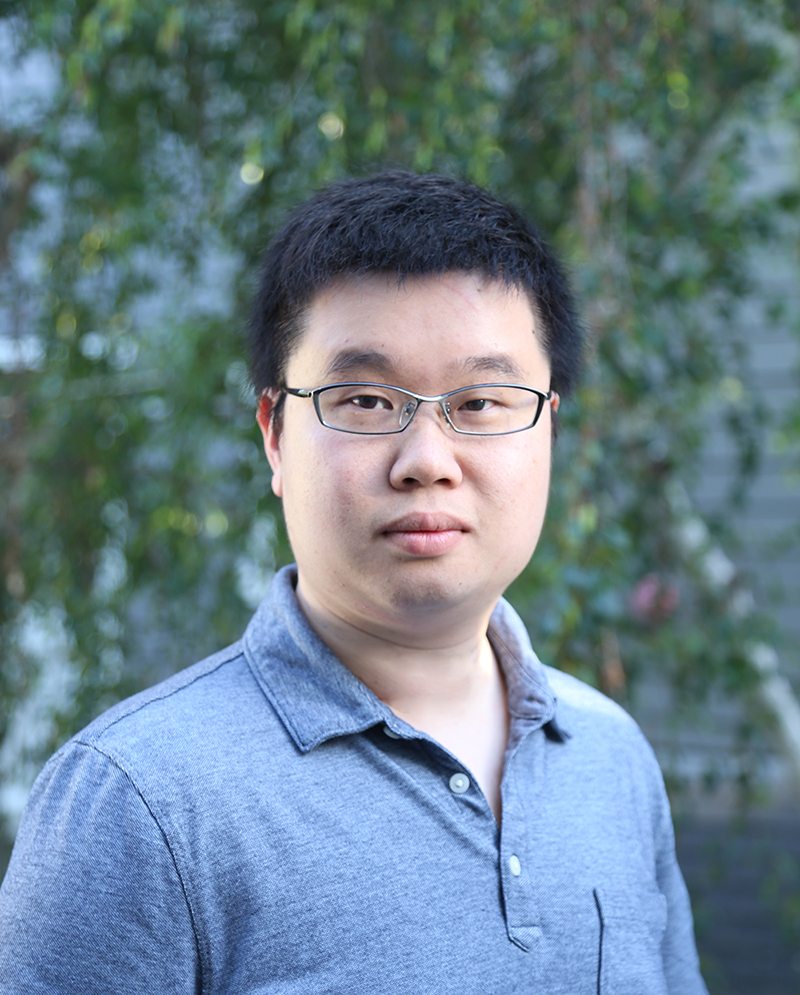 Zhiding Yu (禹之鼎)合作论文数NVIDIA Research5Gyeongrok Oh合作论文数4
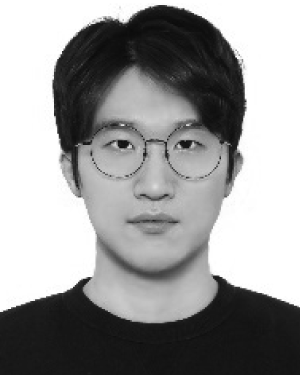 ChanYoung Kim合作论文数4
 Federico Raue合作论文数German Research Center for Artificial Intelligence DFKI4
 Petros Koumoutsakos合作论文数ETH Zurich;Harvard University4
 Anima Anandkumar合作论文数Anima AI + Science Lab, California Institute of Technology;Division of Engineering and Applied Science, California Institute of Technology;Department of Computing and Mathematical Sciences, California Institute of Technology4
 Moongu Jeon合作论文数School of Electrical Engineering and Computer Science
Gwangju Institute of Science and Technology
Gwangju, South Korea4
Moongu Jeon合作论文数School of Electrical Engineering and Computer Science
Gwangju Institute of Science and Technology
Gwangju, South Korea4 Bryan Catanzaro合作论文数NVIDIA4Ka Chun Cheung合作论文数Department of Statistics;University of Hong Kong;Department of Statistics, University of Hong Kong4
 Hongxu Danny Yin合作论文数NVIDIA4Duncan Riach合作论文数3Roger Waleffe合作论文数3Zijia Chen合作论文数3Ameya Sunil Mahabaleshwarkar合作论文数3
 Jiarui Xu合作论文数University of California, San Diego3
 Brandon Norick合作论文数NVIDIA3
 Hanrong Ye (叶汉荣)合作论文数NVIDIA Research3
 Mohammad Shoeybi合作论文数NVIDIA3
 Xiaolong Wang (王小龙)合作论文数Department of Electrical and Computer Engineering, Jacobs School of Engineering, University of California, San Diego;Assured Robot Intelligence3
 Jean Kossaifi合作论文数NVIDIA3
 Xin Dong合作论文数NVIDIA Research3
 Deepak Narayanan合作论文数NVIDIA3
 Marcus Liwicki合作论文数Lulea University of Technology, EISLAB, Machine Learning, Sweden3
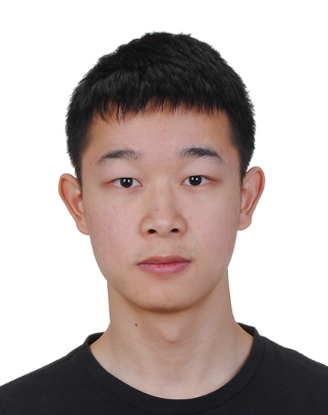 Yonggan Fu (傅泳淦)合作论文数NVIDIA Research3
 Hongjun Wang (王弘焌)合作论文数The University of Hong Kong3
 Jinwei Gu合作论文数3
 Yoshihiko Suhara合作论文数Megagon Labs , MIT Media Lab3Jared Casper合作论文数NVIDIA3
 Zhiqi Li (李志琦)合作论文数CS Department, Nanjing University;Shanghai Artificial Intelligence Laboratory3
 Vijay Anand Korthikanti合作论文数Nvidia3
 Shizhe Diao合作论文数NVIDIA Research3Zhiyu Li合作论文数2Marta Stepniewska-Dziubinska合作论文数2Anna Shors合作论文数2Ke Chen合作论文数2




