The recent advancements in image-text diffusion models have stimulated research interest in large-scale 3D generative models. Nevertheless, the limited availability of diverse 3D resources presents significant challenges to learning. In this paper, we present a novel method for generating high-quality, stylized 3D avatars that utilizes pre-trained image-text diffusion models for data generation and a Generative Adversarial Network (GAN)-based 3D generation network for training. Our method leverages the comprehensive priors of appearance and geometry offered by image-text diffusion models to generate multi-view images of avatars in various styles. During data generation, we employ poses extracted from existing 3D models to guide the generation of multi-view images. To address the misalignment between poses and images in data, we investigate view-specific prompts and develop a coarse-to-fine discriminator for GAN training. We also delve into attribute-related prompts to increase the diversity of the generated avatars. Additionally, we develop a latent diffusion model within the style space of StyleGAN to enable the generation of avatars based on image inputs. Our approach demonstrates superior performance over current state-of-the-art methods in terms of visual quality and diversity of the produced avatars.
In-context generation significantly enhances Diffusion Transformers (DiTs) by enabling controllable image-to-image generation through reference examples. However, the resulting input concatenation drastically increases sequence length, creating a substantial computational bottleneck. Existing token reduction techniques, primarily tailored for text-to-image synthesis, fall short in this paradigm as they apply uniform reduction strategies, overlooking the inherent role asymmetry between reference contexts and target latents across spatial, temporal, and functional dimensions. To bridge this gap, we introduce ToPi, a training-free token pruning framework tailored for in-context generation in DiTs. Specifically, ToPi utilizes offline calibration-driven sensitivity analysis to identify pivotal attention layers, serving as a robust proxy for redundancy estimation. Leveraging these layers, we derive a novel influence metric to quantify the contribution of each context token for selective pruning, coupled with a temporal update strategy that adapts to the evolving diffusion trajectory. Empirical evaluations demonstrate that ToPi can achieve over 30% speedup in inference while maintaining structural fidelity and visual consistency across complex image generation tasks.
Video chroma-lux editing, which aims to modify illumination and color while preserving structural and temporal fidelity, remains a significant challenge. Existing methods typically rely on expensive supervised training with synthetic paired data. This paper proposes VibeFlow, a novel self-supervised framework that unleashes the intrinsic physical understanding of pre-trained video generation models. Instead of learning color and light transitions from scratch, we introduce a disentangled data perturbation pipeline that enforces the model to adaptively recombine structure from source videos and color-illumination cues from reference images, enabling robust disentanglement in a self-supervised manner. Furthermore, to rectify discretization errors inherent in flow-based models, we introduce Residual Velocity Fields alongside a Structural Distortion Consistency Regularization, ensuring rigorous structural preservation and temporal coherence. Our framework eliminates the need for costly training resources and generalizes in a zero-shot manner to diverse applications, including video relighting, recoloring, low-light enhancement, day-night translation, and object-specific color editing. Extensive experiments demonstrate that VibeFlow achieves impressive visual quality with significantly reduced computational overhead. Our project is publicly available at https://lyf1212.github.io/VibeFlow-webpage.
Recent advancements have established Diffusion Transformers (DiTs) as a dominant framework in generative modeling. Building on this success, Lumina-Next achieves exceptional performance in the generation of photorealistic images with Next-DiT. However, its potential for video generation remains largely untapped, with significant challenges in modeling the spatiotemporal complexity inherent to video data. To address this, we introduce Lumina-Video, a framework that leverages the strengths of Next-DiT while introducing tailored solutions for video synthesis. Lumina-Video incorporates a Multi-scale Next-DiT architecture, which jointly learns multiple patchifications to enhance both efficiency and flexibility. By incorporating the motion score as an explicit condition, Lumina-Video also enables direct control of generated videos' dynamic degree. Combined with a progressive training scheme with increasingly higher resolution and FPS, and a multi-source training scheme with mixed natural and synthetic data, Lumina-Video achieves remarkable aesthetic quality and motion smoothness at high training and inference efficiency. We additionally propose Lumina-V2A, a video-to-audio model based on Next-DiT, to create synchronized sounds for generated videos. Codes are released at https://www.github.com/Alpha-VLLM/Lumina-Video.
Multi-modal large language models have demonstrated impressive performances on most vision-language tasks. However, the model generally lacks the understanding capabilities for specific domain data, particularly when it comes to interpreting chart figures. This is mainly due to the lack of relevant multi-modal instruction tuning datasets. In this article, we create a high-quality instruction-tuning dataset leveraging GPT-4. We develop a multi-step data generation process in which different steps are responsible for generating tabular data, creating chart figures, and designing instruction tuning data separately. Our method's flexibility enables us to generate diverse, high-quality instruction-tuning data consistently and efficiently while maintaining a low resource expenditure. Additionally, it allows us to incorporate a wider variety of chart and task types not yet featured in existing datasets. Next, we introduce ChartLlama, a multi-modal large language model that we've trained using our created dataset. ChartLlama outperforms all prior methods in ChartQA, Chart-to-text, and Chart-extraction evaluation benchmarks. Additionally, ChartLlama significantly improves upon the baseline in our specially compiled chart dataset, which includes new chart and task types. The results of ChartLlama confirm the value and huge potential of our proposed data generation method in enhancing chart comprehension.
Recent advances in large-scale text-to-image diffusion models (e.g., FLUX.1) have greatly improved visual fidelity in consistent character generation and editing. However, existing methods rarely unify these tasks within a single framework. Generation-based approaches struggle with fine-grained identity consistency across instances, while editing-based methods often lose spatial controllability and instruction alignment. To bridge this gap, we propose ReMix, a unified framework for character-consistent generation and editing. It constitutes two core components: the ReMix Module and IP-ControlNet. The ReMix Module leverages the multimodal reasoning ability of MLLMs to edit semantic features of input images and adapt instruction embeddings to the native DiT backbone without fine-tuning. While this ensures coherent semantic layouts, pixel-level consistency and pose controllability remain challenging. To address this, IP-ControlNet extends ControlNet to decouple semantic and layout cues from reference images and introduces an ε-equivariant latent space that jointly denoises the reference and target images within a shared noise space. Inspired by convergent evolution and quantum decoherence,i.e., where environmental noise drives state convergence, this design promotes feature alignment in the hidden space, enabling consistent object generation while preserving identity. ReMix supports a wide range of tasks, including personalized generation, image editing, style transfer, and multi-condition synthesis. Extensive experiments validate its effectiveness and efficiency as a unified framework for character-consistent image generation and editing.
Recent advancements in large language models (LLMs) have led to the creation of intelligent agents capable of performing complex tasks. This paper introduces a novel LLM-based multimodal agent framework designed to operate smartphone applications. Our framework enables the agent to operate smartphone applications through a simplified action space, mimicking human-like interactions such as tapping and swiping. This novel approach bypasses the need for system back-end access, thereby broadening its applicability across diverse apps. Central to our agent's functionality is its innovative learning method. The agent learns to navigate and use new apps either through autonomous exploration or by observing human demonstrations. This process generates a knowledge base that the agent refers to for executing complex tasks across different applications. To demonstrate the practicality of our agent, we conducted extensive testing over 50 tasks in 10 different applications, including social media, email, maps, shopping, and sophisticated image editing tools. The results affirm our agent's proficiency in handling a diverse array of high-level tasks.
With the rise of Multimodal Large Language Models (MLLM), LLM-driven visual agents are transforming software interfaces, especially those with graphical user interfaces. However, existing methods often struggle with diverse and complex mobile environments, such as rapidly changing app interfaces or non-standard UI components, limiting their adaptability and precision. This work presents a novel LLM-based multimodal agent framework for mobile devices, designed to enhance interaction and adaptive capabilities in dynamic mobile environments. By autonomously navigating devices and emulating human-like behaviors, the agent integrates parsing, text, and vision descriptions to construct a flexible action space. During the exploration phase, functionalities of user interface elements are documented into a customized structured knowledge base. In the deployment phase, RAG technology enables efficient retrieval and updates from this knowledge base. Experimental results across multiple benchmarks validate the framework's superior performance and practical effectiveness.
Texturing is a crucial step in the 3D asset production workflow, which enhances the visual appeal and diversity of 3D assets. Despite recent advancements in Text-to-Texture (T2T) generation, existing methods often yield subpar results, primarily due to local discontinuities, inconsistencies across multiple views, and heavy dependence on UV unwrapping outcomes. To tackle these challenges, we propose a novel generation-refinement 3D texturing framework called MVPaint, which can generate high-resolution, seamless textures while emphasizing multi-view consistency. MVPaint mainly consists of three key modules. 1) Synchronized Multi-view Generation (SMG). Given a 3D mesh model, MVPaint first simultaneously generates multiview images by employing a SMG model, which leads to coarse texturing results with unpainted parts due to missing observations. 2) Spatial-aware 3D Inpainting (S3I). To ensure complete 3D texturing, we introduce the S3I method, specifically designed to texture previously unobserved areas effectively. 3) UV Refinement (UVR). Furthermore, MVPaint employs a UVR module to improve the texture quality in the UV space, which first performs a UVspace Super-Resolution, followed by a Spatial-aware Seam-Smoothing algorithm for revising spatial texturing discontinuities caused by UV unwrapping. Moreover, we establish two T2T evaluation benchmarks: the Objaverse T2T benchmark and the GSO T2T benchmark, based on selected high-quality 3D meshes from the Objaverse dataset and the entire GSO dataset, respectively. Extensive experimental results demonstrate that MVPaint surpasses existing state-of-the-art methods. Notably, MVPaint could generate highfidelity textures with minimal Janus issues and highly enhanced cross-view consistency.
Recent advancements in image generation have enabled the creation of high-quality images from diverse conditions, such as text and images. However, existing methods struggle to balance multiple conditions effectively, typically favoring certain modalities over others. To address this challenge, we introduce EMMA, a novel multi-modal image generation model that integrates both text and additional modalities, which we refer to as "text + X", to guide the generation of images. EMMA incorporates an innovative Multi-modal Feature Connector design, which effectively integrates textual and supplementary modal information through a special attention mechanism. Additionally, we propose a method for the assembly of existing modules to produce images conditioned on multiple modalities at the same time, eliminating the need for additional training. This modular nature also facilitates easy adaptation to different existing frameworks, making EMMA a flexible and effective tool for producing personalized and context-aware images. Extensive experiments demonstrate the effectiveness of EMMA in maintaining high fidelity and detail in generated images, showcasing its potential as a robust solution for advanced multi-modal conditional image generation tasks.
Presents corrections to the paper, “DCNet: Large-Scale Point Cloud Semantic Segmentation With Discriminative and Efficient Feature Aggregation”.
We introduce Lumina-Image 2.0, an advanced text-to-image generation framework that achieves significant progress compared to previous work, Lumina-Next. Lumina-Image 2.0 is built upon two key principles: (1) Unification - it adopts a unified architecture (Unified Next-DiT) that treats text and image tokens as a joint sequence, enabling natural cross-modal interactions and allowing seamless task expansion. Besides, since high-quality captioners can provide semantically well-aligned text-image training pairs, we introduce a unified captioning system, Unified Captioner (UniCap), specifically designed for T2I generation tasks. UniCap excels at generating comprehensive and accurate captions, accelerating convergence and enhancing prompt adherence. (2) Efficiency - to improve the efficiency of our proposed model, we develop multi-stage progressive training strategies and introduce inference acceleration techniques without compromising image quality. Extensive evaluations on academic benchmarks and public text-to-image arenas show that Lumina-Image 2.0 delivers strong performances even with only 2.6B parameters, highlighting its scalability and design efficiency. We have released our training details, code, and models at https://github.com/Alpha-VLLM/Lumina-Image-2.0.
This study delves into the intricacies of synchronizing facial dynamics with multilingual audio inputs, focusing on the creation of visually compelling, time-synchronized animations through diffusion-based techniques. Diverging from traditional parametric models for facial animation, our approach, termed LinguaLinker, adopts a holistic diffusion-based framework that integrates audio-driven visual synthesis to enhance the synergy between auditory stimuli and visual responses. We process audio features separately and derive the corresponding control gates, which implicitly govern the movements in the mouth, eyes, and head, irrespective of the portrait's origin. The advanced audio-driven visual synthesis mechanism provides nuanced control but keeps the compatibility of output video and input audio, allowing for a more tailored and effective portrayal of distinct personas across different languages. The significant improvements in the fidelity of animated portraits, the accuracy of lip-syncing, and the appropriate motion variations achieved by our method render it a versatile tool for animating any portrait in any language.
The remarkable multimodal capabilities demonstrated by OpenAI's GPT-4 have sparked significant interest in the development of multimodal Large Language Models (LLMs). A primary research objective of such models is to align visual and textual modalities effectively while comprehending human instructions. Current methodologies often rely on annotations derived from benchmark datasets to construct image-dialogue datasets for training purposes, akin to instruction tuning in LLMs. However, these datasets often exhibit domain bias, potentially constraining the generative capabilities of the models. In an effort to mitigate these limitations, we propose a novel data collection methodology that synchronously synthesizes images and dialogues for visual instruction tuning. This approach harnesses the power of generative models, marrying the abilities of ChatGPT and text-to-image generative models to yield a diverse and controllable dataset with varied image content. Additionally, datasets can be arbitrarily scaled. This not only provides greater flexibility compared to existing methodologies but also significantly enhances several model capabilities. Our research includes comprehensive experiments conducted on various datasets. The results emphasize substantial enhancements in more than ten commonly assessed capabilities. Additionally, our model achieves state-of-the-art results across multiple widely recognized multimodal benchmarks.
Diffusion models have demonstrated remarkable performance in the domain of text-to-image generation. However, most widely used models still employ CLIP as their text encoder, which constrains their ability to comprehend dense prompts, encompassing multiple objects, detailed attributes, complex relationships, long-text alignment, etc. In this paper, we introduce an Efficient Large Language Model Adapter, termed ELLA, which equips text-to-image diffusion models with powerful Large Language Models (LLM) to enhance text alignment without training of either U-Net or LLM. To seamlessly bridge two pre-trained models, we investigate a range of semantic alignment connector designs and propose a novel module, the Timestep-Aware Semantic Connector (TSC), which dynamically extracts timestep-dependent conditions from LLM. Our approach adapts semantic features at different stages of the denoising process, assisting diffusion models in interpreting lengthy and intricate prompts over sampling timesteps. Additionally, ELLA can be readily incorporated with community models and tools to improve their prompt-following capabilities. To assess text-to-image models in dense prompt following, we introduce Dense Prompt Graph Benchmark (DPG-Bench), a challenging benchmark consisting of 1K dense prompts. Extensive experiments demonstrate the superiority of ELLA in dense prompt following compared to state-of-the-art methods, particularly in multiple object compositions involving diverse attributes and relationships.
This paper presents Paint3D, a novel coarse-to-fine generative framework that is capable of producing high-resolution, lighting-less, and diverse 2K UV texture maps for untextured 3D meshes conditioned on text or image inputs. The key challenge addressed is generating high-quality textures without embedded illumination information, which allows the textures to be re-lighted or re-edited within modern graphics pipelines. To achieve this, our method first leverages a pre-trained depth-aware 2D diffusion model to generate view-conditional images and perform multi-view texture fusion, producing an initial coarse texture map. However, as 2D models cannot fully represent 3D shapes and disable lighting effects, the coarse texture map exhibits incomplete areas and illumination artifacts. To resolve this, we train separate UV Inpainting and UVHD diffusion models specialized for the shape-aware refinement of incomplete areas and the removal of illumination artifacts. Through this coarse-to-fine process, Paint3D can produce high-quality 2K UV textures that maintain semantic consistency while being lighting-less, significantly advancing the state-of-the-art in texturing 3D objects.
With the advancement of Multimodal Large Language Models (MLLM), LLM-driven visual agents are increasingly impacting software interfaces, particularly those with graphical user interfaces. This work introduces a novel LLM-based multimodal agent framework for mobile devices. This framework, capable of navigating mobile devices, emulates human-like interactions. Our agent constructs a flexible action space that enhances adaptability across various applications including parser, text and vision descriptions. The agent operates through two main phases: exploration and deployment. During the exploration phase, functionalities of user interface elements are documented either through agent-driven or manual explorations into a customized structured knowledge base. In the deployment phase, RAG technology enables efficient retrieval and update from this knowledge base, thereby empowering the agent to perform tasks effectively and accurately. This includes performing complex, multi-step operations across various applications, thereby demonstrating the framework's adaptability and precision in handling customized task workflows. Our experimental results across various benchmarks demonstrate the framework's superior performance, confirming its effectiveness in real-world scenarios. Our code will be open source soon.
The polygon mesh representation of 3D data exhibits great flexibility, fast rendering speed, and storage efficiency, which is widely preferred in various applications. However, given its unstructured graph representation, the direct generation of high-fidelity 3D meshes is challenging. Fortunately, with a pre-defined ordering strategy, 3D meshes can be represented as sequences, and the generation process can be seamlessly treated as an auto-regressive problem. In this paper, we validate the Neural Coordinate Field (NeurCF), an explicit coordinate representation with implicit neural embeddings, is a simple-yet-effective representation for large-scale sequential mesh modeling. After that, we present MeshXL, a family of generative pre-trained auto-regressive models, which addresses the process of 3D mesh generation with modern large language model approaches. Extensive experiments show that MeshXL is able to generate high-quality 3D meshes, and can also serve as foundation models for various down-stream applications.
Facial semantic guidance (including facial landmarks, facial heatmaps, and facial parsing maps) and facial generative adversarial networks (GAN) prior have been widely used in blind face restoration (BFR) in recent years. Although existing BFR methods have achieved good performance in ordinary cases, these solutions have limited resilience when applied to face images with serious degradation and pose-varied (e.g., looking right, looking left, laughing, etc.) in real-world scenarios. In this work, we propose a well-designed blind face restoration network with generative facial prior. The proposed network is mainly comprised of an asymmetric codec and a StyleGAN2 prior network. In the asymmetric codec, we adopt a mixed multi-path residual block (MMRB) to gradually extract weak texture features of input images, which can better preserve the original facial features and avoid excessive fantasy. The MMRB can also be plug-and-play in other networks. Furthermore, thanks to the affluent and diverse facial priors of the StyleGAN2 model, we adopt it as the primary generator network in our proposed method and specially design a novel self-supervised training strategy to fit the distribution closer to the target and flexibly restore natural and realistic facial details. Extensive experiments on synthetic and real-world datasets demonstrate that our model performs superior to the prior art for face restoration and face super-resolution tasks.
This study investigates identity-preserving image synthesis, an intriguing task in image generation that seeks to maintain a subject's identity while adding a personalized, stylistic touch. Traditional methods, such as Textual Inversion and DreamBooth, have made strides in custom image creation, but they come with significant drawbacks. These include the need for extensive resources and time for fine-tuning, as well as the requirement for multiple reference images. To overcome these challenges, our research introduces a novel approach to identity-preserving synthesis, with a particular focus on human images. Our model leverages a direct feed-forward mechanism, circumventing the need for intensive fine-tuning, thereby facilitating quick and efficient image generation. Central to our innovation is a hybrid guidance framework, which combines stylized images, facial images, and textual prompts to guide the image generation process. This unique combination enables our model to produce a variety of applications, such as artistic portraits and identity-blended images. Our experimental results, including both qualitative and quantitative evaluations, demonstrate the superiority of our method over existing baseline models and previous works, particularly in its remarkable efficiency and ability to preserve the subject's identity with high fidelity.
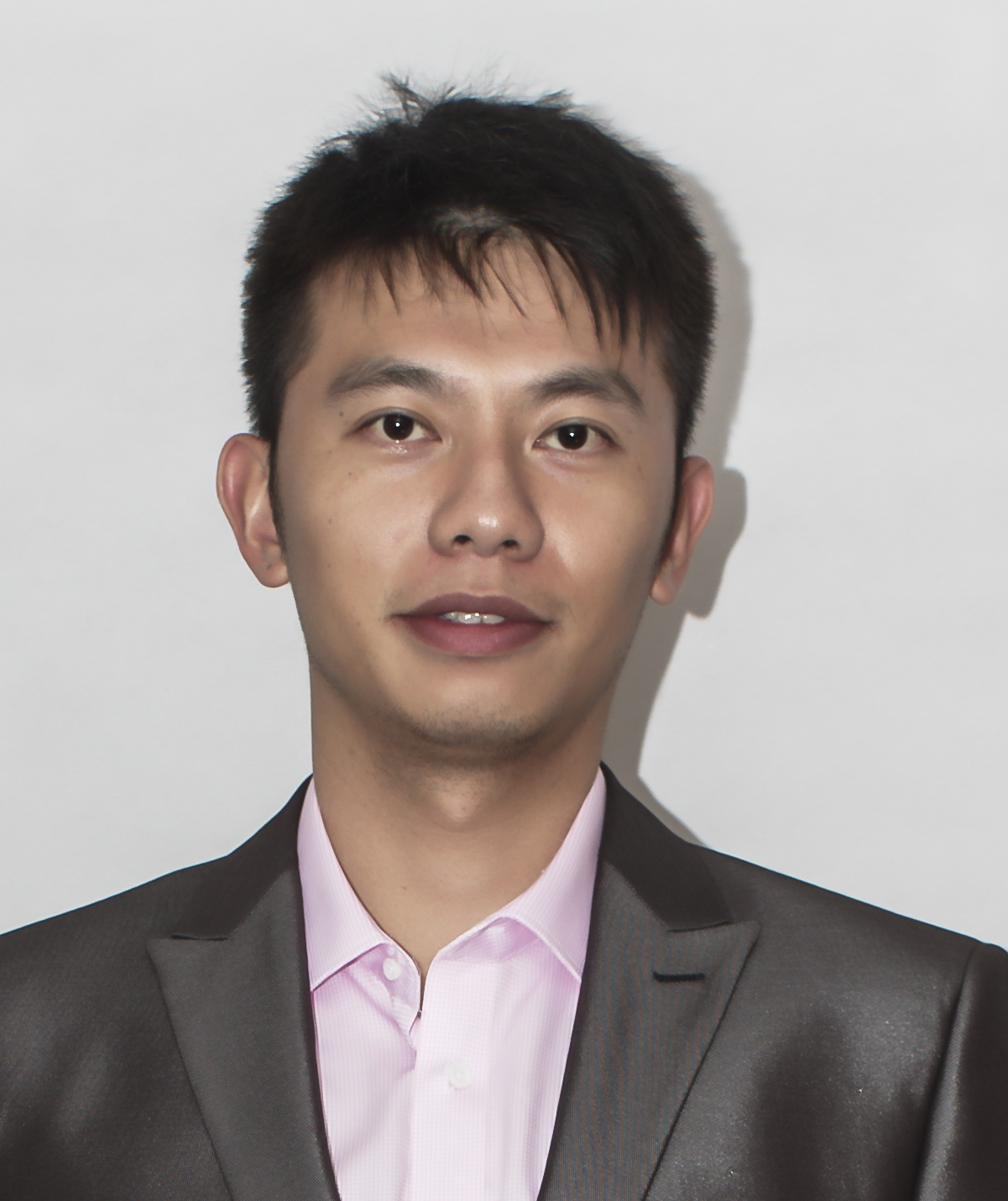 Gang Yu (俞刚)合作论文数StepFun23
 Pei Cheng合作论文数12
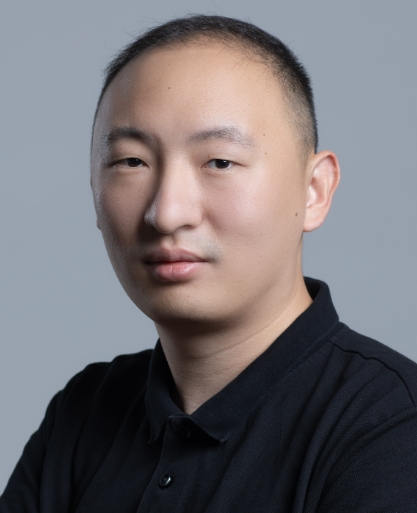 Chi Zhang (张驰)合作论文数AGI Lab, Westlake University;School of Engineering, Westlake University11
 Xin Chen合作论文数10
 Tao Chen (陈涛)合作论文数School of Information Science and Technology, Fudan University9
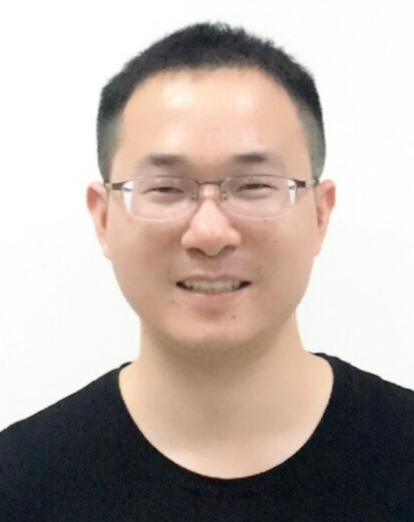 Zilong Huang (黄子龙)合作论文数Tencent8
 Guozhong Luo合作论文数7
 Fukun Yin (尹富坤)合作论文数StepFun4
 Xianfang Zeng合作论文数Tencent PCG4Wang Zhibin合作论文数Chinese Academy of Sciences, University of Chinese Academy of Sciences4
 Chunhua Shen (沈春华)合作论文数College of Computer Science and Technology, Zhejiang University4
 Wanqi Yang (杨琬琪)合作论文数School of Computer and Electronic Information, Nanjing Normal University3
 Yucheng Han合作论文数Nanyang Technological University3
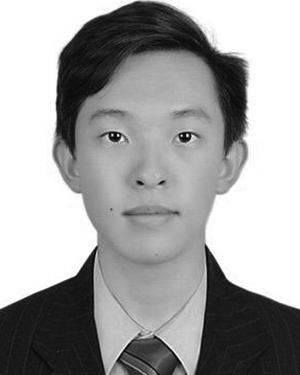 Yicheng Wang合作论文数3
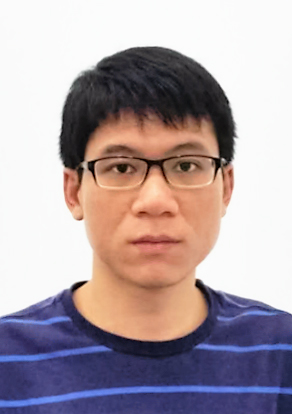 Wen Liu (刘闻)合作论文数DeepSeek AI3
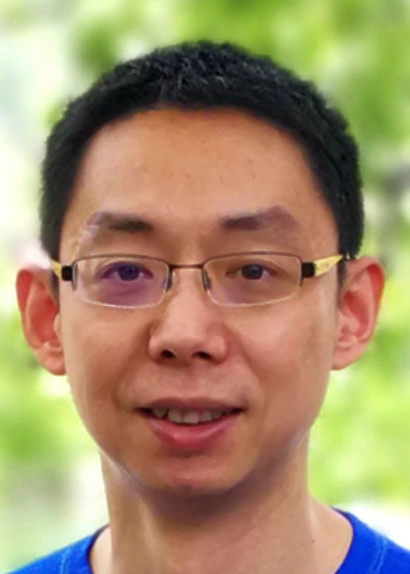 Rui Wang (王睿)合作论文数Department of Computer Science and Technology, School of Computer and Communication Engineering, University of Science and Technology Beijing3
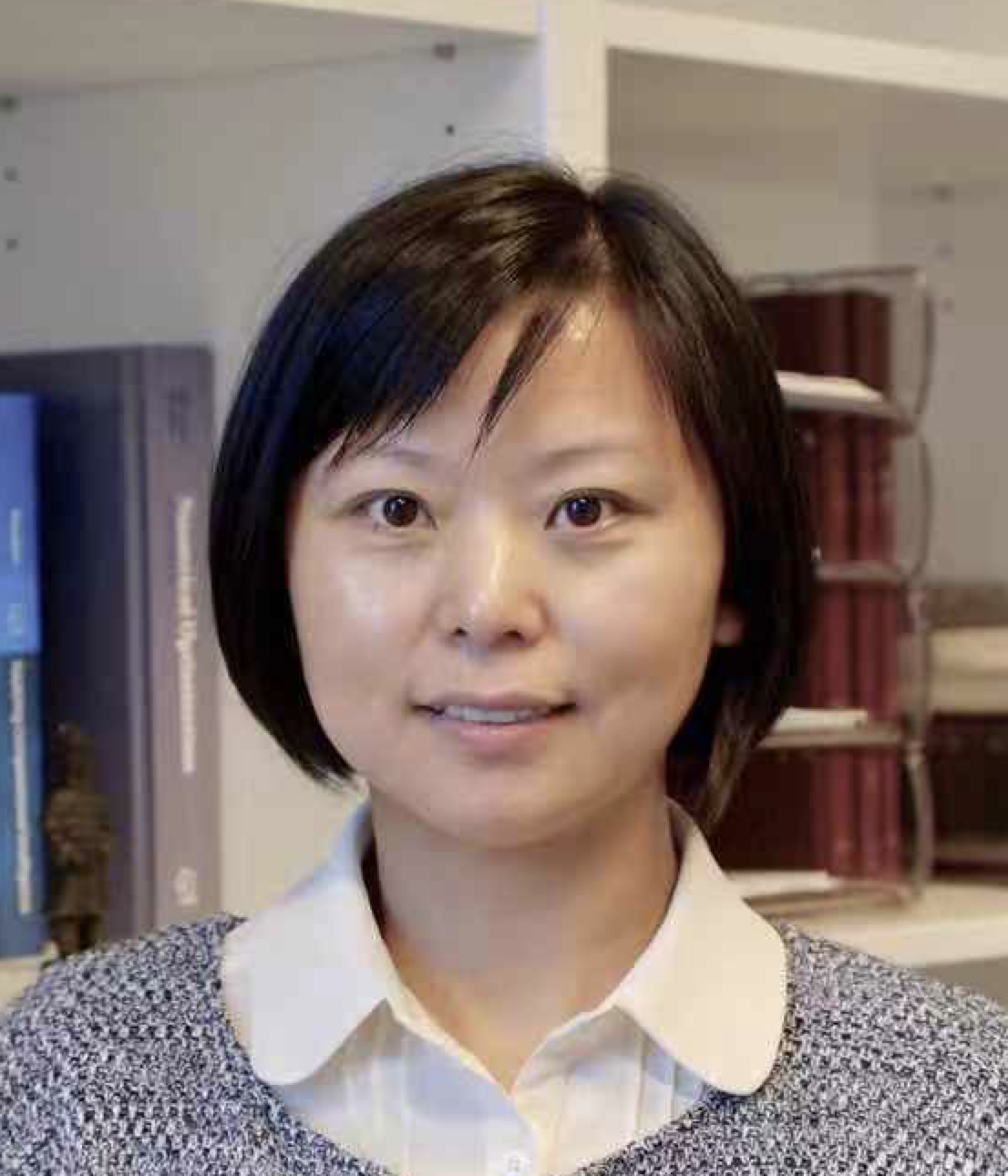 Ling Chen合作论文数Centre for Artificial Intelligence, School of Computer Science, University of Technology Sydney3
 Ziyu Zhang合作论文数Medical College of Wisconsin3
 Yunchao Wei (魏云超)合作论文数Institute of Information Science, Beijing Jiaotong University;Center of Digital Media Information Processing, Beijing Jiaotong University3Zhibin Wang合作论文数2Zebiao Huang合作论文数2Yijun Fu合作论文数2Yixiao Fang合作论文数2
 Yiran Wang (王一然)合作论文数MOE Key Laboratory of Image Processing and Intelligent Control, School of Artificial Intelligence and Automation, Huazhong University of Science and Technology;Tencent AI Lab2Zibo Zhao合作论文数2Billzb Wang合作论文数2Dong-Yang Liu合作论文数Key Lab of Intell. Info. Process., Inst. of Comput. Tech., Chinese Academy of Sciences;University of Chinese Academy of Sciences2Youcheng Ben合作论文数2Grigory Malivenko合作论文数2Anqi Pang合作论文数ShanghaiTech Univ, Sch Informat Sci & Technol, Shanghai Engn Res Ctr Intelligent Vis & Imaging, Shanghai, Peoples R China2Jialei Xu合作论文数2
 Andrey Ignatov合作论文数Eidgenössische Technische Hochschule Zürich2
 Radu Timofte合作论文数Computer Vision Laboratory, Institute of Computer Science, Faculty of Mathematics and Computer Science, Julius Maximilians University of Würzburg;ETH Zurich2
 Ziwei Liu (刘子纬)合作论文数College of Computing and Data Science, Nanyang Technological University2
 Yu Qiao (乔宇)合作论文数Multimedia Laboratory, Shenzhen Institutes of Advanced Technology, Chinese Academy of Sciences;Shanghai AI Laboratory;Shenzhen University of Advanced Technology2
 Guosheng Lin合作论文数School of Computer Science and Engineering, Nanyang Technological University2
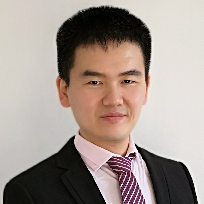 Junjun Jiang (江俊君)合作论文数School of Computer Science and Technology, Harbin Institute of Technology2
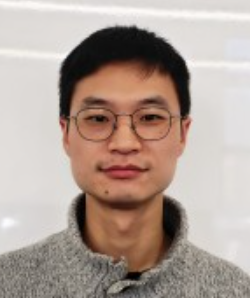 Wei Yin (尹炜)合作论文数DJI2
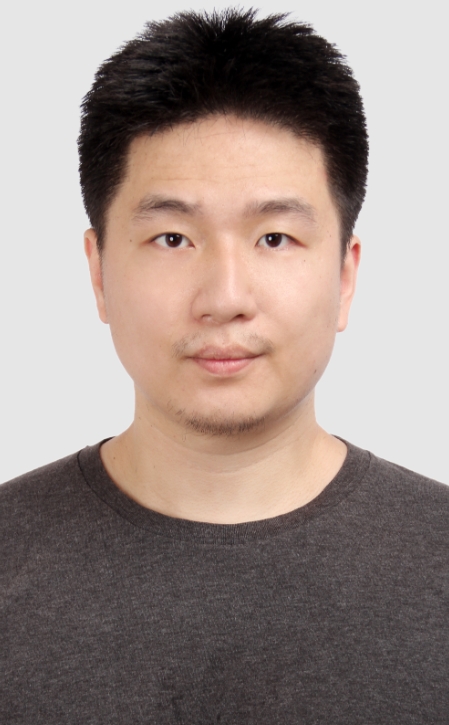 Peng Gao合作论文数Alpha-VLLM Team, OpenGVLab, Shanghai Artificial Intelligence Laboratory2
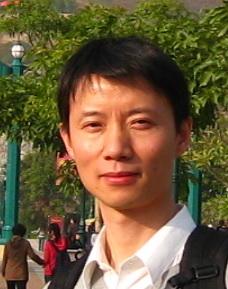 Zhiguo Cao (曹治国)合作论文数School of Artificial Intelligence and Automation, Huazhong University of Science and Technology2
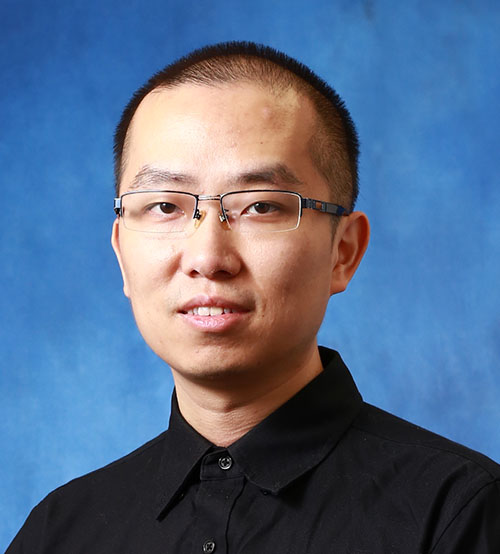 Hongsheng Li (李鴻升)合作论文数Department of Electronic Engineering, The Chinese University of Hong Kong;Multimedia Laboratory, The Chinese University of Hong Kong2
 Zhenyu Li (李震宇)合作论文数Advanced Imaging and Intelligent Analysis Laboratory, Computing Faculty, Harbin Institute of Technology2
 Hanwang Zhang (张含望)合作论文数College of Computing and Data Science, Nanyang Technological University;School of Computer Science and Engineering, Nanyang Technological University2Victor Perez合作论文数1Erwann Millon合作论文数1Will Beddow合作论文数1Xinyue Li合作论文数1Zhen Li合作论文数1Juncheng Mu合作论文数1




