In this work, we propose Causal Autoregressive Diffusion (CARD), a novel framework that unifies the training efficiency of ARMs with the high-throughput inference of diffusion models. CARD reformulates the diffusion process within a strictly causal attention mask, enabling dense, per-token supervision in a single forward pass. To address the optimization instability of causal diffusion, we introduce a soft-tailed masking schema to preserve local context and a context-aware reweighting mechanism derived from signal-to-noise principles. This design enables dynamic parallel decoding, where the model leverages KV-caching to adaptively generate variable-length token sequences based on confidence. Empirically, CARD outperforms existing discrete diffusion baselines while reducing training latency by 3 $\times$ compared to block diffusion methods. Our results demonstrate that CARD achieves ARM-level data efficiency while unlocking the latency benefits of parallel generation, establishing a robust paradigm for next-generation efficient LLMs.
RL-based agentic search enables LLMs to solve complex questions via dynamic planning and external search. While this approach significantly enhances accuracy with agent policies optimized via large-scale reinforcement learning, we identify a critical gap in reliability: these agents fail to recognize their reasoning boundaries and rarely admit ``I DON'T KNOW'' (IDK) even when evidence is insufficient or reasoning reaches its limit. The lack of reliability often leads to plausible but unreliable answers, introducing significant risks in many real-world scenarios. To this end, we propose Boundary-Aware Policy Optimization (BAPO), a novel RL framework designed to cultivate reliable boundary awareness without compromising accuracy. BAPO introduces two key components: (i) a group-based boundary-aware reward that encourages an IDK response only when the reasoning reaches its limit, and (ii) an adaptive reward modulator that strategically suspends this reward during early exploration, preventing the model from exploiting IDK as a shortcut. Extensive experiments on four benchmarks demonstrate that BAPO substantially enhances the overall reliability of agentic search.
Accurate evaluation of conversational retrieval is pivotal for advancing Retrieval-Augmented Generation (RAG) systems. However, existing conversational retrieval benchmarks suffer from costly, sparse human annotation or rigid, unnatural automated heuristics. To address these challenges, we introduce MTR-Suite, a unified framework for auditing, synthesizing, and benchmarking retrieval. It features: (1) MTR-Eval, an LLM-based auditor quantifying alignment gaps in previous benchmarks; (2) MTR-Pipeline, a multi-agent system using greedy traversal clustering to generate high-fidelity dialogues at 1/400th human cost; and (3) MTR-Bench, a rigorous general-domain benchmark. MTR-Bench mimics production-style challenges (hard topic switching, verbosity), offering superior discriminative power. We make our code and data publicly available to facilitate future research.
Existing video frame interpolation (VFI) methods often adopt a frame-centric approach, processing videos as independent short segments (e.g., triplets), which leads to temporal inconsistencies and motion artifacts. To overcome this, we propose a holistic, video-centric paradigm named \textbf{L}ocal \textbf{D}iffusion \textbf{F}orcing for \textbf{V}ideo \textbf{F}rame \textbf{I}nterpolation (LDF-VFI). Our framework is built upon an auto-regressive diffusion transformer that models the entire video sequence to ensure long-range temporal coherence. To mitigate error accumulation inherent in auto-regressive generation, we introduce a novel skip-concatenate sampling strategy that effectively maintains temporal stability. Furthermore, LDF-VFI incorporates sparse, local attention and tiled VAE encoding, a combination that not only enables efficient processing of long sequences but also allows generalization to arbitrary spatial resolutions (e.g., 4K) at inference without retraining. An enhanced conditional VAE decoder, which leverages multi-scale features from the input video, further improves reconstruction fidelity. Empirically, LDF-VFI achieves state-of-the-art performance on challenging long-sequence benchmarks, demonstrating superior per-frame quality and temporal consistency, especially in scenes with large motion.
Reinforcement learning has proven effective for enhancing multi-step reasoning in large language models (LLMs), yet its benefits have not fully translated to multilingual contexts. Existing methods struggle with a fundamental trade-off: prioritizing input-language consistency severely hampers reasoning quality, while prioritizing reasoning often leads to unintended language drift toward English. We address this challenge with LANG, a novel framework that leverages language-conditioned hints to guide exploration in non-English reasoning tasks. Our method incorporates two key mechanisms to prevent dependency on these hints: a progressive decay schedule that gradually withdraws scaffolding, and a language-adaptive switch that tailors learning horizons to specific language difficulties. Empirical results on challenging multilingual mathematical benchmarks reveal that LANG substantially enhances reasoning performance without compromising language consistency. Moreover, we show that our framework generalizes beyond mathematics, fostering more consistent language alignment across model layers
We introduce OneCAT, a unified multimodal model that seamlessly integrates understanding, generation, and editing within a single decoder-only transformer architecture. OneCAT uniquely eliminates the need for external components such as Vision Transformers (ViT) or vision tokenizer during inference, leading to significant efficiency gains, especially for high-resolution image inputs and outputs. This is achieved through a modality-specific Mixture-of-Experts (MoE) design trained with a unified autoregressive (AR) objective, which also natively supports dynamic resolutions. Furthermore, we pioneer to achieve multi-scale visual autoregressive mechanism within the Large Language Model (LLM) with proposed scale-aware adapter (SAA) that drastically reduces decoding latency compared to diffusion-based methods while maintaining state-of-the-art performance. Our findings demonstrate the powerful potential of pure autoregressive modeling as an elegant foundation for unified multimodal intelligence. As a result, OneCAT outperforms existing unified models across benchmarks for multimodal understanding, generation, and editing.
The success of Large Language Models (LLMs) hinges on the stable training of deep Transformer architectures. A critical design choice is the placement of normalization layers, leading to a fundamental trade-off: the ''PreNorm'' architecture ensures training stability at the cost of potential performance degradation in deep models, while the ''PostNorm'' architecture offers strong performance but suffers from severe training instability. In this work, we propose SpanNorm, a novel technique designed to resolve this dilemma by integrating the strengths of both paradigms. SpanNorm adopts the clean residual path of PreNorm to stabilize signal propagation while employing a PostNorm-style computation that normalizes the output of the residual connection, thereby enhancing model performance. We provide a theoretical analysis demonstrating that SpanNorm, combined with a principled scaling strategy, maintains bounded signal variance throughout the network, preventing the gradient issues that plague PostNorm models, and alleviating the representation collapse of PreNorm. Empirically, SpanNorm consistently outperforms standard normalization schemes in both dense and Mixture-of-Experts (MoE) scenarios, paving the way for more powerful and stable Transformer architectures.
On-policy distillation (OPD) has become a promising paradigm for reasoning-oriented post-training of large language models (LLMs), especially when combined with reinforcement learning from verifiable rewards (RLVR). Existing OPD methods rely on reverse KL (RKL)-based teacher supervision over trajectories sampled from the student policy. However, we identify a critical limitation: under large teacher–student policy divergence, RL-driven exploration often produces trajectories outside the teacher distribution, resulting in uninformative negative feedback. To address this, we propose Teacher-Guided Policy Optimization (TGPO), an on-policy reasoning distillation method that remains effective under large policy divergence settings. Rather than relying solely on evaluative supervision, TGPO uses teacher to directly guide token level generation conditioning on student-generated contexts; together with RLVR-style trajectory level rewards, TGPO steers exploration toward improved continuations. Experiments on reasoning benchmarks show that TGPO consistently outperforms existing RKL-based OPD methods and remains robust across different teacher models.
Distilling reasoning capabilities from strong to weak language models typically involves imitating specific solution trajectories, effectively transferring what to answer rather than how to reason. This trajectory-level imitation encourages memorization of instance-specific steps rather than acquisition of transferable problem-solving skills, limiting generalization to novel problems. We propose Strategy-Guided Policy Optimization (SGPO), which replaces instance-level trajectory imitation with reusable strategy distillation. SGPO extracts structured strategy descriptions from strong-model responses and, for each problem, constructs both autonomous and strategy-guided trajectories to enable direct comparison of the model's behavior with and without strategic guidance. The framework then addresses two key questions. For how to distill, a token-level forward-KL objective selectively transfers the distributional shift induced by strategy conditioning into the unguided policy, with proximal constraints ensuring stability. For when to distill, adaptive instance-level weighting strengthens guidance when autonomous exploration falls short and reduces it as the model's own competence grows. Experiments on four mathematical benchmarks across two model families show that SGPO consistently outperforms SFT, on-policy RL, and hybrid-policy baselines, improving the average score by 2.2 points over the strongest baseline on Qwen2.5-7B-Instruct. Analysis reveals that the forward-KL objective provides an inherently selective distillation signal that outperforms direct trajectory imitation, and that strategy distillation exhibits complementary scaling with base model capability.
We present LongCat-Flash-Thinking, an efficient 560-billion-parameter open-source Mixture-of-Experts (MoE) reasoning model. Its advanced capabilities are cultivated through a meticulously crafted training process, beginning with long Chain-of-Thought (CoT) data cold-start and culminating in large-scale Reinforcement Learning (RL). We first employ a well-designed cold-start training strategy, which significantly enhances the reasoning potential and equips the model with specialized skills in both formal and agentic reasoning. Then, a core innovation is our domain-parallel training scheme, which decouples optimization across distinct domains (e.g., STEM, Code, Agentic) and subsequently fuses the resulting expert models into a single, nearly Pareto-optimal model. This entire process is powered by our Dynamic ORchestration for Asynchronous rollout (DORA) system, a large-scale RL framework that delivers a greater than threefold training speedup over synchronous methods on tens of thousands of accelerators. As a result, LongCat-Flash-Thinking achieves state-of-the-art performance among open-source models on a suite of complex reasoning tasks. The model exhibits exceptional efficiency in agentic reasoning, reducing average token consumption by 64.5
We study a class of sequential decision-making problems with augmented predictions, potentially provided by a machine learning algorithm. In this setting, the decision-maker receives prediction intervals for unknown parameters that become progressively refined over time, and seeks decisions that are competitive with the hindsight optimal under all possible realizations of both parameters and predictions. We propose a minimax Markov Decision Process (minimax-MDP) framework, where the system state consists of an adversarially evolving environment state and an internal state controlled by the decision-maker. We introduce a set of future-imposed conditions that characterize the feasibility of minimax-MDPs and enable the design of efficient, often closed-form, robustly competitive policies. We illustrate the framework through three applications: multi-period inventory ordering with refining demand predictions, resource allocation with uncertain utility functions, and a multi-phase extension of the minimax-MDP applied to the inventory problem with time-varying ordering costs. Our results provide a tractable and versatile approach to robust online decision-making under predictive uncertainty.
Time series prediction is an effective tool for marine scientific research. The Hierarchical Temporal Memory (HTM) model has advantages over traditional recurrent neural network (RNN)-based models due to its online learning and prediction capabilities. Given that the neuronal structure of HTM is ill-equipped for the complexity of long-term marine time series applications, this study proposes a new, improved HTM model, incorporating Gated Recurrent Units (GRUs) neurons into the temporal memory algorithm to overcome this limitation. The capacities and advantages of the proposed model were tested and evaluated on time series data collected from the Xiaoqushan Seafloor Observatory in the East China Sea. The improved HTM model both outperforms the original one in short-term and long-term predictions and presents results with lower errors and better model stability than the GRU model, which is proficient in long-term predictions. The findings allow for the conclusion that the mechanism of online learning has certain advantages in predicting ocean observation data.
Incremental few-shot semantic segmentation (IFSS) aims to incrementally extend a semantic segmentation model to novel classes according to only a few pixel-level annotated data, while preserving its segmentation capability on previously learned base categories. This task faces a severe semantic-aliasing issue between base and novel classes due to data imbalance, which makes segmentation results unsatisfactory. To alleviate this issue, we propose the Semantic-guided Relation Alignment and Adaptation (SRAA) method that fully considers the guidance of prior semantic information. Specifically, we first conduct Semantic Relation Alignment (SRA) in the base step, so as to semantically align base class representations to their semantics. As a result, the embeddings of base classes are constrained to have relatively low semantic correlations to categories that are different from them. Afterwards, based on the semantically aligned base categories, Semantic-Guided Adaptation (SGA) is employed during the incremental learning stage. It aims to ensure affinities between visual and semantic embeddings of encountered novel categories, thereby making the feature representations be consistent with their semantic information. In this way, the semantic-aliasing issue can be suppressed. We evaluate our model on the PASCAL VOC 2012 and the COCO dataset. The experimental results on both these two datasets exhibit its competitive performance, which demonstrates the superiority of our method.
Recently years have witnessed a rapid development of large language models (LLMs). Despite the strong ability in many language-understanding tasks, the heavy computational burden largely restricts the application of LLMs especially when one needs to deploy them onto edge devices. In this paper, we propose a quantization-aware low-rank adaptation (QA-LoRA) algorithm. The motivation lies in the imbalanced degrees of freedom of quantization and adaptation, and the solution is to use group-wise operators which increase the degree of freedom of quantization meanwhile decreasing that of adaptation. QA-LoRA is easily implemented with a few lines of code, and it equips the original LoRA with two-fold abilities: (i) during fine-tuning, the LLM's weights are quantized (e.g., into INT4) to reduce time and memory usage; (ii) after fine-tuning, the LLM and auxiliary weights are naturally integrated into a quantized model without loss of accuracy. We apply QA-LoRA to the LLaMA and LLaMA2 model families and validate its effectiveness in different fine-tuning datasets and downstream scenarios. Code will be made available at https://github.com/yuhuixu1993/qa-lora.
The Mixture of Experts (MoE) model becomes an important choice of large language models nowadays because of its scalability with sublinear computational complexity for training and inference. However, existing MoE models suffer from two critical drawbacks, 1) tremendous inner-node and inter-node communication overhead introduced by all-to-all dispatching and gathering, and 2) limited scalability for the backbone because of the bound data parallel and expert parallel to scale in the expert dimension. In this paper, we systematically analyze these drawbacks in terms of training efficiency in the parallel framework view and propose a novel MoE architecture called Pipeline MoE (PPMoE) to tackle them. PPMoE builds expert parallel incorporating with tensor parallel and replaces communication-intensive all-to-all dispatching and gathering with a simple tensor index slicing and inner-node all-reduce. Besides, it is convenient for PPMoE to integrate pipeline parallel to further scale the backbone due to its flexible parallel architecture. Extensive experiments show that PPMoE not only achieves a more than $1.75\times$ speed up compared to existing MoE architectures but also reaches $90\%$ throughput of its corresponding backbone model that is $20\times$ smaller.
Weather forecasting is important for science and society. At present, the most accurate forecast system is the numerical weather prediction (NWP) method, which represents atmospheric states as discretized grids and numerically solves partial differential equations that describe the transition between those states 1 . However, this procedure is computationally expensive. Recently, artificial-intelligence-based methods 2 have shown potential in accelerating weather forecasting by orders of magnitude, but the forecast accuracy is still significantly lower than that of NWP methods. Here we introduce an artificial-intelligence-based method for accurate, medium-range global weather forecasting. We show that three-dimensional deep networks equipped with Earth-specific priors are effective at dealing with complex patterns in weather data, and that a hierarchical temporal aggregation strategy reduces accumulation errors in medium-range forecasting. Trained on 39 years of global data, our program, Pangu-Weather, obtains stronger deterministic forecast results on reanalysis data in all tested variables when compared with the world’s best NWP system, the operational integrated forecasting system of the European Centre for Medium-Range Weather Forecasts (ECMWF) 3 . Our method also works well with extreme weather forecasts and ensemble forecasts. When initialized with reanalysis data, the accuracy of tracking tropical cyclones is also higher than that of ECMWF-HRES.
This paper targets on self-supervised tumor segmentation. We make the following contributions: (i) we take inspiration from the observation that tumors are often characterised independently of their contexts, we propose a novel proxy task “layer-decomposition”, that closely matches the goal of the downstream task, and design a scalable pipeline for generating synthetic tumor data for pre-training; (ii) we propose a two-stage Sim2Real training regime for unsupervised tumor segmentation, where we first pre-train a model with simulated tumors, and then adopt a self-training strategy for downstream data adaptation; (iii) when evaluating on different tumor segmentation benchmarks, e.g. BraTS2018 for brain tumor segmentation and LiTS2017 for liver tumor segmentation, our approach achieves state-of-the-art segmentation performance under the unsupervised setting. While transferring the model for tumor segmentation under a low-annotation regime, the proposed approach also outperforms all existing self-supervised approaches; (iv) we conduct extensive ablation studies to analyse the critical components in data simulation, and validate the necessity of different proxy tasks. We demonstrate that, with sufficient texture randomization in simulation, model trained on synthetic data can effortlessly generalise to datasets with real tumors.
Neural architecture search (NAS) and network pruning are widely studied efficient AI techniques, but not yet perfect. NAS performs exhaustive candidate architecture search, incurring tremendous search cost. Though (structured) pruning can simply shrink model dimension, it remains unclear how to decide the per-layer sparsity automatically and optimally. In this work, we revisit the problem of layer-width optimization and propose Pruning-as-Search (PaS), an end-to-end channel pruning method to search out desired sub-network automatically and efficiently. Specifically, we add a depth-wise binary convolution to learn pruning policies directly through gradient descent. By combining the structural reparameterization and PaS, we successfully searched out a new family of VGG-like and lightweight networks, which enable the flexibility of arbitrary width with respect to each layer instead of each stage. Experimental results show that our proposed architecture outperforms prior arts by around 1.0% top-1 accuracy under similar inference speed on ImageNet-1000 classification task. Furthermore, we demonstrate the effectiveness of our width search on complex tasks including instance segmentation and image translation. Code and models are released.
In this paper, we present Pangu-Weather, a deep learning based system for fast and accurate global weather forecast. For this purpose, we establish a data-driven environment by downloading $43$ years of hourly global weather data from the 5th generation of ECMWF reanalysis (ERA5) data and train a few deep neural networks with about $256$ million parameters in total. The spatial resolution of forecast is $0.25^\circ\times0.25^\circ$, comparable to the ECMWF Integrated Forecast Systems (IFS). More importantly, for the first time, an AI-based method outperforms state-of-the-art numerical weather prediction (NWP) methods in terms of accuracy (latitude-weighted RMSE and ACC) of all factors (e.g., geopotential, specific humidity, wind speed, temperature, etc.) and in all time ranges (from one hour to one week). There are two key strategies to improve the prediction accuracy: (i) designing a 3D Earth Specific Transformer (3DEST) architecture that formulates the height (pressure level) information into cubic data, and (ii) applying a hierarchical temporal aggregation algorithm to alleviate cumulative forecast errors. In deterministic forecast, Pangu-Weather shows great advantages for short to medium-range forecast (i.e., forecast time ranges from one hour to one week). Pangu-Weather supports a wide range of downstream forecast scenarios, including extreme weather forecast (e.g., tropical cyclone tracking) and large-member ensemble forecast in real-time. Pangu-Weather not only ends the debate on whether AI-based methods can surpass conventional NWP methods, but also reveals novel directions for improving deep learning weather forecast systems.
 Qi Tian (田奇)合作论文数Huawei Consumer Business Group;Guangming Laboratory21
 Lingxi Xie (谢凌曦)合作论文数16
 Jingang Wang合作论文数NLP9
 Kaifeng Bi合作论文数Huawei Inc.7Xunliang Cai合作论文数Meituan, Beijing, China7
 Xiaopeng Zhang (张晓鹏)合作论文数Huawei7
 Bei Li (李北)合作论文数Meituan7
 Jun Wu (吴俊)合作论文数College of Electronic and Information Engineering, Tongji University;College of Computer Science and Artificial Intelligence, Fudan University6
 Yuhui Xu (徐宇辉)合作论文数Google6
 Longhui Wei合作论文数Huawei Cloud6Hengheng Zhang合作论文数Huawei Technologies Ltd.5
 Xiaotao Gu (顾晓韬)合作论文数Zhipu AI5
 Hongkai Xiong (熊红凯)合作论文数School of Information and Electronic Engineering, East China Normal University;Department of Electronic Engineering, Shanghai Jiao Tong University;Department of Computer Science and Engineering, School of Computer Science, Shanghai Jiao Tong University;Institute of Media,Information, and Network, Shanghai Jiao Tong University5
 Tong Xiao (肖桐)合作论文数School of Computer Science and Engineering, Northeastern University;Natural Language Processing Lab, Northeastern University5
 Ya Zhang (张娅)合作论文数School of Artificial Intelligence, Shanghai Jiao Tong University;Cooperative Medianet Innovation Center, School of Electronic Information and Electrical Engineering, Shanghai Jiao Tong University4
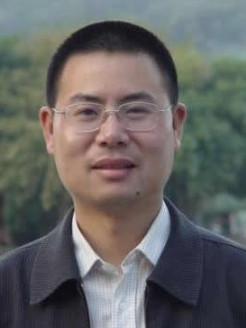 Jingbo Zhu (朱靖波)合作论文数School of Computer Science and Engineering, Northeastern University4
 Yanfeng Wang (王延峰)合作论文数Artificial Intelligence Institute, Shanghai Jiao Tong University;Cooperative Medianet Innovation Center4Junhao Ruan合作论文数School of Computer Science and Engineering, Northeastern University3
 Yongjing Yin合作论文数School of Engineering, Westlake University;School of Informatics, Westlake University3Rongxiang Weng合作论文数Suzhou University3
 Guo-Jun Qi (齐国君)合作论文数Laboratory for Machine Perception and Learning, School of Engineering, Westlake University;Seattle Research Center, OPPO;Futurewei Technologies, Inc.3
 Wenrui Dai (戴文睿)合作论文数School of Integrated Circuits, Shanghai Jiao Tong University3Zhengsu Chen合作论文数2
 Xiao An合作论文数Huawei Inc.2
 Xiaoman Zhang合作论文数AI Lab, Shanghai2Yaoming Wang合作论文数Department of Electronic Engineering, Shanghai Jiao Tong University2
 Qifan Wang (王奇凡)合作论文数2
 Weidi Xie (谢伟迪)合作论文数School of Artificial Intelligence, Shanghai Jiao Tong University2Yuan Zhou (周源)合作论文数2
 Chaoqin Huang (黄潮钦)合作论文数Cooperative Medianet Innovation Center, Shanghai Jiao Tong University;Learning and Vision Laboratory, Department of Electrical and Computer Engineering, College of Design and Engineering, National University of Singapore2
 Yuchun Fan合作论文数NLP Lab, School of Computer Science and Engineering, Northeastern University1
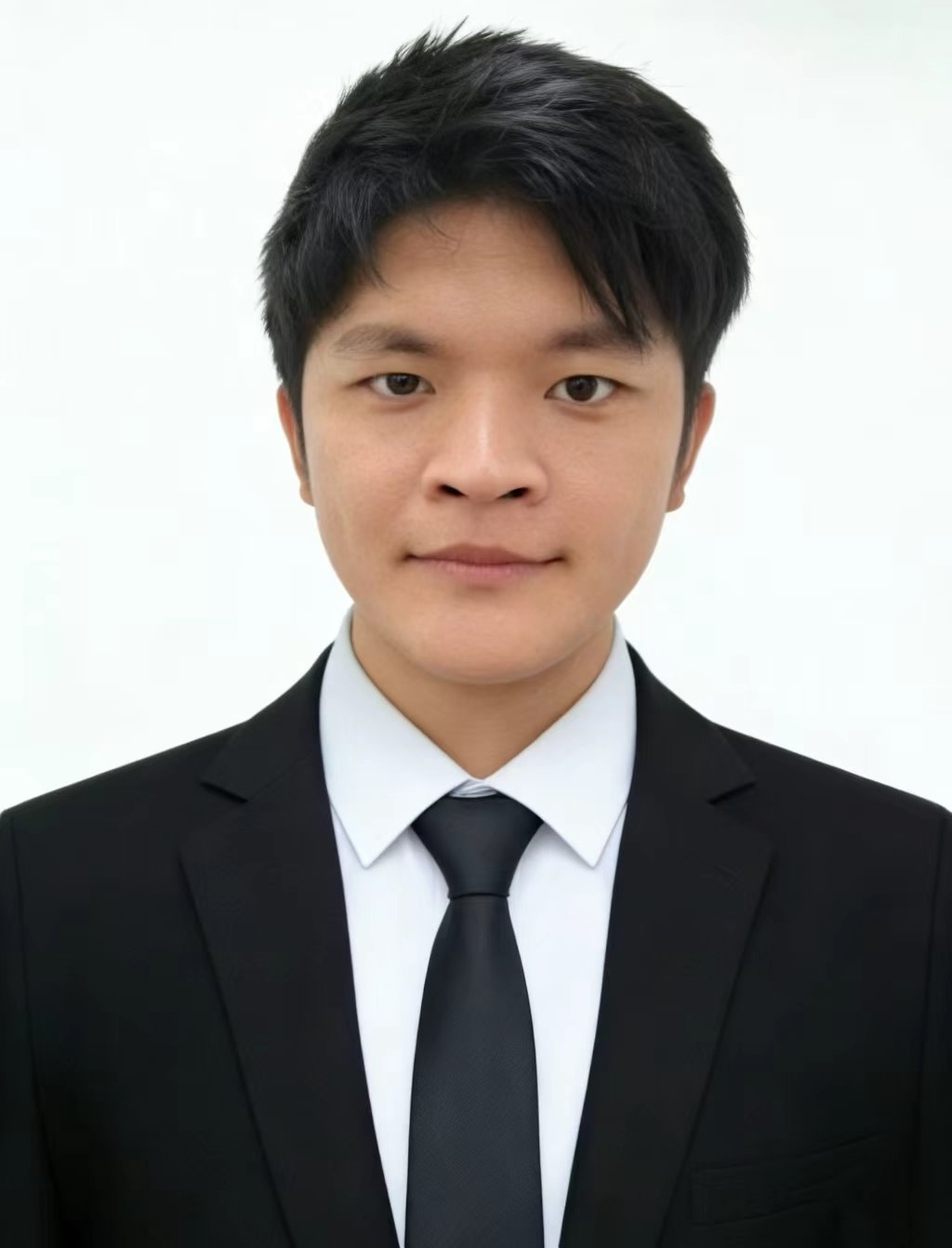 Qinggang Zhang (张庆刚)合作论文数School of Artificial Intelligence, Jilin University1
 Zelin Peng (彭泽林)合作论文数Shanghai Jiao Tong University;Meituan1Yongyu Mu合作论文数NLP Lab, School of Computer Science and Engineering, Northeastern University1Xinyu Peng合作论文数Department of Computer Science and Engineering, Shanghai Jiao Tong University1Tianyuan Shi合作论文数School of Computer Science and Engineering, Sun Yat-sen University1
 Chaoyi Wu (吴超逸)合作论文数School of Artificial Intelligence, Shanghai Jiao Tong University1
 Ziyang Zheng合作论文数1
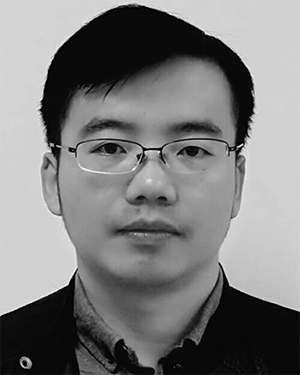 Songlin Cheng合作论文数1Chao Wang合作论文数Technology Department, Meituan Group1
 Chengcheng Han合作论文数Department of Computer Science & Technology, School of Data Science and Engineering, East China Normal University1
 L. Wang合作论文数1
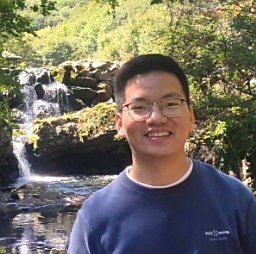 Chenglong Wang合作论文数College of Computer Science and Engineering, Northeastern University;Natural Language Processing Laboratory, School of Computer Science and Engineering, Northeastern University1
 Jiahao Liu合作论文数Meituan NLP1
 Han Li合作论文数Shanghai Jiao Tong University1Shixiang Feng合作论文数Shanghai Jiao Tong Univ, Cooperat Medianet Innovat Ctr, Shanghai 200240, Peoples R China1
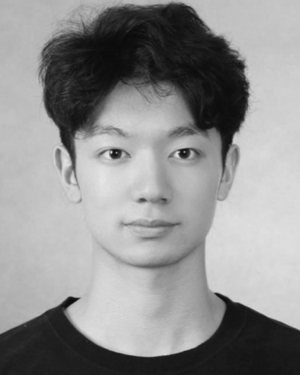 Li Han合作论文数Liaoning Normal University(Liaoning Normal University),Dalian,China1
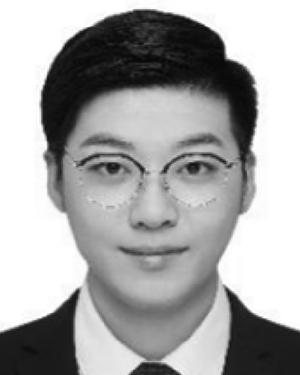 Zijie Yang合作论文数1Hongyin Tang合作论文数Chinese Acad Sci, Inst Software, State Key Lab Comp Sci, Beijing 100864, Peoples R China1




