Quantum program generation demands a level of precision that may not be compatible with the statistical reasoning carried out in the inference of large language models (LLMs). Hallucinations are mathematically inevitable and not addressable by scaling, which leads to infeasible solutions. We argue that architectures prioritizing verification are necessary for quantum copilots and AI automation in domains governed by constraints. Our position rests on three key points: verified training data enables models to internalize precise constraints as learned structures rather than statistical approximations; verification must constrain generation rather than filter outputs, as valid designs occupy exponentially shrinking subspaces; and domains where physical laws impose correctness criteria require verification embedded as architectural primitives. Early experiments showed LLMs without data verification could only achieve a maximum accuracy of 79
Optimization via decoded quantum interferometry (DQI) has recently gained a great deal of attention as a promising avenue for solving optimization problems using quantum computers. In this paper, we apply DQI to an industrial optimization problem in the automotive industry: the vehicle option-package pricing problem. Our main contributions are (1) formulating the industrial problem as an integer linear program (ILP), (2) converting the ILP into instances of max-XORSAT, and (3) developing a detailed quantum circuit implementation for belief propagation, a heuristic algorithm for decoding low density parity-check codes. Thus, we provide a full implementation of the DQI algorithm using Belief Propagation, which can be applied to any industrially relevant ILP by first transforming it into a max-XORSAT instance. We also evaluate the effectiveness of our implementation by benchmarking it against both Gurobi and a random sampling baseline.
We introduce a quantum–classical generative model for small-molecule design, specifically targeting KRAS inhibitors for cancer therapy. We apply the method to design, select and synthesize 15 proposed molecules that could notably engage with KRAS for cancer therapy, with two holding promise for future development as inhibitors. This work showcases the potential of quantum computing to generate experimentally validated hits that compare favorably against classical models. A hybrid model combines quantum and classical approaches to generate compounds targeting the KRAS protein.
This study examines the potential for fault-tolerant quantum computers to provide utility in fluid dynamics simulations, with a focus on drag force calculations for ship hull design. We assess whether quantum algorithms can surpass classical computational limits by generating detailed quantum resource estimates (QREs) in terms of logical qubits and T-gate counts. Our analysis is based on a quantum algorithm leveraging Carleman linearization of the lattice Boltzmann method (LBM), which has been suggested to offer exponential speedup. We develop efficient block encodings for LBM matrices and a method for amplitude-encoding drag force. We apply the method to the simple case of fluid flow past a sphere across a range of Reynolds numbers (Re). We estimate the required (logical qubits)×(T-gates), finding them to be prohibitively large, ranging from 10^21 to 10^39. While classical simulations scale as O(Re^3), our QREs exhibit a modest polynomial scaling of O(Re^2.68), indicating no exponential quantum advantage. We attribute this limitation to an intrinsic power-law relationship between spatial grid resolution and time-stepping requirements that is a fundamental characteristic of explicit methods for evolving nonlinear differential equations. Thus, quantum computers are unlikely to provide utility in applications that require time-evolving fluids and other systems of nonlinear differential equations.
The industrial manufacturing of chemicals consumes a significant amount of energy and raw materials. In principle, the development of new catalysts could greatly improve the efficiency of chemical production. However, the discovery of viable catalysts can be exceedingly challenging because it is difficult to know the efficacy of a candidate without experimentally synthesizing and characterizing it. This study explores the feasibility of using fault-tolerant quantum computers to accelerate the discovery of homogeneous catalysts for nitrogen fixation, an industrially important chemical process. It introduces a set of ground-state energy estimation problems representative of calculations needed for the discovery of homogeneous catalysts and analyzes them on three dimensions: economic utility, classical hardness, and quantum resource requirements. For the highest utility problem considered, two steps of a catalytic cycle for the generation of cyanate anion from dinitrogen, the economic utility of running these computations is estimated to be $200,000, and the required runtime for double-factorized phase estimation on a fault-tolerant superconducting device is estimated under conservative assumptions to be 139,000 QPU-hours. The computational cost of an equivalent DMRG calculation is estimated to be about 400,000 CPU-hours. These results suggest that, with continued development, it will be feasible for fault-tolerant quantum computers to accelerate the discovery of homogeneous catalysts.
Fault diagnosis (FD) of bearings is a research area with great relevance to industrial applications. Also, multi-source domain adaptation-based FD methods have achieved more widely acclaimed performance than the single-source domain. However, these methods try to derive domain-invariant features for multiple sources but ignore the semantic information of the target data under multi-source domain adaptation. In addition, aligning the decision boundaries of different classifiers may lead to the confusion of margin features, thus resulting in a limitation. To overcome these challenges, a two-stage transfer alignment (TSTA) method is proposed to complete fault diagnosis of bearings under transfer tasks. Specifically, a novel temporal transformer is developed as a backbone network to extract common and domain-specific fault features at different stages, where the common feature extractor can further reduce the complexity of the model. Meanwhile, a semantic consistency module is designed to consider the target semantics while eliminating the discrepancies in each pair of source and target domains, thus preserving the target information. Also, an entropy loss is developed to eliminate feature confusion in aligning domain-specific decision boundaries of different classifiers. Two bearing cases are extensively evaluated to validate the superiority of TSTA. The experiment results show that TSTA exhibits more competitive outcomes. In future work, a framework will be explored to treat physics-based domain knowledge as a soft constraint to penalize the loss function of deep neural networks.
De novo drug design with desired biological activitiesis crucialfor developing novel therapeutics for patients. The drug developmentprocess is time- and resource-consuming, and it has a low probabilityof success. Recent advances in machine learning and deep learningtechnology have reduced the time and cost of the discovery processand therefore, improved pharmaceutical research and development. Inthis paper, we explore the combination of two rapidly developing fieldswith lead candidate discovery in the drug development process. First,artificial intelligence has already been demonstrated to successfullyaccelerate conventional drug design approaches. Second, quantum computinghas demonstrated promising potential in different applications, suchas quantum chemistry, combinatorial optimizations, and machine learning.This article explores hybrid quantum-classical generative adversarialnetworks (GAN) for small molecule discovery. We substituted each elementof GAN with a variational quantum circuit (VQC) and demonstrated thequantum advantages in the small drug discovery. Utilizing a VQC inthe noise generator of a GAN to generate small molecules achievesbetter physicochemical properties and performance in the goal-directedbenchmark than the classical counterpart. Moreover, we demonstratethe potential of a VQC with only tens of learnable parameters in thegenerator of GAN to generate small molecules. We also demonstratethe quantum advantage of a VQC in the discriminator of GAN. In thishybrid model, the number of learnable parameters is significantlyless than the classical ones, and it can still generate valid molecules.The hybrid model with only tens of training parameters in the quantumdiscriminator outperforms the MLP-based one in terms of both generatedmolecule properties and the achieved KL divergence. However, the hybridquantum-classical GANs still face challenges in generating uniqueand valid molecules compared to their classical counterparts.
We present a gate synthesis application of the Deep Deterministic Policy Gradient (DDPG) algorithm for continuous control in a noisy quantum environment. Gate synthesis plays a crucial role in quantum computing, and optimizing control strategies for gate synthesis is of significant interest. The proposed approach leverages a DNN-based actor-critic architecture to optimize gate synthesis performance. The effectiveness of the algorithm is evaluated through simulations in a noiseless and noisy quantum environment, demonstrating its ability to achieve high-fidelity gate synthesis, $\mathcal{O}(10^{-3})$ , despite the presence of Markovian damping terms. The results highlight the potential of DDPG and reinforcement learning techniques for addressing continuous control challenges in quantum computing applications.
Model-based optimization, in concert with conventional black-box methods, can quickly solve large-scale combinatorial problems. Recently, quantum-inspired modeling schemes based on tensor networks have been developed which have the potential to better identify and represent correlations in datasets. Here, we use a quantum-inspired model-based optimization method TN-GEO to assess the efficacy of these quantum-inspired methods when applied to realistic problems. In this case, the problem of interest is the optimization of a realistic assembly line based on BMW's currently utilized manufacturing schedule. Through a comparison of optimization techniques, we found that quantum-inspired model-based optimization, when combined with conventional black-box methods, can find lower-cost solutions in certain contexts.
The efficiency of a Markov chain Monte Carlo algorithm for estimating the mean of a function of interest might be measured by the cost of generating one independent sample, or equivalently, the total cost divided by the effective sample size, defined in terms of the integrated autocorrelation time. To ensure the reliability of such an estimate, it is suggested that there be an adequate sampling of state space— to the extent that this can be determined from the available samples. A sufficient condition for adequate sampling is derived in terms of the supremum of all possible integrated autocorrelation times, which leads to a more stringent condition for adequate sampling than that simply obtained from integrated autocorrelation times for functions of interest. A method for estimating the supremum of all integrated autocorrelation times, based on approximation in a finite-dimensional subspace, is derived and evaluated empirically.
We present mathematical and conceptual foundations for the task of robust amplitude estimation using engineered likelihood functions (ELFs), a framework introduced by Wang et al. [PRX Quantum 2, 010346 (2021)] that uses Bayesian inference to enhance the rate of information gain in quantum sampling. These ELFs, which are obtained by choosing tunable parameters in a parametrized quantum circuit to minimize the expected posterior variance of an estimated parameter, play an important role in estimating the expectation values of quantum observables. We give a thorough characterization and analysis of likelihood functions arising from certain classes of quantum circuits and combine this with the tools of Bayesian inference to give a procedure for picking optimal ELF tunable parameters. Finally, we present numerical results to demonstrate the performance of ELFs.
Quantum mechanics is well known to accelerate statistical sampling processes over classical techniques. In quantitative finance, statistical samplings arise broadly in many use cases. Here we focus on a particular one of such use cases, credit valuation adjustment (CVA), and identify opportunities and challenges towards quantum advantage for practical instances. To improve the depths of quantum circuits for solving such problem, we draw on various heuristics that indicate the potential for significant improvement over well-known techniques such as reversible logical circuit synthesis. In minimizing the resource requirements for amplitude amplification while maximizing the speedup gained from the quantum coherence of a noisy device, we adopt a recently developed Bayesian variant of quantum amplitude estimation using engineered likelihood functions (ELF). We perform numerical analyses to characterize the prospect of quantum speedup in concrete CVA instances over classical Monte Carlo simulations.
In the near-term, hybrid quantum-classical algorithms hold great potential for outperforming classical approaches. Understanding how these two computing paradigms work in tandem is critical for identifying areas where such hybrid algorithms could provide a quantum advantage. In this work, we study a QAOA-based quantum optimization approach by implementing the Variational Quantum Factoring (VQF) algorithm. We execute experimental demonstrations using a superconducting quantum processor, and investigate the trade off between quantum resources (number of qubits and circuit depth) and the probability that a given biprime is successfully factored. In our experiments, the integers 1099551473989, 3127, and 6557 are factored with 3, 4, and 5 qubits, respectively, using a QAOA ansatz with up to 8 layers and we are able to identify the optimal number of circuit layers for a given instance to maximize success probability. Furthermore, we demonstrate the impact of different noise sources on the performance of QAOA, and reveal the coherent error caused by the residual Z Z -coupling between qubits as a dominant source of error in a near-term superconducting quantum processor.
The number of measurements demanded by hybrid quantum-classical algorithms such as the variational quantum eigensolver (VQE) is prohibitively high for many problems of practical value. For such problems, realizing quantum advantage will require methods which dramatically reduce this cost. Previous quantum algorithms that reduce the measurement cost (e.g. quantum amplitude and phase estimation) require error rates that are too low for near-term implementation. Here we propose methods that take advantage of the available quantum coherence to maximally enhance the power of sampling on noisy quantum devices, reducing measurement number and runtime compared to the standard sampling method of the variational quantum eigensolver (VQE). Our scheme derives inspiration from quantum metrology, phase estimation, and the more recent "alpha-VQE" proposal, arriving at a general formulation that is robust to error and does not require ancilla qubits. The central object of this method is what we call the "engineered likelihood function" (ELF), used for carrying out Bayesian inference. We show how the ELF formalism enhances the rate of information gain in sampling as the physical hardware transitions from the regime of noisy intermediate-scale quantum computers into that of quantum error corrected ones. This technique speeds up a central component of many quantum algorithms, with applications including chemistry, materials, finance, and beyond. Similar to VQE, we expect small-scale implementations to be realizable on today's quantum devices.
It is expected that the simulation of correlated fermions in chemistry and material science will be one of the first practical applications of quantum processors. Given the rapid evolution of quantum hardware, it is increasingly important to develop robust benchmarking techniques to gauge the capacity of quantum hardware specifically for the purpose of fermionic simulation. Here we propose using the one-dimensional Fermi-Hubbard model as an application benchmark for variational quantum simulations on near-term quantum devices. Since the one-dimensional Hubbard model is both strongly correlated and exactly solvable with the Bethe ansatz, it provides a reference ground state energy that a given device with limited coherence will be able to approximate up to a maximal size. The length of the largest chain that can be simulated provides an effective fermionic length. We use variational quantum eigensolver to approximate the ground state energy values of Fermi-Hubbard instances and show how the fermionic length benchmark can be used in practice to assess the performance of bounded-depth devices in a scalable fashion.
We develop a framework for characterizing and analyzing engineered likelihood functions (ELFs), which play an important role in the task of estimating the expectation values of quantum observables. These ELFs are obtained by choosing tunable parameters in a parametrized quantum circuit that minimize the expected posterior variance of an estimated parameter. We derive analytical expressions for the likelihood functions arising from certain classes of quantum circuits and use these expressions to pick optimal ELF tunable parameters. Finally, we show applications of ELFs in the Bayesian inference framework.
The number of measurements demanded by hybrid quantum-classical algorithms such as the variational quantum eigensolver (VQE) is prohibitively high for many problems of practical value. Quantum algorithms that reduce this cost (e.g. quantum amplitude and phase estimation) require error rates that are too low for near-term implementation. Here we propose methods that take advantage of the available quantum coherence to maximally enhance the power of sampling on noisy quantum devices, reducing measurement number and runtime compared to VQE. Our scheme derives inspiration from quantum metrology, phase estimation, and the more recent alpha-VQE proposal, arriving at a general formulation that is robust to error and does not require ancilla qubits. The central object of this method is what we call the engineered likelihood function (ELF), used for carrying out Bayesian inference. We show how the ELF formalism enhances the rate of information gain in sampling as the physical hardware transitions from the regime of noisy intermediate-scale quantum computers into that of quantum error corrected ones. This technique speeds up a central component of many quantum algorithms, with applications including chemistry, materials, finance, and beyond. Similar to VQE, we expect small-scale implementations to be realizable on today's quantum devices.
Integer factorization has been one of the cornerstone applications of the field of quantum computing since the discovery of an efficient algorithm for factoring by Peter Shor. Unfortunately, factoring via Shor's algorithm is well beyond the capabilities of today's noisy intermediate-scale quantum (NISQ) devices. In this work, we revisit the problem of factoring, developing an alternative to Shor's algorithm, which employs established techniques to map the factoring problem to the ground state of an Ising Hamiltonian. The proposed variational quantum factoring (VQF) algorithm starts by simplifying equations over Boolean variables in a preprocessing step to reduce the number of qubits needed for the Hamiltonian. Then, it seeks an approximate ground state of the resulting Ising Hamiltonian by training variational circuits using the quantum approximate optimization algorithm (QAOA). We benchmark the VQF algorithm on various instances of factoring and present numerical results on its performance.
Practical challenges in simulating quantum systems on classical computers have been widely recognized in the quantum physics and quantum chemistry communities over the past century. Although many approximation methods have been introduced, the complexity of quantum mechanics remains hard to appease. The advent of quantum computation brings new pathways to navigate this challenging complexity landscape. By manipulating quantum states of matter and taking advantage of their unique features such as superposition and entanglement, quantum computers promise to efficiently deliver accurate results for many important problems in quantum chemistry such as the electronic structure of molecules. In the past two decades significant advances have been made in developing algorithms and physical hardware for quantum computing, heralding a revolution in simulation of quantum systems. This article is an overview of the algorithms and results that are relevant for quantum chemistry. The intended audience is both quantum chemists who seek to learn more about quantum computing, and quantum computing researchers who would like to explore applications in quantum chemistry.
 Sabre Kais合作论文数Department of Electrical and Computer Engineering, North Carolina State University12
 Peter D. Johnson合作论文数11
 Alán Aspuru-Guzik合作论文数Department of Chemistry, Faculty of Arts & Science, University of Toronto;NVIDIA;Kebotix, Inc.10
 Romero Jonathan合作论文数Escuela de Ciencias y Humanidades, Universidad Nacional de Colombia8Amara Katabarwa合作论文数Zapata Comp Inc5
 Olson Jonathan P合作论文数Department of Physics &, Hearne Institute for Theoretical Physics;Astronomy, Louisiana State University;Hearne Institute for Theoretical Physics and Department of Physics & Astronomy, Louisiana State University4
 Zhitang Huang (黄志镗)合作论文数Institute of Chemistry, Chinese Academy of Sciences4
 Chuanfeng Chen (陈传峰)合作论文数Institute of Chemistry, Chinese Academy of Sciences;University of Chinese Academy of Sciences4
 Qiyu Zheng (郑企雨)合作论文数Institute of Chemistry, Chinese Academy of Sciences4
 Dax Koh合作论文数Computing and Intelligence Department, Institute of High Performance Computing, Agency for Science, Technology and Research;Quantum Innovation Centre, Agency for Science, Technology and Research4
 Ian D. Kivlichan合作论文数Jigsaw, Richmond, Surrey, England3
 Ryan Babbush合作论文数Google3
 Nicolas P. D. Sawaya合作论文数Azulene Labs3
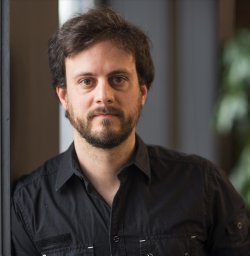 Peropadre Borja合作论文数Dept Chem & Chem Biol, Harvard Univ3
 Honggang Zhang (张洪刚)合作论文数School of Artificial Intelligence, Beijing University of Posts and Telecommunications3
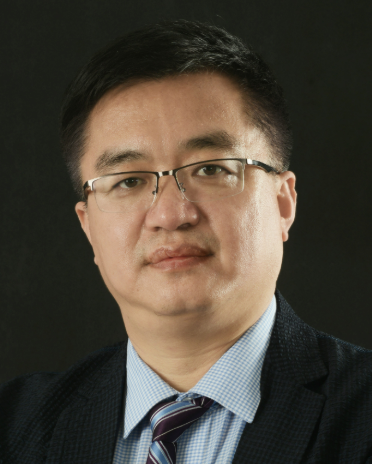 Bintang Yang (杨斌堂)合作论文数School of Mechanical Engineering, Shanghai Jiao Tong University3
 Eric R. Anschuetz合作论文数Division of Physics, Mathematics and Astronomy, California Institute of Technology3
 Jacob D. Biamonte合作论文数Oxford University;Computing Laboratory;Computing Laboratory, Oxford University3Pierre-Luc Dallaire-Demers合作论文数2Zizhao Zhao合作论文数2
 Tim Menke合作论文数Dept Phys, MIT2Yan Ye合作论文数2ShuangXi Qi (祁双喜)合作论文数2
 Alex Zhavoronkov合作论文数Insilico Medicine;HautAI OU2Aliper Alexander M合作论文数Insilico Med Inc, Johns Hopkins Univ2
 Bretislav Friedrich合作论文数Molecular Physics Department, Fritz-Haber-Institut der Max-Planck-Gesellschaft2
 Guang Meng (孟光)合作论文数School of Mechanical Engineering, Shanghai Jiao Tong University;Shanghai Academy of Spaceflight Technology2
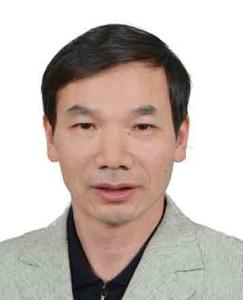 Jun Guo (郭军)合作论文数School of Artificial Intelligence, Beijing University of Posts and Telecommunications2
 Zhiqiang Feng合作论文数Laboratoire LME-Evry, Université d'Évry – Val d'Essonne2
 Dudley Herschbach合作论文数Department of Chemistry and Chemical Biology, Faculty of Arts and Sciences, Harvard University2
 Edwin Garcia合作论文数School of Materials Engineering;Purdue University;School of Materials Engineering, Purdue University2Aritra Sankar Brahmachari合作论文数1William A. Simon合作论文数1Marc Davis合作论文数1Anmer Daskin合作论文数1Quanbing Wu合作论文数1William P. Banner合作论文数1Alcazar Javier合作论文数1Dirk Englund合作论文数1Pengyou Xu合作论文数1Schuyler Fried合作论文数1Xiao Ding合作论文数1
 Guoming Wang (王国明)合作论文数College of Chemistry and Chemical Engineering, Qingdao University1cong jin合作论文数1Huai-Ming Hu (胡怀明)合作论文数1Jen-Yueh Hsiao合作论文数1
 Bashige Ntwali合作论文数Zapata Comp Inc1
 Marta Mauri合作论文数Zapata Comp Canada Inc1




